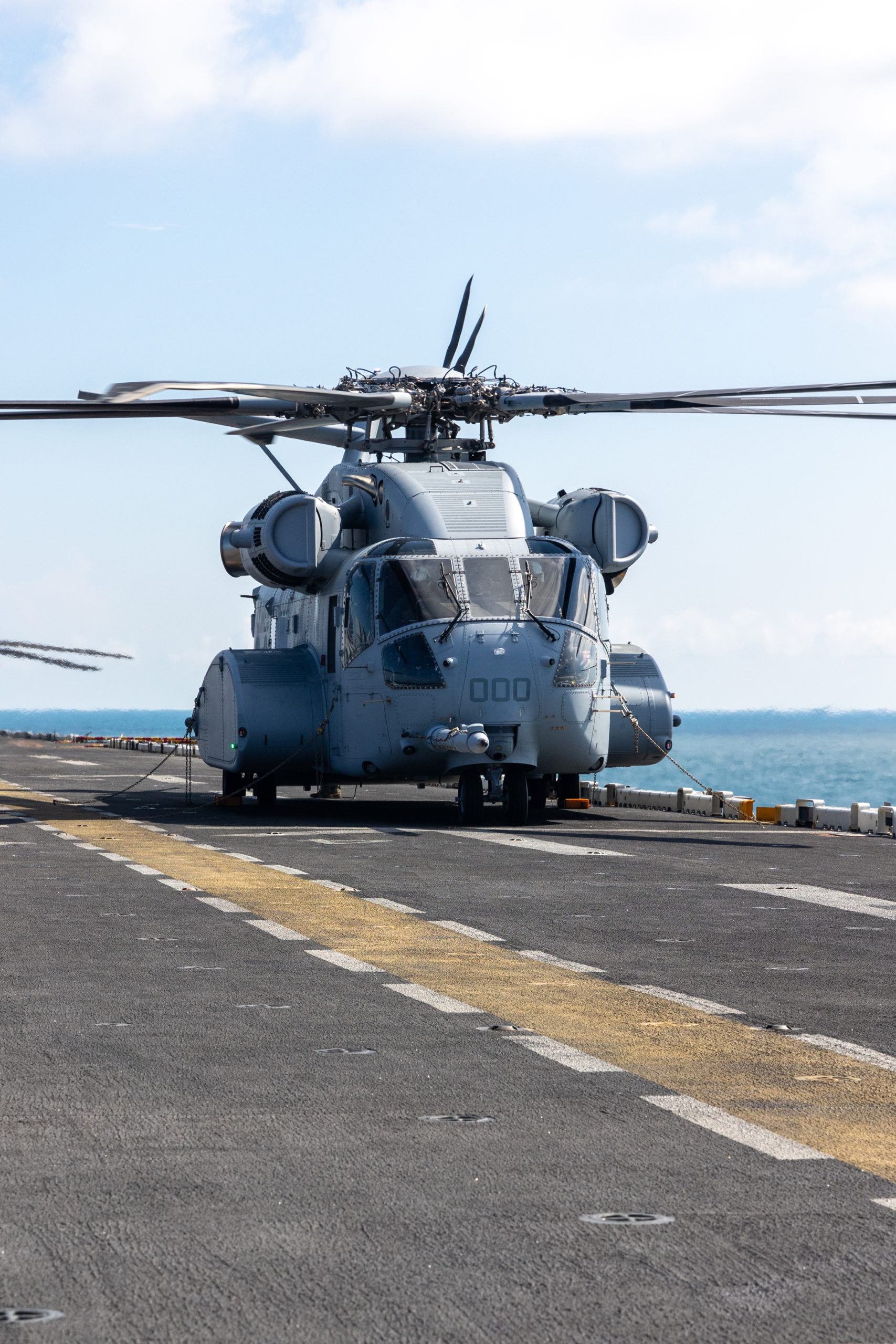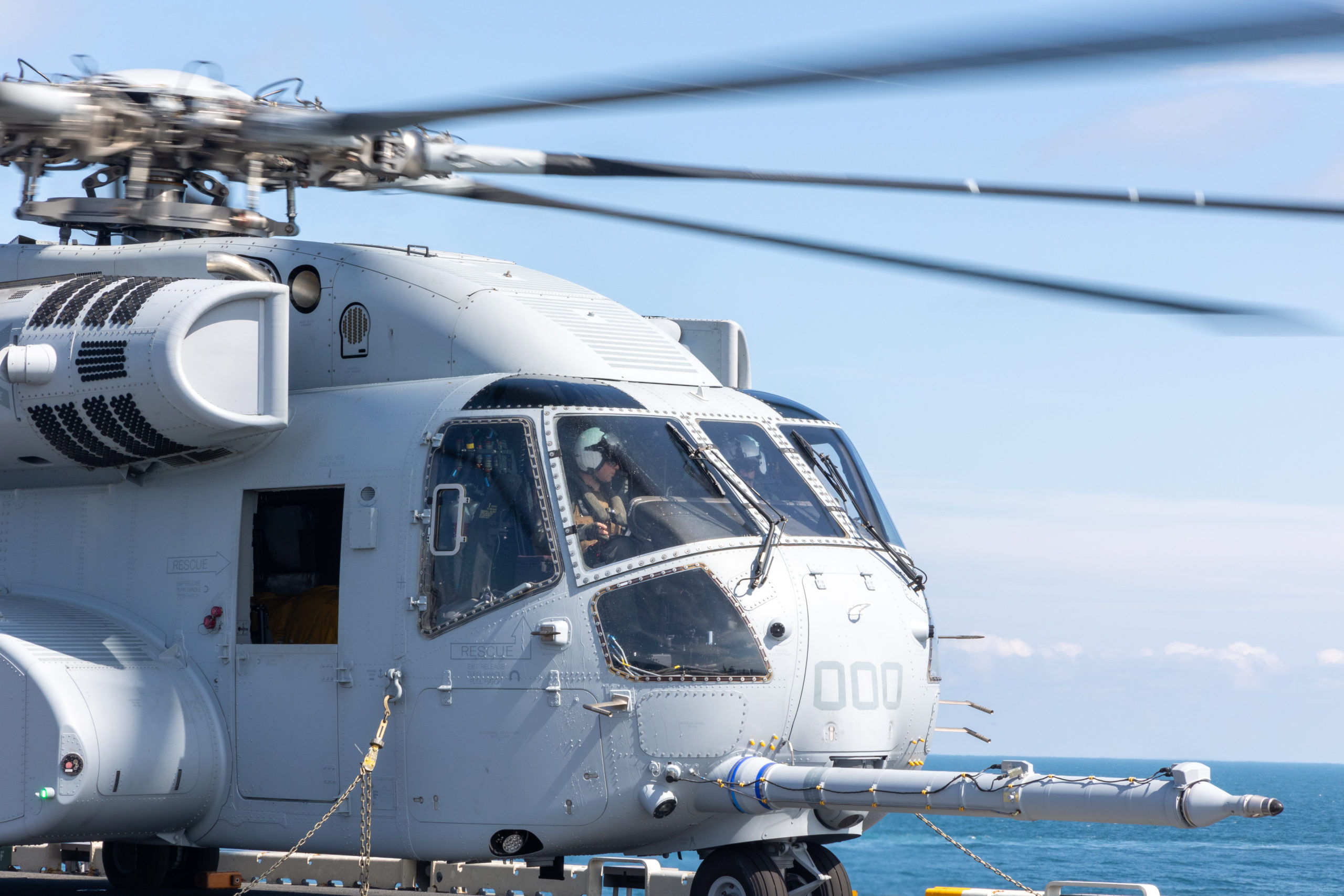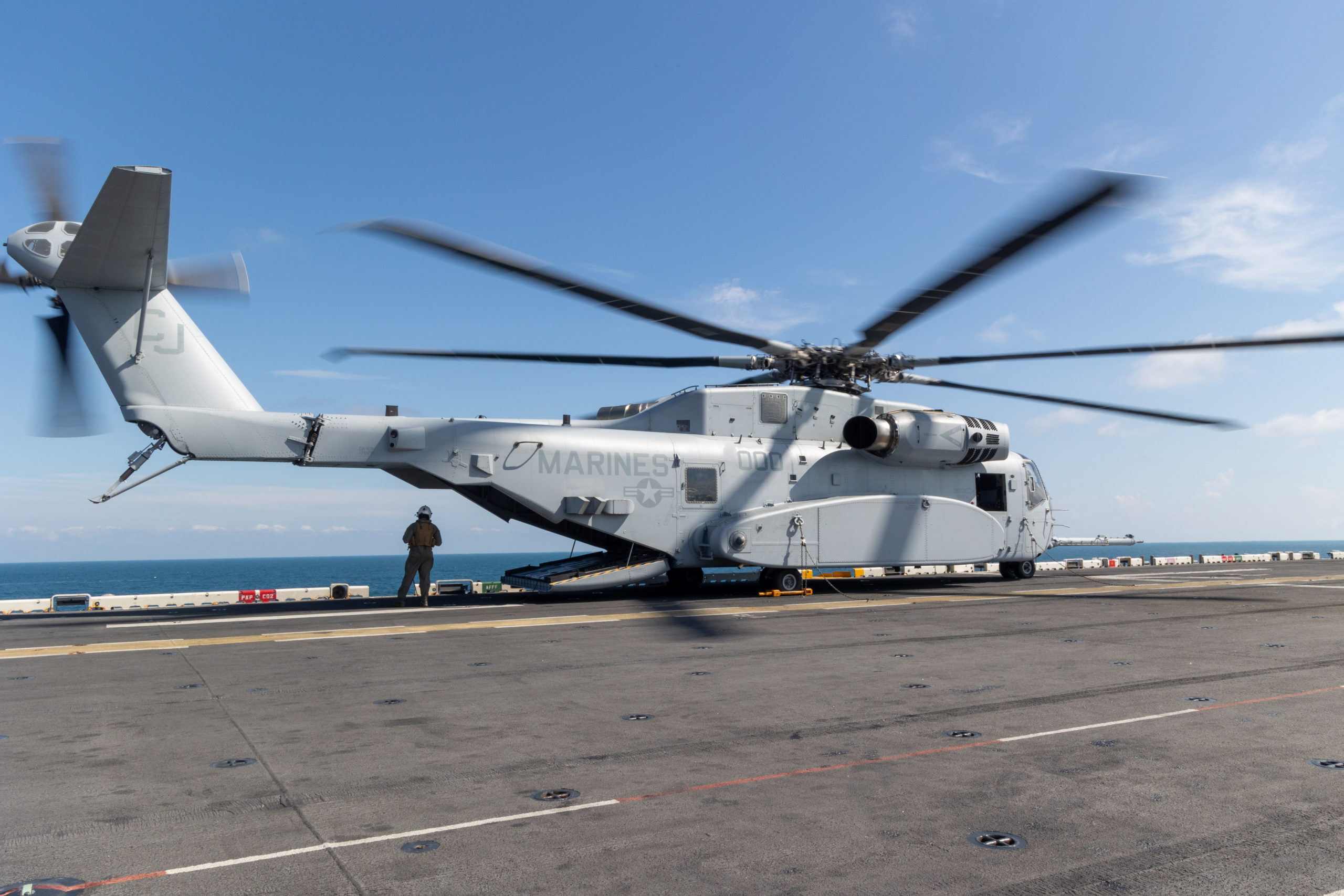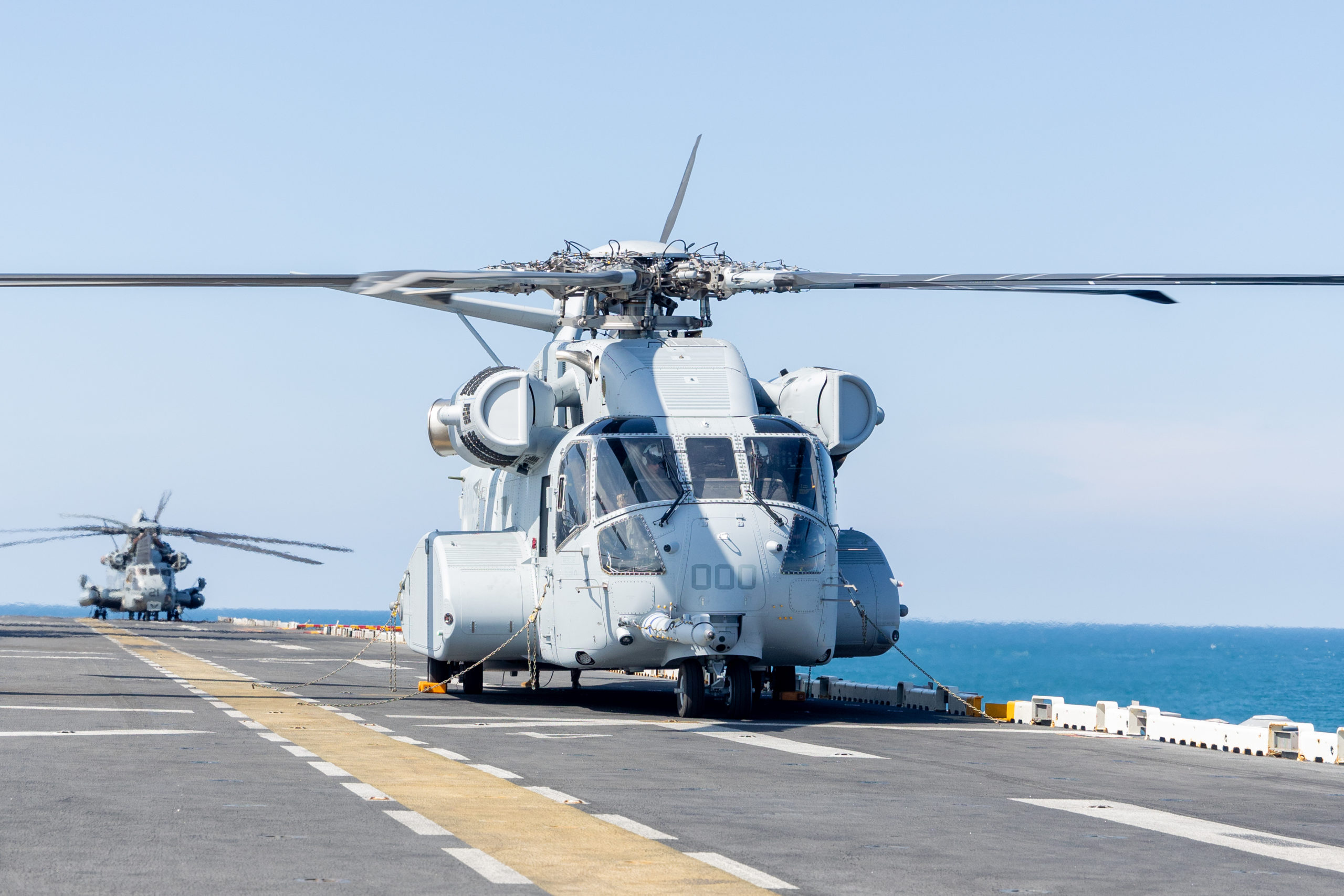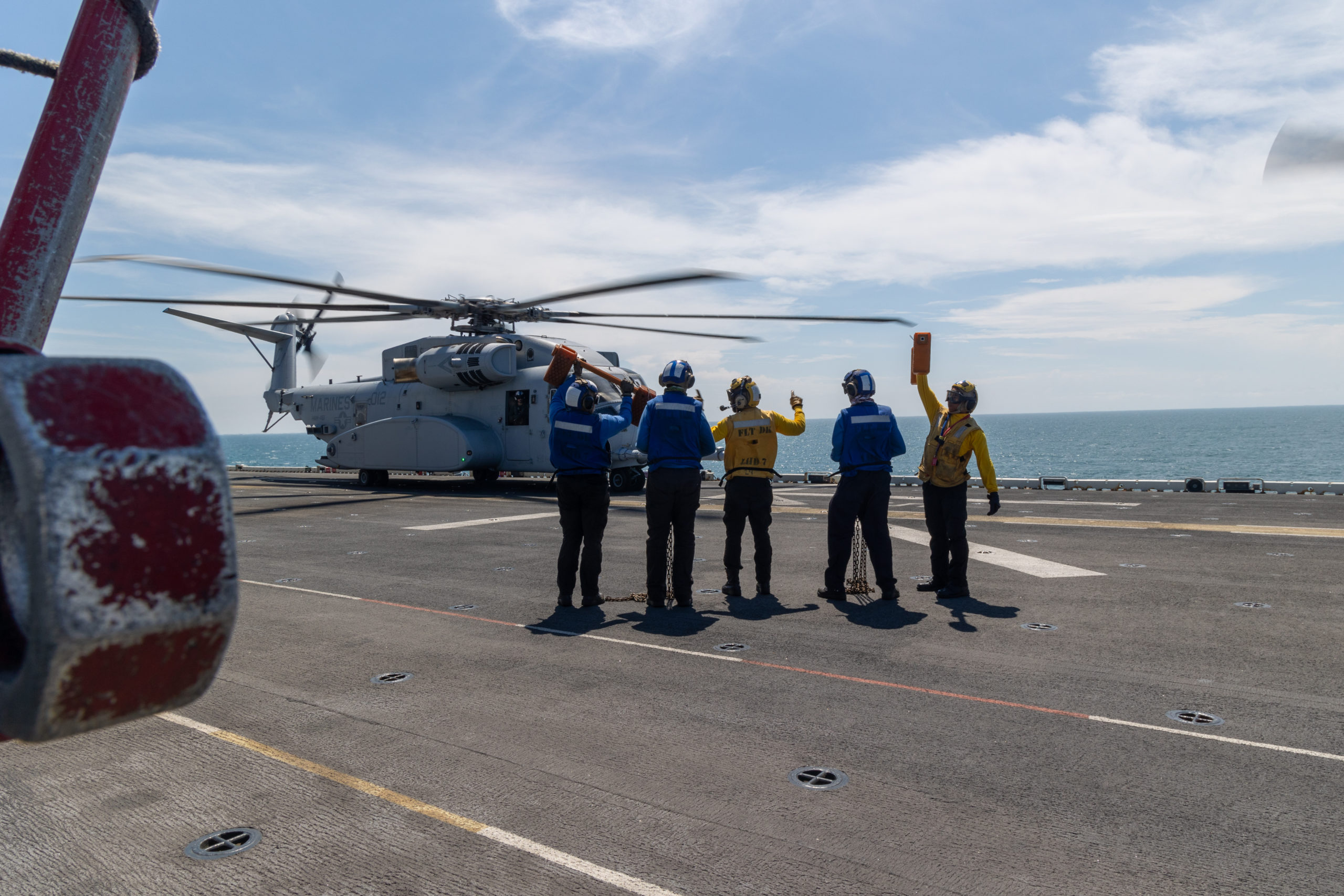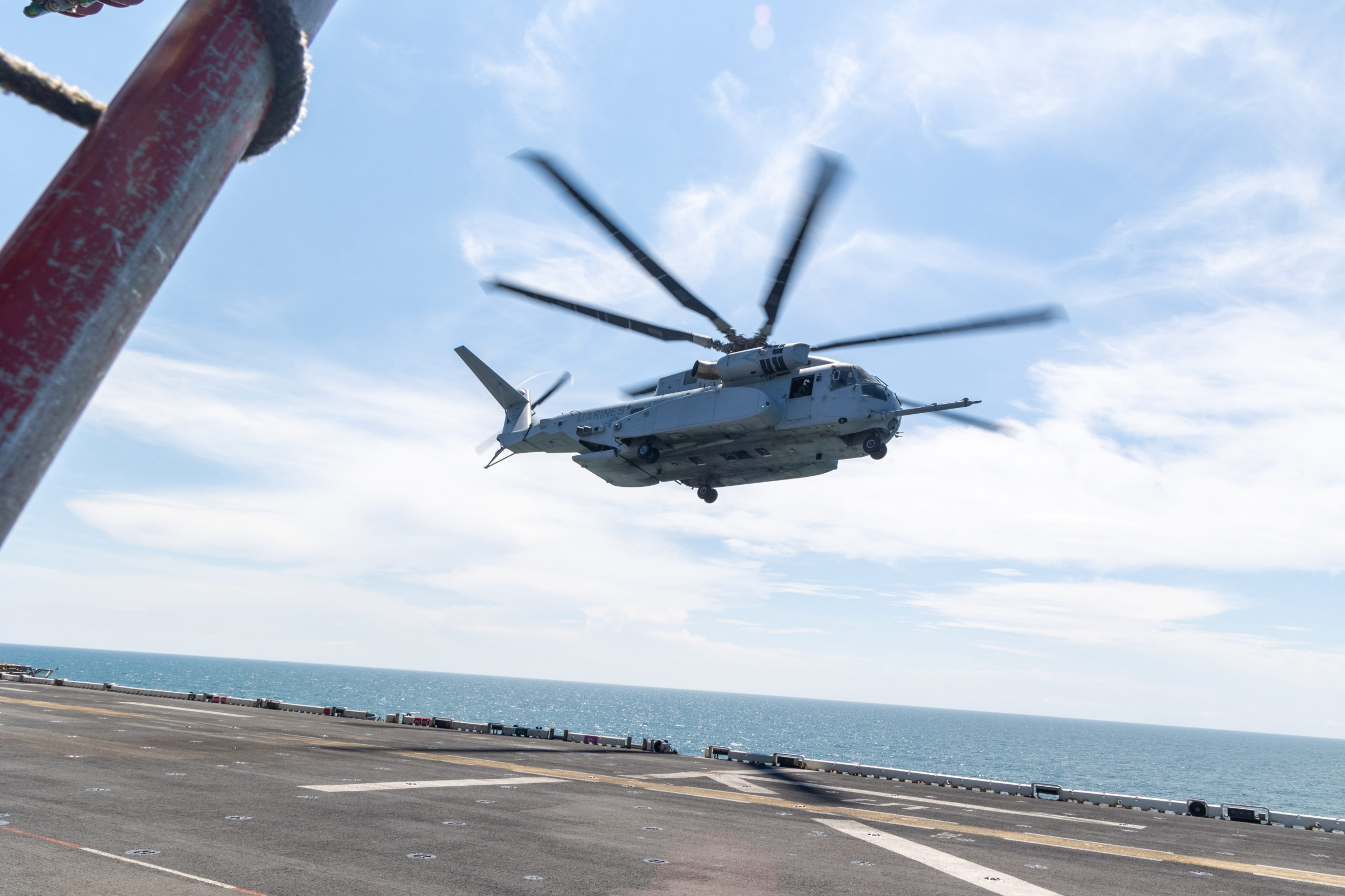
The CH-53K in Action: Bridging the Gap Between Technology and New Operational Possibilities

08/25/2025

By Robbin Laird

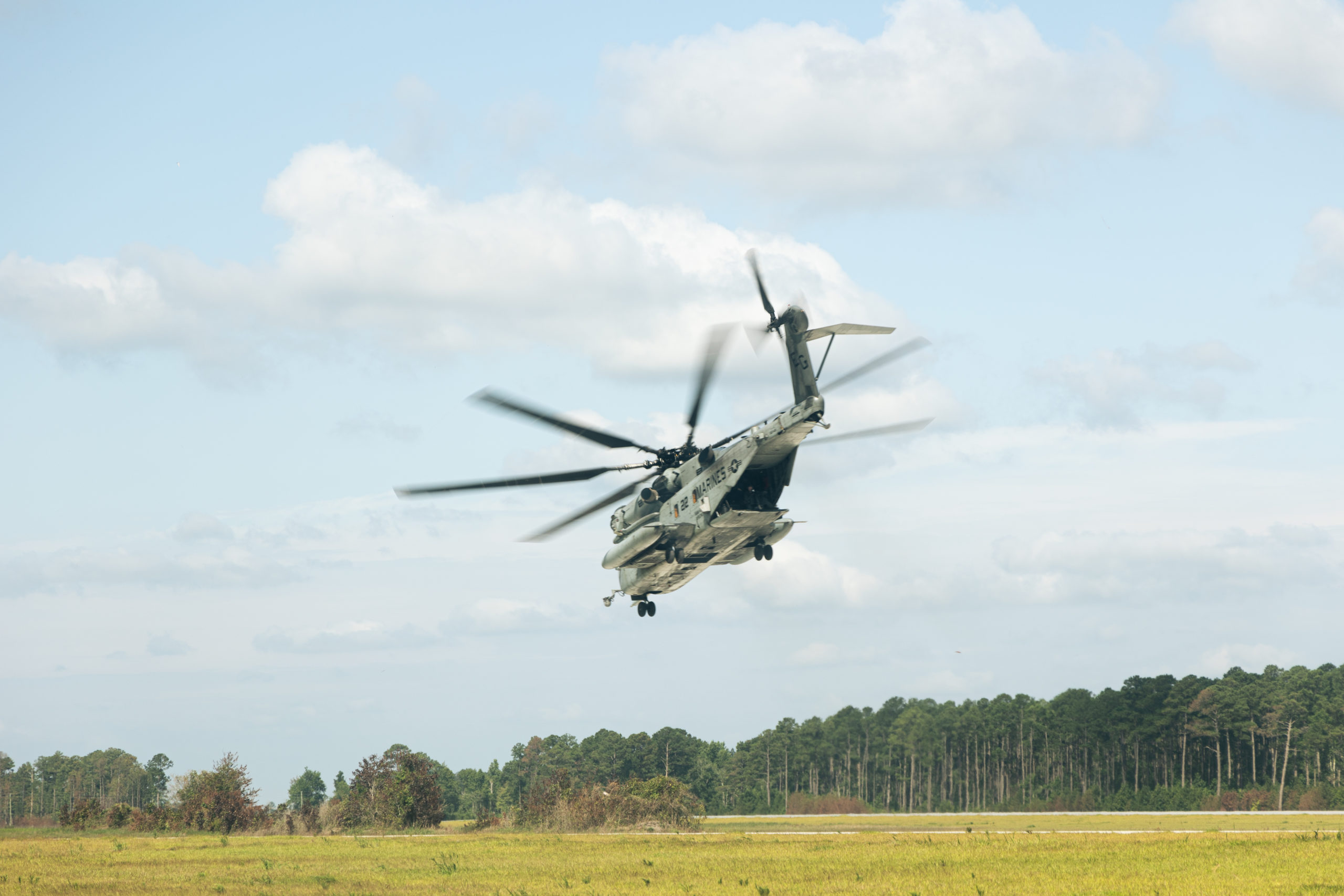
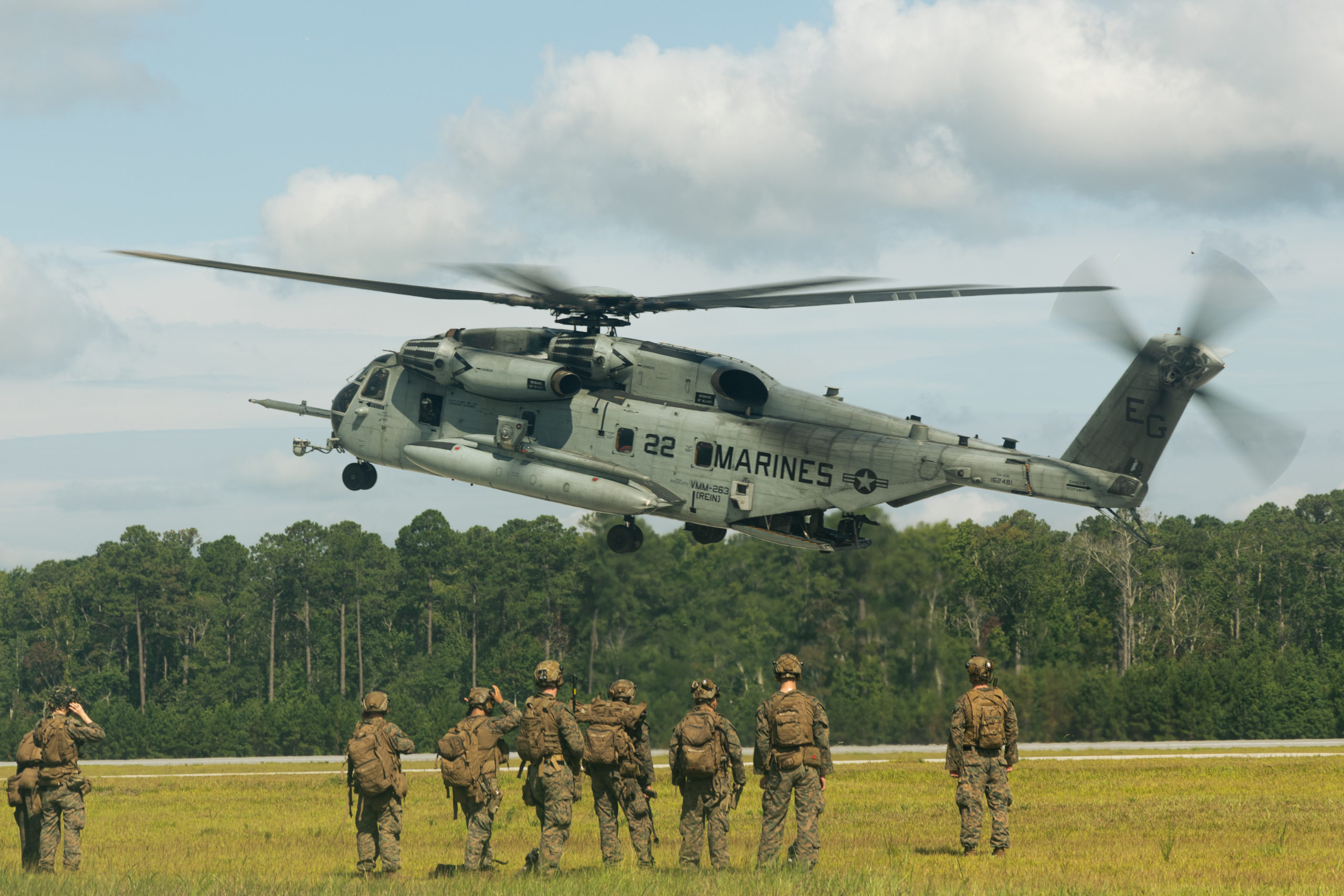
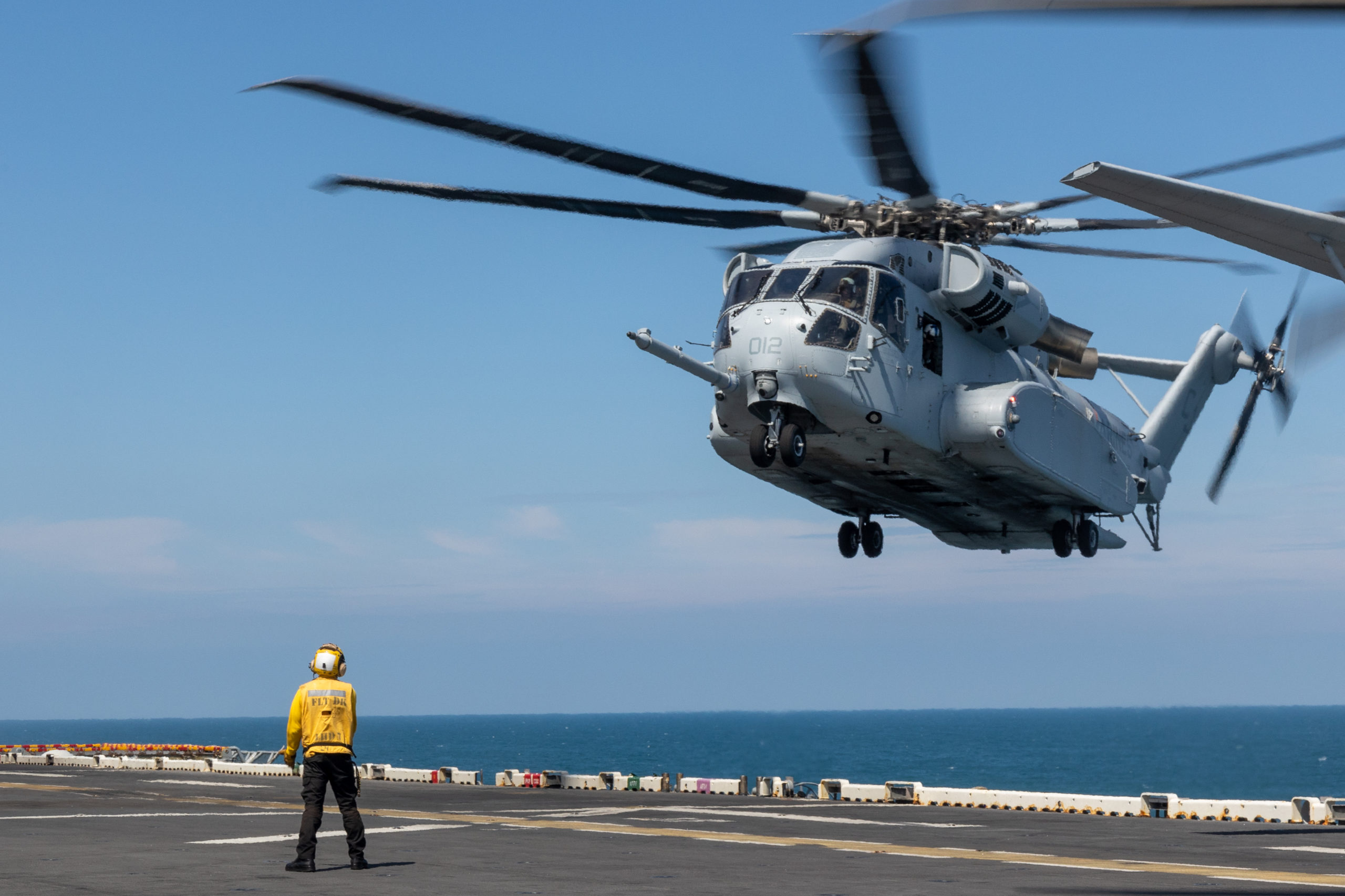
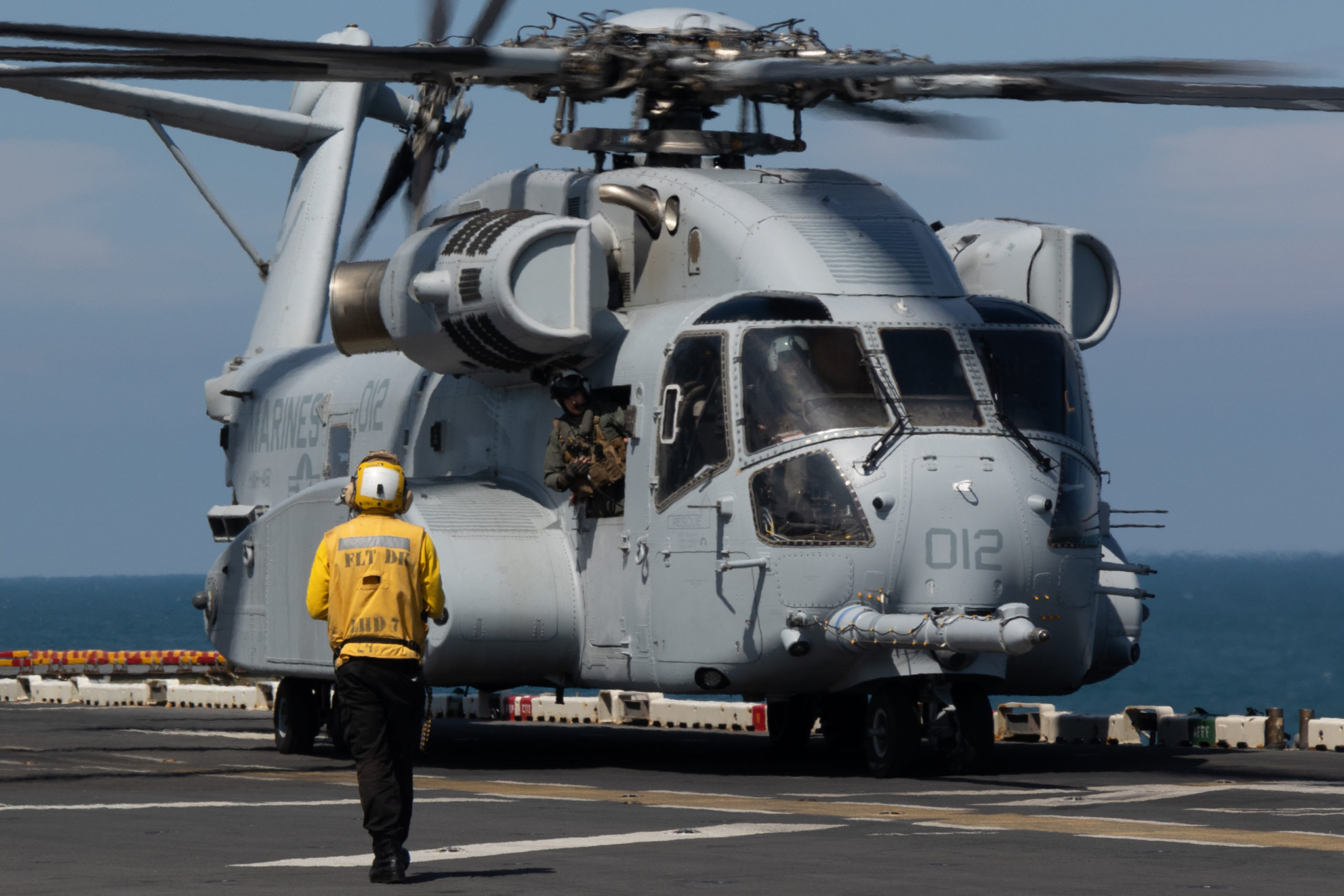
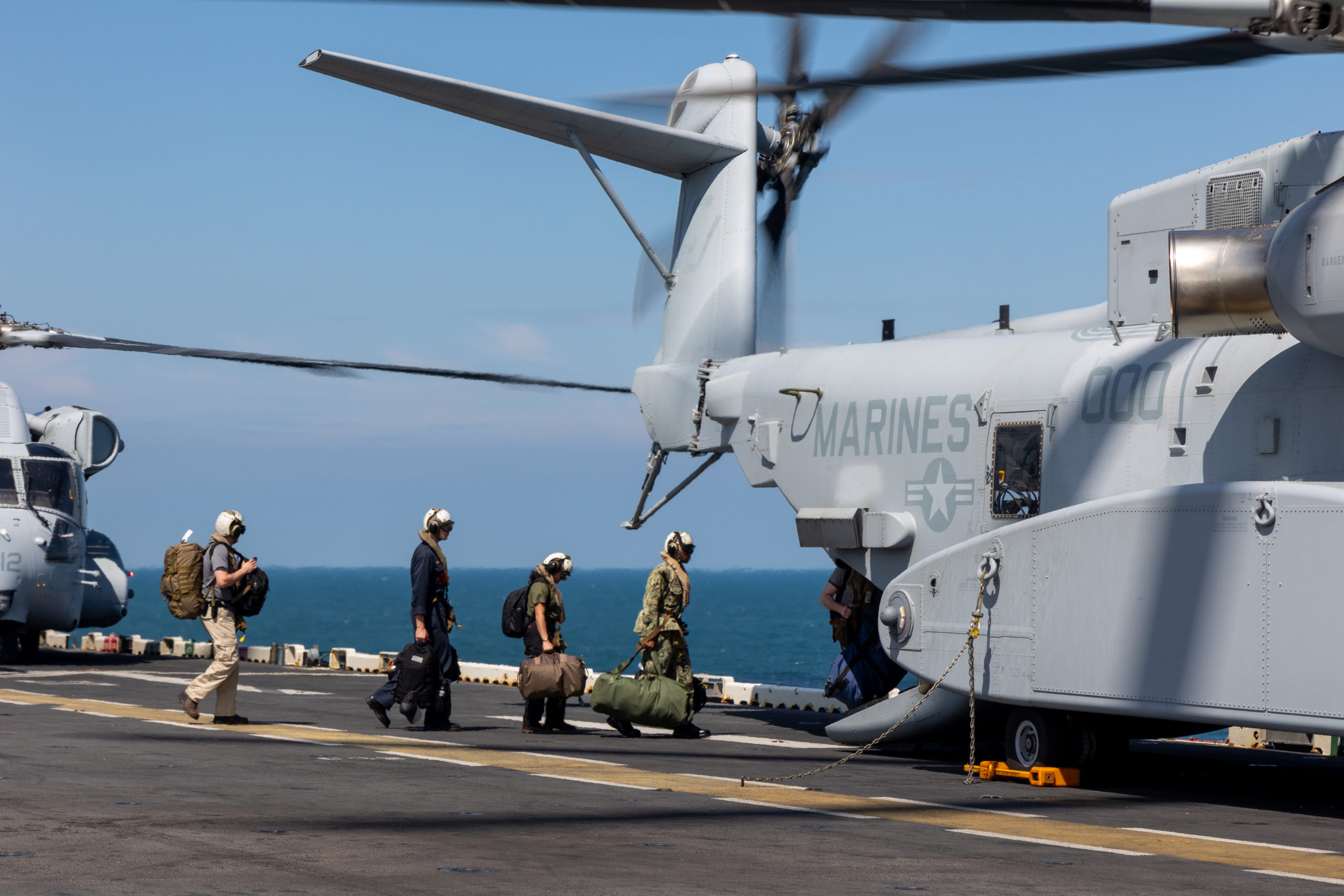
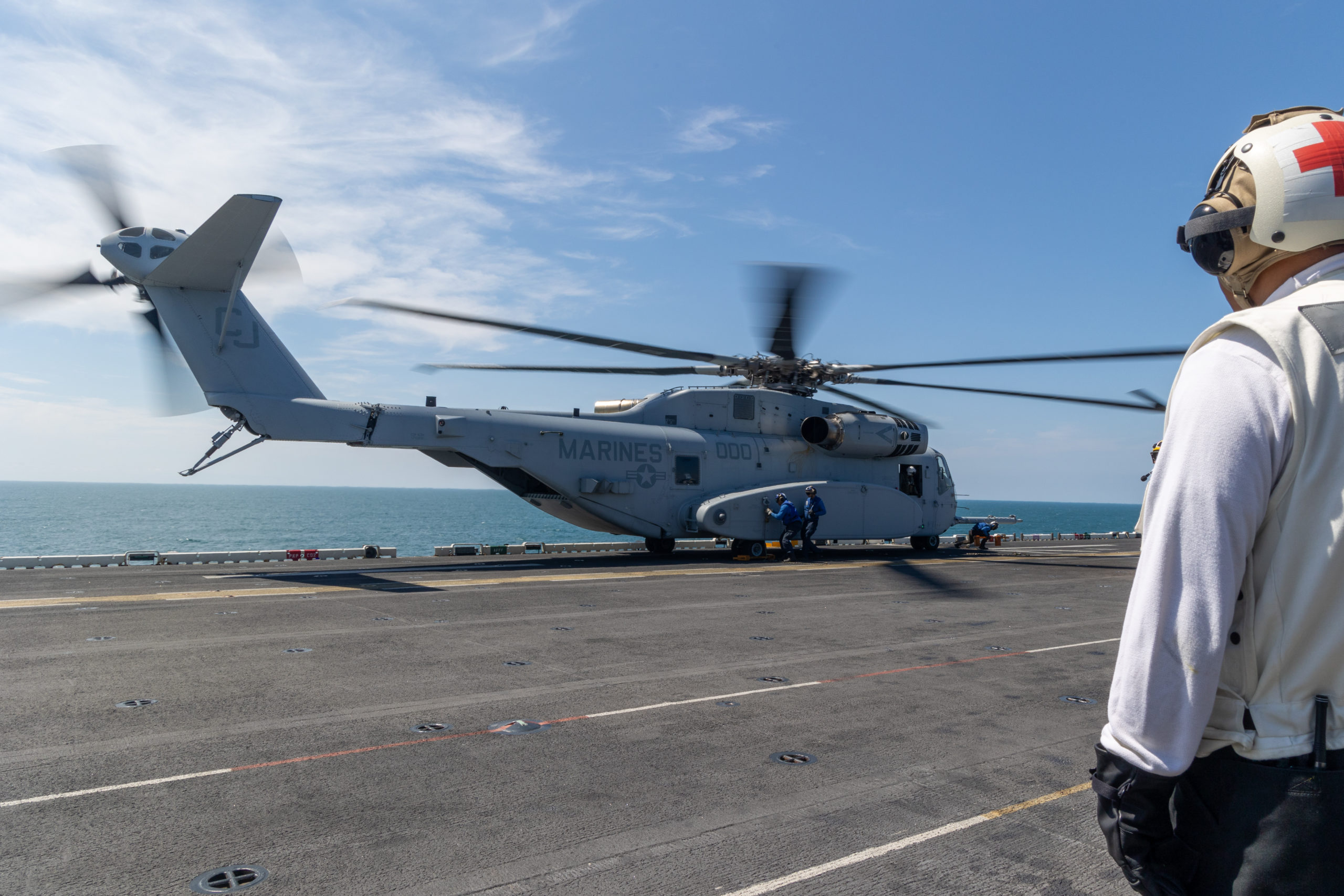
The U.S. Marine Corps’ latest heavy-lift helicopter, the CH-53K King Stallion, represents far more than an evolutionary step from its predecessor. In an interview on July 22, 2025, Col Kate Fleeger, Program Manager, H-53 Heavy Lift Helicopters Program at NAVAIR, underscored that the CH-53K embodies a fundamental shift in how Marines approach heavy-lift operations, mission planning, and force sustainment.

According to Col Fleeger, the aircraft’s debut at major exercises is revealing capabilities that extend well beyond its impressive lift specifications, challenging traditional acquisition and support paradigms while unlocking new operational possibilities.

At the heart of Col Fleeger’s leadership priorities lies a conceptual paradox: how to introduce a cutting-edge capability without having it mentally reduced to merely the “next version” of the past. She explains that part of this stems from deliberate choices in the helicopter’s designation and outward appearance.

“What contributes to that challenge is the fact that we called it the CH-53K instead of going with something wholly different, the fact that we made it look a lot like a 53 Echo. I think it actually encourages, unfortunately, people to view the platform as a replacement platform instead of a revolutionary, key element of a really forward-thinking concept of operations.”

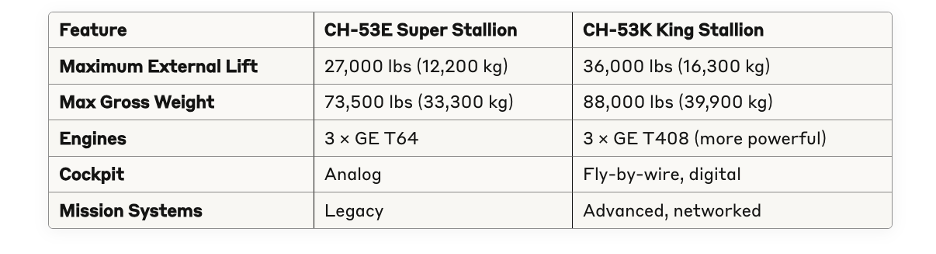
This insight highlights the inertia that can affect even the most innovative military programs. Marines, maintainers, and planners have long relied on the CH-53E Super Stallion as the backbone of heavy-lift operations. The King Stallion’s larger engines, advanced avionics, and greater payload unleash new capabilities and new possibilities for operational innovation.

The CH-53K should not be seen as a modest improvement, but as a transformative enabler for a new era of expeditionary operations. Its ultimate effectiveness will depend on whether users — operators, planners, commanders — embrace the change which the CH-53K enables.

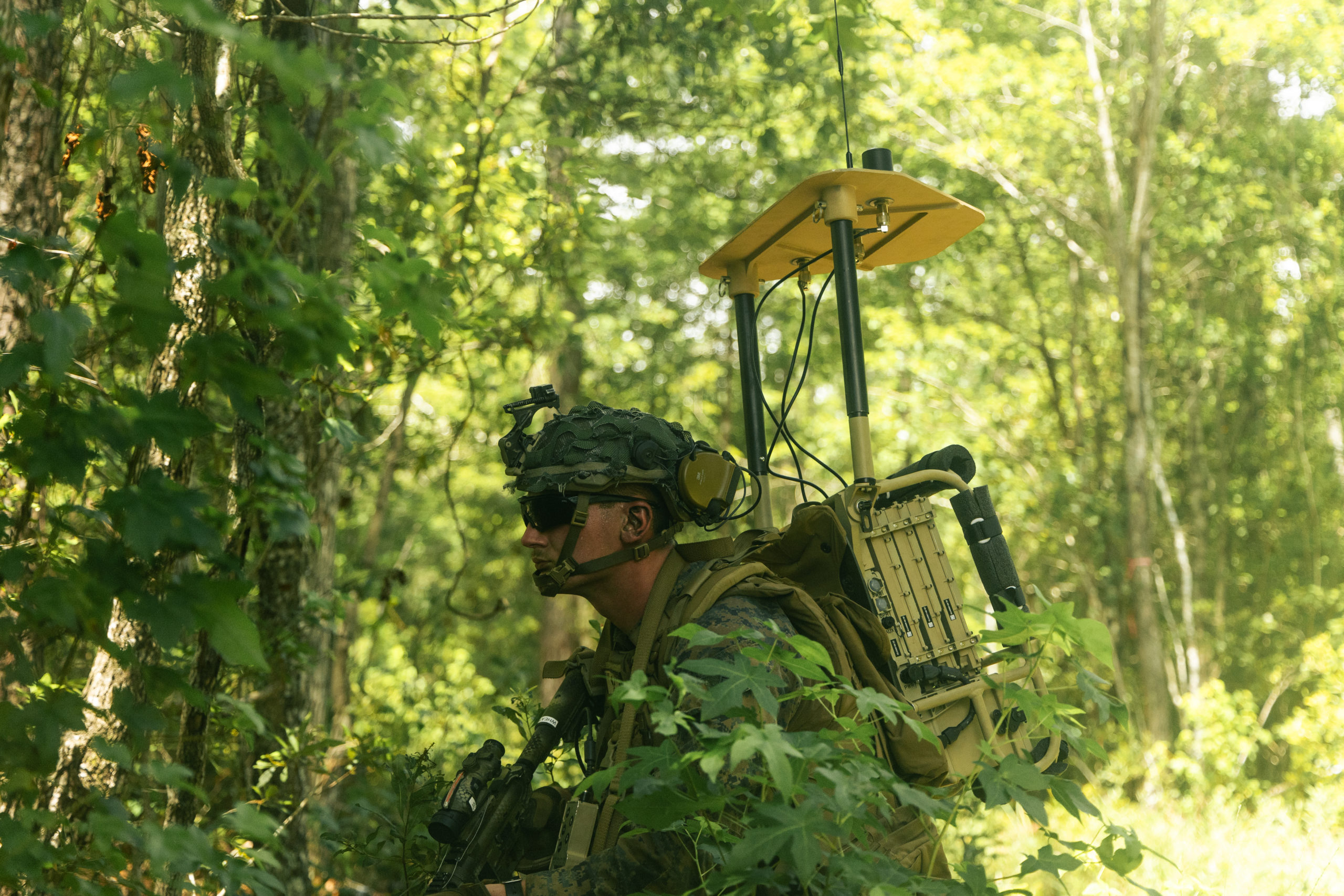
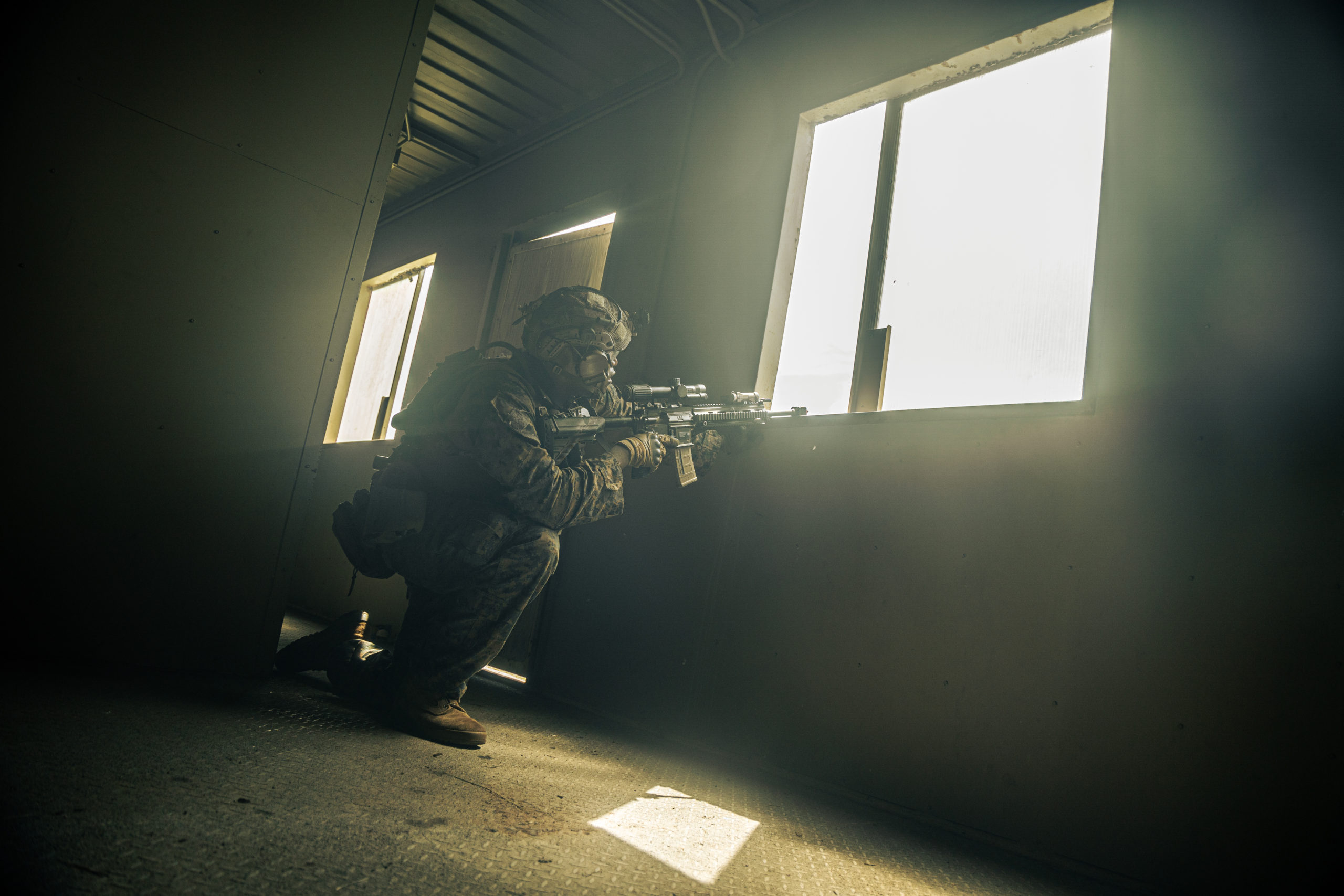
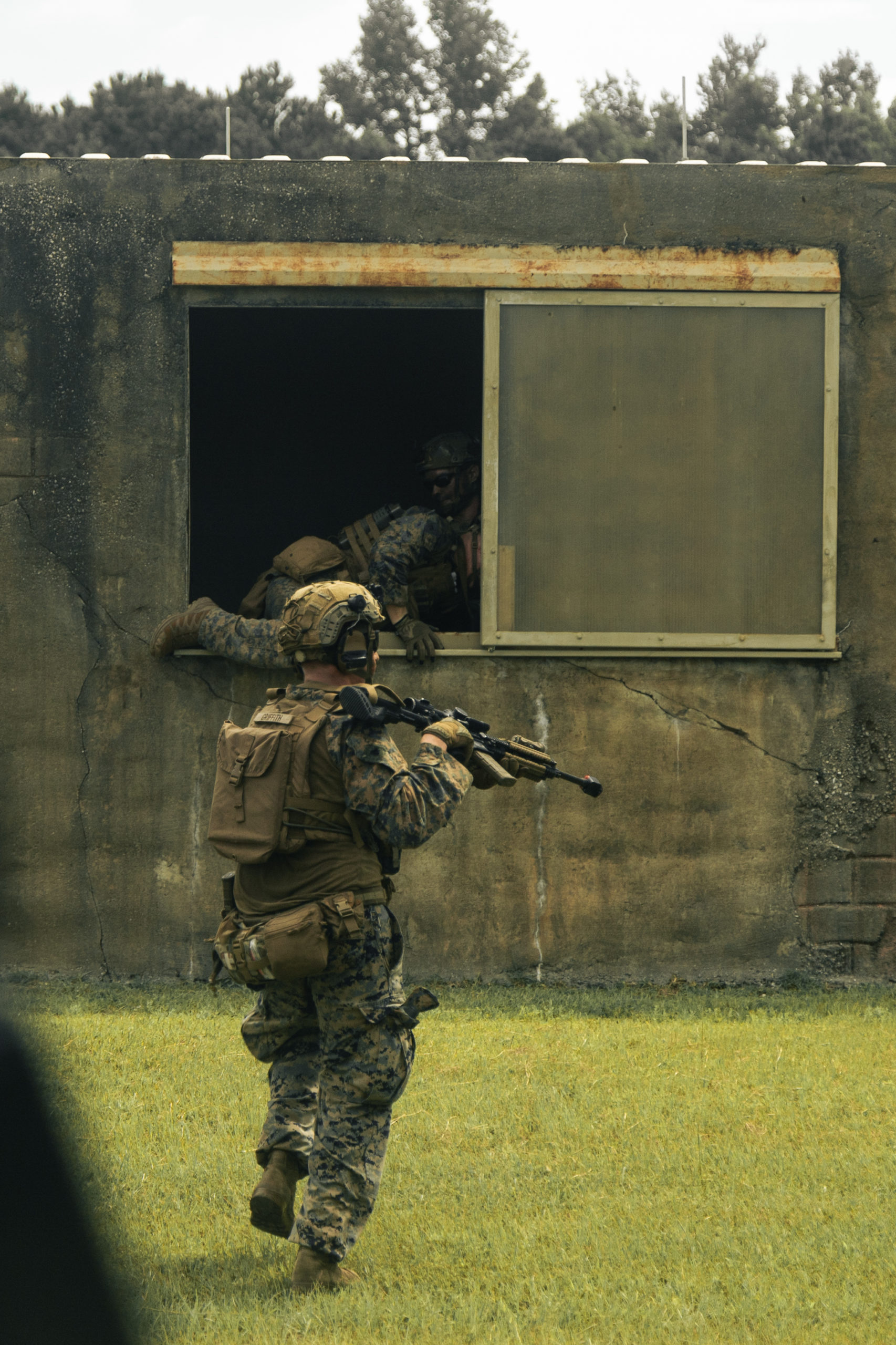
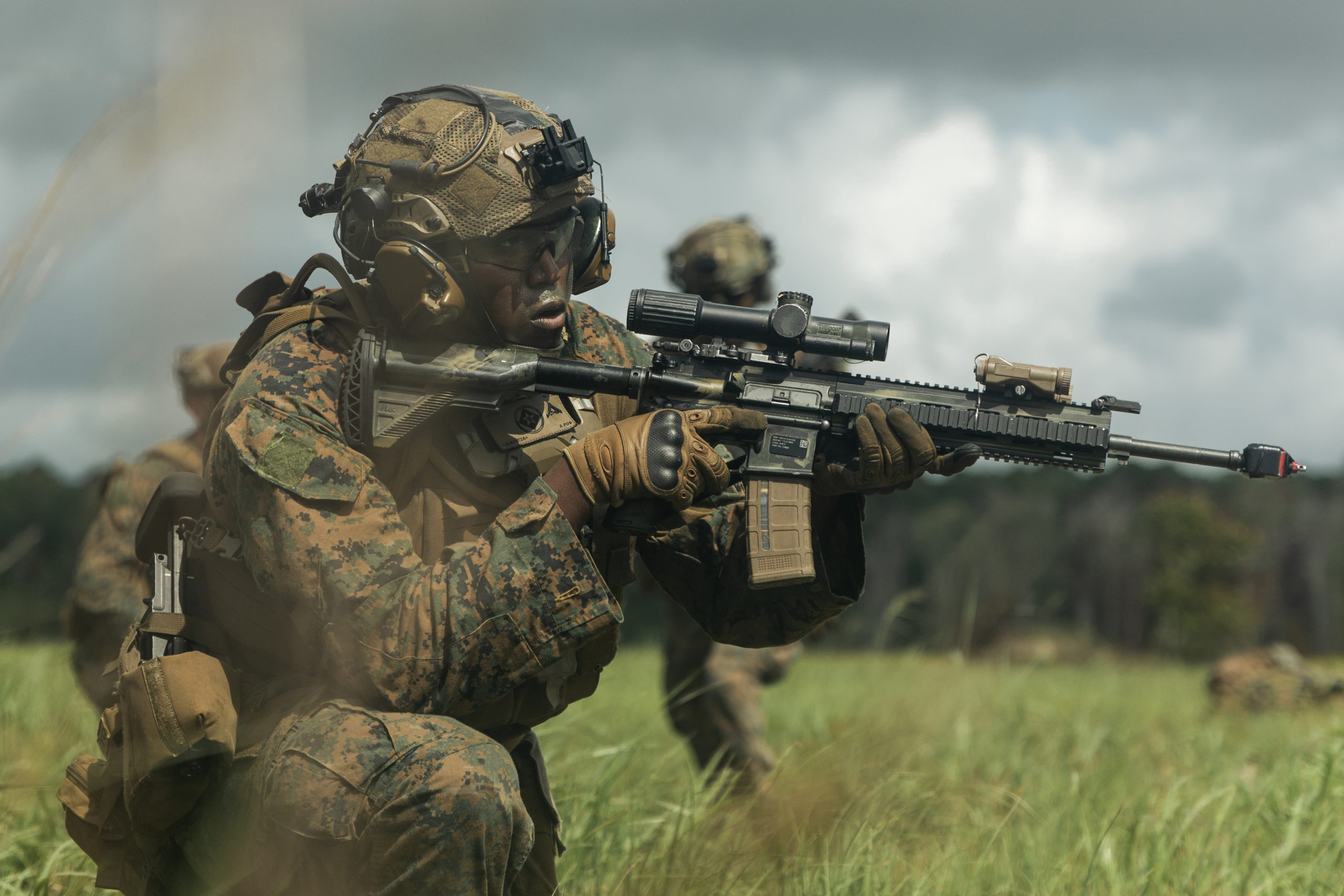
Col Fleeger noted that the best antidote to old mindsets is realistic, challenging operational experience. The Service Level Training Exercise (SLTE) at 29 Palms, California in January 2025, provided exactly that opportunity, where HMH-461 deployed six CH-53K aircraft in a proving ground for both the machine and the Marines.

“This is a large-scale exercise at 29 Palms, California, Marine Corps-wide, and it is really designed to kind of put the entire [MAGTF] through its paces. They’re not only practicing and implementing, kind of our standard CONOPS and tactics, techniques and procedures (TTPs) with the equipment that we’ve had all along,” said Col. Fleeger. “But then they’re also integrating newer capabilities and kind of executing variations on the existing TTPs, and coming up with wholly new TTPs as well, and trying those out in an operationally realistic environment.”

The exercise wasn’t simply a demonstration of lift capacity. It was an exploration of what becomes possible when technological limitations disappear. Where the CH-53E required extensive preparation and carried significant risk when lifting 20,000-pound loads, the CH-53K handles such operations routinely. This transformation from complex undertaking to routine operation fundamentally changes how ground commanders plan missions.

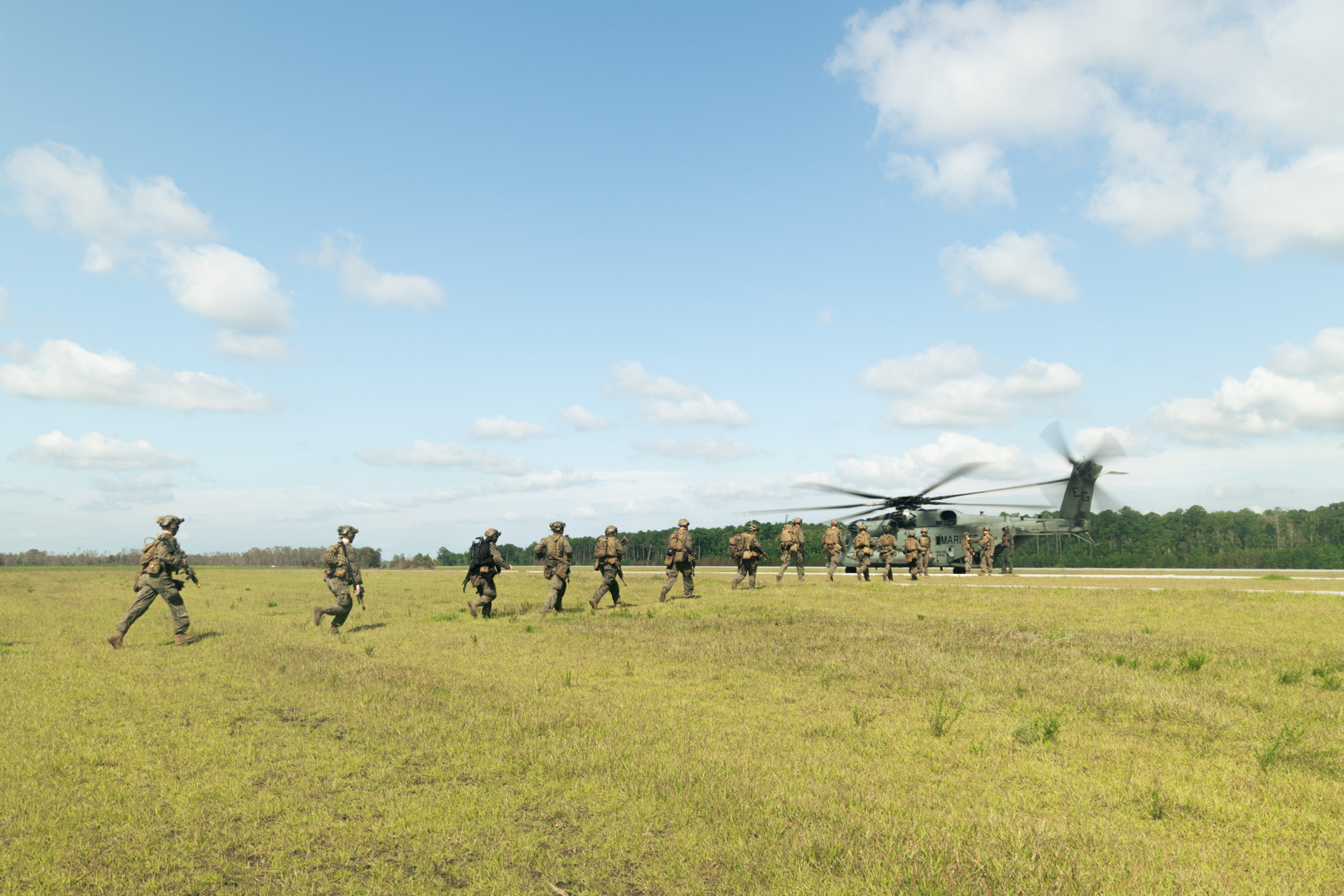
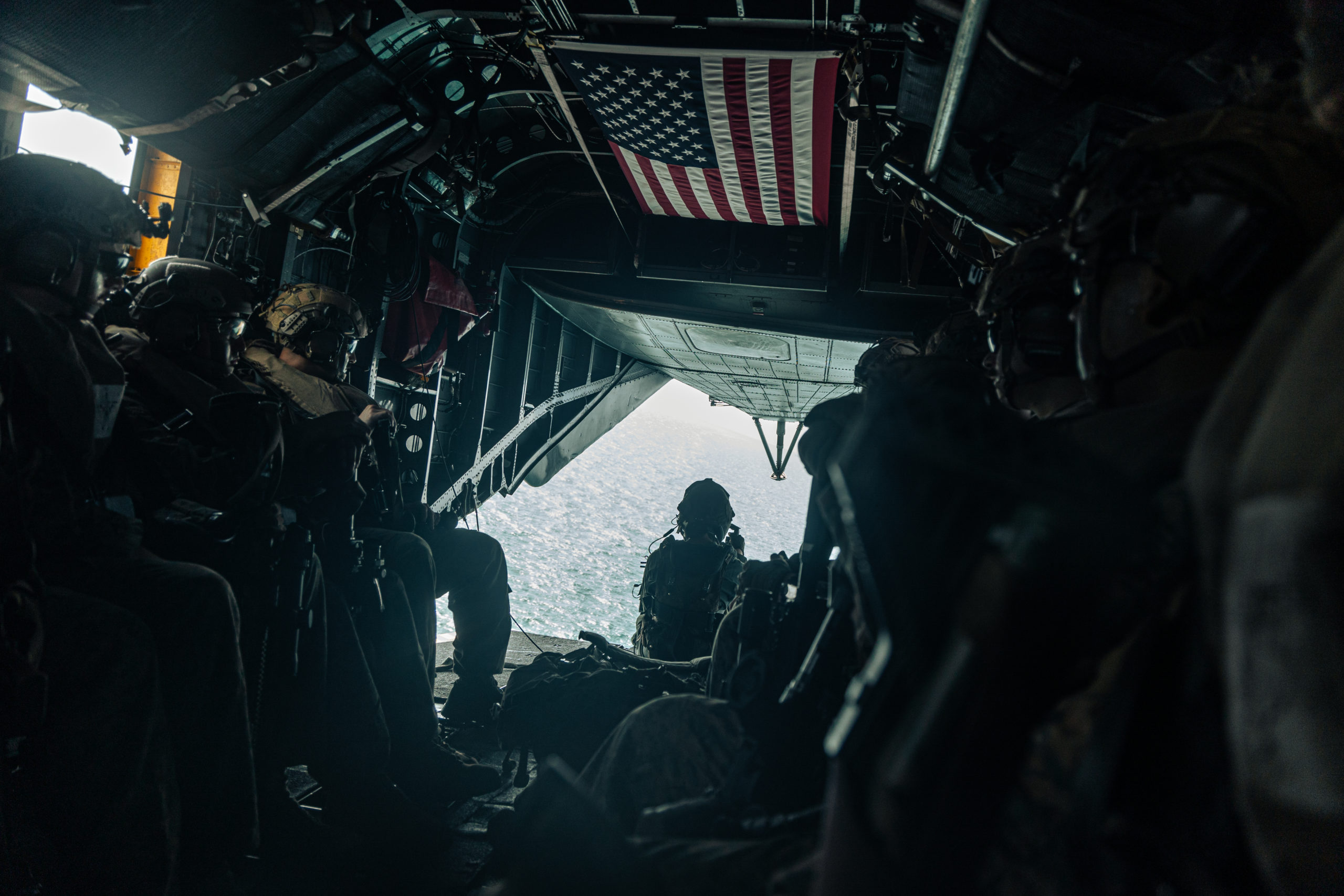
The exercise’s most striking demonstration was a full company insert conducted entirely with CH-53K aircraft. This capability dramatically reduces both the operational signature and timing required for major troop movements. As such, this operational capability delivers critical advantages in contested environments where speed and smaller numbers of lift elements determine mission success.

Key aspects of the exercise included:

  • Testing the CH-53K’s increased lift and range in situations simulating contested logistics, distributed sustainment, and rapid troop movements.
  • Enabling Marines to experiment with, adapt, and iterate on established and entirely new TTPs, not just for the CH-53K, but in the context of evolving Marine Corps operational doctrine.
  • Demonstrating how developing confidence in the platform is as much about human adaptation as machine performance.

Perhaps the most significant but least visible advancement lies in the CH-53K’s integrated mission planning ecosystem. Col Fleeger emphasized that this system encompasses both cockpit technologies and ground-based planning stations, creating seamless integration throughout the Marine Air-Ground Task Force (MAGTF).

“Planning is as important as execution,” Col Fleeger noted, describing how the CH-53K’s systems integrate into rapid response planning processes across the entire MAGTF structure. This represents a paradigm shift from aircraft-centric planning to truly integrated operational design, asking planners to start with the problem, not with the platform, and to imagine what missions are now possible.

It’s easy to focus on mindset, but the CH-53K’s technical attributes are undeniable. Designed with the demands of distributed maritime operations in mind, the aircraft is a force multiplier for both traditional and emerging missions: These differences aren’t just statistics; they enable new concepts in contested logistics, distributed basing, and support for high-end maneuver warfare
The CH-53K’s digital architecture generates unprecedented amounts of operational data, but Col Fleeger identified a critical challenge: transforming data into actionable information and knowledge for sustainment operations. The aircraft continuously collects information that could revolutionize supply chain management, but only if organizational systems evolve to process and act on these insights.

“Data is no good to anybody if you can’t move that data throughout the ecosystem and analyze it in such a way that you turn it into actionable information,” she explained. The goal is creating a seamless flow from aircraft-generated data to demand signals that inform industrial partners about parts requirements for production in advance.

This represents a fundamental shift from reactive maintenance to predictive sustainment. This capability is essential for maintaining readiness in distributed operations where traditional logistics pipelines may be disrupted.

Col Fleeger provided an overview on the progress of the program and significant milestones ahead:

  • August 2025: The 20th aircraft will deliver directly from factory to VMX-1 at Yuma, Arizona.
  • Training Infrastructure: HMHT-302 at New River has received aircraft and is transitioning to become the formal CH-53K training squadron.
  • Long-term Commitment: Multi-year contracts for lots 9-13 will be awarded by September 2025, securing production through fiscal year 2029.

She argued that the expansion to HMHT-302 represents a crucial transition from limited operational testing to institutional training capability which is a necessary step for broader fleet integration.

The CH-53K can “unlock” capability that enables new operational concepts across the Marine aviation portfolio. The combination of F-35 sensing capabilities, Osprey versatility, and CH-53K heavy-lift capacity creates operational possibilities that extend far beyond the sum of individual platform capabilities.

With the payload revolution, when looking to deploy a Marine Corps force, there is flexibility in using the totality of Marine Corps air to deliver various payloads across the force to enable the Ground Combat Element’s mission success. In this context, Col Fleeger advocates for developing standardized “roll-on, roll-off” payload systems for the King Stallion. These would establish common size, weight, and power parameters that allow rapid integration of new capabilities without lengthy acquisition processes.

“Give the fleet operators a box, and whatever you can fit in this box with this weight and power, will allow for rapid innovation in operational approaches,” she explained. Such systems could revolutionize how Marines employ maritime autonomous systems, advanced sensors, or other emerging technologies by providing a standardized integration pathway that bypasses traditional acquisition timelines.

Fielding a new helicopter is only half the battle; the challenge is integrating it operationally, conceptually, and culturally. This means feeding real-world feedback from exercises like the SLTE directly back into maintenance procedures, training pipelines, and doctrine development processes.

Her comments show a resolve to push the enterprise to move beyond incrementalism, ensuring doctrine and aviation planning evolve alongside the machine. Success requires not just new tools, but new mindsets about how digital systems can enhance rather than complicate operational effectiveness.

Although the current focus is on Marine Corps adoption, there are broader joint and allied dimensions. The technological gains embodied in the CH-53K are being closely watched by U.S. military leadership and international partners, especially as global threats demand both interoperability and operational unpredictability.

The CH-53K represents a microcosm of broader military transformation challenges. Like the F-35’s evolution from traditional fighter to information node, the CH-53K’s journey from helicopter to integrated system demonstrates how platform-centric thinking must evolve toward capability-based approaches.

As it is successfully integrated into the force, the CH-53K will make a significant impact not just in amphibious operations, but in humanitarian assistance, partner capacity building, and rapid response missions worldwide.

The CH-53K’s story is ultimately about transformation of platforms, processes, and possibilities. Its legacy will be written not just by its impressive specifications, but by how daringly it shapes what is possible for generations of Marines to come, realizing the promise of digital aviation in an era of major power competition and global disorder.

This is a more comprehensive version of the Breaking Defense version of the article published on August 21, 2025.

https://breakingdefense.com/2025/08/how-the-ch-53k-king-stallion-can-transform-marine-heavy-lift-operations/

For a video overview of several of the key elements of this interview and article, see the following:

For a podcast discussing this article, see the following:

CH-53K King Stallion: Reshaping Marine Corps Heavy Lift Operations

What if it was called the CH-55? Transformation in the Vertical Heavy Lift Fleet

The Heavy Lift Helicopter and Its Role in Supporting Diverse USMC Operations

The Coming of the CH-53K : A New Capability for the Distributed Force

 

Australia–South Korea Space Cooperation: Diversifying Relationships Among Middle Powers

08/24/2025

In recent years, space has become a primary frontier for geopolitical strategy, defense partnerships, and technological innovation. Both Australia and South Korea have accelerated their national ambitions in the space sector, moving from tentative bilateral exchanges to robust, multi-layered cooperation.

This evolving relationship now spans satellite manufacturing, launch services, positioning systems, and joint defense initiatives. Growing strategic alignment not only reflects the changed security calculus in the Indo-Pacific but recognizes the need to develop resilient sovereign capabilities in a contested domain.

This article explores the drivers, dynamics, and future prospects of Australia–South Korea cooperation in space, grounded in recent government agreements, defense industry partnerships, and expert analysis, while showcasing how this relationship exemplifies next-generation space strategy for allied nations.

Strategic Rationale for Bilateral Space Cooperation

The Indo-Pacific faces mounting threats: North Korean missile provocations, growing Chinese space and missile capabilities, and the potential for crisis escalation. For Seoul, rapid deployment and renewal of surveillance assets especially in wartime is imperative. Australia, meanwhile, seeks to augment sovereignty in space surveillance, intelligence gathering, and secure communications as it modernizes its defense sector and responds to threats in its vast maritime approaches.

Both nations are classified as “new space powers.” Australia’s push for independent launch capacity and South Korea’s expansion in small satellite programs and orbital services form natural complements. Joint projects allow for rapid innovation cycles, skill building, and sovereign manufacturing capability thereby reducing dependence on third-country providers in an era of supply-chain insecurity and dual-use technology competition.

Australia’s geographic position close to the equator offers optimal launch conditions for orbital vehicles, lowering costs per kilogram and enabling eastward launches with greater efficiency. Its sparse population means launches are safer, compared to crowded Asian territories. For South Korea, whose territory is surrounded by geopolitical rivals, launching from Australia is a strategic imperative.

Expanding Defense and Commercial Partnerships

In September 2024, Hanwha Defence Australia, Hanwha Aerospace (South Korea), and Gilmour Space Technologies (Australia) signed a major Memorandum of Understanding (MoU) to foster innovation and expand cooperation in aerospace and defense. This partnership leverages Hanwha’s expertise in space and defense programs and Gilmour’s sovereign launch vehicle (Eris rocket), Queensland-based orbital launch facilities, and advanced satellite structures.

Immediate goals include joint research, development, and manufacturing across the two countries, co-development of integrated launch technologies, and collaborative launches of South Korean payloads from Australian territory. The agreement also aims to address regulatory, legal, and export challenges, positioning the parties as leaders in Indo-Pacific space services.

South Korean firm INNOSPACE signed a multi-year contract with Australia’s Equatorial Launch Australia for orbital launches from the Arnhem Space Centre, with inaugural launches scheduled for early 2025. This cements Australia’s place as a regional launch provider and signals Korean industry’s intent to use Australian territory for commercial and defense-related satellite deployments.

Beyond individual companies, there is a clear trajectory toward government-to-government agreements and broader commercial synergies. The Australian Space Agency and South Korea’s Ministry of Science and ICT signed an MoU in December 2021 covering Earth observation, robotics, and space manufacturing—laying the groundwork for current cooperation. Dialogue forums, such as the inaugural Space Policy Dialogue in July 2022, are facilitating policy alignment and industry connection.

Joint R&D: Small Satellites and Technological Innovation

A central pillar of cooperation is in small satellite development. According to analysis from ASPI and South Korea’s Defence Acquisition Projects Administration (DAPA), joint research and manufacturing can build foundational skills and infrastructure in a sector critical for resilience against counterspace threats and robust civil and defense use cases. Small satellites under 100kg are easier to deploy in constellations, harder for adversaries to neutralize, and allow for rapid replacement if lost.

South Korea’s focus is on surveillance of North Korean activity, while Australia needs robust Earth observation assets to support environmental monitoring, disaster response, and military ISR. Joint Australian–Korean satellite constellations would allow data sharing, capacity building, and mutual deterrence and resilience, supporting both countries’ sovereign ambitions.

A second priority is alignment in Positioning, Navigation, and Timing (PNT) infrastructure. South Korea’s planned Korean Position System (KPS) and Augmentation Satellite System (KASS) can be supported by ground stations in Australia—similar to existing hosting arrangements for Japan’s Quasi-Zenith Satellite System. This collaborative arrangement would:

  • Enhance accuracy and reliability of navigation services.
  • Diversify and harden regional PNT infrastructure against interference.
  • Complement Australia’s Southern Positioning Augmentation Network (SouthPAN), used by both Australia and New Zealand.

Streamlining Launch Capabilities and Regulatory Frameworks

Australia’s emergence as a regional launch provider is underlined by new sites in the Northern Territory, Queensland (Bowen and Cape York), South Australia (Woomera), and potential expansion to other strategic locations. These are attractive for South Korean launches for reasons of proximity, safety, and technical efficiency. Regulatory authorities in both countries are working to streamline launch permits, export licenses, and payment processes to accelerate collaborative launches.

The next logical step, as suggested by ASPI and Korean analysts, is negotiation of an agreement for a permanent Korean-operated launch site in Australia. Not only would this support commercial and defense launches, but it would also benefit local economies, create jobs, and drive the emergence of an Indo-Pacific launch hub for allied nations.

Space Situational Awareness and Traffic Management

Bilateral cooperation is also expanding into space situational awareness (SSA) and traffic management which are increasingly essential as space becomes an increasingly contested and congested domain. Collaborating on SSA will improve:

  • Monitoring and collision avoidance for satellite assets.
  • Detection and attribution of hostile space activities.
  • Strategic deterrence and resilience through real-time data sharing.

Such cooperation is a direct response to the growing threat landscape, where counterspace operations and physical or cyber risks to satellites are now an operational reality for space-faring defense partners.

Strategic Implications

Australia and South Korea are now positioned as proactive “middle powers,” demonstrating that a flexible, agile alliance can shape regional security environments and technological innovation.

The Australia–South Korea partnership is a template for how Indo-Pacific allies can develop dual-use capabilities, enhance deterrence, and drive economic growth via space cooperation. It also reflects a broader trend in multipolar competition, where regional resilience is built not only through hard power but through control of critical infrastructure, supply chains, and data both on Earth and in orbit.

Australia–South Korea space cooperation stands at a pivotal juncture, propelled by defense needs, technological synergy, and shared economic interests. The recent wave of government agreements, commercial MoUs, and expert-driven recommendations highlight a deepening strategic partnership. With clear progress on joint launches, satellite development, PNT infrastructure, and space awareness, the two countries are well placed to shape the Indo-Pacific space domain for decades to come.

As new projects for scientific, defense, and commercial purposes continue to emerge, the partnership will not only serve immediate national interests but reinforce long-term stability, technological sovereignty, and innovation in the broader region.

Sources Consulted for this Article:

Malcolm Davis, “Strengthening Australia’s space cooperation with South Korea,” The ASPI Strategist, April 16, 2025.

Max Blenken, “South Korea seeks closer ties,” Australian Defence Magazine, August 20, 2025.

Hanbyeol Sohn,A Strategic Turning Point for Australia-South Korea Defense Cooperation,” The Diplomat, August 19, 2025.

MoU between Australia and the Republic of Korea – Australian Space Agency

https://www.space.gov.au/mou-between-australia-and-the-republic-of-korea

“Australia and South Korea Enhance Space Cooperation,” Confer.com.au, April 16, 2025.

Hanwha Defence Australia, Hanwha Aerospace and Gilmour Space sign MOU

https://www.hanwha-defence.com.au/news/hanwha-defence-australia-hanwha-aerospace-and-gilmour-space-sign-mou-at-land-forces-2024

COMPTUEX Amphibious Assault

08/22/2025

A U.S. Marine Corps MV-22B Osprey with Marine Medium Tiltrotor Squadron 263, 22nd Marine Expeditionary Unit (Special Operations Capable), conducts flight operations during an amphibious assault as part of Composite Training Unit Exercise, on Marine Corps Base Camp Lejeune, North Carolina, July 9, 2025.

During COMPTUEX, the Iwo Jima Amphibious Ready Group and 22nd MEU (SOC) refine tactics, techniques, and procedures to execute warfighting functions that enhance operational readiness and lethality as a unified IWOARG/22 MEU (SOC) team.

MARINE CORPS BASE CAMP LEJEUNE, NORTH CAROLINA

07.09.2025

Photo by Cpl. Maurion Moore 

22nd Marine Expeditionary Unit

Denmark Expands Defense Capabilities Amid Arctic Tensions and Ukraine Support

Denmark is pursuing an ambitious defense modernization program that spans from F-35 fighter jet acquisitions to coordinating European support for Ukraine’s air defenses, while simultaneously bolstering its Arctic presence in response to growing geopolitical pressures.

Danish Defense Minister Troels Lund Poulsen has confirmed plans to significantly expand the country’s F-35 Lightning II fleet beyond the original 27-aircraft order. Speaking at a Center for Strategic and International Studies event in July 2025, Poulsen indicated that purchasing additional F-35 combat aircraft “will be the way forward,” with at least 10 additional jets planned for acquisition.

This expansion would bring Denmark’s total F-35 fleet to approximately 40 aircraft, representing what Poulsen described as “a very large amount of billions” in investment. The Royal Danish Air Force currently operates 15 delivered F-35As at Skrydstrup Air Base, with six aircraft remaining in the United States for training purposes.
A significant milestone for 2025 will see F-35s begin to occasionally replace aging F-16 fighters in air policing duties, marking Denmark’s transition to fifth-generation air power. The country plans to completely phase out its F-16 fleet by 2027, as these aircraft have been in service since the 1980s.

Denmark is also exploring strategic deployments of its F-35 fleet, with plans to upgrade Kangerlussuaq airport in western Greenland to support F-35 operations. This development would represent one of the most significant improvements to Greenland’s security infrastructure in decades.

Denmark has emerged as a key coordinator in European efforts to provide advanced air defense systems to Ukraine. Poulsen secured an agreement on behalf of European nations to purchase and donate 10 Patriot air defense systems to Ukraine, marking a breakthrough in addressing critical capability gaps.

“The most important part right now is that Europe would be able to buy military equipment here in the U.S., so we can donate these military systems directly to Ukraine,” Poulsen explained at the CSIS event. This arrangement addresses previous constraints where no additional Patriot systems were available for immediate purchase from U.S. manufacturers.

Recent developments indicate substantial European commitment to this initiative. Ukrainian President Volodymyr Zelensky has confirmed that Germany is prepared to fund two Patriot systems while Norway will finance one additional system. U.S. Secretary of State Marco Rubio has been actively encouraging European allies to transfer existing Patriot batteries to Ukraine and purchase replacements from American manufacturers.

Germany currently possesses 13-14 Patriot batteries and is in advanced talks with the United States to secure at least two additional systems for Ukraine. This coordinated approach allows for faster delivery than waiting for new production, as Ukraine faces intensified Russian aerial bombardment.

Denmark has dramatically increased its Arctic defense spending in response to growing regional tensions and renewed U.S. interest in Greenland. In January 2025, Copenhagen announced a $2.05 billion investment package to strengthen security in the Arctic and North Atlantic regions.

The comprehensive package includes funding for three new Arctic naval vessels capable of carrying helicopters and drones, long-range surveillance drones with advanced imaging capabilities, and enhanced satellite coverage. This investment follows a separate $1.5 billion Greenland defense package announced in December 2024, covering inspection ships, surveillance drones, and additional dog sled patrol teams.

“We must face the fact that there are serious challenges regarding security and defense in the Arctic and North Atlantic,” Poulsen stated. “For this reason, we must strengthen our presence in the region”.

Currently, Denmark’s Arctic capabilities consist of four aging inspection vessels, one surveillance aircraft, and 12 dog sled patrols monitoring an area four times the size of France. The new investments aim to address what has been characterized as a “security black hole” in the strategically vital region.

These defense enhancements come amid President Donald Trump’s repeated assertions that U.S. control of Greenland is “an absolute necessity” for American national security. Danish and Greenlandic officials have firmly rejected any notion of transferring sovereignty, with Greenland Prime Minister Múte Egede stating that “Greenland belongs to the people of Greenland”.

Rather than acquiring expensive maritime patrol aircraft, Denmark has opted for a cost-effective approach by leasing flight hours from Norway’s P-8 Poseidon fleet. This arrangement provides surveillance capacity over the Arctic without the substantial investment required for independent aircraft procurement.

“Right now, we are looking into buying [flight] hours from the P-8 system… for capacity,” Poulsen explained. “They have [the aircraft] in Norway and Germany and [we do] not [have interest in] buying it ourselves, but buying hours” alone.

This decision reflects Denmark’s pragmatic approach to defense procurement, recognizing the benefits of multinational cooperation in addressing capability requirements while managing costs effectively.

Denmark’s defense initiatives align with broader NATO requirements and changing security dynamics. The alliance has set new targets of 5% of GDP for defense spending, creating pressure for increased military investment across member states. Denmark committed over 3% of its GDP, approximately $7 billion, to defense spending over two years in early 2025.

The country’s defense strategy emphasizes interoperability with NATO allies and standardization around proven platforms like the F-35. As Poulsen noted, Denmark cannot afford to operate multiple types of fighter aircraft due to its size and resource constraints, justifying the focus on a standardized F-35 fleet.

These developments demonstrate Denmark’s commitment to addressing multiple security challenges simultaneously: supporting Ukraine’s defense against Russian aggression, strengthening Arctic sovereignty, and modernizing its own military capabilities.

The coordinated approach reflects both the interconnected nature of contemporary security challenges and Denmark’s role as a reliable ally in addressing them.

The Dynamic Duo: KC-130J and Osprey Partnership in Crisis Response

08/21/2025

When disaster strikes remote locations or when rapid force projection becomes critical, few aviation combinations prove as versatile and effective as the KC-130J Super Hercules and MV-22B Osprey tandem.  It is a bit like Batman and Robin in operation.

As LtGen (Retired) Heckl noted in my books on the tiltrotor experience: “We now had the V-22 collaborating with all the other rotorcraft and for me V 22 needs to be discussed in terms of operating with the KC-130Js. I would express caution for anybody to discuss V 22 without every other sentence talking about KC-130J. It is a phenomenal workhorse and when paired with the V-22 creates an incredible operational envelope for the Marines.”

Recent humanitarian operations in the Philippines have once again demonstrated why this pairing has become the backbone of Marine Corps crisis response capabilities across the vast Indo-Pacific theater.

Most recently, Capt. John Fischer noted about the Marine Corps response to recent events in the Phillipines as follows: “At the close of Exercise Talisman Sabre 25, the Indo-Pacific’s largest combined military exercise with over 40,000 service members, U.S. Marines with the Marine Rotational Force – Darwin (MRF-D) 25.3 Marine Air-Ground Task Force (MAGTF) began the mass retrograde from training areas across northern Australia. Aircraft, vehicles, and personnel returned to Darwin for recovery and consolidation — a familiar rhythm for the end of a months-long exercise.
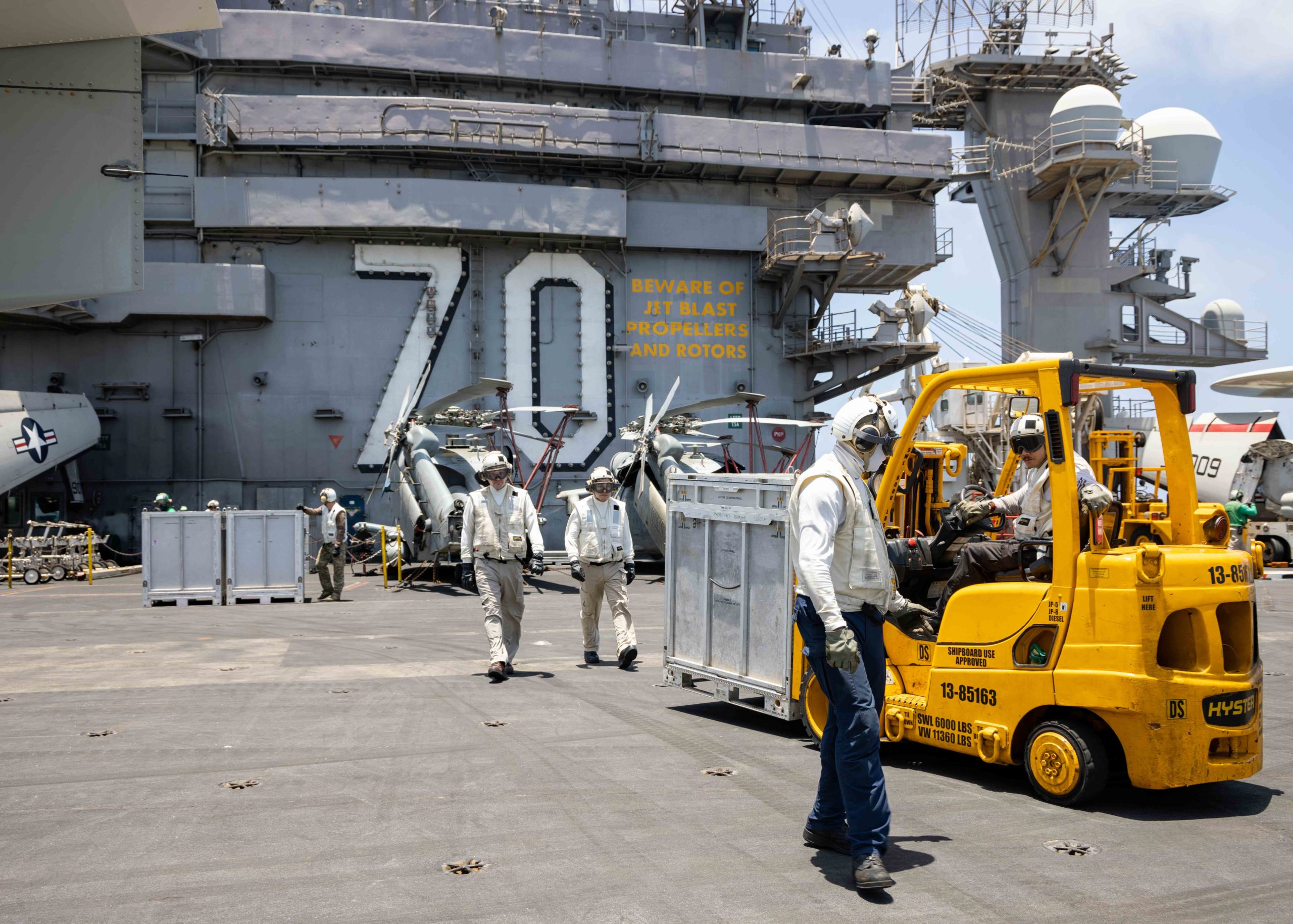
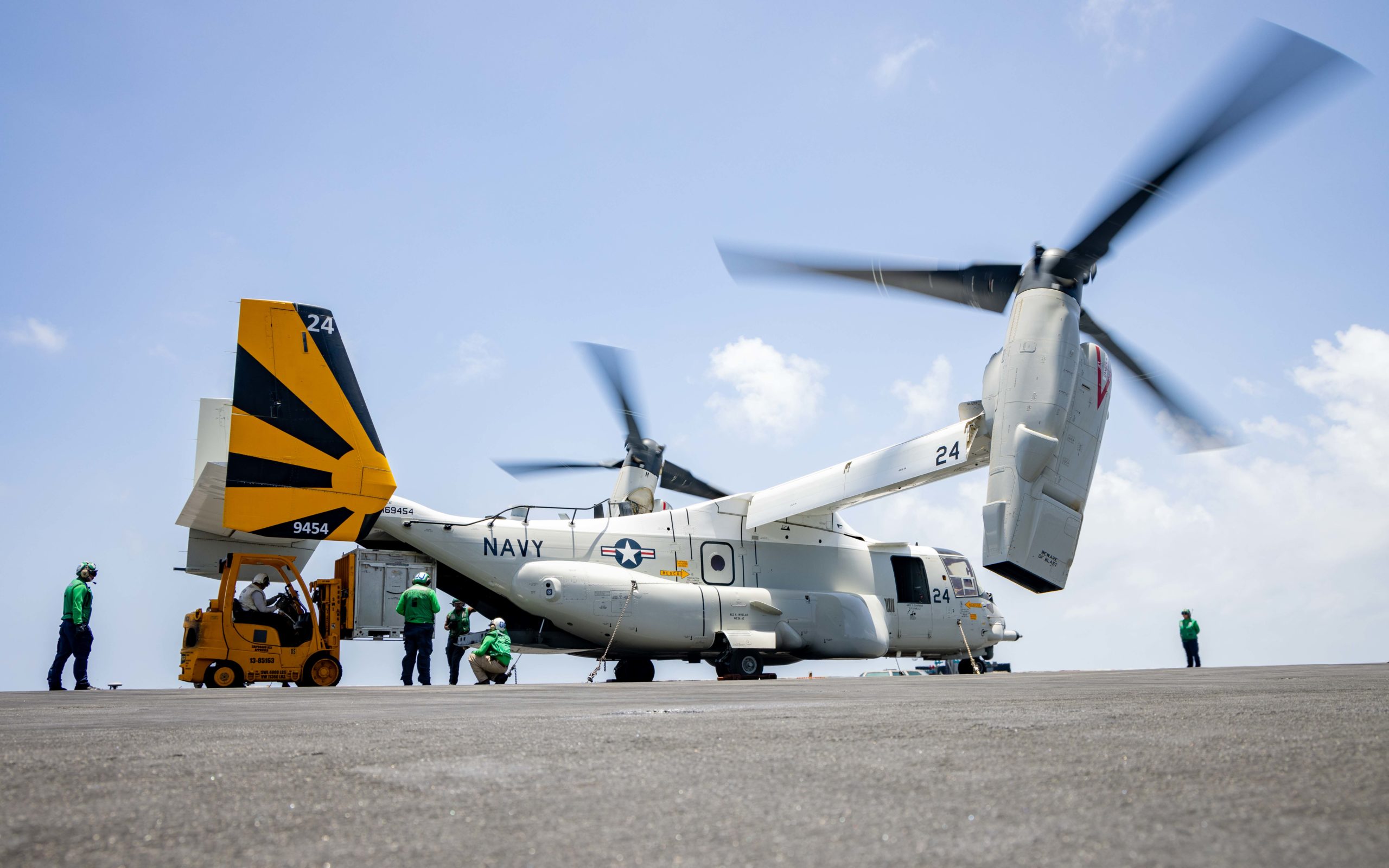
“With the force disaggregated across the battlespace, MRF-D received urgent notification: the Philippine government had requested U.S. military support through available forces in U.S. Indo-Pacific Command (USINDOPACOM) to ongoing disaster relief operations following back-to-back tropical storms and an intensified southwest monsoon. The weather system inundated parts of Central and Northern Luzon, triggering landslides, flooding, and widespread damage to infrastructure. One isolated province  —  Batanes, a chain of islands in the northernmost reaches of the Philippines — was cut off from critical supplies.
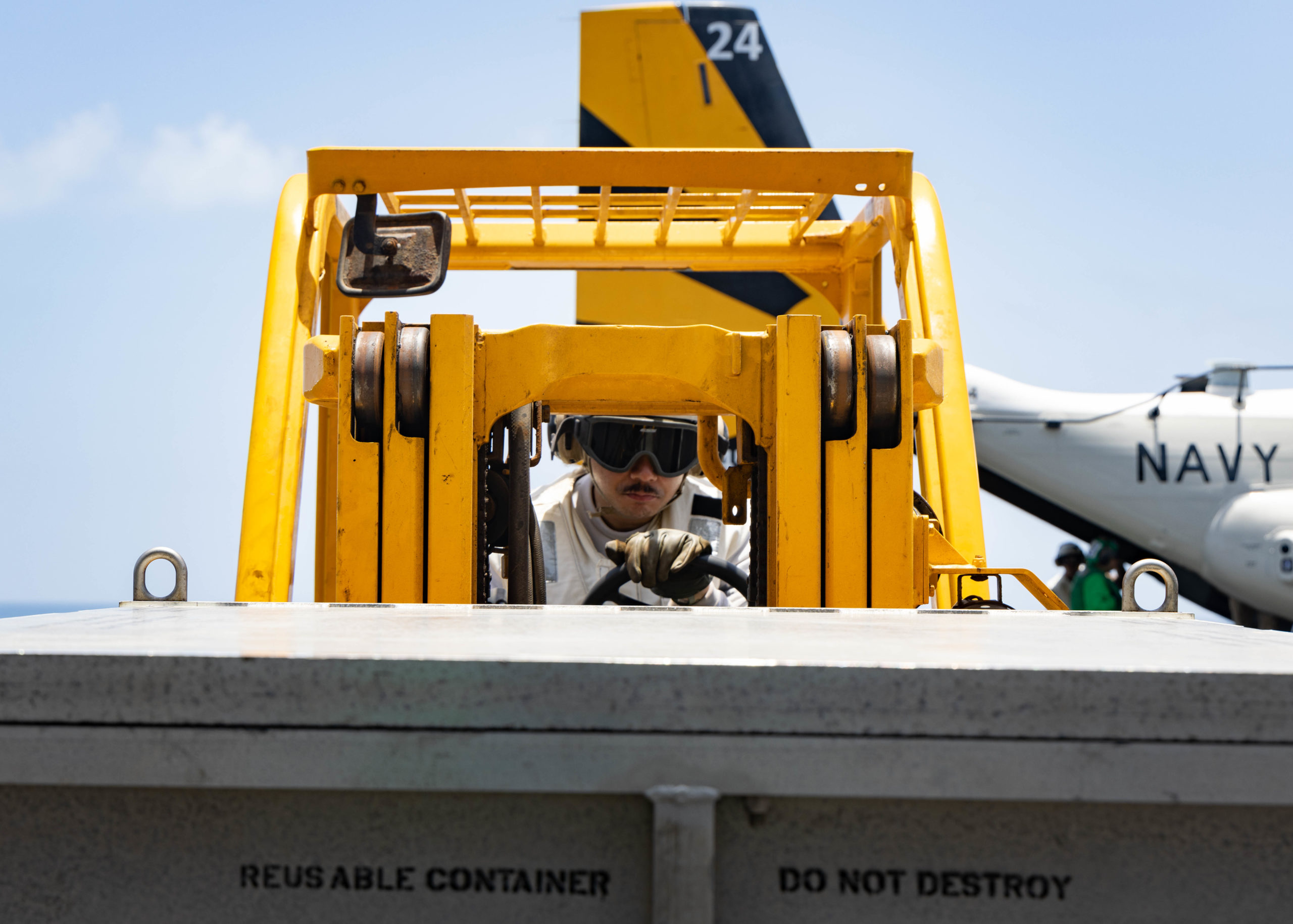
“In the operational blink of an eye, MRF-D transitioned from consolidating thousands of dispersed forces to real-world crisis response across the vastness of the Indo-Pacific.”

Then again the October 2024 response to Typhoon Krathon showcased this dynamic partnership in action. When the storm battered the northern Philippines with 120 mph winds, leaving Batan Island cut off from critical supplies, Marines deployed the tried-and-tested KC-130J/Osprey combination to deliver nearly 96,000 pounds of disaster relief supplies to one of the most remote and impacted areas.

This wasn’t the first time these aircraft worked together in Philippine disaster relief. A similar operation in 2013 following a devastating typhoon revealed the same operational advantages that make this pairing so effective. As Lt. Col. Brown, commanding officer of VMM-262, noted during the earlier mission, the KC-130J squadron commander living next door to him in Okinawa enabled rapid joint planning that proved crucial when digital communications failed and crews had to rely on aerial reconnaissance to locate landing zones.

The KC-130J’s air-to-air refueling capability fundamentally transforms the Osprey’s operational envelope. While the MV-22B’s unique tiltrotor design allows it to reach areas inaccessible to conventional aircraft, its range limitations become critical when operating across the Pacific’s vast distances. The KC-130J eliminates this constraint.

During the 2024 Krathon response, this capability enabled Ospreys to conduct extended-range operations throughout the Philippine island chain. The tanker aircraft provided both fuel and pathfinding support, creating conditions for sustained operations far from established bases. As one senior Marine observed about a previous operation, “1st MAW had Ospreys and Hercs in Tacloban about 72 hours after the storm passed. And I am not talking just about people on the ground but real, self-sustaining capability.”

The 2025 disaster response following back-to-back tropical storms highlighted how this aircraft combination enables truly distributed operations. Marine Rotational Force – Darwin (MRF-D) transitioned seamlessly from Exercise Talisman Sabre to real-world crisis response, with four MV-22B Ospreys flying nearly 2,000 miles from Darwin to Clark Air Base.

The operation leveraged Enhanced Defense Cooperation Agreement infrastructure, particularly Lal-lo Airport in Cagayan province, as a forward refueling point. Chief Warrant Officer 2 Shahid Jordan emphasized how this “served as a critical force multiplier” by extending operational reach and sustaining uninterrupted aerial delivery of vital supplies.

In disaster relief operations, professionals consistently emphasize that time represents the most precious commodity. The KC-130J/Osprey pairing delivers exactly that  –  time. By enabling rapid insertion of relief teams and supplies while simultaneously establishing infrastructure for larger follow-on operations, this combination creates the crucial first response that shapes everything that follows.

The 2013 operation demonstrated this principle when Marines achieved a “five-day jump” that enabled shaping infrastructure for subsequent phases. The first five days of Marine operations weren’t just about immediate relief – they established the foundation for much larger relief efforts involving multiple nations and agencies.

While disaster relief operations showcase this partnership’s humanitarian value, the same capabilities translate directly to military operations. The combination provides rapid insertion of forces into contested or remote areas, sustained operations across vast distances, and the flexibility to operate from austere locations.

The recent transition from disaster relief back to Exercise Alon in the Philippines illustrated this versatility. Forces that had just completed humanitarian operations seamlessly integrated into combined amphibious warfare exercises, demonstrating the operational agility that defines modern Marine Corps operations in the Indo-Pacific.

The recurring success of KC-130J/Osprey operations in the Philippines underscores broader strategic realities about the Indo-Pacific theater. The region’s geography – thousands of islands scattered across vast ocean distances – demands exactly the kind of flexible, long-range capabilities this aircraft combination provides.

Forward-deployed Marine forces can respond rapidly to crises anywhere in the theater, whether humanitarian disasters or military contingencies. As Col. Jason Armas, commanding officer of MRF-D 25.3, noted, “Our Marines and Sailors proved that no matter the mission, we can adapt in an instant – shifting from training to real-world operations with a kind of purpose, precision, and unity of effort that define our Corps.”

Multiple Philippine operations have validated several key operational concepts. The importance of forward presence cannot be overstated – having forces already positioned in the theater enables rapid response that would be impossible from CONUS-based units. The value of strong partnerships and infrastructure agreements has proven repeatedly, with facilities like Lal-lo Airport serving as crucial force multipliers.

Perhaps most significantly, these operations have demonstrated that the same capabilities required for high-end military operations translate directly to humanitarian missions. The flexibility to transition between combat operations and disaster relief without losing operational momentum represents a critical advantage in an era of strategic competition.

As the Marine Corps continues to refine its force structure for Indo-Pacific operations, the KC-130J/Osprey partnership remains central to distributed operations concepts. Each real-world deployment provides lessons that inform future training and planning, creating a continuous improvement cycle that enhances both humanitarian and military capabilities.

The question posed during the 2013 operation remains relevant today: “How much is 3-5 days of additional time worth in putting in motion a relief effort?” For the communities served by these rapid response capabilities, whether in disaster zones or potential conflict areas, that time can mean the difference between hope and despair, between mission success and failure.

The KC-130J and Osprey combination has proven its worth through repeated real-world operations across more than a decade. In an era where rapid response and operational flexibility define success, this dynamic duo continues to provide capabilities that no other aircraft combination can match.

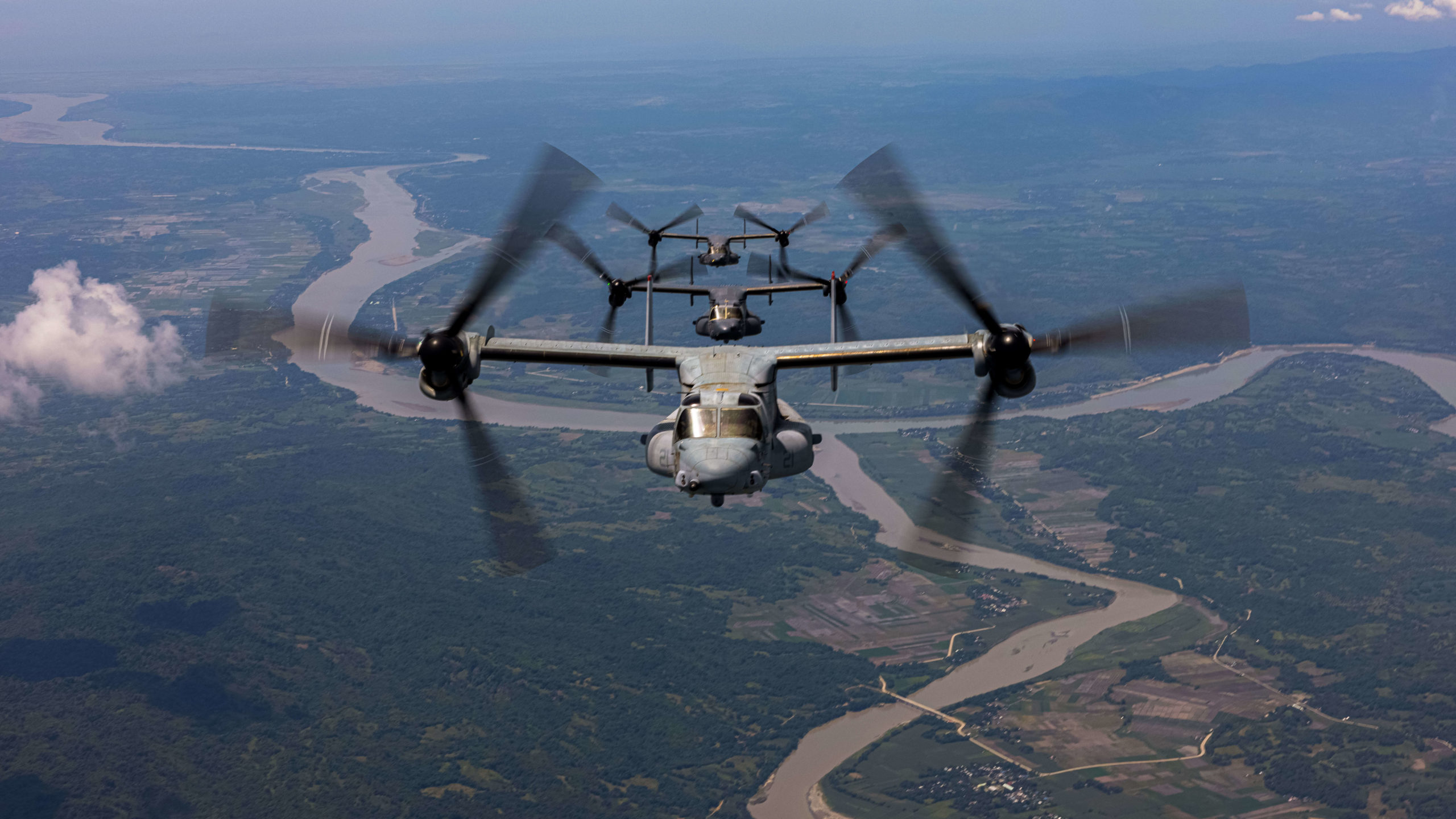
Featured image: An MV-22B Osprey assigned to Marine Medium Tiltrotor Squadron (VMM) 363, Marine Rotational Force – Darwin 25.3, flies in a formation flight with CV-22 Ospreys assigned to 21st Special Operations Squadron, 353rd Special Operations Wing, near Lal-lo, Philippines, during a foreign disaster relief operation, Aug. 3, 2025. At the request of the Government of the Philippines, the MRF-D 25.3 Marine Air-Ground Task Force is working alongside the Armed Forces of the Philippines to provide foreign disaster relief to communities affected by consecutive storms and the southwest monsoon. The forward presence and ready posture of United States Indo-Pacific Command in the region facilitates rapid and effective response to crisis, demonstrating the U.S.’s commitment to Allies and partners during times of need. MRF-D is an annual six-month rotational deployment to enhance interoperability with the Australian Defence Force and allies and partners and provide a forward postured crisis response force in the Indo-Pacific. (U.S. Marine Corps photo by Cpl. Angelina).

See the following:

Looking Back and Looking Forward with the Osprey: The Perspective of LtGen (Retired) Heckl

A Typhoon Reminder: Send in the Ospreys

https://www.imef.marines.mil/Media-Room/Stories/Article/Article/4279645/mrf-ds-rapid-response-from-training-to-disaster-relief-and-back-again/

A Tiltrotor Perspective: Exploring the Experience

The Brazil-India Strategic Partnership: A New Path for Middle Power Diplomacy in an Era of Great Power Competition

08/20/2025

As the global order undergoes profound transformation, middle powers are increasingly seeking ways to enhance their strategic autonomy while navigating the complex dynamics of great power competition.

Among the most promising yet under-explored partnerships is the deepening relationship between Brazil and India which are two democratic giants that represent the largest developing nations in their respective hemispheres. While both countries maintain significant economic ties with China, their growing cooperation offers a compelling model for how middle powers can leverage partnerships to manage major power relationships more effectively while advancing their own interests on the global stage.

The strategic logic of enhanced Brazil-India cooperation extends beyond simple economic complementarity.  For Brazil, deeper ties with India offer a pathway to reduce over-dependence on China without severing crucial economic links. For India, Brazil provides an essential gateway to Latin American markets and resources while supporting New Delhi’s vision of offering developing nations an alternative to Chinese-dominated initiatives.

The Current State of Brazil-India Relations

The foundation for expanded cooperation already exists. The 9th Joint Commission Meeting co-chaired by External Affairs Minister Dr. S. Jaishankar with his counterpart Ambassador Mauro Vieira on August 27, 2024, in New Delhi, demonstrated the institutional mechanisms supporting bilateral engagement.  Economic ties, while growing, reveal significant untapped potential. In 2024-25, bilateral trade reached $12.20 billion, with Indian exports to Brazil amounting to $6.77 billion and imports from Brazil totaling $5.43 billion.

This economic relationship has shown remarkable growth trajectory. Between 2003 and 2023, India moved from the 26th to the 13th largest destination for Brazilian exports, reflecting an average annual growth in exports to India of 14.3%, which exceeded Brazil’s export growth to the rest of the world at 11.3% during the same period. Yet this represents only a fraction of the potential between two economies that together account for a significant portion of global GDP and population.

The partnership extends across multiple domains beyond trade. Both countries have established robust institutional mechanisms including Joint Defence Committees, Trade Monitoring Mechanisms, and cooperation frameworks in space technology, renewable energy, and traditional medicine. In space cooperation, India and Brazil’s 2004 agreement has led to successful collaboration in data sharing and satellite tracking, with Brazil witnessing the launch of the Amazonia-1 satellite in 2021.

Brazil’s China Challenge and the Search for Strategic Balance

Brazil’s relationship with China presents both opportunities and strategic dilemmas that deeper India ties could help address. China has been Brazil’s largest trading partner since 2009. However, this deepening economic interdependence comes with strategic costs. Trade data shows concerning patterns of dependence, with Brazilian beef exports to China accounting for 54.9 percent of Brazil’s total beef exports in 2023. Brazil’s soybean exports to China have reached record levels, with three-quarters of Brazil’s 15.7 million tons of soybean exports in March 2025 destined for China.

Brazilian foreign policy experts advocate for a “hedging strategy” which would require maintaining beneficial economic ties with China while developing alternative partnerships that preserve strategic autonomy.  But under President Lula, the focus has been upon linking Brazil ever more closely with Global China.

India’s Alternative Vision and Strategic Offerings

India presents a compelling alternative model for developing nations seeking partnership without subordination. This approach is exemplified in India’s infrastructure initiatives, particularly the India-Middle East-Europe Economic Corridor (IMEC). IMEC enhances India’s connectivity, economic opportunities and global standing, while serving as a multilateral counterbalance to China’s Belt and Road Initiative, in partnership with G7 and regional players. Unlike Chinese projects that often require exclusive partnerships, India’s initiatives emphasize collaborative approaches that preserve partner nations’ strategic autonomy.

India’s technological offerings present another attractive alternative. Brazilian delegations have expressed high interest in collaborating with India in data protection and management architecture, 5G/6G networks, artificial intelligence, supercomputing, and quantum technology. These partnerships offer Brazil access to advanced technology without the strategic strings often attached to Chinese technology transfers, particularly in sensitive areas like telecommunications and artificial intelligence.

The democratic dimension adds another layer of strategic compatibility. Both nations share fundamental values and approaches to international law and governance that create natural foundations for cooperation. This values-based partnership offers both countries enhanced credibility in international forums and strengthens their positions as leaders of the democratic Global South.

Strategic Benefits of Enhanced Cooperation

Enhanced India ties would provide Brazil multiple strategic advantages. Economic diversification represents the most immediate benefit. India-Brazil trade accounts for nearly one-fourth of India-Latin America trade in the 21st century, with Indian investment in Brazil estimated at $6 billion in 2018—by far the largest in the region. Expanding this relationship would reduce Brazil’s vulnerability to economic pressure from any single partner while creating new opportunities for Brazilian exports and investment.

Technology transfer and innovation partnerships offer long-term strategic value. India’s successful development of indigenous capabilities in space technology, pharmaceuticals, information technology, and renewable energy provides Brazil with alternative sources of technology and know-how. This is particularly valuable given concerns about technological dependence that have emerged in Brazil’s relationship with China.

Developing world leadership represents another crucial dimension. As the two largest developing countries in their respective hemispheres, enhanced Brazil-India cooperation could provide more authentic leadership for developing nations than alternatives like the BRICS which is increasingly dominated by Global China and Russia which is increasingly a Chinese client state.

For India, Brazil offers unparalleled access to Latin American markets and resources. Brazil serves as India’s primary entry point to a region with over 650 million people and growing economies. Enhanced cooperation could facilitate Indian business expansion throughout Latin America while providing Brazilian companies with platforms for expansion into Asian markets.

Resource security represents another critical benefit. Brazil’s vast agricultural resources, mineral wealth, and energy production offer India opportunities to diversify its supply chains and reduce dependence on other suppliers. This is particularly important given India’s growing energy needs and the geopolitical volatility affecting many resource-rich regions.

The partnership also supports India’s broader strategic vision of offering developing nations alternatives to great power dependence.

Success in the Brazil partnership could serve as a model for similar relationships throughout Latin America and Africa, advancing India’s aspirations for global leadership.

Practical Areas for Enhanced Cooperation

Infrastructure and Connectivity

Infrastructure development represents perhaps the most promising area for expanded cooperation. Both countries have significant expertise and needs in this sector. Brazil’s experience in large-scale infrastructure projects, combined with India’s growing capabilities in digital infrastructure and smart city development, could create synergies benefiting both nations.

The connection to broader connectivity initiatives offers additional possibilities. While Brazil has not joined China’s Belt and Road Initiative, it could potentially participate in or complement India’s infrastructure initiatives like IMEC, creating alternative pathways for South-South cooperation.

Technology and Digital Economy

Technology cooperation has already shown significant promise. Both countries are advancing rapidly in digital infrastructure, green technology, and space applications. India and Brazil’s established space cooperation, dating from their 2004 agreement, provides a foundation for expanded collaboration in satellite technology, earth observation, and space-based applications.

Emerging technologies offer new frontiers for cooperation. Brazilian interest in collaborating with India on artificial intelligence, quantum computing, and advanced telecommunications could create joint capabilities that enhance both countries’ technological sovereignty and competitiveness.

Climate and Energy

Climate cooperation represents both necessity and opportunity. India has achieved 13% ethanol blending and targets 20% by 2025, while Brazil became a co-founder member of the Global Biofuel Alliance launched during the G20 Summit in New Delhi.¹⁹ This existing cooperation could expand to include broader renewable energy partnerships, sustainable agriculture, and climate adaptation technologies.

Defense and Security

Defense cooperation, while sensitive, offers important possibilities for both nations. Both countries face complex security environments and have interests in maintaining strategic autonomy in defense procurement and capabilities. Enhanced cooperation could include joint training, technology sharing, and collaborative approaches to maritime security, particularly in the Indian Ocean and South Atlantic regions.

Managing Major Power Reactions

Enhanced Brazil-India cooperation would inevitably provoke reactions from major powers, particularly China and the United States. Managing these responses requires careful calibration and clear communication about the partnership’s objectives and limitations.

China’s likely response would combine economic incentives and pressure. Beijing might offer enhanced trade terms or investment opportunities to discourage closer Brazil-India ties, while potentially using economic leverage to signal displeasure.

The United States might view enhanced Brazil-India cooperation with mixed feelings. While Washington would likely welcome any development that reduces Chinese influence in Latin America, it might also worry about initiatives that enhance middle power autonomy and reduce American influence. However, the democratic nature of both Brazil and India, combined with their shared interests in maintaining open international systems, should mitigate American concerns.

The broader context of global power transitions creates favorable conditions for enhanced Brazil-India cooperation. One of the leading trends in world politics is the growing desire of middle powers for more control over the shape of the global order and greater influence over specific outcomes.

The strategic partnership between Brazil and India represents more than bilateral cooperation. It could generate a new model for middle power diplomacy in an era of major power competition. By leveraging their complementary strengths, shared values, and common aspirations for strategic autonomy, both countries can enhance their global positions while contributing to a more balanced international order.

In 2026, we are publishing a book by Robbin Laird and Kenneth Maxwell entitled: The Australian, Brazilian and Chinese Dynamic: An Inquiry into the Evolving Global Order.

The King Stallion Operating at Sea

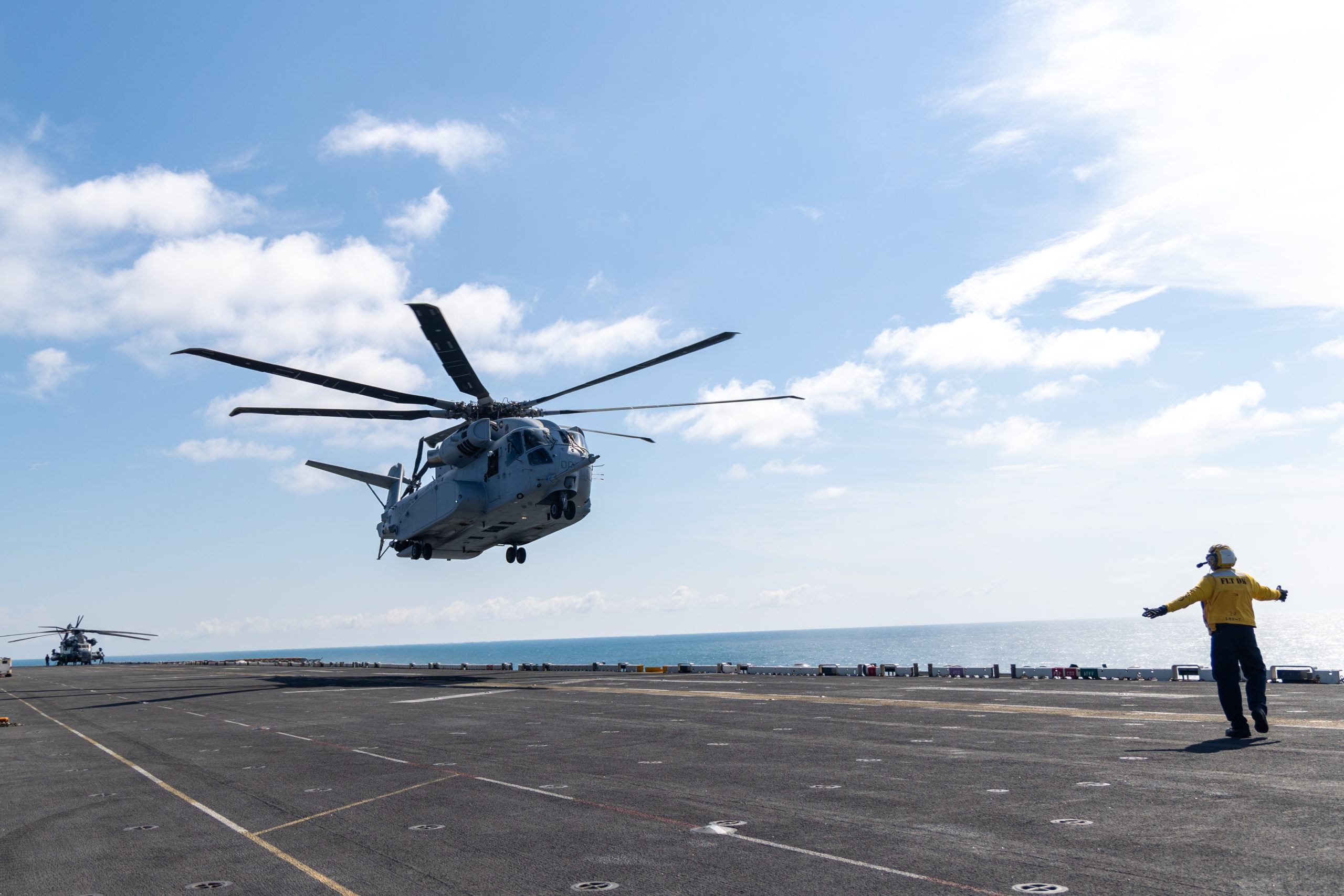
A U.S. Marine Corps CH-53K King Stallion attached to Marine Heavy Squadron (HMH) 461 lifts off the Wasp-class amphibious assault ship USS Iwo Jima (LHD 7), during Composite Training Unit Exercise while underway in the Atlantic Ocean, July 10, 2025.

During COMPTUEX, the IWO ARG and 22nd MEU(SOC), refine tactics, techniques, and procedures to execute warfighting functions that enhance operational readiness and lethality as a unified IWOARG/22MEU(SOC) team.

07.10.2025

Photo by Cpl. Sharon Errisuriz 

22nd Marine Expeditionary Unit

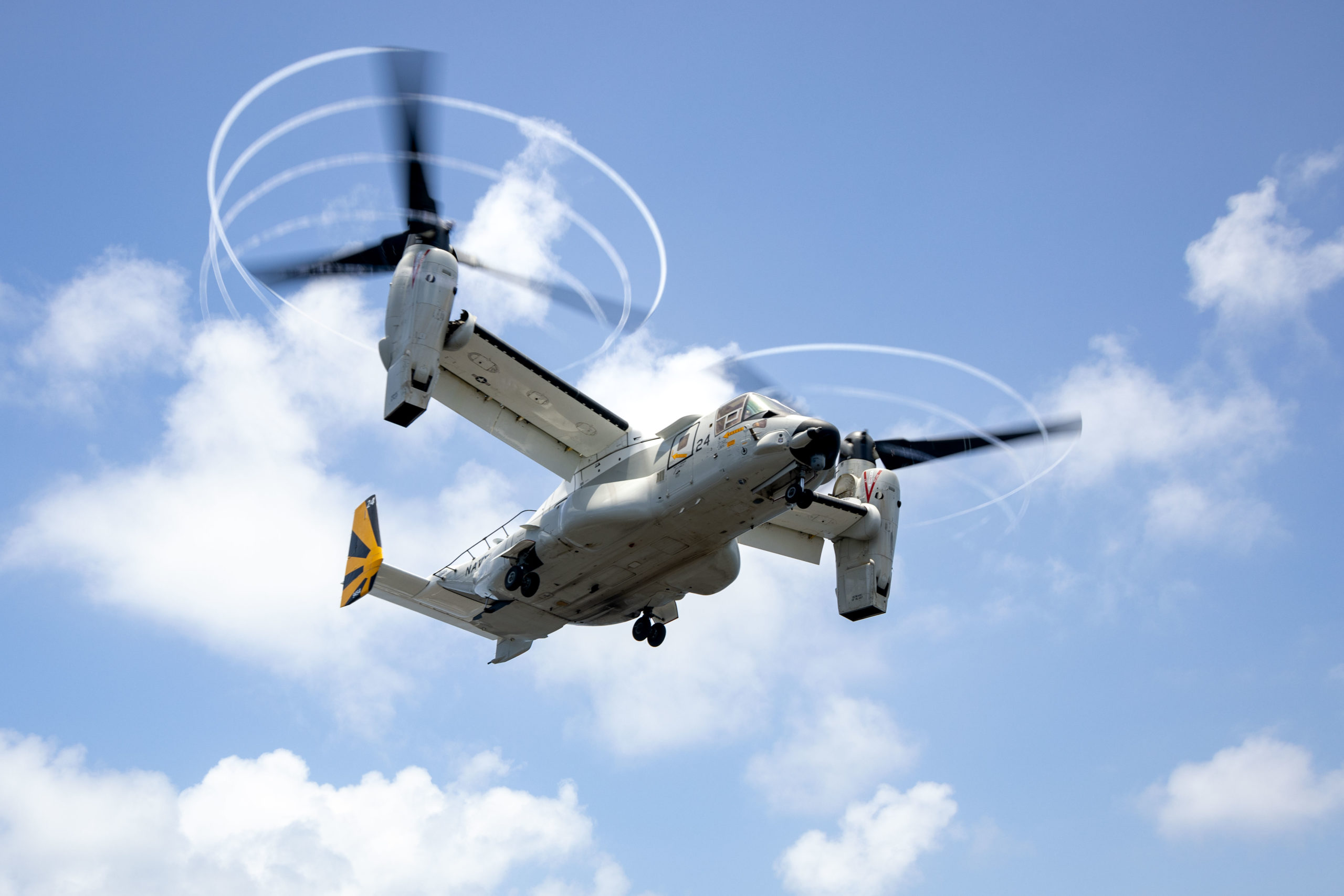
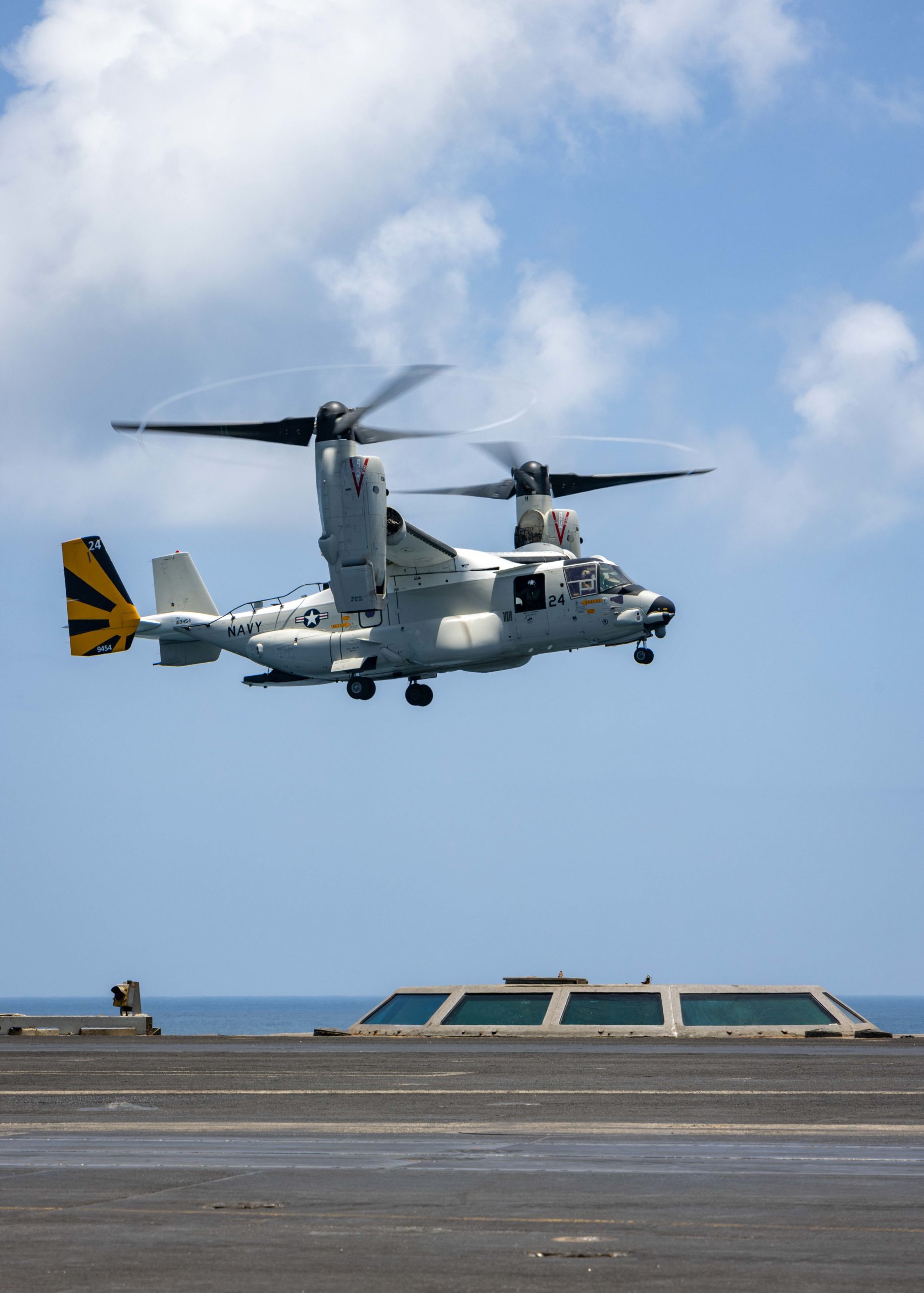
The CMV-22B: A Game Changer for Carrier Strike Group Support

08/19/2025

By CAPT (Ret) Christoper C. Misner, Senior Manager, Bell Strategic Pursuits

The U.S. National Defense Strategy prioritizes the Indo-Pacific as a critical theater for national security. For naval and joint forces operating in that theater, an operationally limiting factor is the so-called tyranny of distance. Vast distances required to operate and sustain a naval force are further magnified by limited basing options.

In prolonged combat operations in this area, the current U.S. Navy fleet would likely struggle to meet the logistical demands of the Joint Force.

The sea services must have the logistics capability to support the growing number of deployed naval and air forces operating from sea and shore-based hubs in the Indo-Pacific. That will allow the services to meet immediate and long-term needs and strengthen the U.S. defense industrial base.

Current procurement, readiness and modernization programs, approved and funded by the Department of Defense, do not meet the demand for airborne logistics in maritime combat. This creates a significant gap in the Navy’s ability to support Distributed Maritime and Expeditionary Advanced Based Operations.

The U.S. Navy has historically projected power through carrier strike groups concentrating firepower from a few assets, typically an aircraft carrier, destroyers and submarines. Despite the power of the carrier strike group, adversaries can still anticipate U.S. naval movements, which limits the Navy’s ability to respond to threats across long distances and exposes fleets to anti-access/anti-denial (A2/D2) threats.

As a result, the U.S. Navy is shifting from large, centralized carrier strike groups to distributed maritime operations, which disperse naval forces over a larger area to complicate enemy targeting. This shift requires advanced combat capabilities and flexible logistics support.

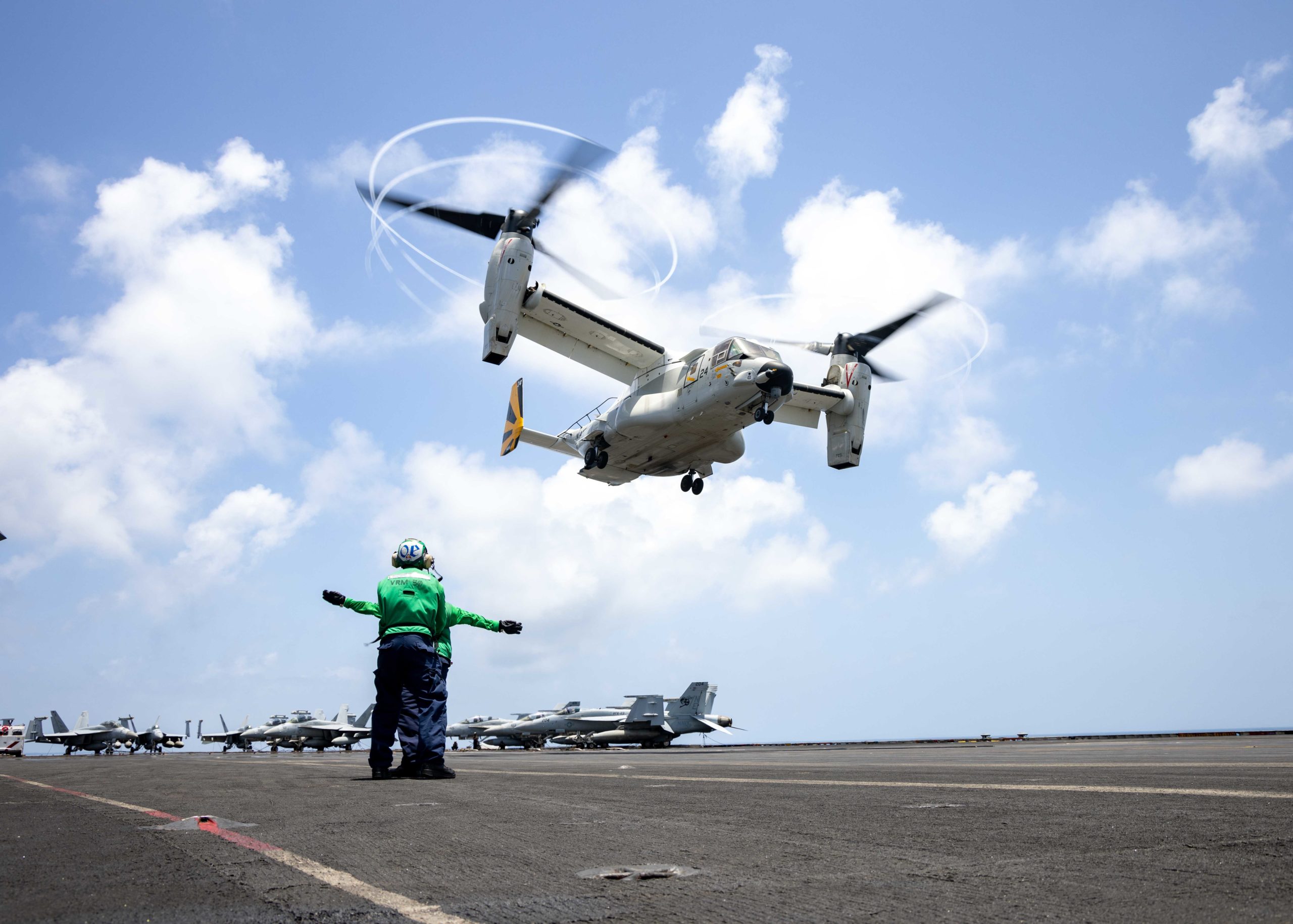
The CMV-22B Osprey – a tiltrotor aircraft – is at the heart of this naval transformation. Compared to the C-2A Greyhound, its predecessor, the CMV-22B offers superior range, avionics, and communications. The Osprey’s ability to rapidly self-deploy, air-refuel enroute, and then land without regard to the availability of a runway makes it an exceptional platform to support and sustain a distributed force in a contested environment.

Although it was initially conceived as a carrier-onboard-delivery (COD) replacement, the Osprey is not confined to large-deck carrier logistics. The CMV-22B can conduct long-range navigation and deliver logistical support across entire fleets, an advantage in distributed maritime environments where logistics needs span vast areas and diverse units.

Carrier strike group operations today can cover over 700 miles in 24 hours. The CMV-22B ensures logistics support matches this pace, crucial for distributed maritime operations in contested environments. The aircraft can rapidly transport personnel, munitions, medical supplies, and components to Expeditionary Advanced Bases, Forward Logistic Support Sites, and ships at sea.

The CMV-22B also allows the U.S. military to lead joint combat operations, integrating capabilities across service branches. It assists in the convergence of the U.S. Navy’s distributed operations with the Air Force’s agile combat employment and the Marine Corps’ Expeditionary Advanced Base Operations (EABO). The aircraft’s speed, range, and versatility ensure the Navy operates effectively as part of a modular force comprising air and ground elements.

Looking ahead, the CMV-22B presents opportunities beyond its primary logistics role. The Navy could leverage its versatility to support the Carrier Strike Group with aerial refueling capability. Its enhanced secure, long-range communication could better support Naval Special Warfare (NSW) forces in personnel recovery (PR), combat search and rescue (CSAR), and other NSW missions. These and other readiness improvements would expand its strategic value to the U.S. Navy fleet and Joint Force.

One such readiness improvement the CMV community should embrace is the Nacelle Improvement (NI) program, which is being fully implemented across the USAF CV-22 fleet. The value of this readiness initiative has been significant, and as a result it continues to garner Congressional support.

Modifications under the NI program simplify the nacelle structure, originally designed decades ago with a highly complex series of wires and junction boxes. The NI program’s re-engineering of more than 1,300 parts has reduced harness count by 43% and wiring integration assemblies (WIA) by 80%. The NI program also significantly improved the panel latch assemblies in multiple areas of the nacelle and made manufacturing more affordable and less time-consuming.

These major updates from the NI program have improved aircraft availability and readiness, and they will reduce future maintenance time on the 28 CV-22 NI-modified aircraft delivered back to AFSOC.

“Nearly 60% of all maintenance actions occur within the V-22’s nacelle area, so the NI effort is designed to attack the highest reliability and readiness degraders while maximizing return on investment for the taxpayer,” says Kurt Fuller, Bell senior vice president.

Before NI modification, an average of more than 2.5 maintenance hours were dedicated to nacelles per fight hour. With over half the Air Force’s CV fleet completing the NI modification and with over 7,000 hours flown on those aircraft, the Air Force has saved over 17,000 maintenance hours in the nacelles already.

Maintainability and reliability were key performance parameters in the new design to measure success, and the results have far exceeded expectations.

Delivering both short-term and long-term benefits to support the longevity of the fleet, the NI program provides immediate readiness advances that will pay long-term dividends in availability and affordability.

The results seen by the Air Force will translate to the Navy CMV-22 and the Marine Corps MV-22. In the Indo-Pacific theater specifically, the increasing need for sea services to prepare for and execute Expeditionary Advanced Base Operations and Distributed Maritime Operations is exposing a vulnerable logistical capability gap.

Investing in CMV-22 readiness and modernization is not only necessary to meet operational needs, but also to sustain and strengthen the U.S. defense industrial base. The Department of Defense must ensure it maintains its competitive advantage where tiltrotor technology is concerned. Organizations such as Team Osprey, a consortium of over 500 manufacturers and suppliers spanning nearly every U.S. state, supports jobs producing thousands of essential parts for the Osprey. This industrial base is vital to maintain American military and economic strength.

U.S. naval capabilities may not reach their full potential without a fast, long-range tiltrotor aircraft like the CMV-22B. Indeed, its ability to support both Fleet and Joint Force operations while enhancing combat capabilities makes it a key asset against emerging threats in contested environments.

If deterrence fails and naval and joint commanders must “fight tonight”, they will have to resupply their forces at range and in a contested environment. If the force structure does not match its combat logistics requirement, commanders will be faced with significant operational challenges in a time of rapid response and crisis.

Naval leaders should focus on modernizing the the Osprey fleet and tackling the obsolescence issues it faces today. The Osprey – used by the Navy, Air Force Special Operations Command, and Marine Corps – has evolved over time to meet the needs of our warfighters. Taking actions today to modernize and sustain all three V-22 variants will ensure operational capabilities align with strategic imperatives.

This article was first published in the Summer 2025 edition of Hook magazine and is republished with the author’s permission.

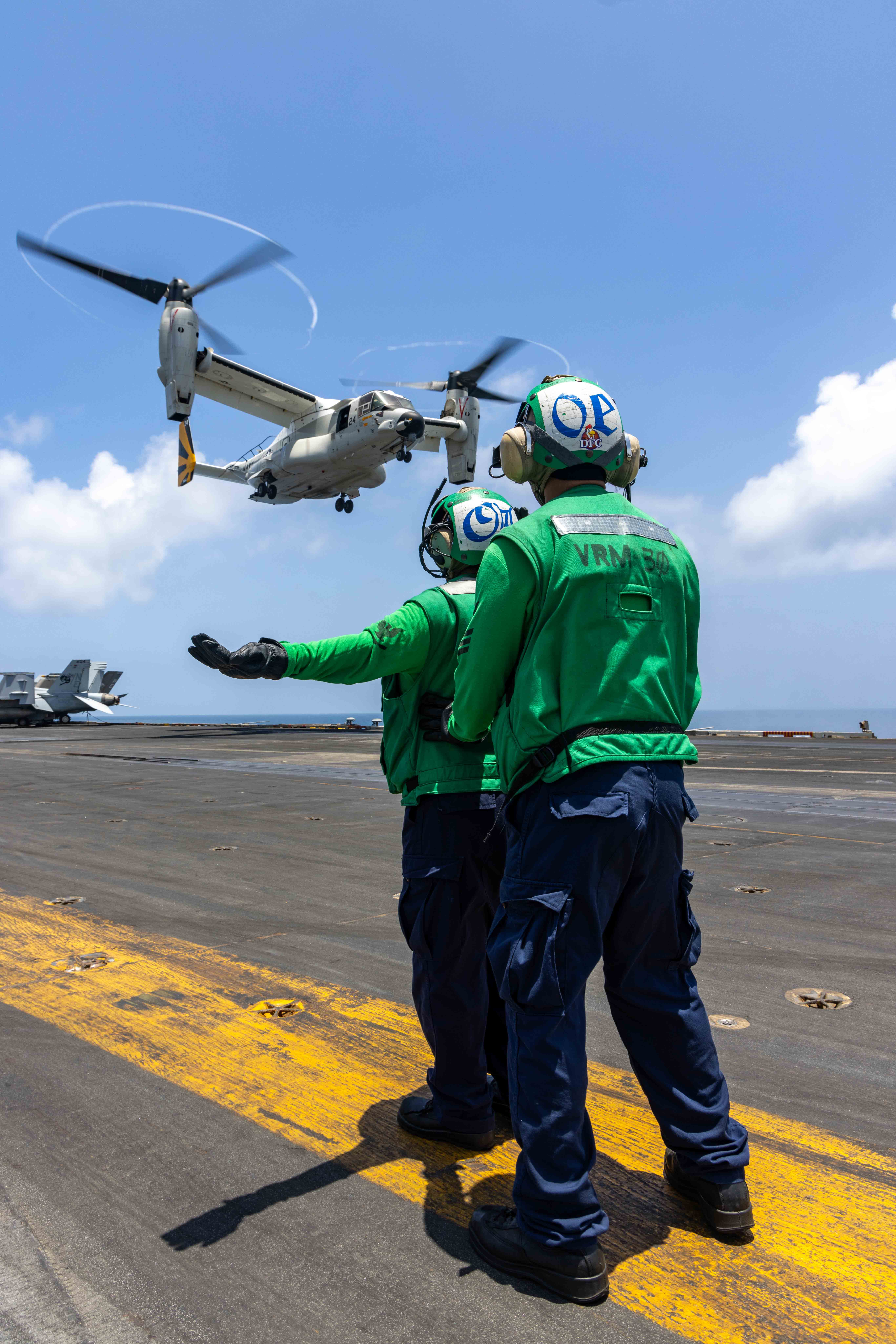
Featured image: (June 11, 2025) A CMV-22B Osprey, attached to Fleet Logistics Multi-Mission Squadron (VRM) 30, takes off from the flight deck of the Nimitz-class aircraft carrier USS Carl Vinson (CVN 70) in the U.S. Central Command area of responsibility. (Official U.S. Navy photo)