Pondering American Grand Strategy

08/13/2011

08/12/2011: Pondering American Grand Strategy

By Richard Weitz

On Thursday, August 4, 2011, CNA convened a one-day unclassified conference on “American Grand Strategy and Maritime Power” at the Army and Navy Club in downtown Washington. This column will address the grand strategy issues that were raised; the next one will discuss the various forms of military power discussed that could help achieve these goals.

The discussions assessed the advantages, costs, risks, and implications of several plausible U.S. grand strategies. They also considered the factors that shape the evolution of U.S. grand strategies and the implications of these strategies for the U.S. military. The speakers told the audience, many of whom were military officers or defense planners, that they must understand these issues to best prepare their services, their units, and themselves for future security challenges and opportunities.

In search of a strategy

Credit: Bigstock

The first speakers set the international context. As the geopolitical landscape changes, U.S. grand strategy must likewise change. In terms of the relative sizes of their economies and populations, longstanding U.S. allies and adversaries—such as Europe, Japan, and Russia—seem to be in decline, while the great Asian continental powers of China and India are rising. Although U.S. strategic thinking in the wake of the Cold War has been temporarily distracted by non-state threats such as terrorism, grand strategy must also address the challenges posed by newly empowered conventional state actors.

American grand strategy, which was focused for half a century on securing Europe and containing Russia, must be reoriented to address the growing challenge of a more powerful and assertive China. Intimately connected with meeting this challenge is courting and engaging an increasingly influential India, whose expanding economy, vast population, and proximity to strategically significant nations to both the east (China) and the west (Afghanistan-Pakistan) increases India’s strategic significance.

Power transitions are rarely peaceful. At the level of the international system, the rise and fall of great powers typically entails major tensions and often major wars.   Rising powers seek to alter international institutions and the rules to their advantage as well as pursue territorial and other concrete goals. They convert some of their growing wealth into power projection and other military capabilities—which they can in turn employ to pursue their foreign commercial goals. The declining great powers will resist these predations on their overseas economic interests and the existing world order of institutions and norms from which they benefit.

Unresolved border disputes, competition for scarce resources, and even status and prestige considerations can easily precipitate an armed conflict. The 16th through 17th centuries saw the transition of international power pass from Spain to England in a series of open military conflicts. Great Britain’s fall from dominance over the course of the 20th century was hastened by the two most devastating wars in history, though the actual handoff of global primacy to the United States occurred relatively peacefully. Likewise the Soviet Union emerged from World War II as a superpower largely by sudden and aggressive territorial grabs toward the end of the conflict.An effective U.S. grand strategy must manage the current power transition. China might use its growing economic and military power to uphold common interests, such as freedom of the seas against pirates, political reconciliation and economic development in the Afghan-Pak region, or nuclear non-proliferation in Iran and the Koreas, but such a benign power transition is rare and certainly cannot be presumed.

Like other scholars, Christopher Layne, Professor and Robert M. Gates Chair in Intelligence and National Security at George Bush School of Government and Public Service at Texas A&M University, argued that the world was seeing another great power transition from the United States and its European allies to the rising powers of Asia—India and especially China. Layne explained that we should view this power transition not so much as a result of America’s decline as about the Asian countries’ rise—or rather their restoration to great power status, which several have enjoyed in previous centuries. Insofar as Americans were contributing to their own fall, Layne saw it as due to “termite” decline—the eating away of the foundations of American power through misguided fiscal and other domestic policies—and needlessly extensive foreign military interventions and other manifestations of “imperial overstretch.”


US grand strategy in search of an identity in a challenging world

Credit: Bigstock

As Chinese and Indian economic growth numbers continue to outpace those of the United States and its European allies, Beijing and New Delhi are likely to demand more representation in the key international institutions and exert more power and influence in Asia. How the United States manages these developments will determine in large part the political stability and prosperity of the new international order. The fundamental question is whether this power transition will happen through war, as in the past, or whether the transition can be managed in a way that avoids unnecessary loss of life, time, and resources.Rising powers also tend to apply their growing strength to resolve territorial conflicts in their favor. Beijing’s case is more menacing since so many of its land and sea borders are contested with other states.  China’s excessive claims to sovereignty over the East China Sea are worrying given the conflicting claims and the vital importance for maritime navigation of these sea-lanes. American forces provide strategic deterrence and military security for many East Asian states, like Japan, South Korea and Taiwan, among others. Many Asian leaders privately, and some openly, look to Washington to balance a more assertive Chinese foreign policy in the region.

One core element of an effective grand strategy will be working with other Asian powers. American grand strategy must consider how to engage China’s neighbors, many of whom are wary of the PRC’s growing power. Layne argued that a grand strategy of “offshore balancing” would help address the gap between the large-scale U.S. foreign policy ambitions and the scarce U.S. power resources.  Although authors often use the term “off-shore balancing” imprecisely or in different ways, the concept broadly refers to strategic efforts by a major power to check the rise of a rival power by aligning primarily with other regional powers to bar the burden of balancing the rising state.

The obvious advantage of this strategy is that the offshore balancer can exert influence without maintaining a financially costly and diplomatically burdensome strong physical presence in the rival’s region. For example, the related concept of “selective engagement” would entail concentrating U.S. military, diplomatic, and economic resources to protect a few vital interests. In today’s world, this approach would prioritize maintaining control over vital sea lines of communication, preventing a major land war in Eurasia, and augmenting U.S. homeland security. In Layne’s vision of how the United States would apply the concept of offshore balancing to the PRC, Washington would seek to balance China’s rise through strategic ententes rather than military alliances. The United States would use burden shifting, not burden sharing, which contributes to free riding of others on U.S. defense efforts.

Christopher Preble, Director of Foreign Policy Studies at the Cato Institute, also stressed what he saw as the recurring failure of U.S. allies to pay enough for their own defense because U.S. grand strategy, which regularly employs military power to guarantee the security of U.S. allies and friends, makes it unnecessary for them to do so.In Layne’s vision, Japan, India, and possibly Russia, all of which have an imminent interest in countering China’s expansion, would serve as the front-line balancers of Beijing.By reducing its direct military role in the region, the United States would induce China’s neighbors to assume a greater self-defense burden. This burden shifting would allow Washington to constrain China’s rise while reducing U.S. defense costs as well as potential concerns of other countries regarding how U.S. hegemony might constrain their own strategic options.

Such regional balancing need not involve only military means. For example, India and especially Russia could work within the Shanghai Cooperation Organization to constrain Chinese influence in Central Asia, perhaps supplemented with a more open U.S. engagement with that organization and a U.S. policy more encouraging of expanding Russia’s role in East Asia. U.S. military power would backstop such efforts, though mostly in the background, as with U.S. nuclear weapons today.Layne saw U.S. naval and air power as the optimal tools for this purpose since the United States has strategic advantages in these capabilities. Therefore, the United States would adjust its regional force posture to maintain more of an “over the horizon” presence that focuses on sea power and air power while keeping U.S. ground forces on the Asian mainland to a minimum. Barry Posen, recalling his “Command of the Commons: The Military Foundation of U.S. Hegemony,” stressed the need to maintain U.S. command of “the commons,” i.e., the seas, sky, outer space, and the cyber domain.  This primacy gives the United States the ability to strike anywhere very quickly, and very hard, while at the same time allowing allies to benefit from U.S. extended security guarantees.

As long as the United States acts to keep the commons open to all legitimate users, other countries will support this U.S. hegemony because it directly benefits them—they are able to enjoy free use of the commons without having to pay the full burden of upholding it.Unfortunately, analysts at the conference noted that China’s development of ballistic missiles and other anti-access and asymmetric capabilities were threatening to challenge U.S. primacy in the sea and air near China, as well as the cyber and outer space domains more broadly.Michael Mandelbaum, Christian A. Herter Professor and Director of the American Foreign Policy Program at SAIS, stressed the continuing limitations of Chinese power. Although the size of the entire PRC economy was large, its per capita GDP remains low. Referencing Susan Shirk’s book, China: Fragile Superpower, Mandelbaum noted how the PRC also faces major domestic impediments to its rising power, including ethnic tensions, an aging population due to the one-China policy, and restrictions on the Internet and other societal communications and freedoms resulting from the PRC’s authoritarian political system.  Japan provides a recent example of how what many Americans considered an emerging great power challenger to the United States in Asia failed to materialize due to debilitating domestic problems.

In terms of international barriers to China’s rise, PRC leaders fear acting too aggressively might strengthen other states’ incentives to form a countervailing coalition against them. In addition, Mandelbaum and others argued that PRC leaders’ desire to remain in power leads them to avoid actions that could jeopardize their country’s high economic growth—something best achieved in a peaceful Asia without conflicts or other impediments to commerce. According to Mandelbaum, PRC leaders also want to restrain nuclear weapons proliferation since their acquisition by Japan or Taiwan would present a real threat to Beijing’s regional security ambitions. The Chinese Navy would need decades, if ever, to catch up to the U.S. Navy. Until then, the PRC would refrain from directly challenging the U.S. military.

Mandelbaum also identified several characteristics of the present international system that could make the current great power transition more peaceful than previous ones. First, the advent of nuclear weapons made an all-out war between China and the United States unthinkable. Second, empires are out of fashion. Whereas before World War I Germany was igniting conflicts with Britain and France in its quest for overseas colonies and its naval buildup to support its burgeoning overseas empire, the PRC relies on Chinese diplomats and companies, with strong but non-military support from their government, to obtain the raw materials China needs to fuel its expansion. In fact, Beijing depends on the indirect support of the U.S. Navy to preserve the freedom of the seas necessary for China to import vital energy and other foreign goods. The United States must determine how to exploit this period of weakness in China’s expansion. In terms of American diplomacy, common suggestions in the policy literature are to continue to divide and conquer potential adversaries as well as to enhance U.S. alliances with the United Kingdom, Japan and India. These countries are bound together by their shared beliefs in democratic governance and wariness of growing Chinese influence in Asia and abroad.  In some areas, Washington would do better to cooperate with rising powers to manage transnational threats such as terrorism, pathogens, nuclear proliferation, and climate change. In these areas, U.S. policy should promote strategic collaboration among all great powers, whether friendly or not.

The problems with having an ineffective grand strategy is that it can lead to a further decline in U.S. relative power and influence. For example, analysts have faulted U.S. policy makers for not having a grand strategy after 9/11 that balanced ends and means by establishing clear priorities regarding which terrorist groups and nation states represented the greatest threat to the United States and what means should be employed to counter them. Critics of the George W. Bush administration believe it devoted excessive resources to countering terrorism and confronting Iraq, while neglecting to consolidate initial U.S. successes in Afghanistan, reverse deteriorating relations with Russia, and respond to Asian worries about the PRC’s rising power.

The Obama administration has also been faulted for devoting excessive resources to the Afghanistan War when, in contrast to the locally focused Taliban, most of the hard-core transnational terrorists have relocated to other countries, such as Yemen and Somalia, which therefore warrant greater economic and other resources.Today, some analysts worry that the Obama administration and the Congress will cut defense spending excessively, while others fear that they will prove insufficiently bold to make major cuts and thereby induce other countries to assume greater defense responsibilities.Resolving these competing recommendations is impossible without a high-level grand strategy that establishes a hierarchy of essential objectives and then determines what military and non-military means are necessary to achieve them.
Motor Transport Mechanics Conducting Daily Tasks

08/10/2011

08/10/2011: Motor transport mechanics with 3rd Battalion, 2nd Marine Regiment, work on damaged or broken down vehicles to keep the Marines out on the battlefield mobile. The 11 mechanics work day and night to keep more than 240 motorized vehicles running properly. By July 2011, they’ve been able to successfully complete more than 860 work orders since arriving in Afghanistan earlier this year.

Credit: 2nd Marine Division: 07/14/2011

Perspectives On The Iranian Nuclear Challenge

08/09/2011

By Dr. Richard Weitz

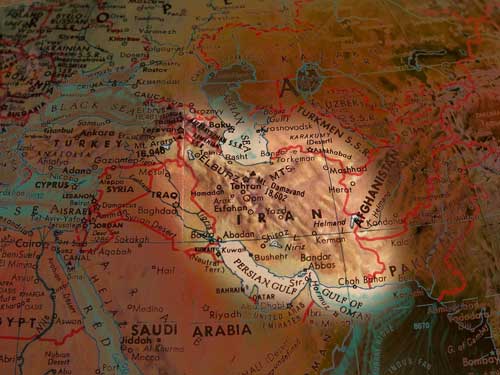
08/09/2011 – The Iranian nuclear question was the focus of a panel discussion at the Hudson Institute on July 13. The three nuclear security experts who provided panel presentations offered both overlapping and alternative perspectives and policy prescriptions regarding the Iranian nuclear challenge. They addressed such topics as the threats it poses, the implications for U.S. interests, and the policies available to the United States moving forward.

(Credit: Bigstock)(Credit: Bigstock)

They all agreed on the importance of keeping the Iranian nuclear program within some bounds short of nuclear weapons possession as well as the value of maintaining a strong military presence in the Middle East to deal with a range of possible contingencies.

Although agreeing on many points, especially the desirability of preventing Iran’s acquisition of nuclear weapons, the three nuclear security experts offered alternative perspectives and prescriptions regarding the Iranian nuclear challenge based on their distinct views regarding the scope and intensity of the threat posed by Iran’s nuclear ambitions.

Dr. Ollie Heinonen brought his considerable technical to bear to elucidate the progress Iran has made in the nuclear arena despite international pressure and sanctions.

Dr. Christopher Ford reviewed the diverse threats a nuclear-armed Iran presents to U.S. interests in the region.

Dr. Peter Jones argued that, while frustrating, negotiating with Iranians over their nuclear program still made sense if reinforced by the use of limited sanctions and clandestine indirect instruments.

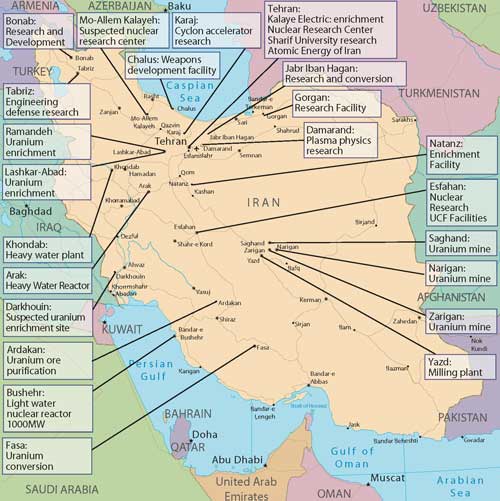
Heinonen, a Senior Fellow at the Belfer Center for Science and International Affairs and former Deputy Director General of the International Atomic Energy Agency (IAEA), warned that Iran is continuing to make progress toward developing a nuclear weapons capacity. While Iranian scientists have been engaged in clandestine nuclear activities since the early 1980s, their nuclear program has, after a series of fits and starts, grown disturbingly advanced even after Iranian dissenters exposed in 2002 the secret construction of a large clandestine enrichment plant in Natanz. Since 2003, the IAEA and more recently the UN Security Council have adopted a variety of criticisms and sanctions in a failed effort to secure the program’s suspension.

(Credit: http://www.nti.org/e_research/profiles_pdfs/Iran/iran_nuclear_sites.pdf)(Credit: http://www.nti.org/e_research/profiles_pdfs/Iran/iran_nuclear_sites.pdf)

According to Heinonen’s calculations, Iran has by now installed 8,000 IR-1 centrifuges and produced roughly 4,400 kg (9.050 lbs.) of uranium enriched to 3.5% in centrifuges linked in a cascade. Furthermore, 371 tons (818,000 lbs.) of UF6, which serves as feed material for LEU enrichment, has already been produced at a major uranium conversion facility in Esfahan. In February 2010, Iran began enriching LEU to 20%; while suitable for civilian purposes, 20% LEU can be readily augmented to 80% to 90% enrichment for military purposes.

The specter of Iran’s acquiring weapons-grade high-enriched uranium (HEU) rose markedly in June 2011, when Abbasi Davani, the newly appointed President of the Atomic Energy Organization of Iran, announced the transfer of 20% enriched uranium production from Natanz to Fordow.

Built in secrecy until its construction was unveiled in September 2009, Iran says it will use the Fordow facility to triple its production of 20% enriched uranium using more advanced centrifuges than those at Natanz. Overall, Iran is projected to possess 250 kg (or 500 lbs.) of 20% enriched uranium by the end of 2012. Tripling its production rate at Fordow will require 120 kg (250 lbs.) of 3.5% enriched UF6, which is comparable to Natanz’s extant production levels.

The production of 20% enriched uranium, justified as fuel for the Tehran Research Reactor, is especially dangerous because:

1)   It cannot be used to generate electricity (like 3.5% enriched uranium, which is used in most civilian nuclear power reactors);

2)   It can be used to make fissile material for nuclear weapons if further enriched and converted; and

3)   Iran’s current let alone planned production rate of 20% enriched uranium far exceeds the requirements for fueling the Tehran Research Reactor.

Iran could easily import the 20% uranium needed for this reactor, including that downgraded by Russia’s excess stocks of HEU extracted from dismantled Soviet-era nuclear warheads, so its decision to produce so much 20% enriched uranium raises suspicions that the Iranian government is seeking the material foundation to rapidly establish a nuclear weapons program should it decide to do so.

Heinonen further noted that Iran had announced plans to construct up to 10 additional uranium enrichment sites, but has not met its obligation to provide the IAEA with information about their intended location and other details. Further complicating matters is the Iranians’ progress on its heavy water reactor which, by 2014, will be capable of producing enough weapons-grade plutonium to make one nuclear weapon per year.

Finally, Iran has failed to address IAEA concerns over alleged studies by Iranians regarding the use of nuclear power for military purposes. These alleged studies allegedly address such topics as special neutron sources without civilian applications, high explosives with precise timing, and missile re-entry vehicles that can carry nuclear warheads.

If Iranian military entities are engaged in nuclear-related research, the Islamic Republic would be violating its commitment under the Nuclear Non-Proliferation Treaty to use nuclear technologies exclusively for peaceful purposes.

In light of Iran’s continued progress and defiance of international demands that Iran suspend its sensitive nuclear activities pending clarification of possible research involving nuclear weapons, Heinonen called on the international community to increase its pressure on member states to provide information on Iran’s proliferation activities. He further called on the world’s governments to step up enforcement of the UN Security Council sanctions resolutions.

Christopher Ford, Senior Fellow and Director of the Hudson Institute Center for Technology and Global Security, and former U.S. Special Representative for Nuclear Nonproliferation, warned that Iran’s nuclear activities were placing several key U.S. national security interests at risk, including:

1)   Preventing a nuclear attack against the United States or its allies

2)   Keeping terrorists from acquiring nuclear materials or technologies

3)   Preventing Iran from dominating the Middle East

4)   Averting further cascading nuclear proliferation in the Middle East

5)   Promoting peace in the Middle East

6)   Upholding the strength of the global nuclear nonproliferation regime

7)   Preserving the reputation of the United States as a strong and effective ally

8)   Decreasing risks that the Iranian government can exploit the Arab Spring for nefarious purposes

According to Ford, Iranian leaders want to acquire nuclear weapons to intimidate other countries, “immunize” Iran against outside military intervention; and for reasons of status and prestige. In highlighting the difficulties of ascertaining Iranian intentions in the face of its saber-rattling rhetoric, Ford warned that one couldn’t exclude the possibility of an Iranian nuclear attack. While the regime itself could perhaps be dissuaded or deterred by U.S. threats, our paucity of knowledge vis-à-vis Iran’s likely command, control, and communications (C3) system leaves unresolved the risks of an inadvertent or unauthorized strike.

Ford also underscored the danger inherent in the powerful and extremist Iranian Revolutionary Guard Corps (IRGC) having responsibility of Iranian nuclear weapons stewardship given the uncertainty of Iran’s political situation as well as the IRGC’s radicalization and ability to defy Iranian political leaders. In this context, Ford noted that the Arab Spring offers Iran both an opportunity and a threat. The wave of upheavals offers the prospect of the demise of some regimes Tehran opposes, but the repressive clerical regime would be threatened if democratic forces in the Middle East gained strength.

Another key U.S. interest is preventing terrorists’ acquisition of nuclear weapons, nuclear materials, and technological know-how from Iran. While the Iranian regime may prize its survival too much to launch a nuclear attack, according to Ford it is conceivable that Iranians could—knowingly or accidentally, given the program’s scope—enable one or more terrorist proxies to acquire its nuclear assets in such a way as to claim deniability. Moreover, Iran’s extensive “black” and “grey” market ties, currently used to circumvent international sanctions and acquire items required to support Iran’s expanding nuclear program, creates a “spider web” of illicit transnational transactions that could see “cross-pollination” between otherwise disparate networks, possibly including the reverse flow of Iranian nuclear technologies and materials to terrorists.

Due to Iran’s unwelcome progress in developing nuclear weapons, Ford concluded that the Iranian nuclear issue is evolving from one of preventing nuclear weapons proliferation to one of mitigating the adverse consequences of a radical Iranian regime possessing growing nuclear weapons potential.

Ford explained that effective mitigation requires ensuring that Iran does not become excessively emboldened by its nuclear advances and that other aspiring nuclear weapons states are not inspired by Iran’s achievements to pursue their own ambitions. The latter policy implies deterring Iran from using or transferring nuclear weapons, material, or technology. It also involves ensuring that Iran does not feel “immunized” from punishment for regional provocations and aggression by sending the appropriate signals to Iran and other states seeking nuclear weapons illicitly. One possible means to this end was by reinforcing the U.S. military presence in the region.

Peter Jones, Associate Professor at the University of Ottawa and former Senior Analyst for the Security and Intelligence Secretariat of the Privy Council of Canada, identified four options most readily available to the Western powers: military action; economic sanctions; indirect disruptive activities; and diplomacy. Jones argued that economic sanctions, diplomatic engagement, and clandestine operations would, in combination, most likely yield the best results.

Jones warned that a pre-emptive military strike against the Iranian nuclear program would be unlikely to end Iran’s nuclear program. Heinonen had already noted that its immense size and clandestine nature would make it difficult to identify and destroy all the relevant targets.

Jones believed even an attempted military strike would prove counterproductive by driving the program further underground, strengthen the unpopular Iranian regime, end its already constrained cooperation with the IAEA, and prove difficult for the United States to sustain diplomatically or domestically.

Still, some experts in the audience considered it useful to retain the military option, noting that F-22/35 airstrikes combined with missile defenses could mitigate considerable damage under some scenarios.

Although Jones favored continuing with the economic sanctions, he warned that the timeline in which sanctions could be agreed upon and implemented could not keep pace with the more rapid schedule of Iranian nuclear weapons development. Even after they are implemented, the sanctions hurt Iran but not enough to compel Tehran to cease its uranium enrichment activities. China would oppose the only sanctions that might truly bring Iran to its knees—boycotting its oil industry.

Jones did advocate pursuing indirect actions that disrupt Iran’s nuclear activities as a means to delay its progress and raise its costs. These clandestine means include assassinating Iranian nuclear scientists, infecting the computers supporting Iran’s nuclear activities with malicious software, and other covert attacks. But he cautioned that these indirect actions by themselves would not stop Iran’s nuclear program.

Jones was more optimistic than the other two speakers regarding the possibility of achieving a diplomatic agreement with the Iranian government to limit its nuclear activities and capacities. Having visited Iran many times, Jones acknowledged that haggling with the Iranians can be very frustrating and slow, but he considered diplomacy an essential component of any approach toward constraining Iran’s nuclear program.

Even so, Jones warned that removing the present regime would not guarantee the emergence of a successor government with nuclear policies more advantageous to Western interests. Many Iranians see possessing nuclear weapons as a rational security instrument given their country’s geopolitical position and history.

Given the limited effectiveness of these options, even in combination, Jones argued that the West may have to accept some degree of uranium enrichment capacity since Iran was unlikely to surrender its hard-won progress in this area. Western countries should find an Iranian nuclear program that they can live with and identify ways to contain it within those bounds.

Jones concluded that a combination of diplomacy, sanctions, and indirect actions would work best though not very satisfactorily in constraining Iran’s nuclear progress. Jones and the other speakers agreed that it was also important to raise the costs the Iranian regime pays for developing nuclear technologies with potential military applications to discourage other governments from pursuing similar policies.

JTAC: Voice Behind the Madness

08/08/2011

08/08/2011: A resupply mission carrying fuel and watching as JTAC calls in medical evacuations. Whether it’s clearing the air space for a controlled detonation or calling in air support, Joint Terminal Attack Controllers are the voice behind the madness. Marine Sgt. Rachael Moore rode along to see them in action.

Credit: 2nd Marine Logistics Group:07/11/2011

PLA Navy Capabilities on the March

08/07/2011

By Dr. Richard Weitz

08/07/2011 – The PRC’s sustained military buildup has over time allowed the PLAN to modernize many of its platforms and weapons systems. Since the late 1990s, China has undertaken an ambitious modernization program that has produced approximately one hundred new warships since 2001. The PLAN already has the largest number of principal surface combatants (75), submarines (60), and amphibious ships (55) of any Asian navy.

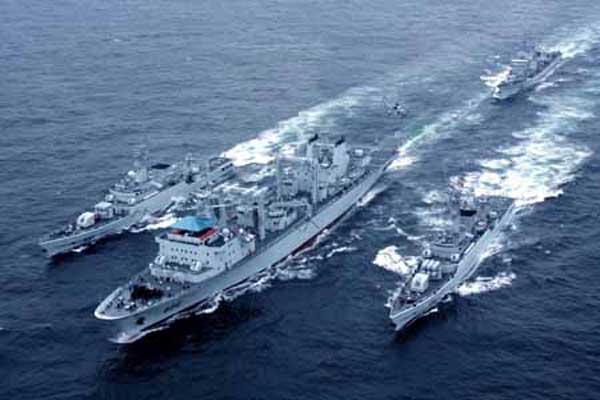
At the end of 2008, the Chinese Navy set off on an historical mission: the first modern deployment of battle-ready warships beyond the Pacific.  What was the task?   An anti-piracy mission that will provide escorts and patrols in the pirate-infested Gulf of Aden. (Credit: http://gcaptain.com/historic-mission-for-chinese-navy?5171)At the end of 2008, the Chinese Navy set off on an historical mission: the first modern deployment of battle-ready warships beyond the Pacific.  What was the task?   An anti-piracy mission that will provide escorts and patrols in the pirate-infested Gulf of Aden. (Credit: http://gcaptain.com/historic-mission-for-chinese-navy?5171)

If this rate of expansion continues, the PLAN could possess more ships than the U.S. Navy at some point during the next two decades. The qualitative improvements have been equally stunning and include longer-range maritime planes and anti-ship missiles, quieter submarines, more sophisticated surface ships, and better educated and trained sailors. They are transforming what had been a primarily shore-defense force into a viable regional Navy power. Anticipated future PLAN acquisitions include more advanced blue-water power projection capacities.

A long-standing PLAN priority has been to enhance the capabilities of its submarine fleet, equipped with anti-ship cruise missiles as well as land-attack cruise missiles. The PLAN has constructed more than a dozen Song-class SSN (Type 039 or Type 039/039G) attack submarines.

Most recently, the PLAN has acquired about a dozen indigenously made submarines that have made major achievements in terms of quietness and range. The Jin-class SSBN (Type 094) is armed with 12 JL-2 ballistic missiles, with the theoretical range to hit targets in the western half of the United States from strike positions west of Hawaii. The Shang-class SSN (Type 093) nuclear-powered attack submarines and the Yuan-class SSN (Type 041 or Type 039A) diesel-powered attack submarines complement one another due to their diverging power systems.

The dozen Russian-made Kilo-class diesel electric submarines have also represented a marked advance in the PRC’s undersea warfare capabilities. The Kilo’s wake-homing torpedoes present a particularly deadly threat to aircraft carrier battle groups, which emerged as a key concern for PLA strategists following their intervention in the 1995-1996 Taiwan missile crisis.

Although many PLAN submarines are outdated, the newest classes are approaching the capabilities of those of the other major world navies in sound-dampening technology, naval propulsion, and weapons systems. The Office of Naval Intelligence anticipates that the PLAN will deploy the next-generation Type 095 attack submarine by 2015.

In addition to modernizing its fleet of submarines, the PLAN has developed increasingly sophisticated surface combatants. Since the early 1990s, the PLAN has put five new types of destroyers and frigates into service, with each successive model featuring new variations and improvements. Taken together, these modern warships are substantial improvements over China’s aging Luda (Type 051) destroyers that entered service in the 1970s and 1980s. Many of these new warships feature stealthy hull designs; efficient propulsion systems; and enhanced sensors, electronics, and weapons systems.

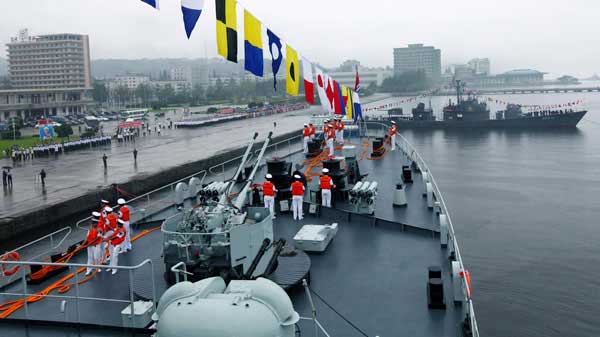
In this photo released by China's Xinhua News Agency, the Chinese Navy fleet composed of missile frigate Luoyang, front, and training ship Zheng He arrives in Wanson, North Korea, Thursday, Aug. 4, 2011. (Credit: http://www.ctv.ca/CTVNews/World/20110804/chinese-warships-north-korea-110804/)In this photo released by China’s Xinhua News Agency, the Chinese Navy fleet composed of missile frigate Luoyang, front, and training ship Zheng He arrives in Wanson, North Korea, Thursday, Aug. 4, 2011. (Credit: http://www.ctv.ca/CTVNews/World/20110804/chinese-warships-north-korea-110804/)

During the 1990s, China purchased two Sovremenny class missile destroyers (DDG) from Russia. These outclassed any surface combatant fielded by the PLAN at the time, providing improved anti-submarine warfare capabilities, more advanced anti-ship missiles, and longer expected sea-duty time.

Since the original purchase of these four Russian destroyers, the PRC has introduced its own improvements regarding both design and functionality to its indigenously made surface warships. The PLAN also made the important decision to focus on quality over quantity.

The last few generations of warships have only seen a few vessels built per model in an attempt to maximize the new functions of each generation without committing considerable resources into constructing a ship type that might soon become obsolete.

The PLAN’s fleet of indigenously manufactured destroyers, and to a lesser extent frigates, has become increasingly more capable due to the longer reach of their platforms, their improved active electronic countermeasures, their advanced anti-submarine warfare (ASW) helicopters, and their newer generations of air defense and anti-ship cruise missiles (ASCM).

These ships have a limited capability to conduct long-distance operations, including eight counter piracy patrols in the Gulf of Aden since December 2009, a non-combatant evacuation operation of PRC nationals from Libya, and many visits to far-off ports, including in the Western Hemisphere. The new Type 920 hospital ship and longer-range PLAN submarines could also be used for long-range missions.

In addition, the PLAN has been developing a large number of smaller vessels, including indigenous-made littoral and coastal vessels, gunboats, missile boats, torpedo boats, and countermine warfare ships. These ships can be used for a variety of missions, both offensively and defensively, or in support of larger ships, though many of these vessels are suitable only for coastal combat because of their limited range and size.

The dozens of small Houbei-class (Type 022) fast-attack craft, armed with anti-ship cruise missiles and using stealthy catamaran hulls, might prove the most useful. They perform coastal patrol and defense missions, allowing larger ships to extend their operations elsewhere.

These new warships in both the frigate and destroyer classes offer significant improvements over the Navy’s designs of the 1970s and 1980s. The roles of these ships, that of air defense and power projection, provide the beginnings of what could become a fleet battle group. More recently, the PLAN has begun developing aircraft carriers, a vital but more complex element of a blue-water fleet that extends beyond the “first island” chain–commonly linking Okinawa Prefecture, Taiwan, and the Philippines—and perhaps the “second island” chain linking the Ogasawarsa island chain, Guam, and Indonesia.

Although the writers stressed their defensive potential, aircraft carriers could more plausibly strengthen the PLAN’s offensive capabilities by providing more effective air cover for any battle far from the PRC mainland, where all China’s warplanes, including those of the PLA Navy Air Force, are stationed since the PRC government has no foreign military bases. One or more carriers could prove quite useful for providing air cover for an invasion of Taiwan, harassing U.S. surveillance planes and ships inside China’s expansive 200-mile maritime exclusive economic zone (EEZ); or contesting disputed islands with Vietnam, Japan, or others.

The PLAN still lacks the sealift capacity to transfer and sustain a large expeditionary force for an extended period, though it is increasing its capabilities. China has effectively doubled its force of roughly 20 landing ship tanks (LSTs) by additionally building 10 Yuting-II and 10 Yubei-class LSTs from 2003 to 2005, each with a capacity to carry roughly 250 troops. The PLAN also maintains numerous smaller transports that augment the LSTs. In 2006, the PLAN built a larger landing platform dock that can hold up to 800 troops, providing greater mission flexibility.

In total, the PLAN can amphibiously transport a maximum of 15,000 troops in a single wave. China’s airlift capability is comparably modest, with a capacity to transport a maximum of 5,000 parachutists in a single operation. But recently China has begun constructing Yuzhao Type 071 amphibious ships, comparable in size in the previous generation U.S. Navy Whidbey Island/Harpers Ferry (LSD-41/49) class ship. And there is speculation that even larger Type 081 amphibious assault ships are under design. These could carry more helicopters and perhaps even STVOL-type planes.

Chinese Navy ships moored at Sanya, in southern China's Hainan province. China's navy will move faster to build large combat warships, next-generation aircraft and sophisticated torpedoes in a modernizing overhaul for fighting in an era of information technology, its commander in chief said Thursday, April 16, 2009. (Credit: http://www.time.com/time/world/article/0,8599,1892954,00.html)

The PLAN Marine Corps is a small contingent of specially trained troops that serve on China’s few amphibious transport dock ships, which are based at the Zhanjiang port attached to the South Sea Fleet. Numbering approximately 12,000 troops, the PLAN Marine Corps would provide the initial landing force of any amphibious operation. The Marines also garrison disputed islands under PRC control and have deployed in the Gulf of Aden to fight pirates on ships.

The Marine Corps equipment includes amphibious Type 63 and 63A tanks along with a variety of armored personnel carriers. These are all seriously outdated. Barring a significant investment in new equipment and larger numbers, the PLAN Marine Corps will continue to serve primarily as an instrument to garrison remote islands and board and fight pirate ships.

The PLA Naval Air Force (PLANAF), the Navy’s ground-based air contingent, conducts primarily territorial water defense and fleet air support in those geographic areas within reach of warplanes based on Chinese territory. The PLANAF includes hundreds of older short-range J-7E (a Mig-21 variant) and J-8II air superiority fighters along with the H-6D (based on the Soviet Tu-16 Badger), which carries two anti-ship missiles.

The effectiveness of these planes against modern air defenses such as those found on U.S. Navy ships is questionable. The planes, weapons, and other technology found in the PLANAF lags considerably behind those of the more generously funded regular PLA Air Force.

The PLANAF does have Su-27s and Su-30MK2 fighters purchased from Russia to provide longer-range support for naval operations. The Su-30MK2 variant has some advanced C4ISR capabilities along with long-range search radar to detect surface ships to engage them with anti-ship cruise missiles. The Su-30MK2 variant is generally compared to the U.S. F-15E fighter, though it still lags behind newer fifth-generation aircraft such as the F-22 and F-35.

In comparison, the SU-27 originally purchased from Russia, was later produced under license in China. The PRC then copied liberally from the Su-27 to make a Chinese variant, the Shenyang J-11, which has undergone several modifications and technological improvements from the original Russian version. The J-11 offers improvements in radar and early warning systems, but most of these warplanes have gone to the regular Air Force.

As partial compensation for the Navy’s weak amphibious and air combat capabilities, which would significantly hamper any PLA effort to occupy Taiwan or fight against the United States or another modern navy, China has developed a powerful strike capability in its large number of long-range missiles. The Pentagon’s 2010 report on the PLA notes that it has “the most active land-based ballistic and cruise missile program in the world.”

PRC policymakers hope this capacity would discourage U.S. military intervention on Taiwan’s behalf. The missiles also allow the PLA to threaten more distant targets in Asia. China has positioned more than one thousand short-range ballistic missiles (SRBMs) opposite Taiwan to menace the island.

This arsenal is reinforced with a smaller number of medium-range ballistic missiles and land-attack cruise missiles. The PLAN has also acquired a variety of indigenous and foreign-made anti-ship cruise missiles. Among the most powerful are Russian-made SS-N-22 Sunburn missiles carried aboard China’s Sovremenny-class destroyers and SS-N-27 Sizzler missiles found on some of the PLAN’s twelve Kilo-class attack submarines. According to the media, the PLA has been researching and developing an experimental anti-ship cruise missile, the CH-SS-NX-13, for use on PLAN submarines.

China’s attempts to develop the world’s first ballistic missile designed to attack targets at sea is of special concern to the U.S. Navy. The PLA’s candidate is the DF-21D anti-ship ballistic missile (ASBM), which is based on the mobile, medium-range, ground-to-ground DF-21 (also known as the CSS-5) ballistic missile. The DF-21D has an estimated range of 1,500 kilometers (900 miles), enabling it strike deep into the western Pacific, with a maneuverable re-entry vehicle that could allow its warhead to target moving ships without itself being intercepted.

A logical mission for such a weapon would be to disable or destroy a U.S. aircraft carrier before it can move its planes within striking range of PLA targets. Although the DF-21D has yet to be tested over the ocean, the Pentagon considers the system to have achieved initial operational capability.

For the companion piece to this one please see https://www.sldinfo.com/?p=22097.

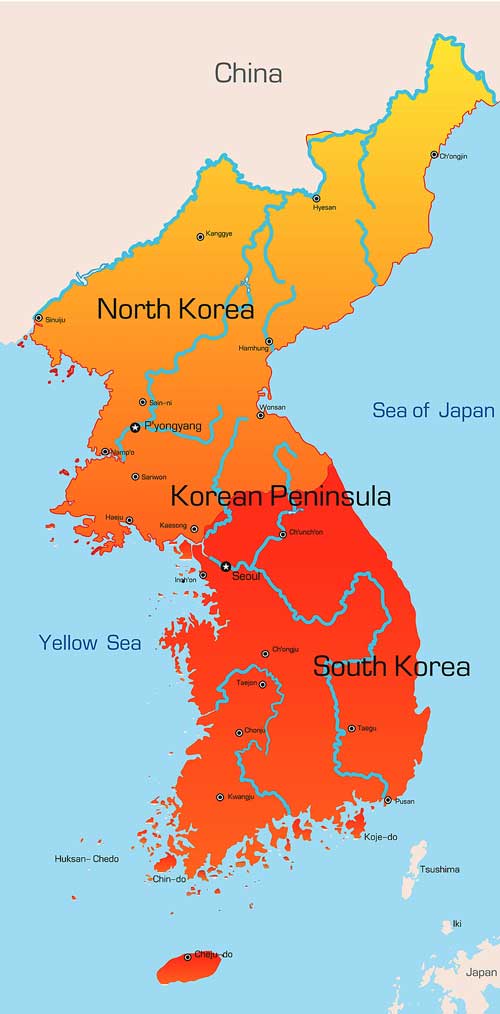
Assessing the North Korean Threat

08/05/2011

By Dr. Richard Weitz

08/03/2011 – The London-based International Institute for Strategic Studies (IISS) recently released an insightful new report on the security challenges presented by the Democratic People’s Republic of Korea (DPRK) to the international community. Its latest Strategic Dossier, “North Korean Security Challenges: A Net Assessment,” offers a comprehensive and balanced evaluation of the topic. The 200+ page monograph reviews the domestic situation in North Korea, the foreign and military threats the DPRK presents to the Republic of Korea (ROK) and other countries, and the possible scenarios that might lead to the regime’s collapse and possible reunification with South Korea. The team of authors, led by editor Mark Fitzpatrick, director of the IISS Non-Proliferation and Disarmament Programme and a former senior U.S. State Department official, did a nice job helping the reader understand the complex, multi-dimensional nature of the North Korean problem.

(Credit: Bigstock)(Credit: Bigstock)

According to the IISS team, the DPRK currently presents several major international security challenges. The most well-known DPRK defense capacity is North Korea’s illegal nuclear weapons program, pursued in violation of the country’s treaty obligations and other nonproliferation commitments. For two decades, North Korea has been diverting plutonium from its nuclear reactor complex at Yongbyang to make fissile material to fuel a nuclear explosion. In 2006 and 2009, the DPRK detonated one nuclear explosive device. The IISS estimates that the DPRK currently has sufficient plutonium to make 4–12 additional nuclear bombs.

More recently, the DPRK has launched a new uranium enrichment program that can also manufacture fissile material for a nuclear weapon. The authors expect that North Korea’s future nuclear weapons activities will focus on employing this enrichment program since, while Yongbyang could be reopened in approximately six months, uranium enrichment activities are easier to conceal than a plutonium-based nuclear weapons programs.

In addition to its nuclear weapons program, the IISS assesses that North Korea has the world’s third largest chemical weapons arsenal and possibly biological weapons. It is fairly easy for well-disciplined and equipped troops, like those of the ROK and the United States, to defend against chemical weapons. But civilians are harder to protect unless they are warned in advance of an impending chemical weapons attack. The current IISS team has less confidence than the writers of the previous DPRK dossier that North Korea is continuing to pursue a comprehensive offensive biological weapons program.  And biological weapons are more difficult to employ.

The DPRK produces large numbers of ballistic missiles. North Korea uses them to enhance its own strike capabilities, compensating for its weak air force, as well as to sell to foreign buyers. The DPRK has developed several ballistic missiles types, of varying ranges and capabilities, which may be able to deliver WMD munitions to targets in South Korea and Japan. Under the guise of developing a space launch vehicle, the DPRK is working on an intercontinental-range missile capable of hitting targets as far as California and Alaska. The IISS analysts have major questions about the capabilities of the DPRK’s new missiles since some on public display look like mock ups.

In one of several controversial findings, the IISS analysts argue that the DPRK’s missile program may prove vulnerable to a supply cut-off.   They believe that North Korean technicians have largely been relying on parts and technologies acquired from the Soviet Union, including legacy engines and other key components, to assemble missiles based on earlier Soviet-era designs. They see no evidence that Russian companies are supplying more missile parts or additional technologies to the DPRK, while the believe that North Korean technicians will require a few more years to be able to make such core components themselves.

Other analysts believe the DPRK has already learned how to manufacture its own ballistic missiles and is moving beyond simple knock-offs of Soviet-origin designs.

The current focus of the DPRK’s WMD-related research and development efforts focus on making warheads sufficiently small and secure that they can carry nuclear or other dangerous agents on North Korea’s improving ballistic missile capacities. The DPRK has yet to demonstrate that it has manufactured a warhead that can fly long distances safely atop a ballistic missile, but the IISS team considers such a task not especially difficult.

They are more uncertain how long it will take the DPRK to do this. It depends on whether North Korea has been able to obtain one of the designs for tested warheads that the A. Q. Khan illicit trafficking network was selling on the black market, which would accelerate its progress.

There is little indication that the DPRK leadership has developed a doctrine for actually employing its nuclear weapons in combat. Rather, the IISS analysts believe that North Korean leaders view nuclear weapons as a means of elevating their prestige and legitimacy at home as well as the DPRK’s influence and status in the international arena.

A more immediate danger, evident for some time, is how North Korea has been contributing to the horizontal proliferation of nuclear, ballistic missile, and other dangerous technologies to regimes of proliferation concern. The fear is that, for financial profit or barter, the DPRK would transfer WMD-related technologies to other rogue states or terrorists.

This problem has already occurred; there is considerable evidence that the DPRK has assisted Syria, Libya, and other countries to develop WMD-related technologies and their means of delivery. Interestingly, the IISS team finds little indication of uranium enrichment cooperation between North Korea and Iran. Both countries use different centrifuge models. In addition, North Korea is capable of manufacturing high-strength steel that Iran has been unable to acquire, forcing Tehran to rely on carbon fiber materials that are less reliable.

The DPRK Korean People’s Army is the world’s fourth largest; but the IISS net assessment finds that the DPRK’s conventional military capabilities have fallen even further behind those of the ROK. In any conflict, South Korea would also enjoy the military support of the United States under their longstanding mutual defense security pact.  This pact includes an extended security guarantee that could see the United States use nuclear weapons to protect the ROK. In any full-scale war between the two Koreas, the ROK should eventually win.

A Unified Korea in the Works? (Credit: Bigstock)A Unified Korea in the Works?  (Credit: Bigstock)

Nonetheless, that “eventually” is a key word—the North could inflict considerable damage against the South before its defeat. The one welcome finding of the IISS team is that North Korea’s long-range artillery is unlikely to turn Seoul into a “sea of fire” since, by their calculations, the DPRK has only some 300 such guns and will likely need to pull them back into defensive positions soon after hostilities commence or they will be destroyed by ROK and U.S. counter-battery fire.

However, last year’s DPRK sinking of the ROK Cheonan warship and its shelling of civilians on the Yeonpyong Island demonstrates that the DPRK is willing to use even limited conventional capabilities in provocative ways. The latter incident represented the first direct attack on ROK territory by the DPRK regular military since the 1950-53 Korean War, but both incidents occurred in areas overlapping the contested boundaries of the two states, and were not followed by subsequent DPRK attacks. Both conditions kept the level of fighting below the threshold of major war.

Although the superior conventional and nuclear capabilities of the ROK-U.S. alliance can credibly deter DPRK conventional attacks, they are much less effective at deterring lower-level provocations, which the DPRK has been conducting for decades even if the 2010 incidents marked a major escalation from previous years. Although its quantity of conventional weapons is enormous, it is North Korea’s willingness to use them that makes the country such a serious menace.

The DPRK is also developing asymmetric capabilities and tactics to compensate for its conventional weaknesses. These include the weapons of mass destruction listed above, special forces that can enter ROK territory through underground tunnels as well as on midget submarines, cyber weapons that make the information-dependent and highly networked South Koreans feel vulnerable, and the use of military force short of a full-scale confrontation.

North Korea has the largest number of special forces anywhere in the world, though the IISS contests the ROK government’s assessment that the DPRK has 200,000 of these personnel. According to the IISS, while some 200,000 DPRK troops have undergone specialized training, perhaps only 80,000 of these troops are equivalent to the U.S. or British Special Forces, trained in a comprehensive range of light warfare and clandestine strike missions.

Factory and Field Workers on 5 Won 1978 Banknote from North Korea (Credit: Bigstock)

The DPRK’s economic problems, though grave, are insufficient to hurt the country’s military capabilities since the regime is sufficiently inured to popular suffering that it can devote almost a fourth of the country’s GDP to its defense sector. Changes are occurring in North Korean society. The public food distribution system collapsed in the mid-1990s, private markets grew to replace it and have not been repressed for long, and people have gained increased knowledge of the outside world through radios and other news sources.

Furthermore, income rather than political standards are becoming the most important determinant of the DPRK’s class structure since income disparities are increasing as North Koreans become more involved in market activities.

Even so, while the direction of domestic change in the DPRK is clearly toward modest fragmentation and liberalization, the magnitude and pace of this change should not be overestimated. North Korea remains the world’s most militarized country in which the military-industry complex receives priority in terms of resource allocations and in which domestic opposition, dissent, and even the wrong thoughts are severely repressed by the police and military.

Among other things, these conditions have led to a surging number of refugees fleeing into China and settling into South Korea. The DPRK’s “military first” (songun) policy has resulted in North Korean generals exercising as much influence as leaders of the ruling Workers’ Party of Korea (WPK), which has had to share power collectively with the military as well as the Kim dynasty.

Despite its police state nature, the IISS concludes that “criminality” is “hard-wired into the regime.” The DPRK has engaged in diverse forms of state-sponsored crime including the kidnapping of foreign nationals (the Japanese abductees are best known since Tokyo raises them as a barrier to further engagement with the DPRK); trafficking in narcotics, people, and many other forms of contraband; and the counterfeiting of foreign currency (especially well-crafted $100 bills).

The IISS report makes evident that the DPRK is clearly a menace to its people, neighbors, and much of the rest of the international community. Its hyper-militarism, economic mismanagement, and inability to implement major economic reforms due to fear of undermining the political dictatorship have made the DPRK dependent on foreign assistance.

The DPRK has in the past managed to blackmail the United States, South Korea, and Japan with threats of conducting more provocations while offering (and then reneging on) pledges of good behavior in return for sufficient compensation. But the DPRK’s previous partners are unwilling to buy that same horse yet again. The IISS concludes, like others, that the DPRK is unlikely to relinquish its nuclear weapons arsenal in return for exclusively economic and diplomatic aides.

Even so, the process of dynastic succession is now proceeding in Pyongyang in circumstances much less favorable than during the first dynastic transfer after the death in 1994 of Kim Il-sung, the regime’s god-like founder. Although Kim Il-sung died suddenly, he had prepared his son for years to succeed him. In contrast, Kim Jong-il’s health abruptly deteriorated before he had designated a successor and prepared him to fulfill that function.

Although Kim Jong-Il seems to have recovered from his 2008 stroke, he has been pushing to establish favorable conditions for his third son, Kim Jong-un, to succeed him. If his father dies soon, Kim Jong-un will experience severe disadvantages due to his limited experience, fragile power base, political barriers to needed economic reforms, and the military’s elevated role in politics (Kim Jong-un’s recent promotion to general may have hurt rather than helped his standing with other military leaders).

The troubled conditions surrounding the political succession could spell trouble for others since the regime’s increasingly provocative behavior might be designed to rally support behind the Kim dynasty.

Although warning that expectations regarding the demise of the DPRK regime have been both frequent and incorrect, the IISS analysts nevertheless believe that the circumstances may be conducive now for major changes. The regime is experiencing an unprecedented conjunction of crises of which four interlinked problems are most serious.

1)    First, the IISS teams notes that political succession is always “the Achilles’ heel of dictatorships,” especially one that adheres to the principle of dynastic political inheritance in a nominally Marxist-Leninist state.

2)    Second, North Korea’s economic problems have become very serious due to its progressive loss of many vital sources of foreign aid, an inability to abandon economically harmful but politically stabilizing policies, widening income disparities, and perennial food and health care shortages that threaten to degrade North Koreans’ human capabilities. The result of all these economic problems is an impoverished and increasingly disenchanted population as well as hordes of refugees fleeing to neighboring countries.

3)    Third, the DPRK’s long-standing policy of brinkmanship no longer yields major concessions; they do however increasingly risk provoking a major war. Pyongyang’s outrageous provocations against the ROK last year—sinking the Cheonan and shelling civilians on a border island—have so antagonized South Korean public opinion that vigorous retaliation to any further provocations has become much more likely since President Lee Myung-bak would find it difficult not to strike back. ROK military doctrine now emphasizes the need for a prompt and vigorous response to future DPRK provocations.

4)    All these problems have created a fourth, existential, crisis in which North Koreans have increasingly lost faith in their regime even if they lack the means to depose it. The incongruence between the DPRK regime’s proclaimed successes and its genuine failures will become increasingly evident in 2012 due to its pledge to create a “strong and prosperous nation” that year, the centennial of the founding father’s birth. The recent upheavals in the Arab world are a welcome reminder that even the most long-lasting dictatorships cannot last forever.

North Korea Shaping Its Global Destiny (Credit: Bigstock)

The IISS analysts see several possible routes to unification. The best outcome would be a “soft landing” in which the weight of the DPRK’s problems gradually saps its strength and North Korea no longer threatens other countries. At some point, this process could lead to intra-Korean reconciliation and the gradual integration of the two Koreas.

Unfortunately, fundamental change is not visible on the horizon, while even a more mellow DPRK would have good reasons to keep its nuclear weapons, especially if the regime’s other support props no longer work. The IISS also considers a German-style reunification through absorption, along with the DPRK’s regime voluntary collapse, extremely unlikely due to its ingrained militancy.

According to their assessment, a violent and abrupt collapse represents a more plausible scenario. This process could occur due to a major internal challenge, perhaps from a dissatisfied General or popular uprising, or from a confrontation with South Korea that escalates out of control. For example, the DPR leadership might take a provocative action assuming that its nuclear deterrent would avert military retaliation, only to be proved wrong about its presumed “escalation dominance.”

North Korea’s possession of nuclear weapons could present real problems here—as it does with the fourth “nightmare” scenario, reunification through war, in which the ROK would intervene to occupy North Korea. This scenario also runs the high risk of Chinese military intervention to preserve a sphere of influence. The authors call on the ROK, PRC, and U.S. governments to discuss this possible scenario beforehand to minimize misunderstandings. But I have tried this myself in Beijing. The Chinese keep quiet for fear of irritating the DPRK’s erratic leadership, which object to anyone even mentioning its possible demise.

Another consideration has been that Chinese leaders have, after several years of reassessing their Korean polices, resolved to prevent the Kim regime’s collapse no matter how much they dislike it. According to the IISS, the PRC government appears to have made a strategic decision that a unified Korea under Seoul’s leadership and allied to the United States threatens its fundamental interests.

Since mid-2010, the PRC has increased its assistance to the DPRK, including by providing more diplomatic support and economic aide.

Yet, the authors believe that Beijing’s help might prove sufficient to help the DPRK avoid the collapse and unification scenarios, but at the risk of China’s extending its hold so tightly over the DPRK that North Korea becomes an economic satellite of Beijing that still retains considerable capabilities and inclination to cause trouble on its own.

***

(http://www.iiss.org/publications/strategic-dossiers/north-korean-security-challenges-a-net-assessment/)

31st MEU and the ADF

The 31st Marine Expeditionary Unit is participating with the ADF in Talisman Sabre 2011, which strengthens military-to-military relations and increases theater security cooperation between the two partner nations.

08/05/2011

[slidepress gallery=’31-meu-preparations’]

Credit: Talisman Sabre 2011:07/12/2011

  • In the first photo, the sun sets here on the first official day of Exercise Talisman Sabre 2011. The beach is a portion of the Shoal Water Bay Training Area which is now the training ground for thousands of service members from both the Australian Defense Forces and the U.S. military.
  • In the second photo, an Australian Bushmaster vehicle maneuvers down dusty roads here during a training event, part of Exercise Talisman Sabre 2011.
  • In the final photo, Capt. Robert Schwaab, assistant logistics officer, 31st Marine Expeditionary Unit, listens as an Australian Defense Force convoy leader gives a brief during Exercise Talisman Sabre 2011. Schwaab was planning for the arrival of additional forces of the 31st MEU in support of the biennial exercise.