

High over the Libyan desert on March 21, 2011, a critical malfunction sent a U.S. Air Force F-15E Strike Eagle plummeting towards the sand. The two crew members ejected into hostile territory, landing miles apart. While the Weapons Systems Officer was quickly recovered by friendly rebel sympathizers, the pilot, Major Kenneth Harney, found himself in a desperate situation. Alone, he was being actively hunted by five to six tactical vehicles from pro-Gaddafi forces, their searchlights sweeping across the desert floor.
This incident occurred during Operation Odyssey Dawn, the international military intervention to enforce a no-fly zone over Libya. The capture of a U.S. pilot would have been a significant propaganda victory for the regime and a grave danger to Major Harney. As enemy forces, complete with barking dogs and gunfire, closed in on his position, a race against time began. Waiting just offshore, a team of U.S. Marines was about to put a revolutionary and controversial aircraft to its first ultimate test.
- The Call to Action: The 26th MEU Responds
Aboard the amphibious assault ship USS Kearsarge, the Marines of the 26th Marine Expeditionary Unit (MEU) received the alert. A pilot was down, and a Tactical Recovery of Aircraft and Personnel (TRAP) mission was activated. A comprehensive TRAP package was rapidly assembled, combining multiple air assets to create layers of protection and capability for the complex operation.
AV-8B Harriers: Launched first to provide immediate close air support, establish communication with the downed pilot, and serve as the on-scene command platform.
MV-22 Ospreys: The primary rescue aircraft, tasked with the high-speed transit deep into Libya and the vertical extraction of the pilot.
CH-53E Super Stallions: Transported a Quick Reaction Force (QRF) of Marines, ready to provide ground security if the rescue became contested.
KC-130J Hercules: Stood by to provide critical aerial refueling for the other aircraft, extending their range and time on station.
The initial response unfolded with disciplined speed, transitioning from a potential incident to a full-blown rescue operation in under an hour.
| Time (Local) | Event |
| 11:33 p.m. (March 21) | F-15E crashes southwest of Benghazi. |
| 12:50 a.m. (March 22) | Two AV-8B Harriers launch from the USS Kearsarge. |
| 12:55 a.m. (March 22) | Full TRAP mission is approved by U.S. military leadership. |
As the Harriers streaked toward the pilot’s last known location, they were flying not just to provide air cover, but to hold the line and buy the precious time needed for the Ospreys to arrive.
- Holding the Line: The Harrier’s Decisive Airstrike
Arriving over the dark desert landscape, the Harrier pilots, led by on-scene commander Major J. Eric Grunke, tuned their radios to the downed pilot’s frequency. This rapid response was possible due to Grunke’s specialized training as a Forward Air Controller (Airborne), or FAC(A), a skill that enabled him to orchestrate the complex strike with the speed and authority required to save the pilot’s life. The transmissions they intercepted painted a terrifying picture of Major Harney’s final, desperate moments before expected capture.
“I just start listening to gain an idea of what’s going on down there, and I can hear him, wind rustling and him whispering into his radio. At that point it all became real to me… that’s really a guy down there scared for his life.”
As the tactical vehicles with searchlights and gunfire closed in, Major Harney believed his time was up. He made a final, heartbreaking radio call.
“He comes up and actually crying on the radio he says, ‘tell my wife I love her.'”
With deadly force authorized, Grunke used his Harrier’s advanced targeting pod to identify the pursuing vehicles. Within five minutes of arriving on station, he confirmed their position with Harney, asking, “I’ve got two 500-pound bombs, do you need them?” The pilot’s response was immediate: “Yes, yes I do.” Grunke delivered two laser-guided bombs with direct hits on two of the pursuing vehicles. The remaining enemy forces, convinced by the decisive airstrike, broke off their search and fled.
The Harriers had saved Major Harney from imminent capture. But while the immediate threat was gone, the pilot was still stranded 130 nautical miles inside hostile territory, and the complex challenge of extracting him remained.
- “The Beauty of Speed”: The Osprey’s High-Speed Ingress
At 1:33 a.m., two MV-22 Ospreys lifted off the deck of the USS Kearsarge and transitioned into airplane mode, accelerating toward the Libyan coast. The mission would immediately showcase the revolutionary capabilities that set the Osprey apart from any conventional helicopter.
Unprecedented Speed: The Ospreys covered the 130 nautical miles to the pickup zone at 250 knots. This incredible speed reduced the transit time to approximately 45 minutes, a journey that would have taken traditional helicopters hours. As MajGen “Dog” Davis later commented, the mission was “45 minutes each way, instead of hours.”
Reduced Vulnerability During Ingress and Egress: Its speed and altitude capabilities allowed the Osprey to “shoot the gap between several SAM sites” during its ingress. Furthermore, its ability to approach quietly in airplane mode provided a decisive tactical advantage. This unique acoustic signature defeats rudimentary but effective early warning systems, like those used by insurgents in other theaters, which rely on tracking the distinct sound of slow-moving helicopters. The enemy heard nothing until it was nearly overhead.
Advanced Automation: The aircraft’s sophisticated autopilot systems allowed the pilots to manage the complex mission without being exhausted by the physical act of flying. As pilot Major Debardeleben explained, “Like setting cruise control in a car, you can focus your mind elsewhere.” This freed up crucial cognitive capacity for the crew to monitor communications, build situational awareness, and manage the tactical situation as it unfolded.
As the Ospreys closed in, the crew was calm, focused, and ready. They prepared to transition from high-speed aircraft to agile helicopter for the final, most critical phase of the operation.
- The Rescue: A First for the MV-22
The final moments of the rescue were a masterclass in coordination and execution. Using a flare from the downed pilot and a laser marker from an overhead aircraft, the Ospreys pinpointed Major Harney’s location, hidden in small desert shrubs. After a quiet, high-speed approach, the lead Osprey began its conversion to helicopter mode for landing. The sudden, deafening roar of its powerful rotors shattered the desert silence. Hearing the noise, the pilot on the ground made one last desperate call, fearing the sound was of the aircraft leaving: “Don’t leave me, I hear you.”
Major Debardeleben’s crew responded, assuring him they were on their way in. The pickup was incredibly rapid. Even before the Osprey’s wheels touched the sand, Major Harney bolted toward the aircraft with his hands above his head. The Marines on board barely had time to disembark before he had jumped on, fastened his seatbelt, and declared, “I’m ready to go.”
At 2:38 a.m., Major Harney was safely aboard the MV-22. Less than 25 minutes later, at 3:00 a.m., the Osprey landed back on the deck of the USS Kearsarge. The entire rescue mission, from launch to recovery, took just 90 minutes.
- Conclusion: A Watershed Moment for Marine Corps Aviation
The successful TRAP mission over Libya was more than just a single rescue; it was a watershed moment for the MV-22 Osprey and a definitive validation of the tiltrotor platform. After years of controversial development, the Osprey proved its revolutionary combat value in a high-stakes, real-world operation. The mission’s success validated the Marine Corps’ investment in a unique capability, a point MajGen Davis underscored with stark finality:
“No one could have gone and got that guy like we went and got him. Nobody.” — MajGen “Dog” Davis, Commanding General, 2nd Marine Aircraft Wing
This mission was the Osprey’s first combat rescue, and it was an unequivocal success. It proved that the aircraft’s unique combination of speed, range, and vertical-lift flexibility had fundamentally transformed the Marine Corps’ ability to project power.
The performance in Libya redefined the operational radius of the Marine Expeditionary Unit (MEU).
As one MEU officer later noted, “With the CH-46E, you are typically operating 25-50 nautical miles (NM) from shore. As of today, I can operate 250 NM or greater from shore.”
This ten-fold increase in reach transformed the MEU from a coastal force into a deep-inland power projection asset, solidifying the Osprey’s role as a cornerstone of expeditionary operations.
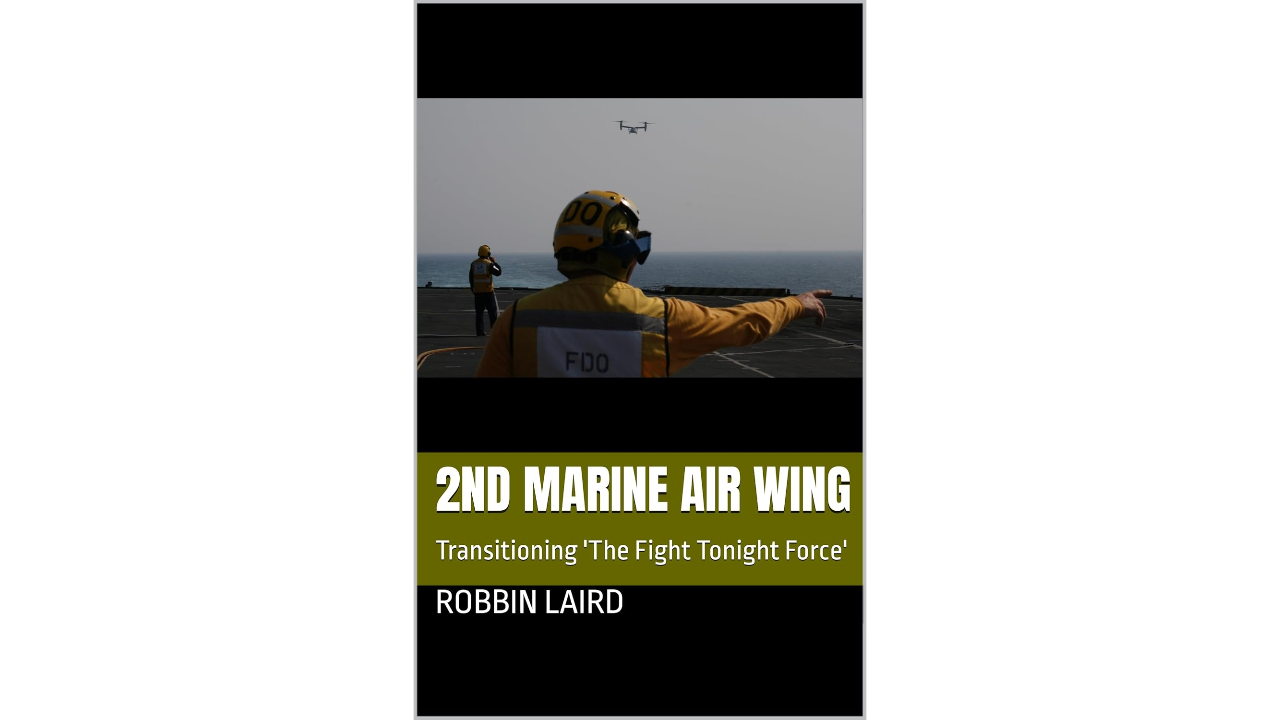
This is just one of the many stories contained in our new book looking back at the past 15 years of defense transformation generated by the 2nd Marine Wing.