During the first Obama Administration, as American defense policy pivoted toward Asia and grappled with budget pressures following the financial crisis, a critical question emerged: Where did the United States Coast Guard fit in the nation’s strategic framework?
For decades, the Coast Guard had operated somewhat in the shadows of national security discussions, its contributions often underappreciated or misunderstood by policymakers focused on the Navy, Air Force, Army, and Marine Corps.
Into this gap stepped Rear Admiral Ed Gilbert, whose strategic communications efforts helped reshape how America understood the Coast Guard’s essential role in national defense.
My collaboration with Admiral Gilbert during this period proved transformative in understanding how military services articulate their value and secure their place in strategic planning. Together, we embarked on a systematic effort to visit Coast Guard districts across the nation and engage with the service’s two area commanders, documenting operational realities that rarely penetrated Washington’s policy discussions.
What emerged was not merely a public relations exercise but a fundamental reframing of how the Coast Guard’s unique capabilities contributed to American security in an era of complex, hybrid threats.
Admiral Gilbert understood something that many defense thinkers missed: the 21st-century security environment demanded capabilities that transcended traditional military paradigms. The Coast Guard, with its law enforcement authorities, regulatory responsibilities, and operational flexibility, represented a strategic asset uniquely positioned for an era when threats emerged from gray zones, piracy, drug trafficking, illegal fishing, maritime disputes short of armed conflict, and hybrid warfare that blurred distinctions between military and civilian operations.
Yet this value proposition remained poorly articulated in budget documents, National Security Council deliberations, and strategic guidance.
Our district visits revealed operational innovation that deserved far wider recognition. Coast Guard crews conducted complex operations requiring simultaneous application of law enforcement, search and rescue, environmental protection, and defense readiness, often within the same patrol. In the Caribbean and Eastern Pacific, Coast Guard cutters pursued drug traffickers while simultaneously maintaining presence operations that reassured partner nations and deterred potential adversaries. In Alaska, Coast Guard units navigated the complexities of opening Arctic waters, balancing environmental monitoring, sovereignty assertion, search and rescue preparation, and engagement with both commercial interests and potential competitors like Russia and China.
The challenge Admiral Gilbert faced was translating these operational realities into strategic language that resonated in Washington. The Coast Guard suffered from what might be called a categorization problem.
Was it a military service or a law enforcement agency?
Did it belong to the Department of Defense or Homeland Security?
These bureaucratic questions, seemingly arcane, had profound implications for funding, authorities, and strategic integration. Admiral Gilbert’s genius lay in reframing the question: rather than forcing the Coast Guard into existing categories, he demonstrated how its hybrid nature represented strategic advantage, not administrative confusion.
Meeting with the area commanders provided crucial insights into how the Coast Guard conceived its strategic role. These flag officers thought in terms of global persistent presence, relationship building, and graduated response options, concepts that would later gain prominence in strategic discussions about competition short of armed conflict. They described operations where Coast Guard vessels served as floating embassies, where boarding teams enforced international law while simultaneously gathering intelligence, and where partnership building with foreign coast guards created access and influence that purely military engagements could never achieve.
What impressed me most about Admiral Gilbert was his intellectual rigor in building the narrative. He didn’t simply assert the Coast Guard’s importance; he documented it systematically. We examined how Coast Guard operations supported broader national security objectives, from counter-narcotics efforts that weakened adversarial networks, to fisheries enforcement that protected economic resources and maintained international order, to icebreaker operations that asserted American presence in strategic waters. Each operational activity connected to strategic ends, but those connections required articulation.
Yet Admiral Gilbert never oversold the Coast Guard’s capabilities. He acknowledged resource constraints, aging infrastructure, and capability gaps with admirable candor. This honesty enhanced credibility. Rather than claiming the Coast Guard could solve every maritime challenge, he articulated a realistic vision of how adequate resourcing would enable the service to fulfill its expanding responsibilities. The chronic underfunding that has plagued the Coast Guard for generations became not just a service-specific problem but a national security vulnerability. a gap in America’s strategic toolkit which still remains to this day.
Our work together reinforced lessons about military transformation that extend beyond the Coast Guard. Strategic narratives matter. Services that cannot articulate their value in terms policymakers understand risk marginalization, regardless of their operational effectiveness. The Coast Guard’s struggle for recognition stemmed partly from its own modesty and partly from Washington’s tendency to think about security in conventional military terms. Admiral Gilbert’s contribution lay in bridging this gap, translating operational excellence into strategic relevance.
The district visits also revealed something often missed in Pentagon discussions: military effectiveness cannot be measured solely in firepower or technological sophistication. The Coast Guard’s authority to board and inspect vessels under international law, its credibility as a humanitarian organization, its relationships with foreign counterparts, these represented force multipliers as significant as any weapons system. Admiral Gilbert helped defense planners understand that in many scenarios, a Coast Guard cutter achieved strategic effects a Navy destroyer could not, not despite its limited armament but because of its different authorities and operational profile.
Looking back on this collaboration, I recognize how much I learned from Admiral Gilbert about strategic communication, institutional advocacy, and the complex relationship between military services and civilian policymakers. His approach combined operational knowledge, strategic thinking, and political awareness in ways that served both the Coast Guard and broader national interests. He understood that effective advocacy required substance, not just salesmanship and that lasting influence came from demonstrating value rather than asserting it.
The narrative we helped shape during those years has endured and evolved. Today’s strategic discussions increasingly recognize the Coast Guard’s contributions, though resource challenges persist. The service’s role in Indo-Pacific strategy, Arctic operations, and countering Chinese maritime expansion reflects concepts Admiral Gilbert articulated years earlier. His work laid foundations that subsequent Coast Guard leaders built upon, creating institutional memory and strategic positioning that transcends individual tenures.
What made Admiral Gilbert particularly effective was his ability to balance service advocacy with broader strategic perspective. He recognized that the Coast Guard’s interests aligned with national security imperatives that strengthening the Coast Guard strengthened America’s strategic position. This alignment meant he could advocate forcefully without appearing parochial, connecting service capabilities to national needs in ways that resonated across the policy community.
My respect for Admiral Gilbert stems from both his professional excellence and personal integrity. In an environment where self-promotion often substitutes for substance, he let operational results and strategic logic speak for themselves. He built the Coast Guard’s narrative through patient documentation, systematic engagement, and intellectual honesty, an approach that created lasting impact rather than ephemeral attention.
The Coast Guard’s ongoing struggle for adequate resources and strategic recognition suggests that Admiral Gilbert’s work remains unfinished. Yet his contribution. demonstrating that the Coast Guard represents not a secondary service but an essential element of American strategic power, established foundations that continue supporting the service’s advocacy and operational effectiveness.
For those of us privileged to work alongside him. the experience provided masterclass instruction in how military and security institutions navigate political environments while maintaining operational focus and institutional integrity.
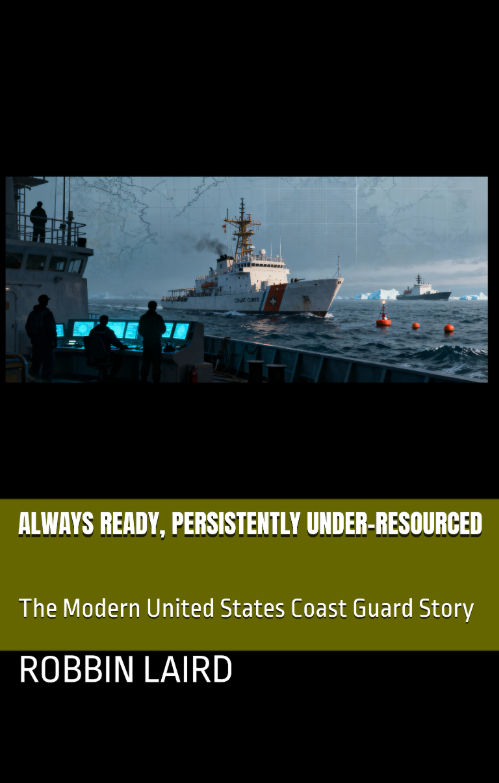
Note: I am publishing a book in April 2026 which draws together our work and carries it forward into the current period.