By Robbin Laird
February 7, 2026, The Wall Street Journal published an interesting article entitled, Squeezed by U.S. and China, the World’s Middle Powers are Teaming Up.
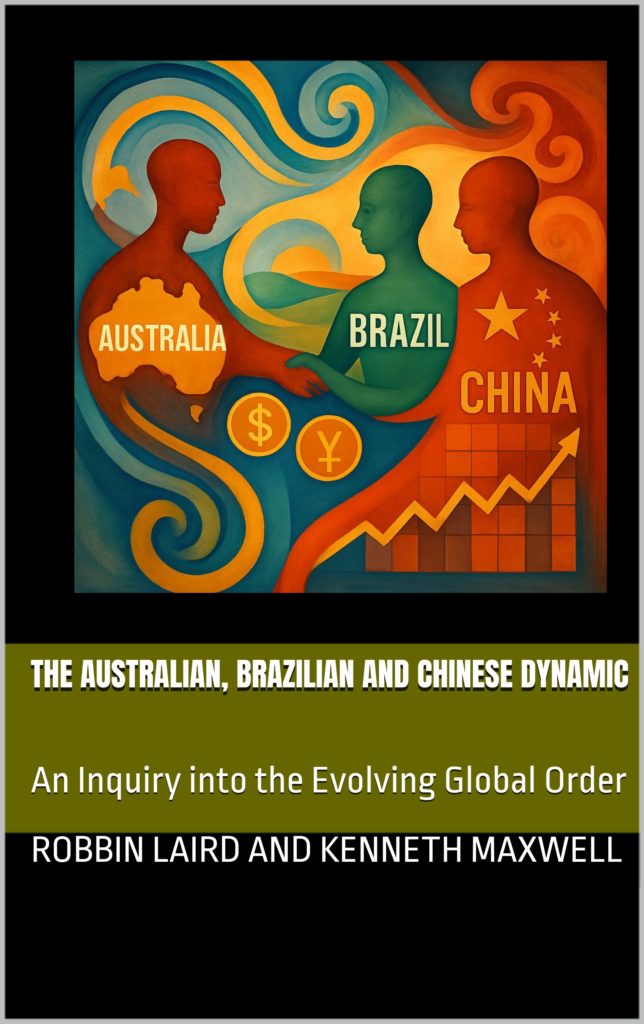
Upon reading this article, I wanted to take that assessment and compare it to the findings in my forthcoming book with Ken Maxwell on the relationships of Brazil and Australia with China, a clear test case of emergent middle power theory.
The contrast between the WSJ’s somewhat optimistic framing of middle power cooperation and the more complex, nuanced reality we discovered through our research reveals important insights about the actual dynamics shaping the international order.
The Middle Power Thesis: Promise and Reality
Canadian Prime Minister Mark Carney’s declaration at Davos captures the aspirational vision: “Middle powers must act together because if we’re not at the table, we’re on the menu.” This metaphor of collective action to avoid becoming “roadkill in the new world order” resonates with a certain logic. The WSJ article presents a world where nations like Canada, most of Europe, Japan, South Korea, Australia, India, Brazil, and Turkey are finding common cause in trade agreements, military cooperation, and efforts to reduce dependence on both Washington and Beijing.
The theoretical framework is straightforward: faced with two unpredictable great powers, an increasingly transactional United States retreating from its role as guarantor of the rules-based international order, and an authoritarian China willing to bend global trading rules in its favor, middle powers should logically seek to hedge their bets through self-reliance and strategic alliances with other middle powers. This represents a structural response to what Cornell economist Eswar Prasad describes as “two unsavory alternatives” between which the rest of the world is “bouncing around.”
Yet our research on Brazil and Australia’s relationships with China suggests a far more complicated picture than this framework allows. These two nations serve as particularly revealing test cases precisely because they occupy such different positions in the global system while facing similar pressures regarding Chinese power and influence.
Australia’s Constrained Hedging: Alliance Structure and Regional Proximity
Australia represents perhaps the clearest case of a middle power attempting to navigate between economic dependence on China and security alignment with the United States. The numbers tell a stark story: China accounts for roughly one-third of Australia’s total trade, yet Australia remains one of America’s closest military allies, bound through the ANZUS treaty and now the AUKUS partnership for nuclear-powered submarines mentioned in the WSJ piece.
Our research reveals that Australia’s approach to China has been neither straightforward hedging nor simple alignment, but rather a complex dance shaped by three critical factors.
First, geographic proximity to China creates critical vulnerabilities. Australia cannot relocate away from the Indo-Pacific, and Chinese military modernization directly affects Australia’s strategic environment in ways that feel more immediate than they do in Ottawa or Paris.
Second, the depth of economic integration with China creates structural constraints on Australia’s freedom of action. When China imposed trade sanctions on Australian barley, wine, coal, and other products in 2020-2021 following Canberra’s call for an investigation into COVID-19 origins, Australia discovered the limits of middle power autonomy. The economic pain was real, even if Australia found alternative markets for some products. This was not theoretical great power competition but concrete economic coercion that affected jobs and industries.
Third, and perhaps most importantly, Australia’s alliance with the United States provides both security and constraints. The AUKUS agreement represents a deepening of defense ties that the WSJ article frames as middle powers “hedging against the U.S. to some degree.” But this interpretation misreads the Australian calculus. AUKUS is not hedging against America. It is doubling down on the U.S. alliance as the cornerstone of Australian security policy precisely because Australia has concluded that middle power cooperation alone cannot balance Chinese military power in the Indo-Pacific. The Trump dynamic creates significant challenges as well to this calculation.
The recent tensions around Chinese naval activities near Australian waters, Chinese foreign interference operations documented by Australian intelligence agencies, and disputes over Taiwan all reinforce Canberra’s assessment that geography and power realities limit Australia’s ability to truly balance between great powers. Australia has made a choice, even as it tries to maintain profitable economic relationships with China where possible.
Brazil’s Different Geography, Different Choices
Brazil offers a contrasting case that reveals how geographic distance from great power competition creates different options and constraints for middle powers. Located in South America, far from the primary theaters of U.S.-China strategic competition, Brazil has pursued a strategy that looks much more like genuine non-alignment than Australia could ever achieve.
Under both right-wing and left-wing governments, Brazil has maintained a remarkably consistent approach to China based on pragmatic economic engagement without significant security entanglement. Chinese investment in Brazilian infrastructure, agriculture, and energy has grown substantially over the past two decades. China has become Brazil’s largest trading partner, purchasing Brazilian soybeans, iron ore, and other commodities that fuel the Brazilian economy.
Yet unlike Australia, Brazil faces no Chinese military pressure, no direct territorial disputes, and no immediate security dilemmas related to Chinese power. This geographic buffer allows Brazil to engage economically with China while maintaining political independence in ways that would be unthinkable for Canberra. Brazil can criticize U.S. policy in Latin America, refuse to align with American positions on Venezuela or Cuba, and still not face the same pressures to choose between Washington and Beijing that Australia confronts daily.
Our research found that Brazilian policymakers view the middle power cooperation described in the WSJ article with considerable skepticism. The idea that Brazil shares fundamental interests with European powers or with Asian democracies like Japan and South Korea strikes many Brazilian strategists as wishful thinking. Brazil’s historical experience of Western intervention in Latin America, its commitment to South-South cooperation through BRICS and other forums, and its desire for reform of global governance institutions all point toward a different conception of middle power strategy.
Where the WSJ article sees middle powers potentially clustering together in “smaller groups of trust,” Brazil’s approach suggests that geography, historical experience, and divergent interests among middle powers create significant barriers to the kind of cooperation Canadian officials advocate. Brazil has not joined sanctions on Russia following the Ukraine invasion precisely because Brasília sees its interests as distinct from those of European or North American middle powers.
The Limits of Middle Power Theory
Comparing Australia and Brazil’s experiences with China reveals several fundamental limitations in the middle power cooperation framework the WSJ article presents.
First, the assumption that middle powers share common interests simply because they are caught between great powers proves questionable. Australia and Brazil are both middle powers squeezed by U.S. and Chinese power, yet they pursue radically different strategies based on geography, history, domestic politics, and threat perceptions. The notion that these countries would naturally coordinate on trade, supply chains, or security cooperation overlooks profound differences in how they perceive their national interests.
Second, the idea that middle powers can achieve meaningful autonomy through cooperation understates the structural asymmetries in the international system. Royal United Services Institute director Neil Melvin, quoted in the WSJ article, accurately notes that Europe “can produce its own artillery, tanks, subs and ships, but is heavily dependent on the U.S. in key areas such as fighter aircraft and military satellites, as well as nuclear protection.” This dependency is not merely technical. It reflects fundamental disparities in resources, technology, and military capabilities that cannot be easily overcome through middle power coordination.
For countries like Australia located in regions of active great power competition, middle power cooperation offers at best supplementary benefits rather than genuine strategic alternatives. The AUKUS submarine program, European-Asian defense partnerships, and other initiatives mentioned in the WSJ article all involve middle powers working with great powers, not replacing or balancing them.
Third, the diversity of middle power interests means that cooperation will remain issue-specific and limited rather than comprehensive. The WSJ article notes this challenge, observing that middle powers “could cause more global disruption instead of helping anchor security and peace” if they pursue short-term interests without regard for broader stability. India’s refusal to join sanctions on Russian oil sales provides one example. Israel’s recognition of Somaliland, sparking tensions with Turkey and Egypt, provides another.
Our research on Brazil and Australia suggests this fragmentation is not a bug but a feature of the middle power dynamic. These countries have distinct and often conflicting interests. Brazil and India share membership in BRICS with Russia and China. Australia and Japan coordinate closely with the United States on Indo-Pacific security. European middle powers face different challenges from Asian or Latin American ones. The search for common ground across such diversity will inevitably produce limited, tactical cooperation rather than strategic realignment.
Economic Integration as Constraint, Not Opportunity
The WSJ article emphasizes middle power efforts to diversify trade relationships, noting EU trade deals with India and Mercosur countries, Canada’s expansion of export terminals to reduce U.S. dependence, and similar initiatives. Yet our examination of the Brazil-Australia-China triangle suggests that economic integration with China creates structural dependencies that cannot be easily unwound through alternative partnerships.
Australia’s experience illustrates this clearly. Despite years of rhetoric about diversifying away from Chinese market dependence, the economic logic of comparative advantage, geographic proximity, and Chinese demand for raw materials means that Australia cannot simply redirect trade flows to India, Indonesia, or other partners. These countries do not need Australian iron ore and coal at the scale China does. They cannot pay the prices Chinese buyers offer. The infrastructure for shipping Australian commodities to alternative markets does not exist and would be prohibitively expensive to build.
Brazil faces similar constraints. Chinese demand for Brazilian soybeans, driven by China’s massive livestock sector and limited arable land, creates a structural relationship that cannot be replaced by trade agreements with other middle powers. European countries do not need massive imports of Brazilian agricultural products. Asian democracies like Japan and South Korea already have their own agricultural suppliers and relationships.
This reality means that economic “diversification” often amounts to marginal adjustments rather than fundamental restructuring of trade relationships. Middle powers can expand trade with each other in some sectors while remaining deeply dependent on Chinese demand in others. The net effect is incremental rather than transformative.
The Security Dimension: Geography Determines Strategy
Perhaps the starkest division between middle powers appears in security policy, where geographic position relative to great power competition determines available options. The WSJ article notes European countries deepening defense ties with East Asian partners, the UK-Italy-Japan sixth-generation fighter program, South Korean arms sales to Poland and the Baltics, and similar initiatives. These are meaningful developments in military cooperation, but they do not overcome fundamental geographic realities.
Australia cannot substitute South Korean missiles or European submarines for American security guarantees when Chinese naval and air power operates in Australia’s immediate region. The distances involved, the logistics of power projection, and the realities of nuclear deterrence mean that only the United States can provide the security architecture Australia believes it needs. This is not a failure of middle power cooperation but a recognition of strategic geography.
Brazil, conversely, faces no comparable security pressure from China and therefore does not seek middle power security partnerships focused on balancing Chinese power. Brazilian defense priorities center on Amazon protection, border security, and domestic stability rather than great power naval competition. The idea that Brazil would join military cooperation schemes aimed at China makes no sense from a Brazilian strategic perspective.
NATO Secretary-General Mark Rutte’s blunt assessment to the European Parliament, “If anyone thinks here, again, that the European Union or Europe as a whole can defend itself without the U.S., keep on dreaming. You can’t. We can’t.” applies even more forcefully to middle powers beyond Europe. The capabilities gap between great powers and middle powers in advanced military technology is widening, not narrowing. Cooperation among middle powers can supplement but not replace great power alliances for countries facing direct security threats.
Chaos Management and Strategic Competition
The emerging international order looks less like a coordinated middle power response to great power pressure and more like what I have called elsewhere the transition from crisis management to chaos management. Individual middle powers are making distinct calculations based on their specific circumstances, leading to fragmented and sometimes contradictory policies rather than coherent collective action.
Australia aligns more closely with the United States while trying to preserve economic relationships with China. Brazil cultivates Chinese economic ties while maintaining political independence from both Washington and Beijing. European middle powers increase defense spending while hoping to preserve some form of security relationship with an increasingly unreliable America. Asian democracies hedge between U.S. security partnerships and economic integration with China. Middle Eastern states play great powers against each other opportunistically.
This is not the emergence of a middle power bloc but rather the fracturing of international order into multiple overlapping games that different actors play according to their own logic. Mark Carney’s formulation that middle powers must cooperate or risk becoming menu items captures a real concern but overstates the possibility of coordinated response. Many middle powers are indeed becoming menu items, but they are being consumed in different ways by different great powers based on their specific vulnerabilities and choices.
Conclusion: Toward a More Realistic Assessment
Our research on Brazil and Australia’s relationships with China suggests several conclusions that modify the more optimistic middle power cooperation thesis presented in the WSJ article.
First, geography fundamentally shapes middle power options in ways that limit the potential for broad cooperation. Powers located in regions of active great power competition face constraints and make choices that differ dramatically from those enjoying geographic distance from such pressures.
Second, economic integration with China creates structural dependencies that cannot be easily diversified away through alternative partnerships. Middle powers may expand trade with each other, but this supplements rather than replaces existing patterns of great power economic dominance.
Third, security cooperation among middle powers provides meaningful benefits in specific areas but cannot substitute for great power alliances where direct security threats exist. The capabilities gap is too large and growing larger.
Fourth, the diversity of middle power interests, values, and strategic circumstances means that cooperation will remain limited, issue-specific, and often contradictory rather than comprehensive and coherent.
The international order is indeed being reshaped by great power competition between an increasingly transactional United States and an assertive China. Middle powers are responding to these pressures, but not primarily through coordinated collective action.
Instead, we see individual states making distinct calculations based on their specific geographic, economic, and security circumstances. Some align more closely with the United States, others maintain careful neutrality, still others tilt toward China in certain areas while preserving independence in others.
This fragmented response may ultimately prove more destabilizing than the coordinated middle power cooperation that figures like Mark Carney advocate.
But it reflects the reality of a multipolar system in which middle powers lack both the common interests and the collective capabilities to genuinely balance between great powers. Brazil and Australia’s divergent approaches to China illustrate not the failure of middle power theory but its fundamental limitations in a world where geography, history, and power still matter more than diplomatic aspirations.
The question is not whether middle powers can cooperate, they clearly can on specific issues, but whether such cooperation can fundamentally alter their positions in a system still primarily shaped by great power competition.
Our research suggests the answer is no, at least not in the security and economic domains that matter most. Middle powers will continue seeking advantages where they can, but the menu metaphor may be more apt than the cooperation thesis: in a world of great power competition, middle powers have choices about which course to select and how to be prepared, but they are still dining at someone else’s table.