

By Robbin Laird
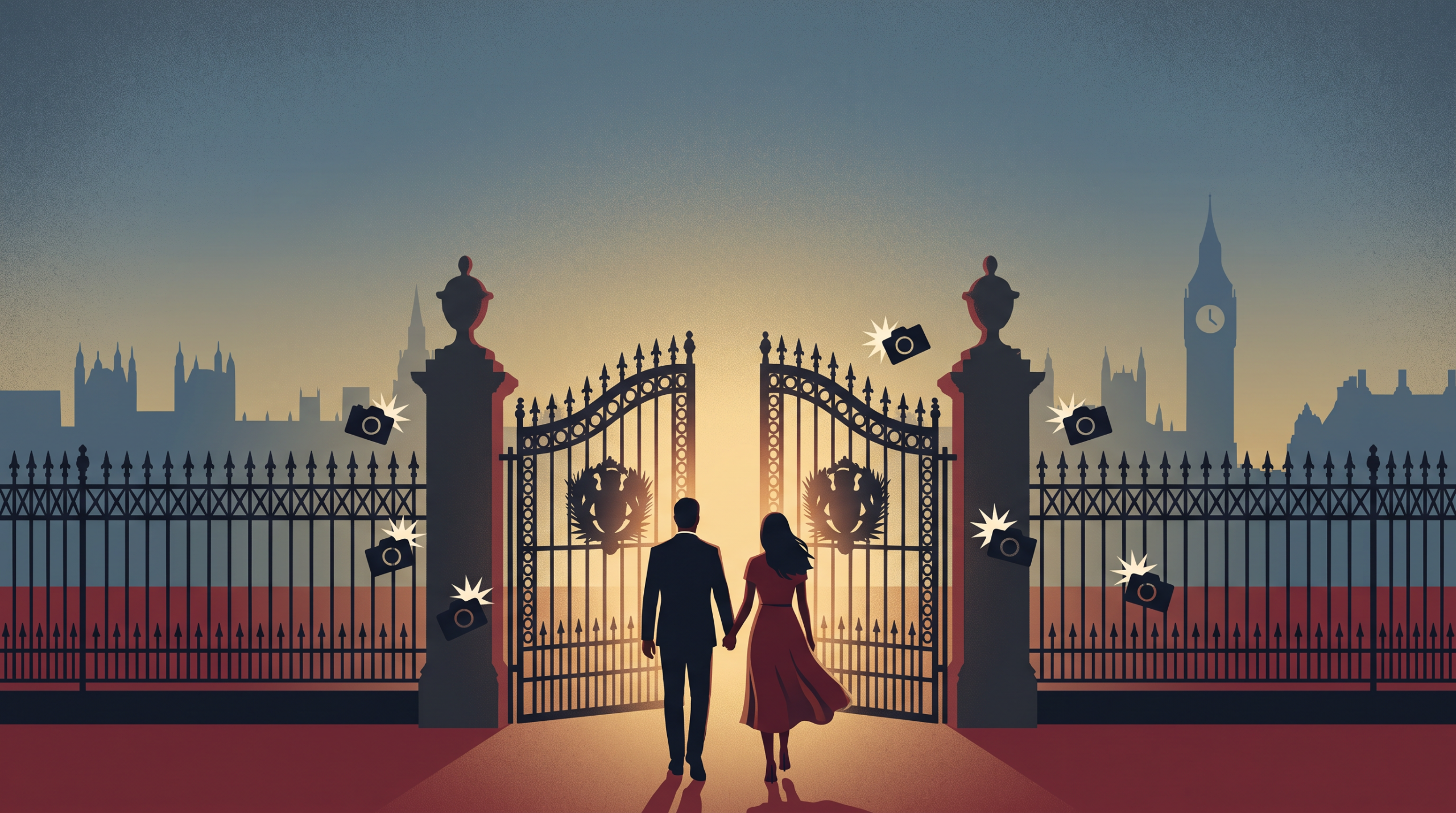
In the United States, the news cycle belongs almost entirely to Donald Trump. In the Mother Country, it belongs, once again, to the Duke and Duchess of Sussex. After six years in Montecito, Harry and Meghan are heading back to Britain, settling this fall in the Cotswolds rather than in any royal residence. King Charles was informed of the decision only shortly before it broke publicly, and by most accounts Harry has been angling for reconciliation as his father continues treatment for cancer. Buckingham Palace, true to form, has said nothing beyond its usual line about not commenting on the doings of non-working royals.
There is, of course, no shortage of theories about what brings them back: a desire to be nearer an ailing King, school places secured for Archie and Lilibet, or simply the pull of a story that has never really let go of the British public.
But the return is also a good moment to revisit an essay Kenneth Maxwell wrote for Second Line of Defense back in 2021, one that placed the current Duke of Sussex against the far stranger and more consequential life of the first Duke of Sussex and found the comparison almost entirely to Harry’s disadvantage.
Maxwell’s starting point was simple irony: the title Elizabeth II bestowed on Harry in 2018 had first been created in 1801 for Prince Augustus Frederick, ninth child of George III, the king, as Maxwell drily notes, who lost America. Where the present Duke has a B and a D at A-level to his name, the first Duke of Sussex was, by every account, formidably intelligent, well-travelled, and politically serious. He studied at Göttingen, settled for years in Rome and then Lisbon, and built a life that ran directly into the great currents of his age.
What Maxwell’s essay actually recovers is a genuinely remarkable transatlantic and Luso-Brazilian story hiding behind the modern tabloid one. In Lisbon, the first Duke of Sussex gathered a circle of young aristocrats, officers, and freemasons around him, and became a patron of Portuguese freemasonry’s formal recognition. Among that circle was a young Brazilian-born graduate of Coimbra, Hipólito José da Costa, who had been sent to the young United States to study manufacturing and agriculture, moved in Jeffersonian circles in Philadelphia, and later fled Portuguese Inquisition imprisonment for London where the Duke of Sussex sheltered him and made him his private secretary. From that partnership came the Correio Braziliense, the first Brazilian newspaper, published continuously in London from 1808 to 1822, campaigning for constitutional monarchy, a free press, and the gradual abolition of slavery, and quietly helping lay intellectual groundwork for Brazilian independence.
Back in London, the first Duke spent decades in the House of Lords opposing Tory governments, championing Catholic and Jewish emancipation, and fighting the slave trade, before rising to Grand Master of the united English freemasons and president of the Royal Society. He married twice in defiance of the Royal Marriage Act, was disowned by convention both times, and was buried not at Windsor but in a public cemetery at Kensal Green, a rebel, as Maxwell puts it, to the end.
Set against that record, the modern Sussex saga — Megxit, Netflix and Spotify deals, an Oprah special, a stream of tabloid skirmishes — looks less like history repeating and more like a very reduced echo of it. Maxwell’s essay was making a sharper point than nostalgia for a more serious aristocracy: it was a reminder that titles inherited from history carry stories most of their current holders never bother to learn, and that the first Duke of Sussex, for all his scandal by the standards of his own time, left behind an actual legacy, in Portugal, in Brazil, in the House of Lords, that outlasted the gossip about him by two centuries.
Whether the present Duke and Duchess, back on British soil after their long California interlude, will be remembered for anything with comparable weight is an open question. For now, the Cotswolds will have to do what the Palácio das Necessidades once did for the first Duke of Sussex: provide a place to wait out estrangement from the family firm.
Putting Harry’s and Meghan’s Interview in Context: The Dukes of Sussex