In an effort to be in compliance with GDPR we are providing you with the latest documentation about how we collect, use, share and secure your information, we want to make you aware of our updated privacy policy here
Enter your name and email address below to receive our newsletter.
From 1989 to 2004 he was Director of the Latin America Program at the Council on Foreign Relations, and in 1995 became the first holder of the Nelson and David Rockefeller Chair in Inter-American Studies.
He served as Vice President and Director of Studies of the Council in 1996.
Maxwell previously taught at Yale, Princeton, Columbia, and the University of Kansas.
He founded and was Director of the Camões Center for the Portuguese-speaking World at Columbia and was the Program Director of the Tinker Foundation, Inc.
Todd Miller has been an aviation photographer and “platform enthusiast” from his early teens.
Todd is a prolific contributor to Military Aviation news agencies worldwide in print and digital medium.
A student of global conflict, military strategy, leadership and weapons systems Todd utilizes opportunities to meet with military leaders and flight crews to unpack platform capabilities, tactics and pilot experience.
Todd consistently brings passion and insight to his work and strives to provide the human interest component to his journalism.
His work on Second Line of Defense has highlighted the operational work of the US armed forces and how they make the difficult look simple.
For example, in a piece published on the 305th Air Mobility Wing, he brought us a great sense of what it was to fly with the Wing and how they worked the art of aerial refueling.
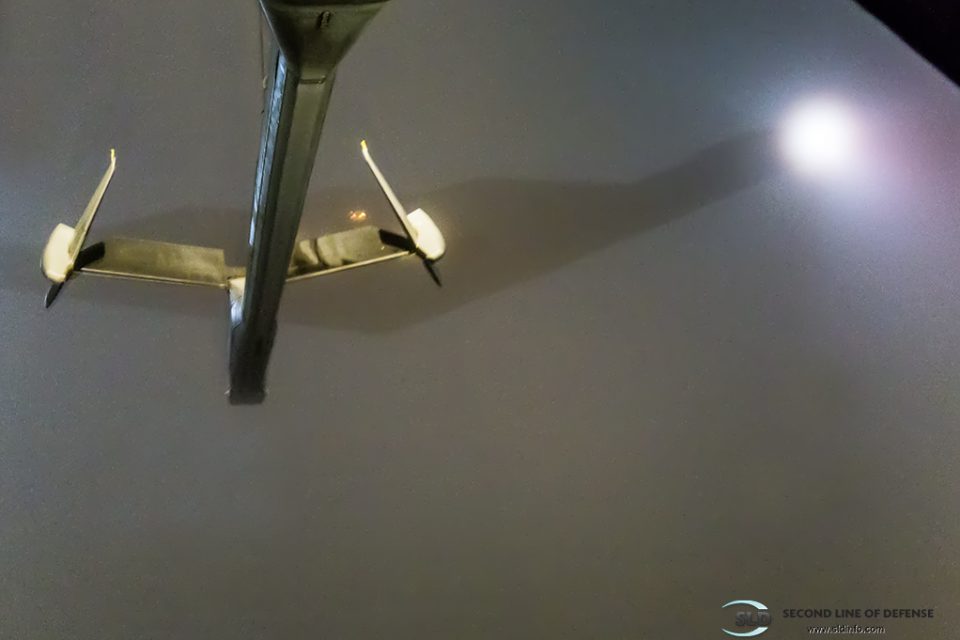
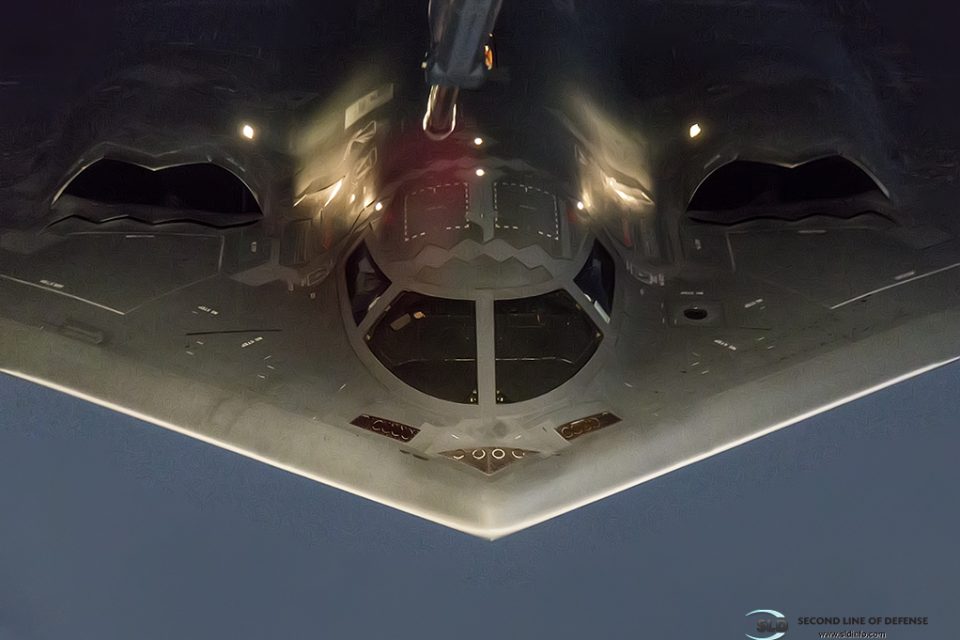
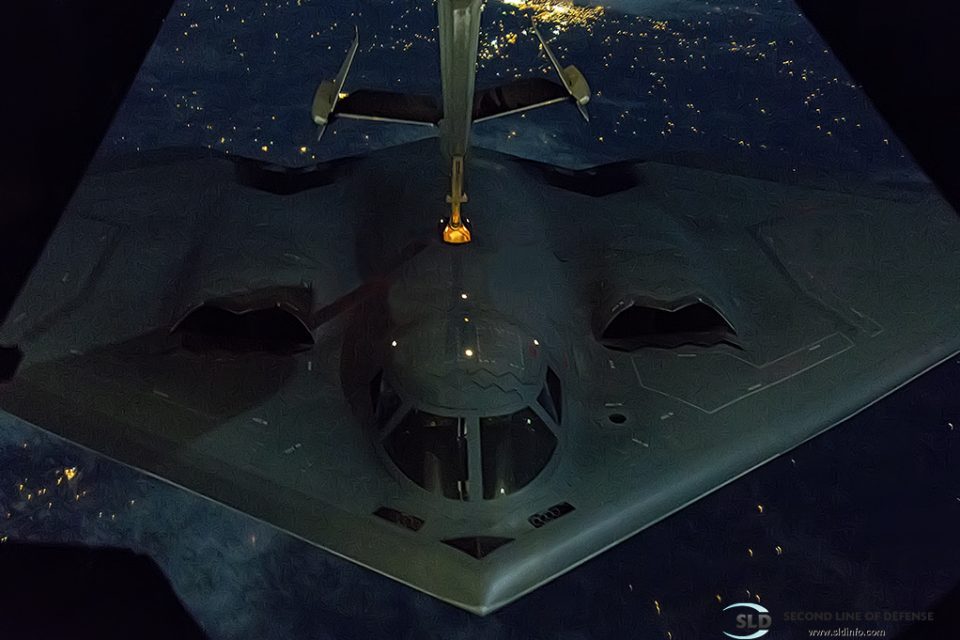
And in his piece on flying with a B-2 at night he brought a sense of immediacy of the experience to those of us who have not done so.
The 305th AMW and their force of KC-10 tankers at JBMDL enable the Global Reach of the USAF. On this mission we fly with crew from the 32nd Air Refueling Squadron (ARS) with the clear and accurate motto “Linking the Continents.” It is a simple fact, without units like the 305th AMW the Global Reach of the USAF would be severely diminished.
The importance and value of the mission is not lost on boom operators like Wise, who comments “a boom operators job offers instant satisfaction.
Every time we refuel an aircraft we enable it to complete its mission, whether in training, combat, or humanitarian relief.”
This job satisfaction explains why I find myself with 3 very experienced boom operators. All three are Instructors, including Master Sergeant Jessica Stockwell with 11 years’ experience.
The three are passionate and have found tremendous rewards in service. Stockwell notes that it is an incredible team effort from the maintenance group to the entire crew on the aircraft.
As it relates specifically to her role as in-flight refueler she says, “during preparation and flight the 2 pilots and flight engineer are responsible for everything that happens in the cockpit, the in-flight refueler is responsible for everything that happens outside the cockpit, air to air refueling, cargo, people and more. It is very rewarding to have that mission responsibility.”
Buffeted by turbulence BAT 71 drops briefly off the boom. As the turbulence subsides she slides back making another connect look effortless. This Spirit is not leaving without getting all her intended fuel. The entire encounter speaks of planning, precision and the utmost professionalism.
Dropping off the boom a final time, BAT 71 disappears into the night.
Under duress, SMSgt Wise passes his review and moves forward toward instructor requalification.
Sochia and Stockwell fuel BAT 72 & BAT 73. Time passes too quickly. Their thirst satisfied the bombers disappear into the dark skies to destination(s) unknown.
This was a training mission.
In the same fashion, the Spirits loaded with deadly ordnance which bcould be destined to strike a target on the other side of the globe.
B-2 Spirits are each identified with a unique U.S. State, such as “The Spirit of Missouri.”
I always considered the name “Spirit” in such context.
Zero Hundred, October 3 has forever changed my perspective.
“Spirit” as perhaps was always intended, is; “one emerging from the clouds, lights glowing, hair flowing, mysterious, ghostly – and most certainly, deadly.”
A defense analyst based in Paris, France, and Arlington, Virginia (USA), she has worked in the French government and various think tanks both in France and the United States.
She received her training at Sciences Po and Sorbonne in Paris and Georgetown University in Washington, D.C.
She has published several books and articles in French on defense and strategic issues, as well as being a regular contributor to both Breaking Defense and Front Line Defence.
She is the Editor-in-Chief of Opérationnels, a leading edge French defense magazine.
She has provided global reporting from Canada, the United States, Djibouti, the Middle East, and Africa.
Diplômée de l’Institut d’Etudes Politiques de Paris, de la Sorbonne (DEA sciences politiques/défense) et de Georgetown University, Washington, D.C. (Masters in Government/security studies)
Travaille depuis plus de trente ans en France et aux Etats-Unis comme analyste de défense
Depuis 2009 : fondatrice et rédactrice en chef du magazine Soutien Logistique Défense – devenu en 2014 Operationnels SLDS – et des sites associés www.operationnels.com et www.sldmag.com
“Nicaragua-Etats-Unis: le bras de fer”, Stratégique, Fondation pour les Etudes de Défense Nationale, Paris, 1986
L’armée rouge face à la Perestroïka, co-publication avec Thierry Malleret, Editions Complexe, Bruxelles, 1991
“Bill Clinton’s new Crusades”, in Deutsch-Amerikanische Beziehungen . Jahrbuch 2/ German-American Relations Yearbook 2, Eds: James Cooney, Wolfgang-Uwe Friedrich, Gerald Kleinfeld, Beate Lindemann, Campus Verlag, Frankfurt/New York, 1994
L’Amérique à la croisée de l’Histoire: cinquante ans de politique étrangère américaine (1945 – 1995), Editions Complexe, Bruxelles, 1995
“Towards a Redefinition of Post-Cold War French National Interests”,in Deutsch-Amerikanische Beziehungen . Jahrbuch 3, Eds: Cooney, Campus Verlag, Frankfurt/New York, 1995
2/12/18: The first Marine Expeditionary Force Support Battalion in the Marine Corps was activated during a ceremony at Camp Lejeune, N.C., Feb. 9, 2018.
The new battalion, part of the II MEF Information Group, is designed to provide and coordinate combat-service support as well as security and administrative services to the MEF Command Element or Marine Expeditionary Brigade Command Element and MEF Information Group in order to sustain command and control of Marine Air-Ground Task Force operations.
The activation of the MSB is in line with the Commandant’s priorities to modernize the force and develop increased 21st century war fighting capabilities.
The S-92® helicopter was first delivered in 2004, and now, there are nearly 300 deployed worldwide by various commercial customers.
What makes the S-92 notably of interest for students of military systems is that the S-92 is the first helicopter deployed with digital systems for monitoring in real time the operational performance and health of the aircraft and thereby generating data where fleet performance can be measured and evaluated.
As new digital military aircraft systems come into operations, can the military benefit as has the commercial customer from leveraging data to enhance aircraft performance and availability?
The HUMS system onboard the S-92 and modern digital aircraft provides significant data to monitor aircraft performance.
According to one source:
A Health Usage Monitoring System (HUMS) records the status of critical systems and components on helicopters so that the early detection of progressive defects, or indications of them, is possible and thus rectification can be achieved before they have an immediate effect on operational safety.
The on-board equipment stores data on a PCMCIA Card.
For analysis, the card is downloaded after flight and maintenance analysis can then be performed on a ground-based computer.
These systems were first deployed in the early 1990s as a response to the relatively poor continuing airworthiness record and their introduction led to, and continues to support, significant improvements in both safety and reliability.
A typical HUMS system uses sensors, distributed throughout the airframe and its components, which are linked to a central computer unit with a data recording and storage system.
Monitoring trends in the recorded data is particularly important – it allows system specialists to determine whether the aircraft has developed (or is likely to develop) faults that require rectification.
The extent of HUMS data capture varies considerably.
A basic system collects some usage parameters such as take-offs, landings, engine starts and winch lifts as well as a small subset of engine and transmission health data.
The most modern systems monitor the health of all significant vibrating and spinning parts – engines, gearboxes, shafts, fans, rotor systems – and other components.
The operational context of events is recorded so that the trends can be fully analysed and maintenance crews are thus able to proactively perform condition-based maintenance.
The latest equipment allows the data acquired to be processed onboard the aircraft or at a ground station – and some systems allow it to be transmitted, whilst the helicopter is in flight, via satellite communications to operator maintenance control units so that subsequent maintenance downtime can be minimised by pre-planning.
These systems can also be configured to automatically report urgent or emergency conditions to the operator and manufacturer from anywhere in the world.
By visiting the Sikorsky Customer Service Center it is possible to see the state-of-the-art support to a customer fleet and then to explore how such capabilities can be more fully applied for the military customer.
Sikorsky Customer Care Center, Trumbull, Connecticut. Photo Credited to Sikorsky.
According to Sikorsky, the Center is described as follows:
Sikorsky’s Customer Care Center is the heartbeat of Sikorsky’s customer support, and the foundation of Sikorsky’s continued movement to being more of a proactive and predictive service provider, working collaboratively with customers to improve the availability of their helicopters.
Based in Trumbull, Connecticut, the Customer Care Center is manned 24-hours-a-day by a focused, interdisciplinary team of experts working urgent customer needs as well as longer term availability and reliability improvements. 24/7 customer service is available at 1-800-WINGED-S (1-800-946-4337) for domestic inquiries and +1-203-386-3029 for international customers.
Through the Health and Usage Monitoring System, we apply individual aircraft data fleet-wide to reduce costs while improving reliability and aircraft availability – all to keep your helicopters flying smarter and longer.
The Customer Care Center is designed to improve aircraft availability and customer satisfaction using the latest intelligence and analytics capabilities.
The center is focused on both tactical and strategic response, with two distinct rooms:
AOG Resolution Center – Relentless drive to return aircraft to flight status
Fleet Management Center – Leverage Data & Analytics for long term benefit
Visiting the center is quite impressive.
As the description above notes, there are two centers, the fleet management center and the AOG resolution center, and each is manned 24/7 and set up with digital displays to provide real time data on the global fleet operations, regularly schedule maintenance and unscheduled maintenance demands.
One center focuses on providing for the parts and service flow.
The other analyzes the fleet performance over all and looks for learning paths to solve problems before they occur and to in general reduce down time for the global fleet.
According to Simon Gharibian, Director of Fleet Management, Supportability and Training, the centers support about 1,000 aircraft worldwide.
“Most of our customers fly high-op-tempo operations in either VIP, SAR, EMS, or offshore oil missions.”
“This is why the focus is clearly upon aircraft availability for the commercial customer.”
Both the S-92 and the S-76 fleets are supported by Sikorsky’s Customer Care Center.
The flow of data from the current operational fleet into the system is the foundation for shaping an effective system,
But discussions with the managers of the centers underscored a critical element of the challenge: it is about shaping organizations that can learn from the data flows, shape the data flows and put in place work flows that can make optimal use of the continuous learning from the data which is only possible if the proper management system is put in place and rapidly adapted to the learning curve.
Put in other terms, without organizational change, simply generating data is about generating data.
Performance will only really be enhanced when an organizational learning system is in place to direct the process and to support the customers providing continuous feedback.
By analyzing the data and shaping models which can reliably predict quantities of inventory required at specific locations to support fleet operations, the cost to support a higher level of available aircraft is reduced as well as generating a higher level of availability of the aircraft themselves.
The results from establishing such an organization are dramatic.
For example, in 2017, aircraft availability for the global fleet was around 95% and the numbers of incidents requiring resolution were down dramatically as well.
A key element of successful fleet management is clearly having forward stocking facilities and Sikorsky has four to support their global fleet worldwide.
The forward stocking facilities are crucial to manage the flow of parts to aircraft which need them, and one organizational task continuously being worked is determining what to forward deploy and what to not in order to optimize aircraft availability.
With several military programs already under its belt, including the legendary Blackhawk, and now the new Air Force rescue helicopter, the Canadian Cyclone and the Marine Corps CH-53K, how might these programs gain from the commercial support experience?
A large part of the answer is changing the organization approach to using data and better configuring maintenance and support organizations to just to collect data but learn from the data.
And that combat sustainment learning curve is about enhancing the availability of aircraft, and perhaps shaping the PBLs going forward to focus on that jointly desired outcome might well be the key target.
And as the fleets become global, clearly forward positioning of parts and supplies is crucial to an ability to support global operations.
Sikorsky Customer Care Center, Trumbull, Connecticut. Photo Credited to Sikorsky.
How best to manage parts flows abroad with parts at home?
James Cycon highlighted the importance of the regional centers and the role of the centers in supporting regional needs.
“One of the powerful things about the regional support locations is that the material needed to support operations in that particular region varies and we can tailor parts to the regional operating conditions.”
This is especially important for the military because of the shortage of lifters and tankers place a premium on ability to forward deploy by normal commercial shipping methods.
Reducing the burden on the lift and tanking fleet via sound global support strategies is a force generator, not simply about good business practices.
In short, the commercial innovations demonstrated by Sikorsky in support of its flagship commercial systems provides a way ahead as the military comes to terms with its new digital aircraft and also will intersect with changes associated with the major combat air transformation associated with the F-35 and its global enterprise.
The digital systems in modern aircraft provide for the possibility of continuous improvement.
The challenge for the military is to align their organizations with the potential to tap into the aircraft systems THEY ARE ALREADY BUYING.
Jim Cycon had this comment with regard to the S-92 experience:
“When we first flew the aircraft it had a certain level of capability.
“Because we have had continuous access to the data generated by the aircraft and have empower a continuous improvement process, we are at an order of magnitude much greater with regard to the performance of that aircraft today.
“We have learned from real operational aircraft.
“With 250 aircraft flying we are now in a position to define what is normal.
“It is a collaborative agreement between the OEM and the government that is required with regard to similar digital aircraft for the military.”
There are clearly security limits built into military systems limiting the ability to provide flexible support of the sort Sikorsky provides its commercial aircraft.
But the key question is simply what security limits are actually required and which are simply hangover from the legacy period of supporting combat aircraft?
With regard to the CH-53K, the digital nature of the aircraft allows for spiral development.
But if the legacy requirements process prevails, then spiral development is aborted, even though it is built into the aircraft.
It is about changing the way you sustain and modernize the aircraft, as well as allowing for new business rules with regard to upgradeability to flourish and allow for the more rapid insertion of capability which software upgradeability allows for.
Note: During the visit I was able to meet with Simon Gharibian, Director of Fleet Management, Supportability and Training, James Cycon, Director, Health Management Systems, and Ping Liu, Chief Data Scientist Senior Manager, Advanced Analytics, Sikorsky Aircraft.
2018-02-09 Sikorsky is ramping up its engagement to prepare its CH-53K offering to the German military.
According to a February 6, 2018, press release fro Rheinmetall, they have signed a new teaming agreement with Sikorsky to support the bid to replace the CH-53 legacy heavy lift aircraft with the new CH-53K.
Rheinmetall and Sikorsky, a Lockheed Martin (NYSE: LMT) Company signed a strategic teaming agreement for competing in the German Air Force “Schwerer Transporthubschrauber” (STH) Program.
Rheinmetall brings a wealth of experience and knowledge to the Sikorsky STH team. With Sikorsky’s breadth and depth of heavy lift experience and Rheinmetall’s leadership as the lead teammate for STH sustainment, the German Air Force will experience the high levels of aircraft availability and reliability that Sikorsky customers have come to expect.
“With Rheinmetall as the strategic partner for Sikorsky, we are convinced that together we provide the best possible state-of-the-art aircraft for the German Air Force as successor for the legacy CH-53G fleet,” said Armin Papperger Rheinmetall CEO. “Furthermore, we stand strongly together in offering a cost-effective, reliable solution oriented to the needs of today’s operations, and able to evolve with the Armed Forces as its needs change over time.”
“Sikorsky has a 45-year history supporting the German Armed Forces fleet of CH-53G aircraft, and we are humbled by the opportunity to continue to serve the German Armed Forces for another 45 years with Sikorsky’s CH-53K,” said Dan Schultz, president of Sikorsky. “As a former CH-53 pilot, I can attest that this aircraft is truly the most capable heavy lift helicopter we have ever built. Sikorsky’s CH-53K, combined with Rheinmetall as our key German partner, is a winning solution for STH.”
Sikorsky and Rheinmetall will look to introduce more German teammates in the weeks to come. The team will leverage and build upon the deep knowledge and expertise of the German defense industry.
The CH-53K King Stallion advances Sikorsky’s 50 years of manufacturing and operational success of its CH-53A, CH-53D/G, and CH-53E. Built to thrive on the 21st-century battlefield, including shipboard operations, the CH-53K aircraft is an all-new aircraft, using modern intelligent design. The rugged CH-53K is designed to ensure reliability, low maintenance, high availability and enhanced survivability in the most austere and remote forward operating bases.
The U.S. Marine Corps will field the CH-53K as a fully-operational aircraft in 2019. By the time Germany receives its first aircraft, the CH-53K will have been in service with the U.S. Marine Corps for five years. The CH-53K provides the German Armed Forces with a proven heavy lift helicopter that can be entered into service seamlessly without need for upgrades for the next several decades.
The CH-53K helicopter is the best choice for completing missions like humanitarian aid, troop transport, casualty evacuation, support of special operations forces, and combat search and rescue. No matter the mission, the aircraft provides the highest degree of safety for its crew and occupants in all conditions.
With the legacy fleet of the CH-53G, Sikorsky has a long lasting strong relationship with the Bundeswehr, which Sikorsky looks forward to strengthening with the CH-53K. The CH-53K will enable the German Armed Forces to conduct real heavy lift operations. Intelligent, reliable, low maintenance and survivable, the CH-53K is the future of German Heavy Lift.
According to Flight Global: “The German government in late December authorised the BAAINBw acquisition agency to begin the procurement process for the heavy lift helicopters. A request for proposals is expected to be released in May, with a contact award set for early 2020.
“The competition represents the first head-to-head competition between the US-built King Stallion and Chinook.”
Defense News added: “An industry day is set for Feb. 28 in Koblenz, where the government will release details of its acquisition plan. A formal solicitation to industry is expected later this year…..
“The German defense company will provide maintenance, support and training, while the Lockheed Martin subsidiary would supply the hardware.
“Additional companies are expected to join the cooperation, according to a statement by Sikorsky.
“A Defence Ministry spokesman said the government is still in the process of evaluating the pros and cons of each aircraft, such as external and internal cargo transport.”
02/11/2018:The Cyber Defence Unit was set up as part of the Estonian Defence League to bring technical expertise from the civilian world into the Estonian defence forces to be deployed should a cyber emergency arise.
Interview with one of the founding members of the Unit, Andrus Padar, who is the current commander, speaking about why the Unit is important to defend Estonia’s highly digitized way of life.
02/10/2018: Marines with Battalion Landing Team, 1st Battalion, 1st Marines, 31st Marine Expeditionary Unit, conduct Tactical Recovery of Aircraft Personnel training at Camp Hansen, Okinawa, Japan, Dec. 14, 2017.
TRAP is a vital capability for the 31st MEU and allows the Aviation Combat Element to tactfully recover aircraft and put Marines and the machinery they use back in the fight quickly.
The Marines of BLT 1/1 were able to successfully rescue the aircraft pilot and bring him back to safety.