Russia Doubles Down on Assad

12/12/2011

Dr. Richard Weitz (Credit: The Hudson Institute)


By Dr. Richard Weitz

12/08/2011 – While the possibility of foreign military intervention in Syria is small, it is growing.

In this context, Russia’s considerable military, diplomatic, and economic ties with the Syrian regime weigh heavily on everyone’s minds.
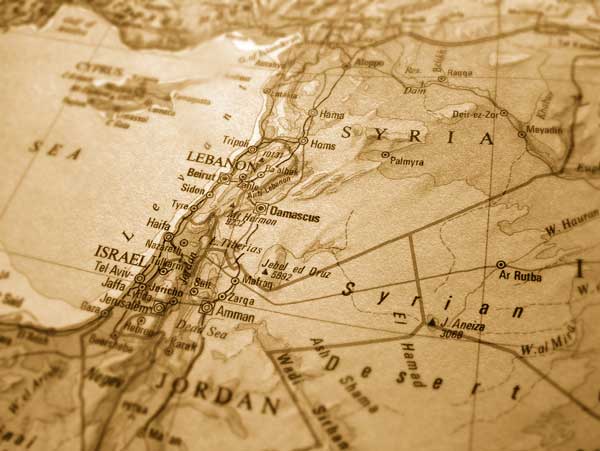
The Syrian Dynamic is a Major Fault Line for 2012 (Credit: Bigstock)

During the 1970s and 1980s, Syria was a close ally of the Soviet Union. The end of the Cold War and subsequent collapse of the Soviet Union weakened relations between Damascus and Moscow. Since Syrian President Bashar al-Assad visited Moscow in January 2005, their relationship has improved substantially. Russian arms sales have increased and Russian companies have been engaged in a number of projects in Syria aimed at improving Syria’s physical infrastructure and exploring and extracting oil and gas reserves. With the West, Turkey, and the Arab League cutting their ties with the Assad regime, Russia’s influence in Syria is likely to grow even further until the Syrian regime changes.

Russia is doing everything it can to avert that possibility. This August, Russian Foreign Minister Sergei Lavrov said that, “Russia will do everything it can to prevent a Libyan scenario happening in Syria.” Lavrov cast most of the blame for Syria’s civil war on Assad’s opponents. “It’s not so much the authorities, but armed groups that are provoking the unrest,” Lavrov told reporters. He also referred to “the armed groups that work in Syria and maintain contacts with a host of Western countries and a host of Arab states.” Lavrov has said that the internal disputes in Syria and other Arab countries “should be resolved peacefully through national dialogue… and without outside interference.”

Russian opposition to Western military intervention in Syria is easy to understand. The Syrian government remains one of Moscow’s last few allies in the Middle East. Russia has substantial economic stakes in Syria. Russian officials are repeating the warnings they made during the Libyan War that internal strife in Muslim countries would further energize extremist forces in the region.

Russian analysts are worried that a civil war in Syria, even more so than in distant Libya, could set off further sectarian violence in the heart of the Middle East that could easily spur Islamist extremism in the North Caucasus and Central Asia. They also recognize that the collapse of the Assad regime could mean the end of Russian influence in Damascus. Syrian opposition leaders warned in September that if they come to power they would punish Russia and other foreign governments that stood by Assad.

Russia has endorsed the Assad’s regime called for peaceful dialogue to end the crisis. Syrian Foreign Minister Walid Moallem has said his government would welcome Moscow as an intermediary to the current conflict. Moscow has often sought such a role, and has at various times tried to mediate between Israel and Hamas, Iran and the West, and Israel and Syria. Russian officials are eager to affirm their role as an important player in world affairs and want to host a Middle East peace conference to confirm their status in that region.

Moscow’s military presence in Syria grew after the Soviet government backed Hafez Assad’s seizure of power in Damascus in 1970. Hafez Assad, the father of current Syrian President Bashar  Assad, soon offered the Soviet Union a naval maintenance and logistics facility at the Syrian port of Tartus, which became an important support base for the Soviet Navy’s Mediterranean Fleet. The new Russian Federation lost interest in having a global naval presence.

Although Russian warships still dock at the port to load fuel and supplies, the Soviet 5th Mediterranean Squadron made greater use of its facilities. But when Russia began its military buildup a few year ago, and resumed global air and naval deployments, Moscow’s interest in Tartus resumed. Hundreds of Russian technicians now work at the facility, which is being expanded.

The declared purpose of the Tartus site is now to provide support to Russia’s anti-piracy operations off the Somali coast and the elevated Russian Navy presence in the Mediterranean. The naval base in Syria gives Russian warships based there the capability of reaching the Red Sea through the Suez Canal and the Atlantic through the Strait of Gibraltar in the matter of days. The Russian charge d’affaires in Damascus confirmed in 2008 that the Russian military intends to use Tartus more frequently because “our Navy presence in the Mediterranean will increase.”

Moscow has been Syria’s main arms supplier for more than half a century.

Syria now accounts for about 7 percent of Russia’s annual arms exports. Russia supplies arms to Syria to earn money as well as help Syria defend itself from an attack by Israel or the West, which would risk overthrowing the Assad regime and threatening Russia’s large economic and security stake in Syria. Russia has also trained many of the officers now commanding their troops to fire on unarmed protesters.

Russian officials have affirmed their right to continue supplying arms to the Syrian government despite all the thousands of people it has killed. Russian policy holds that Moscow can supply weapons to any government unless UN sanctions ban such sales. And since Russia has the right to veto any proposed UN sanctions in the Security Council, it can in theory sell weapons to any country it wants.

Russia has indeed blocked proposed UNSC resolutions that would ban weapons sales to Syria. Lavrov said that the Libya case showed how an arms sales ban would only apply to the Syrian government since the opposition would receive supplies from foreign supporters despite the ban.

Russian analysts believe that, whereas sanctions against Iran can help avert war, in Syria they would simply be a prelude to foreign military intervention, in the same way that they helped legitimize the NATO military operations in Libya earlier this year. Russians also recognize that regime change in Damascus could lead to their losing their lucrative Syrian arms client. In September 2011, Libya’s National Transitional Council chair Mustafa Abdul Jalil said Libya would no longer buy Russian arms due to Moscow’s support for Quaddafy.

In September 2007, Lavrov insisted that Russia’s arms exports to Syria were not threatening the regional power balances in the Middle East because they consisted mostly of “defensive” weapons. “All of our sales are completely transparent and in line with both our international obligations and our national export control laws – some of the toughest in the world.”

In an obvious reference to allegations that Russia was supplying weapons to Hezbollah through Syria, Lavrov also said that the sales contracts excluded the transfer of the weapons to third parties and that Moscow had effective safeguards against their illicit diversion.

Nonetheless, besides any direct threat Russian weapons sales to Syria pose to Israel, Israeli analysts also worry that the Syrians might transfer any weapons Russia provided to the Hezbollah terrorist organization in Lebanon, which has close ties to Damascus and Tehran.

Syrians appeared to have assisted Hezbollah to acquire Soviet- and Russian-manufactured weapons before the summer 2006 conflict between Hezbollah and Israel, contributing to the group’s unexpectedly strong military performance. Israel’s Haaretz newspaper stated that Hezbollah was using Russian-made RPG-29 Vampir anti-tank grenade launchers to penetrate the armor of Israel’s Merkava tanks. Hezbollah also reportedly employed Russian-designed anti-tank missiles against Israeli armor and low-flying helicopters.

After the war, Russian Foreign Ministry spokesman Mikhail Kamynin insisted that his government’s effective export controls made it impossible for Hezbollah to acquire diverted Russian-made weapons. Informally, Russian defense experts argued that the USSR had sold the RPG-29s so widely that Hezbollah could easily have obtained them from other sources. Nevertheless, the Russian government reaffirmed its commitment to sell additional arms to Syria, despite the risks of a confrontation between the Israeli Defense Forces and a Syrian military armed primarily with Moscow-provided weapons.

Russia’s most recent weapons sale to Syria is now provoking controversy and concern.

Russian officials have confirmed the sale of several mobile Bastion anti-ship systems armed with SS-N-26 Yakhont supersonic cruise missiles to Syria. The Yakhont missile has a range of 300 kilometers, can carry a 200-kilogram warhead, and cruises several meters above the water surface to make it hard to detect and intercept. The Bastion’s purpose would be to defend the Syrian coastline against attacks by Western or Israeli ships operating in the Mediterranean Sea.

Defense Minister Anatoly Serdyukov had disclosed in September 2010 that Russia had signed a contract in 2007 to sell 72 Yakhont missiles (equivalent to two Bastion systems) to Syria. A Russian source said that, while the systems have been delivered, Russia still needs time to train the Syrians how to operate the missile and its radar. According to Serdyukov, the sales agreement with Syria contains provisions to prevent the weapons from being transferred to other parties, such as terrorist organizations.

Russia’s economic presence in Syria has grown considerably in recent years.

Shortly after Bashir Assad’s visit in January 2005, Russia decided to forgive 73 percent of Syria’s $14.5 billion Soviet-era debt. The Russian parliament ratified the agreement in June 2008. Russia further allowed for Syria to pay the remaining balance of the loan under extremely favorable conditions. Russia’s economic presence in Syria has increased substantially since then. According to one source, Russia’s investment in Syria amounted to $19.4bn in 2009.

For instance, Russian firms have subsequently invested heavily in Syria. For example, Russia’s largest oil and gas construction company, Stroytransgaz, won a number of preferential business contracts with Syrian firms.

One such business arrangement came at the heels of the fifth session of the Russian-Syrian Commission for Trade and Economic, Scientific and Technical Cooperation in late-April 2007. It entailed a €160 million contract to build a gas refinery in the north of Palmyra plateau, which Vladimir Naumenko, the head of the Damascus branch of Stroytransgaz. Other deals the Syrian government has reached with Stroytransgaz include a $220 million contract to build a natural gas processing plant and projects totaling more than $2.5 billion in investment to construct an oil refinery and the pan-Arabian and Kirkuk-Banyas pipelines in Syria.

Aside from Stroytransgaz, other Russian firms have agreed to cooperation deals with Syria. In the field of oil and gas, the Russian-owned Tatneft oil company and the Syrian-owned Syrian State Oil Company signed a production-sharing contract in March 2005 giving the two companies exclusive rights to geological prospecting and oil and gas extraction in a 1,900 square-kilometer sector in eastern Syria. Tatneft began pumping Syrian oil last year. In the sphere of power generation, in April 2005, Russia signed cooperation contracts with Syria to modernize the Maskanah irrigation system, to build the Khalyabiyah-Zalyabiyah HEP station on the Euphrates, and to erect about 20 dams on the Euphrates’ coast. Moreover, Tekhpromeksport, a Russian energy construction firm, in consortium with Silovyye Mashiny (Power Machines), won an estimated $200 million contract to increase the capacity of the Tishrin thermal power station.

During the Joint Syrian Russian Governmental Committee held in Moscow on April 22, 2010, the Syrian Minister of Economy and Trade, Lamia Asi, reaffirmed the importance of “activating Syrian-Russian cooperation in all fields.”  Asi also called for the establishment of “a Russian-Syrian bank to enhance and develop trade exchange between the two countries.”  Moreover, the Russian government may open a direct maritime connection between the Syrian port of Latakia and Russian port of Novorossiysk on the Black Sea to ship cargo directly. Furthermore, Syria has expressed interest in joining the free trade zone planned by Russia, Belarus, and Kazakhstan. Specifically, during a meeting with Belarusian Prime Minister Sergei Sidorsky on July 26, 2010, President Assad said that Syria’s ascension to the Belarusian-Russian-Kazakh free trade zone would “facilitate the development of Syria’s trade and economic ties with all three countries.”

It is unlikely that Russia would easily surrender its Syrian assets even in response to significant Western pressure.

Nonetheless, Russia has cancelled several arms sales to Syria in the past after they encountered major Western and Israeli opposition. For example, the Russian government has on several occasions walked back from proposals to provide Iskander missiles to Syria. These intermediate-range surface-to-surface missiles can attack targets with more accuracy and greater range (approximately 280km) than Syria’s current arsenal of Scud missiles.

Similarly, in 2007, Russia agreed to sell MiG-31 interceptor jets to Syria. The contract, which was evaluated at $400-$500 million, called for Russia to deliver eight, modernized MiG-31 aircrafts to Syria. However, in late-April 2009, the board of directors of Sokol Enterprise, the company delegated to execute the agreement and modernize the MiG-31 interceptor jets, confirmed Russia’s not to deliver the aircraft due to pressure from Israel.
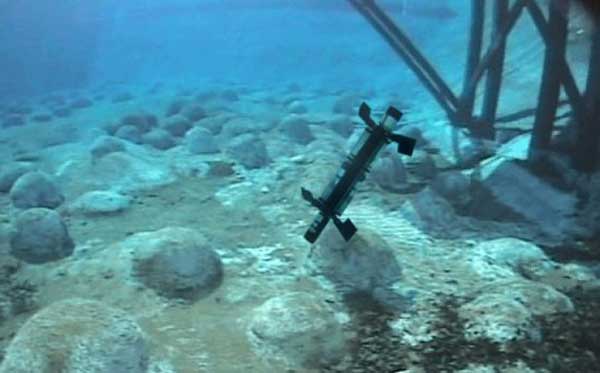
The Evolution of Maritime Robotic Systems

12/09/2011

12/09/2011 – In a wide ranging discussion with General Heinz, former PEO of the F-35 program and now head of Maritime Systems in I Robot (and working for the former head of NAVAIR, now the COO of I Robot), the current state of Maritime Robotic systems was discussed as well as their prospects.

According to Heinz, three Seaglider robotic systems were used in the Gulf Oil spill crisis.

First Heinz explained how Seaglider works.

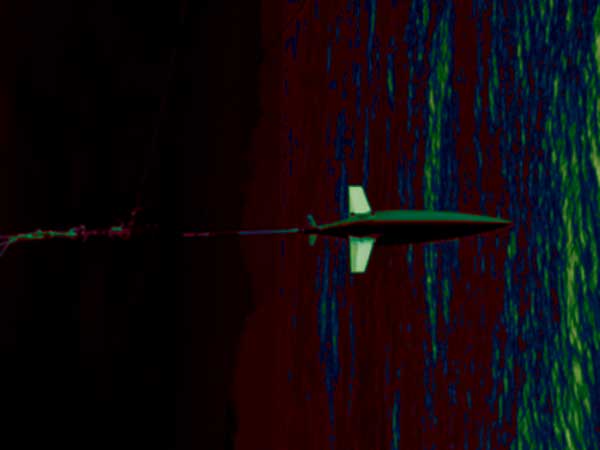
Seaglider is a long endurance vehicle that uses a change in its buoyancy as a means of propulsion.  And so when the Glider is positively going, it stays at the surface. It sticks its antenna out of the water and is able to communicate via iridium satellite to a home-based station where the pilot/operator can see the data that has been retrieved from the last dive and then type in new commands relative to the Glider operation.  If for whatever reason the Glider doesn’t make contact during that, then it has a profile that it’s basically commanded to fly and it will continue flying that profile.  So if there’s bad weather and you can’t get to iridium, then the Glider doesn’t get stuck in the bad weather, it goes ahead and continues its mission.  But it then begins to pump negatively in terms of its buoyancy and then flies just like a regular glider would with the wings steering — doing command changes and essentially going negative buoyancy to the depth that you want to do, sampling with whatever sensors you put onboard at whatever rate you require and can continue to do that for up to nine months without human intervention.

Seaglider (Credit: iRobot)Seaglider (Credit: iRobot)

Then Heinz explained how it was used in the Gulf.

What we did in the Gulf is we took a couple science sensors because at the time we didn’t have a carbon detector, but we used a combination of a turbidity and a fluorometer, which are essentially biomass sensors, and use some techniques that had been developed in the science regime to actually prove that we could detect the oil when we were passing through it.  And so the Glider was put out near the accident to actually go down into the water column and try to find the underwater plumes.  And frequently the Seagliders, there were three of them deployed total, one from us and two from the US Navy, were the only things that were able to track where the underwater plumes were moving to because the space satellites of other ship sampling methods were too slow or simply unable to make the observation in the water column.  Now we would’ve preferred to be able to do that to deeper than 3,300 feet, but that’s the current limits of the capability that we deliver, down to a thousand meters or 3,300 feet.

The company is focusing significant attention on applications of the Seaglider as well as underwater robotic developments and opportunities.

I also think is a fallacy of the current thinking is that most of it in terms of underwater robots is centered almost entirely around duration or ability to move covertly to a location.  So the large diameter UUV program and others are building these very large vehicles that have separate power systems and lots of storage for batteries simply because it’s believed you’re going to drop these things in waters and they’re going to have to travel 200 miles by themselves covertly in order to begin to be able to perform the mission that you’re looking for.  And I would simply propose that either that concept or an air deployable one, but the reality is we want to start moving to a number of smaller robots that can populate that grid and do so by delivering them near the site and then allowing the persistence of the mission to fill in those gaps and whether that’s an air deployable system or it’s a mother ship that then carries them a number of smaller robots that are deployed at intervals, but we have to start thinking about what those smaller robots are going to do for us and what persistence that they want to have.  So the simplest mission or challenge might actually be: How you going to blow up mines in the surf, and what’s the means that you’re going to do to deliver those and dolphins probably is not the answer.

Expandable and adaptable, the iRobot® Transphibian™ supports a wide variety of defense, first responder and commercial applications. Transphibian is capable of swimming long distances and is difficult to detect; the robot swims submerged to its destination, guided by periodic GPS updates. (Credit: iRobot)Expandable and adaptable, the iRobot® Transphibian™ supports a wide variety of defense, first responder and commercial applications. Transphibian is capable of swimming long distances and is difficult to detect; the robot swims submerged to its destination, guided by periodic GPS updates. (Credit: iRobot)

And Heinz sees the deployment of the Littoral Combat Ships and the new LPDs as a significant opportunity to deploy such robotic elements onboard. “These new ships are going to be ideal deployers of robotic systems and will indeed need them to extend ship protection forward and downward.”

Heinz also underscored the light logistical footprint, which underwater robotic systems would need.

I believe that robots in the underwater domain are different than air in the fact that the human logistics chain is less expensive for underwater robots, that I don’t have to maintain that very large human back train for a UAV. I don’t have to do that for a UUV and so there is potential for savings beyond just the functionality that the robot provides.

Over Hill, Over Dale the MRAPs Hit the Dusty Trail

12/08/2011

12/08/2011: In the first photo, Mine Resistant Ambush Protected Vehicles roll into the Redistribution Property Assistance Team Yard at Camp Virginia, Kuwait, Dec. 3, 2011.The RPAT assists soldiers and units coming out of Iraq to turn in mission essential items, which helps them redeploy back to the United States.

[slidepress gallery=’over-hill-over-dale-the-mraps-hit-the-dusty-trail’]

Credit: 1st Brigade Combat Team, 34th Red Bull Infantry Division: 12/3/11

  • In the second photo, Soldiers get a informational briefing prior to unloading their Mine Resistant Ambush Protected Vehicles at the Redistribution Property Assistance Team Yard at Camp Virginia, Kuwait, Dec. 3, 2011.
  • In the third photo, Soldiers unload and clean their Mine Resistant Ambush Protected Vehicles in the Redistribution Property Assistance Team Yard at Camp Virginia, Kuwait, Dec. 3, 2011.
  • In the final photo, Mine Resistant Ambush Protected Vehicles roll into the Redistribution Property Assistance Team Yard at Camp Virginia, Kuwait, Dec. 3, 2011.

New facilities for Logistic Support Team at Camp Atterbury

12/07/2011

12/07/2011: A new Army Sustainment Command complex was officially opened with a ribbon cutting ceremony at Camp Atterbury Joint Maneuver Training Center, Ind., Nov. 7. This new eight-acre complex includes a maintenance shop, warehouse and operations building for issuing and maintaining over 2,300 pieces of equipment, from weapons to Mine Resistant Ambush Protective vehicles to units undergoing pre-deployment training.

The new complex represents a vast improvement over earlier facilities, said John Medlin, Logistics Support Team chief. “We were working out of tents before, said Medlin. “This greatly increases our capacity and capability. The new facilities will help make for a better pre-deployment training experience for the soldiers that come here. We work hard to provide a great service here so Camp Atterbury has the latest and greatest to ensure the soldiers we’re training get what they need.”
The new facility is on land that was once a swamp and required extensive efforts from the installation Directorate of Public Works to reclaim the ground, said Lt. John Silva, Director of Camp Atterbury Directorate of Public Works. “This complex will greatly enhance the working conditions,” said Silva.

“We were out here with a couple of my engineers and some of my surveyors looking at the swamp that was here a couple years ago, and we thought, ‘there is no way we’re going to be able to get this facility on this ground” even after additional surveys and soil tests were conducted, the outlook was bleak for the amount of resources available for the project, said Silva. “The engineering that went behind getting this facility to where it is today is amazing and had plenty of challenges along the way,” said Silva. “At the end of the day, we got a great product at a reasonable cost…..”

Story by Staff Sgt. David Bruce

Camp Atterbury Public Affairs

11/7/2011

[slidepress gallery=’new-facilities-for-logistic-support-team-at-camp-atterbury’]

Credit: Camp Atterbury Public Affairs:11/7/2011

  • The first photo shows the recently constructed maintenance building, warehouse and operations building are the new home of the Army Sustainment Command Logistic Support Team on Camp Atterbury Joint Maneuver Training Center, Ind.
  • The second photo shows the operations building and warehouse of the new Army Sustainment Command Logistic Support Team Complex at Camp Atterbury Joint Maneuver Training Center, Ind., that was officially opened in a ribbon cutting ceremony Nov. 7. The LST issues and maintains equipment for soldiers to use during their pre-deployment training while at Camp Atterbury.
  • The third photo shows Mike Murphey, of Edinburgh, Ind., moving supplies from the warehouse to the maintenance building at the Army Sustainment Command Logistic Support Team Complex on Camp Atterbury Joint Maneuver Training Center, Ind., Nov. 7.
  • The final photo shows Skip Farley, logistics assistance representative with the Army Sustainment Command’s Logistic Support Team at Camp Atterbury, giving a tour of one of the latest MATV Mine Resistant Ambush Protected vehicles during the opening ceremony of the new Army Sustainment Command Logistic Support Team Complex at Camp Atterbury joint maneuver Training Center, Ind., Nov 7.

US Coast Pacific Rescue

12/05/2011

12/05/2011: HONOLULU — An HC-130 Hercules airplane aircrew from Air Station Barbers Point drops supplies to seven mariners who are stranded on a deserted Pacific island in the Republic of Marshall Islands Nov. 6, 2011.Seven males between the ages of 19 and 30 left the southwestern part of Maloelap Atoll en route north to Kaven Island, Nov. 3, 2011. The Royal Australian Navy liaison to the Republic of Marshall Islands contacted Coast Guard Joint Rescue Coordination Center Honolulu watchstanders and reported the vessel as 24 hours overdue.

JRCC personnel worked closely with Royal Australian Navy liaison in developing joint search patterns that would be used by assets of both governments. On the second day the HC-130 Hercules airplane crew spotted the missing men on the beach of a small island waving palm fronds near a blue vessel matching the description of the overdue 20-foot skiff.The Republic of the Marshall Islands 107-foot patrol boat Lomor was diverted and picked up the survivors. The survivors were taken back to their home atolls via the Royal Australian Navy motor vessel Miss Telitha.

Credit: U.S. Coast Guard District 14:11/6/2011

Operation Eastern Storm: Marines Make Big Bang Clearing IEDs

12/03/2011

12/03/2011: Marines with Engineer Support Company, 3rd Combat Engineer Battalion working in direct support of 1st Battalion, 6th Marine Regiment, to clear improvised explosive devices with mine-clearing line charges near Route 611 in Kajaki, which was laced with IEDs.Afghan residents had been forced to leave their homes due to the dangers imposed by heavy IED emplacement throughout the town and insurgent activity in the area. Marines with 1/6 are clearing insurgents from Sangin to Kajaki along Route 611 to make it safe for Afghan residents, local government officials, and coalition forces.The footage shows Marines preparing their vehicles by loading mine-clearing line charges and detonating charges to eliminate IEDs.

Credit: 2nd Marine Division:10/28/2011

US Joins Russia in Suspending Adherence to Conventional Weapons Treaty

12/02/2011
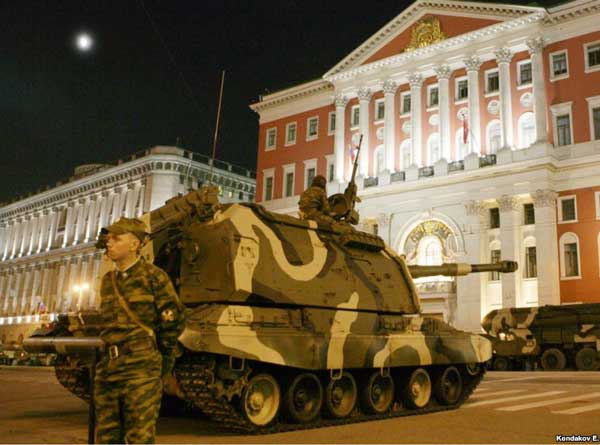
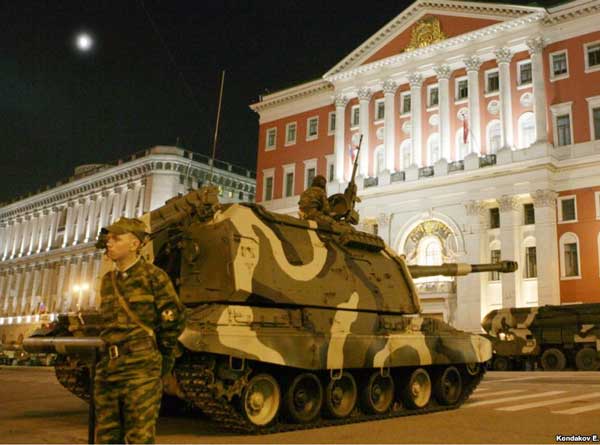
Russian Tanks and APCs on Display in Moscow (Credit: http://www.rferl.org/content/us_stops_provinding_russia_data_on_europe_forces/24399024.html)
Dr. Richard Weitz (Credit: The Hudson Institute)

By Dr. Richard Weitz

12/02/2011 – The United States announced recently that it would stop sharing data with Russia under the Conventional Forces in Europe (CFE) Treaty. In announcing the decision, State Department spokeswoman Victoria Nuland noted that Russia had suspended its participation in 2007. Nuland said the United States still hoped to persuade Russia to come back to the treaty but Washington was no longer willing to share information without Moscow reciprocating.

The successful negotiation of the CFE Treaty marked a major milestone in the East-West conflict that had divided the European continent since World War II. By requiring major reductions in European armaments and establishing a system of confidence-building measures that reduced fears of surprise conventional attacks throughout the continent, the CFE Treaty helped consolidate the end of the Cold War and establish an environment conducive to further security cooperation between Russia and the West. Conversely, the Russian government decision to “suspend” its adherence to the Treaty in 2007 symbolized the deteriorating relationship between Russia and the West as well as of Moscow’s renewed foreign policy assertiveness.

Russian Tanks and APCs on Display in Moscow  (Credit: http://www.rferl.org/content/us_stops_provinding_russia_data_on_europe_forces/24399024.html)Russian Tanks and APCs on Display in Moscow  (Credit: http://www.rferl.org/content/us_stops_provinding_russia_data_on_europe_forces/24399024.html)

On November 19, 1990, the then 16 NATO members (Belgium, Canada, Denmark, France, Germany, Greece, Iceland, Italy, Luxembourg, the Netherlands, Norway, Portugal, Spain, Turkey, United Kingdom, and the United States) and the 6 members of the now disbanded Warsaw Pact (Bulgaria, Czechoslovakia, Hungary, Poland, Romania, and the Soviet Union) signed the original CFE Treaty. It took NATO and the then-Warsaw Pact over a decade to negotiate the complex data exchanges and inspections associated with a binding and verifiable treaty that limited conventional weapons deployments throughout the enormous areas between the Atlantic Ocean and the Urals. This enormous region encompassed the territories of dozens of countries, with disparate force structures and security concerns. The breakup of the USSR resulted in each of the eight former Soviet republics having territory west of the Urals ratifying the accord in 1991. The division of Czechoslovakia into the Czech Republic and Slovakia also led both of them to ratify the accord.

The CFE Treaty established equal ceilings of five categories of “heavy” conventional weapons for both NATO and the Warsaw Pact. In the geographic zone extending from the Atlantic to the Urals, each group agreed to possess no more than 20,000 tanks, 30,000 armored combat vehicles, 620,000 artillery pieces, 800 combat aircraft, and 2,000 attack helicopters. The accord established lower levels for each of these categories of “active” units and also created several sub-regions where both blocs could deploy equal numbers of specified weapons systems. These zonal numerical limitations are also known as “flank limits.” The so-called “sufficiency rule” further limits the proportion of armaments that any one country can deploy in the treaty zone to approximately one-third of the aggregate total for all CFE parties. To enforce these complex limits, the Treaty instituted a sophisticated system of monitoring, inspections, and verifications.

The CFE Treaty established a detailed timeline requiring all 30 State Parties to destroy, transfer, or convert to peaceful use all holdings in excess of permitted levels within three years after the treaty entered into force, which occurred on November 9, 1992. A Joint Consultative Group, composed of all the CFE members, provides a forum in Vienna to address technical and other issues relating to treaty implementation as well as consider ways to enhance the treaty’s effectiveness. According to NATO, over 60,000 pieces of treaty-limited equipment has been destroyed in accordance with the Treaty’s provisions. The reductions, combined with the extensive system of military confidence-building measures, helped eliminate the possibility of large-scale surprise attacks in Europe.

Yet, the Warsaw Pact’s subsequent dissolution and NATO’s ensuing expansion soon disrupted these carefully crafted force balances, based on a bloc-to-bloc structure that no longer existed. To address the changing European security environment, on November 19, 1999, 30 countries (8 new parties had acceded to the original treaty by then) met at a heads of state summit in Istanbul, held under the auspices of the Organization for Cooperation and Security in Europe (OSCE). There they adopted two important agreements. First, NATO governments agreed to modify the CFE Treaty to account for the disappearance of the Warsaw Pact, de-linking the force levels of Russia from the other former members of the Soviet bloc, some of which were joining NATO. The amended version replaced the obsolete bloc ceilings and zones with a system of national limits for each treaty party. Although it retains the systems of flank zones, which were of particular importance for Turkey and Norway, the Adapted Treaty applied them to smaller areas.

In addition to signing the legally binding ACFE, the summit participants agreed to a set of political commitments connected to the treaty to deal with the continuing existence of Russian equipment holdings in the “flank” (North Caucasus) regions in excess of agreed treaty limits, and the continuing Russian military presence in former Soviet bases in Georgia and Moldova. NATO governments insisted on Russia’s withdrawing its military forces from Georgia’s autonomous regions of Abkhazia and South Ossetia as well as Moldova’s Russian-speaking separatist region of Transdniester since they did not comply with the principle that foreign troops can only remain in a host country with the consent of its internationally recognized government. In several Annexes to the 1999 CFE Final Act adopted at the OSCE Istanbul summit (known as the “Istanbul Commitments”), Russian President Boris Yeltsin indicated Moscow would reduce its forces in the flanks to the agreed levels of the CFE Treaty, withdraw its forces from the former Soviet military bases in Moldova, and agree with the Georgian authorities on an appropriate military presence (if any) in the separatist regions of Abkhazia and South Ossetia.

Unfortunately, Russia implemented only some of these Istanbul Commitments, but has retained a military presence in the separatist regions of Moldova and Georgia, citing security and other considerations. As a result, only four of the signatories—Belarus, Kazakhstan, Ukraine, and Russia—subsequently fully ratified the 1999 Adaptation Agreement. The other parties have refused to do so until the Russian government fulfills the commitments it made at the Istanbul summit to withdraw all its military bases from the other former Soviet republics. The new European countries that emerged in Europe after December 1990—including the three Baltic states adjoining Russia—cannot join the CFE Treaty until it is ratified by all current members.

The relationship between these two summit decisions remains a key point of contention between Russia and the West regarding the CFE Treaty. Western governments consider these two steps interdependent, Russian officials rejected NATO’s insistence that a formal link exists between the implementation of the legally binding Adapted CFE Treaty and the political commitments made by a Yeltsin government that is no longer in office and during a different European security environment.

On December 12, 2007, the Russian government “suspended” its participation in the CFE Treaty due to “exceptional circumstances” that jeopardized Russia’s “national interests in the sphere of military security.”  The text posted on the Russian Foreign Ministry website blamed NATO countries for refusing to ratify the Adopted CFE Treaty until Moscow fulfilled “farfetched requirements having nothing to do with the CFE Treaty.” It also accused them of taking “a number of steps incompatible with the letter and spirit of the Treaty and undermining the balances that lie at its core.” This charge refers to NATO’s expansion into Eastern Europe and the deployment of NATO military forces from Western Europe and the United States on these new members’ territory.

The effect of the suspension, an option not even provided for in the original 1990 treaty, has been that Moscow has not provided information about the size, location, and activities of its military forces west of the Ural Mountains, the Russian territory covered by the treaty, for more than four years.

After the Russian CFE moratorium went into effect, NATO issued a statement calling the Russian decision “particularly disappointing” because Allied governments “have worked intensively with other Treaty partners over the past months to try to resolve the Russian Federation’s concerns constructively.” Yet, the alliance still insists that any compromise had to respect “the integrity of the Treaty regime with all its elements,” as well as to “fulfill remaining commitments reflected in the 1999 CFE Final Act with its Annexes, including those related to the Republic of Moldova and Georgia.” NATO governments said that, while they would not retaliate “in kind at this stage” to Russia’s suspension, they “will carefully monitor the Russian Federation’s compliance with its Treaty obligations” given that the “Allies’ proposals for parallel actions on outstanding issues are constructive, reasonable, and forward looking.”

The Russian-Georgian war of August 2008 has further complicated matters. During the war, the Russian military reinforced its forces in the CFE flank region and employed its troops there to occupy all of the separatist regions of Abkhazia and South Ossetia. Russia subsequently recognized these two regions as independent countries. Their self-declared governments, recognized only by Moscow and a few other foreign governments, invited the Russian military to establish large military bases on their territory. in the flank region. Russia ten established several new semi-permanent military bases in the heart of the CFE’s most sensitive sub-zone. In addition, the war impeded negotiations for months between Russia and the West on renewing or replacing the CFE regime.

For their part, Russian officials would like NATO to commit not to establish permanent military bases outside NATO territory, and accept lower force limitation quotas to compensate for the additional military capacity NATO has acquired through its membership enlargement, and consent to eliminate the system of flank limitations that apply to Russian territory in the North Caucasus as well as the Russian region opposite Norway. Since Medvedev became president in 2008, Russian proposals regarding the CFE Treaty have been closely tied to the his call for a new, comprehensive European Security Treaty to address the continent’s major security issues as an integrated passage. Russian officials have offered two pathways for renewing the CFE regime. First, NATO governments could simply ratify the ACFE and Russia would comply with it. After the Adapted Treaty came into force, the two could then modify it further. Alternatively, NATO and Russia could proceed directly to negotiate a new treaty, effectively setting aside the 1999 ACFE draft.

The Obama administration, which assumed office in January 2009, has worked with NATO and other governments to craft a new CFE renewal proposal that might be acceptable to Moscow. During 2010, some diplomatic activity on the CFE Treaty became visible. In January, the United States appointed a special envoy for the CFE treaty and the joint statement released after the June 2010 Obama-Medvedev summit had a reference to CFE: “The United States of America and the Russian Federation are also committed to working with all our partners this year to strengthen the conventional arms control regime in Europe, and modernize it for the 21st century.” But these initiatives have since stagnated.

It is possible that the recent U.S. suspension could help relaunch the CFE negotiations, but any process to modernize the CFE regime will have several tough issues to work through including the sub-zone numerical limitations (so-called flank limits) and the issue of host-nation consent of foreign troops on the territory of a party to the CFE, an issue particularly acute in Moldova and especially Georgia.

Unlike the strategic arms negotiations, which are negotiated only between Russia and the United States (though with considerable give-and-take among the relevant executive branch agencies as well as between the administrations and their legislatures, which must ratify any treaty), the CFE talks involve dozens of independent countries that must all consent to change the existing CFE Treaty or bring a new one into force.. Given that there are 30 state parties to the CFE Treaty and six more states that will have to enter the adapted or new treaty regime (the newer NATO members from the Baltic region and the western Balkans), the parties will require much time to negotiate a revised treaty that will then secure the agreement and ratification of all the state parties.

Above all, it would be surprising if the parties did not try to link other issues to the treaty discussions. The Russian Ambassador to NATO, for instance, has argued that a revised CFE Treaty should extend to encompass navies because “naval forces in many NATO countries have considerable advantages over Russia’s navy.”