By Robbin Laird
Eight photographs from April 4, 2026, at Combat Village near Yuma, Arizona, document an AH-1Z tactics exercise with an unusual premise: the attack helicopter pilot as the person being recovered. The simulated personnel recovery exercise conducted by Maj. James Turner, an AH-1Z Viper pilot with MAWTS-1, turns the standard relationship between the attack helicopter and the rescue mission on its head. The AH-1Z is normally the platform that suppresses threats and provides escort for personnel recovery operations. Here, its pilot is the survivor, on the ground, evading, communicating, and waiting for extraction.
This inversion is not incidental. The Marine Corps’ WTI curriculum requires attack helicopter pilots to train as potential survivors precisely because the AH-1Z operates in the threat environment that makes being shot down a realistic possibility. A pilot who has personally rehearsed the survivor’s actions, egress, evasion, radio communication, authentication, link-up, understands the recovery operation from both sides of the equation. When that pilot is later planning escort and suppression for a personnel recovery mission, he plans with knowledge that no classroom scenario can supply.
The Survivor Phase: Egress, Evasion, and Radio Contact
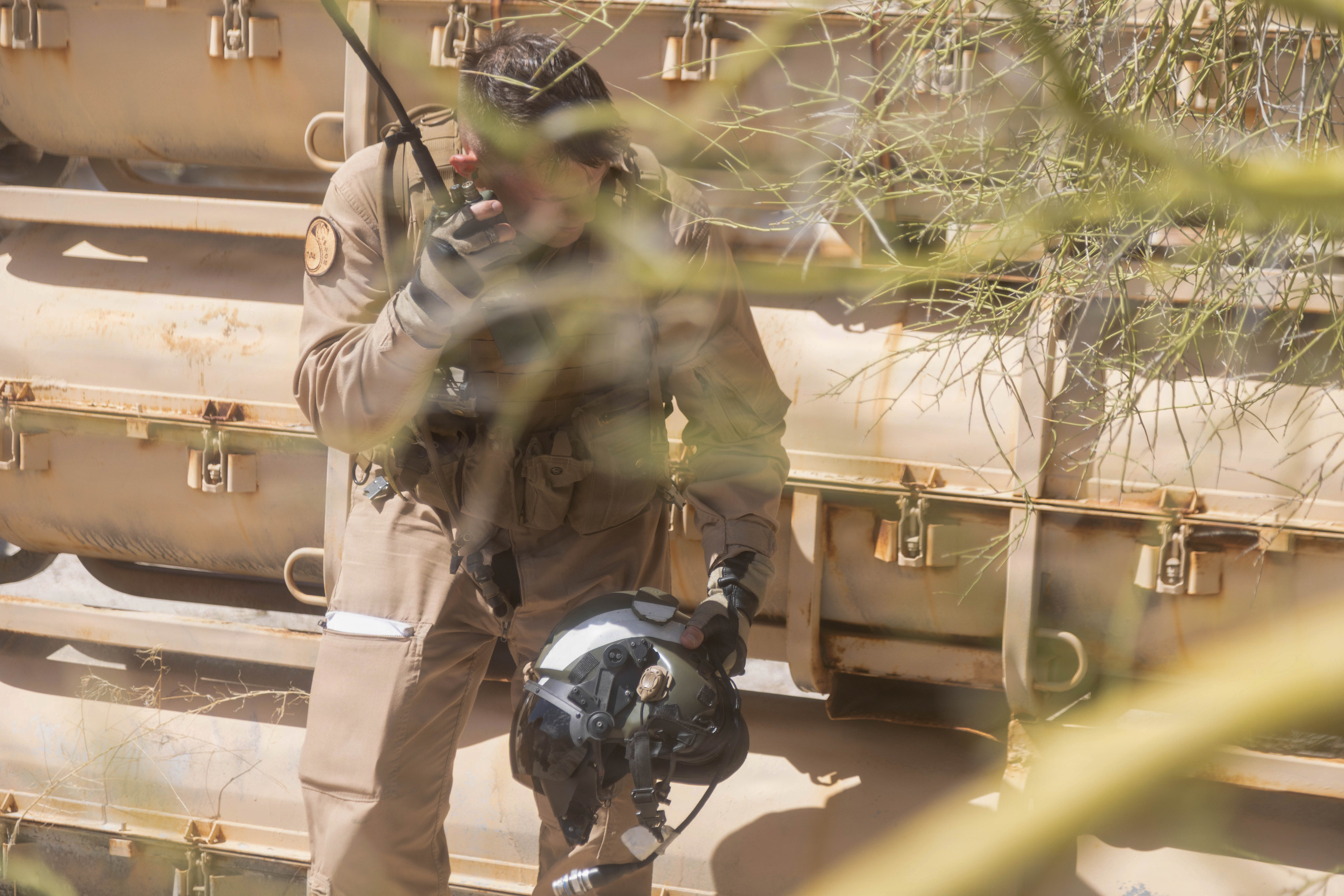
Images 1 and 2 document the survivor phase of the exercise. Image 1 shows Maj. Turner beside the AH-1Z at a desert position, flight suit on, helmet in hand, radio at his ear. He is partially screened by desert mesquite branches, the natural vegetation cover that a downed pilot would use to break his visual signature from aerial observation. The rust-streaked hardware of the aircraft’s fuel pod visible behind him places him against the aircraft itself: the survivor has not moved far from the crash site, consistent with early-phase evasion doctrine that keeps the survivor near enough for rapid recovery while concealing him from ground threats.
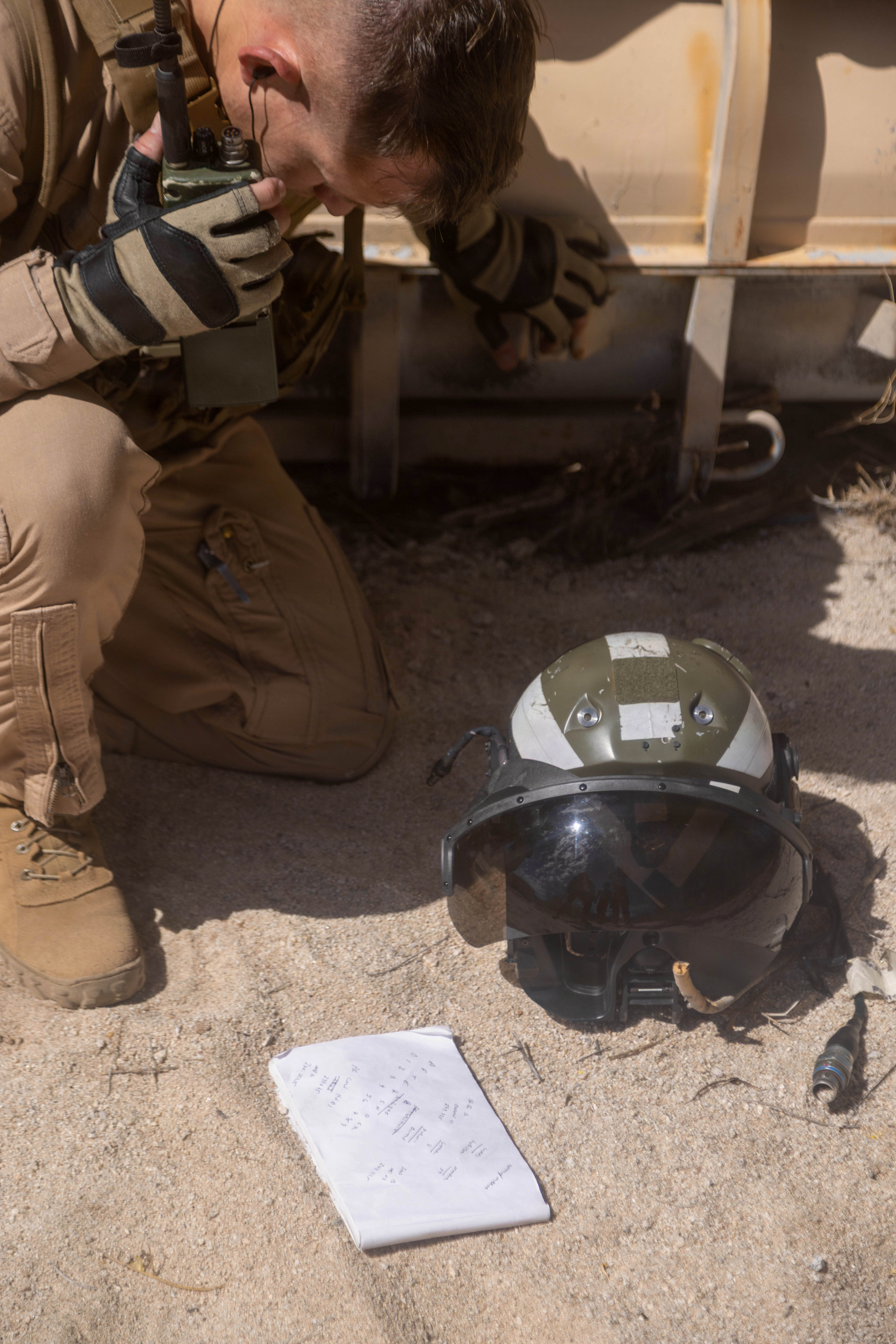
Image 2 shows a second pilot in the survivor role, crouched at ground level beside a vehicle, radio to his mouth, his flight helmet and a written reference card laid on the sand in front of him. The reference card is analytically significant: it represents the brevity codes, authentication sequences, and radio frequencies that the survivor must have memorized or carried to establish his identity to the recovery force. A downed pilot who cannot authenticate himself cannot be recovered — the rescue package cannot distinguish a friendly survivor from a threat or deception without the authentication exchange. The card on the sand is the paper anchor of a life.
The Recovery Force: Moving Through the Scrub
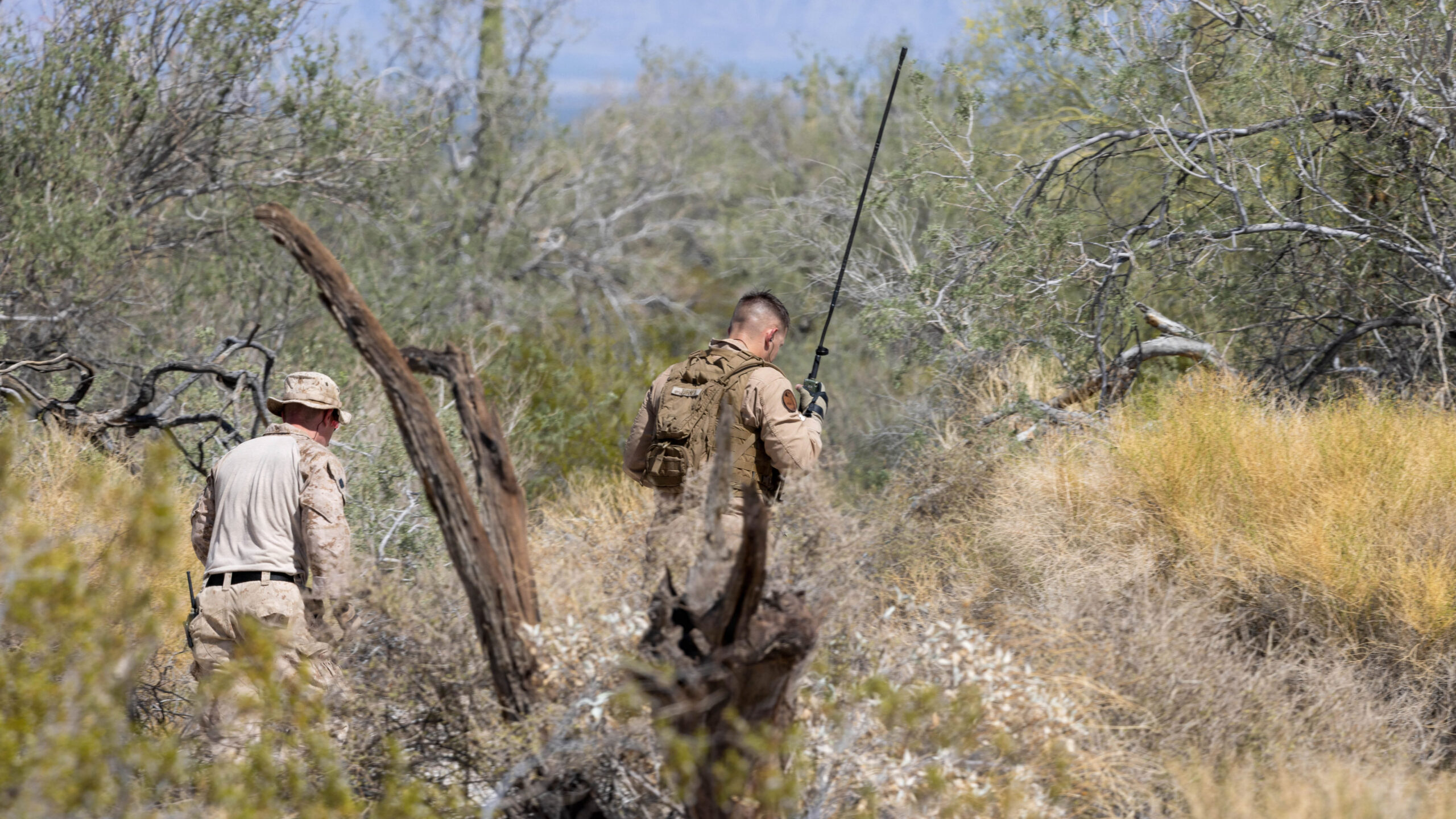
Image 3 shows two Marines moving through dense desert scrub toward the survivor’s position. One carries a long-whip radio antenna extended above the vegetation, the ground element of the combat search and rescue package, navigating toward the authenticated survivor under radio guidance. The dense mesquite and brittlebush that fills the frame represents the kind of terrain that makes ground element navigation and visual identification of the survivor genuinely difficult, even at short range.
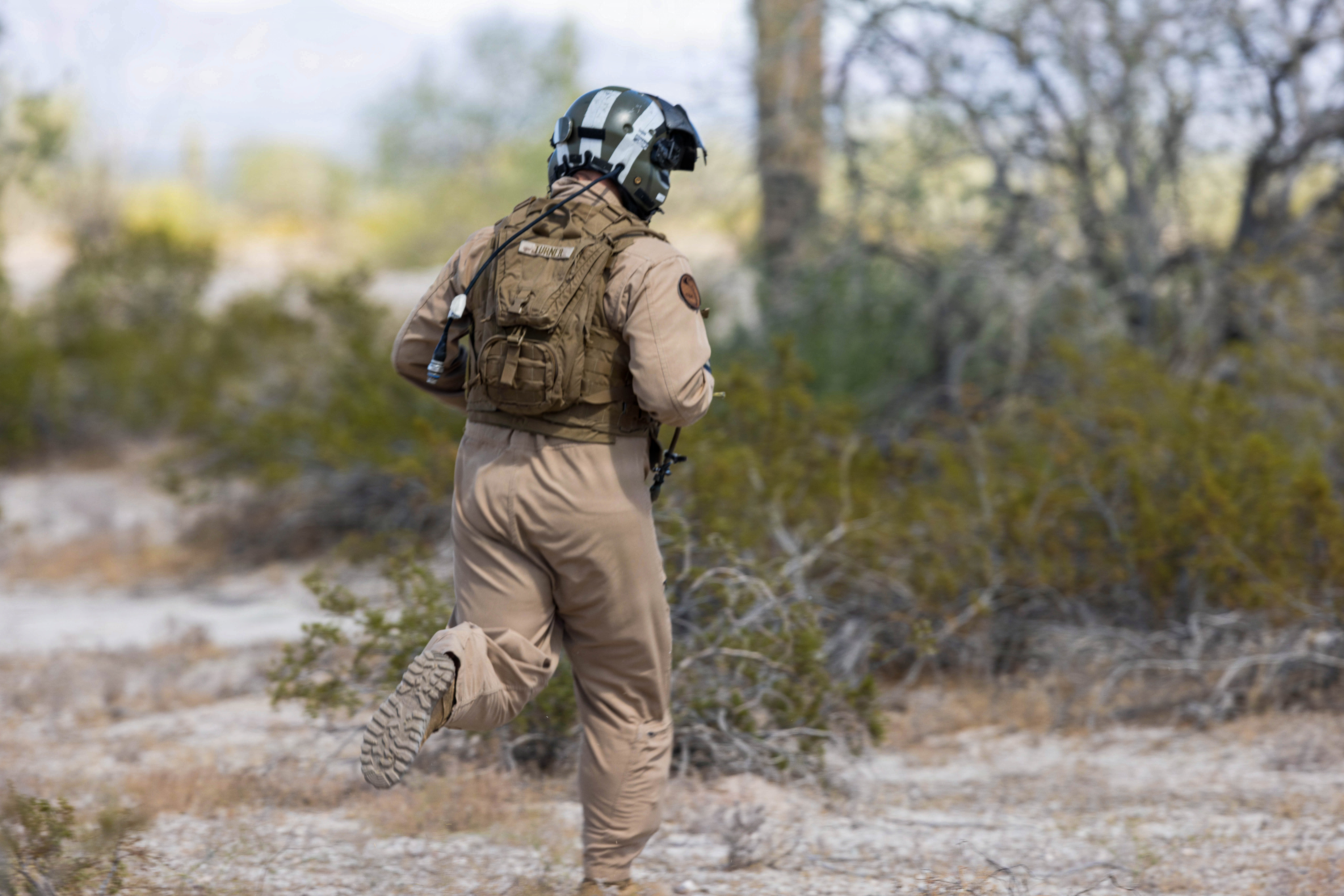
Image 5 shows Maj. Turner running in flight suit and helmet with a small survival pack and radio: the survivor moving to the pre-briefed extraction point. The running posture and the radio in hand capture the physical and cognitive simultaneity of the survivor’s final approach: maintain communications with the recovery aircraft, move at speed to the extraction point, and remain aware of the threat environment that caused the original shoot-down. The flight helmet worn during the ground evasion phase is a realistic detail, a downed pilot does not remove his helmet, both for protection and because it carries the survival radio connections and oxygen mask hardware that remain useful in a contested environment.
The AH-1Z Overhead: Combat Air Patrol and Escort
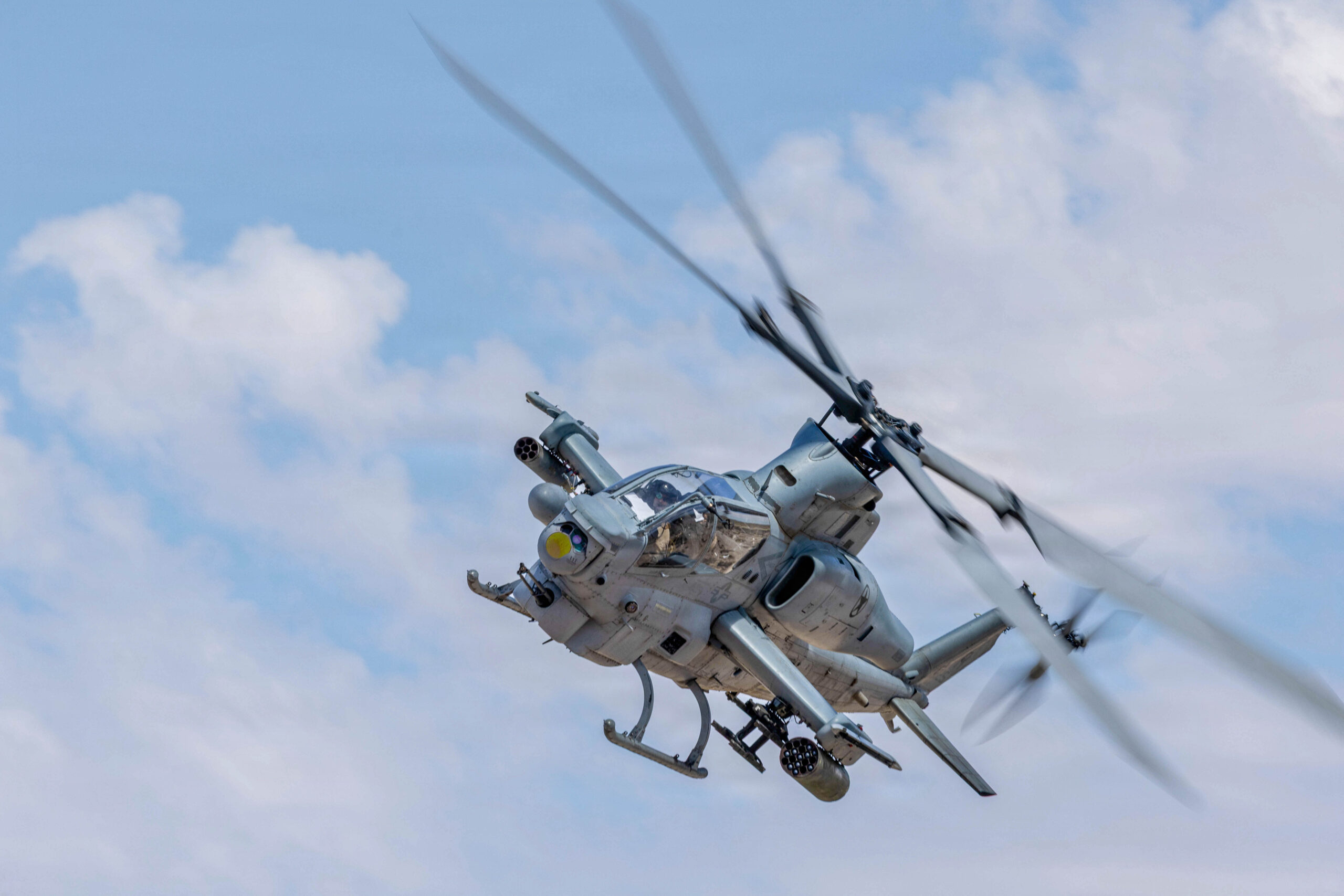
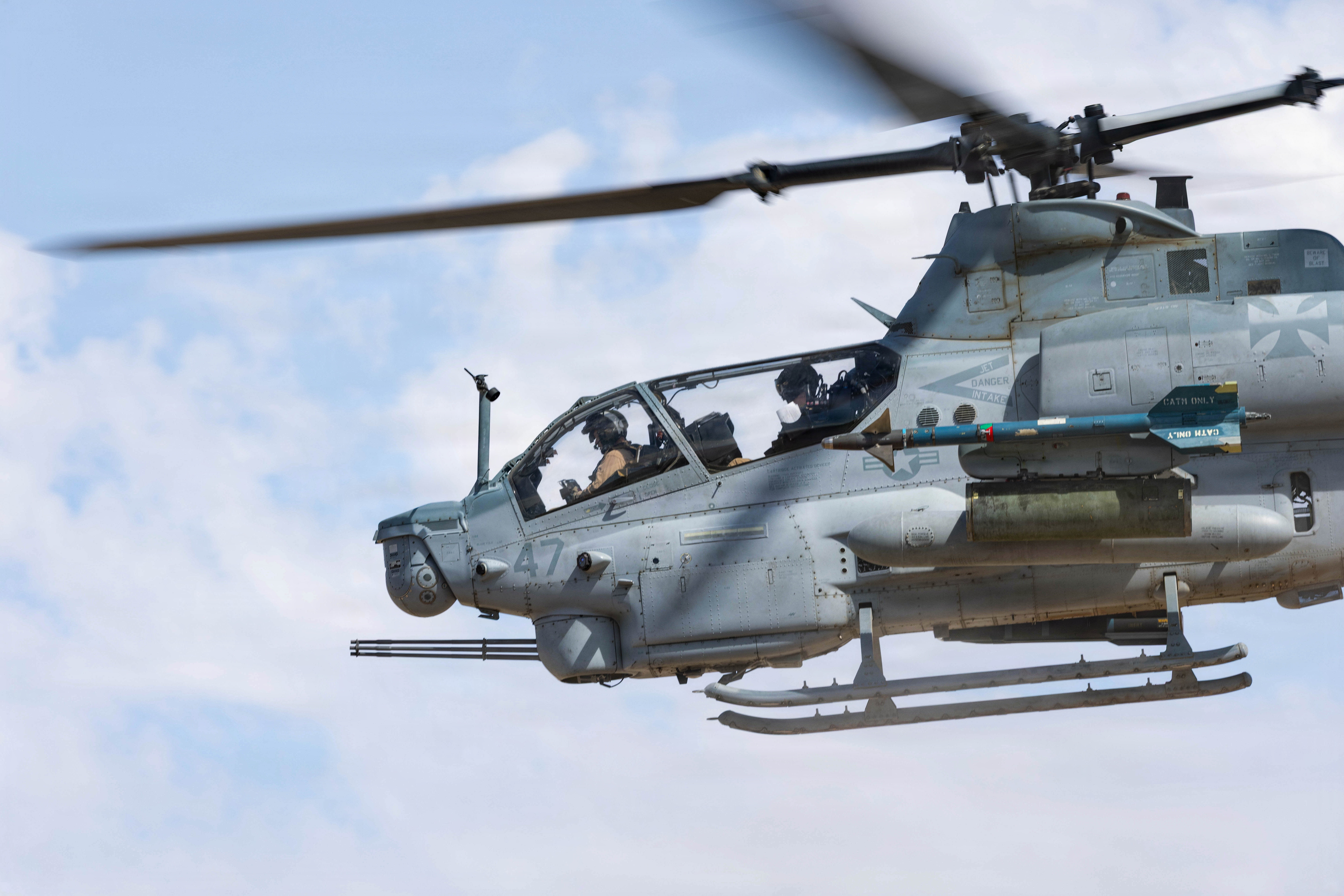
Images 4 and 8 show the AH-1Z in its conventional role during a personnel recovery operation, not as the survivor’s aircraft but as the combat air patrol overhead, suppressing threats and holding the airspace for the recovery package. Image 4 is the most technically detailed photograph of the AH-1Z in the entire WTI 2-26 series: the aircraft is banked hard toward the camera in a nose-low turn, and the full weapons suite is clearly visible. The Target Sight System ball under the nose, with its distinctive yellow lens protective cover, is the sensor that allows the AH-1Z crew to identify and engage targets at standoff while the recovery force executes at the survivor’s position. The Sidewinder missile rail on the port stub wing provides air-to-air self-defense against rotary-wing or slow fixed-wing threats. The rocket pod and the 20mm gun turret complete the layered fires package.
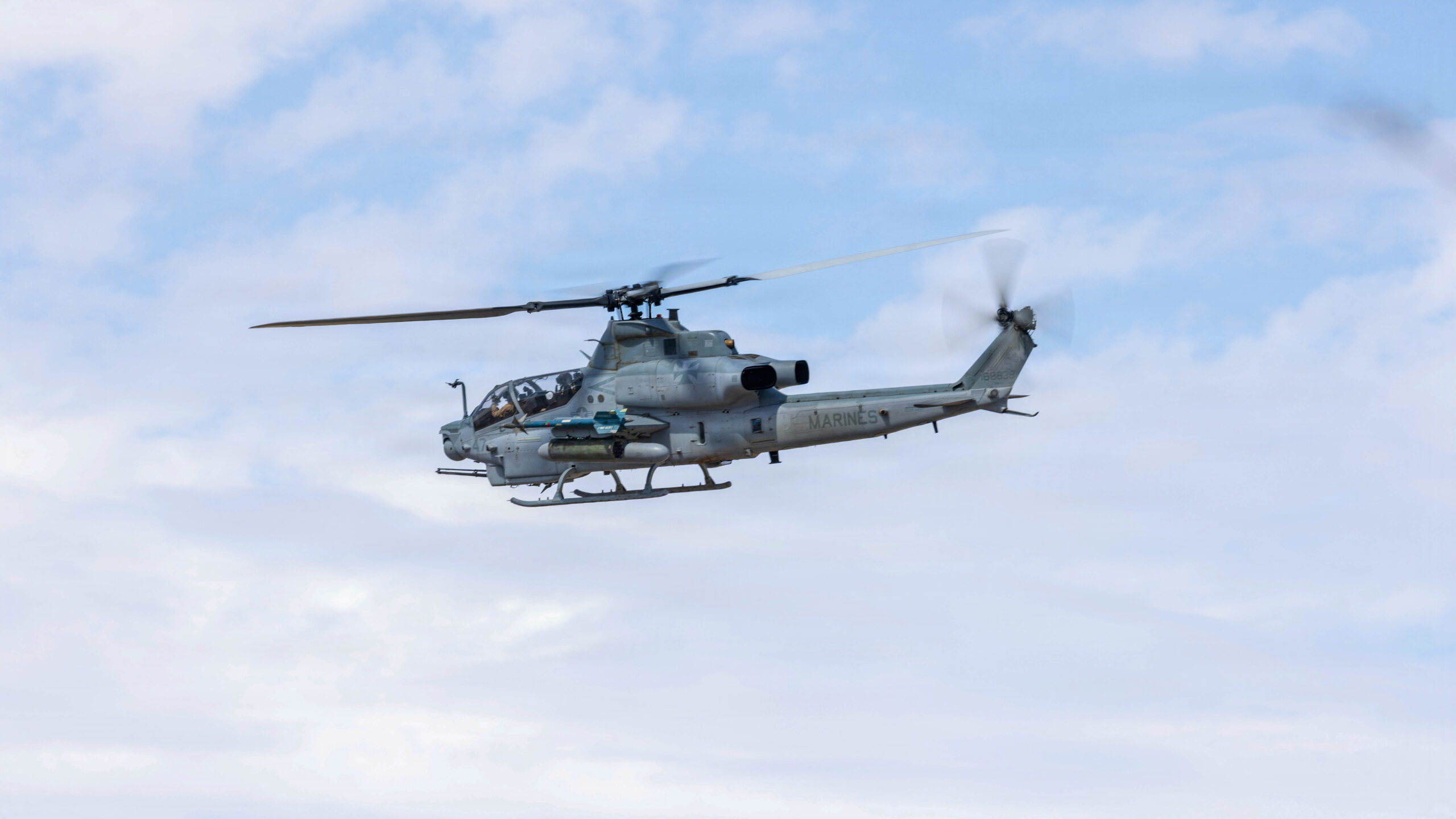
Image 8 provides the broadside view that shows the full loadout in relationship to the aircraft’s profile: the Hellfire missile rails, the rocket pods, and the gun. This is the weapons architecture that makes the AH-1Z the threat suppression layer that allows the recovery aircraft, in operational scenarios typically a UH-1Y or CH-53, to approach, land, load the survivor, and depart without being engaged by the ground threat that caused the original shoot-down.
The Extraction: Climbing Back In
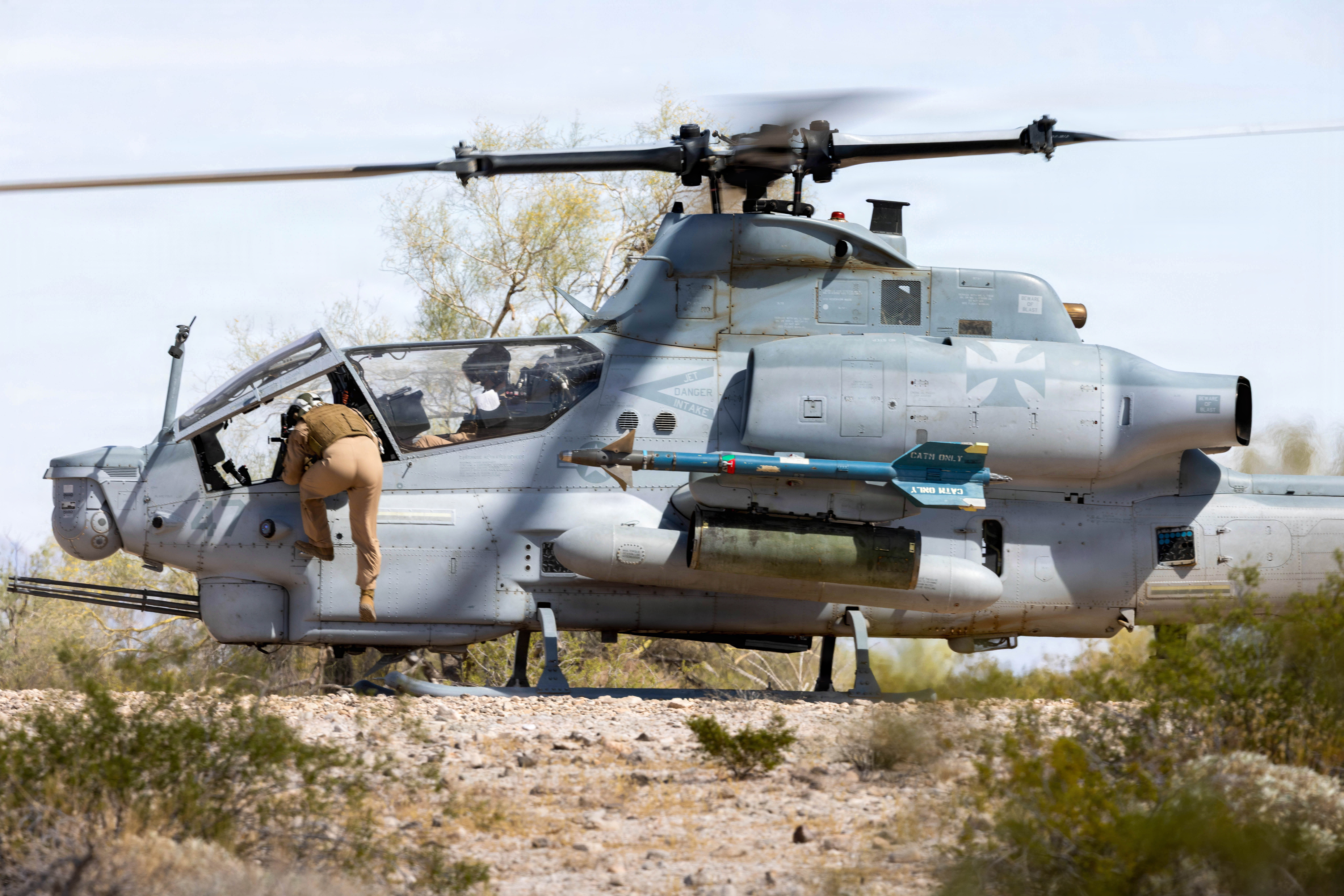
Images 6 and 7 are the most operationally striking photographs in the set. Image 6 shows Maj. Turner climbing into the front cockpit of the AH-1Z at a desert landing site, rotors turning, the full weapons load visible on the port stub wing: blue training AGM-114 Hellfire missiles in their distinctive livery, a rocket pod below. He is climbing back into the aircraft he was flying before the simulated shoot-down, re-entering the system, resuming the role of the pilot rather than the survivor.
The detail of climbing back into a fully armed, rotors-running AH-1Z as the extraction mechanism rather than being lifted by a recovery aircraft reflects the specific scenario design of this exercise. In some personnel recovery scenarios, particularly those involving a forced landing rather than a crash, the aircraft may be recoverable and the pilot may be able to restart and depart under his own power or be picked up by a second aircraft in the package. The exercise is training the full range of outcomes, not only the catastrophic shoot-down.
Image 7 shows aircraft 47 in flight with Turner visible in the front seat, the extraction complete, the survivor back in the cockpit, the AH-1Z departing the recovery site. The Hellfire rounds on the stub wing are still present. The pilot who was on the ground minutes earlier is now back in the aircraft that hunts targets. The circle is closed.
Why Attack Pilots Train as Survivors
The AH-1Z operates at low altitude in the attack role, which means it operates within the engagement envelope of a wide range of threat systems — shoulder-fired missiles, heavy machine guns, radar-guided anti-aircraft systems, and increasingly, UAS-delivered munitions. The probability of an AH-1Z pilot being shot down in a high-intensity conflict is not negligible. The Marine Corps’ investment in training attack pilots to survive that event, to execute the post-shoot-down procedures that give the recovery force a viable target to recover, is an acknowledgment of that reality.
But the training also serves a broader tactical purpose. The AH-1Z pilot who has personally experienced the survivor’s perspective who has run through the scrub in a flight suit, authenticated on a survival radio, and moved to an extraction point under threat of notional pursuit brings a qualitatively different understanding to the planning of personnel recovery escort missions. He knows how long authentication takes. He knows how difficult it is to maintain communications while moving. He knows the terrain-level view of the problem that the aircrew overhead cannot see. That knowledge makes him a better escort planner, a better debrief participant, and a better WTI.
The photographs from Combat Village on April 4, 2026, document that education in progress: Maj. Turner in the scrub, radio in hand, running toward the extraction point, and then climbing back into the cockpit that is his natural environment. The AH-1Z at WTI 2-26 was not only a weapons platform and an escort aircraft. It was, for a few hours, a lesson in what it means to need rescuing.