By Robbin Laird
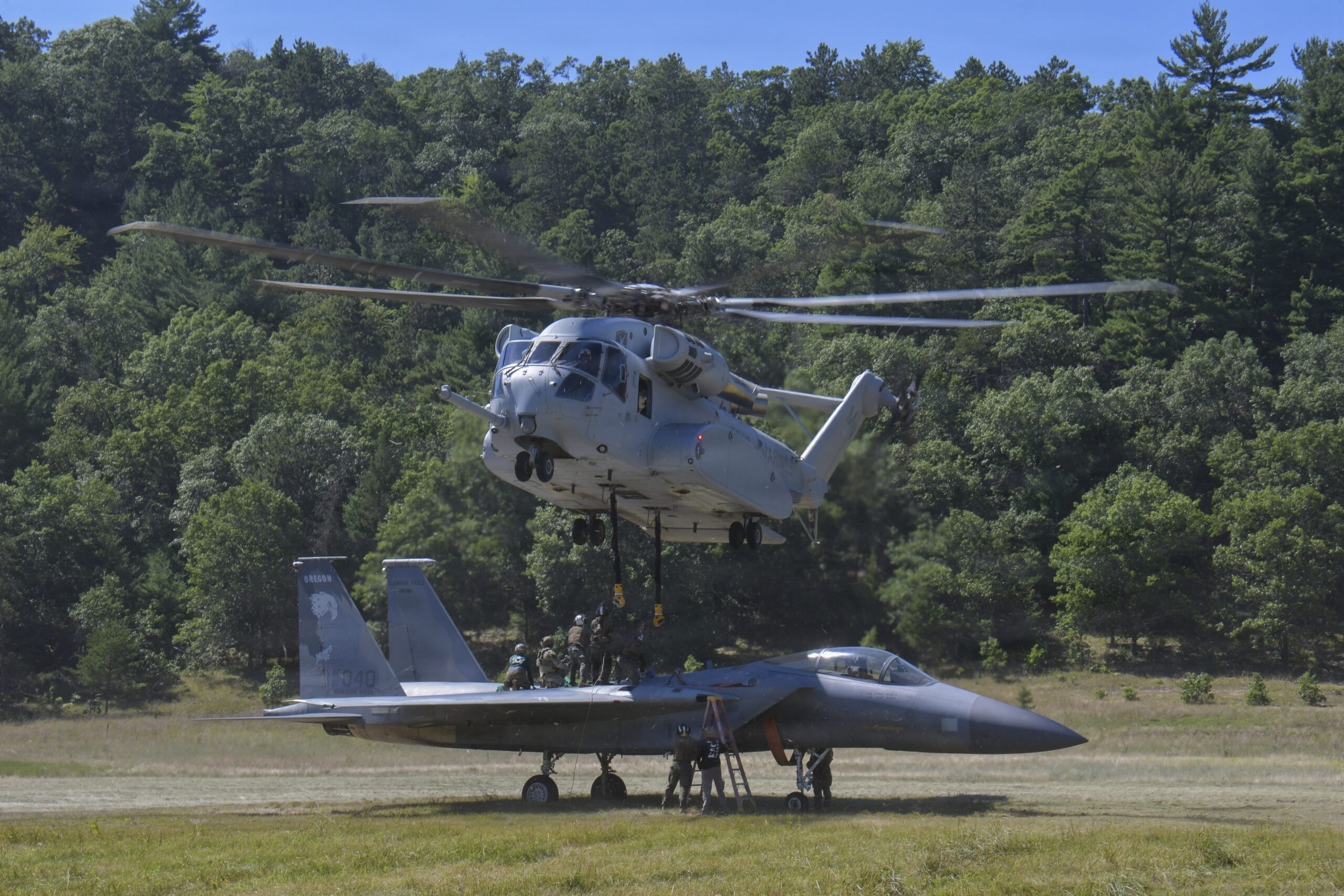
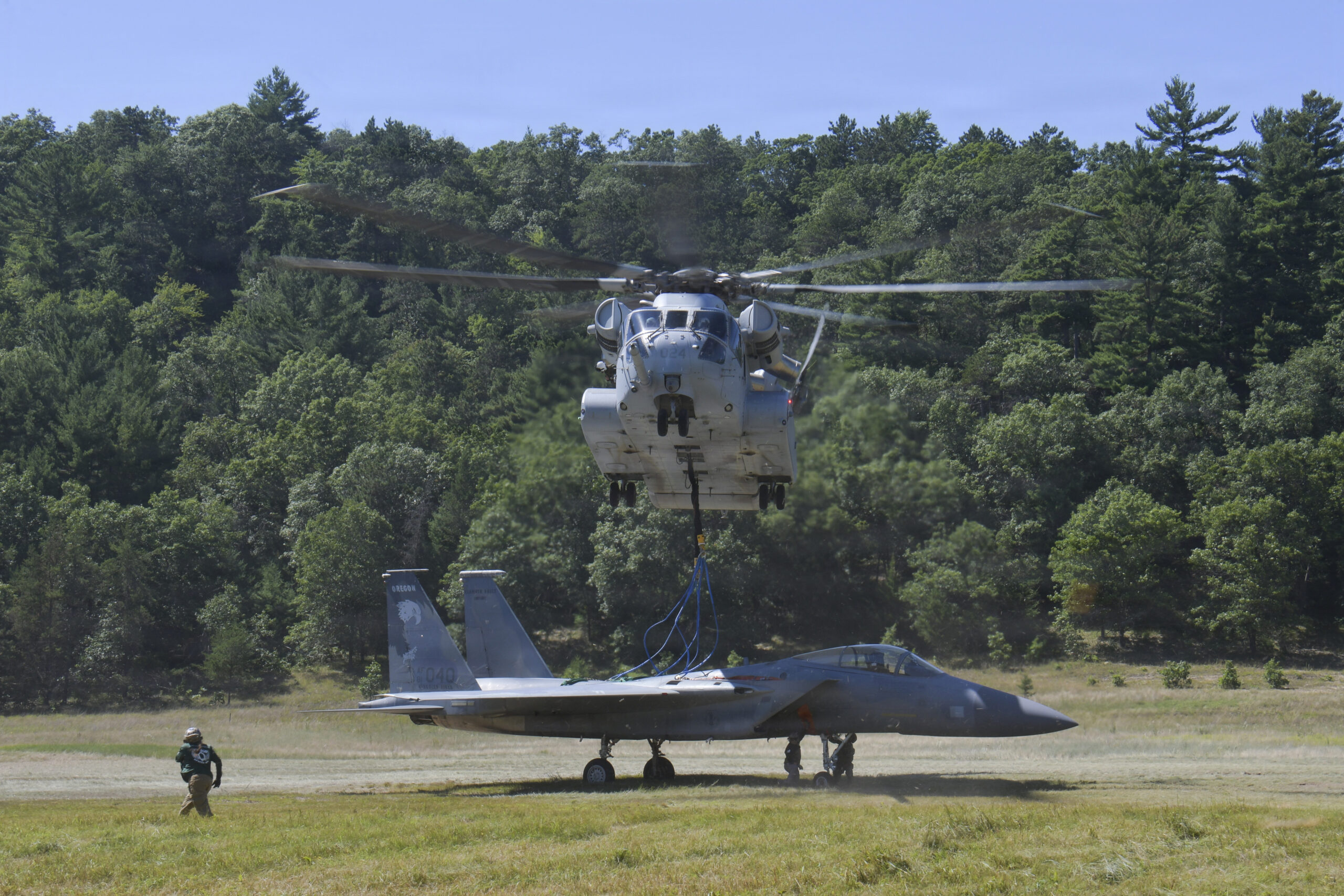
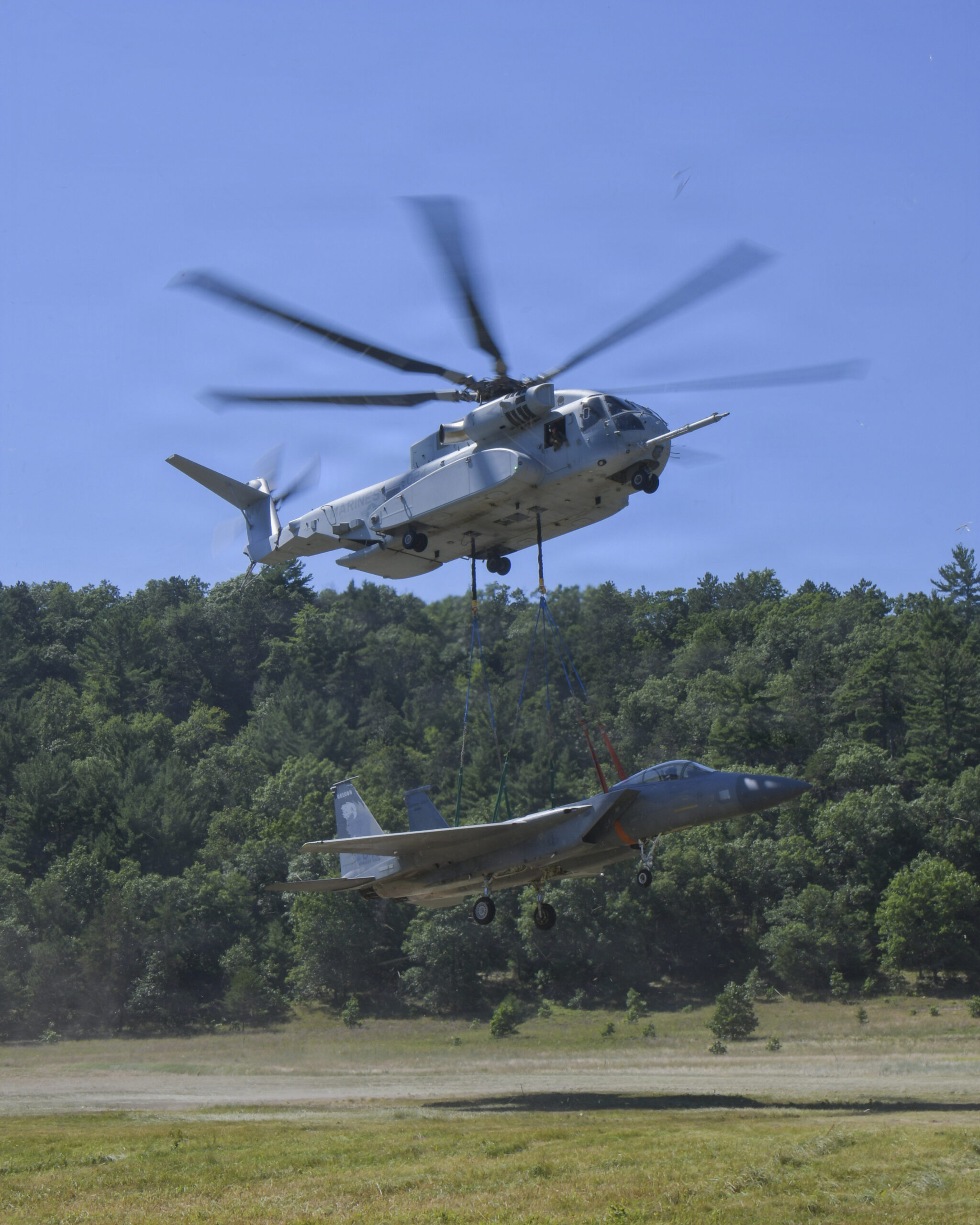
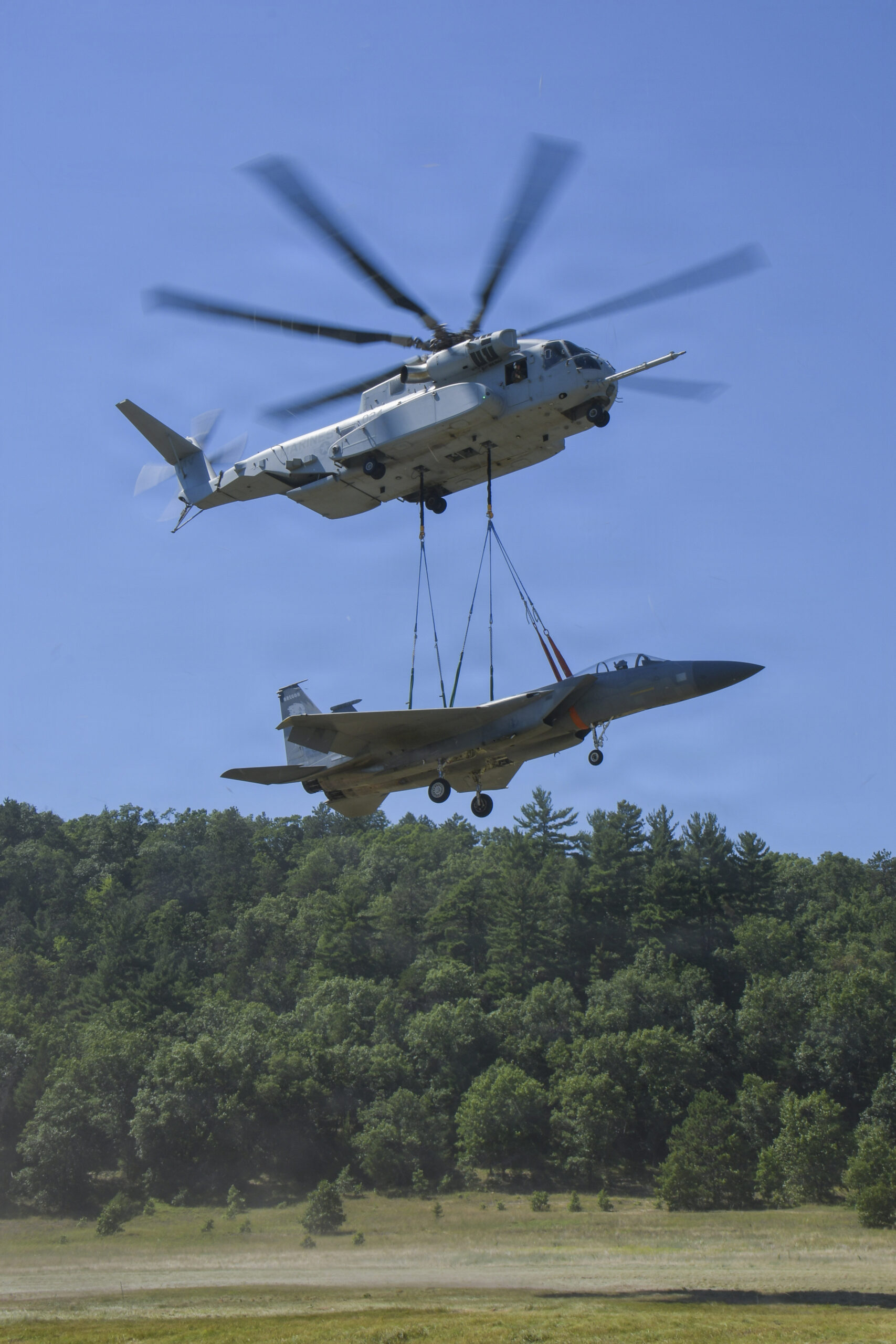
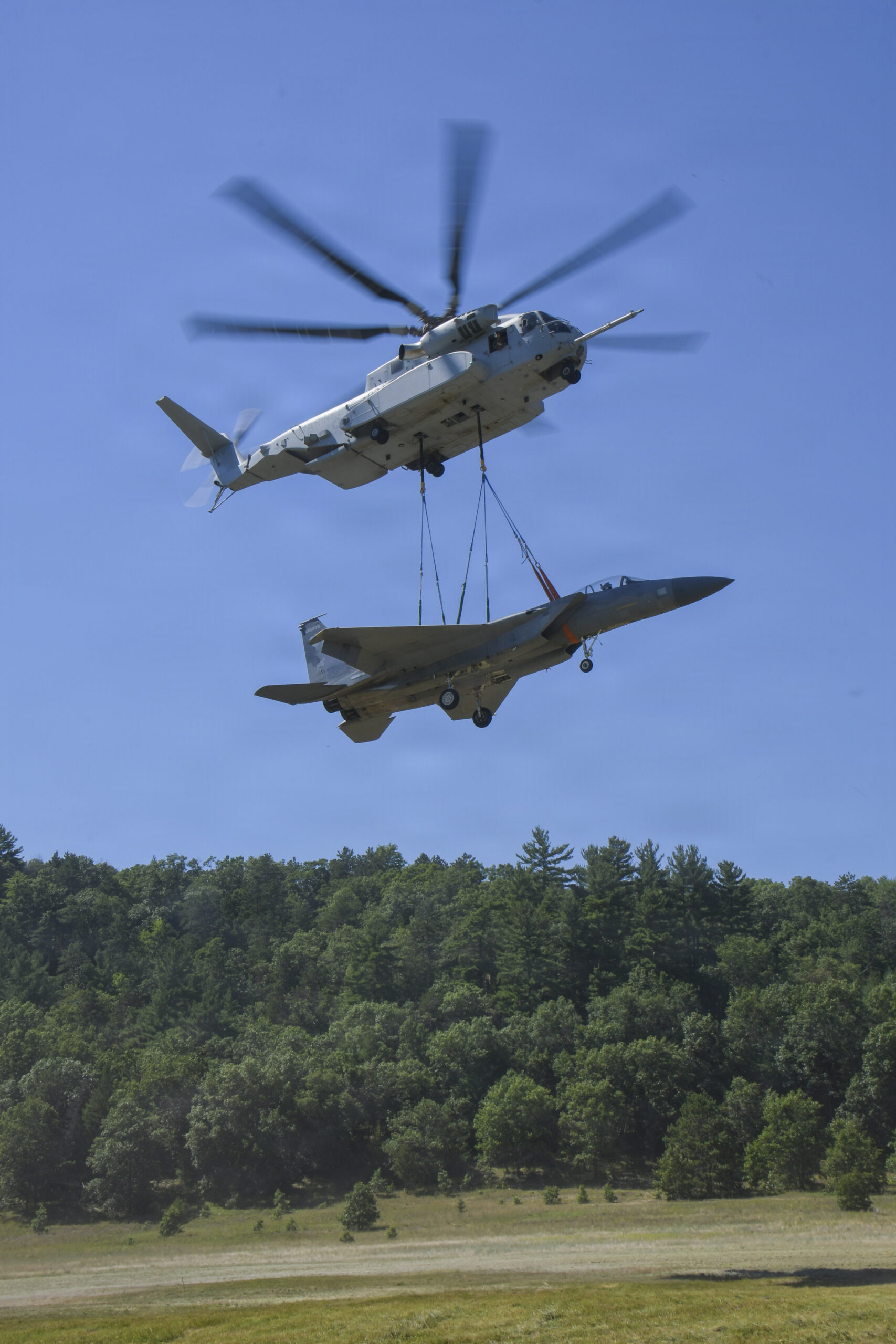
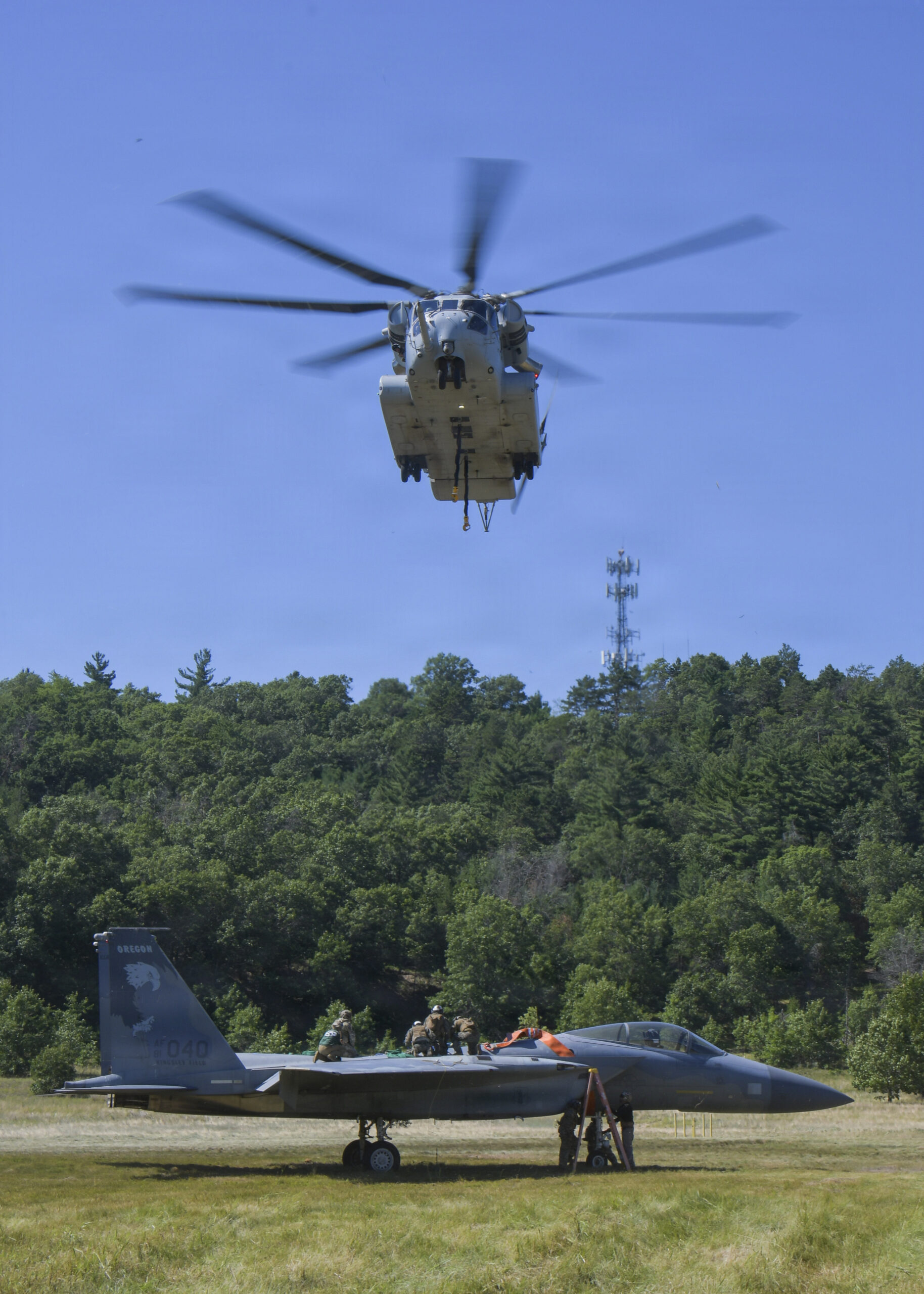
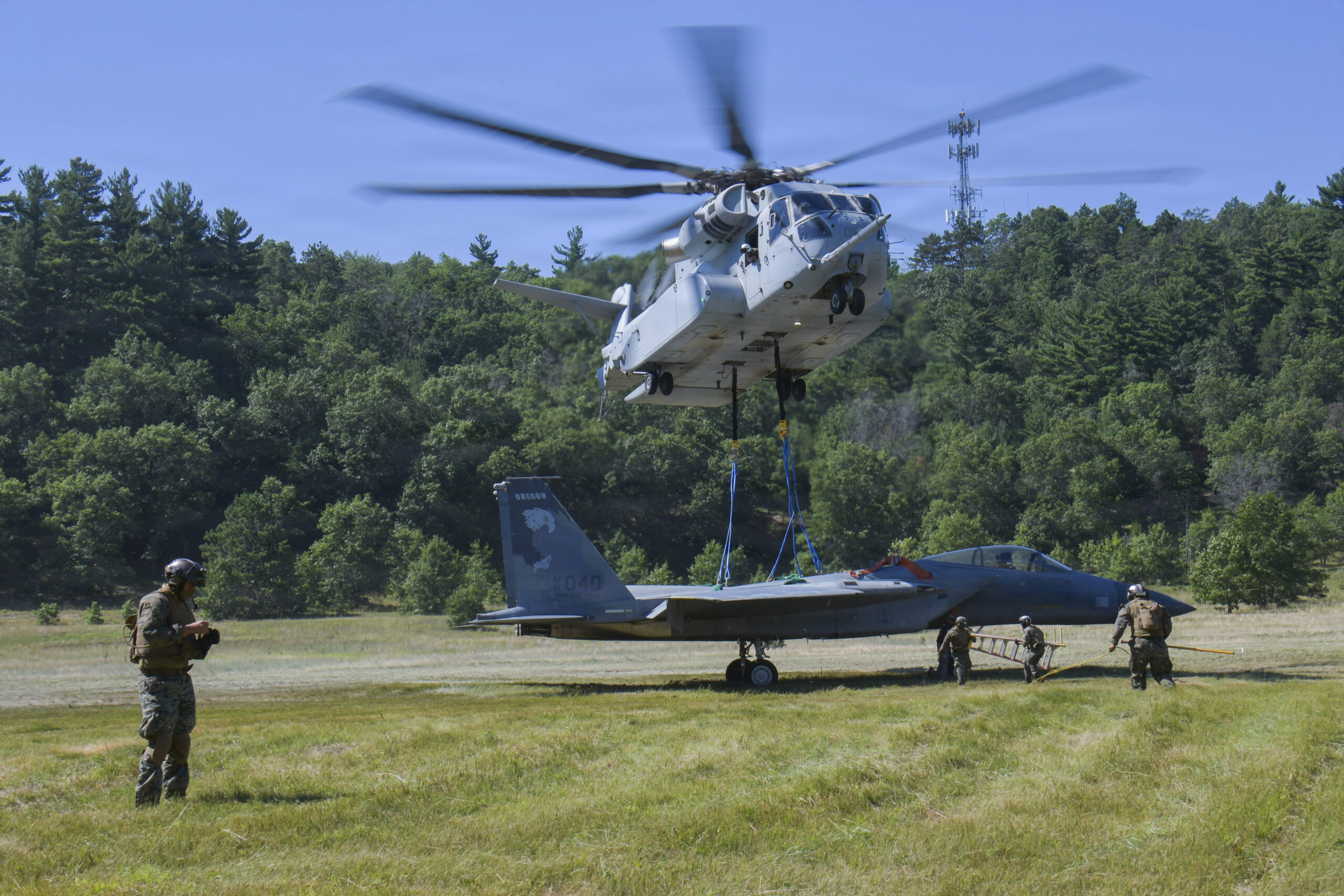
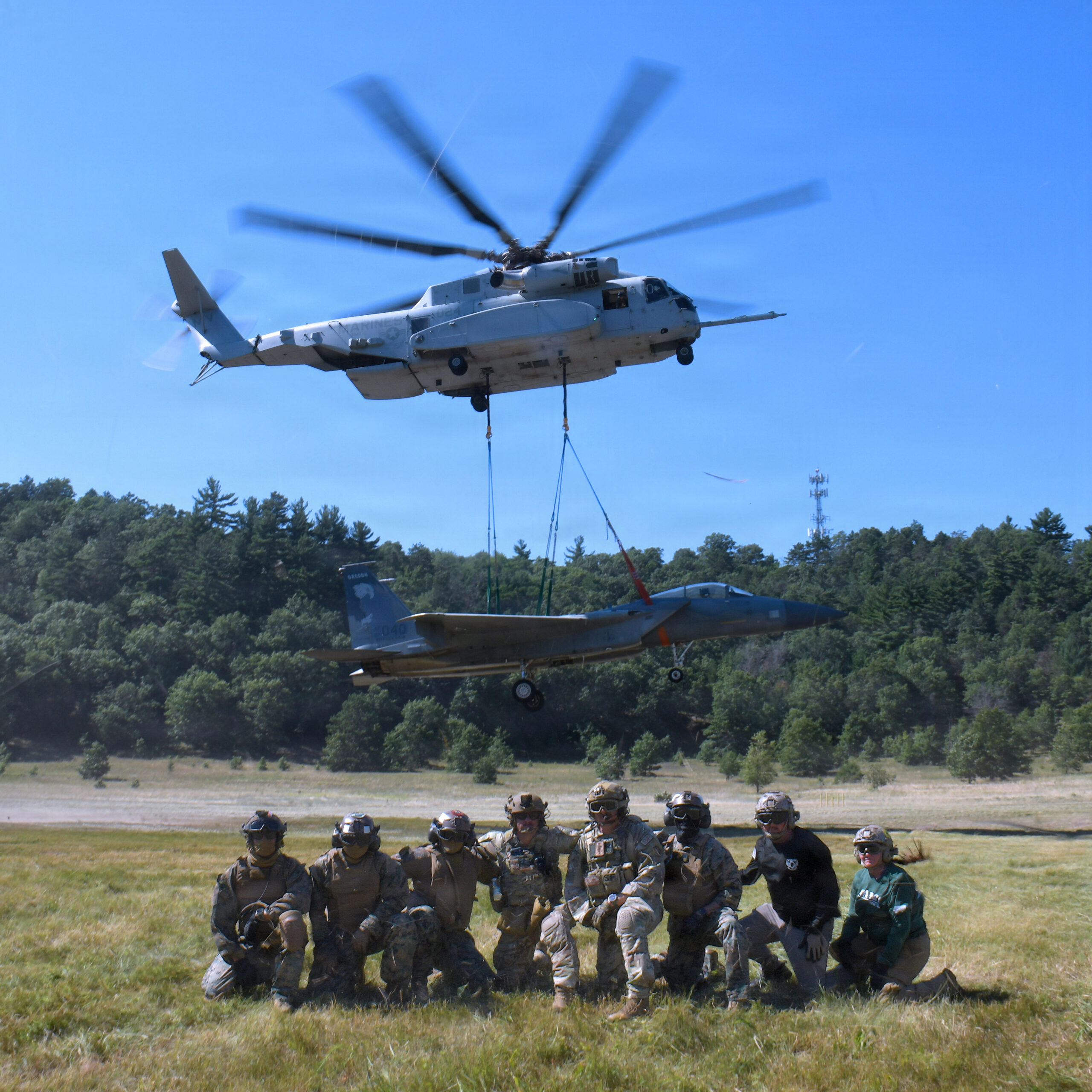
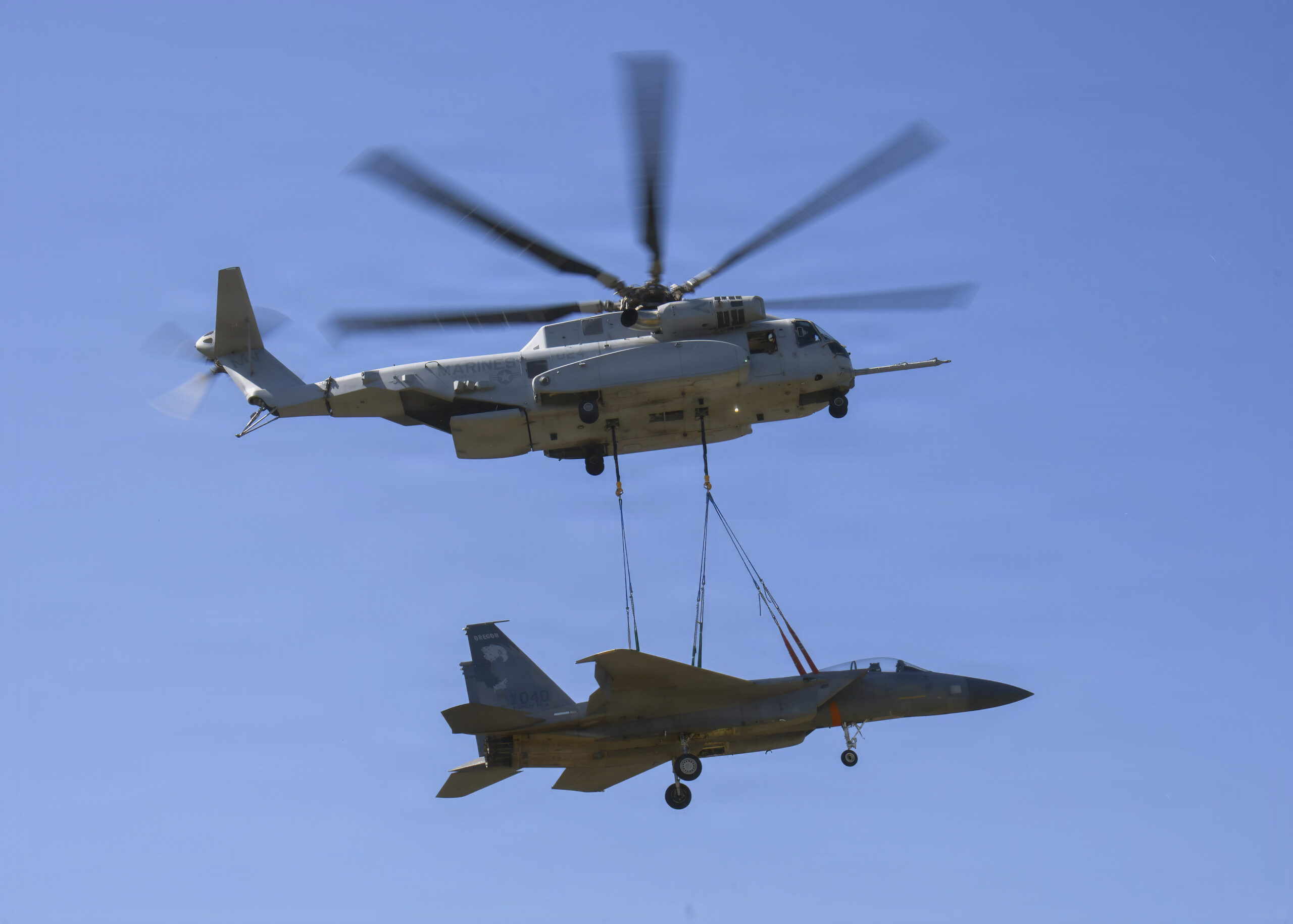
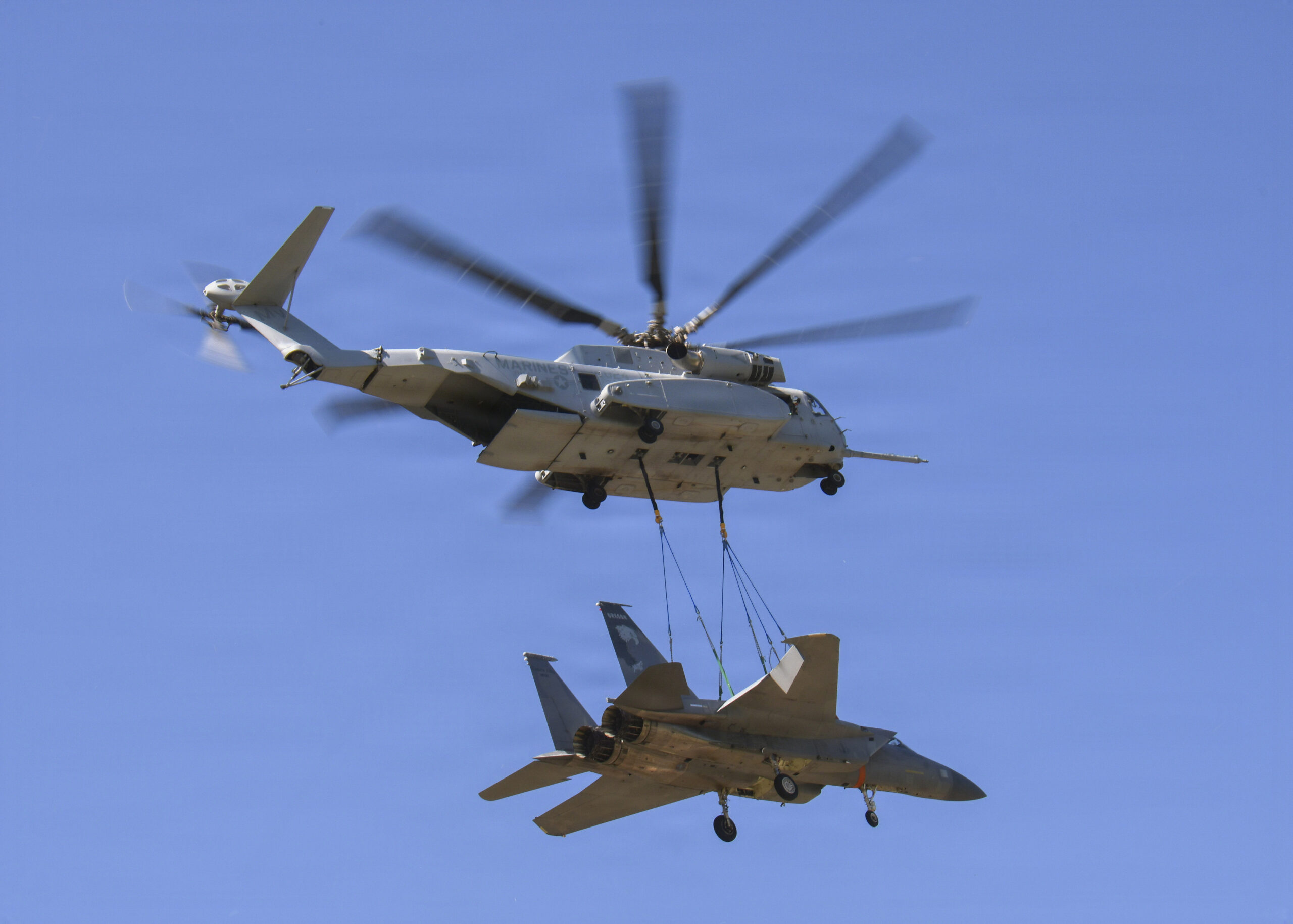
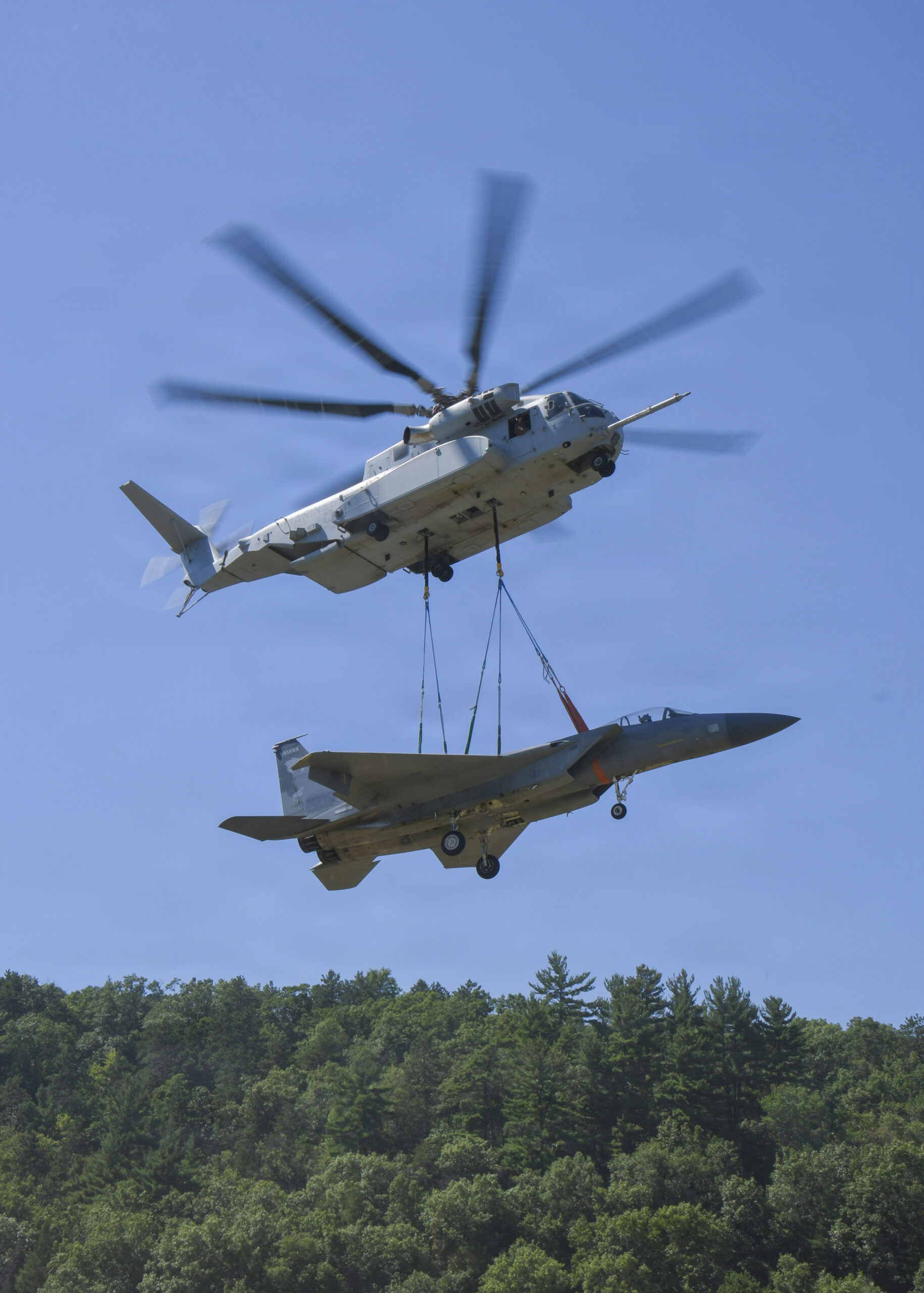
A photograph taken on July 14, 2026 at Volk Field Combat Readiness Training Center in Camp Douglas, Wisconsin, shows a U.S. Marine Corps CH-53K King Stallion helicopter hoisting a recovered F-15 Eagle into the air. The image, credited to Paul Gorman of the Wisconsin National Guard Public Affairs Office, is a still from a much larger and more consequential story: a week-long, multinational exercise in one of the least glamorous but most operationally essential disciplines in modern airpower, getting a damaged or disabled aircraft off the ground, off the ramp, or out of the mud, and back into the fight, or at least back to a depot where it can be repaired
The event was the 2026 Advanced Crash Damaged and Disabled Aircraft Recovery (CDDAR) Course, held July 10–17 and administered by the F-35 Joint Program Office (JPO) in partnership with the Air National Guard’s Volk Field program. More than 85 military and civilian defense-industry participants took part, drawn from 13 bases and, when instructors and students are counted together, at least eight countries. It is worth pausing on why an obscure skill, hauling wrecked airframes out of fields has become the subject of a growing international training enterprise, coordinated at the highest levels of a $2 trillion fighter program, and increasingly framed as a readiness and interoperability priority for the U.S. and its allies.
What CDDAR Actually Is
CDDAR stands for Crash Damaged or Disabled Aircraft Recovery. It is the specialized discipline of safely moving an aircraft that can no longer move under its own power whether because it crashed, suffered a mechanical failure, ran off a runway, sank into soft ground, or was damaged in combat without causing further damage to the airframe, endangering recovery personnel, or losing sensitive or classified equipment in the process.
It sits at the unglamorous intersection of aircraft maintenance, fire and emergency services, structural engineering, and heavy-lift aviation. Most of the personnel who attend CDDAR courses come from aircraft maintenance and fire-emergency-services career fields, the people who are actually on scene, in protective gear, working out how to lift a multimillion-dollar airframe out of a ditch without snapping a spar or triggering an unexploded ordnance hazard.
The Volk Field program itself is not new. Air National Guard instructors have run a rigorous, largely volunteer-built CDDAR training program at the Wisconsin site for more than a decade, conducting hands-on training twice a year using a rotating fleet of retired airframes as stand-ins for crash victims.
What has changed is the scale and strategic weight now being placed on it. Since 2019, the Volk Field program has trained nearly 1,000 military members, run 11 team chief courses and 21 annual training events, and in 2025 alone exported its curriculum abroad, administering CDDAR courses in Italy, Germany, and Japan, while also extending annual support to Marine Corps courses at Marine Corps Air Station Miramar, California, and Marine Corps Air Station Cherry Point, North Carolina.
From a Wisconsin Field Exercise to a Global F-35 Enterprise Requirement
The turning point came in September 2024, when the F-35 Joint Program Office hosted what organizers described as the first-ever global CDDAR Team Chief Course at Volk Field. More than 100 experienced recovery personnel, active duty, reserve, and National Guard, drawn from the Air Force, Navy, Marine Corps, Lockheed Martin, and five international F-35 partner nations, gathered for a week built around realistic mishap scenarios rather than scripted, textbook procedure.
The rationale, as described by Senior Master Sgt. Jordan Jensen, the Volk Field CDDAR program’s site manager and the National Guard Bureau’s CDDAR deputy program manager, was that previous real-world recovery incidents had exposed meaningful gaps between how different services and different countries approached the same problem. A U.S. Air Force crew, a Marine Corps crew, and a German Air Force crew might all know how to recover a downed F-35, but not necessarily in a way that let them work side by side on the same wreck. The 2024 course was explicitly built to close that gap, building “strong partnerships within the F-35 enterprise” and establishing “a more unified training approach across the global F-35 community”.
That course used a deliberately varied fleet of expendable training aircraft, C-130s, an F-16A, an A-6, and a CH-53 helicopter, configured into unscripted mishap scenarios. In one notable exercise, an A-6 was buried nose-down in mud; all five student teams recovered it successfully, but using five different methods, which organizers highlighted as evidence that flexibility, not rote procedure, is the real skill being taught.
Germany’s Chief Master Sgt. Thorsten Michels, who had separately engaged with U.S. counterparts at an Emergency Responder Weapons Crew conference, argued for expanding this kind of cross-training networking beyond the F-35 community to CDDAR operations generally, a sentiment that appears to have been heeded, given how much larger and more international the course became within two years.
Organizers have also been careful to distinguish the Volk Field course from a separate, more procedural F-35 CDDAR course established at Hill Air Force Base, Utah. The Hill course is formal, adheres strictly to F-35-specific technical orders, and is oriented toward mishaps on established airfields. Volk Field, by contrast, is built around off-airfield, degraded, and improvised scenarios, closer to what a recovery team would actually face in a contested or austere environment, away from a fully equipped home base. The two are described as complementary: Hill provides the technical baseline; Volk Field provides the judgment and adaptability layer on top of it.
Inside the 2026 Course
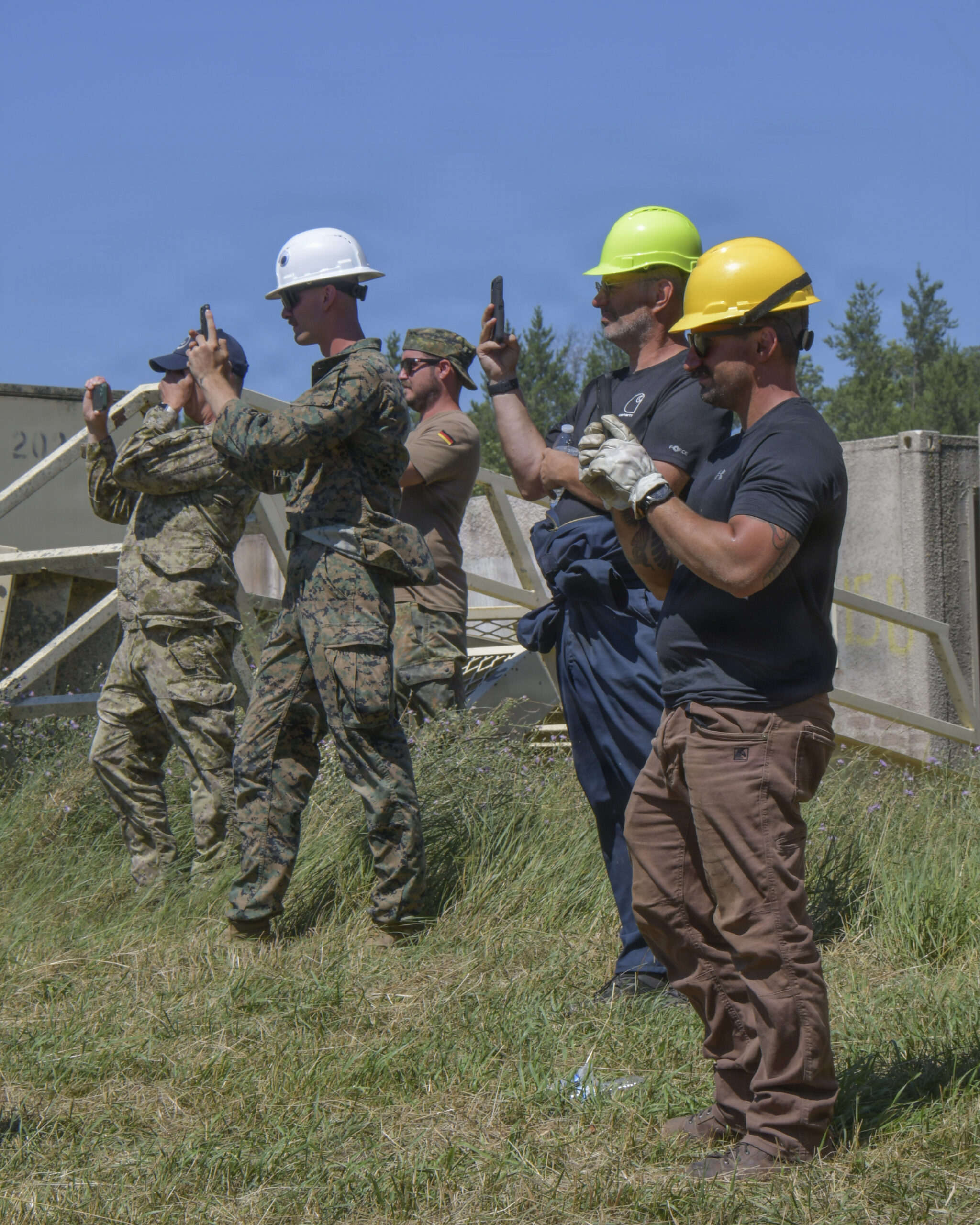
By 2026, the course had grown substantially. Eighteen instructors from 13 bases and four countries ran the program for more than 85 participants, including 41 foreign national students from Singapore, Norway, Canada, Poland, Germany, and the United Kingdom, plus representation from European Air Transport Command. On the U.S. side, participants came from Marine Operational Test and Evaluation Squadron 1 (VMX-1), Company D of the Wisconsin Army National Guard’s 173rd Brigade Engineer Battalion, and the Iowa Army National Guard’s 1st Battalion, 171st Aviation Regiment. Industry and enterprise partners included Lockheed Martin, Delta Airlines, the Naval Air Warfare Center Aircraft Division, and the Joint Program Office’s Lightning Support Team.
Students were split into six teams and worked recovery scenarios staged across Volk Field and the adjacent Hardwood Air-to-Ground Weapons Range, using a mix of legacy and newly developed equipment: airbag lift systems, PlaneSkates (heavy-duty sleds for dragging disabled aircraft), and a prototype “Transporter” multi-aircraft movement system still under development by the Air Force. Scenarios required teams to work through on-site communications, personal protective equipment protocols, fire management, unexploded-ordnance risk, and the security of classified components, a reminder that a downed fifth-generation fighter is not just a maintenance problem but a security and safety one.
The heavy-lift work fell to Marine Corps aviation. VMX-1 Marines performed sling-lift recovery operations on F-15 Eagle, F-16 Fighting Falcon, and F-18 Hornet airframes, reportedly with a 100 percent success rate, using the CH-53K King Stallion, which also ferried heavy equipment between training sites.
Iowa’s 171st Aviation Regiment brought CH-47 Chinooks to move personnel and material between locations. Wisconsin’s 173rd Brigade Engineer Battalion contributed tactical unmanned aircraft systems, generating precision drone mapping of simulated crash sites, a small but telling sign of how even this legacy discipline is absorbing modern ISR tools.
The Naval Air Warfare Center Aircraft Division’s Cargo Lab, meanwhile, provided engineering support to de-risk the VMX-1 sling-load work.
Germany’s continued participation carries its own logic. Master Sgt. Christian Steffen, a German Air Force maintenance specialist attending the course, noted that his unit is transitioning to the F-35 Lightning II the following year, making early exposure to F-35-specific recovery procedures and to the broader partner-nation recovery community a direct readiness investment ahead of that transition. Steffen also flagged a recurring, unglamorous but real friction point in multinational training: language barriers, offset in practice by having a clear team plan so “everyone knows what to do” regardless of native tongue.
Leadership framing at the 2026 course emphasized both the personal and institutional stakes. Jensen, nearing the end of his military career, called the opportunity to help stand up CDDAR training in multiple nations “the highlight of his military career” and voiced hope that Volk Field would keep “shaping the future of crash recovery operations worldwide.” Chief Master Sgt. Ronald Jemmott, the National Guard Bureau’s CDDAR program manager, praised Volk Field commander Col. Timothy Guy and the site’s ability to deliver high-value training on limited resources. a small case study in how a modestly resourced National Guard installation has become a hub for a program with F-35-enterprise-wide, multinational reach.
Why This Matters Beyond Wisconsin
It would be easy to read this as a niche maintenance story. It is worth situating instead against two larger currents in U.S. and allied airpower planning: the F-35 enterprise’s own logic of pooled, multinational sustainment, and the broader shift toward distributed, contested-environment operating concepts generally described under the banner of Agile Combat Employment (ACE).
The F-35 program was designed from the outset around a shared global sustainment enterprise, common parts pools, common training pipelines, and common support infrastructure spanning more than a dozen partner and Foreign Military Sales nations.
A recovery incident involving an F-35 is, almost by design, unlikely to be a purely national affair: the aircraft, its classified systems, and often the personnel on scene are more likely than with legacy fighters to involve more than one country’s equities.
Building a shared vocabulary and shared procedure for recovering a damaged F-35, literally standardizing how a wrecked jet gets lifted, dragged, and secured, is a logical, if easily overlooked, extension of that pooled-enterprise model.
The JPO’s decision to make CDDAR a formally administered, internationally attended course, rather than leaving it to individual services or nations to work out independently, reflects that logic directly.
The second current is doctrinal.
The concept most relevant here is Agile Combat Employment, developed from the U.S. Air Force’s 2016 “Air Superiority 2030” flight plan and its emphasis on adaptive, untethered basing, and refined further in the seminal 2015 “Untethered Operations” framework by Brown, Spacy, and Glover. ACE has been defined by retired Maj. Gen. Brian Killough as “the ability to disperse, recover, and rapidly resume operations in a contested or austere environment” noting that “recover” sits explicitly inside that definition, not as an afterthought.
ACE was conceived as a response to Chinese and Russian anti-access/area-denial strategies that put a premium on striking large, centralized main operating bases; the doctrinal counter is to disperse aircraft, personnel, and logistics across a network of forward and often austere locations, accepting that any single site may be damaged, isolated, or lost, and that forces must be able to reconstitute and resume operations regardless.
An aircraft that goes down whether from combat damage, an unimproved runway, or mechanical failure at a dispersed, minimally staffed forward operating location is exactly the scenario ACE anticipates and exactly the scenario CDDAR training is built to handle. There will not always be a fully staffed depot maintenance team, a paved runway, or benign conditions nearby.
The Volk Field course’s explicit emphasis on off-airfield recovery, degraded resources, and multinational teams thrown together with limited shared procedure maps closely onto what a real ACE-type dispersal scenario would demand: mixed-nationality personnel, working with whatever heavy-lift assets happen to be nearby, recovering an aircraft under time and threat pressure so that it or at least its recoverable components and classified systems — is not simply abandoned to the adversary or written off as a total loss.
There is also a straightforward materiel-readiness argument. Recovering, rather than abandoning, a damaged airframe preserves not just the aircraft itself but its recoverable subsystems and spare parts, a nontrivial consideration for a fleet like the F-35, where parts scarcity and long supply chains are recurring readiness concerns, and where forward supply and repair capability is expected to be thin during the opening phase of any high-end conflict.
A recovered airframe can be cannibalized for parts or eventually repaired; a wreck simply written off in place is a total, permanent capability loss, and in a contested environment may also become a source of exploitable intelligence for an adversary if sensitive systems are not secured or removed in time, precisely the concern behind the course’s focus on classified-item security procedures.
The Heavy-Lift Backbone
None of this works without the aviation assets that physically do the lifting, and the CH-53K King Stallion’s presence in these exercises is itself notable. Built by Sikorsky, a Lockheed Martin company, the CH-53K is the Marine Corps’ new heavy-lift helicopter, designed to replace the aging CH-53E. It can carry 27,000 pounds at a 110-nautical-mile mission radius under “hot and high” conditions, nearly triple the payload of its predecessor at that radius, and has a maximum external lift capability of 36,000 pounds, powered by three 7,332-shaft-horsepower turboshaft engines. The Marine Corps’ program of record calls for 200 aircraft, with the type achieving Initial Operational Capability in April 2022 and beginning fleet deployments with a Marine Expeditionary Unit around fiscal year 2025.
VMX-1, the Marine Corps’ operational test and evaluation squadron based at Marine Corps Air Station Yuma, Arizona, received its first CH-53K in June 2024 and has been putting the type through its operational paces ever since, alongside its testing portfolio for the MV-22 Osprey, F-35B, UH-1Y, AH-1Z, and unmanned systems.
The squadron’s participation at Volk Field using the CH-53K to sling-lift F-15s, F-16s, and F-18s with a reported 100 percent success rate doubles as both realistic recovery training and further operational testing of the King Stallion’s heavy-lift performance in a demanding, non-notional mission set. It is a useful reminder that “test squadron” work is rarely confined to a test range; it increasingly shows up embedded inside exactly the kind of joint, multinational exercises that will define how the aircraft is actually used.
A Small Program With an Outsized Signal
What began as a modest, volunteer-run training program at a National Guard installation in rural Wisconsin has, over roughly a decade, evolved into a recurring fixture of the F-35 enterprise’s international sustainment architecture exported to Italy, Germany, and Japan, feeding Marine Corps courses on both U.S. coasts, and pulling in participants from at least eight nations in a single week this past July.
That trajectory says something about where the U.S. and allied air forces believe the next fight may occur: not necessarily at comfortable, fully resourced main bases, but scattered across austere, contested, and improvised locations where getting a damaged aircraft and its people, its classified systems, and its salvageable parts off the ground and home again will be as operationally important as getting it airborne in the first place.
Sources
- Wisconsin National Guard Public Affairs Office / DVIDS, “Volk Field hosts multinational aircraft crash recovery training,” July 22, 2026: https://www.dvidshub.net/news/570535/volk-field-hosts-multinational-aircraft-crash-recovery-training
- Air National Guard, “Volk Field hosts multinational aircraft crash recovery training,” August 4, 2026: https://www.ang.af.mil/Media/Article-Display/Article/4563933/volk-field-hosts-multinational-aircraft-crash-recovery-training/
- G. Brown Training and Education Center (ANG), “TEC public affairs documents aircraft recovery training at Volk Field,” July 28, 2026: https://www.angtec.ang.af.mil/News/Article-Display/Article/4557819/tec-public-affairs-documents-aircraft-recovery-training-at-volk-field/
- Volk Field Air National Guard Base, “F-35 Enterprise International CDDAR Training Event at Volk Field: A New Era in Collaborative Aircraft Recovery,” October 29, 2024: https://www.volkfield.ang.af.mil/News/Article-Display/Article/3951278/f-35-enterprise-international-cddar-training-event-at-volk-field-a-new-era-in-c/
- The Aviationist, “F-35 Joint Program Office Hosts First-Ever International Crash Recovery Training,” October 30, 2024: https://theaviationist.com/2024/10/30/f-35-jpo-cddar-training/
- NAVAIR, “CH-53K King Stallion” product page: https://www.navair.navy.mil/product/CH-53K-King-Stallion
- Logistics Officer Association, “ER: Understanding ACE,” January 5, 2021: https://atloa.org/er-understanding-ace/