By Robbin Laird
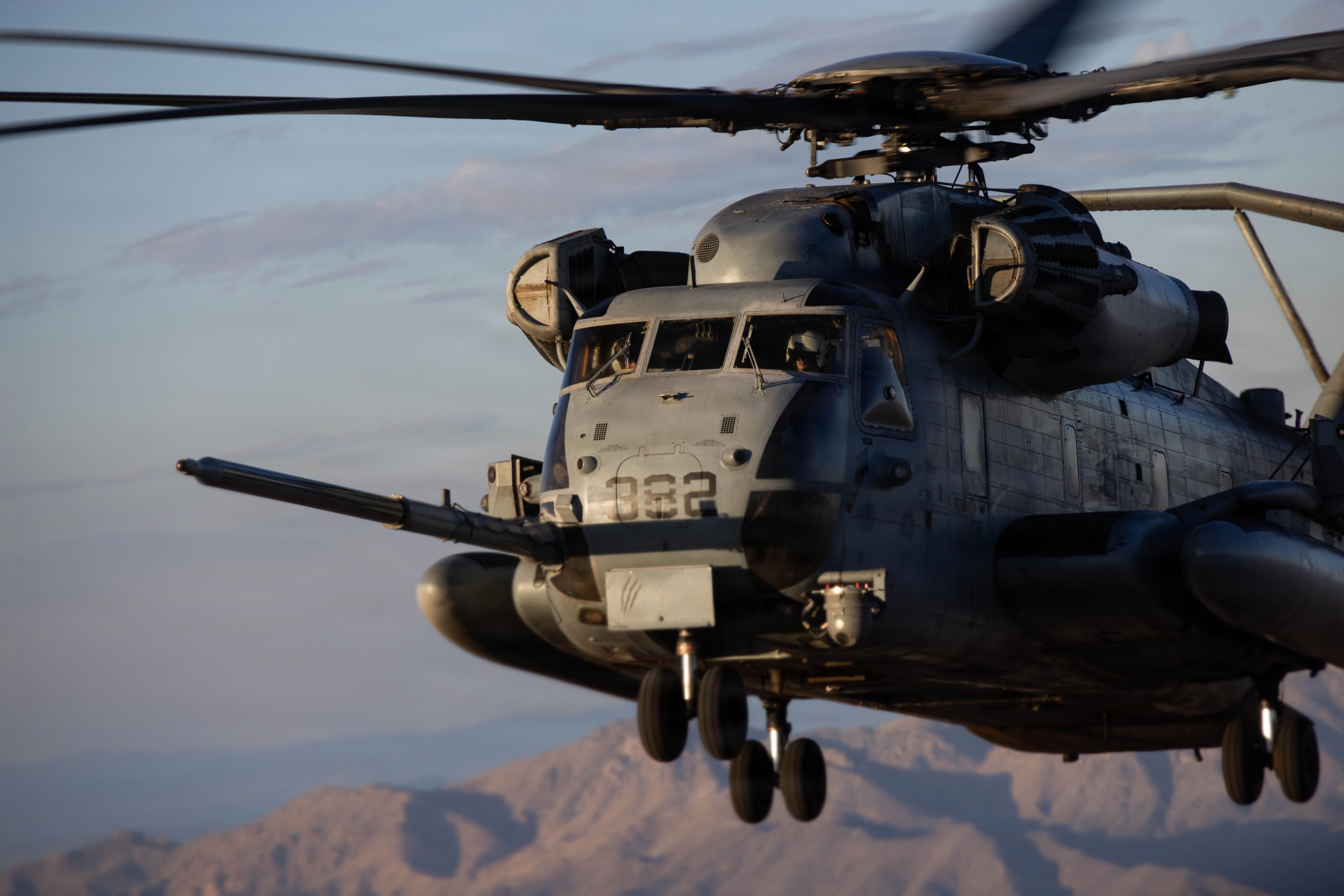
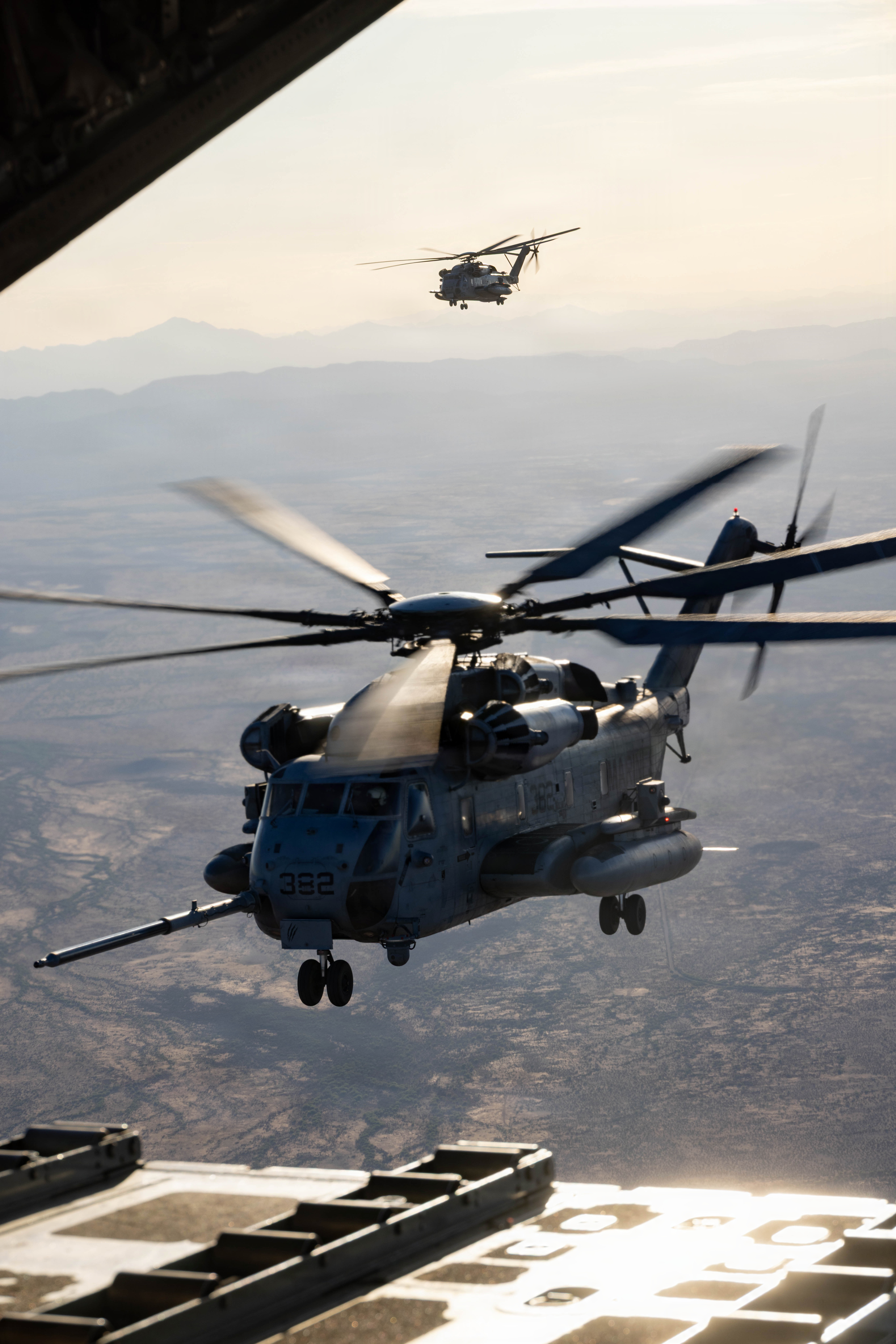
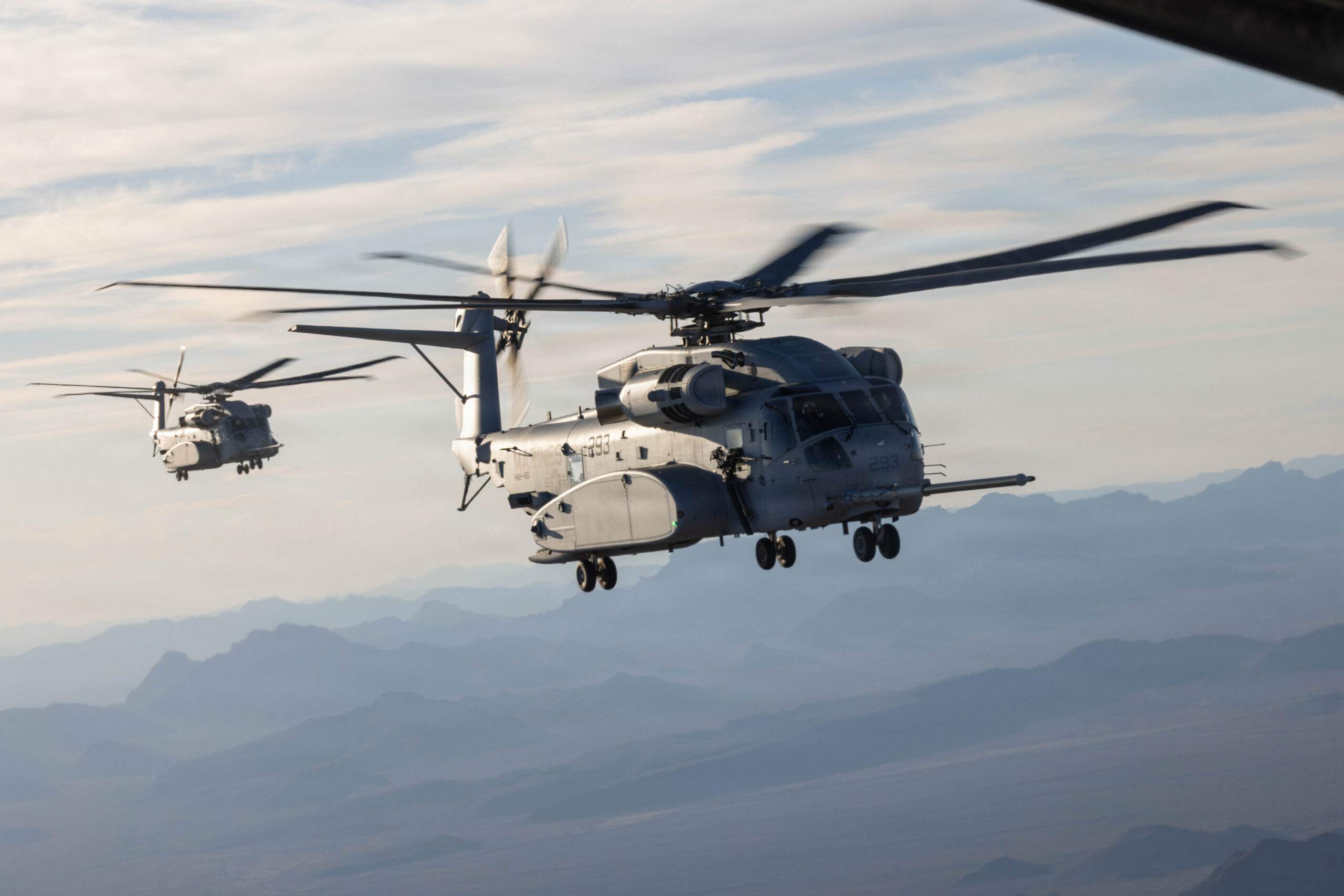
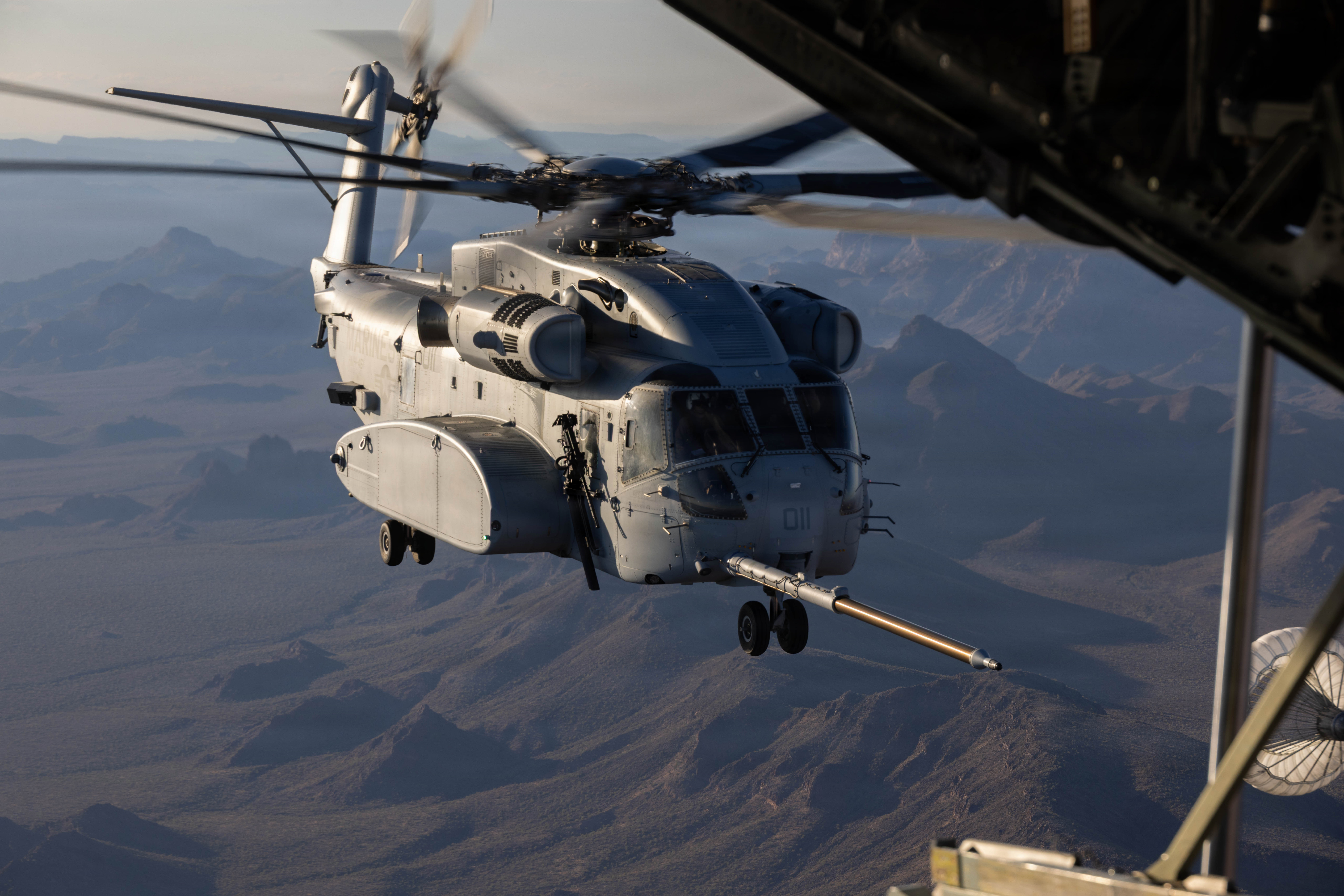
In the clear desert night over Arizona, a CH-53K King Stallion slid into position behind the tanker, its rotors biting into thin air as the crew prepared to take the hose once more. Below, the Sonoran Desert stretched away in darkness. Above and around, the aircraft was alone with its mission. The long-range raid during WTI 2-26 was still in its opening movements, but the key enabler was already on stage: a heavy-lift helicopter whose foundational design premise is to make distance, weight, and temperature less decisive as constraints on Marine assault support.
It was not a dramatic moment in the Hollywood sense. There were no enemy surface-to-air threats pressing in, no emergency that required heroic improvisation. What made it significant was precisely its matter-of-fact quality: the plug was planned, expected, and executed as a routine element of an already-complex tactical evolution. That normalization, the King Stallion on the hose as a standard instrument of Marine Corps assault support, not an exception or a demonstration, is among the most important things WTI 2-26 produced.
MAWTS-1 and the Logic of the Long-Range Raid
Weapons and Tactics Instructor (WTI) courses at MAWTS-1 are built on a straightforward but demanding premise: force real crews and real platforms to solve operational problems that look uncomfortably like the ones the Corps expects to face in the next fight, not the last. The scenarios are not scripted for success. They are designed to surface gaps, expose friction, and generate learning under conditions of meaningful operational pressure. For decades, the long-range raid has been one of the signature evolutions of that curriculum, a way of stretching assault support aviation across range, threat, and integration challenges that go well beyond a standard workup.
In WTI 2-26, the CH-53 community brought a different aircraft to that enduring problem. The CH-53K King Stallion, now entering fleet service as the Marines’ premier heavy-lift and distributed logistics asset, took the lead role in the long-range raid evolution. Its presence was not incidental. MAWTS-1 and the heavy-lift community have been deliberately integrating the Kilo into progressively more demanding WTI scenarios, using the training environment to validate a new concept of operations and to build the institutional knowledge that will carry into fleet practice.
The scenario itself was classic MAWTS-1 in its construction. A force had to project combat power and sustainment across significant distance under the assumption that fixed infrastructure was either absent, degraded, or under threat. The answer was not a single aircraft or a single tactic, but a composite of platforms, fuel planning, routing, and timing, all orchestrated by WTI students and instructors who were simultaneously executing the mission and being evaluated on how they solved it. The CH-53K’s role within that framework was at once straightforward and demanding: move Marines and critical cargo long-range, on time, and in condition to fight, operating at or near the edge of the performance envelope throughout.
Air-to-Air Refueling as a Concept of Operations, Not a Workaround
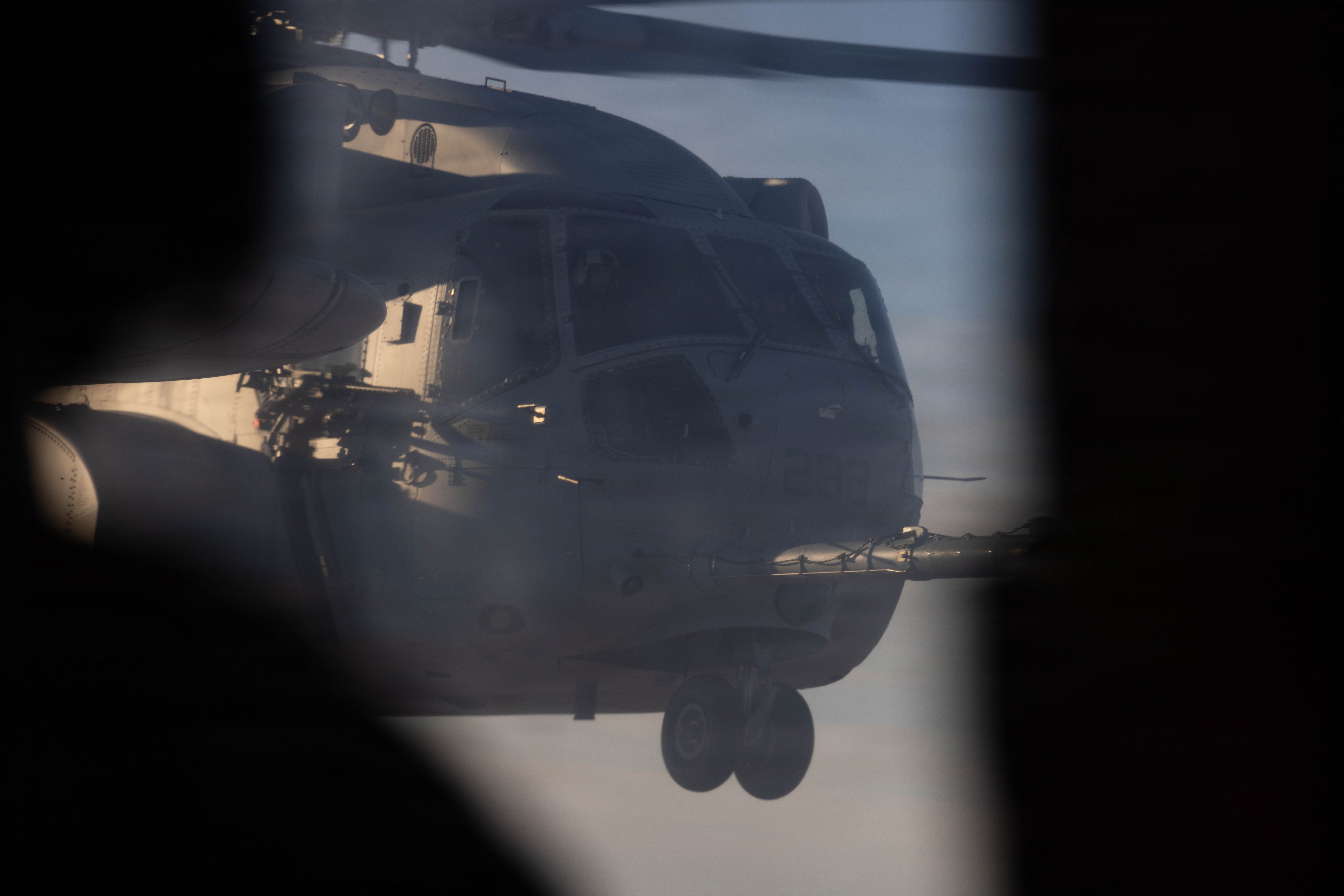
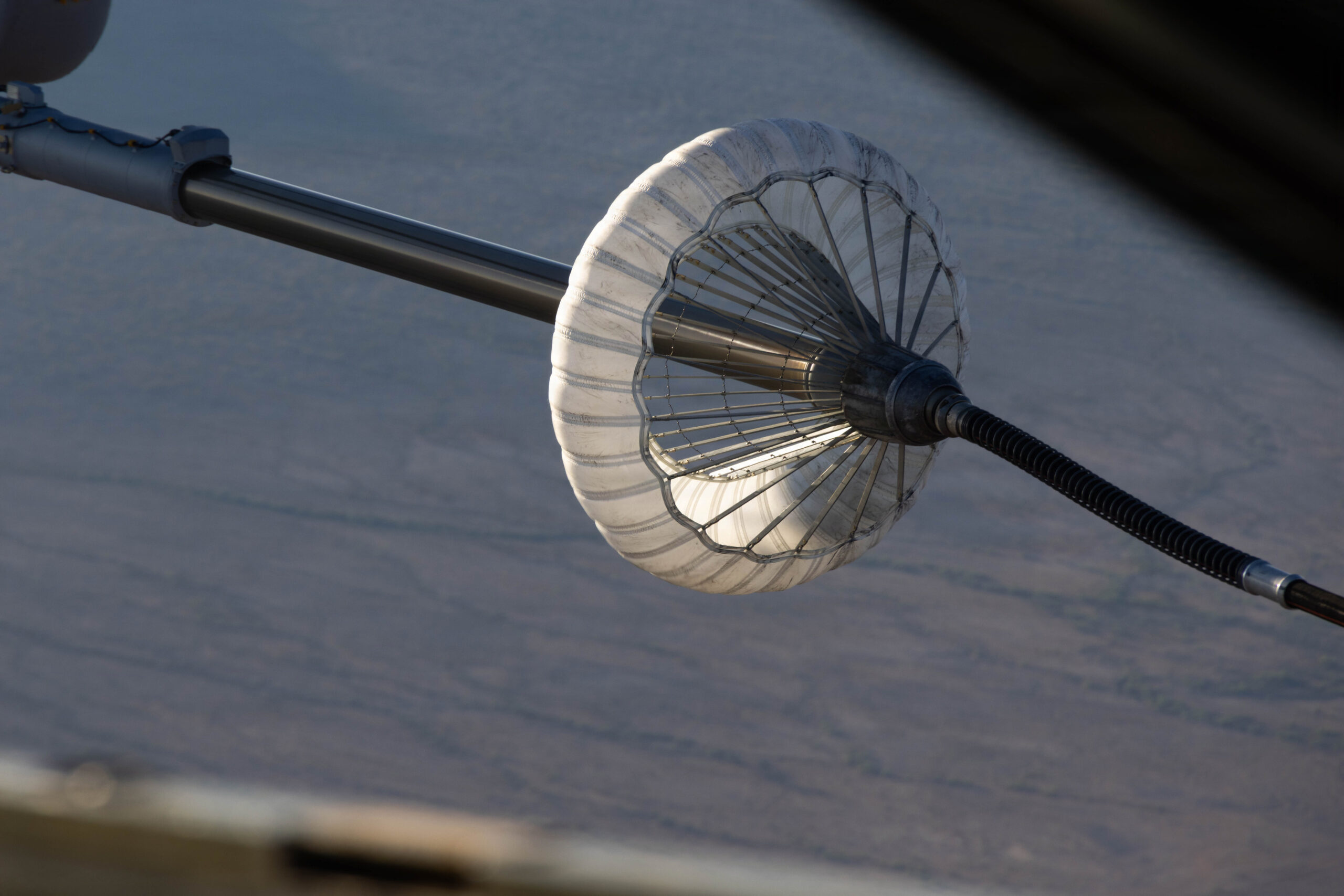
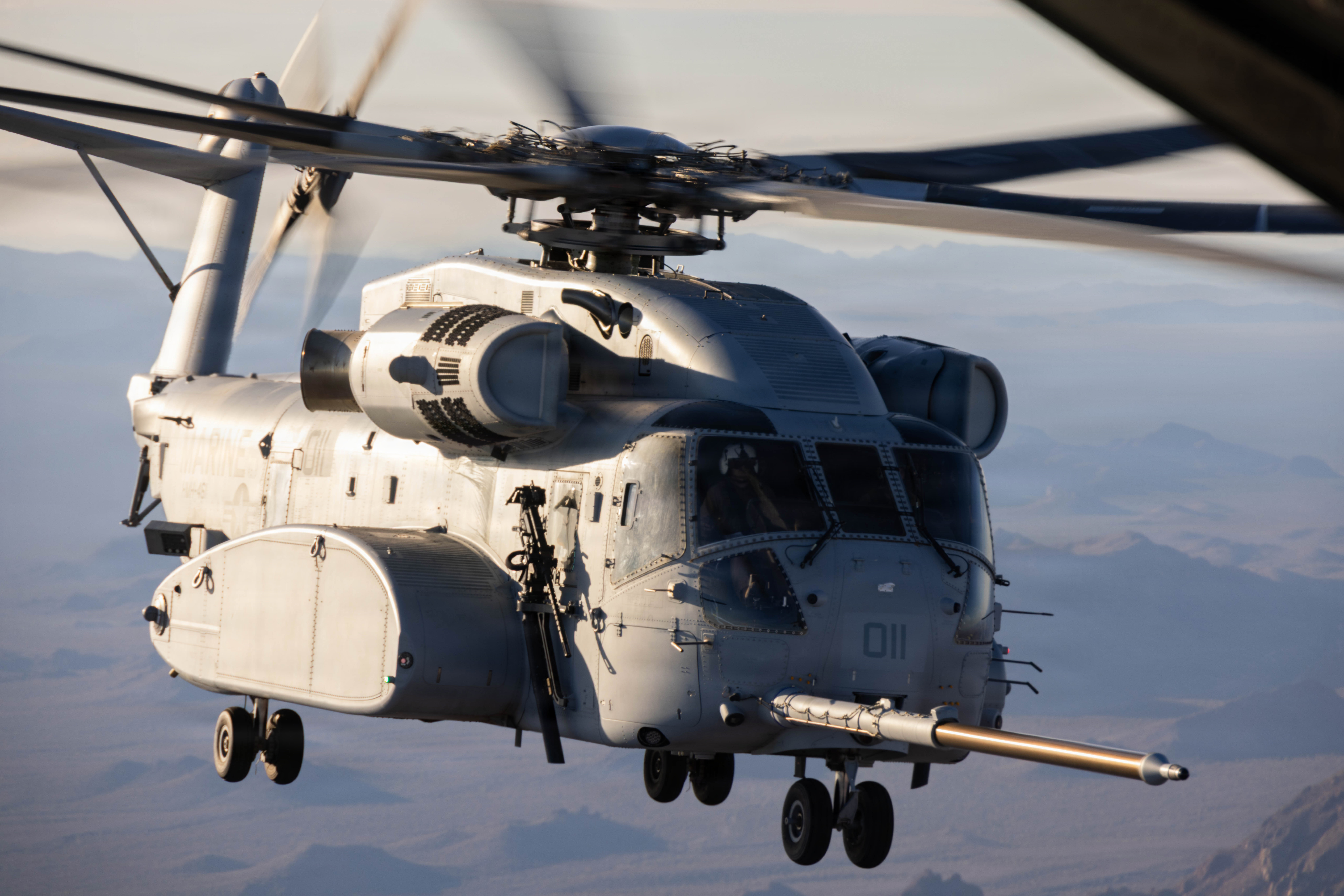
Air-to-air refueling was central to the raid’s execution. Imagery from the evolution shows the CH-53K on the hose in flight, taking fuel to extend its reach deeper into the exercise battlespace. The significance of this detail is easy to understate.
In the emerging CH-53K concept of operations, the ability to plug into a tanker and push further is part of the planned architecture. The King Stallion is not envisioned as a shuttle running loads between known forward operating bases; it is envisioned as a roaming logistics and assault support node, one that can operate across a much wider area of the battlespace because aerial refueling is baked into the mission planning rather than treated as exceptional. This matters enormously in a Pacific or Indo-Pacific context, where distances between suitable landing sites can be prohibitive, where fixed basing is contested or unavailable, and where the ability to sustain stand-in forces depends on a logistics chain that does not require infrastructure the adversary can target and destroy.
The Kilo’s aerial refueling capability is complemented by the power margins its new engines and drivetrain provide. The difference in available power compared to the legacy CH-53E is substantial, particularly in hot-and-high conditions of the kind routinely encountered at Yuma and at many of the expeditionary sites that feature in Pacific planning. Greater power margins translate directly into operational options: heavier loads at range, more margin in degraded environmental or combat conditions, and the ability to treat high-density altitude as a planning factor rather than a mission-limiting constraint. For a force building its logistics around distributed operations and expeditionary advanced base concepts, those margins are not marginal improvements. They are the difference between a mission that works and one that doesn’t.
Fly-by-Wire and the Cognitive Dimension of Heavy Lift
For the crews executing the raid, the CH-53K’s full-authority digital fly-by-wire system is perhaps the most immediately tangible improvement over the legacy platform. Fly-by-wire gives the Kilo a level of stability and handling precision that is especially valuable during the most demanding phases of a long-range raid: formation flight at night, refueling joins under pressure, approaches to austere and unprepared landing zones, and external lift operations when the aircraft is at or near maximum gross weight.
MAWTS-1 leadership has been explicit that fly-by-wire’s value is not primarily about pilot comfort. It is about cognitive bandwidth. In the most demanding phases of a complex tactical evolution, crews face simultaneous demands from the aircraft itself, from the tactical situation, from the threat picture, and from the joint network they are supporting. Every increment of workload reduction that fly-by-wire provides, every moment when the aircraft handles an unwanted excursion automatically rather than requiring the pilot to intervene, is cognitive bandwidth available for the tactical problem. At scale, across a fleet of aircraft and many missions, that difference accumulates into lower risk, better decisions, and more successful mission execution.
This is not an abstract engineering point. Pilots who have transitioned from the Echo to the Kilo have described the difference in handling as qualitatively significant. Night formation flying in the Kilo is described as meaningfully less demanding than in the Echo. External lift at heavy weights, always among the most workload-intensive tasks in rotary-wing aviation, benefits from the Kilo’s stability augmentation in ways crews notice immediately. For a platform whose mission profile regularly stacks multiple high-workload evolutions in sequence, a refueling join followed by a low-level approach to an austere LZ followed by a precision external load delivery, those handling qualities represent a genuine operational advantage.
The Triple-Hook System and the Meaning of Distributed Logistics
The CH-53K’s triple-hook external lift system underpins another dimension of what the WTI long-range raid was demonstrating. The raid was not simply about moving people; it was about moving meaningful combat sustainment under contested or austere conditions. With the ability to carry significant fuel loads externally on the order of tens of thousands of pounds, the Kilo can deliver fuel and heavy cargo without necessarily landing and offloading. That distinction matters. A helicopter that must land to deliver a load is a helicopter that must accept the exposure, time, and vulnerability that come with being on the ground in a forward or hostile environment. A helicopter that can deliver externally, from a hover or a low approach, shortens its time in the objective area and fundamentally changes its risk calculus.
In a raid context, this enables a range of concepts that MAWTS-1 has been exploring across multiple WTI iterations. Bulk fuel delivery to an expeditionary F-35B operating site. Critical equipment delivery to a forward element that cannot afford to wait for a ground resupply chain that may not exist. Recovery of a downed rotorcraft from a location too remote or too contested for a surface recovery. All of these missions fall within the broad heavy-lift design space that WTI repeatedly stresses and the triple-hook system, combined with the K’s power margins and aerial refueling capability, makes the aircraft more capable in all of them than its predecessor.
The connection to Expeditionary Advanced Base Operations (EABO) and distributed maritime operations is direct and intentional. The Marine Corps has been building a strategic concept around the idea of small, dispersed, difficult-to-target forces operating from a network of austere sites across a contested maritime environment. That concept requires logistics. Specifically, it requires logistics that can function without the fixed infrastructure those austere sites, by definition, do not have. The CH-53K’s combination of range, payload, aerial refueling, and external lift capability is not incidental to that concept. It is close to indispensable to it.
Col Purcell and the Institutional Argument
WTI 2-26 did not occur in an institutional vacuum. As a recent MAWTS-1’s commanding officer, Col Eric Purcell, himself a CH-53 pilot with deep experience in the platform, has been explicit and consistent in his argument about what the King Stallion represents and how it should be integrated into Marine Corps thinking. His position is not that the Kilo is a better CH-53E, it is that the Kilo is a different proposition entirely, one that enables different concepts of operations and should be treated as a unique enabler for distributed logistics and force mobility rather than simply a like-for-like replacement for aging 53Es.
That argument has implications that extend beyond the heavy-lift community. If the Kilo is not a replacement but an enabler of new concepts, then the force design and planning work that proceeds from its introduction needs to reflect that distinction. Raid planning, logistics architecture, EABO site selection, tanker support requirements, and the integration of heavy lift with stand-in force concepts all potentially look different when the heavy-lift asset available is a King Stallion rather than a Super Stallion. MAWTS-1’s sustained effort to use WTI as a laboratory for that rethinking, rather than simply substituting the Kilo into existing CH-53E roles and planning assumptions is one of the more consequential things the schoolhouse is doing.
Earlier WTI iterations had already begun integrating multiple CH-53Ks into broader mobility and support packages, exploring how the aircraft performs in composite operations alongside MV-22s, F-35Bs, and other elements of the Marine aviation enterprise. WTI 2-26’s long-range raid represents a continuation and deepening of that trajectory. The King Stallion is now treated as a routine, expected instrument for solving long-range assault support problems, not a guest appearance, not a proof-of-concept demonstration, but a platform the students plan around and the instructors evaluate against.
What Normalization Actually Means
The most important product of the WTI 2-26 long-range raid may not be any specific technical validation or any particular tactic, technique, or procedure. It may be the normalization itself. When WTI students plan a long-range raid and the CH-53K is simply “the heavy-lift aircraft they have”, an asset whose performance they design around rather than an exceptional capability they have to carefully justify using, something significant has shifted in how the Corps thinks and plans.
Normalization in a training environment is not automatic. It requires sustained institutional commitment to integrating a new platform into scenarios where its performance genuinely matters, where the planning assumptions change if it is or is not available, and where students develop the intuition and the habit of mind that will carry into fleet operations. MAWTS-1’s progressive integration of the Kilo across multiple WTI cohorts, in increasingly complex scenarios, with leadership that has articulated a clear operational rationale, represents exactly that kind of sustained commitment.
For the students who planned and executed the WTI 2-26 raid, the experience produces something that classroom instruction cannot replicate: the embodied knowledge of what the King Stallion can do, of where its limits lie, of how it integrates with the other elements of the air-ground task force, and of the planning factors that change when a CH-53K is available instead of an Echo. That knowledge will carry into fleet squadrons, into deployment planning, into pre-mission planning for real-world operations. It represents a form of institutional learning that is difficult to generate outside of a demanding, operationally relevant training environment.
The Heavylift Piece of the Distributed Operations Puzzle
By the time the CH-53K turned back toward Yuma at the conclusion of the raid, the students and instructors had accumulated something more than another set of WTI sorties. They had validated, in a concrete and operationally meaningful way, that the King Stallion’s claims as a revolutionary advance in long-range heavy lift are not abstract promises but capabilities the fleet can plan against today. The aircraft performed. The concept of operations worked. The crews adapted to the platform’s characteristics in the ways that MAWTS-1 needs to see before it can confidently say that a new way of thinking about heavy-lift assault support is taking root.
The broader message for the Marine Corps and for the joint force audience that watches MAWTS-1 closely is pointed and timely. The long-range raid is no longer a theoretical Pacific vignette on a briefing slide. It is an event flown with operational crews in an aircraft designed from the outset to make that kind of mission routine. The distributed operations concepts that animate Force Design 2030 and its successors require a logistics architecture that can function without fixed infrastructure at the forward edge. The CH-53K’s combination of payload, range, aerial refueling, fly-by-wire handling, and external lift capability places it at the center of that architecture.
In the years to come, as more King Stallions flow to fleet squadrons and WTI scenarios grow more complex and more joint, the long-range raid will continue to evolve. New tanker integrations, new external load concepts, new coordination with autonomous logistics platforms, new interfaces with the joint network, all of these will add layers to what WTI is building. But the WTI 2-26 iteration marks an early and significant moment: the moment when the Marine Corps began to act, not just to argue, as if the heavy-lift piece of its distributed operations puzzle is finally in place.