By Robbin Laird
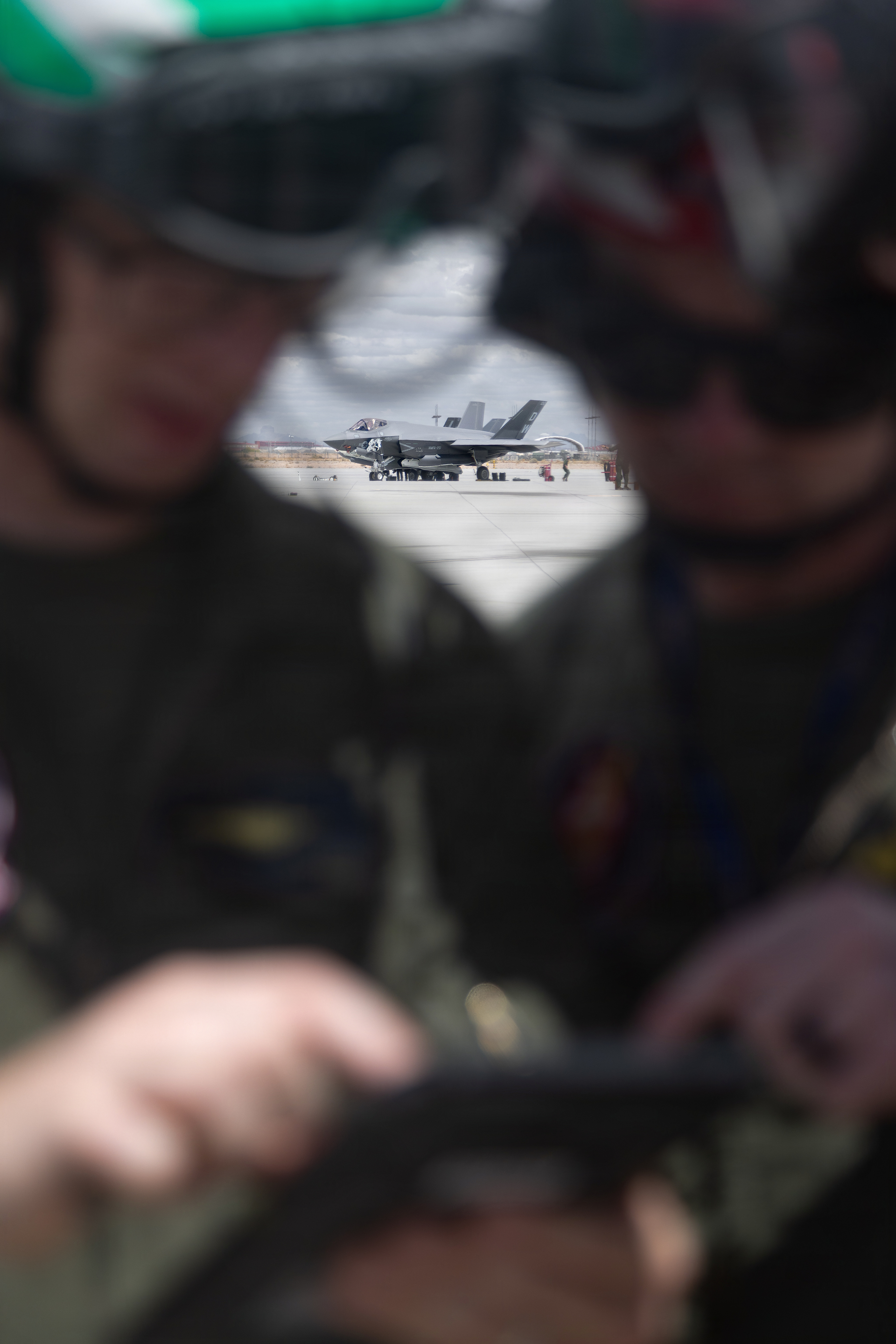
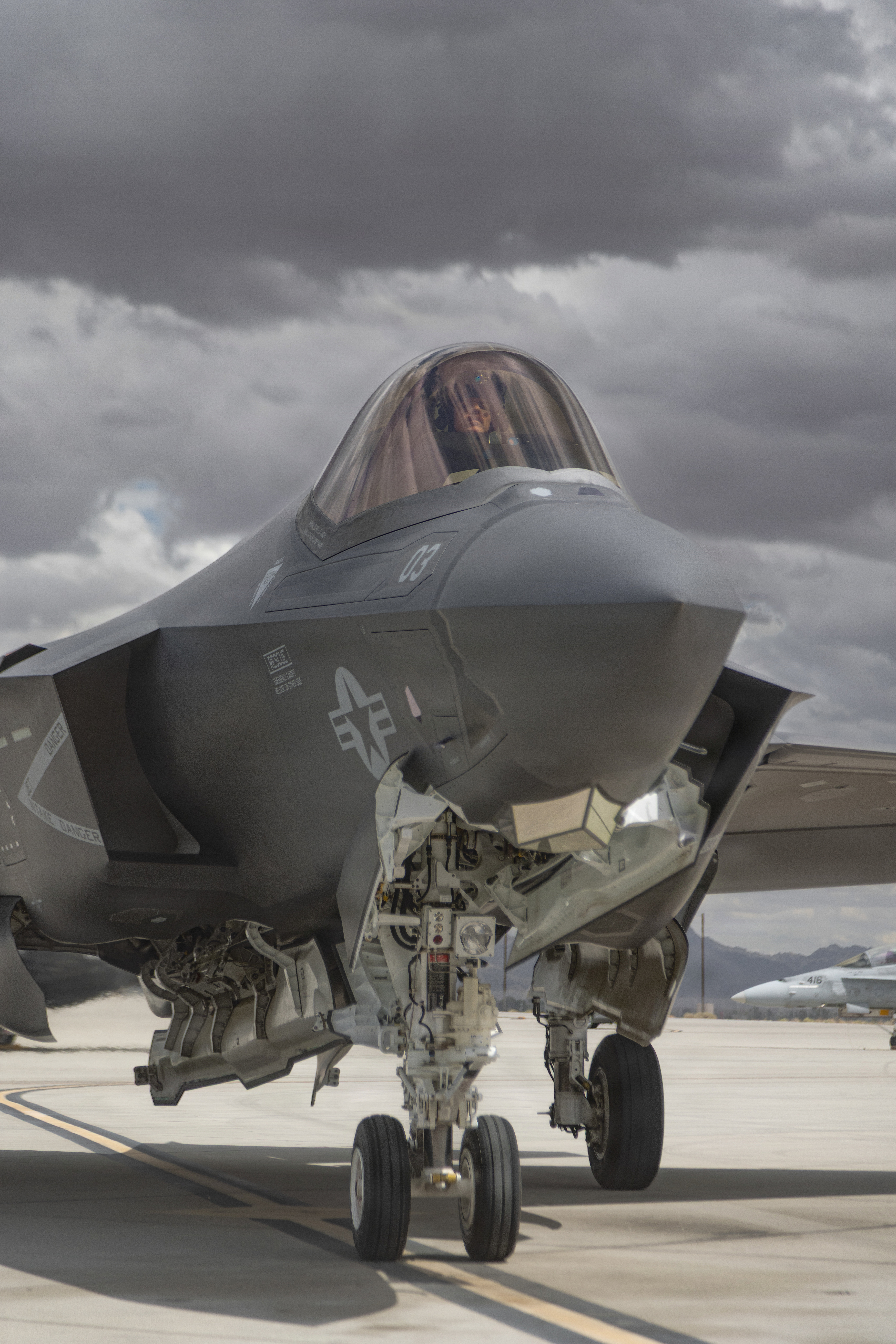
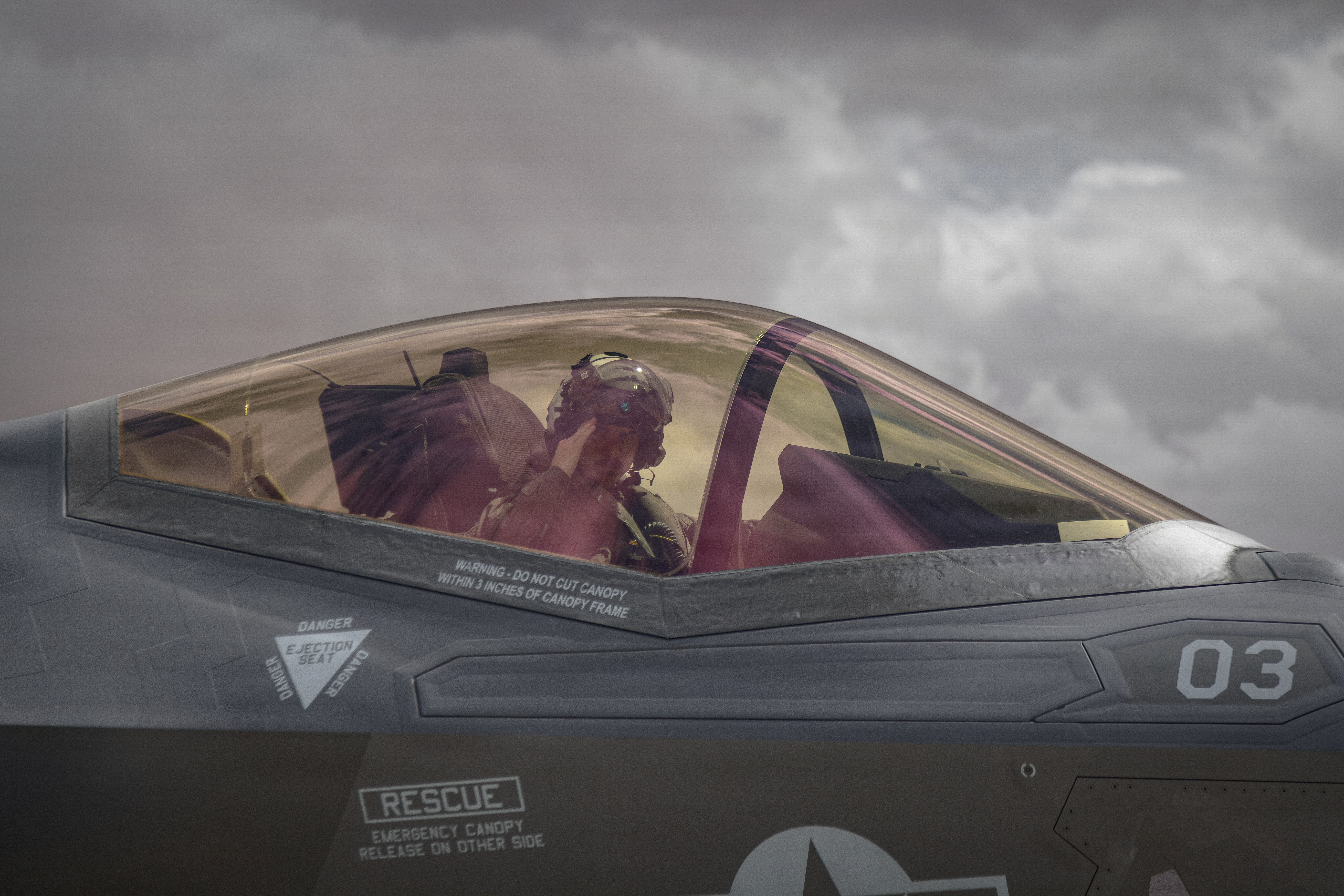
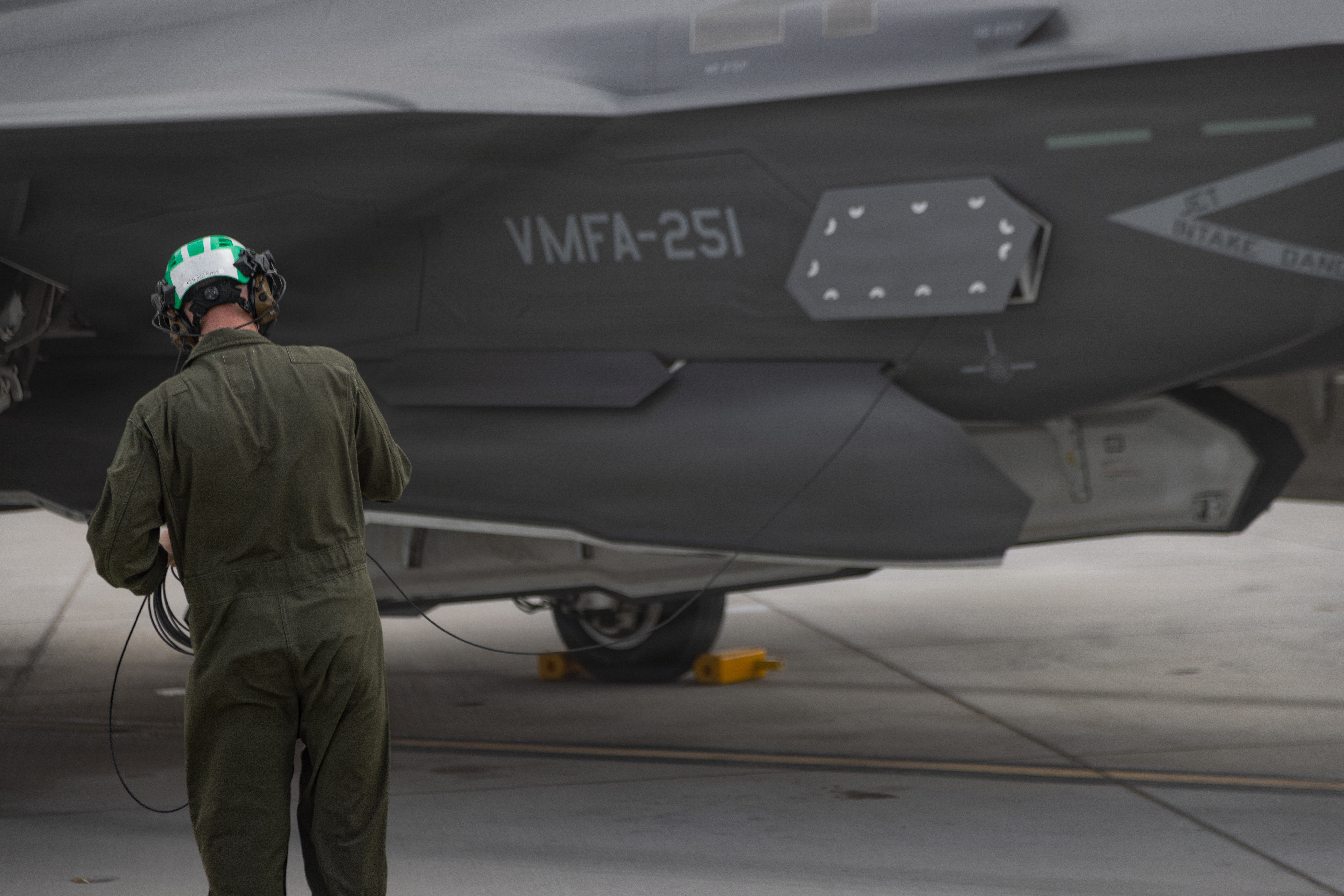
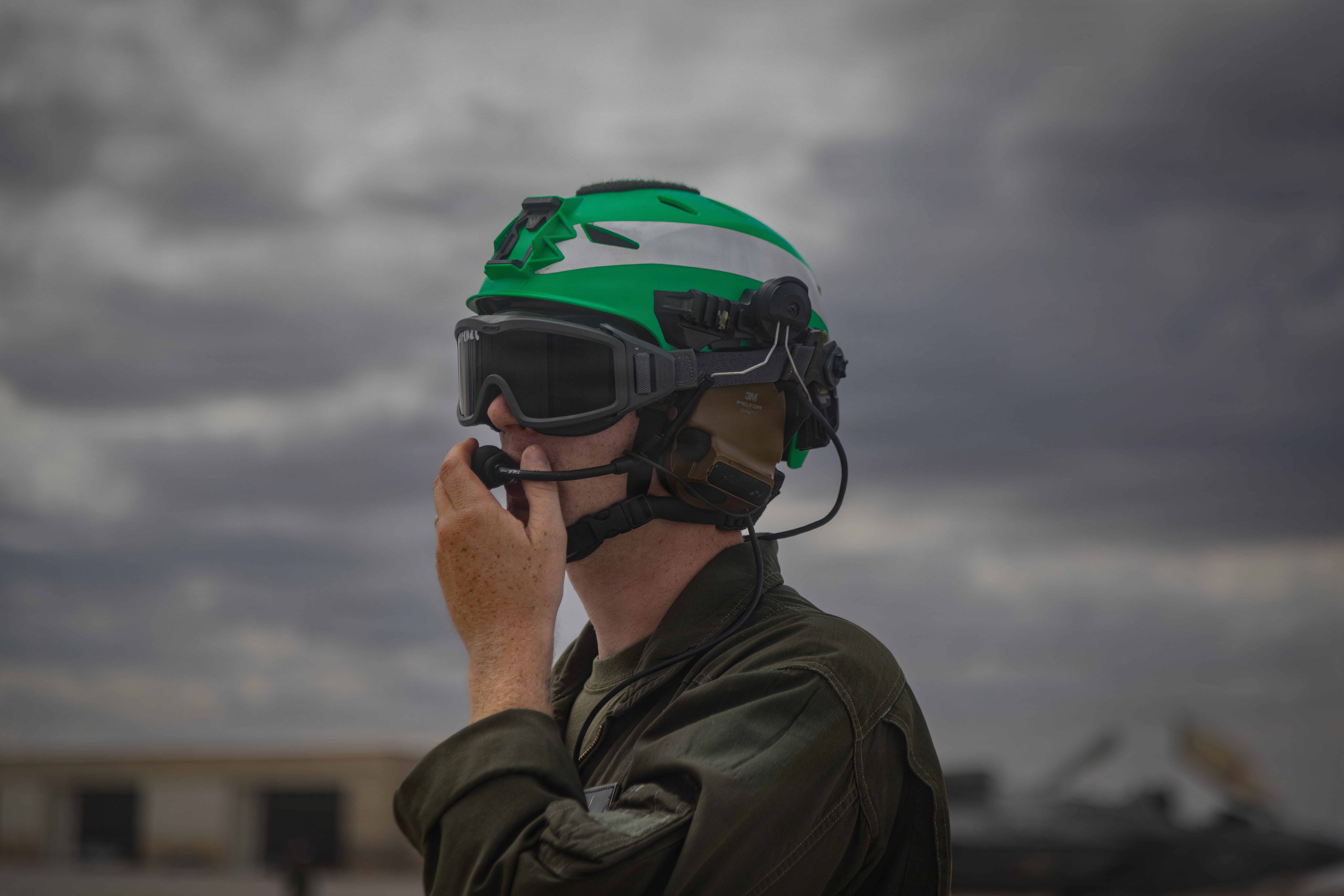
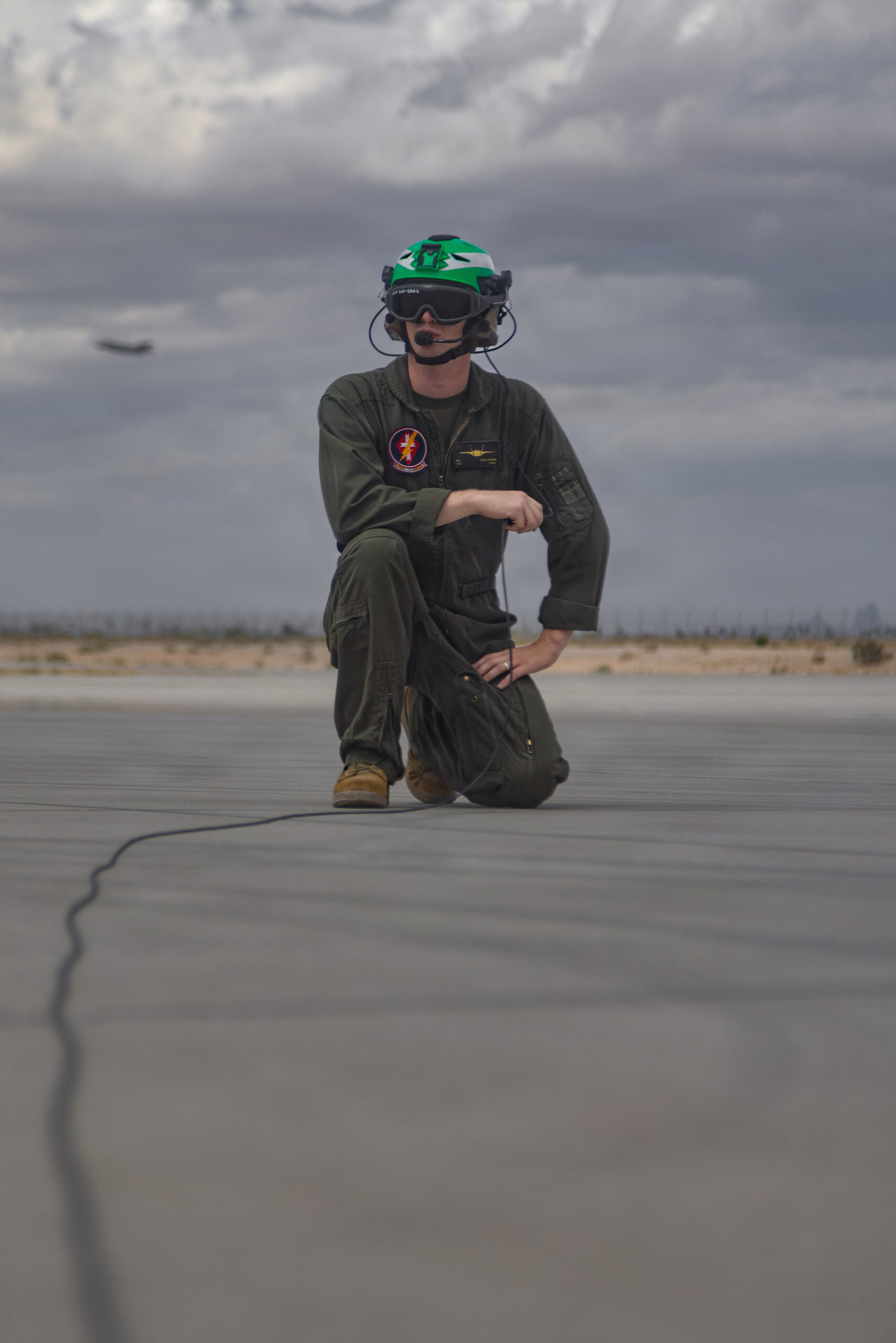
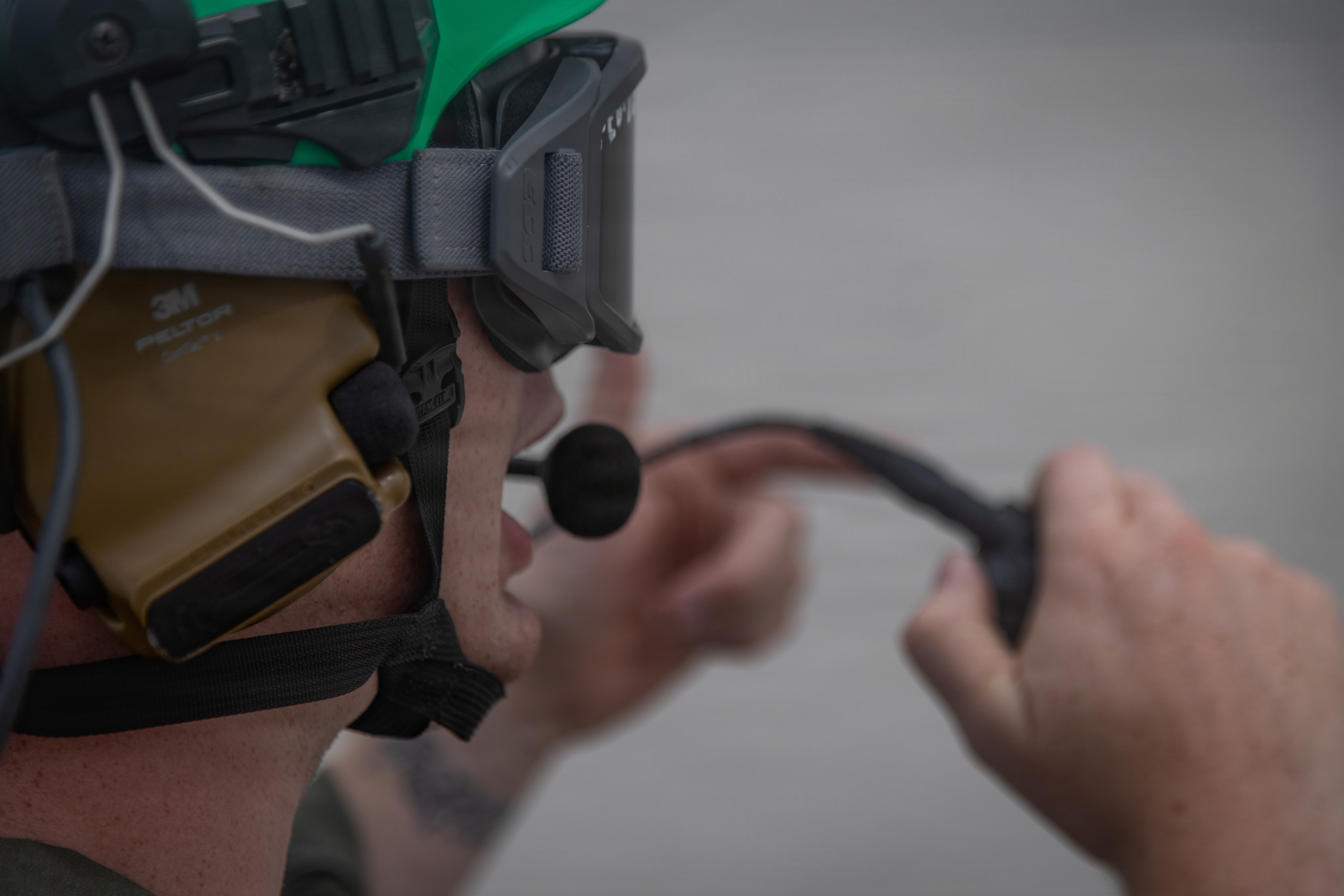
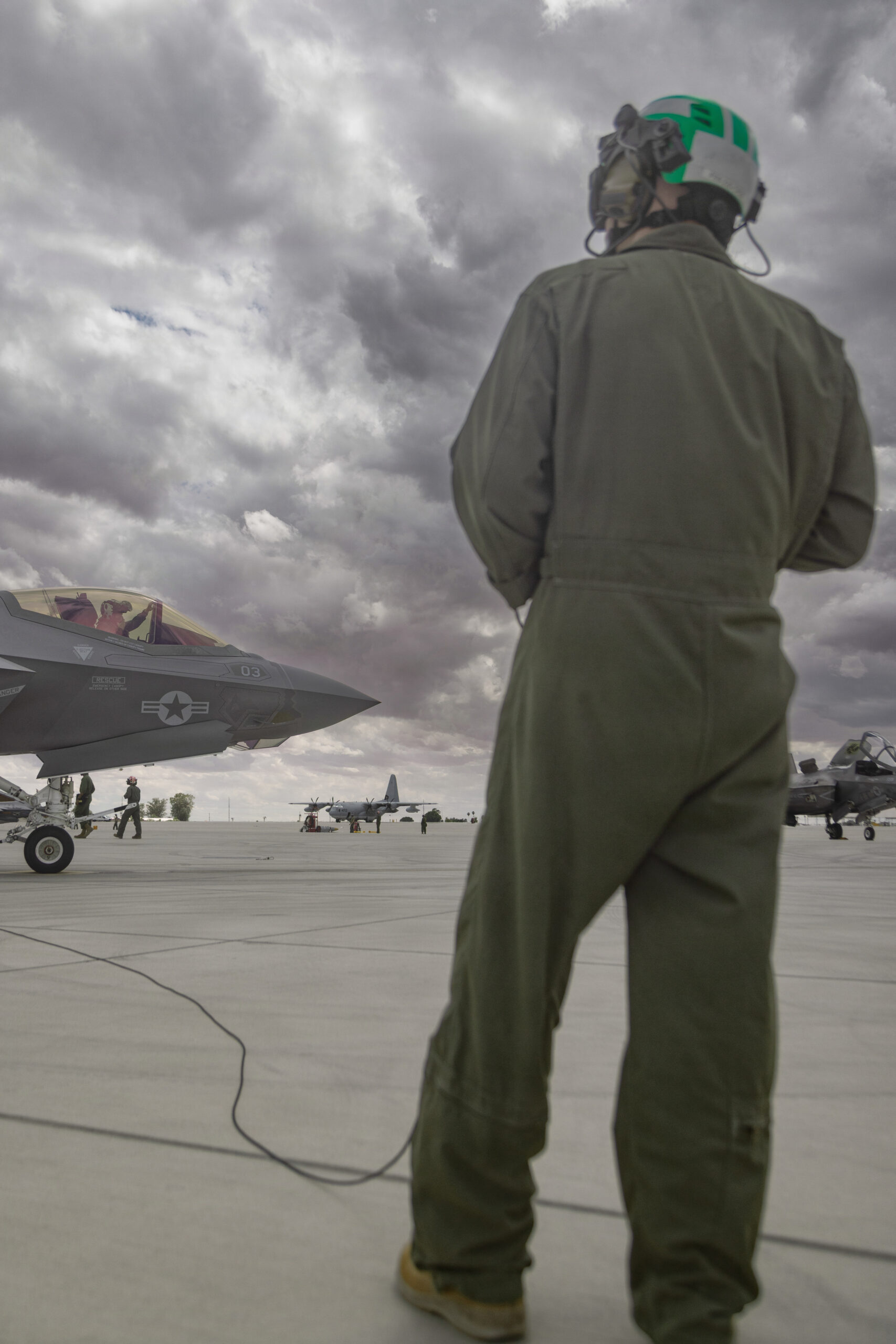
A photograph taken at Marine Corps Air Station Yuma on April 13, 2026, shows a Marine avionics technician from VMFA-251 connected to an F-35B cockpit via the aircraft’s Internal Communication System cable, a 600-inch tether that is, in many ways, a window into how the Marine Corps is rethinking the ground side of fifth-generation aviation.
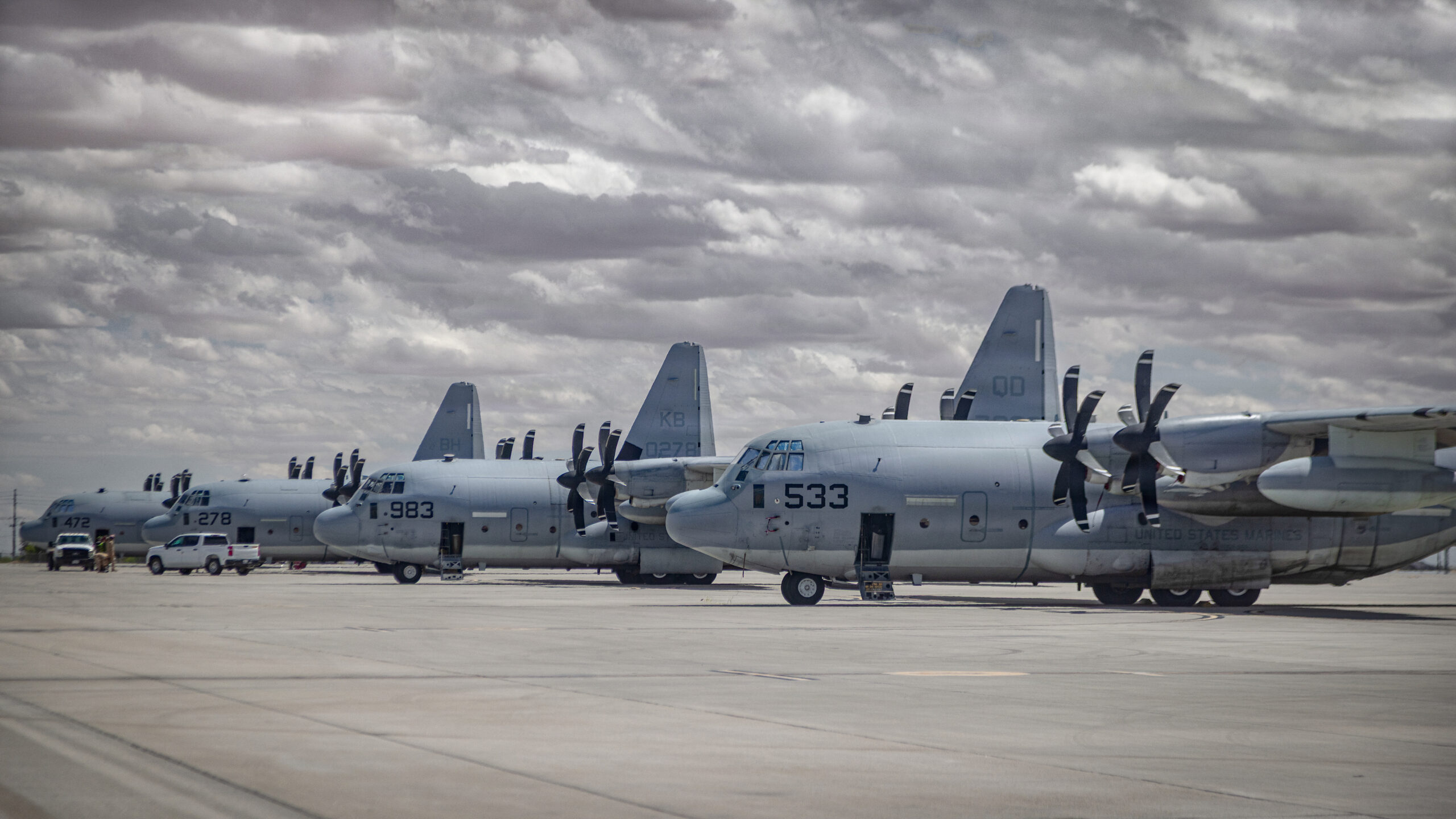
The image was taken during Weapons and Tactics Instructor Course 2-26, hosted by Marine Aviation Weapons and Tactics Squadron One (MAWTS-1). WTI is the Marine Corps’ premier venue for testing, refining, and injecting new concepts back into the fleet.
What VMFA-251 brought to Yuma this spring was not a new platform or a new weapon. It was a new approach to the turnaround.
The Problem: The Ground Side of the Kill Web
The F-35 is frequently discussed as a sensor-fusing, data-generating node in a networked kill web. What receives less attention is that the aircraft’s ability to cycle through that web — to land, rearm, refuel, and return to the fight — depends on a ground process that has historically been slow, fragmented, and dependent on secondhand communication.
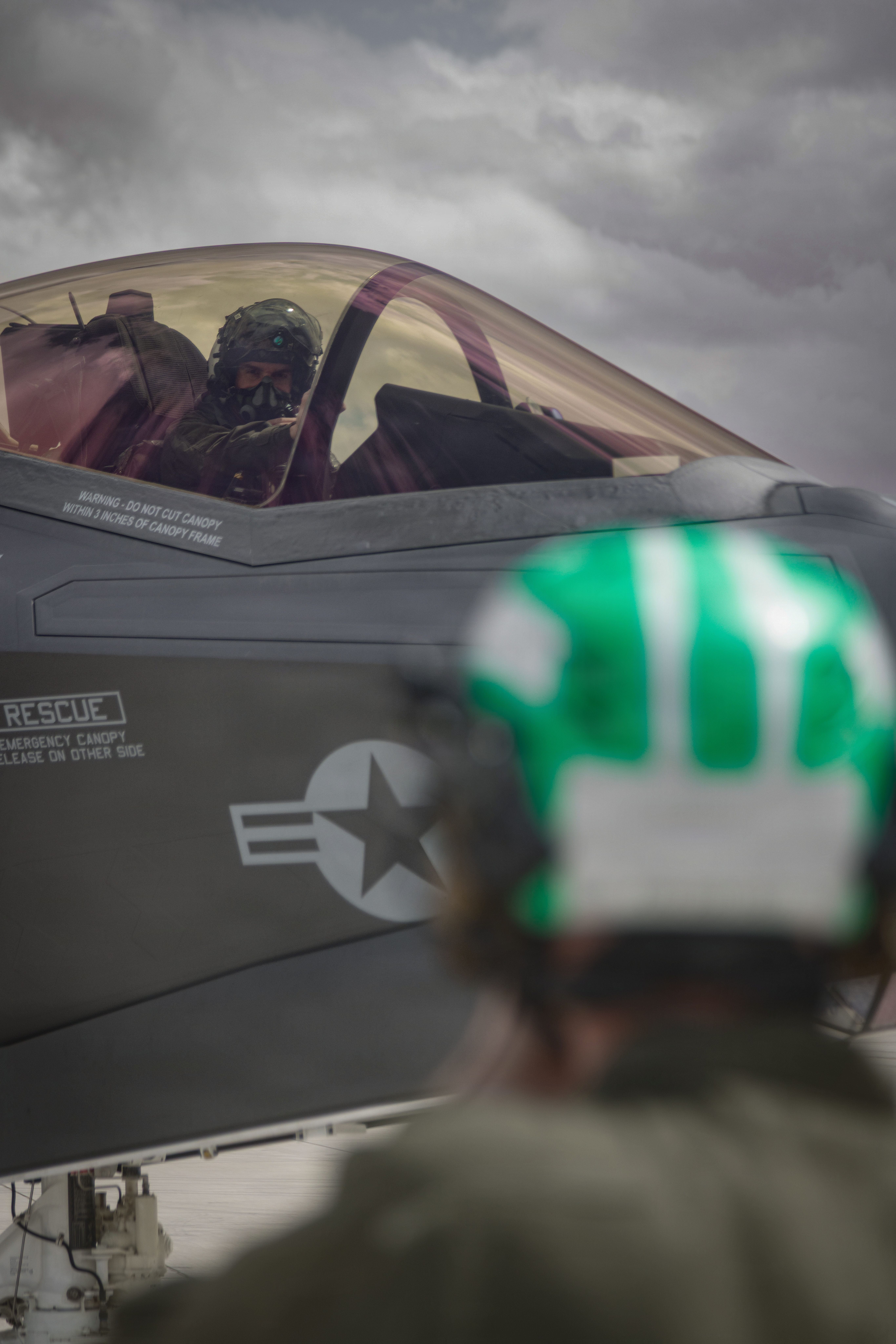
Before this initiative, maintainers on the flight line at VMFA-251 faced a fundamental constraint: they could not speak directly to the pilot while the aircraft was running. They either had to wait for the pilot to shut down and disembark, or rely on relayed communication through an intermediary. In a high-tempo environment, the kind WTI is designed to replicate, that delay costs sorties.
The Solution: Direct Connection and Distributed Awareness
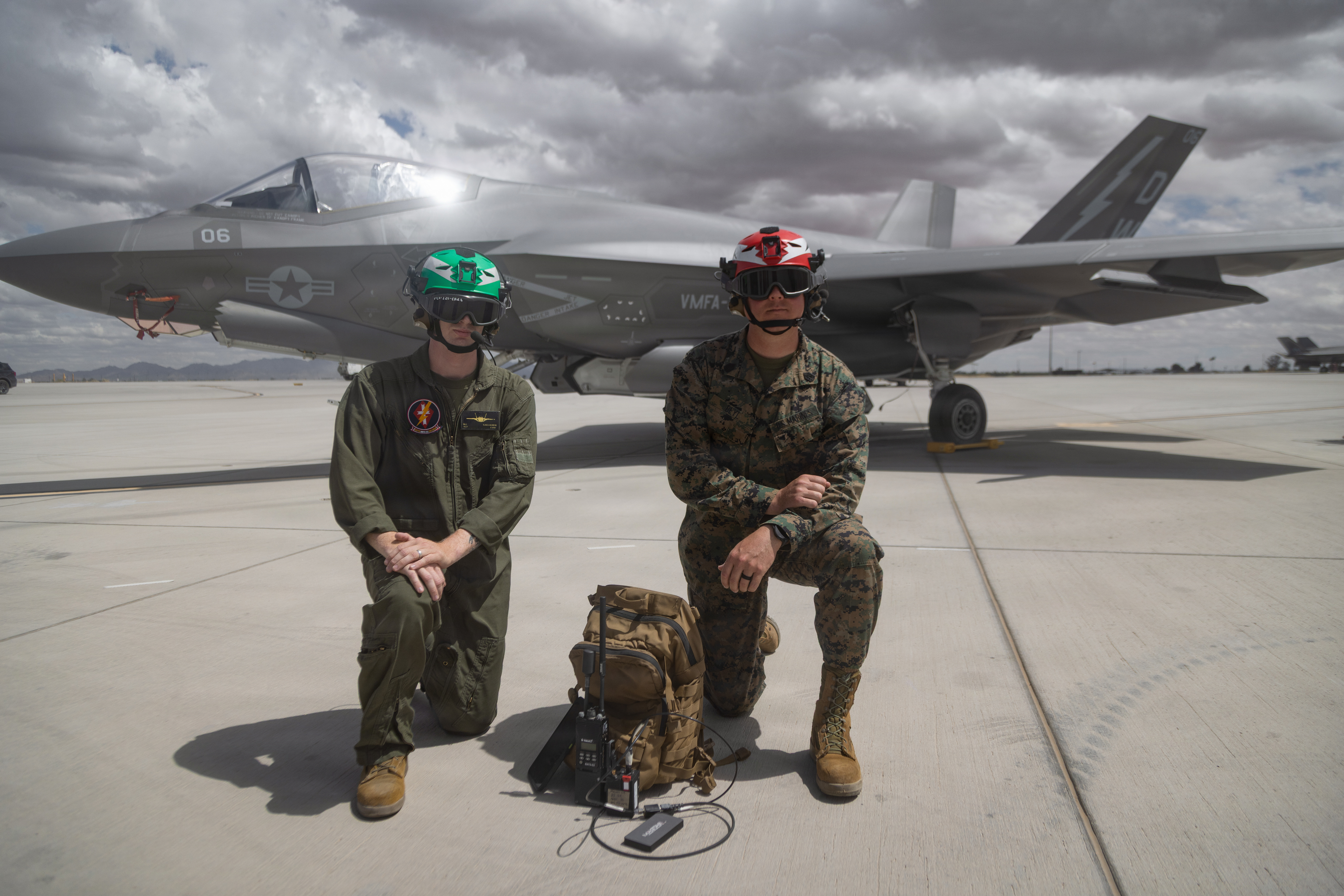
CWO2 Jory D. Reed, aviation ordnance officer with VMFA-251, led the effort to close this gap using tools already in the inventory. The centerpiece was the F-35 ICS cable, a hardwired connection from maintainer to cockpit that allows real-time, direct voice communication with the pilot without requiring engine shutdown.
Reed described the operational shift plainly: the direct connection allows ground crews to diagnose and resolve problems while keeping the aircraft operational. That sentence deserves emphasis. The aircraft stays hot. The pilot stays strapped in. The maintainer gets the information he needs from the source rather than through a chain of intermediaries. The turnaround clock keeps running.
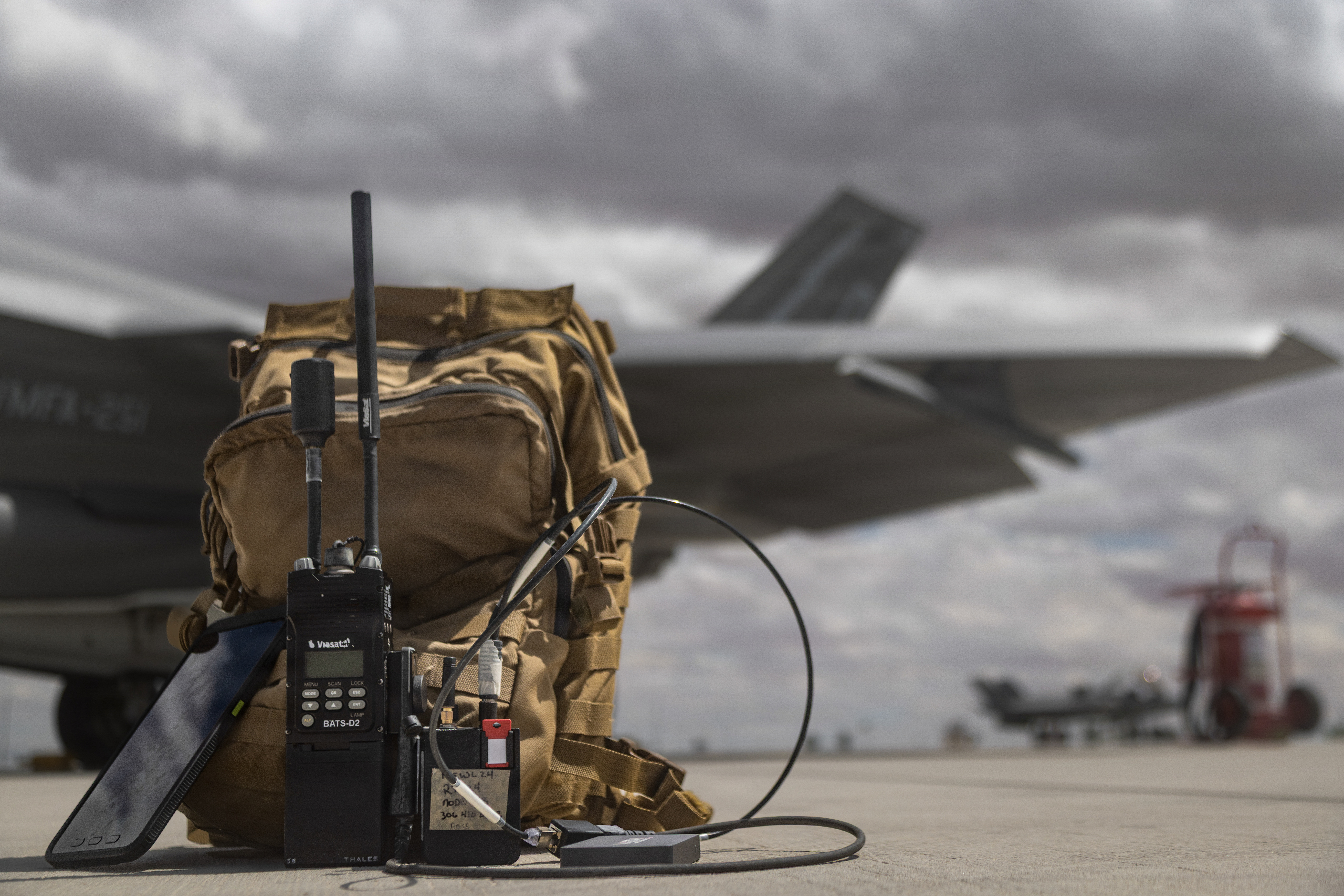
VMFA-251 extended this further by integrating handheld radios on a shared frequency across multiple maintenance sections. CWO2 Eladio Vega, avionics officer, explained the effect: instead of a single point of contact relaying information, multiple sections, ordnance, avionics, fuel, can simultaneously monitor the pilot and respond in parallel. The sequential bottleneck becomes a parallel workflow.
Link 16 to the Flight Line: Knowing Before the Aircraft Lands
The ICS cable initiative was part of a broader digital interoperability effort that pushes the F-35’s data advantage down to the ground crew. Using Digital Interoperability kits, VMFA-251 extended Link 16 data, aircraft position, fuel state, remaining ordnance, to ground-based tablets (MAGTABs) carried by flight line personnel.
The operational implication is significant. The ground staff can see what assets the aircraft has expended and what it will require before it even touches down. Ground crews can pre-position exactly the ordnance, fuel, and personnel needed, not a generalized kit, not excess equipment that has to be moved aside, but precisely what that specific aircraft will require based on its actual mission data.
This is not a trivial efficiency gain. In distributed, resource-limited environments, the operating context the Marine Corps is explicitly designing for, moving excess ordnance and equipment is not just inefficient, it is a signature and a logistics burden. The ability to know before touchdown what is needed compresses the turnaround and reduces the footprint of the support operation.
WTI as the Proving Ground
MAWTS-1’s role in this story is as important as the technology itself. WTI is not simply a training course. It is the Marine Corps’ primary mechanism for validating new concepts under realistic operational conditions and then radiating what works back to the fleet through WTI graduates returning to their squadrons.
MAWTS-1 provides a venue to take concepts and apply them in a realistic training environment, to test new capabilities, identify what works, and determine how to apply them to improve efficiency and lethality across the entire Marine Corps.
This is the kill web logic applied to institutional learning. A concept developed in one squadron, validated at WTI, becomes doctrine that flows to every squadron. VMFA-251’s work at Yuma in April 2026 is not just a 2nd MAW story. It is potentially a Marine aviation story.
The Broader Significance
The F-35 is routinely described as a system rather than an aircraft. What VMFA-251 demonstrated at WTI 2-26 is that the system boundary does not end at the skin of the aircraft. The ICS cable, the MAGTAB tablets, the shared radio frequency, these extend the F-35’s informational advantages to the people who turn it around for the next sortie.
In a sustained high-tempo campaign, sortie generation rate is a measure of combat power as surely as weapons range or sensor reach. An F-35 that cycles through its turnaround ten minutes faster, because its ground crew knew what it needed before it landed and could talk to the pilot without waiting for engine shutdown, is a meaningfully more capable combat asset.
The 600-inch cable in the DVIDS photograph is a small thing. What it represents, the deliberate extension of networked awareness and direct communication to every node in the turnaround cycle, is not small at all.