By Robbin Laird
The photos accompanying this article were taken at Pinal County Airpark near Marana, Arizona on April 4, 2026, during the Weapons and Tactics Instructor (WTI) course 2-26, hosted by Marine Aviation Weapons and Tactics Squadron One (MAWTS-1).
They tell a story worth examining carefully not just as a training vignette, but as a window into how the Marine Corps is shaping the KC-130J Hercules as a multi-mission enabler for the distributed force.
The Aircraft and the Setting
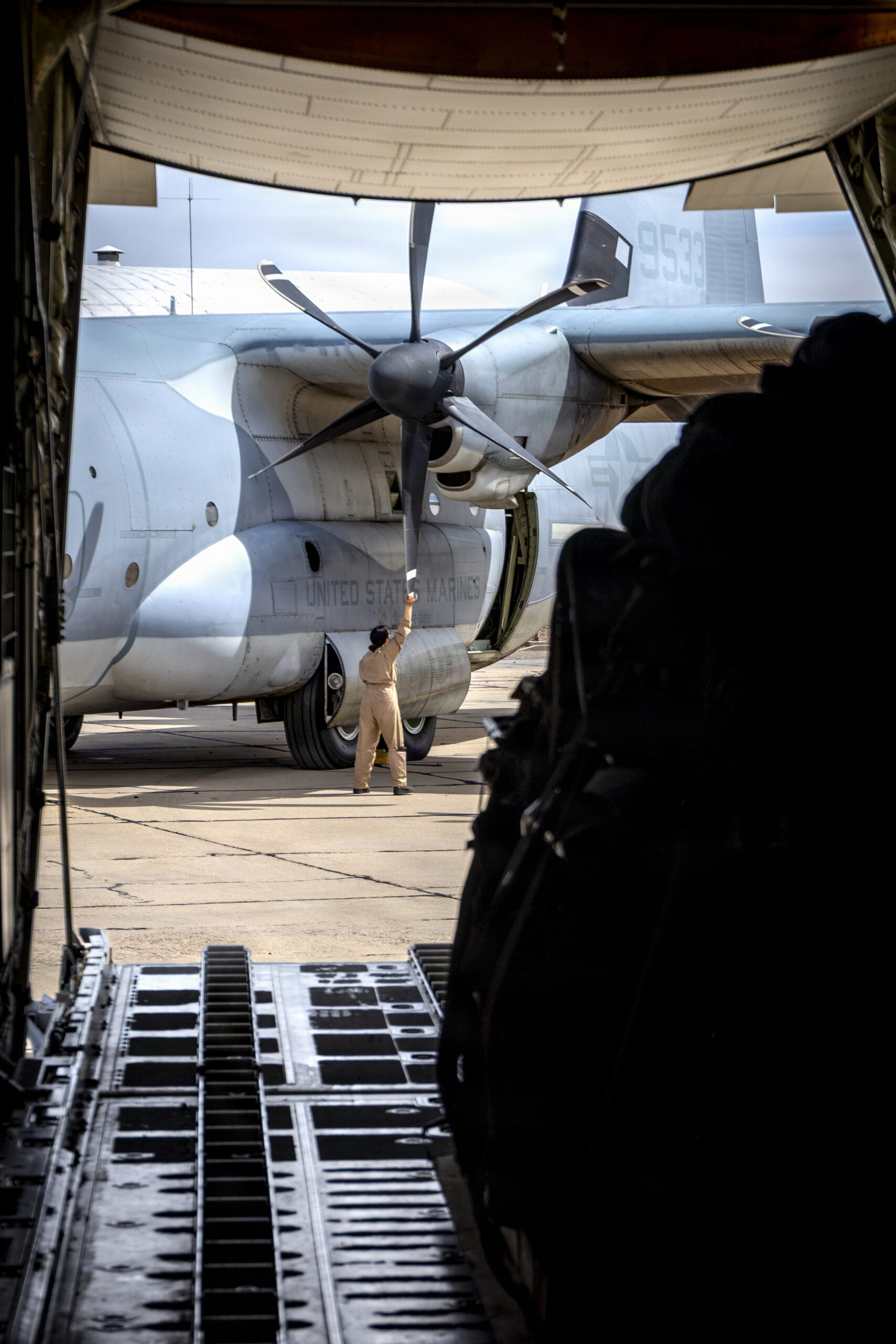
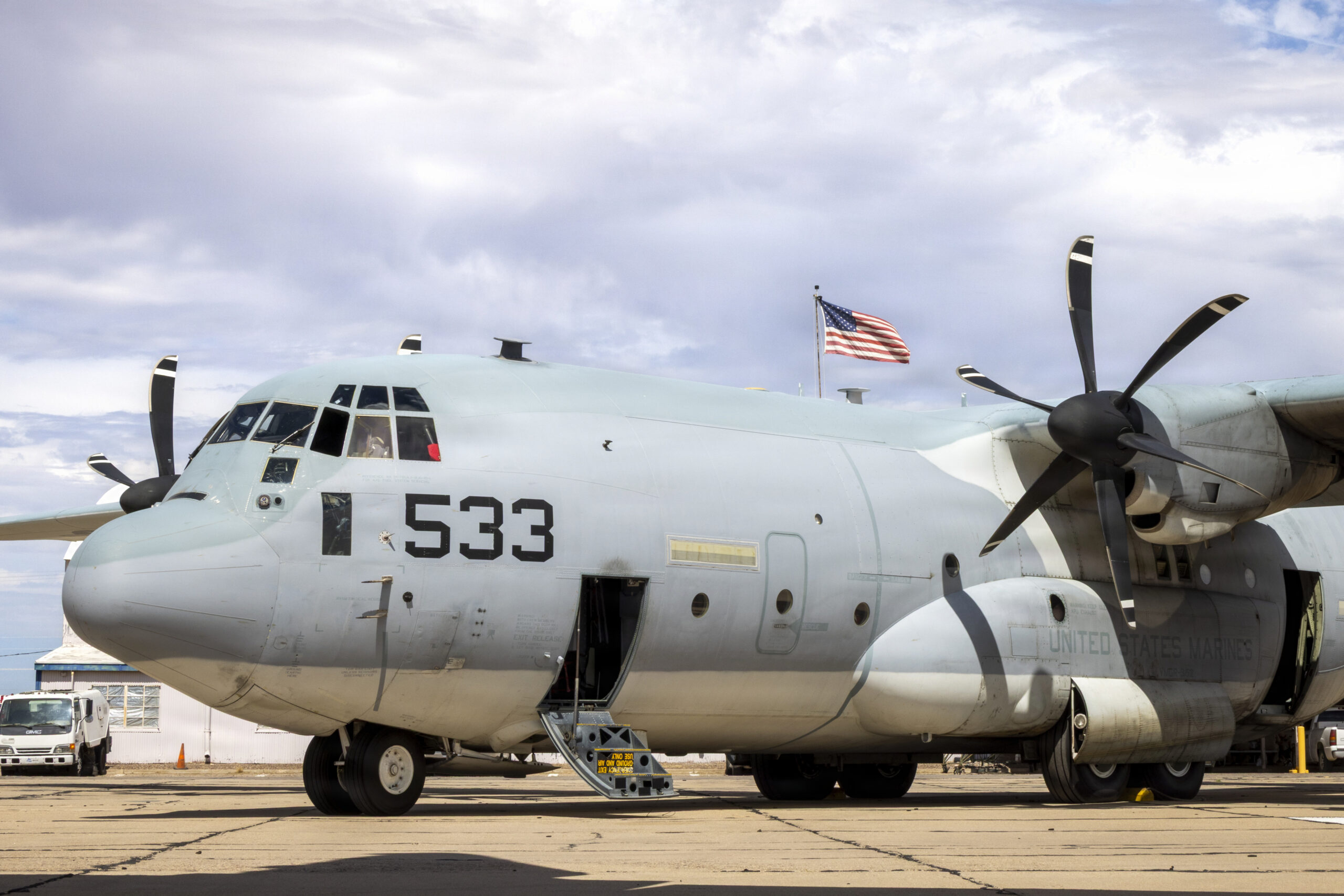
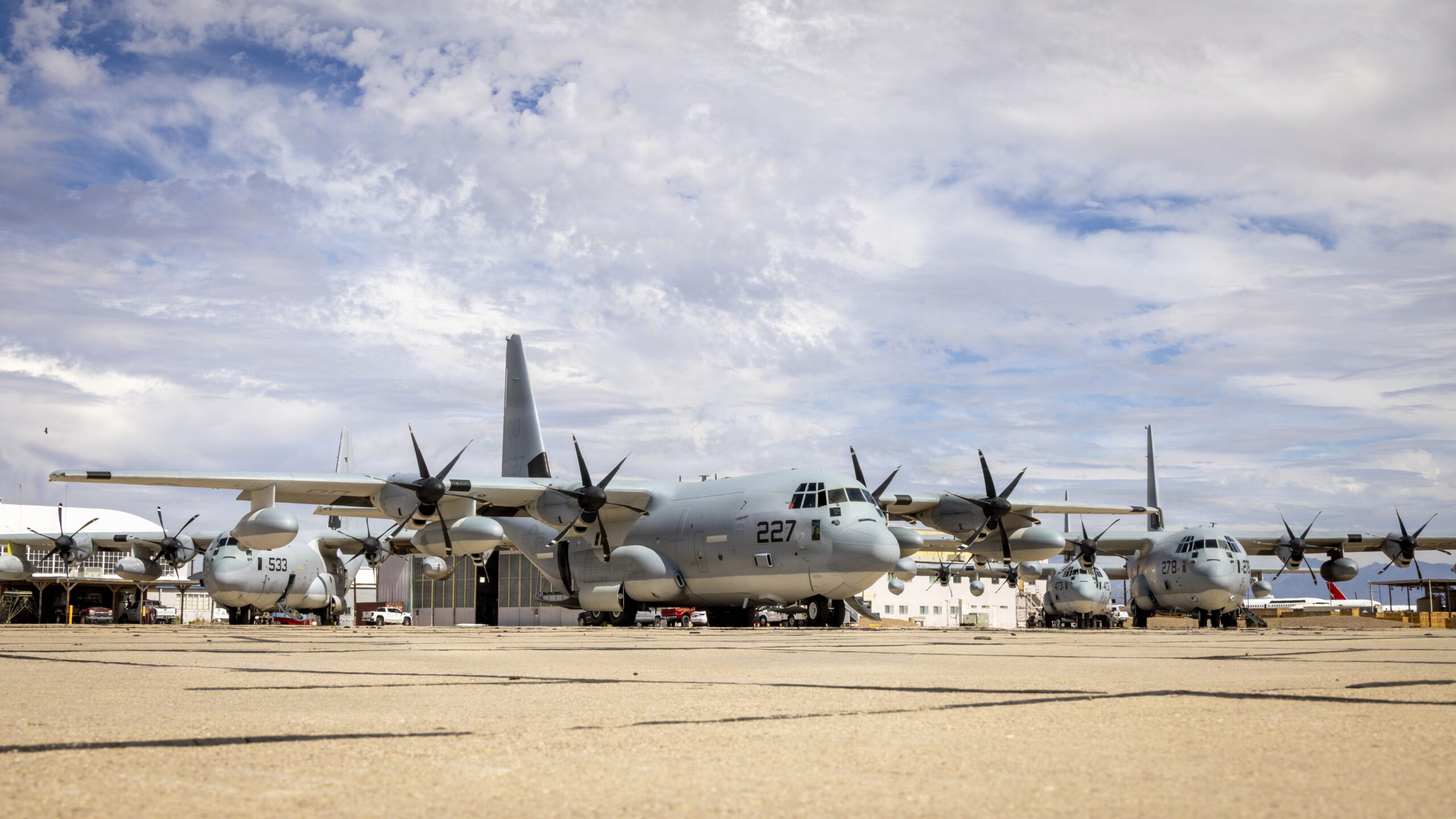
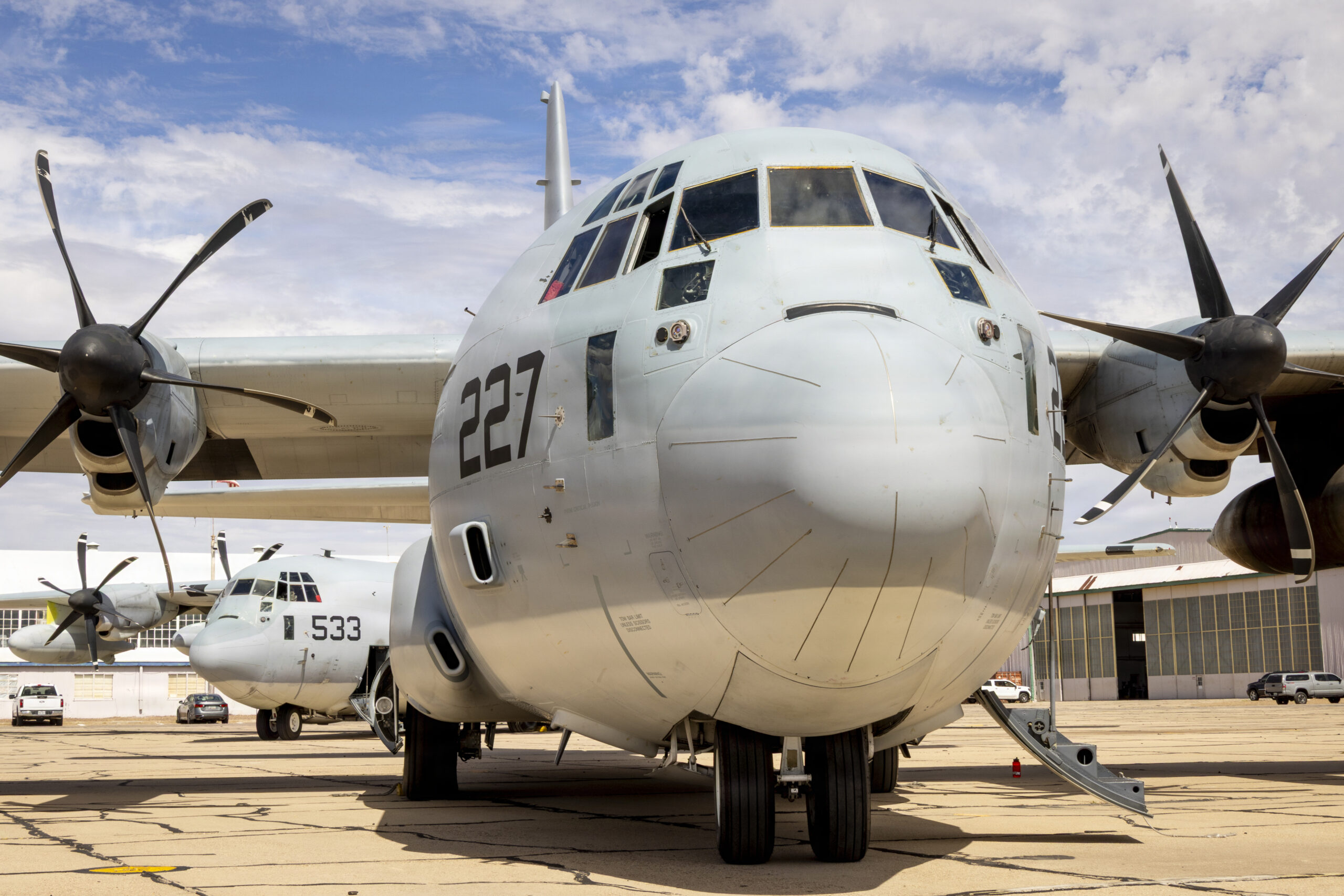
Three KC-130J Herculeses are staged on the flight line at Pinal County Airpark, a former military facility that now serves as an ideal training environment away from congested airspace. The aircraft sit on the ramp in the clear Arizona desert light, the unmistakable bulk of the four-engine turboprop framing what is to follow. The KC-130J is not a glamorous aircraft by the standards of fifth-generation fighters, but in the context of distributed maritime operations and expeditionary logistics, it is arguably among the most strategically consequential platforms in the Marine aviation inventory.
WTI is a seven-week course that MAWTS-1 uses to develop instructor-level proficiency across the seven functions of Marine aviation — and to stress-test the integration of those functions in support of the Marine Air Ground Task Force (MAGTF), joint, and coalition forces. Air delivery and expeditionary refueling exercises of the kind documented here are central to what distributed operations actually require.
Loading and Air Delivery
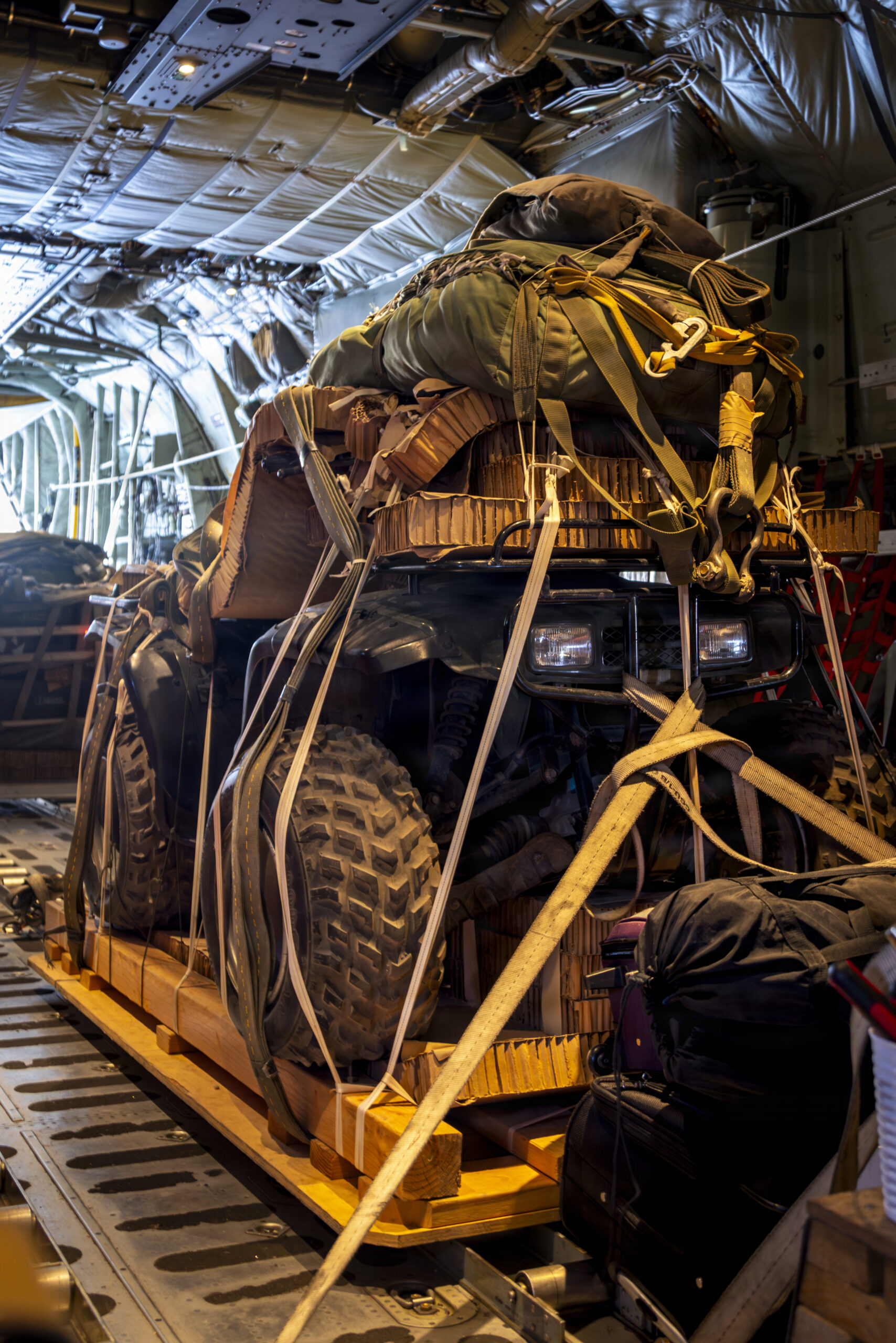
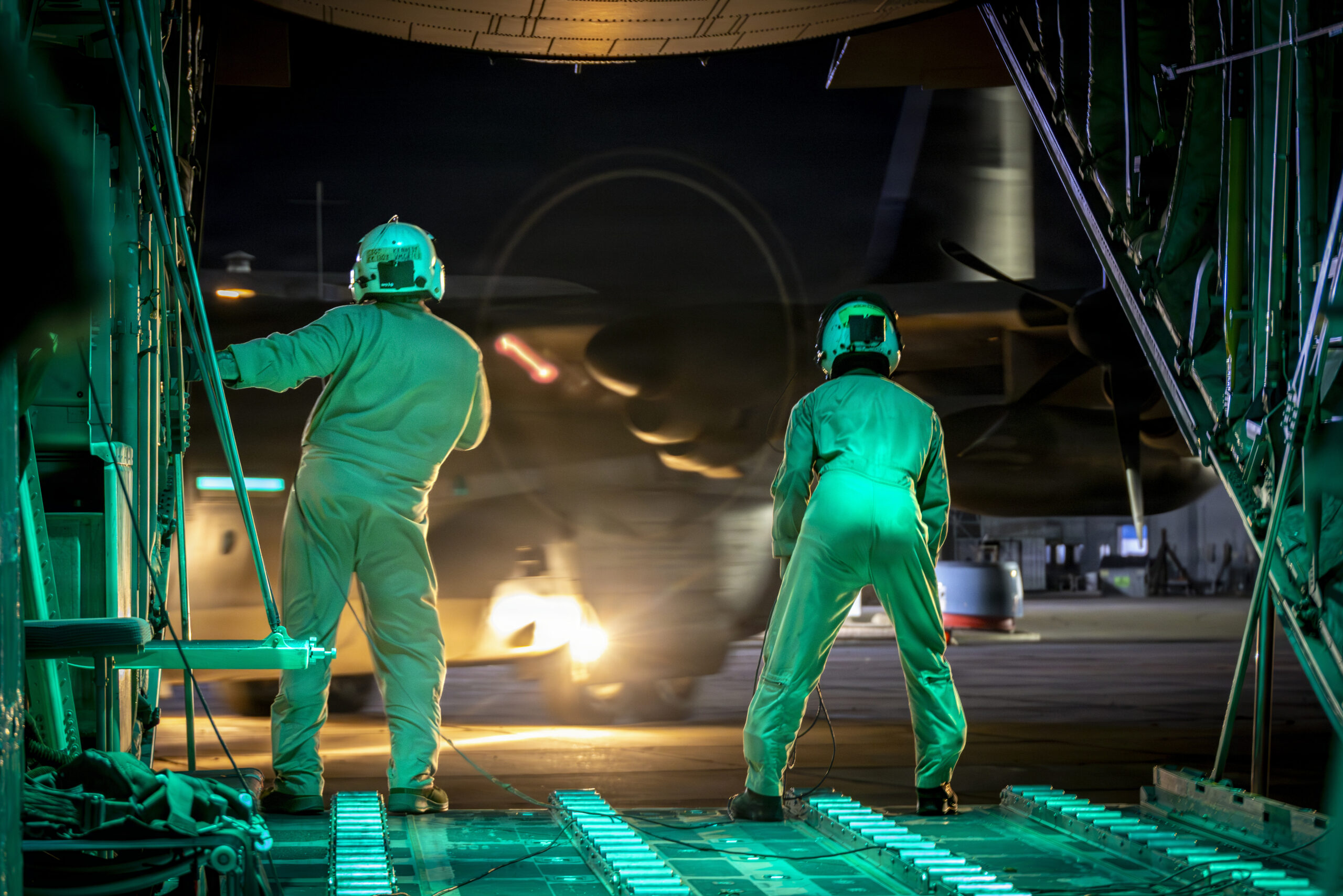
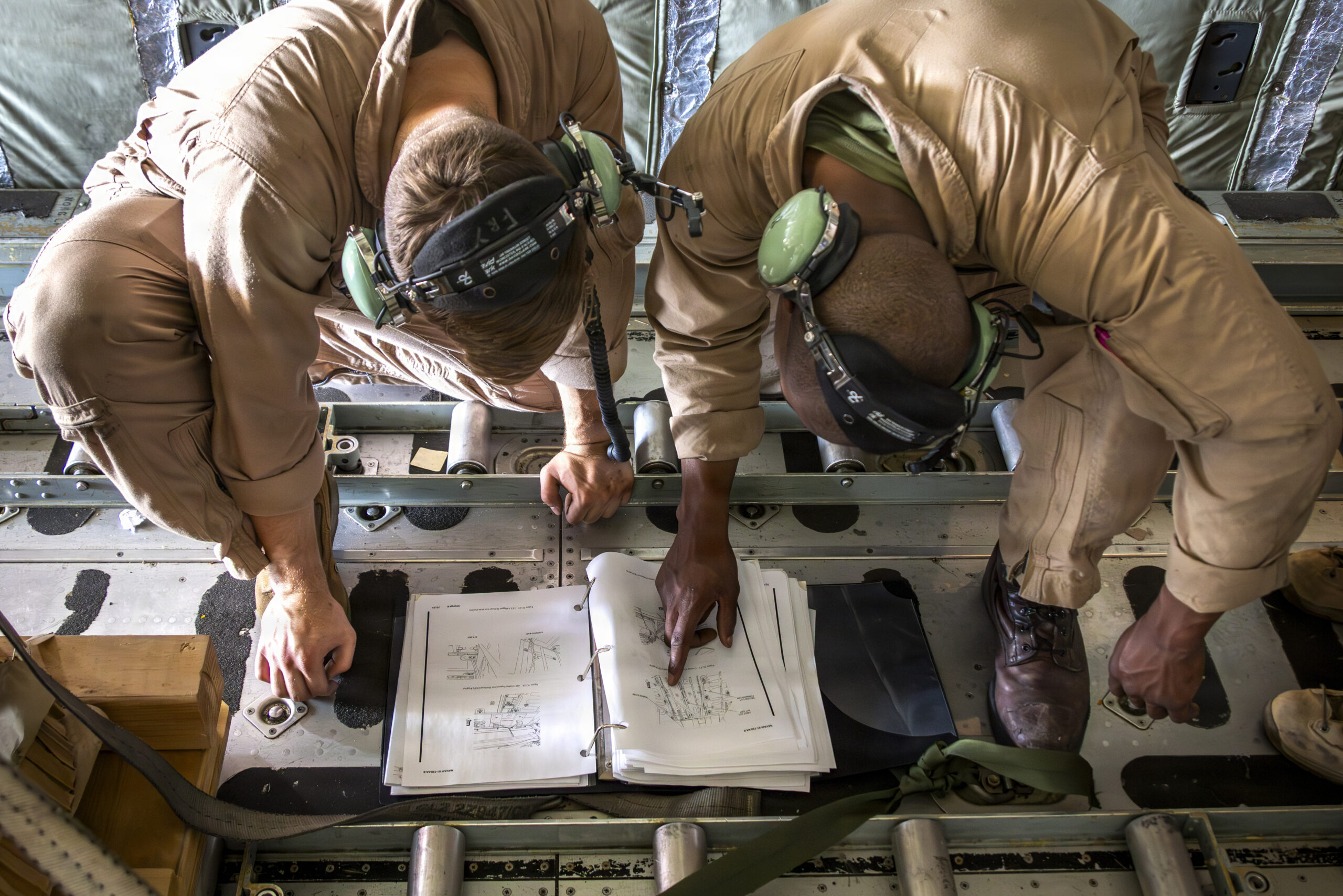
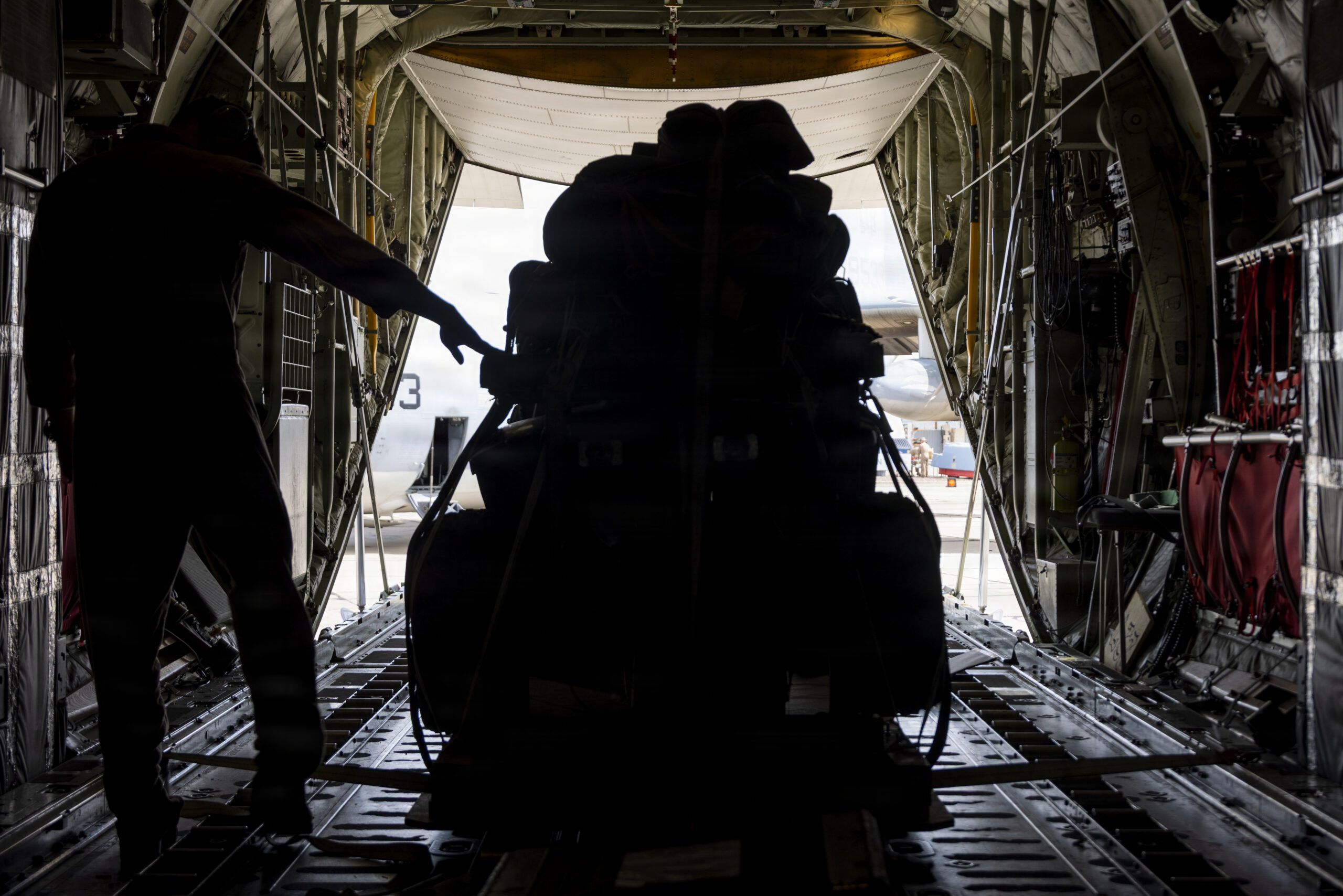
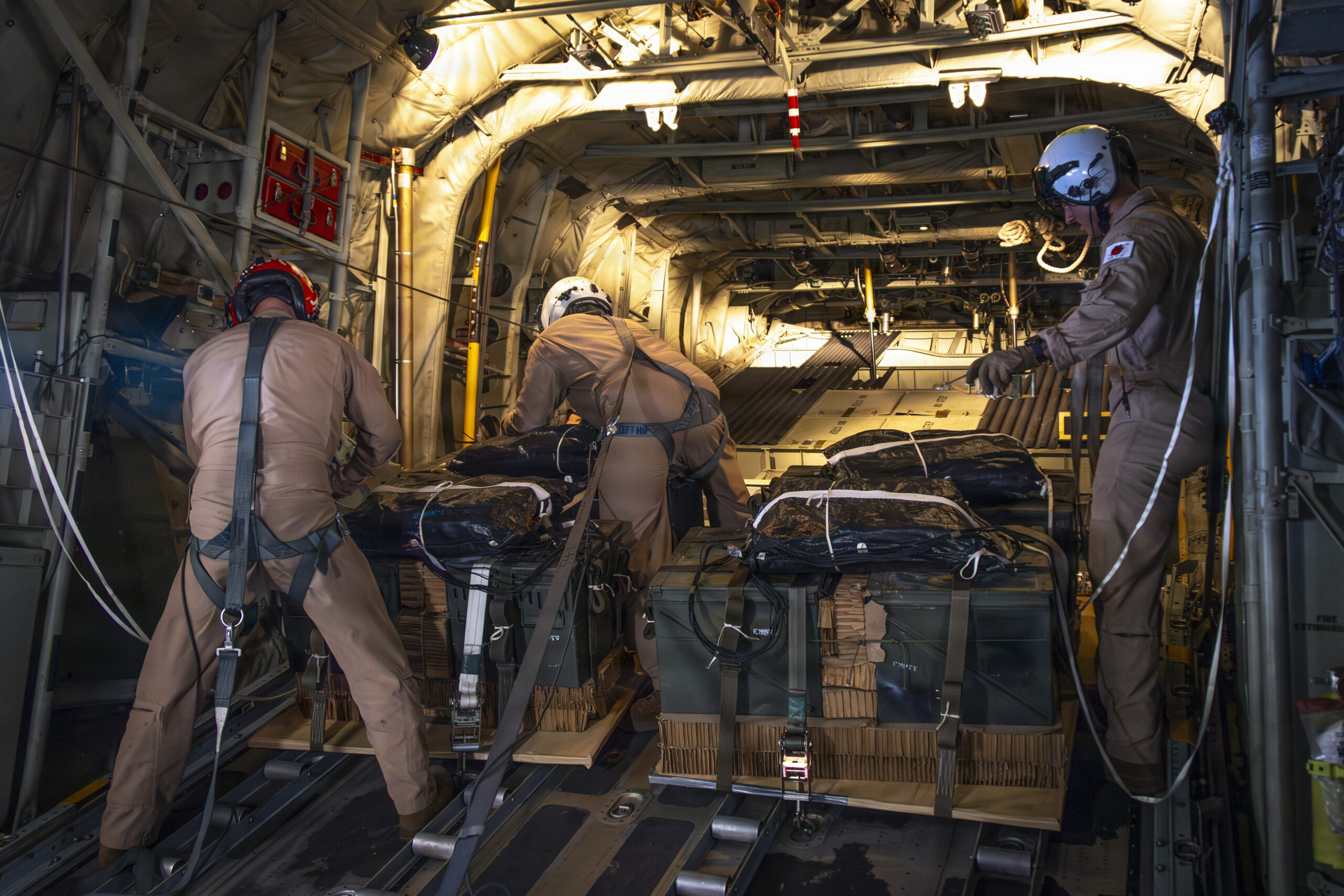
The interior shots tell a story of practiced, disciplined work. In the first image, a loadmaster silhouetted against the open ramp points toward a cargo bundle staged for air delivery, another KC-130J visible through the opening behind him, a reminder that this is a formation exercise, not a solo flight. The internal cargo handling sequence is visible across several images: flight crew in tan nomex suits and white or red flight helmets manhandle palletized cargo bundles toward the ramp, working against the roller-equipped cargo floor that allows relatively rapid movement of heavy loads.
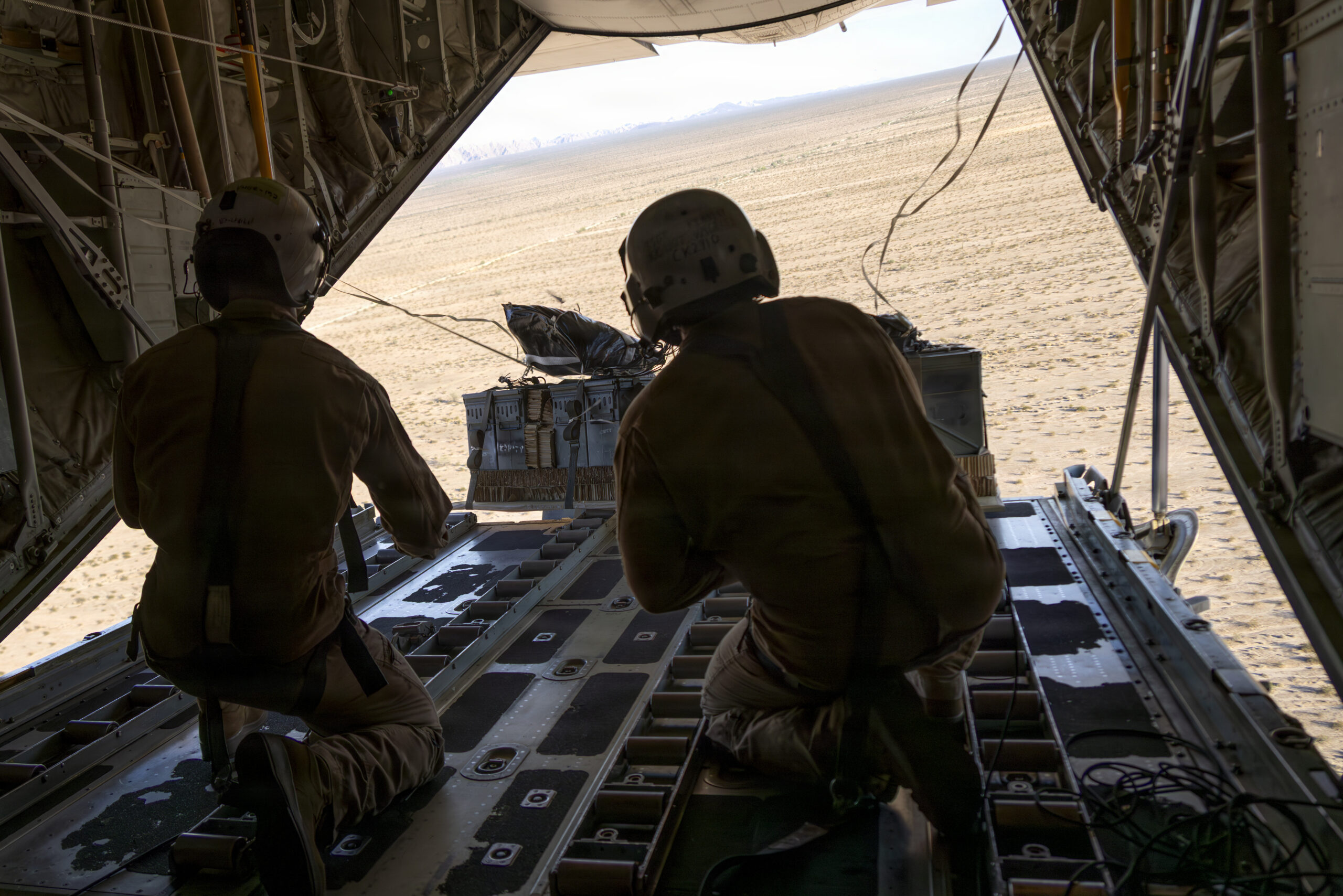
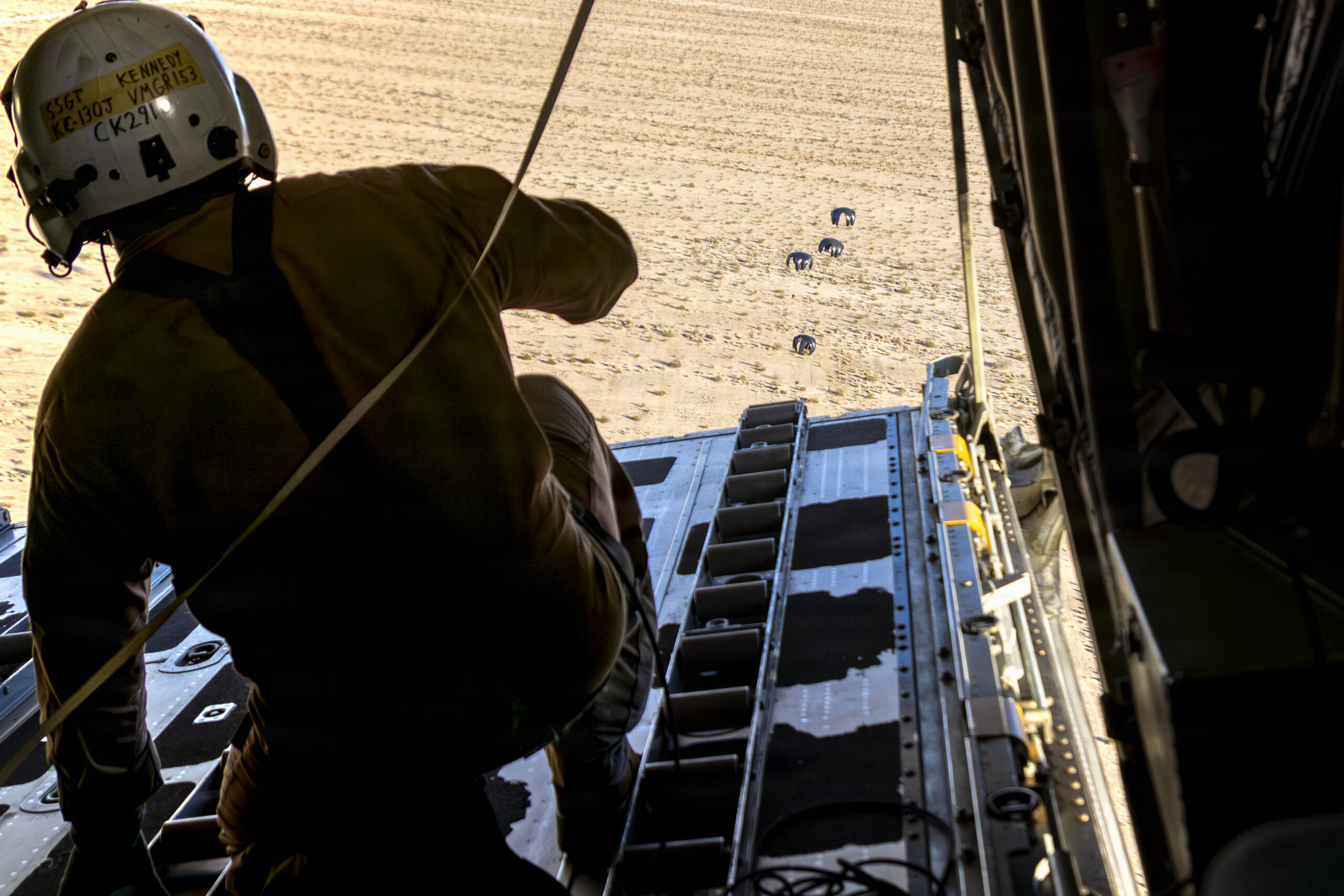
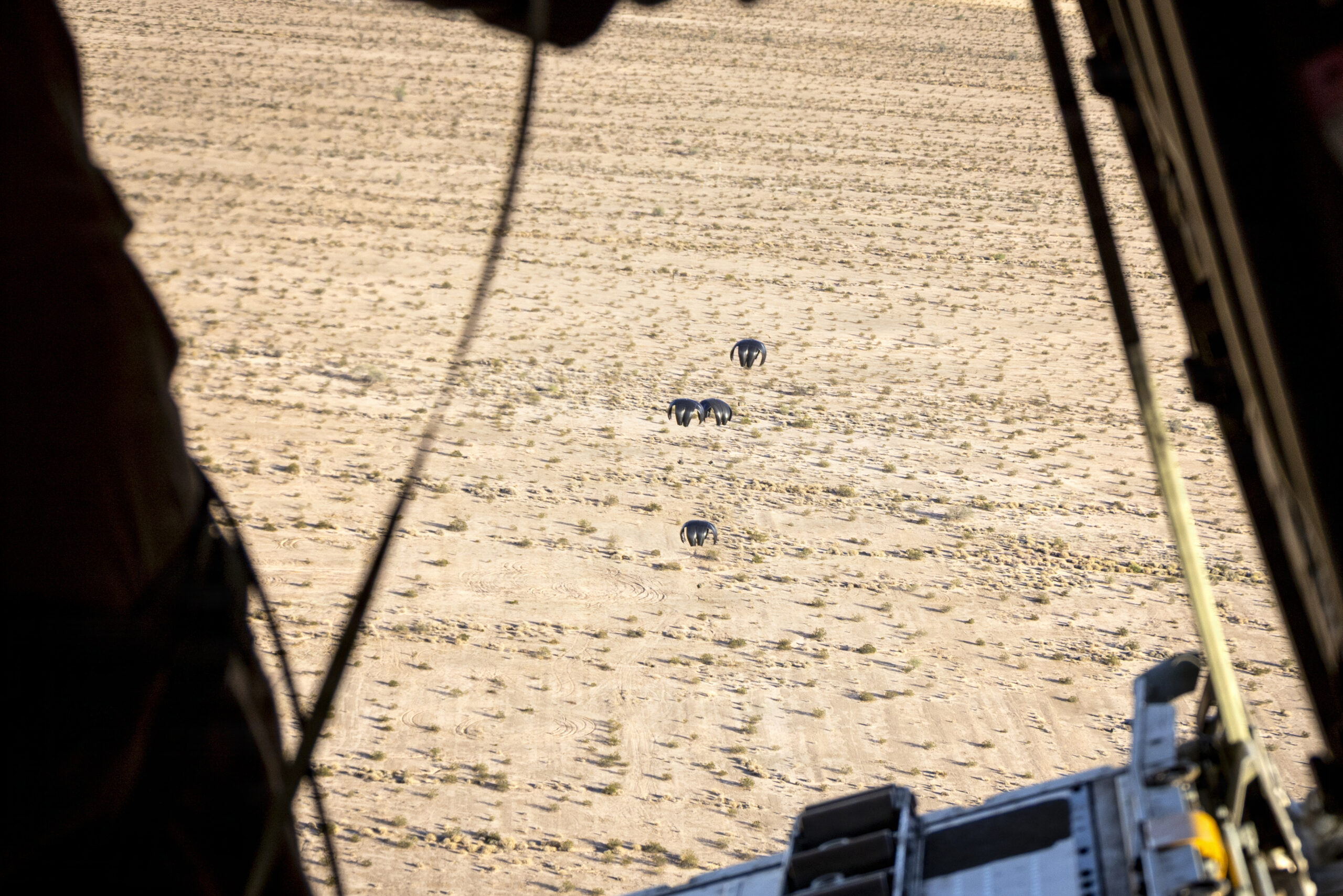
The extraction sequence itself is captured in striking fashion. From the open ramp, two loadmasters kneel at the edge as a cargo bundle parachute already deploying exits the aircraft over the Arizona desert. The flat, sandy terrain below provides an unforgiving but ideal training ground for low-altitude aerial delivery. A subsequent image shot from the open ramp shows multiple small parachute canopies scattered across the desert floor bundles successfully delivered, the training objective achieved.
Expeditionary FARP Operations
Perhaps the most operationally significant sequence in this set documents a Forward Arming and Refueling Point (FARP) exercise conducted at what appears to be an unimproved desert strip. This is the KC-130J functioning not as a tanker in the traditional sense but as a ground-based fuel distribution node exactly the kind of capability that Marine Corps Force Design has emphasized for distributed operations in contested environments.
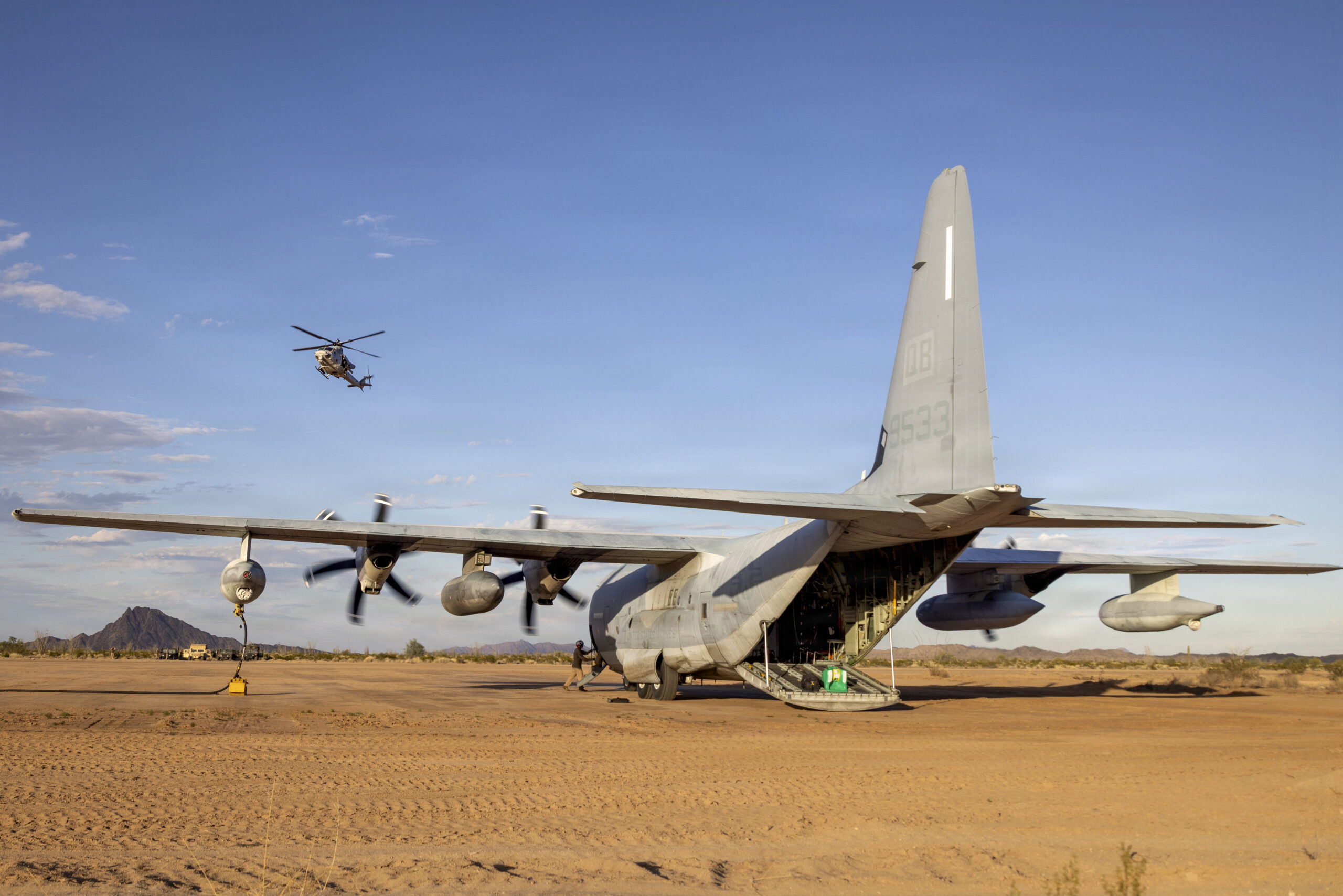
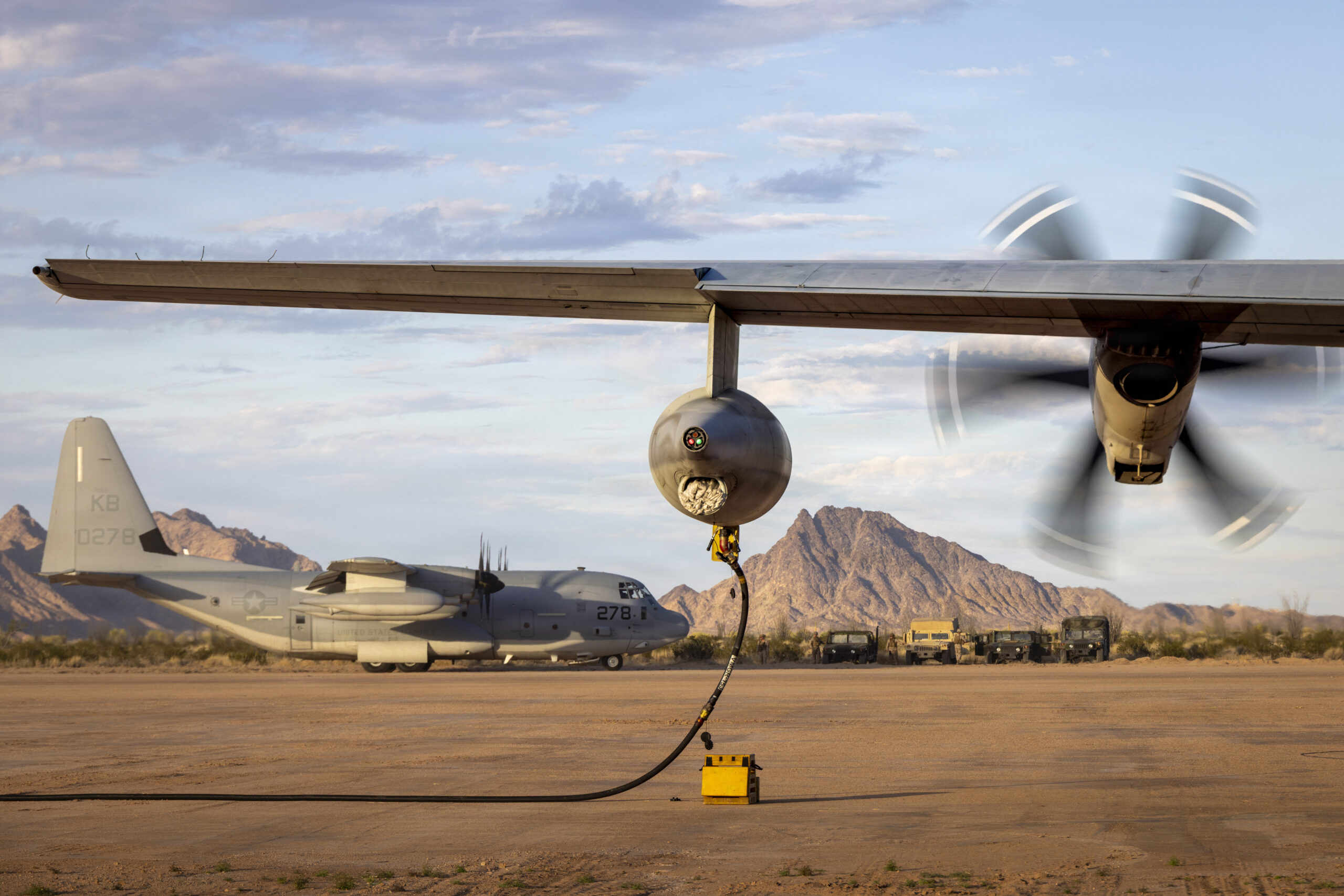
The sequence opens with a ground-level shot looking up at the wing-mounted refueling pod, the spherical buddy store with its hose deployed, connected to a yellow fuel distribution unit on the desert floor. Propellers spin in blur. A second KC-130J (number 278) is visible in the background, parked amid military vehicles and equipment in the scrub desert. This is not a manicured airfield; it is a simulated austere operating location, which is precisely the point.
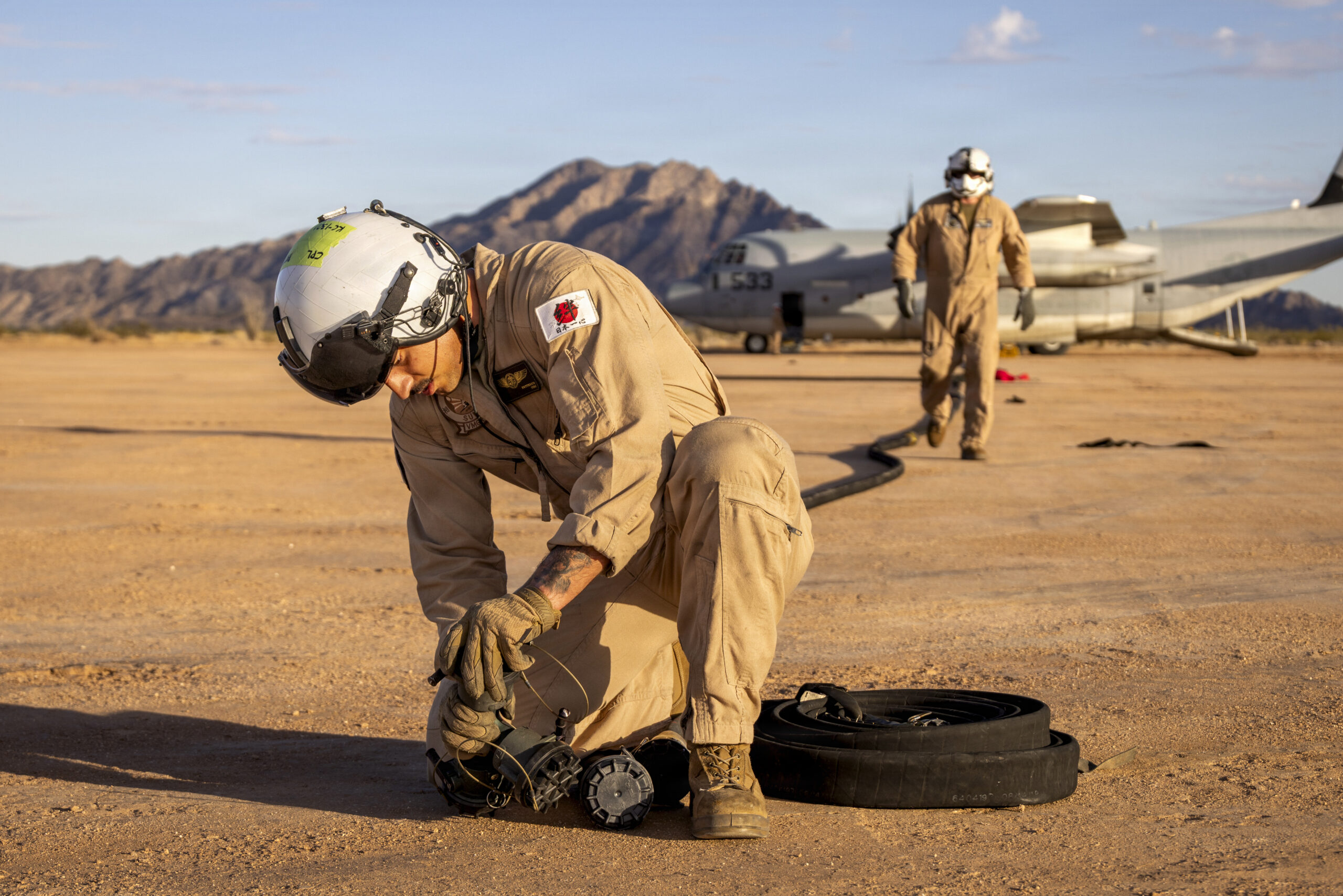
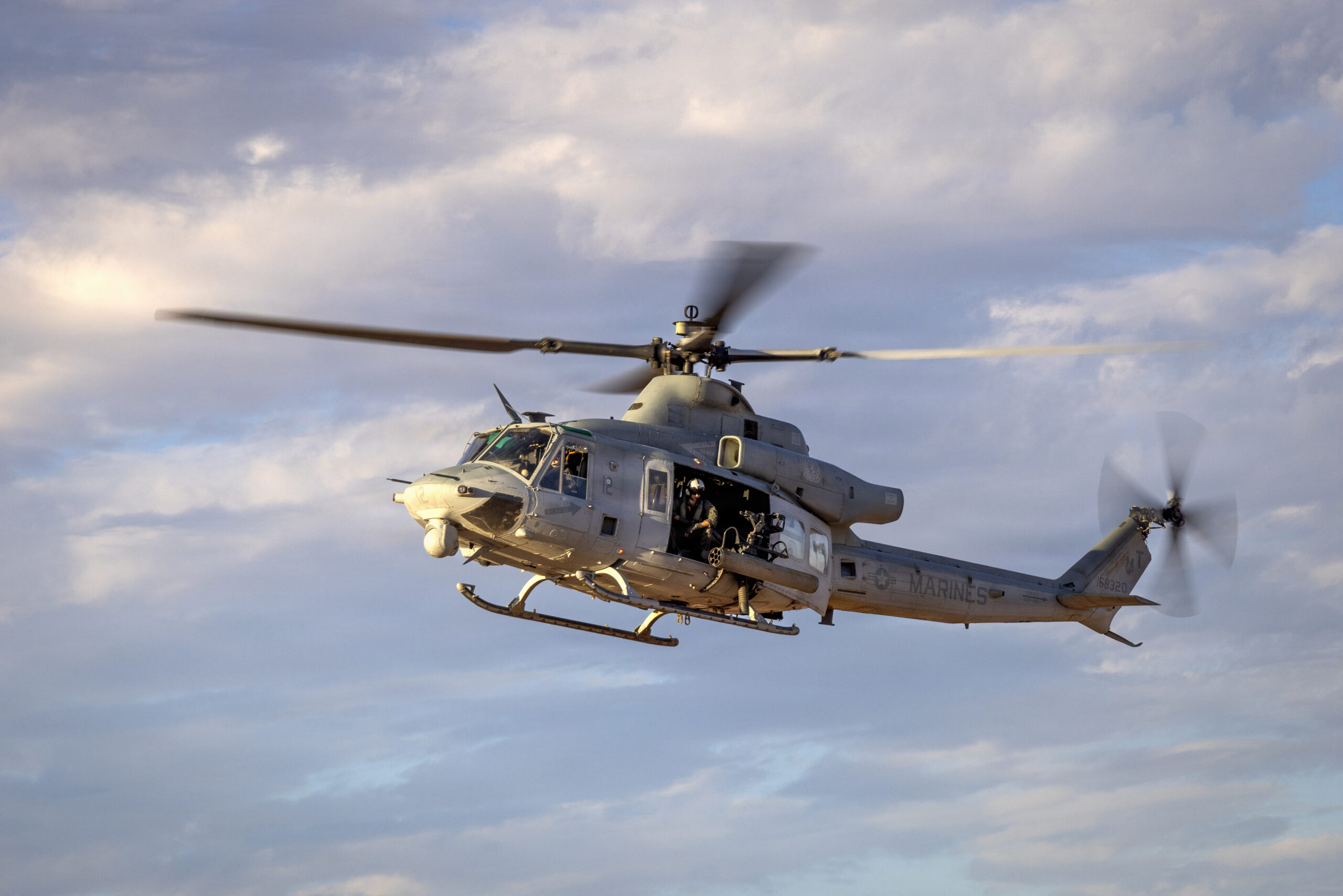
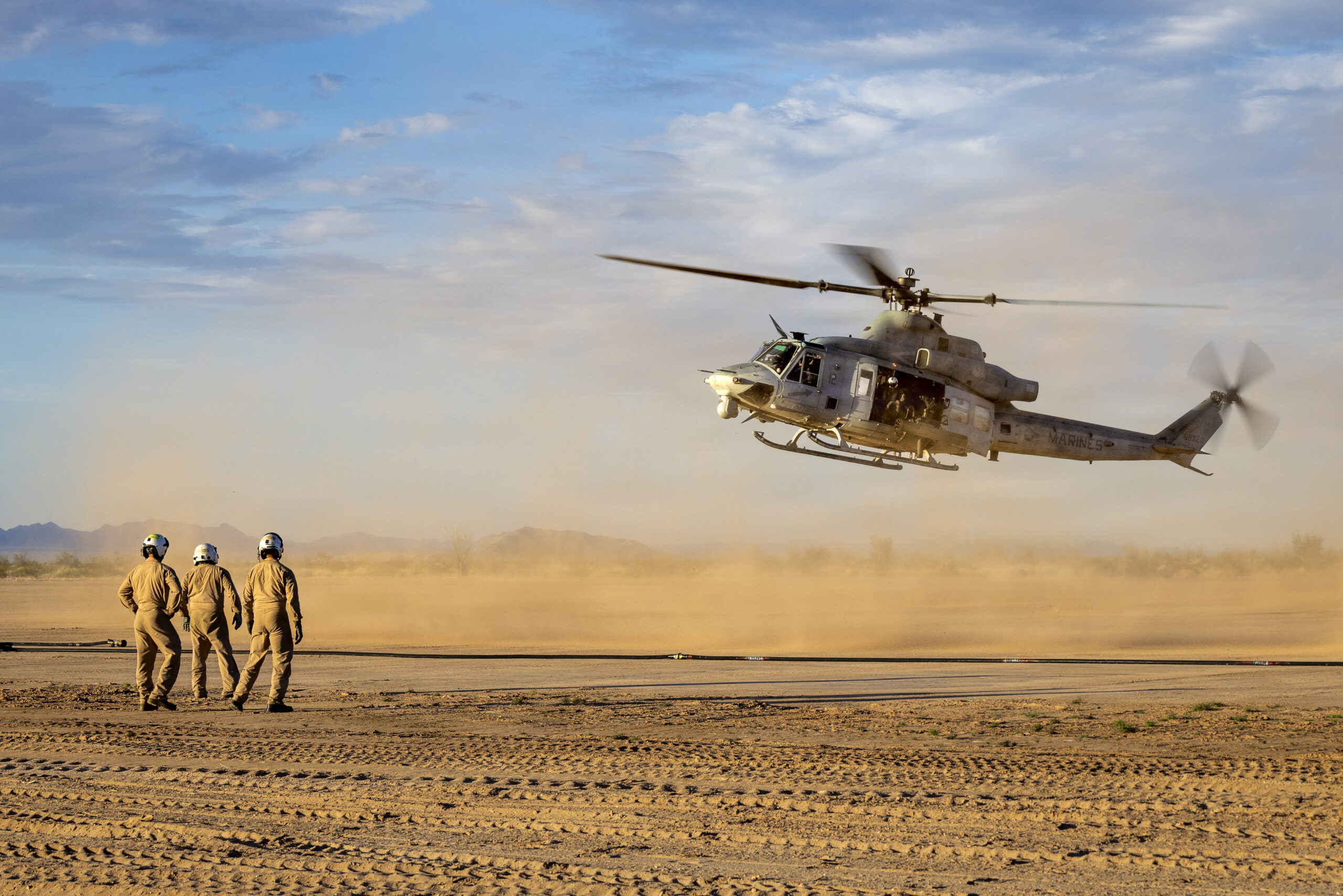
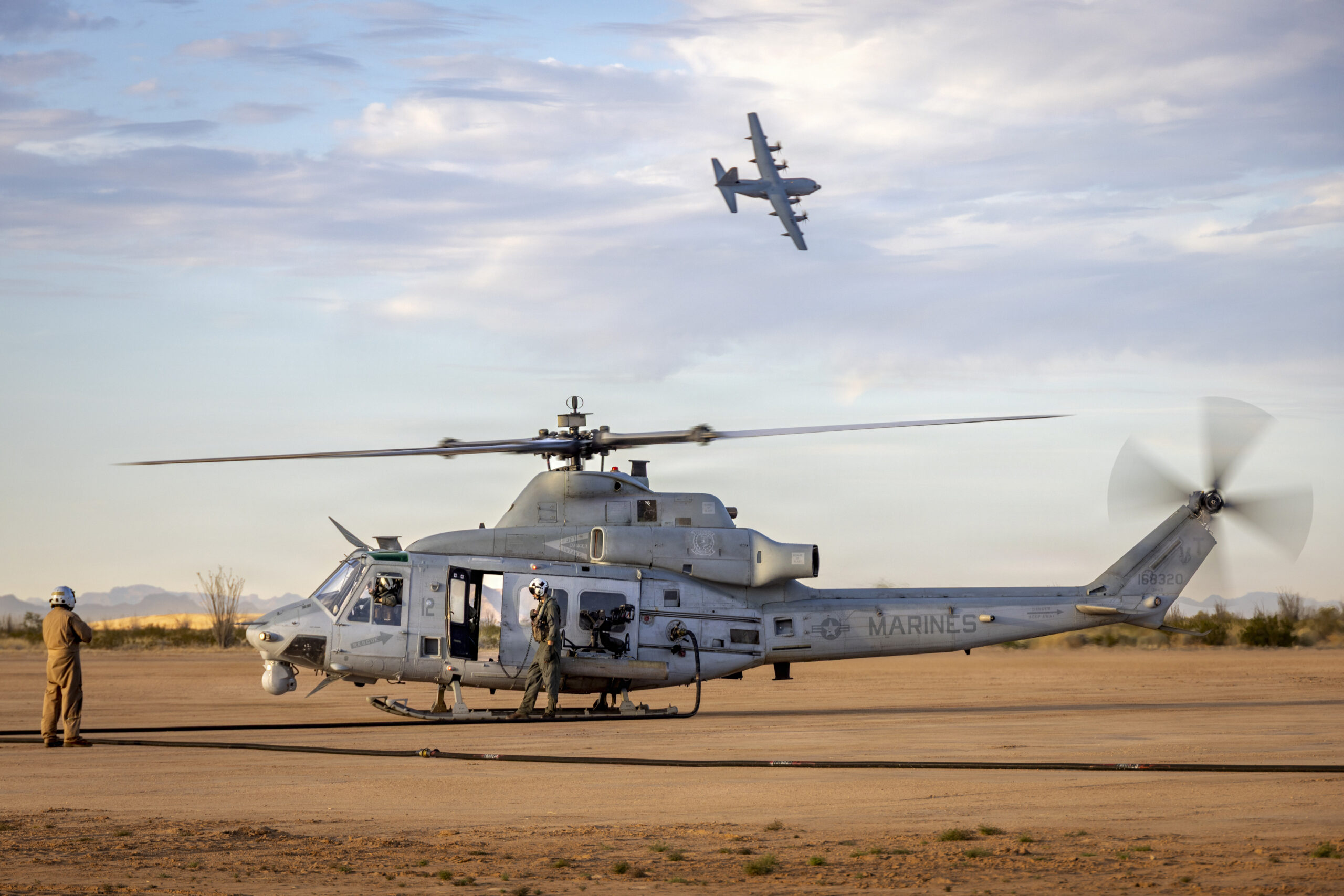
A UH-1Y Venom arrives to take on fuel visible approaching in the middle distance in one image, and then shown in close detail as it hovers and lands at the improvised strip while KC-130J crew members manage the fueling operation. In one of the most visually arresting photographs, three KC-130J crew members in flight suits stand watching the UH-1Y lift off in a wall of blowing desert dust, the mountains of the Arizona desert glowing amber behind them in the late afternoon light. It is an image that captures something essential about expeditionary aviation: the unglamorous, demanding, physical reality of keeping aircraft flying far from established infrastructure.
A close-up of the wing-mounted refueling pod with its hose extended to the ground unit, the blurred arc of the spinning propeller disk filling the upper right of the frame, distant mountains behind, provides a technical punctuation to the operational narrative.
The Distributed Operations Context
What these photographs collectively document is not merely a training exercise. They illustrate a concept. The Marine Corps under Force Design 2030 has leaned heavily into the idea that future operations in contested maritime environments most explicitly in the Pacific will require the ability to sustain small, dispersed, lethal forces operating from austere locations across wide distances. The KC-130J is one of the primary connective tissues of that concept.
Air delivery by KC-130J means that a dispersed force on an island or littoral position can receive ammunition, water, medical supplies, and equipment without requiring a developed airfield or port. The FARP capability means that rotary-wing assets — UH-1Ys, AH-1Zs, MV-22Bs — can be refueled at forward positions, dramatically extending their operational reach without relying on a fixed logistics chain that a peer adversary could target and destroy.
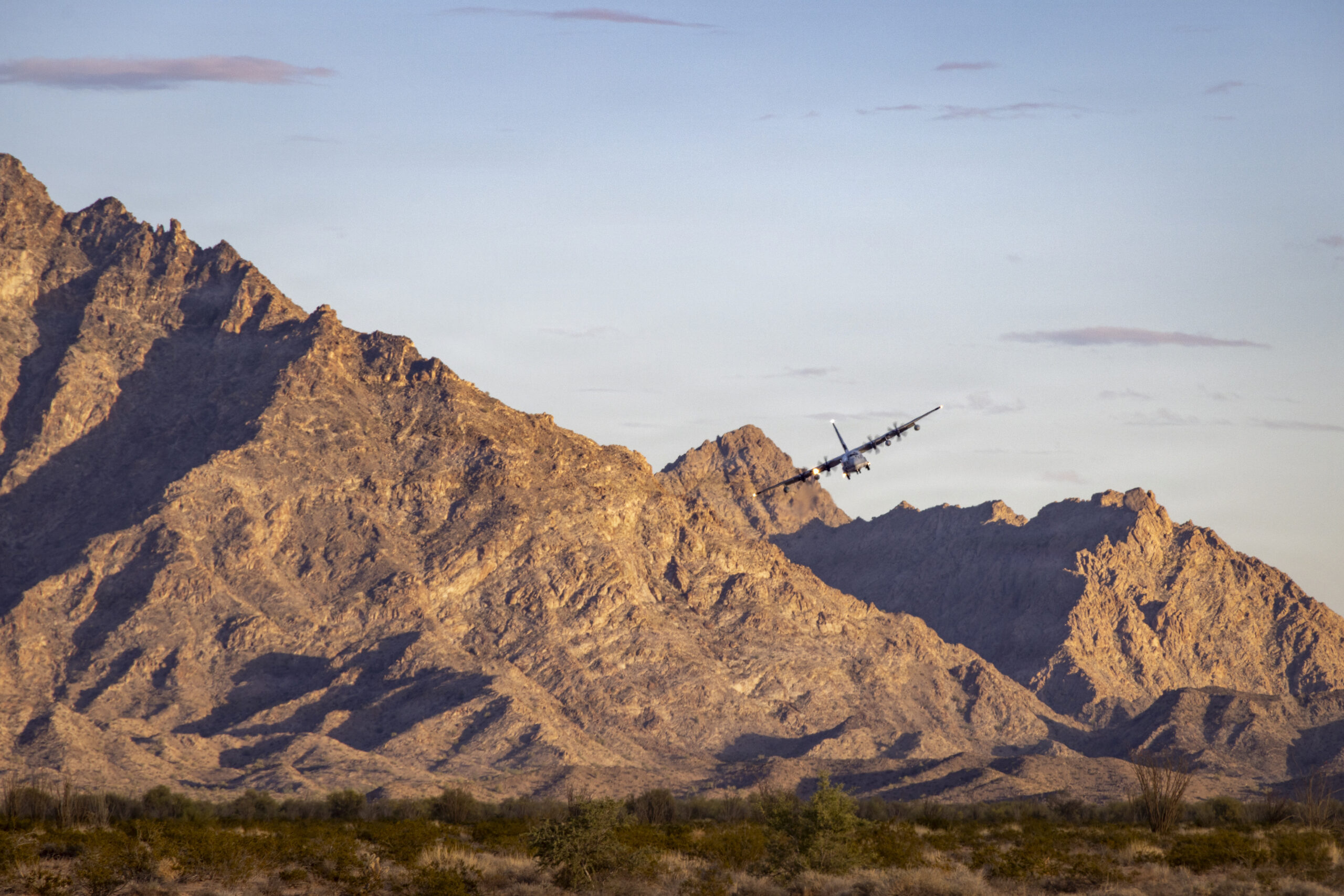
The final image in this set makes the point viscerally: a KC-130J in low, fast flight against the jagged Arizona mountain ridgeline at golden hour, barely clearing the peaks. This is terrain masking, low-altitude operations, the kind of profile that keeps a large, slow aircraft alive in a contested environment. It is a reminder that the KC-130J crews at WTI are not just learning logistics. They are learning to survive while delivering logistics under pressure.
Conclusion
The WTI course exists to produce instructors who can take these lessons back to the operating forces. What MAWTS-1 is refining at Pinal County Airpark is not just technique: it is doctrine in practice. The KC-130J’s role in the kill web is not as a shooter but as an enabler: the aircraft that makes distributed lethality possible by keeping the force supplied, fueled, and in the fight across the vast distances of a Pacific contingency.
These photographs are a record of that work in progress.