Brian Morra and His Contribution to Strategic Thought

01/20/2026

The Second Line of Defense effort has been focused on providing a venue for the expression of fresh thinking about the way ahead to deal with global challenges and defense innovation which can allow the military forces of the liberal democracies to compete effectively with their authoritarian competitors.

Second Line of Defense and defense.info aren’t just websites. They’re strategic communities where policy, technology, and operational realities converge.

Brian Morra has from the outset and indeed even before we launched our website was a key architect in thinking through the effort to shape a new website to generate innovative strategic thinking.

Brian is a highly decorated former American intelligence officer who has successfully transitioned from protecting national security to crafting award-winning historical thrillers that illuminate some of the most perilous episodes of the late twentieth century.

Brian Morra’s journey to literary acclaim began in the high-stakes world of military intelligence during one of the most volatile periods in modern history. Raised in southern Virginia, Morra embarked on a distinguished career that would place him at the center of critical Cold War operations. His impressive educational foundation, degrees from William and Mary, the University of Oklahoma, and Georgetown University, culminating with completion of the Advanced Management Program at Harvard Business School, prepared him for a career that would span both military service and corporate leadership.

As a U.S. Air Force intelligence officer, Morra found himself thrust into the heart of some of the most significant intelligence operations of the 1980s. Perhaps most notably, he helped lead the American intelligence team in Japan that uncovered the true story behind the Soviet Union’s shootdown of Korean Airlines flight 007 in September 1983, a tragic incident that claimed 269 lives and brought the superpowers dangerously close to direct confrontation. This experience would later serve as crucial source material for his literary works, providing him with firsthand knowledge of how intelligence operations unfold and how individual decisions can alter the course of global events.

Morra’s service extended to the Pentagon, where he served on the Air Staff while on active duty, gaining invaluable insight into the mechanisms of national defense policy and military strategy. Following his military career, he transitioned seamlessly into the aerospace industry as a senior executive, working on numerous important national security programs that further deepened his understanding of the complex relationship between technology, defense, and international relations.

His expertise in these fields has been recognized through prestigious appointments to influential think tanks. Currently, he serves as a senior fellow and member of the Board of Regents of the Potomac Institute for Policy Studies, an organization that specializes in examining how advanced technology influences national security. Additionally, he holds the position of non-resident senior fellow at the Mitchell Institute for Aerospace Studies, widely regarded as the world’s preeminent think tank focused on air and space power in the twenty-first century.

The transition from intelligence officer to novelist might seem unusual, but for Morra, it represented a natural evolution, a way to share the profound lessons learned during his years in service while respecting the boundaries of classified information. His approach to writing historical fiction is uniquely informed by his personal experiences, creating narratives that ring with authenticity because they are grounded in the realities of intelligence work and international relations.

Morra’s writing philosophy centers on bringing real events to life through the experiences of characters based on people he encountered during his intelligence career. He draws upon countries and locations he knows firsthand from his extensive travels throughout Europe, Asia, and the Middle East, lending his narratives a geographical and cultural authenticity that sets his work apart from other historical fiction.

Morra’s literary debut came with “The Able Archers,” a historical thriller that introduces readers to one of the most terrifying episodes of the Cold War, a series of events that nearly triggered nuclear war in the autumn of 1983. The novel represents far more than entertainment; it serves as a crucial historical document that reveals how close the world came to nuclear annihilation during a period when most of the public remained blissfully unaware of the escalating tensions.

The book introduces Kevin Cattani, a young American Air Force Intelligence officer whose experiences mirror Morra’s own journey through the intelligence community. Cattani’s Soviet counterpart, Colonel Ivan Levchenko of the GRU (Russian military intelligence), represents the human face of America’s adversaries, a complex character who embodies the reality that intelligence officers on both sides of the Iron Curtain were often more alike than different in their dedication to serving their countries while attempting to prevent global catastrophe.

“The Able Archers” garnered immediate critical acclaim and commercial success, earning the 18th Annual National Indie Excellence Award for Military Fiction and achieving finalist status in the Historical Fiction category. The novel’s impact extended beyond literary circles, with prominent figures from the intelligence and defense communities praising its accuracy and insight.

Jack Carr, the #1 New York Times bestselling author and former Navy SEAL, described the book as “a fast-paced ride through one of the worst crisis periods of the Cold War… a terrifying yet factual story of how a few people prevented a global nuclear war.” William S. Cohen, former Secretary of Defense, called Morra “the master craftsman” and praised “The Able Archers” as “brilliant.” Perhaps most significantly, Michael Morrell, former Acting Director and Deputy Director of the CIA, noted that the book “delivers a story that is both realistic and riveting.”

Following the success of his debut, Morra released “The Righteous Arrows” in April 2024, published by Koehler Books. This sequel picks up where “The Able Archers” concludes, following the same characters as they navigate the complex and dangerous landscape of the Soviet war in Afghanistan. The novel incorporates the true story of the CIA’s role in supplying Afghan rebels who fought against Soviet occupation—a covert operation that would have profound implications for global politics and the eventual rise of international terrorism.

“The Righteous Arrows” presents a more complex moral landscape than its predecessor. Where “The Able Archers” showed Cattani and Levchenko working together to prevent nuclear war, the sequel finds them on opposite sides of a brutal conflict. Cattani conducts a perilous covert mission inside a Soviet bunker in East Germany, barely escaping with his life, before finding himself supplying advanced weapons to Islamic resistance fighters in Afghanistan—weapons designed to kill Russian troops under Levchenko’s command.

The novel’s exploration of the Afghanistan conflict proves particularly prescient, as Morra uses his characters’ experiences to foreshadow the global war on terror that would define the early twenty-first century. The “righteous arrows” of the title refer to the Stinger missiles supplied to Afghan mujahideen, weapons that proved devastatingly effective against Soviet aircraft and ultimately contributed to the USSR’s decision to withdraw from Afghanistan.

Like its predecessor, “The Righteous Arrows” earned critical acclaim and industry recognition, winning the 18th Annual National Indie Excellence Award in the Military Fiction category. General Doug Brown, 7th Commander of United States Special Operations Command, praised the sequel: “The battlefield has moved from the nuclear Cold War threat to the shadow wars of Afghanistan, but the suspense, excellence in writing, and his ability to weave real world events and capabilities into a robust fictional story continues to set Morra apart.”

Beyond their entertainment value, Morra’s novels serve as important educational tools that illuminate historical events often overshadowed by more prominent Cold War episodes. The nuclear war scare of 1983, for instance, remained largely classified for decades, leaving the public unaware of how close civilization came to destruction. Through his fiction, Morra provides accessible insight into these critical moments while respecting the classified nature of much of the source material.

In effect, his novels are case studies in the study of crisis management. And as we have argued throughout the years, shaping a more agile military without evolving new capabilities for crisis management will not yield the West the kind of capabilities necessary to compete successfully with the authoritarian powers.

His expertise has been recognized by major media organizations seeking authoritative voices on Cold War history. Morra served as an on-air expert for Netflix’s documentary series “Turning Point: The Bomb and the Cold War,” and contributed his extensive knowledge to the CNN/BBC documentary “Secrets and Spies: A Nuclear Game.” These appearances have helped bring his historical insights to broader audiences, establishing him as a credible voice in both literary and historical circles.

What distinguishes Morra’s work from other historical fiction is his commitment to authenticity. His characters behave like real intelligence officers because he understands their world intimately. His descriptions of classified operations, international tensions, and military procedures carry the weight of experience rather than research alone. This authenticity extends to his portrayal of both American and Soviet characters, avoiding the simplistic good-versus-evil narratives that often characterize Cold War fiction.

Morra’s writing style reflects his intelligence background, precise, economical, and focused on the human elements that drive major historical events. His novels demonstrate that history’s most significant moments often turn on individual decisions made by people under extraordinary pressure, whether they’re trying to prevent nuclear war or navigating the moral complexities of proxy conflicts in distant lands.

As Morra continues to develop his literary career, his unique perspective as both insider and storyteller positions him to make lasting contributions to our understanding of recent history. His work serves multiple audiences: general readers seeking compelling narratives, history enthusiasts interested in Cold War operations, and policy makers who can learn from past crises to better navigate contemporary challenges.

Living between the Washington, D.C. area and Florida, Morra remains active in policy discussions through his think tank affiliations while continuing to write. His transition from protecting national security to illuminating its complexities through fiction represents a remarkable second career that enriches our understanding of the recent past while providing entertainment and insight for future generations.

In an era when historical events are often reduced to political talking points or forgotten entirely, Morra’s work serves as a vital bridge between the classified world of intelligence operations and the public’s need to understand how their safety has been protected and threatened by forces operating far from public view.

Reaping the Results of More than Two Decades of Western Appeasement of Vladimir Putin
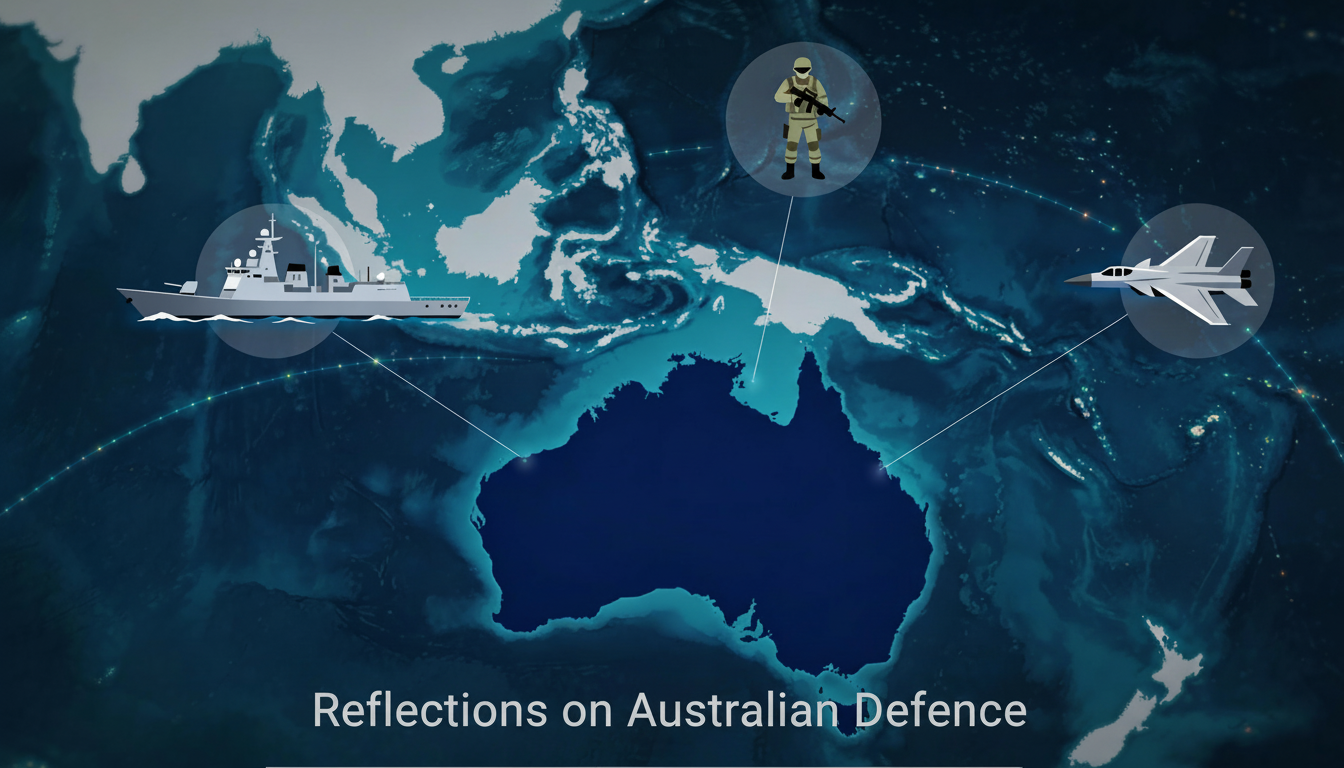
The ADF–USMC Partnership: Building a Modern Defense Alliance for the Indo-Pacific

01/15/2026

By Robbin Laird

The deepening partnership between the Australian Defence Force (ADF) and United States Marine Corps (USMC) is increasingly at the center of Australia’s defense strategy for the Indo-Pacific.

While recent commentary has emphasized the risks of deepened integration for Australian sovereignty, this narrative can underestimate the many advantages flowing to Australia across doctrine, operations, industry, and regional access.

Rather than a one-sided relationship, the evolving ADF–USMC alliance is a dynamic, reciprocal engine for modernization, resilience, and regional stability.​​

For over a decade, the USMC has maintained a rotational presence in northern Australia, most visibly through the Marine Rotational Force – Darwin (MRF-D). This arrangement began as a training opportunity but is now transforming into something much more consequential. Australia has been formally included in the USMC’s prepositioning and sustainment network for the Indo-Pacific, making northern Australia a strategic operational node rather than simply a location for joint exercises.​​

This embedding elevates northern Australia from a logistics waypoint to a core element in the USMC’s Indo-Pacific operational web. For Australia, it creates both opportunities and new forms of strategic exposure. The imperative now is to translate this unique alignment into lasting national advantage, preserving autonomy while maximizing access to alliance resources and regional reach.​

Critics often frame joint posture and integration as a risk to Australian independence.

However, this perspective ignores the immense practical benefits the ADF obtains through cooperation with the USMC. Australia does not merely host U.S. forces for it works alongside them in an interactive, co-development environment that is transforming its own defense capabilities.​​ Foremost among these benefits is the transfer of littoral and amphibious doctrine. The Australian Army is now prioritizing littoral maneuver, operations in complex archipelagic and coastal environments.

This shift aligns directly with USMC experience, as the Marine Corps is the world’s acknowledged leader in amphibious operations, distributed maneuver, and expeditionary logistics.​​ The USMC’s new Force Design Update 2025 emphasizes small, dispersed formations, prepositioned logistics, and resilient command networks.

By operating alongside Marines, Australian forces learn, adapt, and practice these emerging operational concepts in realistic, challenging scenarios. Whether it is live-fire littoral combat drills, rapid air-sea insertions, or distributed command and control, the joint exercises between the ADF and USMC create an unparalleled learning and force development environment.​​

“Working with MRF-D has been an excited experience for the 5th Battalion, Royal Australian Regiment. 5RAR is normally a motorized infantry battalion, but we are undergoing a focus to littoral maneuver, and rapidly re-rolled as an air assault element for Exercise KOOLENDONG,” said Captain Jacob Bronk, the 5th Battalion, Royal Australian Regiment air assault company commander. “The diggers of 5RAR practiced dismount tactics, techniques, and procedures operating as part of the MAGTF, and the lessons learned from our participation will help ensure that the USMC and the ADF remain ready to operate together in the future.”

Joint operational experimentation allows the ADF to rapidly field, adapt, or reject new tactics learned from USMC experience in the Pacific, greatly accelerating Australian Army modernization and doctrinal development.​

The partnership is also producing a new level of command and technical integration. Joint basing, combined communications infrastructure, and secure logistics hubs in northern Australia simultaneously serve USMC requirements and empower the ADF to field world-class C4ISR (Command, Control, Communications, Computers, Intelligence, Surveillance and Reconnaissance) capabilities.​​

Australian participation in the USMC’s prepositioning and sustainment network means the ADF can plug into broader Indo-Pacific logistics and command pathways, creating a flexible, regionally integrated force posture that is much greater than the sum of its parts.​​

Often overlooked in sovereignty debates is the fact that U.S. use of Australian bases also opens doors for reciprocal ADF access to U.S. installations and logistical nodes across the region.

During a regional crisis, Australia is now positioned not just as a host but as a full partner, able to stage, sustain, and reconstitute forces from US and allied locations throughout the Indo-Pacific.​​ This distributed approach gives the ADF both strategic depth and operational flexibility. It amplifies Australia’s ability to maintain a regional presence, contribute to coalition operations, and respond rapidly to emergent threats far beyond its immediate shores.​

Bilateral agreements under the U.S. Force Posture Initiative explicitly provide for joint infrastructure use, training, logistics, and if required operational deployment, ensuring Australian planners gain direct operational and logistical benefits from the arrangement.​​

The notion that infrastructure built for joint use comes at the expense of sovereignty is overly simplistic. In fact, U.S. posture planning increasingly emphasizes dual-use investments, facilities and networks hardened for contested operations, but also designed as the backbone of resilient national defense and industrial capacity for Australia.​​

Every new runway, logistics node, radar facility, or training center established in northern Australia is being built not just for U.S. presence but also as enduring assets for the ADF. By embedding Australian firms within U.S. contracting frameworks and focusing on co-investment, Australia ensures that these projects leave behind sovereign capabilities rather than a transient foreign footprint.​​

Australian leadership can and must set explicit parameters on data sovereignty, environmental stewardship, operational command, and industrial participation in joint posture agreements, ensuring the alliance reinforces not substitutes for its national strategy.​

“With wise co-investment, those same facilities can underpin Australian industry, powering a domestic defence ecosystem that services both ADF and allied demand,” writes analyst John Coyne. Local firms are positioned to build, supply, and sustain a new generation of modular logistics and defense infrastructure, creating sovereign capacity in the process.​

Strengthening sovereignty doesn’t require isolation or decoupling. Instead, sovereignty comes through confidence: the ability to participate in and shape alliance architecture, set limits, and ensure that joint posture is always aligned with national interest.​ Australia’s growing investment in autonomous systems, long-range strike, and space-based awareness speaks to this mindset.

These developments are designed to give the ADF options for independent action, even when operating within coalition frameworks.​ The USMC’s doctrine of distributed, resilient, networked forces provides a template for strengthening Australian sovereignty, not undermining it.

Collaboration drives innovation and empowers both sides to act more flexibly in a complex, contested region.​​ The evolution of the USMC–ADF partnership is perhaps best illustrated in the field of littoral operations. As the Australian Army pivots towards amphibious and archipelagic operations, its closest and most capable mentor is the USMC. The experience of transforming infantry battalions into littoral maneuver elements is one that Marines have lived for decades.​

“5RAR is normally a motorized infantry battalion, but we are undergoing a focus to littoral maneuver, and rapidly re-rolled as an air assault element for Exercise KOOLENDONG,” explained Captain Bronk of the Australian Army.​

Joint experimentation, from force-on-force maneuvers to long-range fires and integrated aviation assaults, allows each side to test, refine, and adapt emerging tactics, creating operational concepts suited to the environmental realities and strategic challenges of the Indo-Pacific.​

The “co-design” approach, where joint Australian-American littoral teams work together from the earliest stages of concept development, is producing uniquely robust capabilities—and validating the benefits of close allied integration.​

Operational integration does not exist in a vacuum. Australia must remain mindful of signaling in Southeast Asia and the South Pacific, where increased U.S. military presence can provoke suspicions among neighbors. Transparency, confidence-building measures, and regular consultation with regional partners are essential to demonstrate that northern posture integration is about stability, not the unchecked projection of U.S. power.​

Australia’s own investments in regional capacity-building, such as joint maritime patrols, disaster response, and infrastructure investments. need to be integrated with military posture to ensure the alliance is perceived as a net contributor to regional security.​​

The USMC–ADF partnership stands at an important crossroads. The scale of U.S. force modernization and posture adjustment in the Indo-Pacific creates a once-in-a-generation opportunity for Australia to achieve a “new balance” between alliance participation and sovereign capability.​​

Key steps to maintain this balance include:

  • Embedding sovereignty safeguards such as clear operational command chains, data controls, and joint planning committees into every posture agreement.​
  • Aligning major infrastructure projects with Australia’s national industrial development agenda, ensuring local firms and technology ecosystems benefit directly from posture-related investment.​
  • Maintaining the ability to opt in or out of coalition operations, retaining independent operational decision-making while building forces capable of integrated operations.​​
  • Using the partnership as a catalyst to expand the ADF’s regional network, seeking access to other allied facilities and deepening links across the broader Indo-Pacific security architecture.​

The intensified relationship between the ADF and USMC is not simply about hosting or dependency; it is about harnessing a unique historical moment to co-design the future of Indo-Pacific security. By moving beyond transactional narratives and focusing on mutual benefit, both autonomy and alliance can be protected and advanced.

Robust, balanced, and interactive partnership will leave Australia better equipped, more connected, and more influential in shaping the region’s strategic environment, now and into the future.​​

For my latest book on Australian defence, see the following:

Fight Tonight: Combat Readiness at the Speed of Relevance

Beyond FCAS: SAAB Positions Itself

01/14/2026

By Pierre Tran

Paris – Saab, the Swedish builder of the Gripen fighter jet, appears to have emerged as a potential plan B for Airbus Defence and Space, if a Franco-German €100 bln ($116 bln) project for a European future combat air system fails to take off.

A Dec. 18 summit in Berlin came and went without France and Germany announcing launch of work on an FCAS technology demonstrator in the new year. That may be seen as a political failure to broker an industrial agreement between the German partner Airbus DS and French partner Dassault Aviation on a new generation fighter at the heart of FCAS.

Spain is the third nation in the FCAS project, but the discord lies between the French and German industrial partners, locked in dispute over sharing technology, and work packages.

Readers of Frankfurter Allgemeine Zeitung learned Dec. 21 there was Swedish corporate interest in working with Airbus DS on a new fighter, with an interview with the Saab president and chief executive, Micael Johansson. There was also interest in cooperating on a combat drone – or collaborative combat aircraft (CCA) – but the fighter is the big ticket item.

The Saab chief executive made clear there were terms of technology and industrial independence to be respected by the partner, Airbus DS, if such a deal went ahead. Political backing for such an industrial cooperation was critical.

“We’re ready for a joint fighter jet with the Germans – provided there’s a clear political commitment from both governments,” Johansson told the German daily.

“A further prerequisite is that we can continue to build fighter jet systems independently and don’t relinquish half of these competencies to another company,” he said. “I’m sure that the German perspective is similar: cooperation must not mean becoming completely dependent on one another.”

That Saab insistence on independence and intellectual property rights sounded similar to the red line drawn by Dassault, a family controlled company which has insisted on guarding its technology, and wants a third of the work on the FCAS fighter.

Meanwhile, it is understood there has been close attention paid to the weapons used in the war in Ukraine, including the extensive use of drones. The lessons learned will likely be applied in the research and development of future combat drones.

The FCAS project includes both sophisticated combat drones, and also lighter airborne weapons, with the latter to be built by MBDA, marking a crossover of missile to drone. The scenarios for future combat will likely include clusters of crewed and uncrewed aircraft, flying in an allied network.

A command and control network which includes allies of the Western forces is seen as opening up the export potential of CCA combat drones. Drones can be rated in levels of autonomy, ranging from one to five, with the present generation seen to be operating mainly at levels one and two, namely basic and assisted automation.

Fighter House

Saab carries the corporate tag of a “fighter house,” with a heritage of building the Tunnan, Draken, Viggen, and Gripen fighter jets for the Swedish air force. Stockholm is extending that fighter culture.

Saab said Oct. 14 it won a government contract worth some 2.6 billion Swedish crowns for concept studies, technology development and demonstrators for future fighter systems, both crewed and uncrewed.

That contract extended a March 2024 contract to 2025-2027, Saab said, and the company  would work with the FMV procurement office, Swedish armed forces, defense research agency, GKN Aerospace, and other companies.

GKN Aerospace, a British company, provides service for the RM12 and RM16 engines of the C/D and E versions of the Gripen fighter.

Saab was an industrial partner on the Neuron, a French-led technology demonstrator for stealthy unmanned combat air vehicle, or combat drone, with the Swedish company designing the main fuselage, undercarriage doors, avionics, and fuel system, the prime contractor Dassault said on its company website. The industrial partners on Neuron came from Germany, Greece, Italy,  Spain, and Switzerland, with those companies sharing about half the value of the work.

Saab was a partner in the early days of the Tempest project for a new generation fighter backed by Britain and Italy. The Swedish company baled out, as Sweden saw the timing of its operational needs differing from the other nations. Japan later signed up and that extended Tempest to the global combat air program.

Saudi Arabia has shown interest in joining the GCAP program. That project is seen as another potential deal for Airbus Space & Defense.

Saab some years ago organized a press trip which showed its involvement in a wide range of military capabilities. That press trip closed with the first showing to foreign press of the Swedish air force DC3 shot down in 1952 by Soviet fighters.

The Swedish authorities had retrieved the parts of the spy plane from the bottom of the Baltic sea, pieced them together and laid them out on the ground in a navy submarine base. The rear of the fuselage showed bullet holes, indicating the plane had been shot down as it sought to fly away from the pursuing Soviet fighters.

It was pointed out that the downing of the DC3 was a major factor in Stockholm’s policy of building a capable and independent military force, while staying neutral and outside Nato.

Sweden joined Nato in response to the Russian 2022 invasion of Ukraine.

Drones and Clouds

Meanwhile, Airbus DS is a partner in the Eurofighter consortium, with Germany, Italy, Spain, and the U.K. as partner nations. The German Airbus company has been seen as effectively a junior partner, with BAE Systems as the senior partner in the Typhoon fighter.

Airbus DS, however, leads the FCAS project pillar for the combat cloud – a command and control network to hook up allied aircraft, warships, satellites, and artillery on the ground. The importance of the cloud for Airbus could be seen in a presentation of its planned battle management capabilities by Bruno Fichefeux, the then Airbus DS director for FCAS, at the 2023 Paris air show.

Airbus DS is also the German lead on the FCAS pillar for heavy remote carriers – or advanced combat drones.

Airbus’s interest in drones could be seen at the 2025 Paris air show. The company’s static display included the Eurodrone, a €7.1 bln program for a medium-latitude, long-endurance drone. Airbus DS is prime contractor on that program, which has drawn fire for its price tag and seen as overtaken by events in the Russian invasion of Ukraine.

Airbus also displayed at the show its Capa-X light tactical drone for special forces, and Sirtap, an advanced tactical drone ordered by Spain. Those drones can be armed, as well as delivering intelligence, surveillance and reconnaissance capabilities.

Airbus has long worked on its drone skills, having launched in 2003 its Barracuda, a demonstrator built on company funds. Technology from that stealthy jet-powered uncrewed arial vehicle, styled as a combat drone, has fed into the Eurodrone and FCAS projects, the company said.

It would take 10 years to develop a new fighter, which would likely enter operations in the late 2030s, the Saab chief executive told the German FAZ daily. The first cooperative steps would be to work on drones, which would take four or five years. Saab was already in talks with Airbus DS on work on drones, he said.

Dassault Raises Stake in AI

Dassault is taking the lead in a $200 mln second stage funding round launched by Harmattan AI, with the two companies seeking to speed up integration of artificial intelligence into combat aviation systems, the companies said Jan. 12 in a joint statement.

Harmattan AI is a French start-up specialized in wiring AI into weapon systems.

“This partnership will support the development of embedded AI capabilities by Harmattan AI within Dassault Aviation’s future air combat systems (Rafale F5 and UCAS), particularly for the control of unmanned aerial systems,” the companies said.

Separately, Dassault expects to report 2025 sales above €7 bln, the company said in a Jan. 7 statement. That compares to €6.2 billion in the previous year. The company said it delivered last year 26 Rafale, one more than expected, and compared to 21 in the previous year.

The company won export orders for 26 Rafale last year, down from 30 in the previous year. Dassault won a 2025 order for 26 Rafale for the Indian navy.

The order book rose to 220 by the end of 2025, the same level as the previous year.

India is in talks with Dassault for procurement of up to 114 Rafale fighters, with a potential order for 90 units in the present F4 version and options for 24 more in the planned F5, Economic Times, an India daily, reported Jan. 10. Those negotiations include building and servicing the fighters in India.

It remains to be seen if the 2026 French military budget will fund a planned package of  flying the Rafale F5 with an uncrewed combat air vehicle based on the Neuron prototype. The French government failed to win parliamentary approval of the draft 2026 budget, due to deep splits in the lower house National Assembly.

The 2025 budget has been extended into the new year as an interim measure.

Dr. Richard Weitz: A Career Dedicated to Security Policy and International Affairs

01/13/2026

Dr. Richard Weitz stands as a prominent figure in the realm of political-military analysis, recognized for his in-depth research, policy contributions, and prolific writing.

Over decades of dedicated service in academia, think tanks, and policy advisory roles, Dr. Weitz has shaped conversations on security dynamics across Europe, Eurasia, East Asia, and among the world’s major powers.

Dr. Weitz currently holds the position of Senior Fellow and Director of the Center for Political-Military Analysis at the Hudson Institute. In this role, he leads research initiatives focused on security challenges involving Russia, China, and the United States. His expertise regularly informs broader analyses of shifting international security environments.

Dr. Weitz’s professional journey is defined by a series of influential positions:

  • Research and analytical roles at leading institutions such as the Institute for Foreign Policy Analysis and Center for Strategic and International Studies.
  • Advisor to the Defense Science Board.
  • Service at Harvard University and with the U.S. Department of Defense, where he received the Office of the Secretary of Defense Award for Excellence.

He has also held fellowships at:

  • Project on National Security Reform (PNSR) as a Non-resident Senior Fellow.
  • Center for a New American Security (CNAS) as an Adjunct Senior Fellow.
  • Dr. Weitz’s academic accomplishments include election to Phi Beta Kappa in recognition of outstanding scholarship..

Dr. Weitz has written and edited numerous books and monographs. His published work explores critical topics such as:

  • Russia-China relations and their implications for global order.
  • The transformation of collective security institutions.
  • The evolving nature of U.S. security partnerships worldwide.

His articles appear in leading journals and publications, including:

  • The National Interest.
  • The Washington Quarterly.
  • NATO Review.

A multilingual scholar, Dr. Weitz is proficient in Russian, French, and German. His work frequently takes him across the globe, where he collaborates with policymakers and engages with officials in areas central to his research.

Dr. Weitz has been a key contributor to Second Line of Defense, offering nuanced analysis on political-military issues and participating in co-authored works. His input has enriched the strategic insights of the website’s editorial team and readership.

Through rigorous policy analysis and a deep commitment to advancing security studies, Dr. Richard Weitz continues to play a vital role in clarifying the complexities of contemporary military and geopolitical challenges.

His research, publications, and global engagement make him a distinguished voice in the ongoing discourse surrounding the security of the United States and its allies.

Some of Dr. Weitz’s work which has appeared on Second Line of Defense was contained in the following book:


HMHT-302: The New River Foundation for America’s Heavy-Lift Future

01/12/2026

By Robbin Laird

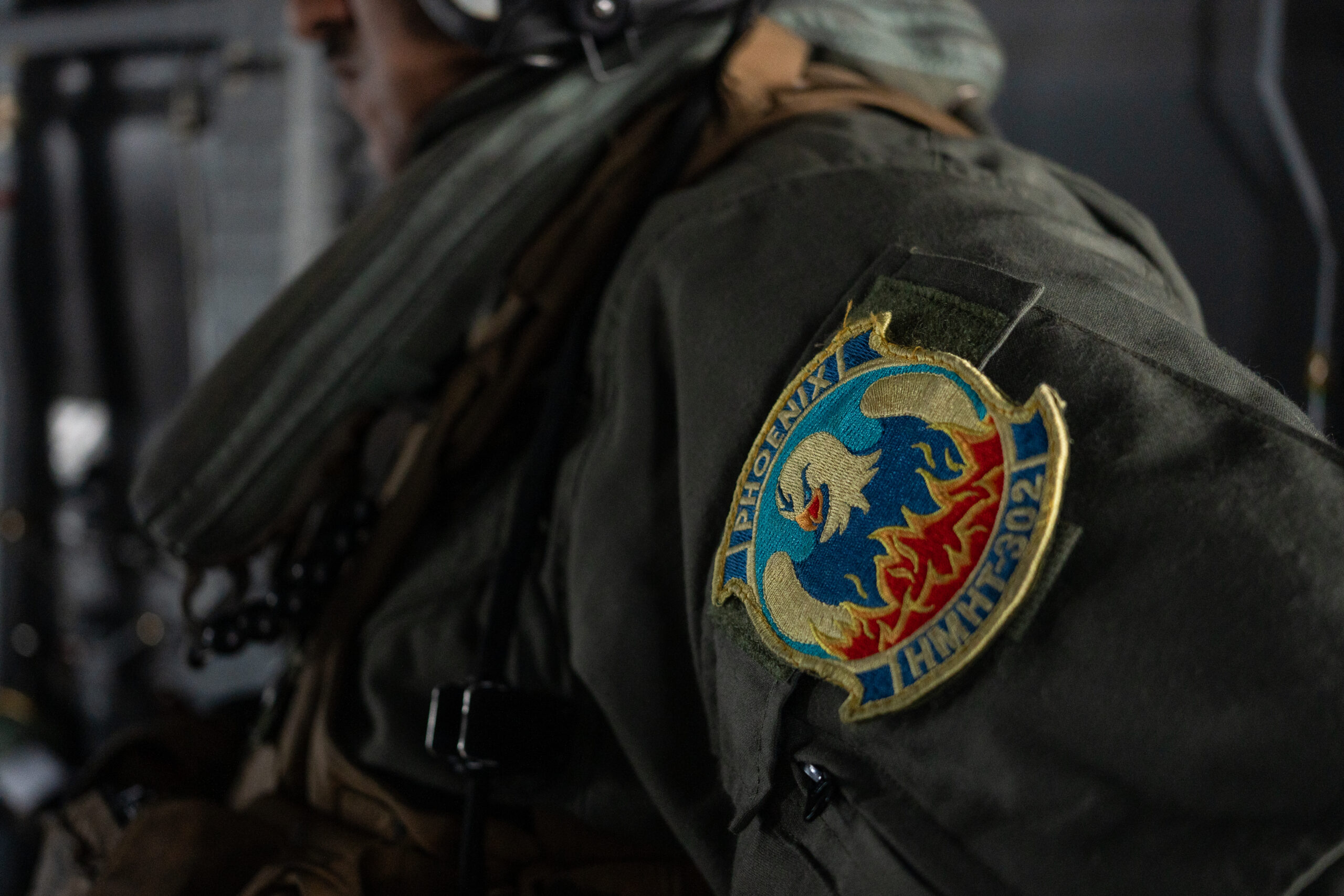
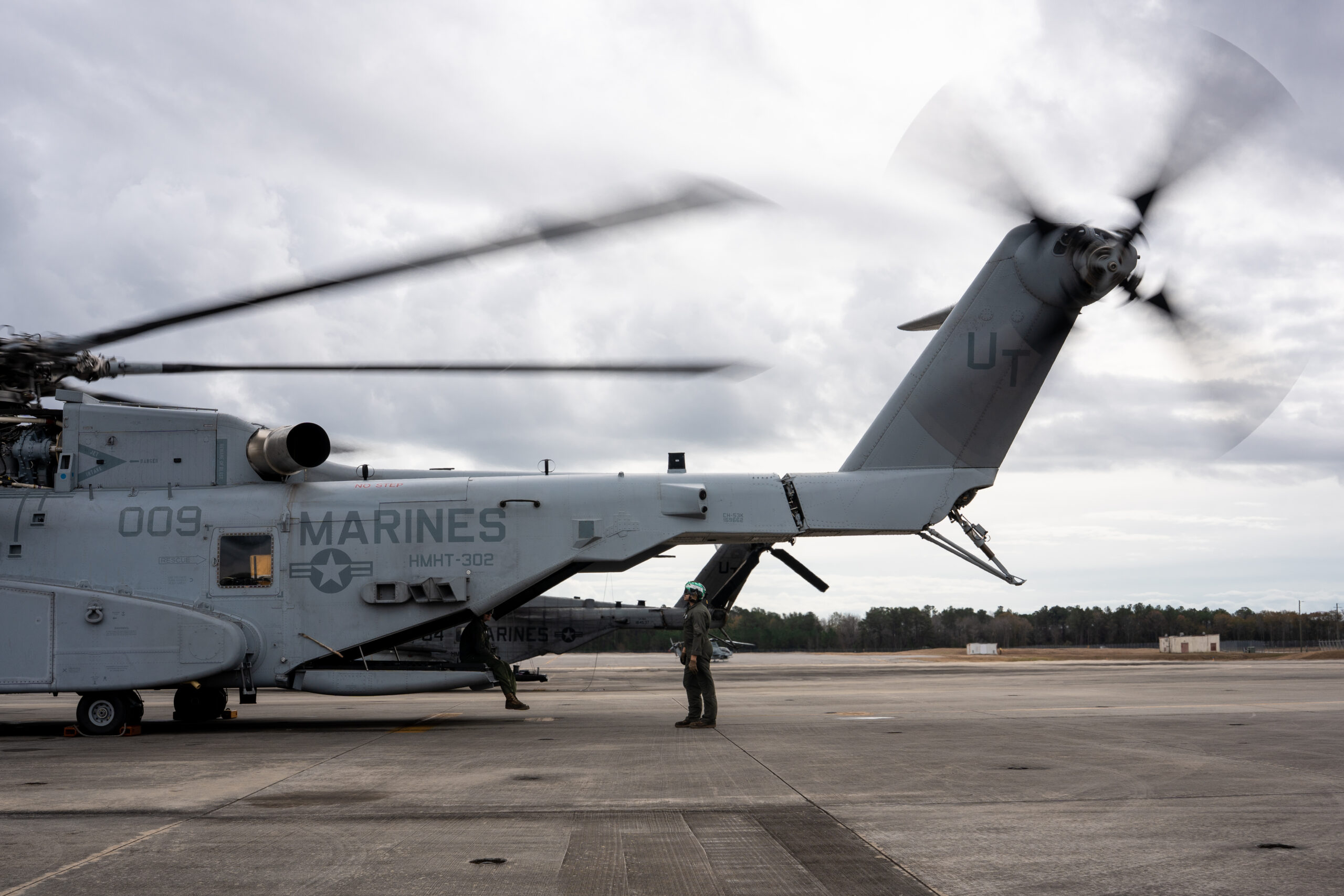
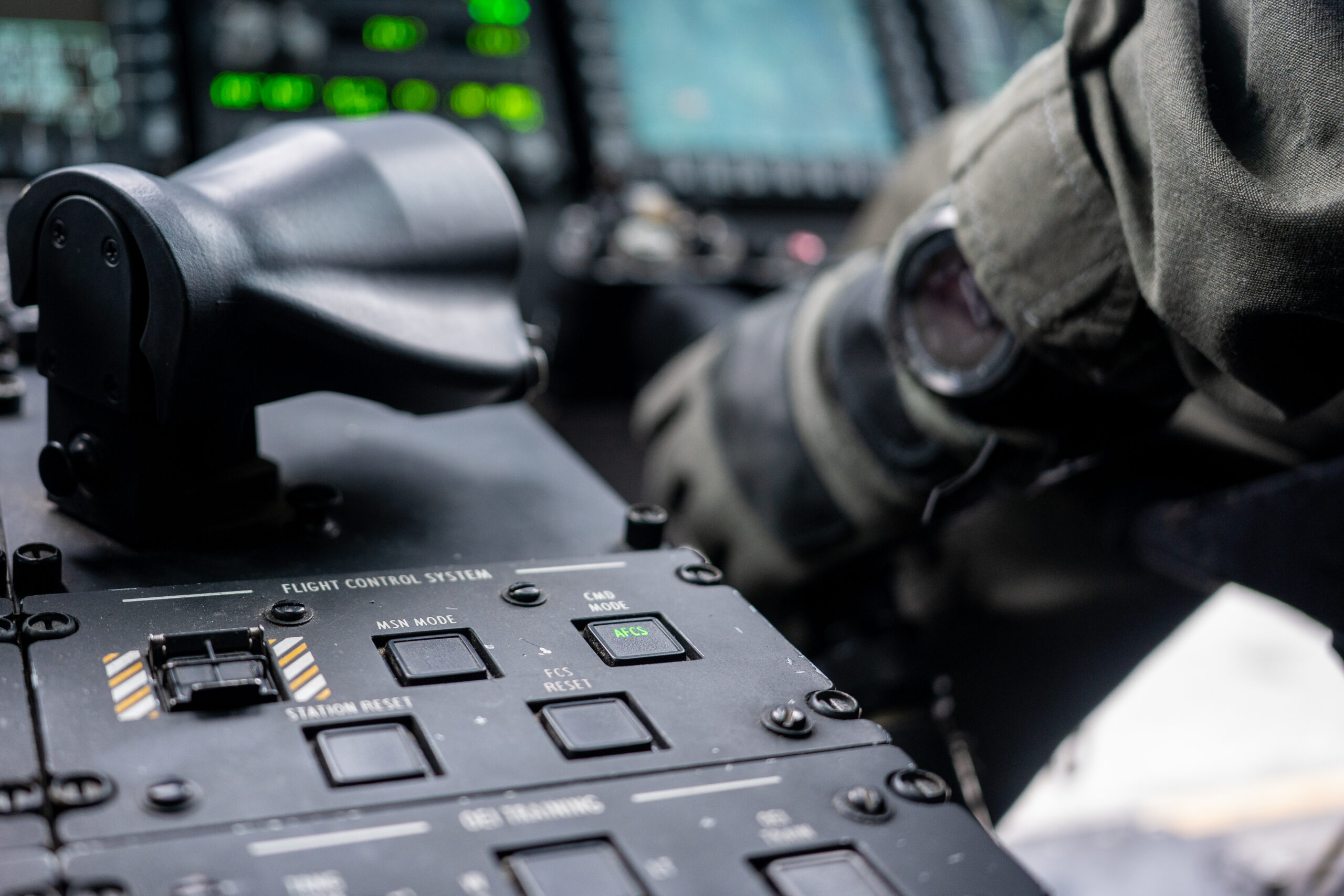
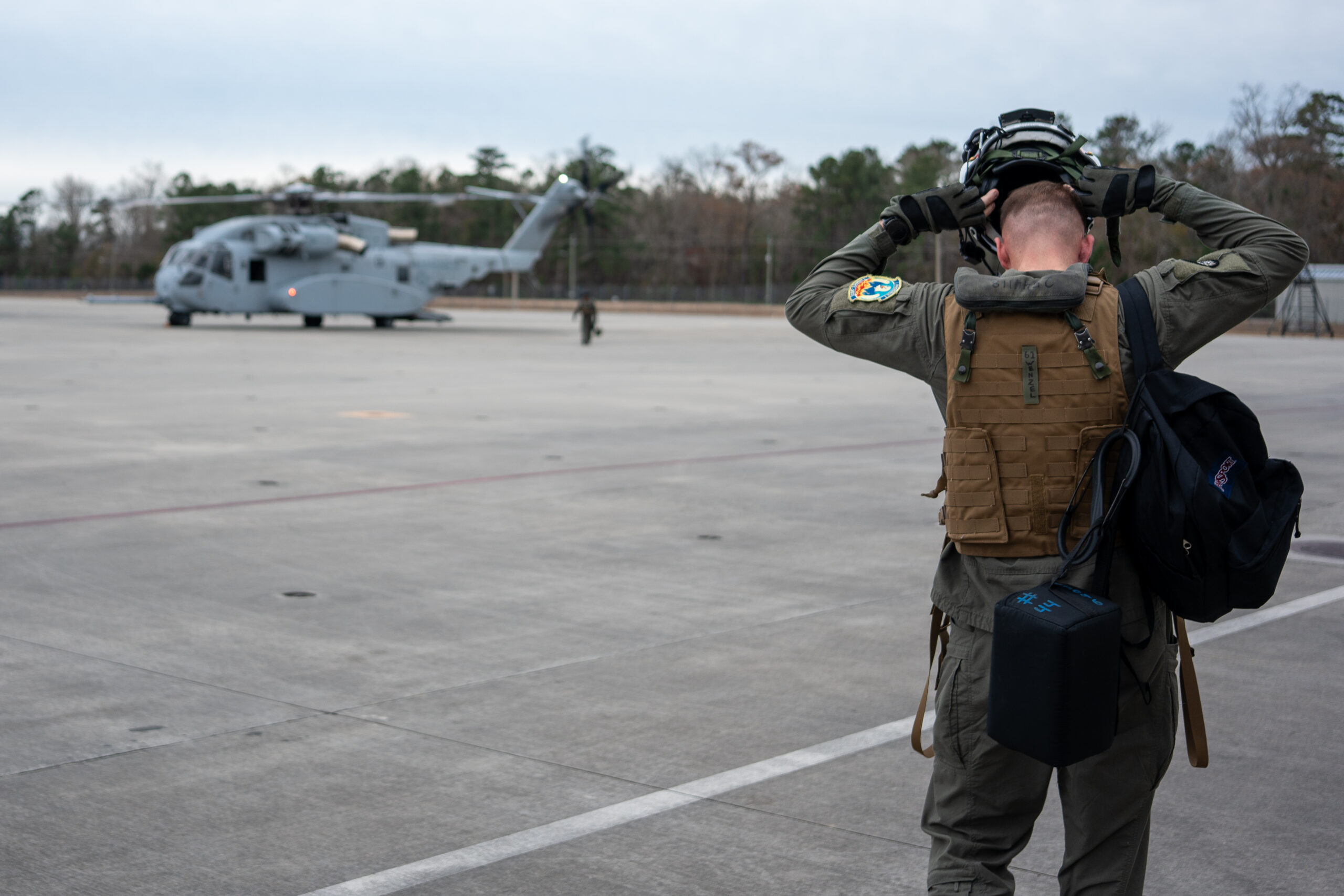
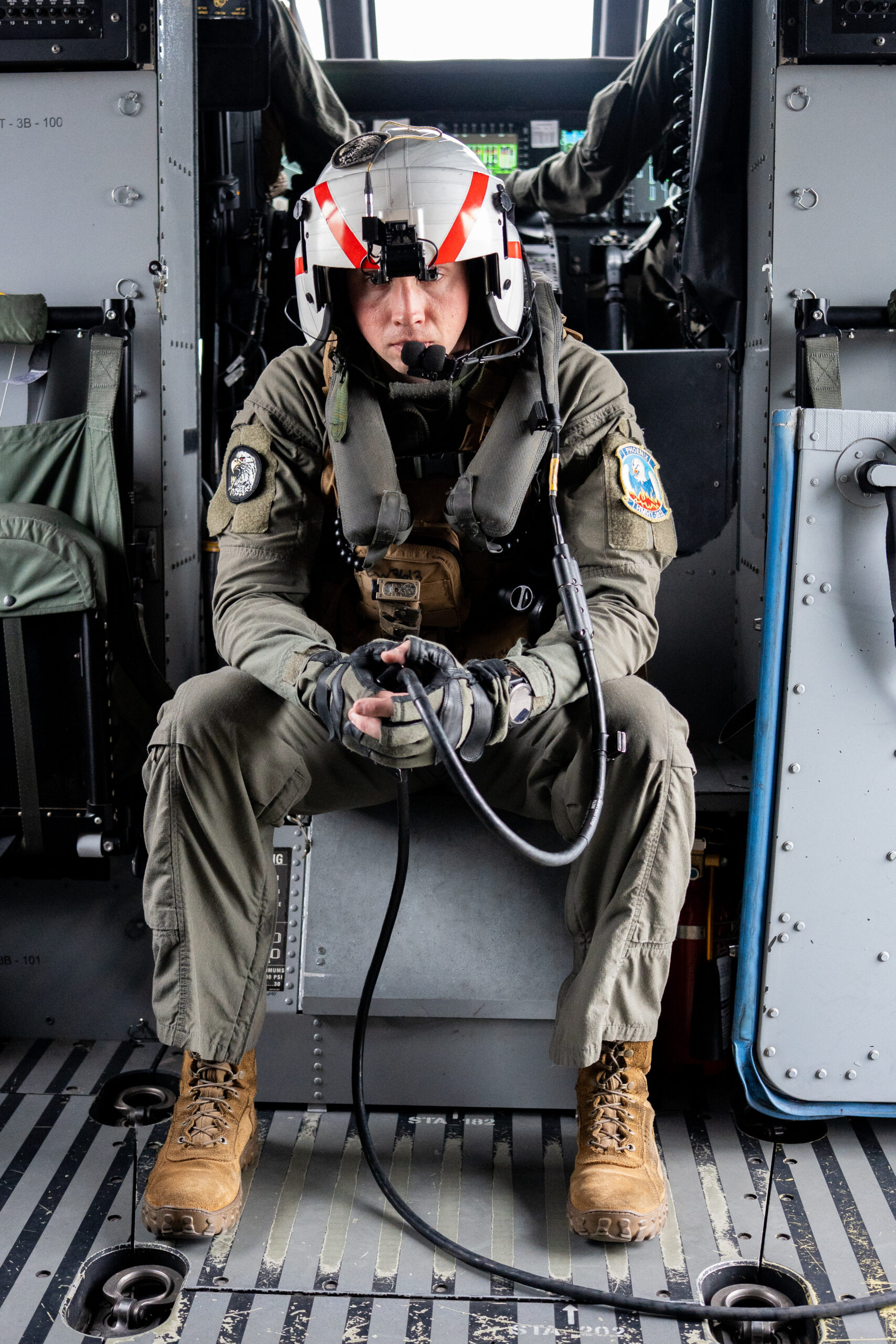
At Marine Corps Air Station New River in North Carolina, a quiet transformation is reshaping the future of American heavy-lift aviation. Marine Heavy Helicopter Training Squadron 302, known by its call sign HMHT-302, has changed in mission by becoming the training squadron now for the CH-53K.

What might appear as a routine administrative reorganization represents something far more consequential: the institutionalization of the CH-53K King Stallion program and the formal declaration that the Marine Corps is committed to replacing its entire legacy heavy-lift fleet with the most capable heavy lift rotorcraft ever built.

The establishment of HMHT-302 as the dedicated Fleet Replacement Squadron for the CH-53K marks a watershed moment. When a military service commits to standing up a dedicated training squadron for a new platform, it signals that the aircraft has moved beyond the experimental phase, beyond the test detachment stage, and into the realm of operational reality. This is not about demonstrating capability anymore. This is about building capacity.

From Test to Training: The Maturation Arc

The journey to HMHT-302’s establishment reveals much about how modern military aviation programs mature. For years, the CH-53K existed primarily in the world of development testing, operational testing, and small-scale demonstrations. Test pilots flew the aircraft. Industry worked out technical issues. Requirements were validated and refined. This is the natural progression for any advanced weapons system, particularly one as complex as the King Stallion, which represents a quantum leap in lifting capacity, digital integration, and operational capability over its predecessor, the CH-53E Super Stallion.

But test programs, no matter how successful, do not build combat power. They prove concepts. The transition from concept validation to fleet employment requires a different organizational structure entirely. It requires institutionalization of training, standardization of procedures, development of tactics, and most critically, the systematic production of qualified pilots, aircrew, and maintainers who can sustain operations across the full spectrum of military employment.

This is precisely what HMHT-302 now provides. The squadron’s mission is straightforward but vital: produce qualified CH-53K pilots, aircrew, and maintainers for the fleet. This includes two distinct training pipelines.

First, newly winged pilots arriving from flight school require foundational training in heavy-lift operations specific to the King Stallion.

Second, experienced CH-53E pilots transitioning from the legacy platform need conversion training that addresses the significant technological and operational differences between the Super Stallion and its successor.

The maintenance lessons learned being shared between HMH-461 and HMHT-302, are also facilitated by the embedded CH-53K Field Support Representative team fielded by Sikorsky at New River.

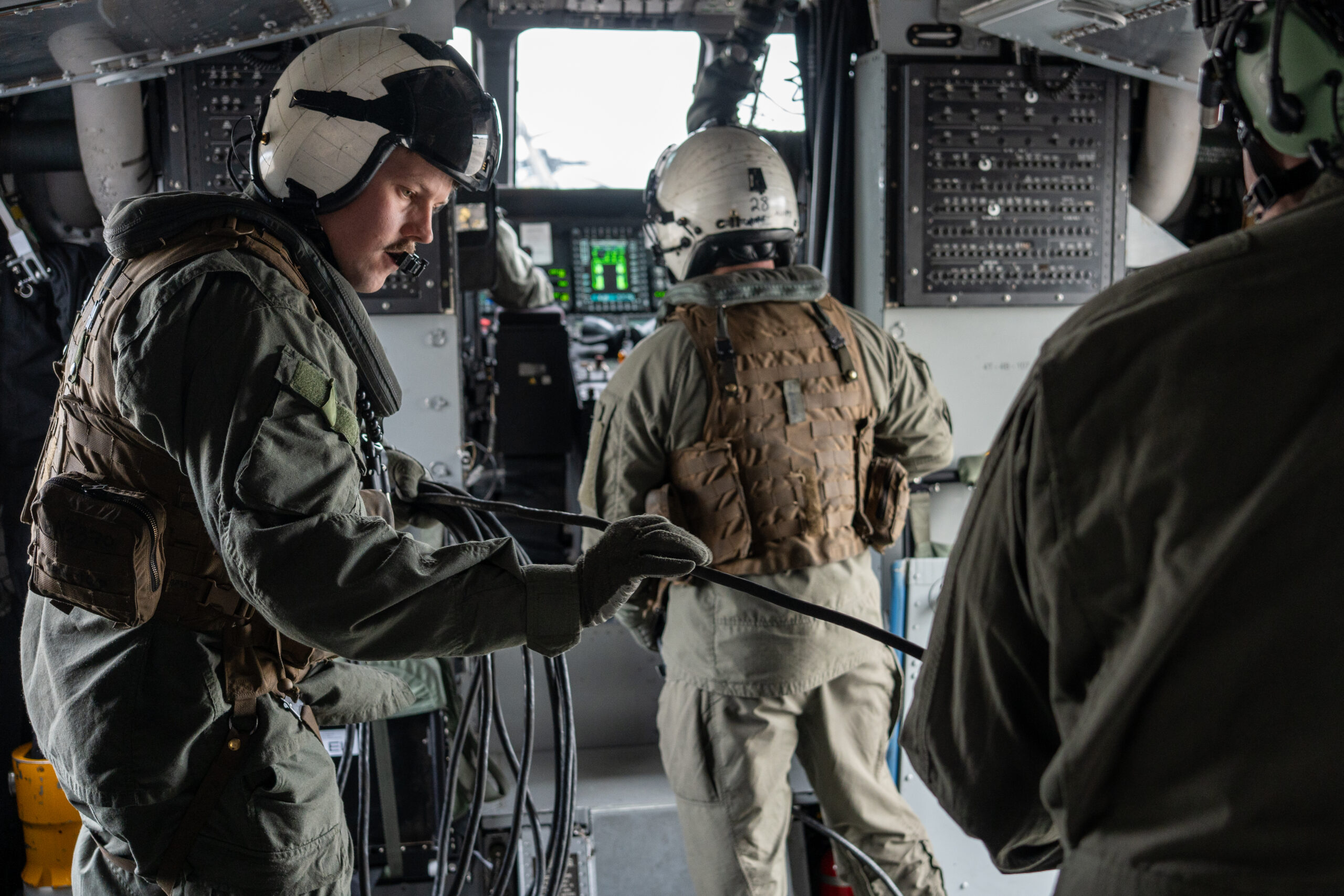
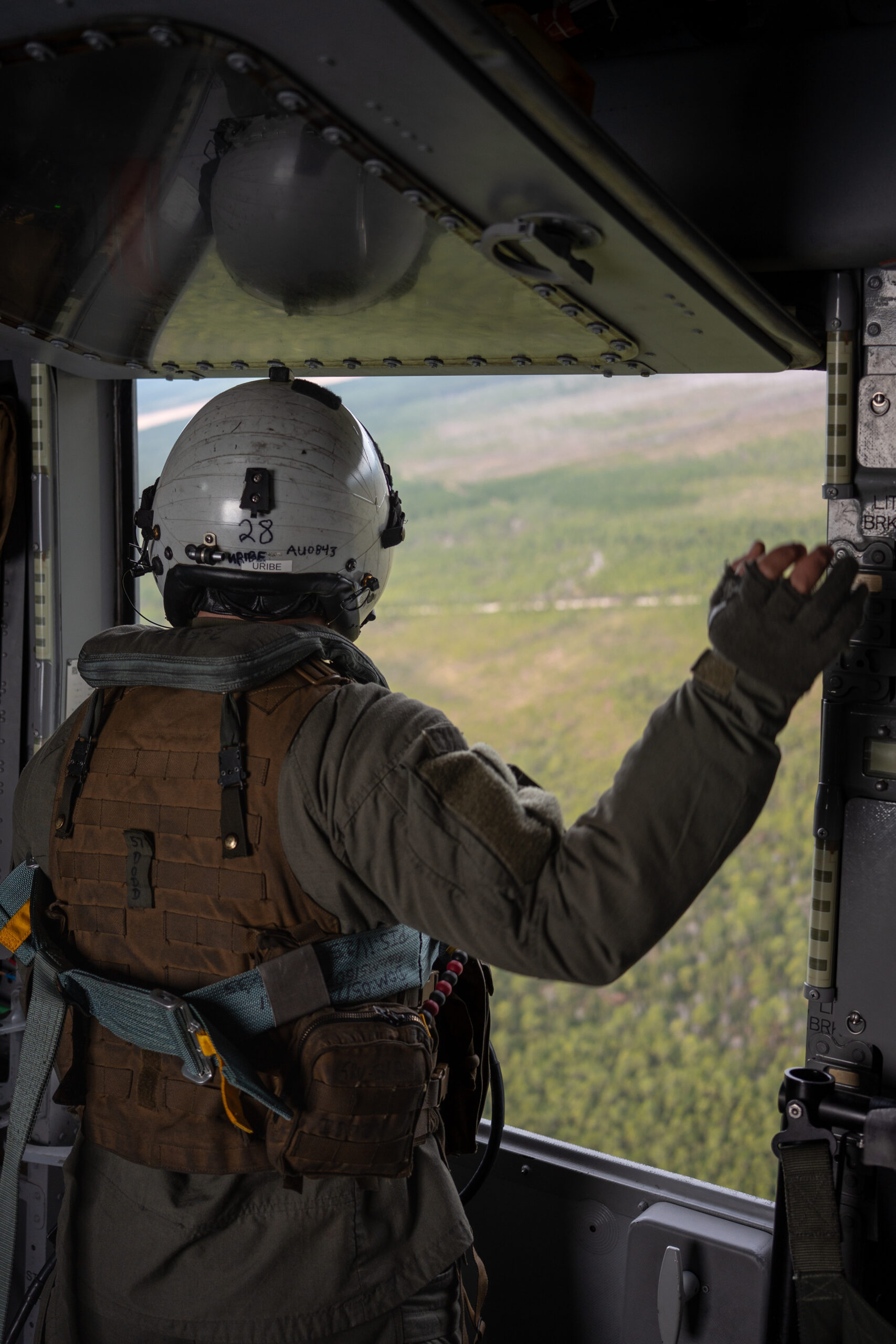
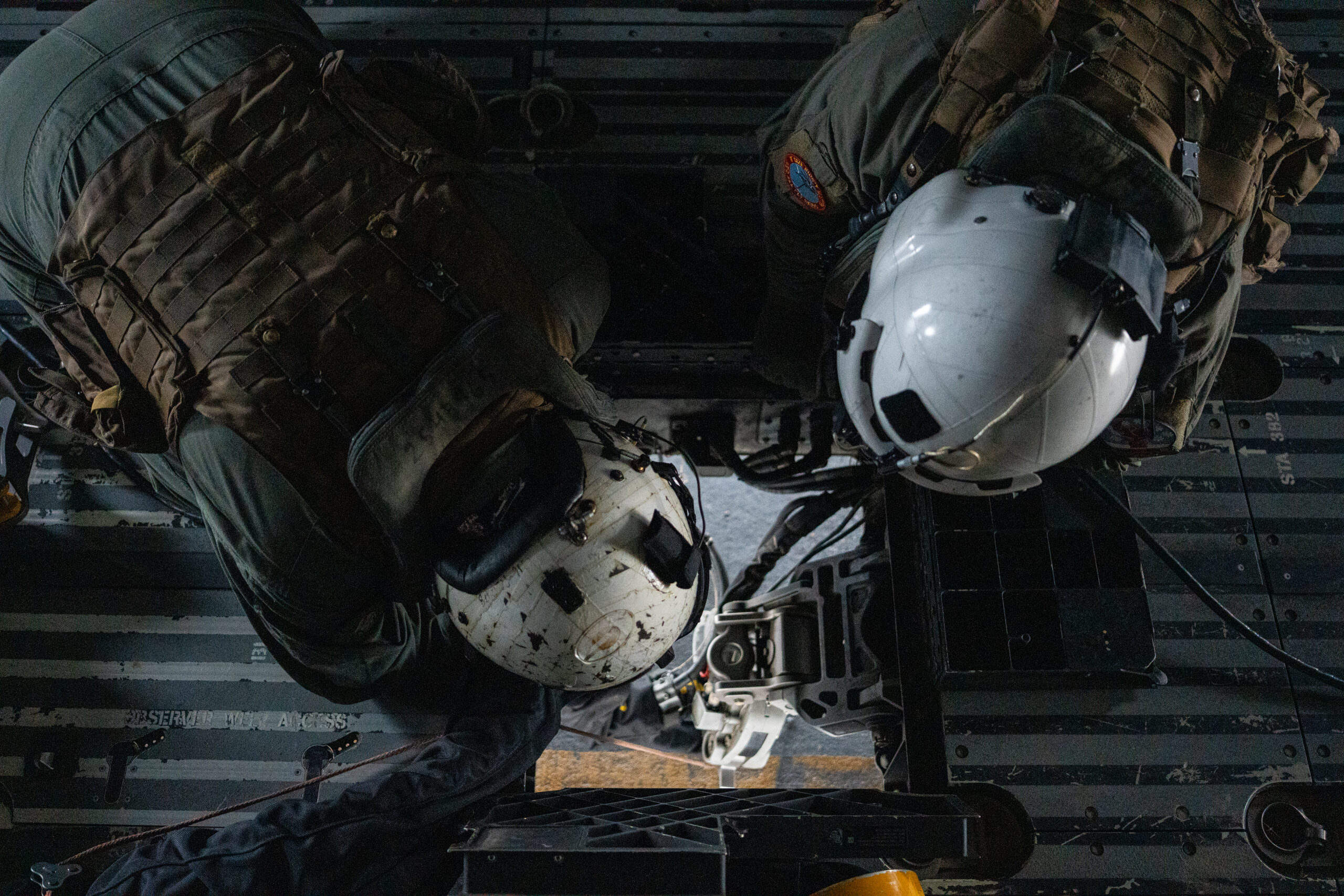
Recent imagery from December 2025 (seen in the slideshow below) showing HMHT-302 conducting active CH-53K flight operations confirms that the full Fleet Replacement Squadron syllabus is now being executed in actual aircraft rather than relying solely on simulators or test detachment assets. This represents the crossing of a critical threshold.

Simulator training, while essential and increasingly sophisticated, cannot replicate the full sensory and decision-making environment of actual flight operations. But the simulator for the CH-53K is quite remarkable as I discovered when given the chance to operate it during a visit. Because the 53K is a digital aircraft, the actual aircraft performs very similar to the flight simulators used by HMHT-302, and the transition and proficiency in moving to the actual 53K is much quicker and more efficient than in legacy platforms.

Nonetheless, the fact that HMHT-302 is now flying regular training sorties means the program has achieved the aircraft availability, maintenance maturity, and operational stability necessary to support a sustained training pipeline.

The New River Ecosystem

The co-location of HMHT-302 with HMH-461, the first operational Marine heavy helicopter squadron to complete its transition to the CH-53K, creates a powerful ecosystem at New River. This arrangement is no accident. Military force development benefits enormously from geographical concentration of expertise, particularly during the early phases of a new platform’s introduction.

HMH-461 serves as the operational proving ground, the squadron that takes the tactics, techniques, and procedures developed during testing and refines them through real-world employment. The squadron conducts external lift operations, distributed logistics training, and joint exercises the United States.

Every lesson learned, every maintenance challenge overcome, every tactical innovation discovered flows directly into the training environment that HMHT-302 provides.

This feedback loop between operational employment and training standardization accelerates the entire force development process. When HMH-461 identifies an effective employment technique during a distributed operations exercise, HMHT-302 can incorporate that technique into the training syllabus within weeks rather than waiting for formal doctrinal updates. When maintainers at HMH-461 develop a more efficient troubleshooting procedure, HMHT-302’s maintenance training can adapt accordingly. The geographical proximity transforms what could be a slow, bureaucratic information exchange into an organic, continuous learning process.

Moreover, the New River concentration creates career pathways that strengthen the entire King Stallion community. Experienced pilots and maintainers can rotate between operational and training assignments without geographical relocation, maintaining continuity and building institutional expertise. Senior aviators can serve as flight instructors at HMHT-302, directly shaping how the next generation of King Stallion pilots approach the aircraft, while maintaining currency in operational employment through engagement with HMH-461.

From Crisis Management to Chaos Management

The establishment of HMHT-302 comes at a moment when the Marine Corps is fundamentally rethinking its approach to force employment. The transition from what might be termed “crisis management” frameworks to “chaos management” concepts requires capabilities that the CH-53K uniquely provides.

Traditional crisis management assumes relatively linear problem sets: a specific contingency arises, forces deploy to address it, operations conclude, forces return. This model worked reasonably well during the post-Cold War era of sequential regional conflicts. But contemporary great power competition presents a fundamentally different operational environment. The Indo-Pacific theater, in particular, demands forces capable of operating across vast distances with minimal logistical infrastructure, adapting rapidly to changing situations, and sustaining operations in communications-degraded or communications-denied environments.

The CH-53K’s lifting capacity, triple that of the CH-53E, enables fundamentally different operational approaches. The aircraft can move artillery systems, distributed logistics packages, or even light armored vehicles across distances and into locations that previous heavy-lift platforms could not access. This capability directly supports the Marine Corps’ evolving concept of distributed operations, where smaller, more mobile units operate across archipelagic terrain rather than concentrating forces at predictable, vulnerable locations.

But lifting capacity alone does not define the King Stallion’s contribution to chaos management. The aircraft’s digital architecture integrates it into the broader network of sensors, communications nodes, and weapons systems that define contemporary military operations. This integration transforms the CH-53K from a simple transport platform into a node within what the Marine Corps increasingly describes as “kill webs” rather than traditional “kill chains.”

Recently, I attended the Steel Knight 2025 exercise in the West Coast which was described exactly as a kill web exercise. It was obvious from my discussions with Marines during the exercise what the CH-53K can provide for such a force compared to the legacy aircraft, the CH-53E. which was widely used in the exercise. I will address this question in a later article.

Kill chains are linear: detect, decide, engage. They work well in controlled environments against limited threats. Kill webs are networked: multiple sensors feed multiple decision nodes that can employ multiple engagement options simultaneously. The CH-53K, with its advanced avionics and communications systems, can participate in this networked approach while simultaneously executing its primary lifting mission. This dual functionality, heavy lift plus network integration, represents the kind of force multiplication that chaos management demands.

Institutionalizing Transformation

The most significant aspect of HMHT-302’s establishment is what it reveals about institutional commitment. The Marine Corps is not hedging its bets on the CH-53K. The service is not maintaining parallel tracks of legacy and new platforms indefinitely. By standing up a dedicated training squadron, co-locating it with the lead operational squadron, and executing full training syllabi in actual aircraft, the Marine Corps has declared its intent to complete the transition from CH-53E to CH-53K across the entire heavy-lift fleet by the early 2030s.

In addition to the significance of standing up a dedicated CH-53K FRS, the recent CH-53K Multi-Year contract award in September 2025 demonstrated and reinforced Marine Corps confidence in the CH 53K program and commitment to the full 200 aircraft program of record.

This timeline is ambitious but achievable, assuming current production schedules and funding profiles remain stable. More importantly, it reflects a recognition that maintaining two separate heavy-lift fleets imposes unsustainable burdens on training, maintenance, logistics, and expertise development. The CH-53E, despite its remarkable service record spanning decades, represents capabilities and limitations increasingly mismatched to contemporary operational requirements. Aging airframes require increasing maintenance hours. Parts availability becomes problematic.

Most critically, the platform’s lifting capacity and digital integration cannot support the distributed operations concepts that define Marine Corps force development.

Accelerating the transition by concentrating training at HMHT-302 while expanding operational employment through HMH-461 and subsequent squadron conversions creates momentum that makes the complete fleet replacement both feasible and necessary. Each newly trained cohort of pilots and maintainers strengthens the King Stallion community while the legacy community naturally contracts through retirements and transitions. The institutional knowledge and tactical expertise that made the CH-53E effective for so long now transfers to the new platform through structured training and operational employment rather than being lost during a protracted, uncertain transition period.

The Tactics Development Laboratory

Beyond training individual pilots and crews, HMHT-302’s establishment makes 2nd Marine Aircraft Wing the center of gravity for King Stallion tactics development. This role extends well beyond teaching basic aircraft handling and standard procedures.

Tactics development involves discovering optimal employment techniques, identifying integration opportunities with other platforms and systems, and challenging assumptions about how heavy-lift capabilities shape operational possibilities.

The Marine Aviation Plan references instrumentation work related to the CH-53K, suggesting sophisticated data collection and analysis efforts designed to understand aircraft performance in various operational scenarios. This instrumentation likely captures everything from engine performance parameters during high-altitude operations to flight characteristics during external lift configurations to communications system effectiveness in different electromagnetic environments.

Data collection feeds tactics development. When HMHT-302 and HMH-461 fly training and operational sorties, the information gathered contributes to a growing knowledge base about what the aircraft can do, where its performance envelopes intersect with operational requirements, and what techniques maximize effectiveness while minimizing risk. This empirical approach to tactics development represents a significant evolution from traditional methods that relied more heavily on extrapolation from similar platforms or theoretical modeling.

The tactics developed at New River will flow throughout the CH-53K community as additional squadrons transition to the platform. More significantly, these tactics will influence broader Marine Corps concepts for distributed operations, naval integration, and joint force employment. When planners design exercises or develop contingency plans, they increasingly incorporate King Stallion capabilities as available tools rather than aspirational futures. This shift from hypothetical to actual changes how the Marine Corps thinks about operational possibilities across both Pacific and Atlantic theaters.

Indo-Pacific and Atlantic Integration

While much attention understandably focuses on Indo-Pacific requirements, the vast distances, the archipelagic terrain, the distributed operations concepts, HMHT-302’s establishment at New River positions 2nd Marine Aircraft Wing to develop Atlantic-focused employment concepts as well. The Atlantic theater presents its own distinct requirements and opportunities that benefit from King Stallion capabilities.

Northern European operations, particularly across Nordic terrain and into Arctic environments, demand heavy-lift platforms capable of operating in challenging weather conditions across extended distances with limited infrastructure. The CH-53K’s power margins and advanced systems provide capabilities that legacy platforms cannot match in these environments. As European security architecture adapts to renewed great power competition, American heavy-lift capabilities that can support allied forces, enable distributed logistics, or facilitate rapid reinforcement become increasingly valuable.

Similarly, Caribbean and Central American operational areas present unique requirements where King Stallion capabilities enable responses to both traditional security challenges and disaster relief scenarios. The aircraft’s ability to move heavy equipment into remote areas with minimal ground infrastructure transforms operational possibilities during hurricane relief operations, earthquake responses, or security cooperation missions.

By concentrating tactics development at New River with operational access to both northern and southern training areas, HMHT-302 and HMH-461 can validate employment concepts across the full range of Atlantic theater requirements. This empirical approach ensures that the tactics and procedures developed for the King Stallion reflect actual operational environments rather than theoretical constructs.

The Human Dimension

Beneath all the discussion of platforms, capabilities, and concepts lies a human reality that HMHT-302 directly addresses: training the people who will fly, maintain, and employ the CH-53K determines the program’s ultimate success far more than any technical specification.

The best aircraft in the world provides no combat power if pilots cannot employ it effectively, if maintainers cannot keep it flying, or if operational commanders do not understand how to integrate its capabilities into broader campaign plans. HMHT-302 exists to solve these human challenges through systematic, standardized training that builds expertise and sustains readiness.

The squadron’s instructors, experienced aviators who understand both legacy and new platforms, serve as the bridge between generations of heavy-lift aviation. They translate institutional knowledge accumulated across decades of CH-53E operations into relevant lessons for King Stallion employment. They identify which traditional techniques remain valid and which require adaptation or replacement given the new platform’s different characteristics and capabilities.

For newly winged pilots, HMHT-302 provides the foundation upon which entire careers will build. The habits, procedures, and mindsets developed during initial qualification training shape how these aviators approach challenges throughout their service. For transitioning CH-53E pilots, the training addresses the cognitive shift required to employ a fundamentally more capable but also more complex platform. This transition training goes beyond teaching different switch positions or procedures; it requires rethinking operational possibilities given the expanded performance envelope.

Looking Forward

The establishment of HMHT-302 as the CH-53K Fleet Replacement Squadron represents a milestone, but milestones are points along journeys rather than destinations. The squadron’s work over the coming years will determine how quickly and how effectively the Marine Corps completes the heavy-lift transformation that the King Stallion enables.

Production rates, funding stability, and technical maturation all factor into the timeline, but HMHT-302’s ability to produce qualified personnel at the pace required to support fleet-wide transition may prove the most critical variable. Training throughput, the number of pilots and maintainers completing qualification courses in a given time period, must match or exceed the rate at which operational squadrons require new personnel as they convert from legacy platforms.

This training capacity equation requires careful management. Insufficient throughput delays squadron transitions and extends the period where the Marine Corps operates mixed fleets with all their attendant complications. Excessive throughput beyond operational squadron absorption capacity wastes resources and leaves qualified personnel without billets. HMHT-302 must calibrate its training production to the broader program timeline, adjusting as production deliveries, squadron transition schedules, and overall force structure decisions evolve.

Beyond the immediate training mission, HMHT-302’s existence changes how the Marine Corps approaches innovation within the heavy-lift community. When a new employment technique emerges from operational experience, a dedicated training squadron provides the institutional mechanism to capture, refine, and disseminate that innovation across the entire community. This standardization function becomes increasingly important as the King Stallion fleet expands and multiple squadrons begin operating the aircraft across different geographic areas and mission sets.

HMHT-302’s establishment occurs within a broader transformation of Marine Corps aviation toward digital integration, autonomous systems support, and network-centric operations. The CH-53K represents one element of this larger transformation, a critical element given the centrality of heavy-lift to distributed operations, but not an isolated element.

The training that HMHT-302 provides increasingly emphasizes integration with other platforms and systems rather than standalone heavy-lift operations. Pilots must understand how CH-53K operations fit within the larger picture of MV-22 Osprey air mobility, F-35 Lightning II strike capabilities, and emerging autonomous systems for logistics distribution. This integrated approach to training reflects the integrated approach to employment that contemporary operations demand.

As concepts like mesh fleets and distributed naval operations mature from experimental to operational status, heavy-lift aviation provides essential connective tissue that enables dispersed forces to operate effectively. HMHT-302 trains the pilots and crews who will execute this connective function, making their proficiency and tactical sophistication fundamental to the broader operational concepts’ success.

Conclusion

The establishment of Marine Heavy Helicopter Training Squadron 302 at MCAS New River marks the CH-53K King Stallion’s arrival as an operational reality within the Marine Corps fleet. What began as a development program, progressed through testing and initial operational capability, and now enters the phase of fleet-wide deployment through systematic training and operational employment.

HMHT-302 provides more than pilot training. The squadron institutionalizes the CH-53K program, accelerates tactics development, enables the feedback loop between operational employment and training standardization, and builds the human expertise that transforms technical capability into combat power. Co-located with the lead operational squadron, embedded within 2nd Marine Aircraft Wing’s broader transformation, and positioned to support both Indo-Pacific and Atlantic operational requirements, HMHT-302 represents the foundation upon which the future of American heavy-lift aviation is being built.

The Coming of the CH-53K : A New Capability for the Distributed Force

2nd Marine Air Wing: Transitioning the Fight Tonight Force

Looking Back on 2025: Reflections on a Year of Military Transformation and Global Realignment

01/11/2026

By Robbin Laird

As I reflect on 2025 from my vantage point as a defense analyst with over four decades of experience observing military transformation and strategic shifts, this year stands out as a watershed moment in the evolution of warfare and international security architecture. The patterns I witnessed throughout 2025 represent not merely incremental changes, but fundamental transformations in how nations prepare for and conduct military operations in an era of major power competition.

My field research in Italy this year crystallized a realization that has been building for the past decade: we are witnessing the death of platform-centric warfare and the birth of truly integrated, network-centric operations. At Italy’s International Flight Training School, I observed firsthand how the M-346 aircraft program represents far more than just another training platform. It embodies a complete reimagining of how we prepare aviators for fifth-generation warfare.

The Live-Virtual-Constructive training environment I encountered there isn’t simply a technological innovation. It’s a philosophical revolution. Traditional pilot training focused on mastering a specific aircraft. What I saw in Italy was training designed from the ground up to prepare aviators not for platform operation, but for participation in kill web operations where information dominance and network integration matter more than individual platform capabilities. This shift from teaching students to fly planes to teaching them to orchestrate complex multi-domain operations represents the most significant evolution in military aviation training since the jet age.

Throughout 2025, as I prepared for additional research visits to Italian Air Force facilities, this theme kept resonating: the F-35 program is serving as a forcing function for broader military transformation. It’s not just about acquiring a new fighter aircraft; it’s about fundamentally rewiring how air forces think, train, and operate. The integration challenges that seemed so daunting a decade ago are now driving innovations that ripple across entire defense establishments.

The Ukraine conflict, which I’ve been documenting intensively for my forthcoming books on “The Global War in Ukraine,” has evolved throughout 2025 in ways that validate a concept I’ve been developing: the shift from crisis management to chaos management in military operations.

This isn’t semantic wordplay. It represents a fundamental change in how militaries must prepare for and respond to conflict in the 21st century.

Crisis management assumes a relatively stable international order occasionally disrupted by discrete crises that can be contained and resolved. Chaos management acknowledges that we now operate in an environment of persistent competition and overlapping conflicts where traditional boundaries between peace and war have blurred beyond recognition. The war in Ukraine has accelerated this transition, demonstrating how regional conflicts rapidly metastasize into global confrontations involving not just military forces but economic systems, information domains, and technological competition.

What struck me most forcefully in 2025 was how the conflict has catalyzed the formation of the multi-polar authoritarian world or an authoritarian axis linking Russia, China, Iran, and North Korea. This isn’t a formal alliance in the traditional sense, but rather a convergence of interests and capabilities that poses unprecedented challenges to democratic nations. Simultaneously, we’ve witnessed the awakening of European defense consciousness and the transformation of Nordic security arrangements in ways that would have seemed impossible just five years ago.

One of the most significant developments I tracked in 2025 was the acceleration of autonomous maritime systems deployment, particularly in the Indo-Pacific region.

The Philippines’ embrace of mesh fleets. distributed networks of autonomous and semi-autonomous systems operating in coordinated fashion, embody similar network-centric principles I observed in aviation training. They represent a move away from concentrated, high-value platforms toward distributed, resilient systems that are far harder for adversaries to neutralize.

What makes this particularly significant is how it challenges traditional naval thinking. For decades, naval power was synonymous with large capital ships, aircraft carriers, cruisers, destroyers. The mesh fleet concept suggests a future where naval power might increasingly reside in the coordinated action of hundreds or thousands of smaller, autonomous platforms. This isn’t just a technological shift; it’s a conceptual revolution in maritime strategy.

My ongoing analysis of the V-22 Osprey’s evolution across different strategic periods has taken on new relevance in 2025. The Osprey serves as a perfect case study for understanding how military platforms must adapt to radically different strategic contexts. The aircraft that was conceived during the Cold War, refined during the Pacific Pivot era, and now operates in an environment of renewed great power competition hasn’t fundamentally changed but its role and the operational concepts surrounding it have transformed completely.

This phenomenon, platforms serving different strategic purposes as the international environment shifts, is something I’ve observed across multiple systems and nations in 2025. It underscores a critical lesson: military transformation isn’t just about acquiring new hardware. It’s about continuously reimagining how existing capabilities can be employed in novel ways to address emerging challenges. The most successful militaries in 2025 have been those that demonstrated this intellectual flexibility, not necessarily those with the newest equipment.

Throughout 2025, I’ve been particularly struck by the increasingly important role of middle powers in the evolving international security architecture. For example, the transformation of Nordic defense cooperation, accelerated by Finland and Sweden’s NATO accession process, demonstrates similar dynamics. These aren’t nations that can compete with major powers in terms of raw military mass. Instead, they’re leveraging technological sophistication, operational innovation, and strategic positioning to punch above their weight. The networks and partnerships they’re forming represent a new model of collective defense that complements traditional alliance structures.

We are publishing a book with Kenneth Maxwell on the relationship of Brazil and Australia with China which looks at the role of the middle powers in the evolving global system.

My collaboration with Kenneth Maxwell on our co-autobiography project has provided an interesting counterpoint to my defense analysis throughout 2025. Examining our parallel intellectual journeys from the 1950s to the present day has reinforced something I learned from my time studying under Zbigniew Brzezinski at Columbia: the importance of historical perspective in understanding contemporary events.

Having witnessed firsthand the collapse of the Soviet Union, European integration processes, and now the return of major power competition, I’m struck by both the continuities and discontinuities in international affairs. The authoritarian impulses we’re seeing from Russia and China aren’t new, but the technological and economic context in which they’re playing out is radically different from the Cold War era. Similarly, the democratic coalition responding to these challenges operates in an information environment that would have been unrecognizable to policymakers of previous generations.

As 2026 begins and 2025 has concluded, the trajectories I’ve been tracking, military transformation, great power competition, alliance realignment, technological innovation, seem poised to accelerate rather than stabilize. The war in Ukraine continues to reshape global security calculations in ways that extend far beyond Eastern Europe. The Indo-Pacific remains the focal point of great power competition, with technological and military innovations emerging at an unprecedented pace.

But beyond specific research projects, what drives my work is a conviction that understanding these transformations matters, not just for defense professionals, but for citizens of democracies who must ultimately make informed decisions about national security in an increasingly complex and dangerous world.

After more than four decades of analyzing defense issues, I remain convinced that the most dangerous threat isn’t any particular adversary or weapons system. It’s intellectual complacency or the assumption that future conflicts will resemble past ones, that existing frameworks remain adequate, that yesterday’s solutions will work for tomorrow’s problems.

2025 has reinforced that conviction while demonstrating once again that military organizations and nations capable of fundamental reconceptualization, not just incremental improvement, will be the ones that thrive in the challenging decades ahead.

The transformation from platform-centric to kill web warfare, from crisis management to chaos management, from concentrated to distributed forces, these aren’t just technical or tactical shifts.

They represent a fundamental reimagining of how nations organize, prepare for, and conduct military operations in the 21st century.

Understanding and documenting that transformation has been the privilege and challenge of my work in 2025, and it will continue to be as we move into an even more uncertain future.

The 2025 Book Publishing Year for Second Line of Defense: 16 New Titles

Solving the CONOPS Gap: How COTS Uncrewed Systems Enable the Navy’s Hybrid Fleet

01/08/2026

By George Galdorisi

The U. S. Navy stands at the precipice of a new era of technology advancement. In an address at a military-industry conference, the U.S. Chief of Naval Operations, Admiral Michael Gilday, revealed the Navy’s goal to grow to 500 ships, to include 350 crewed ships and 150 uncrewed maritime vessels. This plan has been dubbed the “hybrid fleet.” In an address at the Reagan National Defense Forum, CNO Lisa Franchetti cited the work of the Navy’s Unmanned Task Force, as well numerous exercises, experiments and demonstrations where uncrewed surface vessels were put in the hands of Sailors and Marines, all designed to advance the journey to achieve the Navy’s Hybrid Fleet.

The reason for this commitment to uncrewed maritime vehicles is clear. During the height of the Reagan Defense Buildup in the mid-1980s, the U.S. Navy evolved a strategy to build a “600-ship Navy.” That effort resulted in a total number of Navy ships that reached 594 in 1987. That number has declined steadily during the past three-and-one-half decades, and today the Navy has less than half the number of commissioned ships than it had then. However, the rapid growth of the technologies that make uncrewed surface vehicles increasingly capable and affordable has provided the Navy with a potential way to put more hulls in the water.

More recently, the U.S. Navy’s commitment to uncrewed surface vessels has culminated in the issuance of the Chief of Naval Operations Force Design 2045, and subsequently the Chief of Naval Operations Navigation Plan for America’s Warfighting Navy, both of which call for 350 crewed ships and 150 large uncrewed surface vessels.  These documents provide the clearest indication yet of the Navy’s plans for a future fleet populated by large numbers of uncrewed surface vessels (USVs). Indeed, the recent DoD reconciliation bill made a $3.6 billion commitment to Navy uncrewed surface vessels, adding $2.1 billion for medium USVs and $1.53 billion for small USVs.

Juxtaposed against this aspiration is the fact that the U.S. Congress has, until recently, been reluctant to authorize the Navy’s planned investment of billions of dollars in USVs until the Service can come up with a concept of operations (CONOPS) for using them. Congress has a point. The Navy has announced plans to procure large numbers of uncrewed systems—especially large and medium uncrewed surface vehicles—but a CONOPS, one in even the most basic form, has not yet emerged. Additionally, while the composition of the future Navy’s crewed vessels is relatively well understood—based on ships being built and being planned—what those uncrewed surface vessels will look like, let alone what they will do, has yet to be fully determined.

That said, the Navy has taken several actions to define what uncrewed surface vessels will do and thus accelerate its journey to have uncrewed platforms populate the fleet. These include publishing an UNCREWED Campaign Framework, standing up an Uncrewed Task Force, establishing Surface Development Squadron One in San Diego and Uncrewed Surface Vessel Division One in Port Hueneme, CA, and conducting a large number of exercises, experiments and demonstrations where operators have had the opportunity to evaluate uncrewed maritime vessels.

All of these initiatives will serve the Navy well in evolving a convincing CONOPS to describe how these innovative platforms can be leveraged. Fleshing out how this is to be done will require that the Navy describe how these platforms will get to the operating area where they are needed (for example, the Western Pacific), as well as what missions they will perform once they arrive there.

The concept of operations proposed is to marry various size surface, subsurface and aerial uncrewed vehicles to perform missions that the U.S. Navy has—and will continue to have—as the Hybrid Fleet evolves. The Navy can use evolving large uncrewed surface vessels as a “truck” to move smaller USVs, UUVs and UAVs into the battle space in the increasingly contested littoral environment. The Navy has several alternatives for this platform:

  • The Navy’s program of record LUSV. The Navy envisions these LUSVs as being 200 feet to 300 feet in length and having full load displacements of 1,000 tons to 2,000 tons, which would make them the size of a corvette.
  • Unmanned Surface Vessel Division One (USVDIV-1) has stewardship for two surrogates for LUSVs, the Ranger and Mariner, as well as two MUSV prototypes, Sea Hunter and Seahawk. The Navy was sufficiently confident in the operation of its LUSV and MUSV prototypes to deploy them to the international Rim of the Pacific (RIMPAC) 2022 exercise.
  • The MARTAC T82 Leviathan, a scaled-up version of the T38 Devil Ray, is an MUSV capable of either carrying an approximately 40,000-pound payload or, alternatively, carrying smaller craft and launching them toward the objective area.

While there are a plethora of important Navy missions this integrated combination of uncrewed platforms can accomplish, this article will focus on two: intelligence surveillance and reconnaissance (ISR) and mine countermeasures (MCM). There are many large, medium, small and ultra-small uncrewed systems that can be adopted for these missions.  The technical challenge remains that they must be designed to ensure that the “multiple sized” UxSs associated with these missions can be adapted to work together in a common mission goal.

Rather than speaking in hypotheticals as to how uncrewed vehicles might be employed for these missions, this article will offer concrete examples using commercial-off-the shelf (COTS) uncrewed systems that have been employed in recent Navy and Marine Corps events.

While there are a wide range of medium uncrewed surface vehicles (MUSVs) that can potentially meet the U.S. Navy’s needs, there are three uncrewed surface vehicles that are furthest along in the development cycle.   All are currently in production and fully operational. They are:

  • The Leidos Sea Hunter is the largest of the three.  The craft was launched in 2016 and was built at a cost of twenty million dollars.
  • The Textron monohull Common Uncrewed Surface Vessel (CUSV), now referred to as the MCM-USV, features a modular, open architecture design.
  • The Maritime Tactical Systems Inc. (MARTAC), catamaran hull, uncrewed surface vessels (USV) include the Devil Ray T24 (24-foot), and T38 (38-foot) craft.

All three of these MUSVs are viable candidates to be part of an integrated uncrewed solution CONOPS. I will use the Devil Ray craft for a number of reasons. First, they come in different sizes with the same hull, mechanical and electrical (HME) attributes. Second, Sea Hunter is simply too large to fit into and of the LUSVs the Navy is considering. Third, the CUSV is the MUSV of choice for the Littoral Combat Ship (LCS) Mine-Countermeasures Mission Package, and all CUSVs scheduled to be procured are committed to this program.

This scenario and CONOPS is built around an Expeditionary Strike Group underway in the Western Pacific.  This Strike Group includes three LUSVs under supervisory control from a large amphibious ship. Chief of Naval Operations, Admiral Michael Gilday suggested this CONOPS in early 2022 when he noted that he: “Wants to begin to deploy large and medium-sized uncrewed vessels as part of carrier strike groups and amphibious ready groups in 2027 or 2028, and earlier if I can.” More recently, Navy officials have suggested that these deployments may begin as early as next year.

Depending on the size that is ultimately procured, the LUSV can carry a number of T38 Devil Ray uncrewed surface vehicles and deliver them to a point near the intended area of operations. The T38 can then be sent independently to perform the ISR mission, or alternatively, can launch and recover one or more T12 MANTAS small USVs to perform this mission. Building on work conducted by the Navy laboratory community and sponsored by the Office of Naval Research, the T38 or T12 will, additionally, have the ability to launch uncrewed aerial vehicles to conduct overhead ISR.

For the MCM mission, the LUSV can deliver several T38s equipped with mine-hunting and mine-clearing systems (all of which are COTS platforms tested extensively in Navy exercises). These vessels can then undertake the “dull, dirty and dangerous” work previously conducted by Sailors who had to operate in the minefield. Given the large mine inventory of peer and near-peer adversaries, this methodology may well be the only way to clear mines safely.

While the full details of how this CONOPS plays out is beyond the scope of this article, this innovative approach accomplishes an important goal. If the U.S. Navy wants to keep its multi-billion-dollar capital ships out of harm’s way, it will need to surge uncrewed maritime vessels into the contested battlespace while its manned ships stay out of range of adversary A2/AD systems, sensors and weapons.

To be clear, this is not a platform-specific solution, but rather a concept. When fleet operators see a capability with different size uncrewed COTS platforms in the water working together and successfully performing the missions presented in this article, they will likely press industry to produce even more-capable platforms to perform these missions.

While evolutionary in nature, this disruptive capability delivered using emerging technologies can provide the U.S. Navy with near-term solutions to vexing operational challenges, while demonstrating to a skeptical Congress that the Navy does have a concept-of-operations to employ the uncrewed systems it wants to procure.

This article was first published on the Navy League’s website, CMS MOC and is republished with the author’s permission.

An Estonian Perspective on the European Defense Renaissance

01/07/2026

By Pierre Tran

Paris – France and Sweden have offered the Rafale and Gripen to Ukraine, raising  questions of practicality and financing, but an eventual delivery of the fighter jets could not be ruled out, the Estonian ambassador to France, Viljar Lubi, said Dec. 16.

“These are big deals, difficult to deliver,” he told the Association des Journalistes de la Défense, a press club, when asked about the allies’ offer of fighters to hard pressed Kyiv.

“It’s all about detail, so there are many risks,” he said.

France signed in November a “declaration of intent” to supply up to 100 Rafale to Ukraine, while Sweden offered in October up to 150 Gripen, with Reuters reporting Stockholm was offering to help finance a fighter deal through military aid.

“How do you finance it, how do you work with it? It’s difficult, ” said the Estonian diplomat.

The complexity in foreign arms deals could be seen when France was hit by the  AUKUS deal struck by  Australia, the U.K. and U.S., he said.

Canberra sank in 2021 a French deal for 12 Shortfin Barracuda conventional submarines for the Australian navy. The then Australian prime minister, Scott Morrison, switched to a rival offer of nuclear-powered attack boats from London and Washington.

Much could happen in the coming years on the offers to Ukraine, the senior diplomat said.

Lubi said he was the Estonian ambassador to India some 10 years ago, and he saw how it took not one but three successive French ambassadors – each serving four years – to work on a fighter offer before Paris won New Delhi’s order for the Rafale.

“Nothing ever goes according to plan,” he said, adding,“but it doesn’t mean it doesn’t happen.”

On the complexity of arms deals, Dassault Aviation pulled out of India’s lengthy competition in the 1990s for a jet trainer, with the then executive chairman telling journalists it was not worth staying in after years of fruitless pursuit. That left the field open to BAE Systems, with the British company winning a 1 bln stg deal with its Hawk jet in 2003.

Dassault went on to win in 2016 an Indian contract for 36 Rafale, in a deal worth €7.8 billion, in the separate fighter competition. New Delhi has since ordered a naval version of the Rafale, and is looking to buy more fighters for the air force.

Lubi served four years as ambassador to the U.K.  before taking up the posting here four months ago. He went in 2001 for European studies at Sussex University, a landscaped  campus outside Brighton on the south coast of Britain, and he later went on to serve as economic counsellor in the Estonian embassy in Washington in 2009.

Estonia Grows Arms Sector

Estonia now had 200 firms in the defense sector, compared to 20 five years ago, the ambassador said. The companies were growing fast and were adaptable, he added.

Co-production of weapons in Estonia was being discussed in “very many sectors,” he said, adding that he could not disclose the scope of the talks, other than to say “we talk to many.”

“Cooperation” was very important, he said. Estonia needed to increase its capability and diversify its suppliers.

Estonia has ordered weapons from South Korea and Turkey, and speed of delivery was the highest issue, he said.

“Speed is important,” he said.

There was need to change an approach in which companies sought to sell equipment which suited them, he said, “not what you need.”

The combat in Ukraine pointed up the importance of interoperability and complementarity of weapons, he said. Around half of the defense funds were committed to equipment centrally, and half by commanders at the front line, who knew what was needed. That “user approach” was important, he said.

The issue of offset in arms orders was also to be explored, he said. Estonia has ordered two French-built Thales radars, he said and needed more. Tallinn has also ordered Caesar truck-mounted artillery.

There was the risk of inflation with a rising defence budget, he said. If industrial capability did not increase, prices would rise.

The senior diplomat studied economics at Tartu University, Estonia.

“There has been contact and collaboration between Estonian and Ukrainian defense firms,” said a December 2024 research note from Mars, a research organization.

There was now an industrial cooperation agreement which allowed Estonia to partner directly with Ukraine in arms, the report said. Previously, Estonia largely worked with Ukraine through European partner nations.

There were at least 10 Estonian defense firms now working in Ukraine on sensor, observation, field hospitals, and unmanned technologies, said the EKTL Estonian Defense Cluster, the Mars report said. The Estonian cluster met in April 2024 their Ukrainian counterparts to discuss drone production.

Milrem Robotics, an Estonian firm, has struck an agreement with Ukraine’s state-owned arms company Ukrainian Defense Industry JSC (UDI) to develop next-generation robotic defense systems, the report said. UDI was previously known as UkrOboronProm.

The Mars report is titled, Integrated Arsenals? Mapping defense industrial relations between Europe and Ukraine.

Tallinn has launched a €100 mln fund to boost the emerging defense technology sector, Reuters reported Feb. 21. The Estonian defense industry seeks to reach sales of €2 billion by 2030, up from the present €500 million.

The aim was to strengthen “disruptive offensive defence technologies,” said Sille Pettai, chief executive and fund manager at SmartCap, which manages the funds, the news agency reported.

E.U. Funds Ukraine’s Fight

That offer of Rafale fighters to Ukraine was reported as a political signal of support from French President Emmanuel Macron to his Ukrainian counterpart, Volodymyr Zelenskiy. It was not a commercial arms deal.

The fighters, part of an arms package of air defense weapons, would be financed by European Union funds and a planned tapping of frozen Russian financial assets held in Belgium.

Meanwhile, Ukraine won Dec. 19 a financial lifeline, with the E.U. agreeing to raise a two-year €90 billion interest-free loan to help Kyiv’s distressed finances. Ukraine was expected to run out of money in the second quarter 2026, so E.U. funding will help.

The E.U. members, however, shied away from seizing Russia’s €185 billion of assets held in the Brussels-based Euroclear financial institution, amid stiff resistance from Belgium.

The Czech Republic, Hungary, and Slovakia opted out of contributing funds to the E.U. loan, which would be repayable if Ukraine won Russian reparations – seen as unlikely. That much needed E.U. support came amid fears the U.S. Trump administration was withdrawing support for Ukraine. Kyiv risked running out of funds, amid Moscow saying it was ready to  seize more territory, and showed little willingness to negotiate a ceasefire.

Warfare was changing, the diplomat said, with undersea attacks on communications cables and gas pipelines last year, now there were drones. Maybe the threat would switch back to underwater assault in the future.

Decisions needed to be made in minutes, not days, he said, with Russian risk rising.

Estonia is pulling out of the Ottawa Convention, he said, which was a political sign to Moscow, not an intention to deploy land mines.

The Baltic nations – Estonia, Latvia, and Lithuania – as well as Finland and Poland, have said they are leaving the international Ottawa treaty, which bans the use of anti-personnel mines.

There was a perceived pressing political and military need for the Western allies to tap the Russian financial resources stored in Brussels.

“So, the now-overdue use of frozen Russian assets  to support Ukraine is not only vital in itself, but also for its hugely symbolic importance,” Nick Witney, senior policy fellow of the European Council on Foreign Relations (ECFR), said in a Dec. 12 note titled Death of the West.

“And, reflecting on 2025, European leaders should ask themselves whether the Trumpian diagnosis of terminal weakness is really surprising and whether they want that as history’s obituary when the pressure ratchets up in 2026.”