The Dangerous Divide: Australia’s Two Voices on the China Challenge

01/29/2026

By Robbin Laird

November 2025 articles published in The Australian reveal a troubling disconnect at the heart of Australian policy toward China, one that raises fundamental questions about how democracies should respond to authoritarian pressure while maintaining essential economic relationships. The contrast between Foreign Minister Penny Wong’s carefully calibrated diplomatic messaging and the stark, unvarnished warnings from Australia’s intelligence chiefs suggests a government struggling to reconcile competing imperatives: economic pragmatism and national security realism.

This divide is not merely a matter of different communication styles or bureaucratic turf protection. It reflects a deeper tension in Australian strategic thinking about how to manage the most consequential relationship in the Indo-Pacific region. The question is whether Australia’s current approach, maintaining diplomatic courtesy while intelligence officials sound alarm bells, represents sophisticated statecraft or dangerous self-deception.

The Diplomat’s Careful Balance

Foreign Minister Wong’s address to the Australian Institute of International Affairs exemplified the government’s preferred narrative on China. Her speech emphasized the necessity of engagement, arguing that Australia has “no choice” but to work closely with Beijing to safeguard economic prosperity. She rejected what she termed the “false binary” between protecting sovereignty and maintaining productive economic ties, insisting that both objectives can be pursued simultaneously.

Wong’s language was measured and strategic. She acknowledged that China would “continue trying to reshape the region according to its own interests”, a diplomatic formulation that sounds more like normal major power behavior than a threat to the regional order. When discussing countries that “continue to sabotage and destabilise,” she conspicuously named only Russia, Iran, and North Korea, placing China in a different, seemingly more benign category.

This rhetorical choice is revealing. By comparing China favorably to these overtly revisionist states, Wong implicitly suggests that Beijing, despite its assertiveness, remains a potential partner rather than an adversary. Her speech emphasized dialogue “at every level,” including military-to-military communications, and highlighted the government’s success in stabilizing ties “without compromising on our interests.”

The economic rationale behind this approach is compelling. China remains Australia’s largest trading partner, with two-way trade reaching $312 billion in 2024. Trade Minister Don Farrell projects this could hit $400 billion by decade’s end. For a trading nation like Australia, maintaining access to Chinese markets is not simply desirable—it is seen as essential for national prosperity. The painful memory of $20 billion in trade sanctions imposed by Beijing between 2020 and 2023 remains fresh, providing a powerful incentive to avoid provocative language.

The Intelligence Chiefs’ Blunt Assessment

Standing in stark contrast to Wong’s diplomatic caution are the public statements from ASIO Director-General Mike Burgess and outgoing Office of National Intelligence Director-General Andrew Shearer. These intelligence professionals have adopted what The Australian describes as the role of “Canberra’s honest hawks,” speaking with a directness about the China threat that would be unthinkable from government ministers.

Burgess warned business leaders of an “explosion” in Chinese state-sponsored cyber attacks aimed at infiltrating Australia’s critical infrastructure. In language deliberately crafted to cut through bureaucratic euphemism, he painted vivid scenarios: “Imagine the implications if a nation state took down all the networks? Or turned off the power during a heatwave? Or polluted our drinking water? Or crippled our financial system?” His assessment: “These are not hypotheticals, foreign governments have elite teams investigating these possibilities right now.”

Burgess made clear, with minimal diplomatic obfuscation, that China leads this threat: “one nation state, no prizes for guessing which one, conducting multiple attempts to scan and penetrate critical infrastructure in Australia and other Five Eyes countries.” This represents a “high-impact sabotage” capability that Beijing has systematically developed and could deploy in a crisis or conflict.

Shearer’s warnings were equally stark. He described Beijing as “taking advantage of Australia’s preference for restraint to distract and divide us… and chip away at our resolve.” He characterized Xi Jinping’s government as waging a “concerted campaign of military intimidation and state-sponsored hacking against Australia and its closest partners,” emphasizing that it was “vital to ‘be candid’ about the threat.”

These assessments reflect not speculation but classified intelligence about China’s actual capabilities and intentions. When Shearer warned that “the rules and norms that once gave us stability and supported unprecedented global prosperity are fading,” he was describing a strategic environment fundamentally different from the one Wong’s diplomatic language seems to inhabit.

Beijing’s response to Burgess’s remarks, lodging an official protest and accusing him of spreading “disinformation” and “deliberately sowing division and confrontation”, only confirmed the accuracy and impact of his assessment. Authoritarian regimes protest most vigorously when uncomfortable truths are publicly articulated.

The Evidence of Chinese Aggression

The intelligence chiefs’ warnings are supported by a mounting body of evidence about Chinese behavior. A People’s Liberation Army Air Force jet fired flares into the path of an Australian surveillance aircraft over the South China Sea in October 2024. a dangerous act that could have caused catastrophe. PLA Navy warships conducted a circumnavigation of Australia earlier in the year in what defense experts characterized as a rehearsal for potential attacks on Australian cities.

Wong acknowledged Australia faced surging “disinformation, interference, transnational repression, cyber attacks and the unregulated use of AI”, all tools being deployed by Beijing to disrupt the rules-based order. She spoke of a “collapse of truth” with “false voices, fabricated images, manufactured narratives, algorithms amplifying fiction masquerading as fact.” Yet she attributed this malicious behavior to unspecified “others” who wanted to “tear at the fabric of our cohesion,” rather than naming China directly.

This rhetorical gap, acknowledging threats while avoiding attribution, captures the government’s dilemma. The threats are real and growing, but naming China as their source risks the hard-won stabilization of diplomatic and economic relations achieved since Labor took power in 2022.

The Strategic Question: Hawks or Doves?

The question raised by The Australian‘s coverage is whether this two-track approach, diplomatic engagement coupled with intelligence warnings, represents coherent policy or dangerous contradiction. There are arguments on both sides.

The case for the current approach rests on the premise that Australia must pursue what might be called “competitive coexistence” with China. This means maintaining economic integration while building defensive capabilities, engaging diplomatically while preparing for confrontation, and preserving channels of communication even as strategic competition intensifies. In this view, Wong’s measured language keeps dialogue open while intelligence chiefs ensure the public and private sectors understand the real threats they face.

This division of labor has historical precedent. During the Cold War, Western governments often maintained diplomatic courtesy with the Soviet Union while intelligence agencies publicly documented Soviet espionage and subversion. The practice allowed for necessary engagement without papering over fundamental conflicts of interest and values.

The counterargument, however, is that overly cautious diplomatic language can itself become a strategic vulnerability. If the government appears unwilling to speak plainly about Chinese threats, it may send the wrong signals, to Beijing, to allies, and to the Australian public. Beijing might interpret diplomatic restraint as weakness or division, encouraging further pressure. Allies might question Australia’s commitment to regional security if economic considerations consistently trump security concerns in public messaging. The Australian public might fail to understand the scale of the challenge and the investments required to meet it.

Moreover, there is something unsettling about a situation where only intelligence officials, not elected ministers responsible for foreign policy, are willing to speak candidly about threats to national security. This suggests either that the government’s public position differs from its private assessment, or that diplomatic and security agencies are operating with fundamentally different threat perceptions.

The Cost of China’s Trade Leverage

Wong emphasized that the government had prioritized trade diversification to guard against future economic coercion. Yet the reality is that efforts to boost trade with India and Southeast Asia have largely stalled, while China trade continues to grow. This reflects a deeper problem: China’s sheer economic scale and Australia’s commodity export profile make genuine diversification extremely difficult.

Beijing understands this leverage and has demonstrated willingness to weaponize economic interdependence. The 2020-2023 trade sanctions, imposed because Australia called for an investigation into COVID-19’s origins, showed how quickly economic ties can be turned into instruments of coercion. The fact that these sanctions were progressively removed after Labor adopted a more conciliatory tone suggests that Beijing sees diplomatic language as having strategic value.

The question is whether Australia is buying necessary breathing space through diplomatic restraint, or inadvertently teaching Beijing that economic pressure produces desired changes in Australian behavior. If the latter, then Wong’s measured approach may be storing up greater problems for the future.

The Path Forward

The tension between Australia’s diplomatic and intelligence voices on China reflects genuine complexity in the relationship. China is simultaneously an essential economic partner and a strategic competitor whose authoritarian system and regional ambitions conflict with Australian interests. There may be no purely satisfactory way to manage this contradiction.

However, the current approach carries risks that deserve acknowledgment. By leaving candid threat assessment primarily to intelligence officials rather than political leaders, the government may be avoiding necessary public education about the scale of the China challenge. Building the national resilience and defensive capabilities that both Wong and the intelligence chiefs agree are necessary will require sustained public support and investment—support that depends on honest communication about the threats Australia faces.

The intelligence chiefs’ willingness to speak plainly, even at the cost of Chinese protests, suggests they believe the Australian public needs and deserves straight talk about national security. The question is whether the government’s diplomatic approach adequately complements this message or undermines it.

As The Australian‘s coverage makes clear, Australia currently has two voices speaking about China, the diplomat’s careful calibration and the intelligence professional’s blunt assessment. For policy to be effective, these voices need not be identical, but they should at least be mutually reinforcing rather than contradictory. Whether the current balance serves Australia’s interests, or whether greater candor from political leaders is required, remains an open and urgent question as strategic competition in the Indo-Pacific continues to intensify.

Ben Packham, “Penny Wong backs China ties amid disinformation, ‘collapse of truth’”,

The Australian, November 17, 2025.

Cameron Stewart, “Only one China, but two ways to talk about it”,

The Australian, November 17, 2025.

I am publishing with Kenneth Maxwell later this year a look at Global China and its approach to two critical middle powers, Australia and Brazil, and the impact on the dynamically changing global system.
Beyond Professional Forces: The Imperative of Whole-of-Society Defence

01/28/2026

By Robbin Laird

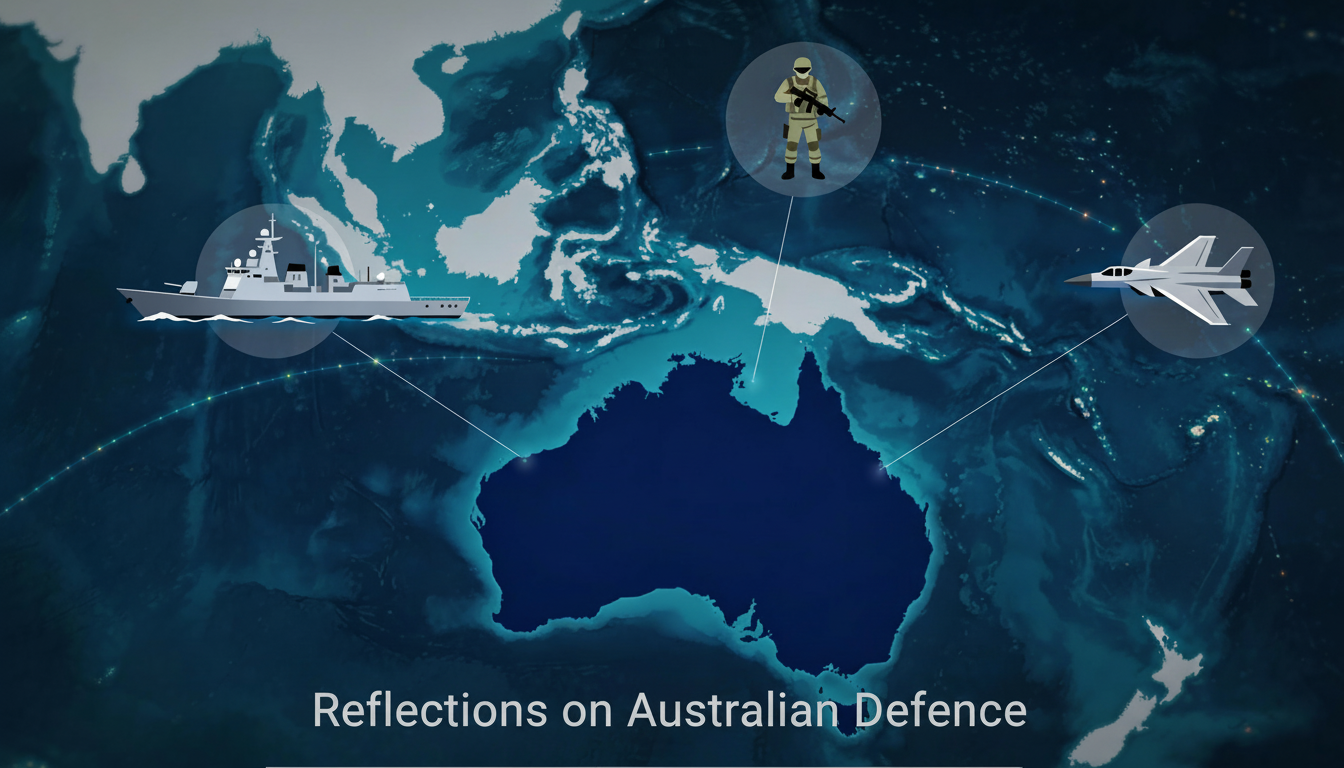
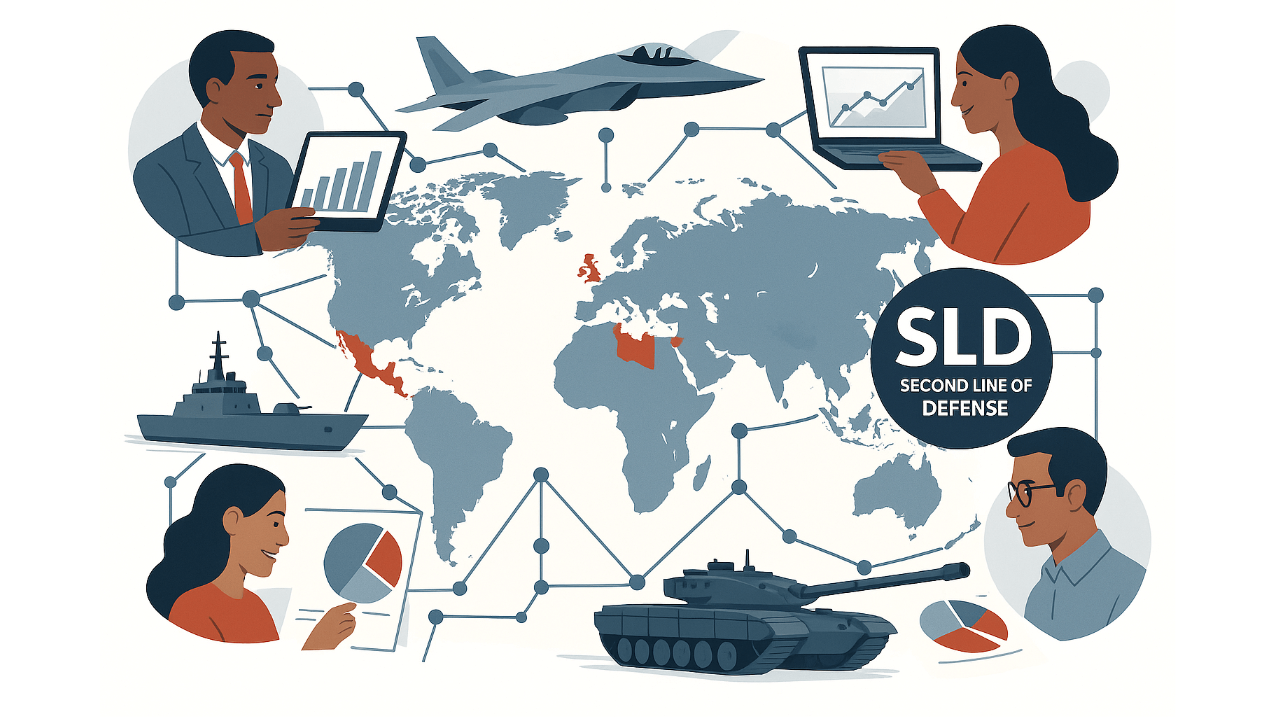
My latest book on Australian defence has focused on the significant challenge facing liberal democracies to develop credible defense in depth capabilities that extend far beyond traditional force structures to encompass whole-of-society considerations.

The contemporary security environment demands a fundamental reimagining of how nations prepare for, deter, and respond to existential threats. The lessons learned from ongoing conflicts, particularly the war in Ukraine, combined with the strategic challenges posed by authoritarian powers like China, underscore that defense is no longer solely the province of professional military forces.

Modern defense requires the active engagement, preparation, and resilience of entire societies. This is not merely a return to earlier models of national service or mass mobilization, but rather the development of sophisticated, multi-layered capabilities that integrate civilian infrastructure, industrial capacity, technological innovation, and social cohesion into a comprehensive defense posture. As President Kennedy once challenged Americans, “we must ask not what our country can do for us, but what we can do for our country” and in the current context, this question has never been more urgent or complex.

The Manufacturing and Industrial Imperative

The hollowing out of manufacturing capabilities due to economic relationships with China, a pattern visible not only in Australia but across the Western alliance system. Australia and Brazil, having become major food and commodity providers to what can be termed “Global China,” have witnessed the systematic atrophy of their manufacturing capabilities, creating dangerous vulnerabilities in any scenario requiring rapid industrial mobilization.

This deindustrialization represents more than an economic policy failure; it constitutes a strategic vulnerability that undermines the foundation of national resilience. The capacity to rapidly produce, modify, and scale production of critical defense materials, from ammunition to advanced electronics, has proven decisive in modern conflicts. Ukraine’s ability to innovate and adapt its defense industrial base under extreme pressure demonstrates both the possibility and necessity of maintaining robust manufacturing capabilities.

For middle powers seeking to maintain strategic autonomy in an increasingly bipolar world, the restoration of manufacturing capacity is not optional but existential. This requires not merely government investment but a comprehensive strategy that integrates energy security, raw material access, technological innovation, and skilled workforce development. The challenge extends beyond defense-specific manufacturing to include the broader industrial ecosystem that supports modern military capabilities, semiconductors, advanced materials, precision manufacturing, and the complex supply chains that enable rapid scaling of production.

The path forward demands recognition that economic security and national security are inseparable in the contemporary environment. This means making deliberate choices about supply chain diversification, accepting higher costs for domestic production capabilities, and investing in the long-term development of industrial capacity even when cheaper alternatives exist abroad. For Australia specifically, this represents a fundamental shift from the resource extraction model that has dominated recent decades toward a more balanced economy capable of supporting sophisticated defense requirements.

An additional challenge is to overecome the bureaucratic and procedural barriers that prevent rapid acquisition and continuous innovation, capabilities that modern conflicts have proven essential. The Australian Department of Defence’s traditional procurement processes, designed for stability and accountability in peacetime, have become impediments to the kind of agile, user-driven development that characterizes successful military innovation today.

Ukraine’s remarkable success in integrating new technologies, particularly unmanned and autonomous systems, demonstrates the power of operational units driving technological development rather than traditional top-down acquisition programs. This represents a fundamental shift from the platform-centric thinking that dominated twentieth-century military development to the payload revolution that defines contemporary warfare. In this new paradigm, the ability to rapidly integrate, test, modify, and scale new capabilities becomes more important than the traditional metrics of platform performance.

The implications extend beyond defense procurement to encompass broader questions about how democratic societies organize themselves for technological competition with authoritarian rivals. China’s ability to rapidly transition from research to deployment, unencumbered by the procedural constraints that characterize Western democracies, presents a systemic challenge that requires institutional innovation rather than merely procedural reform.

This suggests the need for new institutional structures that can operate with greater speed and flexibility while maintaining appropriate oversight and accountability. Special acquisition authorities, experimental units with broad testing mandates, and direct partnerships between operational forces and technology developers represent possible models. The key insight is that technological superiority in the contemporary environment requires not just superior research and development but superior integration and deployment capabilities.

Perhaps the most sobering observation from the September 2025 Sir Richard Williams seminar on which the book is based came from an attendee who focused on what he saw as the relative lack of attention paid to the human dimension of national defense, both in terms of military personnel and broader societal preparation for conflict. The stark reality highlighted by this ADF officer was that Ukraine’s standing military from February 2022 has largely disappeared through casualties, capture, and medical retirement. This clearly underscores the brutal mathematics of modern high-intensity conflict.

This observation forces uncomfortable questions about the sustainability of professional military forces in protracted conflict against peer competitors. The assumption that conflicts can be managed through limited engagement by professional forces, while civilian society remains largely insulated from the costs and demands of war, appears increasingly untenable. The multi-domain nature of contemporary threats, cyber, space, information warfare, means that civilian infrastructure and civilian populations become both targets and participants regardless of government preferences.

The challenge extends beyond military casualties to encompass the broader question of societal resilience under pressure. As one seminar attendee noted, there has been almost no discussion about preparing families and communities for the targeting they will inevitably face through cyber operations and information warfare. The assumption that war can be compartmentalized away from civilian life reflects a strategic blind spot that authoritarian competitors are prepared to exploit.

Modern conflicts demonstrate that societal cohesion, public understanding of threats, and civilian preparedness for disruption become crucial elements of national defense capability. This includes practical preparedness, backup communication systems, food security, energy resilience, but also psychological and social preparedness for the sustained pressure that characterizes contemporary strategic competition.

The concept of mobilization, as explored throughout this book, requires substantial reconceptualization for contemporary challenges. Traditional mobilization focused primarily on expanding military forces and defense production during periods of declared war. Modern mobilization must be understood as a continuous capability that integrates responses to natural disasters, pandemics, cyber attacks, and military threats within a comprehensive framework of national resilience.

Australia’s experience with wildfires and the COVID-19 pandemic demonstrated both the potential and limitations of existing mobilization capabilities. The Australian Defence Force, particularly the Army, proved capable of rapid deployment and sustained operations in support of civilian authorities. However, these experiences also revealed the dangers of over-reliance on military forces for tasks that properly belong to broader governmental and societal capabilities.

The development of effective mobilization systems requires thinking beyond military expansion to encompass the full spectrum of national capabilities. This includes industrial surge capacity, civilian infrastructure resilience, information system security, supply chain diversification, and social cohesion under pressure. As Air Marshal Harvey emphasized in an earlier Williams Foundation seminar, mobilization capability becomes a foundation for national resilience that supports deterrence through demonstrated capacity to sustain pressure and respond effectively to diverse challenges.

This broader understanding of mobilization aligns with the strategic reality that deterrence in the contemporary environment depends less on the threat of decisive military victory than on the demonstrated capacity to impose unacceptable costs through sustained resistance and resilience. For geographically isolated nations like Australia, this resilience-based deterrence becomes particularly important given the challenges of rapid external assistance in crisis scenarios.

The broader challenge facing liberal democracies involves what we might term the “citizenry gap” or the disconnect between professional military forces and the societies they defend. With the exception of the Baltic states, Nordic countries, and Poland, most Western democracies have moved away from models of universal service or broad civilian involvement in defense preparation. This separation, while understandable given the absence of immediate threats during the post-Cold War period, has created vulnerabilities that authoritarian competitors are positioned to exploit.

This does not suggest that liberal democracies must abandon their commitment to individual freedom and prosperity, but rather that they must find ways to prepare their populations for the realities of strategic competition. This includes education about threats and vulnerabilities, practical preparedness for infrastructure disruption, and the development of social cohesion capable of sustaining pressure over extended periods.

The challenge is particularly acute given the dependence of modern societies on cyber and space systems that are inherently vulnerable to attack. Unlike previous conflicts where governments could potentially insulate civilian populations from direct effects of war, contemporary threats guarantee civilian involvement regardless of government preferences or military strategies.

The path forward requires developing new models of national defense that integrate professional military capabilities with broader societal resilience and civilian preparedness. This is not simply a return to earlier models of mass mobilization but rather the development of sophisticated, multi-layered systems appropriate for contemporary challenges.

Key elements of this new model include:

  • Industrial resilience: Maintaining sufficient domestic manufacturing capacity to support sustained operations while reducing dependence on potentially hostile suppliers.
  • Infrastructure hardening: Developing redundancy and resilience in critical systems including communications, energy, transportation, and logistics networks.
  • Civilian preparedness: Educating and preparing civilian populations for the disruptions that accompany modern conflicts, including cyber attacks, supply chain disruption, and information warfare.
  • Institutional adaptation: Reforming procurement, development, and deployment processes to enable rapid innovation and integration of new capabilities.

The analysis presented in this book points toward a fundamental choice facing liberal democracies in the contemporary strategic environment. They can continue operating under assumptions developed during the post-Cold War period that defense is primarily the responsibility of professional forces, that civilian society can remain largely insulated from strategic competition, and that economic and security considerations can be managed separately or they can adapt to the realities of renewed major power competition that demands whole-of-society engagement. The rise of the multi-polar world is a reality not to be ignored while clinging the past hopes of globalization.

The evidence suggests that maintaining the status quo is not viable. The nature of contemporary threats, the demonstrated vulnerabilities of over-specialized defense models, and the strategic approaches of authoritarian competitors all point toward the necessity of fundamental adaptation. This adaptation need not compromise the values and institutions that define liberal democracy, but it does require acknowledging that defending those values and institutions demands more comprehensive preparation than has been undertaken in recent decades.

For Australia specifically, this means embracing the challenge of developing genuine strategic autonomy through industrial capacity, infrastructure resilience, and social preparation for sustained pressure. It means recognizing that geographic isolation, while providing certain advantages, also creates unique vulnerabilities that require specific attention to self-reliance and endurance capabilities.

The ultimate test of these adaptations will not be their effectiveness in preventing war, though deterrence remains a crucial objective, but their capacity to sustain liberal democratic societies through whatever challenges emerge from the current period of strategic transition. The goal is not to militarize civilian society but to create resilient civilian society capable of supporting defense requirements while maintaining the characteristics that make democratic societies worth defending.

The choice, ultimately, is between adaptation and vulnerability. The analysis presented in this book suggests that adaptation, while challenging and costly, remains possible for societies willing to acknowledge the changed strategic environment and commit to the sustained effort required for effective response.

The alternative, continuing with assumptions and structures developed for a different era, risks not merely military defeat but the broader failure of the liberal democratic model in the face of sustained authoritarian pressure.

Fight Tonight: Combat Readiness at the Speed of Relevance


John Blackburn and the Resilience Challenge

01/27/2026

John Blackburn, Air Vice Marshal (Retired) of the Royal Australian Air Force, stands as a leading Australian figure in advancing the discourse on national resilience, from traditional defense concepts to critical infrastructure protection and energy security. His journey, professional background, major published works, and founding of the Institute for Integrated Economic Research Australia (IIER-A) have collectively shaped a new paradigm for how Australians confront vulnerabilities against strategic threats such as China’s coercive capability to isolate Australia in times of crisis.​

John Blackburn joined the RAAF in 1975, beginning his career as a Mirage III fighter pilot and later graduating from the Empire Test Pilots School in the UK in 1980. He served in roles such as test pilot with the Aircraft Research and Development Unit in South Australia and held operational command positions including leading integrated air defense systems across Australia and the Indo-Pacific. Blackburn rose through the ranks to become Deputy Chief of Air Force, where he was responsible for strategic, personnel, logistics, and operational planning, immersing him in defense capability development as well as the direct oversight of airworthiness and the regulation of Australia’s technical aviation standards.​

Blackburn’s leadership legacy is marked not only by operational achievements but by visionary thinking about long-term risk management for the defense sector. As Commander of the Integrated Area Defence System and Deputy Chief, he oversaw multi-national cooperation under the Five Power Defence Agreement, strengthening Australia’s presence in regional security.​

Upon retiring in 2008, Blackburn transitioned from military command to strategic policy consulting, driven by a conviction that Australia’s national security must extend beyond capability-centric defense alone. His military experience revealed significant dependencies in Australia’s strategic “ecosystem” and particularly its vulnerability to disruption in energy, supply chains, and infrastructure.

Blackburn became increasingly vocal about Australia’s reliance on imported liquid fuels, its exposure to supply chain shocks, and the absence of a coherent bipartisan approach to energy security. In wide-ranging interviews and reports, he warned, “you can have the best military in the world but it’s futile if you can’t fuel it,” asserting that Australia’s defense posture would be crippled if energy supplies were interrupted.​

Blackburn’s body of work spans consulting roles, published analyses, and policy advocacy:

“Australia’s Liquid Fuel Security” (2013, NRMA): This foundational report examined Australia’s mounting dependence on imported oil and fuel, outlining the strategic risks of supply chain disruption, particularly as refineries in Singapore (sourcing from the Middle East) became critical links for Australian transport energy.​

Cyber and Energy Security Analysis: As chairman of the Kokoda Foundation (now Institute for Regional Security), Blackburn co-authored reports on cyber risk and advocated for a systems approach to national security—where interdependencies between energy, communications, and logistics are recognized as integrated risk factors.​

Resilience Policy Advocacy: Serving as Deputy Chairman of Williams Foundation, Director at the Australian Strategic Policy Institute Council, and contributing to the National Resilience Project (GAP, IIER-A), Blackburn emphasized the need for an “all-hazards” approach where resilience extends across economy, industry, health, education, environment, energy, emergency response, and culture.​

In 2018, Blackburn co-founded the Institute for Integrated Economic Research Australia (IIER-A), motivated by recognition that systemic risk rather than isolated threats could undermine Australia’s national security. IIER-A became a focal point for multidisciplinary research into vulnerabilities and resilience strategy. Under his chairmanship, IIER-A convened government, industry, and academic experts for the National Resilience Taskforce, producing integrated reports on:

  • Energy systems resilience
  • Sovereign industry capability
  • National preparedness and disaster risk reduction
  • Recommendations for establishing a permanent National Resilience Institute.​

The institute advocated a policy shift, calling for resilience to be institutionalized through joint funding across philanthropy, federal and state governments, and private industry. Its reports and summits influenced national discussions and were referenced by parliamentary commissions and policy forums.

Blackburn’s strategic outlook was sharpened by the rising threat of Chinese “gray zone” operations, coercive acts aimed at disturbing critical lifelines without resorting to conventional warfare. He assessed that China’s ability to sever supply chains, cut off communications, or degrade infrastructure could isolate Australia diplomatically and economically, rendering it vulnerable even in the absence of direct conflict.​

He publicly argued that sea lanes, energy networks, communications infrastructure, and multinational supply chains are vulnerable points that must be protected with flexible, forward-looking policies. Blackburn urged policymakers to view resilience not as a static defense reaction but as a dynamic set of capabilities, spanning civilian and military spheres, prepared to withstand technological, geopolitical, and environmental shocks.​

Beyond energy, Blackburn contributed expertise on:

  • Cyber resilience and integrated risk management
  • Climate risk and its defense impacts, as an Executive Member of the Australian Security Leaders Climate Group​
  • Fifth-generation air power and network-centric defense strategy
  • Space and missile defense policy analysis
  • Strategic foresight for long-term prosperity and crisis management​

Blackburn’s thought leadership precipitated institutional change:

  • IIER-A’s work catalyzed government inquiry into resilience policy and disaster recovery frameworks
  • Recommendations for a National Resilience Institute are shaping future funding priorities
  • His advisory role in AI system implementation for operationalizing resilience recommendations reflects ongoing engagement with emerging technology solutions​

John Blackburn’s journey from RAAF fighter pilot and senior commander to strategic consultant and resilience advocate, mirrors Australia’s own evolution in confronting 21st-century strategic threats. His legacy is embodied in the widening recognition that resilience is not merely a defense challenge, but a whole-of-nation imperative, one where sovereignty, preparedness, and adaptability are forged through proactive policy, integrated risk management, and robust institutions.​

By founding IIER-A and leading multidisciplinary efforts, Blackburn has provided a blueprint for how Australia and likeminded democracies can protect themselves against coercive isolation, infrastructural shocks, and complex global threats.


Trump’s Transactional New World Order

01/26/2026

By Nick Dowling

In 2016, on a stage at Ohio State, I was asked to debate Donald Trump’s foreign policy. My answer was blunt: there wasn’t one. Trump wasn’t a neoclassical realist. He wasn’t an isolationist. He wasn’t anything you could diagram in an IR textbook. He improvised. And it was risky.

Nearly a decade later, the fog has lifted. Trump’s foreign policy isn’t incoherent: it’s transactional. Power-centric. Deal-driven. Less Grand Strategy and more Art of the Deal, Global Edition.

For years, many of Trump’s supporters and critics misread him as an isolationist. They pointed to his anti-globalist rhetoric, his contempt for multilateral institutions, and his scathing attacks on the wars in Iraq and Afghanistan. The assumption followed naturally: Trump would pull America back from the world.

That theory is now dead.

A president who escalates involvement in the Middle East, plays hardball in Ukraine, greenlights regime change in Venezuela, and toys openly with brinksmanship over Greenland is not retreating from the world.

He’s reengineering how the U.S. exerts power within it.

Trump isn’t anti-intervention. He’s anti-unprofitable intervention.

The defining feature of Trump’s foreign policy is the intentional, transactional use of American coercive power, military, economic, political, to extract tangible returns for the United States. Ideology is irrelevant. Norms are optional. Outcomes are everything.

This logic also explains Trump’s much-maligned trade policy. Critics obsess over tariffs as if Trump were drafting an economics dissertation. He isn’t. Trump doesn’t see tariffs as economic theory. He sees them as a loaded gun on the table. They’re leverage. They force movement. And as a bonus, they generate short-term revenue.

Military power and economic power are, to Trump, interchangeable tools in the same toolbox. One compels with fear, the other with pain. Both get people to sign deals.

The biggest difference between Trump’s first term and his second is not policy: it’s confidence. Trump now understands what most second-term presidents eventually realize: the presidency grants enormous, often under appreciated freedom of action in foreign affairs. Fewer restraints. Fewer advisers willing to say no. Less concern about reelection.

The result is a foreign policy unleashed. Everything is negotiable. Trade deals. Peace deals. Resource deals. Even sovereignty itself. American power is the enforcement mechanism, and Trump is unapologetic about using it.

To his credit, some of the wins have been real, better terms extracted from Europe and China, dramatic realignments in Middle Eastern politics, adversaries forced to the table who once felt untouchable.

But the question lingers: at what cost?

Trump’s approach is tearing at the architecture of the international system built after World War II. The architects of that system — Truman, Eisenhower, Marshall — had seen the abyss. They understood the price of unchecked power in a nuclear age. So they constructed institutions, norms, and alliances designed not to win every deal, but to prevent catastrophe.

For eighty years, that system, underwritten largely by American power and bipartisan leadership, worked. It prevented great-power war in Europe and Asia. It fueled unprecedented prosperity. It expanded freedom. It cemented the United States as the indispensable nation.

Did it cost the U.S. money and flexibility? Absolutely.

But it delivered peace, stability, and American dominance in return.

Now that era is ending.

Longtime U.S. allies are recalibrating, not because America is weak, but because it is different. When the guarantor becomes a negotiator or the bully, everyone rereads the fine print. Alliances shift.  And America may no longer get the benefit of the doubt.

My own view is conflicted. I am 100% in favor of sustaining an international system of alliances, trade agreements, international organizations, rules and norms. It is essential to prevent great war and to manage the complex challenges facing us internationally in the 20th century, from climate change to AI.

That said, the postwar system needed reform. It was ossified, hypocritical, and increasingly detached from the realities of rising powers like China, resurgent Russia, and a transformed Middle East.

In that sense, Trump may be unintentionally providing a degree of creative destruction, shattering old assumptions so something more durable and inclusive can emerge.

But destruction without construction is just vandalism.

If the United States alienates its European and North American allies in the process, those who remain central to our security, prosperity, and global leadership, the price of Trump’s deals may ultimately exceed their value.

Trump may be redefining how power works in the world.

The open question is whether America will still like the world that comes next.

Nick Dowling has 35 years of experience in national security sector, working in both senior government and corporate executive roles.  He is a graduate of Harvard College, has a Masters from Georgetown University, and is a Lifetime Member of the Council on Foreign Relations.

Fleet Redesign in the Age of Maritime Autonomous Systems

01/23/2026

By Robbin Laird

The traditional architecture of naval power centered on capital ships projecting force through manned platforms is approaching obsolescence.

Western navies stand at an inflection point where incremental adaptation will no longer suffice. The emergence, proliferation, and rapid development of maritime autonomous systems (MAS) demands nothing less than fundamental redesign of how we conceptualize, organize, and employ naval forces. The question is not whether this transformation will occur, but whether Western navies will lead it or be overtaken by adversaries who embrace it more aggressively.

Current naval thinking remains trapped in legacy frameworks. The concept of Distributed Maritime Operations (DMO), while acknowledging the utility of unmanned systems, still treats capital ships as the organizing principle with autonomous systems relegated to supporting roles at the margins.

This approach fundamentally misunderstands the paradigm shift underway. A genuine redesign that takes MAS seriously requires inverting this relationship, shifting from platform-centric to effects-centric organization where capital ships become mobile infrastructure for launching, controlling, and sustaining networks of uncrewed surface, subsurface, and aerial systems that provide the actual combat power.

The Strategic Imperative for Transformation

The drivers compelling this transformation operate across multiple dimensions, technological, operational, economic, and strategic. Technologically, advances in autonomy, artificial intelligence, sensor miniaturization, and communications have reached maturity levels enabling reliable autonomous operation in complex maritime environments. What was experimental a decade ago is now operational reality, as demonstrated by systems ranging from unmanned surface vessels conducting persistent ISR missions to autonomous underwater vehicles mapping ocean floors and subsurface threats.

Operationally, the tyranny of geography in potential conflict theaters demands new solutions. In the vast expanse of the Pacific, traditional capital-ship-centric approaches cannot achieve the necessary persistence, coverage, and tempo. The distances involved and the number of potential flashpoints exceed what any plausible number of traditional platforms can address.

Maritime autonomous systems offer the only viable path to achieving distributed presence at scale, dozens or hundreds of platforms maintaining continuous surveillance, creating multiple dilemmas for adversaries, and enabling rapid response across theater-wide areas of operation.

Economically, the cost curve of traditional shipbuilding has become unsustainable. Modern destroyers and frigates cost billions of dollars and require decades from concept to commissioning. Loss of a single ship represents catastrophic investment destruction, creating what strategists call the expensive object problem, platforms so costly that commanders become risk-averse about employing them aggressively.

Maritime autonomous systems invert this calculus. Individual platforms cost orders of magnitude less, enabling acceptance of attrition as an operational given rather than a crisis. A fleet can sustain losses of dozens of unmanned vessels while continuing the mission, something impossible with manned capital ships.

Strategically, near-peer competitors are not waiting for Western navies to adapt at leisure. China’s massive investment in unmanned maritime systems, from surface vessels to underwater gliders, reflects recognition that asymmetric approaches can neutralize traditional Western naval advantages.

If Western navies cling to legacy architectures while potential adversaries embrace wholesale transformation, the balance of maritime power will shift profoundly and perhaps irreversibly.

From Platforms to Payloads: The Conceptual Shift

Redesigning around maritime autonomous systems requires fundamentally rethinking what constitutes a fleet and what capital ships actually contribute to naval combat power. In the legacy model, the capital ship is the primary source of combat power supplemented by air systems. Its sensors detect threats, its weapons engage them, its systems provide command and control. Smaller platforms and aircraft extend reach but remain dependent on the mothership for direction, support, and decisive firepower.

The MAS-centric model inverts this relationship. Capital ships become mobile infrastructure, launch and recovery platforms, command nodes, logistics hubs, and heavy weapons reserves. Combat power resides in mesh networks of autonomous systems that provide ISR, counter-ISR, electronic warfare, deception, strike, minelaying, and logistics at scale and at dramatically lower cost per effect. Capital ships hold back their scarce, high-end weapons for decisive moments while MAS handles the grinding work of surveillance, presence, and initial combat.

This shift changes how commanders conceptualize operations. Rather than organizing around task groups centered on individual capital ships, operations organize around combat clusters, temporary groupings that mix manned air, capital ships, and MAS mesh networks tailored to specific mission requirements.

A cluster might include a mothership capital ship, a squadron of manned aircraft, dozens of ISR-equipped surface autonomous vehicles, submarine-deployed underwater autonomous systems, and aerial drones, all operating within a local reconnaissance-strike network that enables rapid sensor-to-shooter cycles.

MESH Fleets and Wolfpacks: Distributed Lethality at Scale

The core operational concept in a MAS-centric navy is the mesh fleet or wolfpack, swarms of unmanned surface vessels operating  as an ecosystem without an epicenter. Unlike traditional formations organized around a flagship, mesh fleets distribute sensing, decision-making, and effects across dozens or hundreds of nodes. Loss of individual craft degrades capability but does not collapse the formation, as remaining units automatically reconfigure and continue the mission.

These mesh fleets operate in multiple modes depending on mission requirements. In sprint mode, they move rapidly to occupy an area or respond to emerging threats. In loiter mode, they maintain persistent presence in contested waters, providing continuous surveillance and immediate strike capability. They establish surveillance networks that feed intelligence to human decision-makers and enable rapid targeting of time-sensitive threats.

The tactical flexibility of mesh fleets transforms operational possibilities. A commander can deploy a mesh fleet to establish sea control in an area too dangerous for manned platforms, accepting potential losses while gathering intelligence and exhausting enemy missiles before committing capital ships. Alternatively, mesh fleets can provide persistent ISR around critical infrastructure, undersea cables, energy platforms, strategic chokepoints, detecting and deterring hostile activity without requiring constant presence of expensive manned vessels.

In offensive operations, mesh fleets enable mass and saturation that fundamentally changes combat mathematics. Against sophisticated air defense systems, a single capital ship firing a salvo of cruise missiles faces high risk of complete intercept. A mesh fleet launching hundreds of lower-cost loitering munitions and decoys from dispersed positions creates decision dilemmas and tracking challenges that overwhelm defensive systems, opening lanes for follow-on strikes by high-end weapons from capital ships and aircraft.

Mothership Capital Ships: Mobile Infrastructure for Autonomous Warfare

If combat power shifts to autonomous systems, what role remains for expensive capital ships? The answer lies in reconceptualizing these platforms not simply as the core primary combat units but as mobile motherships, sophisticated infrastructure designed from the keel up to launch, control, sustain, and recover unmanned systems across all domains.

This redesign draws on emerging international models. Denmark’s StanFlex modular system demonstrates how common interfaces enable rapid reconfiguration, a ship can shift from mine countermeasures to surface strike to ASW depending on which containerized mission modules are installed. Singapore’s work on multi-role drone carriers shows how vessels can serve as forward operating bases for swarms of autonomous systems. The U.S. Navy’s own experimentation with Overlord and other large unmanned surface vessels provides proof of concept, though the service has yet to embrace wholesale fleet redesign around these capabilities.

A properly designed mothership capital ship includes mission bays with standard physical interfaces for rapid launch and recovery, high electrical margins to support computing-intensive AI and autonomy systems, generous bandwidth for controlling distributed unmanned platforms, and maintainable open architecture allowing continuous software and hardware upgrades. Rather than being optimized for a single mission profile over a 30-year service life, these ships serve as adaptable platforms whose capabilities evolve as new autonomous systems and mission payloads are developed.

The economics prove compelling. A single mothership commanding 50 autonomous surface vessels and 100 aerial drones delivers distributed ISR and strike capability equivalent to an entire traditional task group at a fraction of the lifecycle cost.

Payload Centric Architecture: Modularity and Rapid Evolution

The shift to MAS-centric operations requires parallel transformation in how navies approach sensors, weapons, and mission systems. Traditional naval architecture treats these as platform-specific systems, the radar suite designed for a particular destroyer, the sonar system integrated into a specific submarine. This approach locks capabilities to platforms and makes adaptation glacially slow.

A payload-centric architecture prioritizes common, swappable payloads that can operate across multiple platforms. A signals intelligence module fits equally on an unmanned surface vessel, an autonomous underwater vehicle, or an aerial drone. A containerized strike package can be installed on a mothership, a logistic support vessel, or even a commercial ship requisitioned in crisis. Electronic warfare systems, decoys, loitering munitions, mine countermeasures, and logistics pods all follow common standards enabling plug-and-play deployment.

This modularity transforms development timelines and acquisition processes. Rather than decade-long programs to field new capabilities locked into specific platforms, navies can spiral new payloads into service as soon as they prove viable, immediately distributing them across the entire mesh fleet.

A breakthrough in AI-enabled target recognition gets pushed as a software update to thousands of autonomous systems simultaneously. A new class of low-cost loitering munition enters production and deploys within months rather than years.

The implications extend beyond technology to operational flexibility. A mothership preparing for a specific mission loads the appropriate mix of payloads from a common inventory, perhaps emphasizing ISR and electronic warfare for a surveillance operation, or maximizing strike packages for offensive action.

Upon mission completion, it returns, offloads those payloads, and loads a completely different mix for the next operation. This creates modularity not just at the payload level but at the force-level, with the entire fleet capable of rapid reconfiguration to meet changing requirements.

Command, Control and Human Judgement in Autonomous Warfare

Perhaps the most sensitive aspect of MAS-enabled operations involves command relationships and particularly the role of humans in lethal decision-making. International law, national policies, and ethical principles all require meaningful human control over use of force. But traditional command architectures where humans must authorize each weapon employment cannot sustain the tempo and scale of autonomous warfare.

The solution lies in distributed, effects-based authorities rather than centralized, platform-based control. Autonomy handles navigation, deconfliction, collision avoidance, and basic maneuver. AI systems process sensor data, identify potential targets, and present options to human commanders. Humans retain authority over lethal decisions, but within pre-authorized mission profiles that enable rapid execution without requiring individual approval for every engagement.

In practice, this resembles how commanders employ indirect fire artillery or establish rules of engagement for air defense systems—setting parameters and authorities that allow subordinates or systems to execute within defined bounds while preserving human judgment at critical junctures.

A commander might authorize a mesh fleet to engage surface vessels within a defined area matching specific criteria, while reserving personal approval for engagements near civilian traffic or involving ambiguous targets.

This approach enables much faster kill-chain closure than traditional architectures. Local reconnaissance-strike networks, MAS providing ISR, manned platforms analyzing data, distributed nodes executing strikes, can operate at the edge without requiring every decision to flow through centralized command.

The result is increased tempo enabled by decreased centralization, where human judgment remains essential but shifts from controlling individual actions to setting parameters, monitoring execution, and intervening when circumstances exceed authorized bounds.

Deterrence and Graduated Effects: Maritime Presence Transformed

Maritime autonomous systems also transform how navies approach deterrence and the spectrum of operations short of high-intensity warfare. Traditional naval presence involves deploying capital ships. expensive, finite resources that can only be in one place at a time. The costs and risks of maintaining persistent presence in contested waters often prove prohibitive, creating gaps that adversaries exploit.

Large numbers of unmanned assets enable continuous friction or the persistent maritime domain awareness, ubiquitous presence around critical infrastructure, and the ability to impose non-lethal disruption before escalating to kinetic effects if required. Mesh fleets can maintain permanent presence in gray-zone environments too risky for manned platforms, documenting hostile activity, deterring aggression through persistent observation, and providing immediate response capability if situations escalate.

This creates graduated deterrence options. At the lowest level, MAS provide persistent ISR that makes hostile actions difficult to conduct covertly. At intermediate levels, autonomous systems can conduct non-kinetic disruption, electronic warfare, interference with communications, physical obstruction of hostile vessels. If deterrence fails, the same systems can rapidly shift to lethal effects, drawing on pre-positioned weapons and high-volume autonomous strike capabilities.

The psychological and strategic effects prove significant. An adversary contemplating hostile action faces not a few visible capital ships that can be avoided or overwhelmed, but ubiquitous sensing and distributed lethality that makes operating undetected impossible and creates multiple points of potential escalation. Deterrence stems not from concentrated capability but from distributed presence. the knowledge that autonomous systems are everywhere, providing continuous awareness and immediately available response.

Industrial Transformation: Spiral Development and Open Architecture

Realizing the MAS-enabled vision requires parallel transformation of naval industrial practices and acquisition approaches. Traditional shipbuilding operates on decades-long cycles, concept development, detailed design, construction, commissioning, and decades of service with only incremental upgrades. This timeline matches platforms designed for stable, well-defined missions but fails catastrophically for rapidly evolving autonomous systems and software-intensive capabilities.

The alternative draws inspiration from Ukraine’s drone ecosystem and commercial technology development, spiral, software-driven evolution where systems deploy initially in minimum viable configurations and continuously improve through iterative updates. Maritime autonomous systems enter service for basic ISR and presence missions while autonomy improves, payloads mature, and operational concepts develop through actual use rather than years of testing and evaluation.

This requires establishing modularity and standards early in the process. Common physical interfaces, standardized mission bays, containerized modules, universal power and data connections, ensure new systems can plug into existing platforms. Open mission systems and standard software architectures prevent vendor lock and enable continuous upgrade without platform replacement. Digital twins and virtual testing environments allow developers to validate new capabilities before hardware production.

The budgetary and programmatic implications prove profound. Rather than committing vast resources to exquisite, single-purpose platforms with decades-long development timelines, resources shift toward larger numbers of less expensive platforms with modular designs supporting continuous evolution. Instead of replacing an entire destroyer class to field new capabilities, navies plug new payloads and software into existing motherships, update autonomous systems through software pushes, and spiral improved hardware as it becomes available.

This approach matches operational reality in conflict. Ukraine’s military doesn’t wait for perfect drones. It fields thousands of rapidly evolving systems, learning from successes and failures, adapting faster than adversaries can respond.

Western navies must embrace similar philosophy: deploy maritime autonomous systems now in rising numbers for ISR, presence, and security missions while maturing more advanced autonomy and weapons for back-fitting later, rather than waiting for perfect systems that arrive too late to matter.

Force Planning and Budget Realities: Re-shaping Fleet Design

Implementing MAS-enabled fleet redesign requires reconceptualizing force planning and budget allocation. Traditional naval budgeting focuses on procurement and lifecycle costs of small numbers of exquisite platforms. A future fleet structured around maritime autonomous systems inverts this calculus, more numerous but individually less expensive unmanned systems, fewer but more capable mothership capital ships, and sustained investment in the digital infrastructure, software, and payloads that enable the entire mesh to function effectively.

The result is a hybrid fleet where traditional capital ships complement rather than dominate. Instead of 300 destroyers and frigates as the measure of naval power, the fleet might include 100 mothership capital ships, 50 traditional combatants for high-end warfare, 1,000 large unmanned surface vessels, 5,000 small autonomous watercraft, 10,000 aerial drones, and 2,000 underwater autonomous vehicles, all operating within integrated reconnaissance-strike networks.

Budgets and concepts of operations structure around sustaining that mesh rather than only procuring a handful of traditional hulls. Maintenance infrastructure supports rapid turnaround of autonomous systems rather than decades-long depot maintenance of manned ships. Training focuses on operating and commanding distributed networks rather than traditional ship handling. Doctrine emphasizes mission-tailored combat clusters rather than standardized task groups.

The political and cultural challenges of this transformation may exceed the technological hurdles. Naval services built around capital ships and traditional seamanship face institutional resistance to reconceptualizing their core identity around autonomous systems management. Budget battles between traditional platform advocates and MAS proponents will intensify as resources shift. Allies and partners must coordinate standards and operational concepts to ensure interoperability across coalition operations.

Yet the strategic imperative remains overwhelming. Naval warfare is transforming whether Western navies lead that transformation or resist it. Potential adversaries are not waiting for permission to field thousands of autonomous systems that can overwhelm traditional forces through sheer numbers and saturation.

Conclusion

Western navies stand at a decision point comparable to the shift from sail to steam, or from battleships to aircraft carriers. Maritime autonomous systems represent not an enhancement to existing naval architecture but a fundamental transformation in how combat power is generated, organized, and employed at sea. The question is not whether this transformation will occur for it is already underway but whether Western navies will lead it through deliberate redesign or will cling to legacy concepts until crisis forces adaptation under the worst possible circumstances.

Redesigning around MAS requires intellectual courage to abandon comfortable assumptions about how navies operate. It demands accepting that capital ships, while still valuable, are no longer the primary source of combat power but rather mobile infrastructure supporting autonomous systems that provide actual warfighting capability. It necessitates embracing risk by fielding systems that will initially be imperfect, trusting that rapid iteration and operational learning will drive improvement faster than traditional acquisition can deliver exquisite solutions.

The strategic reward for embracing this transformation is nothing less than maintaining maritime superiority in an era when traditional platforms alone cannot provide it. Mesh fleets of autonomous systems can achieve the distributed presence, persistent surveillance, and mass effects that geography and adversary capabilities demand. Mothership capital ships with modular payloads can evolve continuously rather than obsolescing before leaving the shipyard. Graduated deterrence options from continuous friction to distributed lethality can address the full spectrum of maritime challenges from gray-zone competition to high-intensity warfare.

The cost of refusing this transformation is equally stark, fleets too small and too expensive to maintain presence across vast theaters, platforms too precious to risk in contested environments, concepts of operations that adversaries can predict and counter, and ultimately, loss of the maritime superiority that underpins Western security architecture and global stability.

The time for incremental adaptation has passed. Western navies need to redesign, fundamentally, deliberately, and urgently, around the reality of maritime autonomous systems. The future of naval warfare demands nothing less.

A Paradigm Shift in Maritime Operations: Autonomous Systems and Their Impact


Venezuela, Energy Warfare, and the Global War in Ukraine

01/22/2026

By Robbin Laird

The January 3, 2026 U.S. operation in Venezuela can be understood not as an isolated hemispheric intervention, but as a deliberate strike against Russia’s external energy ecosystem and sanctions-evasion machinery, designed to erode Moscow’s war-fighting capacity in Ukraine over time.

What is being reordered is not merely a hostile regime in the Western Hemisphere, but the geography and logistics of global oil flows that have quietly underwritten the Kremlin’s long war. What appears on the surface as a regime-change operation is simultaneously a campaign to close one of Russia’s most important economic pressure valves for sustaining protracted conflict.

This operation must be situated within what I have termed the Global War in Ukraine, a system-defining contest that has already transformed the international order more profoundly than any single event since the end of the Cold War. The war that began with Russia’s full-scale invasion in February 2022 has metastasized into a comprehensive struggle encompassing military innovation, energy security, alliance restructuring, and economic warfare across multiple theaters. Venezuela represents the opening of a new front in this wider campaign, one that targets the financial sinews sustaining Russia’s ability to wage war rather than the battlefield itself.

Venezuela as a Russian Energy Node

For over a decade, Venezuela has functioned as an offshore extension of Russia’s energy presence in the Western Hemisphere, not merely as a diplomatic fellow traveler, but as an integrated component of Moscow’s global hydrocarbon strategy. Russian-linked firms secured equity stakes, financing arrangements, and operating positions in Venezuelan upstream projects, using the country’s heavy crude reserves to diversify a wider portfolio of sanctioned molecules and to maintain leverage within OPEC-plus politics. That presence was renewed and significantly deepened in November 2025, when Caracas approved a 15-year extension of key joint ventures between PDVSA and Roszarubezhneft, locking in Russian access to Venezuelan barrels through 2041 despite multilayered U.S .sanctions.

Venezuela’s geology and degraded infrastructure amplify its strategic value to Moscow as a sanctions-era partner. The Orinoco Belt’s massive heavy-oil reserves, among the world’s largest proven deposits, though technically demanding and capital-intensive, represent one of the few remaining basins that could be ramped up with foreign capital after years of chronic underinvestment and operational decay.

This offered Russia both a hedge against its own future production declines and a cooperative platform for price management within global energy markets. In effect, the Kremlin could treat future Venezuelan output as part of a wider energy axis alongside Iran and other non-aligned producers, collectively exerting leverage over supply volumes, benchmark pricing, and the politics of sanctions enforcement.

The Shadow Fleet and Sanctions Evasion Architecture

Since 2022, Russia has leaned heavily on a rapidly expanded shadow fleet of aging tankers operating under flags of convenience, utilizing dark transponders, ship-to-ship transfers at sea, and deliberately opaque ownership structures to move sanctioned crude and refined products. Iran and Venezuela pioneered many of these evasion techniques over the preceding decade, and Russia effectively grafted itself onto this pre-existing dark-fleet ecosystem centered on those states.

Venezuela’s ports, storage system, and zombie‑tanker ghost fleet’ have become a central hub in sanctions‑evasion logistics, enabling ship‑to‑ship transfers, re‑flagging, identity theft, and falsified documentation to obscure the origin of sanctioned oil cargoes.

Russian suppliers increasingly use the same shadow‑fleet and sanctions‑resistant trading ecosystem, overlapping tankers, intermediaries, and blending points, that services Venezuelan crude, facilitating the movement of Russian barrels into global markets with obscured origin.

By exploiting the expanding shadow‑fleet ecosystem and non‑G7 services, Russian crude and products have been able to sidestep the G7 price‑cap regime and sell at levels well above the 60‑dollar‑per‑barrel ceiling, preserving substantial export revenues. In practical terms, Venezuela’s oil sector has operated as part of this sanctions‑evasion architecture, a site for processing, logistics, and juridical camouflage, helping convert measures that were designed as decisive embargo instruments into persistent but manageable friction for Moscow’s hydrocarbon trade.

How the Operation Attacks Russian Energy Leverage

The January 3 operation and the subsequent assertion of practical control over Venezuelan oil assets directly target three pillars of this Russian-linked energy ecosystem: ownership structures, throughput capacity, and sanctions-evasion infrastructure. By capturing Maduro, sidelining PDVSA’s existing leadership, and creating conditions for freezing or renegotiating joint venture agreements, Washington has manufactured an opportunity to systematically unpick Russian and Iranian stakes in Venezuelan upstream projects that were designed to anchor their presence through mid-century. Contracts that locked in Russian equity and operational control to 2041 now exist under a fundamentally transformed political and coercive reality in which US forces and their chosen Venezuelan interlocutors possess the leverage to reopen terms, suspend operations, or exclude specific foreign partners entirely.

On throughput, the Trump administration has signaled that core sanctions on Venezuelan crude exports will remain in place even as selected U.S. energy firms prepare substantial investments on the order of several billion dollars to restore production capacity over a multi-year timeline. This combination of physical control on the ground and a phased, license-based reopening of export flows gives Washington powerful leverage over how, when, and through which channels new Venezuelan barrels enter global markets, and which traders, intermediaries, and tankers are permitted access to loadings. Russian-linked entities and shadow-fleet vessels can be systematically excluded from participating in these flows, and any attempts to replicate the previous opaque patterns can be characterized as interference with U.S.-controlled assets, thereby justifying interdiction, seizure, or expanded sanctions under counter-narcotics, counter-terrorism, or national security authorities.

Finally, the operation creates both political and legal cover for a substantially more aggressive campaign against the dark-fleet networks themselves. By publicly branding targeted tankers, shipping companies, and maritime service providers as instruments of narco-authoritarian regimes and criminal cartels operating in both Venezuela and Russia, these entities become significantly easier targets for secondary sanctions, insurance blacklisting, port access denial, and potentially kinetic disruption operations. This accelerates a trajectory already visible throughout 2024-2025, when Western enforcement measures expanded from price caps alone to the systematic designation of specific vessels, beneficial owners, flag registries, intermediaries, and shipping agents.

Squeezing Russia’s War-Financing Model

All of these mechanisms connect directly to the Kremlin’s war-financing strategy for Ukraine.

Since February 2022, Moscow has sought to carry the fiscal burden of sustained high-intensity warfare by maximizing cash extraction from energy exports while leaning heavily on domestic credit expansion, deliberately avoiding politically dangerous broad-based taxation that could erode domestic support.

Despite Western sanctions, Russia’s fossil fuel exports continued to yield substantial income in 2024 on the order of USD 180–190 billion by reasonable synthesis of available estimates with baseline scenarios suggesting that, absent significantly tighter enforcement, annual fossil fuel revenues are likely to remain well into the triple‑digit billions of dollars, and plausibly above USD 130 billion, through 2026.

The shadow fleet has been absolutely central to sustaining these flows, offering alternative logistics networks, discounted transport, and opacity sufficient to keep Russian barrels moving to non-aligned buyers willing to accept ambiguous documentation and elevated compliance risk.

The strategic logic behind transforming Venezuela from a Russian-aligned energy partner into a U.S.-controlled supplier is to attack Moscow’s revenue model at the margins and over an extended timeline.

If US-backed investment can gradually restore even a portion of Venezuela’s lost production capacity, adding perhaps 500,000 to 1 million barrels per day to global supply over several years, those incremental barrels will represent non-Russian supply entering a market that OPEC-plus still attempts to manage through coordinated production cuts and quota allocations.

This additional supply places a ceiling on benchmark prices that would otherwise favor the Kremlin’s fiscal position.

Even modest, sustained downward pressure on Brent and WTI benchmarks, on the order of $5-10 per barrel over multiple years, would translate into cumulative lost revenues for Moscow in the tens of billions of dollars, materially narrowing its economic room for maneuver in sustaining a protracted war without resorting to the politically perilous option of comprehensive domestic taxation.

Washington’s emerging operational objective is not the politically and economically impossible task of completely shutting down Russian oil exports, an action that would spike global prices to catastrophic levels and fracture the anti-Russia coalition, but rather to ensure that each exported barrel earns Moscow progressively less net revenue, moves through increasingly risky and expensive channels, faces higher insurance premiums and compliance costs, and operates under perpetual threat of interdiction or designation.

Venezuela’s controlled re-entry into global markets advances this goal by providing alternative supply volumes to price-sensitive buyers in Asia and elsewhere, while simultaneously legitimizing and enabling a substantially harsher enforcement campaign against the sanctions-busting routes and networks that previously operated with Venezuela’s tacit cooperation or active facilitation.

The Global War Context: Structure Over Mood

To fully comprehend the significance of the Venezuela operation, it must be situated within the broader transformation that the Ukraine conflict has wrought on the international system. In my forthcoming analysis of this global war, I have emphasized a fundamental principle: structure outlives mood. The war in Ukraine is not merely about territorial control in Donbas or the fate of a single nation. It represents a comprehensive contest over whether the international order.

Russia’s February 2022 invasion did not emerge from a vacuum. The escalatory narrative was hiding in plain sight for those willing to see it. Putin’s July 2021 essay questioning Ukraine’s legitimacy as a sovereign nation, Russia’s November 2021 draft security treaties demanding legally binding constraints on NATO, and sustained military buildups along Ukrainian borders throughout late 2021 and early 2022 all pointed toward an impending confrontation.

What Western policymakers failed to adequately appreciate was that Moscow had concluded, rightly or wrongly, that the post-Cold War settlement was unsustainable, that NATO expansion represented an existential threat requiring forceful response, and that a window of opportunity existed to act before Ukraine became irreversibly integrated into Western security structures.

Yet Moscow’s attempted fait accompli backfired catastrophically, triggering consequences that have reshaped the global landscape far beyond Ukraine’s borders. NATO, which Moscow treated as a moribund bureaucracy, has undergone its most dramatic transformation since its founding. Finland and Sweden abandoned centuries of military non-alignment to join the alliance. Germany launched its Zeitenwende with over 100 billion euros allocated for rearmament. The UK and France have coordinated their nuclear deterrent postures and established the Coalition of the Willing, a 31-nation grouping that committed 40 billion euros in combined assistance for 2025 alone. European energy independence from Russia, once dismissed as economically impossible, was achieved within 18 months through emergency LNG infrastructure, renewable acceleration, and strategic diversification.

The Multi-Polar Authoritarian Axis and Marketplace Dynamics

Parallel to NATO’s revival, the war accelerated the formation of what might be termed a multi-polar authoritarian axis comprising Russia, China, Iran, and North Korea. Yet this axis operates fundamentally differently from Cold War-era blocs. It functions as a transactional marketplace rather than an ideologically cohesive alliance with each member pursuing distinct strategic objectives while exploiting perceived Western weaknesses and divisions.

China’s relationship with Russia exemplifies these dynamics most starkly. Beijing has deepened economic and financial integration with Moscow substantially since 2022, the yuan now represents over 50 percent of Russia’s trade settlements compared to less than 2 percent pre-war, while Russian energy flows to China at significant discounts to global benchmark prices. Russia has effectively transitioned from energy price-setter to price-taker in this relationship, a subordination that reveals profound asymmetry: the partnership is existentially necessary for Moscow but strategically optional for Beijing. China has acquired leverage that can be exercised whenever Xi Jinping calculates it serves Chinese interests, whether that involves pressuring Russia toward negotiations, extracting additional concessions on border territories and resources, or simply maintaining the status quo of Russian dependence.

North Korea’s involvement has been even more dramatic and consequential. Pyongyang has supplied an estimated 40 percent of Russia’s artillery shell consumption and has deployed up to 30,000 troops to support Russian operations, representing the first major overseas combat deployment of North Korean forces since the Korean War. In exchange, North Korea receives hard currency, access to Russian military technology, and invaluable combat experience for its military, experience that poses direct security implications for South Korea, Japan, and US forces in the Indo-Pacific. Iran has similarly provided drones, missiles, and technical expertise, using Russia as a testing ground for systems that might subsequently be deployed against Israel or US interests in the Middle East.

Energy Security as System Infrastructure

One of the war’s most instructive lessons has been the demonstration that energy security constitutes critical system infrastructure for geopolitical competition, not merely an economic variable subject to market optimization. The Baltic states’ February 2025 synchronization with the Continental European electricity grid, severing their final connection to the Soviet-era system after nearly two decades of planning and over 1.2 billion euros in EU investment, exemplified this principle. That technical achievement carried profound strategic meaning: it isolated Russia’s Kaliningrad exclave, demonstrated that European energy sovereignty from Moscow is achievable despite earlier skepticism, and proved that infrastructure investments guided by security imperatives can reshape strategic geography.

Venezuela fits precisely into this emerging paradigm. Control over major oil reserves and production infrastructure is being recognized as a strategic asset comparable to control over critical shipping chokepoints, semiconductor supply chains, or rare earth mineral deposits. The Trump administration’s willingness to assert direct control over Venezuelan energy assets, despite significant diplomatic costs and operational risks, signals that Washington has internalized this lesson and is prepared to weaponize energy geography as explicitly as it employs financial sanctions or export controls.

Risks, Constraints, and Coalition Fragmentation

The Venezuela strategy carries substantial risks and operational constraints that must be acknowledged candidly. Technically, reviving Venezuela’s oil sector represents a multi-year, capital-intensive undertaking hampered by severely degraded infrastructure, chronic underinvestment, and the emigration of skilled technical personnel over two decades of mismanagement. The disruption from labor strikes, political uncertainty, contractual disputes, and potential sabotage could actually tighten near-term global supply and temporarily lift benchmark prices, ironically providing Russia with a short-term revenue windfall even as the long-term strategic objective is to constrain Moscow’s earnings.

Politically, the operation’s optics reinforce longstanding accusations of American neocolonialism and interventionism in Latin America. Many states in the Global South that were already skeptical of Western narratives regarding Ukraine may perceive little moral distinction between Russian military aggression in Europe and U.S. coercive regime change in the Western Hemisphere. This perception risks undermining the moral clarity that Kiev and its supporters have worked to establish that the conflict represents a fundamental test of whether sovereignty and territorial integrity retain meaning in the 21st century international system.

If significant numbers of non-aligned states respond by purchasing increased volumes of discounted Russian crude, actively resisting enforcement of price caps, or offering registry services and insurance to shadow fleet vessels, they could substantially offset the intended revenue squeeze on Moscow. The success of this strategy therefore depends not only on operational execution in Venezuela itself, but on maintaining sufficient international support or at least acquiescence to prevent the emergence of alternative channels that simply replicate the sanctions-evasion networks Washington is attempting to dismantle.

Conclusion: Venezuela in the System War

Over the medium and long term, Venezuela is being systematically folded into a global theater of economic warfare whose central strategic front remains Ukraine but whose operational geography spans multiple continents and domains. The comprehensive campaign against Russia’s oil-based war-financing ecosystem now encompasses interlocking efforts: targeted sanctions on major energy firms and their executives, progressive designation of shadow fleet vessels and beneficial owners, Ukrainian long-range strikes on Russia-linked tankers and port facilities, EU and UK legal measures against insurance providers and maritime services, and now direct American seizure of control over a rival energy province that had been closely tied to Moscow’s interests.

If Washington can successfully navigate the substantial technical challenges of restoring Venezuelan production capacity and manage the considerable political costs of being perceived as an interventionist power, the combined effect of these measures will be to progressively narrow Russia’s financial and strategic room for maneuver even if the territorial situation on the ground in Ukraine changes only incrementally or enters prolonged stalemate. The objective is not immediate decisive victory through economic coercion alone, but rather sustained attrition that raises the costs of continued aggression to politically unsustainable levels over time.

In this sense, the Venezuelan operation should be understood not as a discrete episode, but as the opening of a new phase in what I have characterized as a system war, a comprehensive contest in which energy flows, tanker registries, joint venture contracts, and production infrastructure are treated as instruments of grand strategy alongside conventional military capabilities and territorial control.

The choice to open this particular front in the Caribbean underscores how profoundly the Ukraine conflict has already transformed into a wider struggle over the fundamental structure of the global energy order, and by extension, over which states and coalitions will possess the economic capacity to sustain their geopolitical ambitions in an era of renewed great-power competition.

The Emergence of the Multi-Polar Authoritarian World: Looking Back from 2024

And my forthcoming comprehensive book on the global war in Ukraine. I am publishing a much shorter book as an essay built on the more comprehensive one and that appears on February 15, 2026.

The Birds: Alfred Hitchcock’s Prophetic Vision of Drone Swarm Warfare

01/21/2026

By Robbin Laird

While finalizing my book to be published later this year, The Lessons From the Drone Wars, I watched a fascinating Wall Street Journal video which highlighted how a drone command center in Ukraine was operating against the Russian aggressor. Throughout the video they showed calibrated attacks on single Russian soldiers as well as on the equipment and deployed forces.

While watching the video, scenes from a movie I watched in high school flooded back in my mind. In Alfred Hitchcock’s 1963 masterpiece “The Birds,” the residents of Bodega Bay face an inexplicable horror: coordinated attacks by flocks of birds that descend without warning, targeting individuals and communities with terrifying precision.

What seemed like pure cinematic fantasy six decades ago now resonates with unsettling familiarity as military forces worldwide develop autonomous drone swarms capable of executing coordinated strikes against individual targets. Hitchcock’s vision of distributed, networked threats operating with collective intelligence has become a blueprint for understanding modern warfare’s most transformative technology.

The parallels between Hitchcock’s avian antagonists and contemporary drone warfare extend far beyond superficial resemblance. In “The Birds,” the attacks follow no conventional military logic: there are no front lines, no safe zones, no predictable patterns. The birds exploit windows of vulnerability, coordinate their movements without apparent communication, and shift seamlessly between individual harassment and mass assault. This operational flexibility mirrors precisely what military planners envision for autonomous drone swarms.

Modern military drones, particularly small unmanned aerial systems, can loiter over battlefields much as Hitchcock’s birds perch ominously on power lines and jungle gyms. They can strike with sudden violence, then disperse and regroup. Most critically, they operate within kill webs or networked systems where multiple autonomous or semi-autonomous platforms share targeting data and coordinate attacks without centralized command. The crows and gulls of Bodega Bay, acting in spontaneous coordination, prefigured the distributed decision-making architecture that defines emerging military technology.

Perhaps the most chilling parallel lies in the personalization of violence. In Hitchcock’s film, the birds don’t simply attack en masse: they pursue specific individuals. Melanie Daniels becomes a marked target, hunted through the town and ultimately trapped in an upstairs bedroom where birds methodically tear through the ceiling to reach her. This intimate, personalized violence captures something essential about modern precision strike capabilities.

Today’s drones can identify, track, and eliminate individual human beings with unprecedented precision. Facial recognition algorithms, gait analysis, thermal signatures, and pattern-of-life surveillance enable what military strategists call “personality strikes” or the targeting of specific individuals rather than military formations or infrastructure. A single quadcopter drone can carry enough explosive to kill one person while leaving others nearby unharmed. Like Hitchcock’s birds singling out victims, these systems collapse the distance between strategic decision-making and intimate violence.

The psychological dimension deserves equal attention. In “The Birds,” the terror stems not from overwhelming force but from persistent, unpredictable threat. Victims cannot know when the next attack will come, where it will strike, or whether they specifically are targets. This generates a paralyzing anxiety that undermines normal social functioning, children cannot safely attend school, adults cannot venture outdoors without protection, and the community fragments into isolated pockets of fearful survivors.

Contemporary drone warfare produces remarkably similar psychological effects. Combatants and civilians in conflict zones describe the constant presence of surveillance drones as creating perpetual anxiety. The inability to distinguish reconnaissance from imminent attack, the randomness of strike timing, and the impossibility of effective defense generate trauma patterns distinct from conventional warfare. The low hum of distant rotors becomes as psychologically devastating as the ominous silence before the birds’ attacks in Hitchcock’s film.

The swarm dynamics in “The Birds” prove most prophetic when examined through contemporary military research. Hitchcock’s birds demonstrate emergent behavior, complex coordinated action arising from simple individual responses to local conditions rather than centralized command. A flock of sparrows attacking a birthday party or gulls diving at a gas station exhibit the kind of distributed decision-making that military researchers now program into autonomous systems.

Current drone swarm technology operates on similar principles. Rather than controlling each unit individually, operators define mission parameters and let the swarm self-organize. Individual drones communicate with nearby units, sharing sensor data and adjusting their behavior based on local conditions. When one drone identifies a target, others autonomously reposition to optimize the strike geometry. If defensive fire destroys several units, the swarm reconfigures without human intervention.

This distributed architecture provides extraordinary resilience. In “The Birds,” killing individual attackers accomplishes nothing, more simply arrive. Similarly, destroying individual drones within a swarm barely degrades its combat effectiveness. The collective adapts, routes around losses, and continues the mission. Traditional military hierarchies, where eliminating commanders disrupts operations, become irrelevant when every unit operates semi-autonomously within a networked whole.

Hitchcock brilliantly captures the helplessness that accompanies fundamentally new threats. The residents of Bodega Bay try boarding windows, huddling indoors, and various improvised defenses, all prove inadequate. Conventional defensive thinking fails because the threat operates on different principles than familiar adversaries. One cannot negotiate with birds, predict their strategy, or identify their command structure.

Military forces confronting drone swarms face analogous challenges. Traditional air defense systems designed to intercept high-speed aircraft or ballistic missiles struggle against slow-moving, low-altitude drones. Radar systems optimized for large targets may not detect small quadcopters. Even when detected, the economics prove devastating, firing million-dollar interceptor missiles at thousand-dollar drones rapidly exhausts defensive resources.

The saturation attack problem compounds these difficulties. In the film’s climactic sequence, so many birds assault the Brenner house simultaneously that defending all potential entry points becomes impossible. Modern drone swarms exploit identical logic, launch enough inexpensive units simultaneously, and even sophisticated defenses cannot intercept them all. Some will penetrate, some will strike targets, and the cost-exchange ratio favors the attacker.

“The Birds” ultimately depicts what I call chaos management or operating effectively within persistent disorder rather than seeking to restore stability. The film offers no resolution, no explanation for the attacks, no return to normalcy. The characters simply navigate carefully through the hostile environment, accepting that the world has fundamentally changed and that survival requires adapting to perpetual threat rather than eliminating it.

This mindset shift proves essential for understanding modern warfare’s trajectory. The proliferation of drone technology, commercial quadcopters costing hundreds of dollars can be weaponized in hours, means that distributed aerial threats will persist indefinitely. Unlike conventional military systems requiring industrial infrastructure and specialized expertise, effective combat drones can be assembled in workshops and operated by minimally trained personnel. The barrier to entry has collapsed.

Military forces must therefore develop operational concepts for fighting within environments saturated with hostile autonomous systems. This means abandoning assumptions about air superiority, dispersing high-value assets to avoid presenting concentrated targets, and developing networked defensive systems that can engage multiple simultaneous threats. The transformation parallels how Bodega Bay’s residents must abandon normal routines and develop new behaviors for a world where the sky itself has become hostile.

Hitchcock’s film, for all its horror, maintains certain boundaries. The birds eventually allow the survivors to escape. Contemporary drone warfare offers no such mercy. The technology enables sustained campaigns of targeted killing that can persist indefinitely without deploying ground forces or risking friendly casualties. This removes traditional constraints on the use of force.

When the cost and risk of military action approach zero, the threshold for employing violence decreases. Drone strikes become routine rather than exceptional, intelligence standards loosen, and the distinction between combatants and civilians blurs. The personalized targeting that makes drones so precise also makes them instruments of assassination, eroding legal and ethical frameworks developed for conventional warfare.

The proliferation challenge intensifies these concerns. If state militaries struggle to defend against drone swarms, civilian populations possess virtually no protection. Terrorist organizations, criminal cartels, and non-state actors can acquire swarm capabilities, potentially targeting individuals for political, economic, or personal reasons. The monopoly on violence that characterizes functional states dissolves when anyone with moderate technical skills and modest resources can deploy lethal autonomous systems.

Alfred Hitchcock understood that the most profound horror comes not from monsters or aliens but from the familiar made strange. Birds, ordinarily benign or ignored, become instruments of terror through collective action and targeting precision. The transformation requires no explanation—it simply is, and those who survive must accept it.

Drone swarm warfare represents a similar transformation. The sky, once contested only by nation-states with sophisticated air forces, now swarms with autonomous systems accessible to anyone. Individual human beings, once protected by distance and the fog of war, can be precisely targeted and eliminated. The collective intelligence emerging from networked systems creates threats that traditional military organizations struggle to comprehend, much less counter.

We live increasingly in Hitchcock’s world, where distributed threats operating with collective intelligence can strike without warning at individual targets.

The question is no longer whether such capabilities will proliferate for they already have but whether societies can adapt to perpetual exposure, developing defensive systems, legal frameworks, and psychological resilience adequate to the challenge.

Like the survivors slowly driving away from Bodega Bay, we must learn to navigate a fundamentally altered landscape where the sky itself has become hostile and the distinction between peace and war has collapsed into persistent, chaotic threat.

Brian Morra and His Contribution to Strategic Thought

01/20/2026

The Second Line of Defense effort has been focused on providing a venue for the expression of fresh thinking about the way ahead to deal with global challenges and defense innovation which can allow the military forces of the liberal democracies to compete effectively with their authoritarian competitors.

Second Line of Defense and defense.info aren’t just websites. They’re strategic communities where policy, technology, and operational realities converge.

Brian Morra has from the outset and indeed even before we launched our website was a key architect in thinking through the effort to shape a new website to generate innovative strategic thinking.

Brian is a highly decorated former American intelligence officer who has successfully transitioned from protecting national security to crafting award-winning historical thrillers that illuminate some of the most perilous episodes of the late twentieth century.

Brian Morra’s journey to literary acclaim began in the high-stakes world of military intelligence during one of the most volatile periods in modern history. Raised in southern Virginia, Morra embarked on a distinguished career that would place him at the center of critical Cold War operations. His impressive educational foundation, degrees from William and Mary, the University of Oklahoma, and Georgetown University, culminating with completion of the Advanced Management Program at Harvard Business School, prepared him for a career that would span both military service and corporate leadership.

As a U.S. Air Force intelligence officer, Morra found himself thrust into the heart of some of the most significant intelligence operations of the 1980s. Perhaps most notably, he helped lead the American intelligence team in Japan that uncovered the true story behind the Soviet Union’s shootdown of Korean Airlines flight 007 in September 1983, a tragic incident that claimed 269 lives and brought the superpowers dangerously close to direct confrontation. This experience would later serve as crucial source material for his literary works, providing him with firsthand knowledge of how intelligence operations unfold and how individual decisions can alter the course of global events.

Morra’s service extended to the Pentagon, where he served on the Air Staff while on active duty, gaining invaluable insight into the mechanisms of national defense policy and military strategy. Following his military career, he transitioned seamlessly into the aerospace industry as a senior executive, working on numerous important national security programs that further deepened his understanding of the complex relationship between technology, defense, and international relations.

His expertise in these fields has been recognized through prestigious appointments to influential think tanks. Currently, he serves as a senior fellow and member of the Board of Regents of the Potomac Institute for Policy Studies, an organization that specializes in examining how advanced technology influences national security. Additionally, he holds the position of non-resident senior fellow at the Mitchell Institute for Aerospace Studies, widely regarded as the world’s preeminent think tank focused on air and space power in the twenty-first century.

The transition from intelligence officer to novelist might seem unusual, but for Morra, it represented a natural evolution, a way to share the profound lessons learned during his years in service while respecting the boundaries of classified information. His approach to writing historical fiction is uniquely informed by his personal experiences, creating narratives that ring with authenticity because they are grounded in the realities of intelligence work and international relations.

Morra’s writing philosophy centers on bringing real events to life through the experiences of characters based on people he encountered during his intelligence career. He draws upon countries and locations he knows firsthand from his extensive travels throughout Europe, Asia, and the Middle East, lending his narratives a geographical and cultural authenticity that sets his work apart from other historical fiction.

Morra’s literary debut came with “The Able Archers,” a historical thriller that introduces readers to one of the most terrifying episodes of the Cold War, a series of events that nearly triggered nuclear war in the autumn of 1983. The novel represents far more than entertainment; it serves as a crucial historical document that reveals how close the world came to nuclear annihilation during a period when most of the public remained blissfully unaware of the escalating tensions.

The book introduces Kevin Cattani, a young American Air Force Intelligence officer whose experiences mirror Morra’s own journey through the intelligence community. Cattani’s Soviet counterpart, Colonel Ivan Levchenko of the GRU (Russian military intelligence), represents the human face of America’s adversaries, a complex character who embodies the reality that intelligence officers on both sides of the Iron Curtain were often more alike than different in their dedication to serving their countries while attempting to prevent global catastrophe.

“The Able Archers” garnered immediate critical acclaim and commercial success, earning the 18th Annual National Indie Excellence Award for Military Fiction and achieving finalist status in the Historical Fiction category. The novel’s impact extended beyond literary circles, with prominent figures from the intelligence and defense communities praising its accuracy and insight.

Jack Carr, the #1 New York Times bestselling author and former Navy SEAL, described the book as “a fast-paced ride through one of the worst crisis periods of the Cold War… a terrifying yet factual story of how a few people prevented a global nuclear war.” William S. Cohen, former Secretary of Defense, called Morra “the master craftsman” and praised “The Able Archers” as “brilliant.” Perhaps most significantly, Michael Morrell, former Acting Director and Deputy Director of the CIA, noted that the book “delivers a story that is both realistic and riveting.”

Following the success of his debut, Morra released “The Righteous Arrows” in April 2024, published by Koehler Books. This sequel picks up where “The Able Archers” concludes, following the same characters as they navigate the complex and dangerous landscape of the Soviet war in Afghanistan. The novel incorporates the true story of the CIA’s role in supplying Afghan rebels who fought against Soviet occupation—a covert operation that would have profound implications for global politics and the eventual rise of international terrorism.

“The Righteous Arrows” presents a more complex moral landscape than its predecessor. Where “The Able Archers” showed Cattani and Levchenko working together to prevent nuclear war, the sequel finds them on opposite sides of a brutal conflict. Cattani conducts a perilous covert mission inside a Soviet bunker in East Germany, barely escaping with his life, before finding himself supplying advanced weapons to Islamic resistance fighters in Afghanistan—weapons designed to kill Russian troops under Levchenko’s command.

The novel’s exploration of the Afghanistan conflict proves particularly prescient, as Morra uses his characters’ experiences to foreshadow the global war on terror that would define the early twenty-first century. The “righteous arrows” of the title refer to the Stinger missiles supplied to Afghan mujahideen, weapons that proved devastatingly effective against Soviet aircraft and ultimately contributed to the USSR’s decision to withdraw from Afghanistan.

Like its predecessor, “The Righteous Arrows” earned critical acclaim and industry recognition, winning the 18th Annual National Indie Excellence Award in the Military Fiction category. General Doug Brown, 7th Commander of United States Special Operations Command, praised the sequel: “The battlefield has moved from the nuclear Cold War threat to the shadow wars of Afghanistan, but the suspense, excellence in writing, and his ability to weave real world events and capabilities into a robust fictional story continues to set Morra apart.”

Beyond their entertainment value, Morra’s novels serve as important educational tools that illuminate historical events often overshadowed by more prominent Cold War episodes. The nuclear war scare of 1983, for instance, remained largely classified for decades, leaving the public unaware of how close civilization came to destruction. Through his fiction, Morra provides accessible insight into these critical moments while respecting the classified nature of much of the source material.

In effect, his novels are case studies in the study of crisis management. And as we have argued throughout the years, shaping a more agile military without evolving new capabilities for crisis management will not yield the West the kind of capabilities necessary to compete successfully with the authoritarian powers.

His expertise has been recognized by major media organizations seeking authoritative voices on Cold War history. Morra served as an on-air expert for Netflix’s documentary series “Turning Point: The Bomb and the Cold War,” and contributed his extensive knowledge to the CNN/BBC documentary “Secrets and Spies: A Nuclear Game.” These appearances have helped bring his historical insights to broader audiences, establishing him as a credible voice in both literary and historical circles.

What distinguishes Morra’s work from other historical fiction is his commitment to authenticity. His characters behave like real intelligence officers because he understands their world intimately. His descriptions of classified operations, international tensions, and military procedures carry the weight of experience rather than research alone. This authenticity extends to his portrayal of both American and Soviet characters, avoiding the simplistic good-versus-evil narratives that often characterize Cold War fiction.

Morra’s writing style reflects his intelligence background, precise, economical, and focused on the human elements that drive major historical events. His novels demonstrate that history’s most significant moments often turn on individual decisions made by people under extraordinary pressure, whether they’re trying to prevent nuclear war or navigating the moral complexities of proxy conflicts in distant lands.

As Morra continues to develop his literary career, his unique perspective as both insider and storyteller positions him to make lasting contributions to our understanding of recent history. His work serves multiple audiences: general readers seeking compelling narratives, history enthusiasts interested in Cold War operations, and policy makers who can learn from past crises to better navigate contemporary challenges.

Living between the Washington, D.C. area and Florida, Morra remains active in policy discussions through his think tank affiliations while continuing to write. His transition from protecting national security to illuminating its complexities through fiction represents a remarkable second career that enriches our understanding of the recent past while providing entertainment and insight for future generations.

In an era when historical events are often reduced to political talking points or forgotten entirely, Morra’s work serves as a vital bridge between the classified world of intelligence operations and the public’s need to understand how their safety has been protected and threatened by forces operating far from public view.

Reaping the Results of More than Two Decades of Western Appeasement of Vladimir Putin