From Crisis Management to Chaos Management: AI and the Collapse of Strategic Predictability

02/17/2026

By Robbin Laird

For decades, national security establishments have organized around crisis management or the structured response to disruptions within fundamentally stable systems.

The Cuban Missile Crisis, though terrifying, operated within understood parameters: known actors, measurable capabilities, calculable escalation ladders.

Even the most dangerous moments followed a logic that skilled diplomats and military planners could navigate.

The system bent under stress but retained its essential shape.

That era is ending.

My work over the past several years has documented a profound shift from crisis management to what I call “chaos management” or operating in environments where the fundamental parameters are themselves in flux, where traditional indicators fail, and where the velocity of change outpaces institutional adaptation.

The OpenAI paper on AI and international security, published in February 2026, provides the technical substrate for understanding why this shift is not merely evolutionary but represents a phase transition in the character of strategic competition.

Crisis management presumes several conditions that shaped Cold War-era thinking and persist in contemporary doctrine:

Stable baselines: The “normal” state of the system is known and relatively predictable. Crises are departures from this baseline, dangerous but temporary.

Bounded uncertainty: While specific events may surprise, the range of possibilities is constrained. Nuclear yields, missile ranges, submarine patrol areas—these could be estimated with useful precision.

Observable indicators: Intelligence communities developed sophisticated methods for detecting threats. Satellite imagery tracked missile deployments. Signals intelligence monitored communications. Human sources provided insight into intentions.

Measured timescales: Even rapid developments, a mobilization, a blockade, a weapons test, unfolded over days or weeks. There was time for deliberation, consultation, messaging through back channels.

Human-centric dynamics: The key variables were human decisions, organizational processes, and political calculations. These could be slow, irrational, or opaque, but they operated at human speed with human constraints.

The shift to chaos management reflects the erosion of each of these conditions.

This isn’t about increased complexity alone.

Complex adaptive systems have always characterized international relations.

It’s about the velocity, opacity, and fundamentally different character of change when general-purpose AI enters the strategic environment.

The OpenAI framework identifies three pathways by which AI reshapes international security.

Each pathway maps directly onto mechanisms that transform crisis management into chaos management.

  1. Temporal Compression: When Planning Horizons Collapse

The first mechanism is the radical compression of timescales for both threat development and operational decision-making.

Consider the submarine detection scenario from the OpenAI paper. Current defense planning assumes that advances in undersea sensing will follow historical patterns, incremental improvements requiring large-scale investments, observable research programs, and deployment timelines measured in years. This allows for structured responses: investment in countermeasures, diversification of deterrent forces, diplomatic initiatives to manage transitions.

If AI compresses a century of materials science and signal processing into a decade, this planning paradigm fails. The threat materializes faster than acquisition cycles can respond.

But more fundamentally, the predictability of the threat environment collapses.

Defense planners cannot know whether their platforms will remain viable for five years or fifty.

Uncertainty of this magnitude doesn’t just complicate planning. It makes traditional planning frameworks incoherent.

This is chaos management: operating when you cannot reliably project even the basic parameters of the competitive environment into the near future.

My field research with Marine Corps aviation transformation, particularly at exercises like Steel Knight 2025, revealed similar dynamics at the tactical level. The integration of digital interoperability, autonomous systems, and AI-enabled decision support is already compressing decision cycles in ways that stress existing command structures. Marines speak of the challenge of “going quiet to think” when adversaries can exploit any pause. AI doesn’t merely speed up familiar processes. It changes what kinds of operations are feasible and forces adaptation to tempo that exceeds comfortable human cognitive bandwidth.

The OpenAI paper extends this to strategic competition.

When AI enables “planning depth” that crosses critical thresholds or the ability to see consequences beyond an adversary’s horizon, the nature of strategic interaction changes.

One side can set traps the other cannot avoid. Deception becomes asymmetric.

The slower side isn’t just disadvantaged; they’re operating in a fundamentally different game.

  1. Structural Opacity: The Failure of Traditional Intelligence

The second mechanism is the breakdown of observable indicators that have historically provided strategic warning and enabled crisis management.

The erosion of secrecy discussed in the OpenAI paper represents more than an intelligence problem. It’s a challenge to the entire architecture of strategic stability.

Arms control regimes from SALT to New START depended on transparency and verification. Confidence-building measures worked because capabilities could be observed, counted, and limited through agreement. Even adversaries could develop shared understandings of the strategic environment.

AI threatens this in two directions simultaneously. First, it may enable inference of protected information from ostensibly unclassified data. If AI can reconstruct classified deliberations from patterns in public statements and observable actions, or discover “technological secrets” through autonomous research in datacenters, then classification systems become porous. The information landscape becomes fundamentally less controllable.

Second, and perhaps more destabilizing, AI-driven breakthroughs may occur with minimal observable signature. The OpenAI paper emphasizes this: major advances in cryptanalysis, materials science, or algorithmic efficiency could happen entirely within secure computing facilities. There’s no missile test to satellite-image, no procurement program to track through supply chains, no observable deployment that provides warning.

This is the essence of chaos management, functioning when your primary mechanisms for understanding the strategic environment have become unreliable.

Traditional crisis management assumes you can see threats developing and calculate responses.

In a chaos environment, the first indication of a breakthrough may be its operational deployment, or worse, its exploitation against you.

My work on European defense transformation and NATO adaptation has revealed similar patterns. The hybrid warfare environment, combining conventional forces, cyber operations, information warfare, and economic coercion, already challenges traditional indicators and warnings. AI acceleration amplifies this by orders of magnitude. When advances can be both rapid and opaque, the distinction between peacetime competition and wartime preparation blurs beyond recognition.

  1. Threshold Effects: Discontinuous Strategic Transitions

The third mechanism involves discontinuous changes in capability that invalidate existing strategic calculations.

Crisis management frameworks assume marginal changes. One side develops a better tank, faster aircraft, or more accurate missile. The other side responds with countermeasures or symmetric capabilities. The competition is continuous, advantages can be measured and countered incrementally.

The OpenAI paper highlights the possibility of “threshold effects” where AI capabilities improve abruptly rather than gradually. This isn’t about linear scaling. It’s about phase transitions. A model that can plan five moves ahead operates in the same conceptual space as one that plans seven moves ahead. But a model that can reliably plan fifteen moves ahead when adversaries can only plan seven creates qualitatively different strategic possibilities.

The paper frames this through “spiky AI” or systems with extraordinary capabilities in narrow domains. We’re already seeing this in cyber operations. AI models demonstrate capability jumps in code analysis, vulnerability discovery, and exploit development that don’t follow smooth improvement curves. Anthropic recently disclosed disrupting the first AI-orchestrated cyber espionage campaign. The threshold from “AI-assisted” to “AI-orchestrated” operations isn’t gradual.

Applied to broader strategic competition, threshold effects create the conditions for what the OpenAI paper calls “false stability.” If capabilities improve gradually, nations can adapt incrementally. But if capabilities improve in jumps, if there are discrete thresholds where compute resources or algorithmic improvements suddenly enable qualitatively different operations, then the period of apparent stability is illusory. The system looks stable until it suddenly isn’t.

This is chaos management: operating in a strategic environment characterized by potential discontinuities you cannot reliably predict or prepare for through traditional planning methods.

One of the most troubling aspects of the crisis-to-chaos transition involves the potential for democratic disadvantage. The OpenAI paper notes concerns raised by national security leaders about authoritarian governments exploiting AI “without democratic accountability.”

In crisis management frameworks, democratic deliberation is valuable. Time for debate, legislative oversight, and public scrutiny improves decision quality and builds legitimacy. The Cuban Missile Crisis, for all its dangers, allowed for careful deliberation within ExComm and consideration of alternatives.

In chaos management environments, these strengths may become vulnerabilities. If AI-enabled decision compression rewards speed over deliberation, if opacity favors systems that can integrate AI into surveillance and control without legal constraints, if institutional adaptation requires top-down coordination rather than democratic consensus-building, then authoritarian systems may possess structural advantages.

My research on European defense and NATO burden-sharing has documented the challenge of coordinating 32 democratic nations with different threat perceptions, budget cycles, and domestic political constraints. Adding AI acceleration to this environment amplifies the coordination problem. China’s civil-military fusion strategy and Russia’s increasingly centralized security apparatus may prove better suited to rapid AI integration, not because authoritarian systems make better decisions, but because they can make faster decisions and implement them without the friction of democratic process.

Yet this may prove shortsighted.

Crisis management succeeded in part because democratic systems, despite their slowness, produced more robust and adaptive responses.

The question for chaos management is whether the same holds when tempo increases by an order of magnitude, or whether new institutional forms are needed that preserve democratic accountability while enabling speed.

The transition from crisis to chaos management demands fundamental rethinking across several dimensions:

Resilience over optimization: Traditional defense planning optimizes for known threats or the “threat-based” approach that dominated post-Cold War acquisition. Chaos management requires resilience to unknown and rapidly-evolving threats. This means redundancy, diversity, and adaptability rather than efficient specialization. My work on Marine Corps Force Design 2030 suggests this shift is underway tactically, but strategic-level adaptation lags.

Continuous adaptation over periodic planning: Crisis management uses planning cycles, PPBE, QDRs, five-year defense plans. These presume a future you can plan toward. Chaos management requires treating strategy as continuous rather than episodic. Organizations must adapt in real-time to an environment that won’t stabilize long enough for traditional planning cycles to complete.

Distributed authority over centralized control: When decision cycles compress below the time required for centralized approval, authority must be distributed. This is already evident in concepts like Distributed Maritime Operations and the kill web frameworks emerging from my research on autonomous systems. But extending this to strategic decision-making raises profound questions about risk, accountability, and the role of human judgment.

Transparency as a strategic asset: If secrecy becomes less maintainable due to AI inference capabilities, the value of transparency as a stabilizing mechanism increases. This seems counterintuitive but reflects a deeper shift—in chaos environments, coordination with potential adversaries to avoid inadvertent escalation may matter more than temporary advantage from concealment.

International coordination mechanisms: The OpenAI paper emphasizes the need for “coordinated, large-scale effort” comparable to the arms control architecture built during the Cold War. But chaos management may require more dynamic mechanisms, not treaties negotiated over decades but adaptive regimes that can evolve as AI capabilities shift.

My work on Coast Guard transformation illustrates these challenges at a service level. The Coast Guard operates in an environment that already exhibits chaos characteristics: diverse mission sets, resource constraints, rapidly evolving threats from asymmetric actors, and requirements for continuous presence rather than episodic crisis response.

AI offers the Coast Guard enormous potential, enhanced maritime domain awareness, improved search and rescue coordination, more effective drug interdiction.

But integration faces all the challenges of chaos management: how to build trust in AI-enabled systems, how to maintain human oversight when operating tempo increases, how to adapt acquisition and training faster than the threat environment evolves.

The Coast Guard’s strategic role in major power competition, Arctic operations, infrastructure protection, partnership-building, positions it at the intersection of traditional law enforcement and emerging strategic competition. The service’s experience may offer lessons for managing the crisis-to-chaos transition at higher levels.

The OpenAI paper concludes that much of the argument about AI timelines has collapsed to the difference between two years and ten years, both short compared to institutional change timescales. This is precisely the challenge chaos management addresses: how to function when you know major change is coming but cannot predict its precise form or timing.

The shift from crisis to chaos management isn’t about abandoning structure for improvisation.

It’s about building different kinds of structures—resilient rather than optimized, adaptive rather than static, distributed rather than centralized.

It requires accepting that we cannot return to the comfortable predictability of Cold War-era crisis management, where baselines were stable and futures were calculable.

My research across Marine Corps transformation, European defense adaptation, and Coast Guard modernization documents this transition at multiple levels. The OpenAI framework provides the technical explanation for why this transition is accelerating and why traditional approaches are inadequate.

The question isn’t whether we prefer crisis management or chaos management. The choice has already been made by technological and geopolitical forces beyond any single nation’s control.

The question is whether we can build the institutional capacity, strategic frameworks, and international mechanisms to manage chaos before events force reactive decisions under the worst possible conditions.

In this sense, the shift from crisis to chaos management represents the central strategic challenge of our era.

AI doesn’t merely add another variable to existing frameworks. It transforms the fundamental character of strategic competition.

Those who adapt their thinking accordingly will shape the future.

Those who cling to crisis management paradigms will find themselves overtaken by a reality they no longer understand.

Note: I am publishing my new book on chaos management in May along with an omnibus edition which includes the two books which precede the chaos management book.

AI and International Security: Beyond Weapons to the Foundations of Power
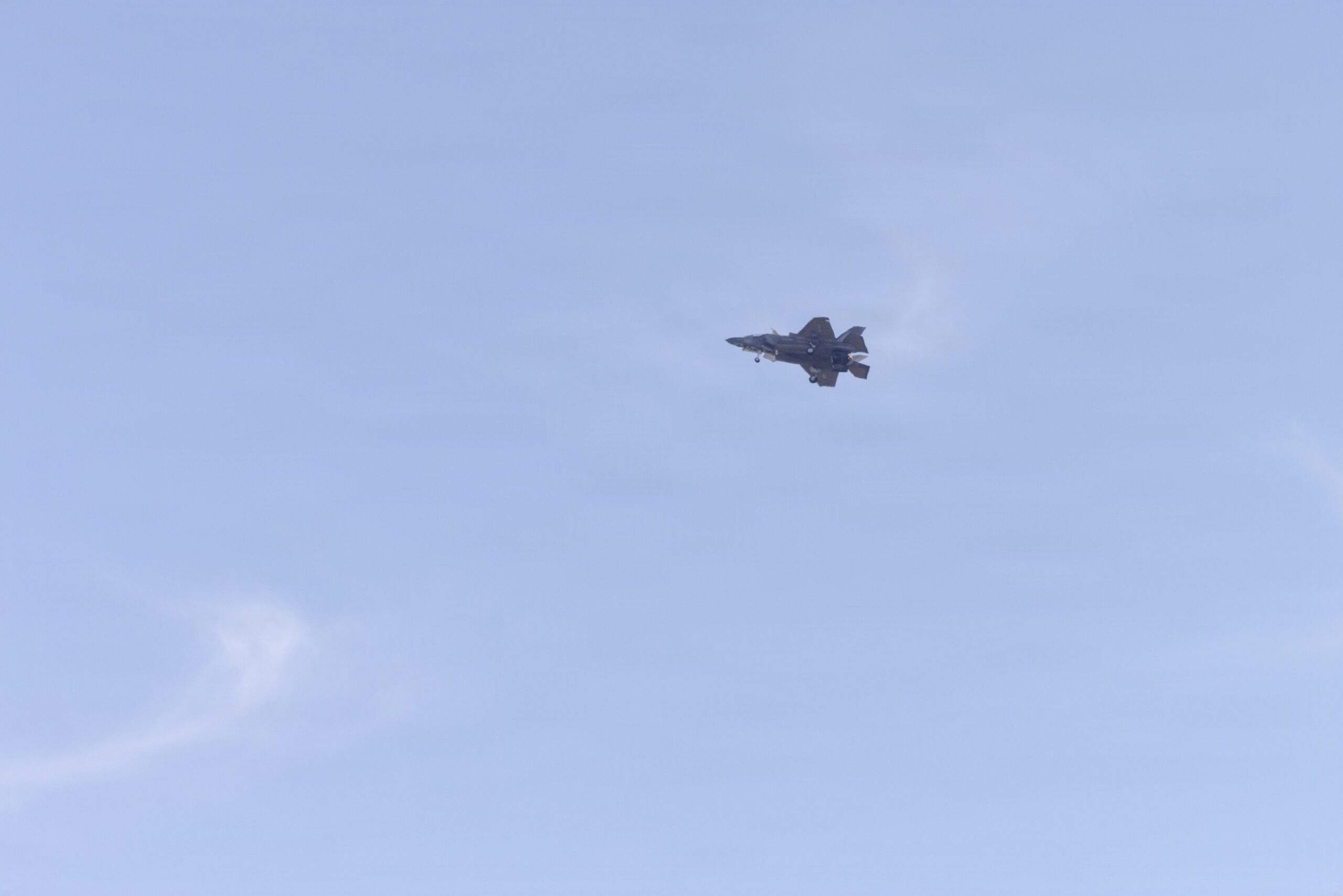
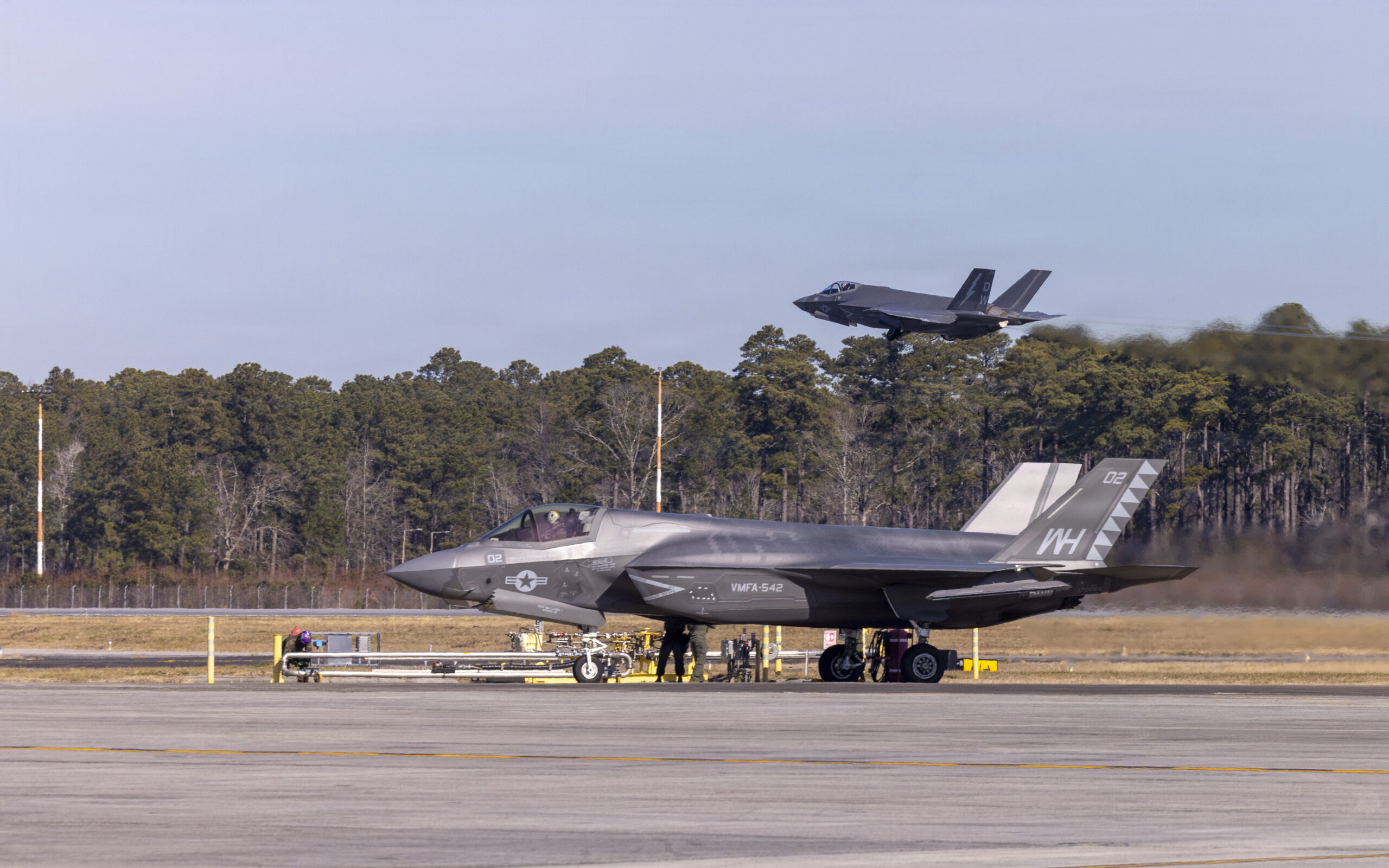
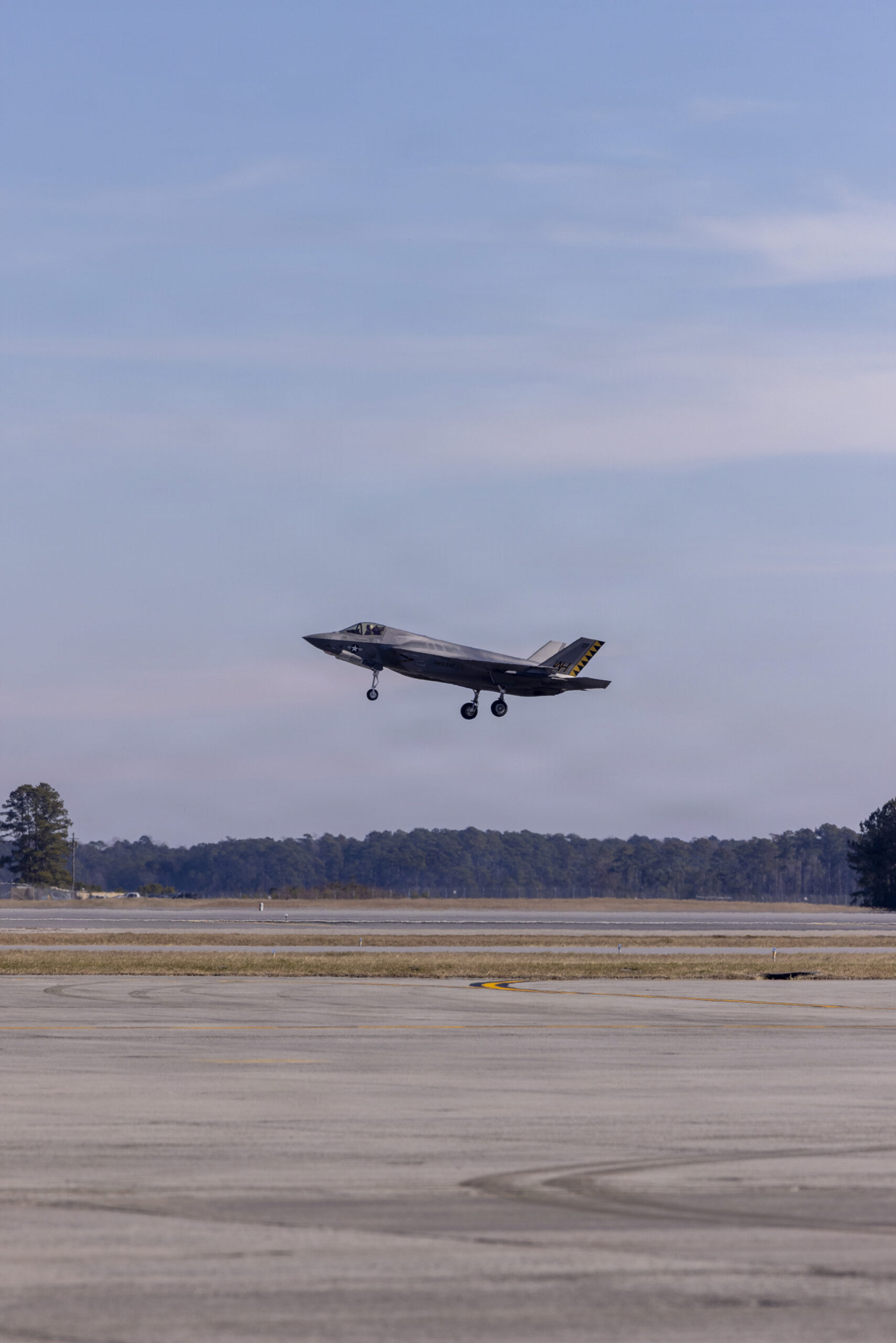
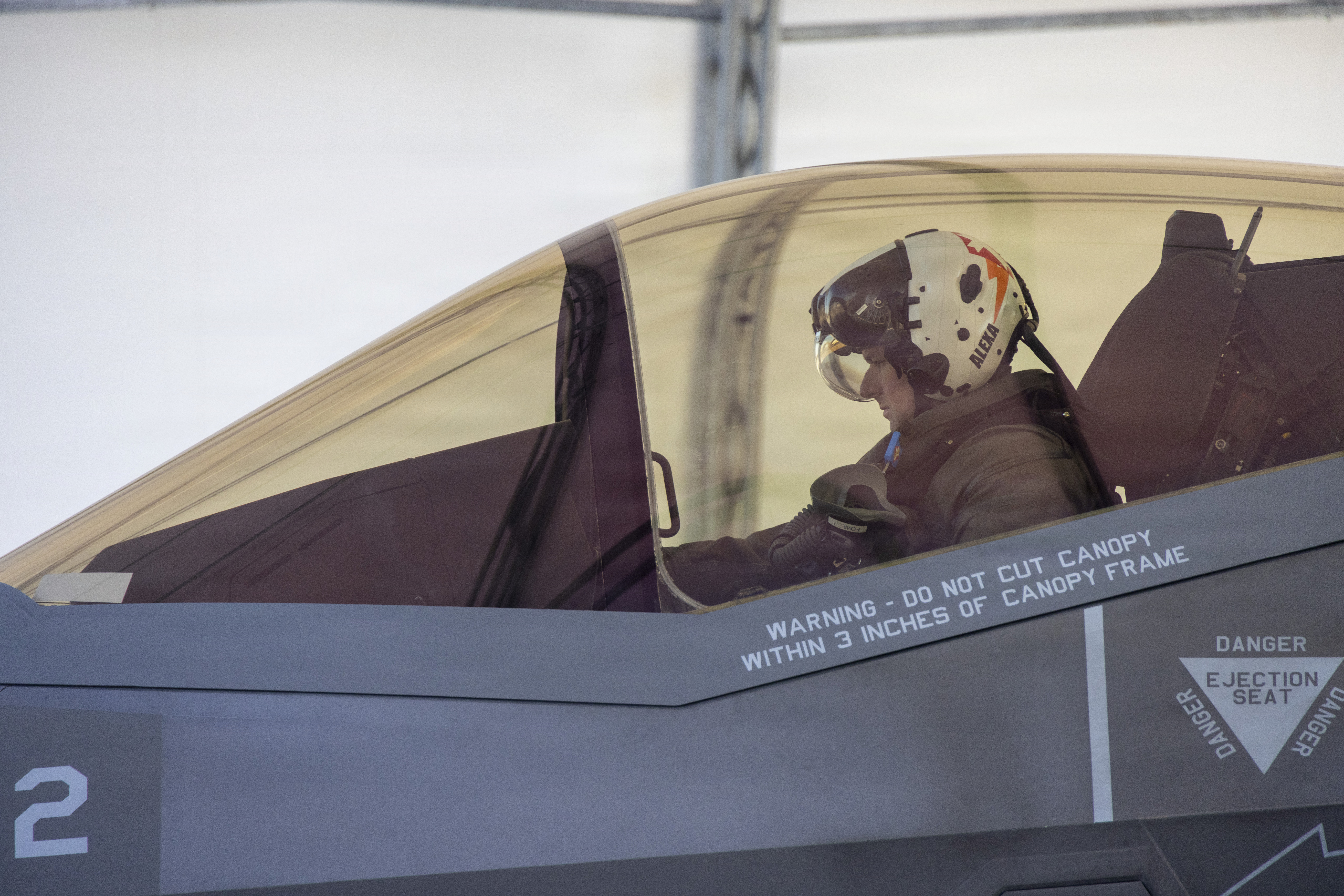
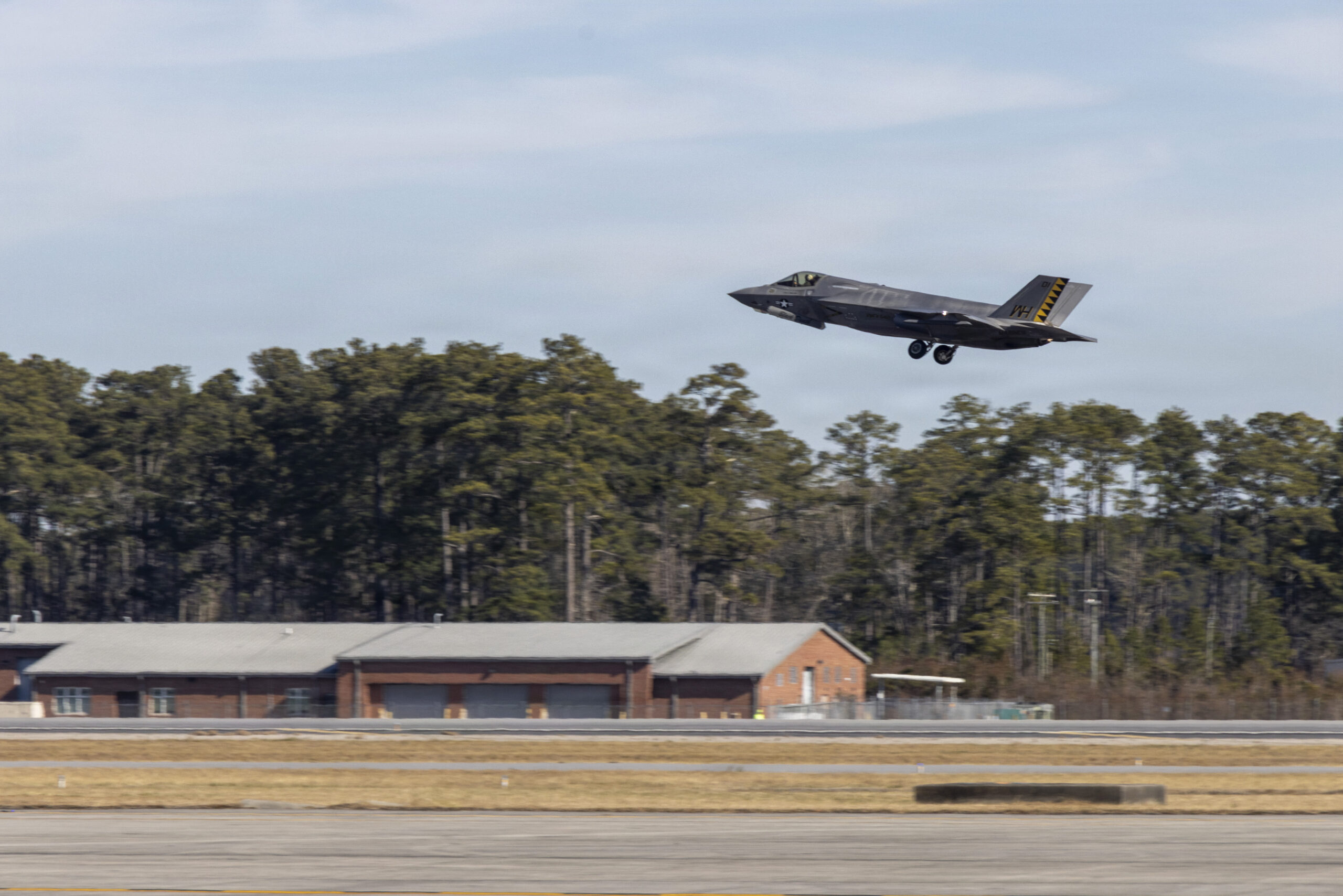
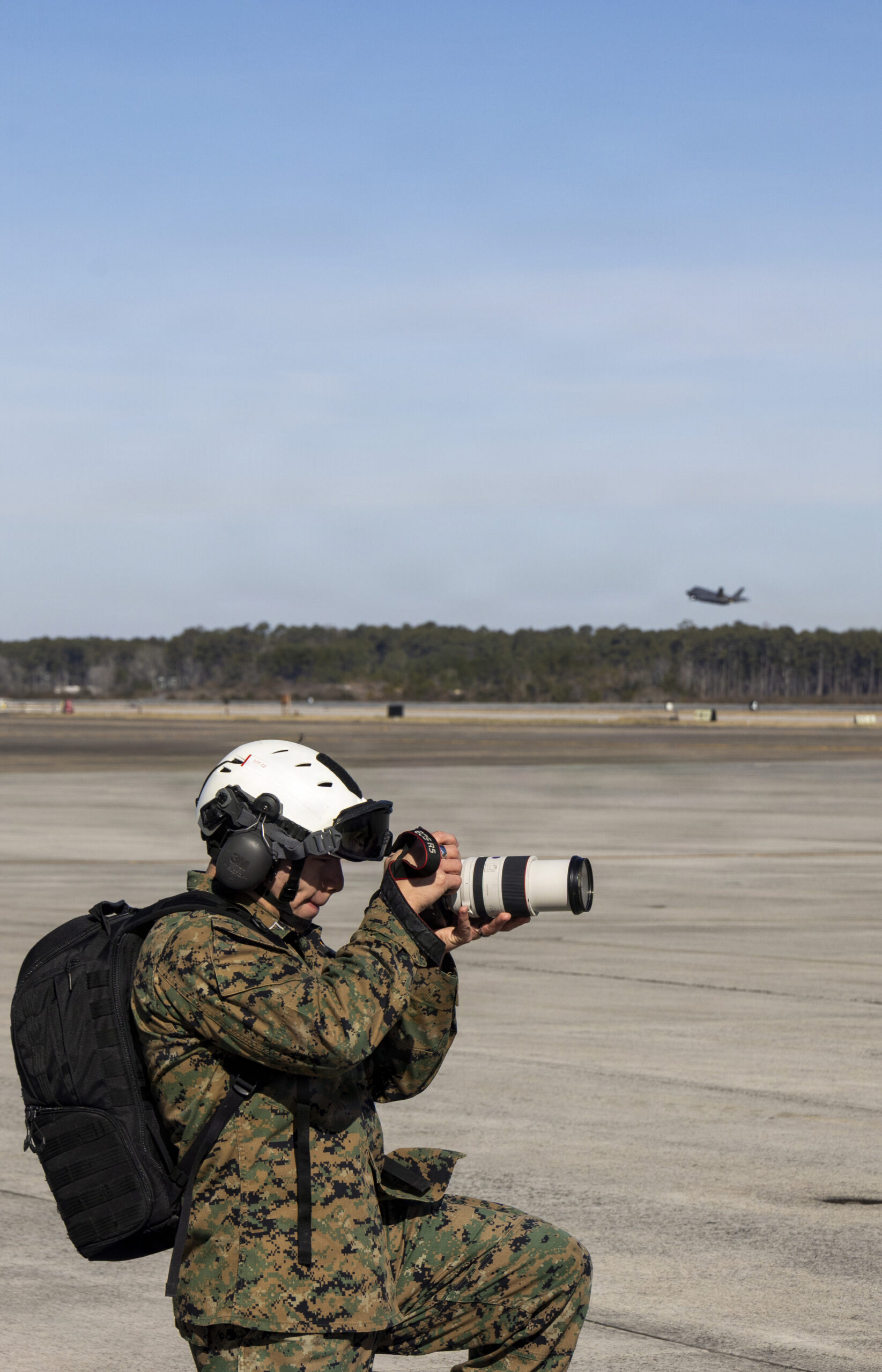
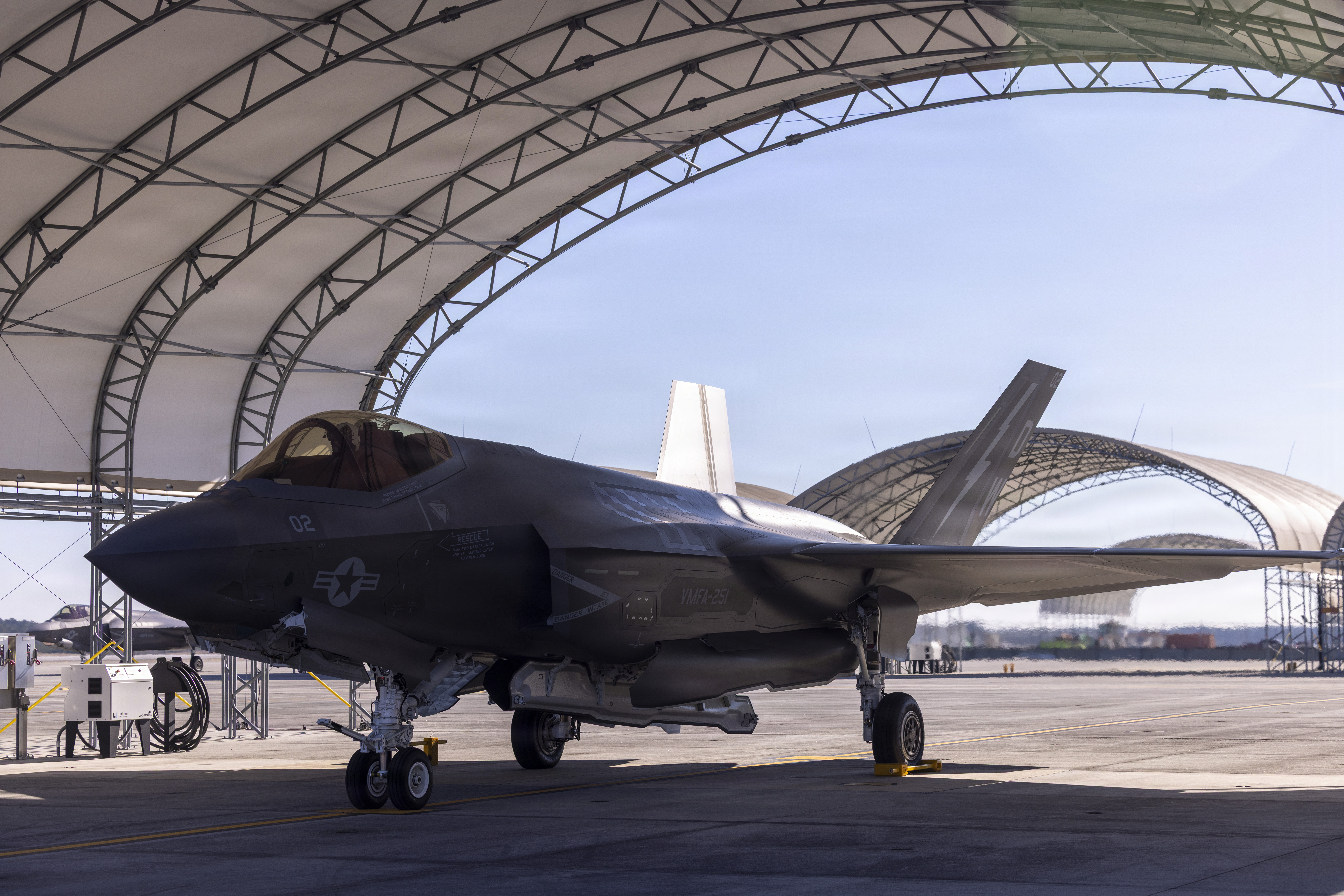
Atlantic Lightning 26-1

U.S. Marines with Marine Fighter Attack Squadron (VMFA) 542 and VMFA-251, Marine Aircraft Group 14, 2nd Marine Aircraft Wing, conduct maritime strike training during Atlantic Lightning 26-1 at Marine Corps Air Station Cherry Point, North Carolina, Jan. 29, 2026.

Atlantic Lightning 26-1 is a tactical aircraft exercise focused on Marine Air-Ground Task Force and Joint Force integration and distributed aviation operations, including offensive and defensive counter-air, suppression of enemy air defenses, close air support, and expeditionary operations.

MARINE CORPS AIR STATION CHERRY POINT, NORTH CAROLINA

01.29.2026

Photo by Lance Cpl. Michael Robinson 

2nd Marine Aircraft Wing

AI and International Security: Beyond Weapons to the Foundations of Power
02/16/2026

By Robbin Laird

In February 2026, a team from OpenAI published what may become a landmark document in the emerging field of AI geopolitics.

“AI and International Security: Pathways of Impact and Key Uncertainties” represents something unusual: a major AI laboratory attempting to map how its own technology could reshape the global balance of power.

Drawing on interviews with former Secretaries of Defense, National Security Advisors, and senior officials from national laboratories, the paper makes a striking argument. AI’s most significant effects on international security won’t come from autonomous weapons or cyber operations, but from how it transforms the fundamental structures that underpin national power.

The authors, led by Jason Pruet and including OpenAI’s Chief Economist, frame their analysis through historical precedent. They point not to specific weapons systems but to general-purpose technologies that restructured the foundations of military power. The marine chronometer enabled precise longitude determination, making naval forces effective in waters where they’d previously been helpless. The electric telegraph collapsed command-and-control timelines in the mid-19th century. Even the humble stirrup is credited with reshaping medieval warfare and social institutions by changing how mounted combat worked.

This framing is deliberate and consequential.

Much of the public discourse on AI and security focuses on near-term applications: swarms of autonomous drones, AI-enhanced cyber attacks, or algorithmically-targeted disinformation.

The OpenAI paper doesn’t dismiss these concerns but argues they miss the larger story. As Paul Kennedy showed in The Rise and Fall of the Great Powers, long-run shifts in economic strength and general-purpose technological advantages have historically mattered more than specific weapons for determining who dominates the international system.

The paper’s central provocation is this: private sector spending on AI development may now exceed the military R&D budgets of nearly every country in the world. This means governments will gain access to AI-enabled capabilities, particularly scientific acceleration, generated by an effort comparable in scale to their own defense research enterprises.

But they won’t control the timeline, the priorities, or the fundamental characteristics of these systems.

The analysis organizes AI’s impacts across three dimensions, each associated with critical technical uncertainties that urgently need resolution.

  1. Deterrence and Force Projection: The Compression of Military Science

Consider this scenario from the paper: AI increases the rate of progress in undersea sensing technology by a factor of ten. By 2040, we have capabilities that wouldn’t have been expected until the end of the century. Before the last of twelve planned Columbia-class nuclear submarines has its first deployment, the state of science will have surpassed that at its planned end-of-life by fifty years.

This matters because submarines carrying ballistic missiles provide a crucial leg of nuclear deterrence for several NATO countries and Russia. Their value rests on being difficult to detect. If AI dramatically accelerates progress in quantum magnetometry, signal processing, or materials science relevant to detection, strategic stability could erode faster than acquisition and planning cycles can adapt.

The paper cites ongoing research using generative AI for discovering high-temperature superconductors, materials that could make distributed submarine detection platforms practical. While no breakthrough has been confirmed, the possibility illustrates a broader point: we have no organizational structures, culture, or experience preparing us for a century of military science occurring every decade.

The key uncertainty here isn’t whether AI can improve specific systems. It clearly can. The question is: Will AI markedly accelerate fundamental scientific discovery in areas relevant to military power?

The span of expert opinion ranges from skepticism (AI may even slow scientific progress by encouraging reliance on flawed but predictively accurate theories) to Microsoft’s CEO declaring a goal to “compress the next 250 years of chemistry and materials science progress into the next 25.”

Current security plans were developed assuming historical rates of scientific progress.

Radical uncertainty about whether that assumption still holds makes it impossible to assess whether our defense architecture remains viable.

  1. Resources for National Power: When Computing Becomes Strategic

The paper’s second pathway examines how AI reshapes dependencies on essential resources.

Could computing capacity become as strategically critical as rare earth elements, uranium deposits, or oil reserves once were?

This question has immediate implications for the balance of power.

If meaningful AI capabilities require vastly more computing than currently deployed, only the United States and perhaps China could develop truly transformative systems.

Other nations would face technological stagnation unless international agreements emerged or they would become increasingly dependent on the few countries controlling frontier AI.

Conversely, if the barriers are lower, smaller states or even non-state actors might access capabilities that currently require superpower-scale resources.

The distribution of power would flatten in unpredictable ways.

The paper frames this through a game-theoretic lens: asymmetries in AI computing capacity create incentives for preemption. Imagine two nations, one leading in AI development. If AI provides gradual benefits (“Case 1” in the paper), the nation that’s behind has little reason to attack. They lose more from conflict than from falling somewhat behind.

But if AI provides abrupt, decisive advantages (“Case 2”), the weaker side faces a Cuban Missile Crisis-style dilemma: strike before the window closes, or accept permanent inferiority.

According to economic modeling cited in the paper, if AGI requires only 2,500 times the computing used for today’s largest training runs, it could double global productivity in three years. That’s not a distant possibility. It’s potentially within current investment trajectories.

Yet we have no established metrics for tracking “National Inference Compute” or “Compute Mobilization Latency” comparable to how we monitor nuclear stockpiles or military readiness.

  1. Understanding the Environment: The Erosion of Secrecy

The third pathway may be the most unsettling: AI’s potential to fundamentally undermine secrecy, the bedrock of military and diplomatic planning.

The paper distinguishes between “social secrets” (deliberations, decisions, plans) and “technological secrets” (physical principles, algorithms, designs that can be discovered independently).

AI threatens both.

Statistical methods already allow remarkably strong inferences about human behavior from seemingly innocuous data. In an extreme limit, AI might reconstruct what was said in closed-door cabinet meetings without any spies or leaks, simply by analyzing patterns in subsequent actions, public statements, and observable outcomes.

Technological secrets face different threats. The paper notes that Britain’s GCHQ independently discovered public key cryptography years before it appeared in open literature but kept it classified. Things like cryptographic algorithms or physics applications in weapons can be discovered by anyone smart enough—or any AI capable enough. If AI systems can make such discoveries autonomously within datacenters, protected information could be exposed without any theft of blueprints or human espionage.

The historical parallel is sobering.

Shor’s algorithm for breaking encryption via quantum computing was published in 1994. It took until 2015 or twenty years for NIST to begin developing post-quantum cryptography standards. Even then, the concern about “harvest now, decrypt later” attacks meant encrypted data captured today might be vulnerable to future quantum computers.

But organizational change takes time.

Even with trusted quantum-resistant algorithms available, it would require years for institutions to fully transition.

With AI advancing at current pace, we may not have twenty years between threat identification and deployment of countermeasures.

The paper emphasizes an urgent need for large-scale studies quantifying frontier AI models’ impact on both scientific discovery and the ability to infer protected information.

What emerges from these three pathways is a portrait of profound technical uncertainty. The paper documents interviews with senior national security leaders struggling with this reality. As Lieutenant General Jack Shanahan (ret.) put it: “The problem is massive uncertainty. Decision-makers are torn between claims that ‘this will end the human race’ and ‘this can’t add 4 digit numbers’.”

This uncertainty creates what the authors call “false stability” or a period where inaction seems prudent because the future is unclear.

If we don’t know whether AI will accelerate science, provide decisive advantages in strategic planning, or undermine secrecy, costly adaptation measures seem premature. But if these capabilities arrive suddenly, the result is reactive crisis decision-making under extreme time pressure, exactly the conditions most likely to produce catastrophic miscalculation.

The paper draws an explicit parallel to the early Cold War, when a spectrum of powerful new technologies (nuclear weapons, ballistic missiles, satellite reconnaissance) required decades of work, new disciplines, and extensive collaboration between political leadership and technical experts to build stable deterrence frameworks.

Even with that effort, there were harrowing close calls and considerable luck. Finding ways to navigate the AI transition, the authors argue, will require comparable large-scale coordination but the current institutional landscape is radically unprepared.

Former Secretary of the Navy Richard Danzig captured the adoption challenge: “The impact of AI on the military is not predominantly dependent on the technology, but on the assimilation process. If I put a bounteous feast in front of you but your jaw is wired shut, you can’t eat.”

The paper’s core contribution is identifying specific technical uncertainties whose resolution would most improve our ability to navigate the AI transition.

These aren’t predictions but rather a framework for interpreting new information as it emerges:

  • Scientific acceleration: Systematic measurements of how frontier reasoning models actually affect R&D productivity across domains relevant to military power.
  • Compute requirements: Better understanding of the relationship between computing resources and meaningful capability thresholds.
  • Diffusion dynamics: How quickly advantages in AI erode through algorithmic improvements, espionage, or independent development.
  • Inference from data: Whether AI can reconstruct secrets from unclassified information or publicly observable patterns.
  • Planning depth: At what scale AI-supported strategic planning crosses thresholds that change operational feasibility.

The authors emphasize that AI laboratories bear responsibility for providing this technical foundation, not because they’re responsible for international security, but because political and military leaders cannot make informed decisions without understanding what AI can and cannot do.

Several themes emerge that should concern anyone thinking about major power competition in the AI era:

  • Compression of timelines: If AI accelerates R&D by even a factor of five, current acquisition programs will be obsolete before completion. The Columbia-class submarines mentioned earlier are planned to operate until the 2080s. If the science of detection advances fifty years faster than expected, deterrence assumptions collapse.
  • Asymmetric transparency: AI may create a world where authoritarian states gain advantages in surveillance and control while democratic institutions struggle with legal constraints, civil liberties concerns, and the need for public debate. Yet those constraints may ultimately produce more robust systems. The paper doesn’t resolve this tension but flags it as critical.
  • Strategic surprise without warning: If major breakthroughs happen inside datacenters with minimal observable signatures, traditional intelligence indicators fail. There may be no “Sputnik moment” or no visible launch that alerts competitors. The first sign could be deployment.
  • The alliance problem: If only a few nations can develop frontier AI, alliance structures may strain. Why maintain expensive defense commitments to countries that lack the technological base to contribute meaningfully? Conversely, AI-enabled prosperity might strengthen alliances by increasing the stakes in preserving stability.

The OpenAI paper arrives at a curious moment. By the authors’ own account, we’re past the point where we can dismiss AI’s impact on international security as speculative. Current systems already demonstrate capabilities relevant to the pathways they describe.

Yet we lack coherent programs, organizational structures, or even shared vocabulary for addressing these challenges at scale.

The span between credible expert estimates from “normal technology” to “superintelligence creates decisive advantage” is so wide as to preclude coherent planning.

This is the paper’s central warning: we cannot afford to wait for certainty.

The sooner critical technical uncertainties are resolved, the more time exists for measures to preserve stability.

Whether through arms control frameworks adapted for AI, transparency regimes for compute capacity, international agreements on limits to certain capabilities, or entirely new institutional arrangements, managing the transition will require what the paper calls “a coordinated, large-scale effort.”

That effort doesn’t yet exist.

What does exist is a growing recognition that AI represents not just another technology to integrate into existing security frameworks, but a force that may require rethinking those frameworks entirely.

The marine chronometer didn’t just improve navigation. It changed which nations could project power and where.

The question facing us now is whether AI will prove similarly transformative, and whether we can build the understanding needed to navigate through a world of chaos and survive and thrive in the anarchy of the moment.

I will focus on this aspect of the challenge in my follow-on article to this one to be published later this week.

The Dynamics of Change for Europe in the Evolving Global System

02/13/2026

Recently, Lt General (Retired) Preziosa published two essays in European Affairs in Italian which we are including in translation after this overview of his analysis of Europe’s position in the evolving global system.

His argument rests on a fundamental proposition: the Russian-Ukrainian war represents not a regional conflict but a critical node in a systemic transformation of the Euro-Asian order. His framework reveals how Europe faces not military defeat but strategic marginalization unless it transforms economic power into coherent geopolitical purpose.

The war’s significance extends far beyond Kyiv because it operates within what Prezioa identifies as an “asymmetrical triangular system.” The United States retains military and technological dominance, China commands economic mass with global ambitions, and Russia maintains nuclear capabilities despite limited economic foundations.

These three powers are interconnected through industrial chains, technological supply routes, critical raw materials, and missile postures that link the Baltic, Black Sea, and Indo-Pacific into a unified strategic space.

When Washington redirects attention toward the Pacific, European security balances shift.

When Europe fails to compensate with autonomous capacity, deterrence becomes asymmetrical.

Preziosa argues that Russia cannot defeat the entire West militarily, yet it can steadily increase European costs over time. China, meanwhile, benefits from Western preoccupation and Russian resilience without direct intervention, avoiding unilateral strengthening of American deterrent credibility.

This dynamic suggests that Ukraine’s final outcome may depend less on negotiations in Kyiv or Brussels than on implicit adjustments between Washington and Beijing regarding global competition management. Should the conflict threaten world economic or financial stability excessively, pressure for a structured freeze would intensify. driven not by European will alone but by systemic calculations among major powers.

For Europe, this presents an existential question of agency.

If the Euro-Asian order gets redefined primarily through U.S.-China competition, Europe risks becoming an object of balance rather than a subject shaping it. A Euro-Asian compromise might freeze the conflict without resolving root causes, subordinate European security to extra-European priorities, and reduce Ukraine to a variable in global stabilization.

The real choice facing Europe, Prezioa contends, is between constructing balance as an active participant or accepting balance defined elsewhere.

This challenge emerges from a historical miscalculation.

After 1989, Europe interpreted systemic imbalance as permanent suspension of geopolitical competition. American superiority made power dynamics less visible while economic integration advanced faster than strategic integration.

Security was outsourced while markets became the Union’s organizing principle.

Globalization and digital transformation expanded European societies’ awareness of international crises, yet this broadened perception failed to generate strategic capacity.

The gap between accelerated public debate and long-term decision-making contributed to internal fragmentation.

Contemporary international order has become what Preziosa calls “densified”, more compressed through energy, technological, financial, and logistical interdependencies. Localized conflicts produce systemic effects across supply chains, energy markets, and deterrence credibility.

Within this densified system, Europe’s stance remains uneven not because of irreconcilable value differences but due to divergent threat hierarchies. Poland prioritizes deterrence against Russia through geographical proximity and historical memory; Germany favors systemic stability through industrial structure and political tradition.

The structural problem lies not in this plurality, natural among sovereign states, but in insufficient cognitive convergence to translate economic weight into strategic power.

Preziosa sees the Ukrainian war as a potential evolutionary threshold where external pressure could transform into institutional consolidation, similar to how European integration historically advanced through systemic crises.

The appropriate response requires neither NATO separation nor consensus-free institutional expansion, but rather transformation of economic weight into strategic coherence through industrial resilience, integrated critical supply chains, credible deterrence capabilities, and aligned technology-security policies.

Ultimately, Preziosa emphasizes that European geopolitical position remains undefined, determined by capacity to integrate perception, power, and political purpose.

Europe cannot merely adapt to triangular dynamics among the United States, China, and Russia.

It must help shape the systemic incentives determining its stability.

Its relevance depends on transforming economic interdependence into organized power and demonstrating maturity through institutional consistency, not claiming centrality by historical tradition.

The Russian Ukrainian War and the Global Strategic System

The Russian Ukrainian war cannot be interpreted as a conflict confined to the European space, but as a critical node in a broader strategic system. The Baltic, Black Sea, and Indo-Pacific are not separate theaters, but rather interconnected compartments of a competition that concerns access, power projection, control of logistics corridors, and credibility of deterrence. What happens in Kyiv does not stay in Kyiv: it affects the global allocation of resources, the missile system, and the strategic priorities of the great powers.

The Baltic Sea is where the strength of Article 5 and the depth of European defense are measured; the Black Sea is where the territorial and maritime divide between Russia and the West is concentrated, with implications for energy and control of shipping routes; the Indo-Pacific is where the systemic competition between the United States and China is played out, directly affecting America’s ability to sustain its long-term commitment to Europe. These areas are linked by industrial and technological chains, the circulation of critical raw materials, competition in semiconductors, medium- and long-range missile postures and, above all, the global distribution of US strategic priorities. If Washington focuses its attention and capabilities on the Pacific, the European balance shifts; if Europe does not compensate with greater autonomy and industrial capacity, deterrence becomes asymmetrical. The war in Ukraine is therefore also a function of the global distribution of American priorities.

The international order is neither fully bipolar nor multipolar in the classical sense. It is an asymmetrical triangular system: the United States remains the dominant military and technological power; China is the main systemic competitor, with economic mass and global ambition; Russia is a nuclear power with significant military capabilities, but with a more limited economic base that is heavily concentrated in the energy and military sectors. In this scenario, Russia cannot realistically prevail against the entire West, but it can increase European costs over time; the United States cannot ignore European security, but considers the Indo-Pacific a strategic priority; China does not intervene directly in the conflict, but benefits from a busy West and a Russia that has not collapsed, allowing it to avoid a unilateral strengthening of American deterrent credibility.

It follows that the final outcome of the Ukrainian war may depend less on the negotiating table in Kyiv or Brussels and more on an implicit adjustment between Washington and Beijing regarding the management of global competition. If the European conflict were to become excessively destabilizing for the world economy or international financial stability, pressure for a structured freeze would increase—not only because of European will, but also because of the systemic calculations of the major powers.

For Europe, the issue is existential. If the Euro-Asian order is redefined primarily in the context of US-China competition, the risk is not direct military defeat, but strategic marginalization. A Euro-Asian compromise could, in principle, freeze the conflict without resolving its root causes, subordinate European security to extra-European priorities, and transform Ukraine into a variable of global stabilization. The real alternative for Europe is therefore not between war and peace, but between being a subject in the construction of balance or an object of a balance defined elsewhere.

This implies a structural choice: developing autonomous deterrence capabilities, industrial resilience, integration of strategic value chains, and internal political cohesion. Not to emancipate itself from NATO, but to make Europe an indispensable player in the final architecture. If the Russian-Ukrainian war is the first chapter in a redefinition of the Euro-Asian order, its conclusion will not only be a territorial agreement, but a new set of incentives among the great powers. In this context, European stability will depend not only on its relationship with Russia, but also on Europe’s position in the global strategic triangle and its ability to influence the overall configuration of systemic incentives.

Published in European Affairs in Italian on February 2, 2026

https://www.europeanaffairs.it/blog/2026/02/06/lordine-euro-asiatico-come-sistema-integrato/

From Economic Power to Strategic Coherence: Europe’s Challenge in the Global Triangular System

Europe today does not face an immediate risk of military defeat. There are no conditions for a direct confrontation that would call into question its territorial integrity. The risk is more subtle and structural, namely, failing to define its geopolitical place in the Euro-Asian order that is currently being redefined.

The war in Ukraine is not an isolated regional conflict. It is part of a systemic competition linking the Baltic, Black Sea, and Indo-Pacific regions, intertwining security, industrial supply chains, missile postures, technology, and the allocation of US strategic priorities. The central question is not only how the conflict will evolve, but what configuration of incentives will emerge from its outcome and what role Europe will be able to play in that configuration.

After 1989, Europe interpreted a systemic imbalance as a suspension of geopolitical competition. American superiority made the dynamics of power less visible, but no less real. Economic integration advanced more rapidly than strategic integration. Security was largely outsourced, while the market was consolidated as the organizing principle of the Union.

At the same time, globalization and digital transformation have profoundly changed the cognitive environment. European societies are now better informed, more connected, and more sensitive to international crises. However, this broadening of perception has not translated into greater strategic capacity. The gap between accelerated public debate and long-term political decision-making has contributed to internal fragmentation and a certain difficulty in sustaining coherent policies over time.

The contemporary international order is not ‘smaller’, but more densely packed. Energy, technological, financial, and logistical interdependencies have compressed the strategic distance between actors. In this context, localized conflicts produce systemic effects. The war in Ukraine is a prime example: a territorial conflict with global repercussions on supply chains, energy markets, financial stability, and the credibility of Western deterrence.

Within this densified system, Europe’s stance remains uneven. The European Union has significant economic clout, but has not yet fully harmonized its perception of threats. Poland, due to its geographical position and historical memory, prioritizes deterrence against Russia. Germany, due to its industrial structure and political-strategic tradition, has long favored systemic stability and economic interdependence. These are different risk hierarchies, not irreconcilable differences in values.

The structural problem does not lie in plurality, which is natural in a union of sovereign states, but in the absence of sufficient cognitive convergence. Without a shared assessment of threats and the costs of inaction, economic power does not automatically translate into strategic power. Deterrence requires capability, but also cohesion of intent.

The war in Ukraine may therefore represent an evolutionary threshold. Historically, European integration has made progress in response to systemic crises. The current phase offers a similar opportunity: to transform external pressure and perceived vulnerability into institutional and strategic consolidation.

This dynamic is part of a broader picture of competition between the United States and China. Washington increasingly identifies the Indo-Pacific as a long-term strategic priority. Beijing observes the European theater in relation to the global distribution of resources, the configuration of technological supply chains, and the credibility of American security commitments.

If the United States were to progressively reallocate capabilities to the Pacific, Europe would be called upon to assume greater responsibility for its own security balance. If China continued to strengthen its economic and technological mass without assuming direct military costs in Europe, the global balance would gradually shift. In either case, European inaction would constitute an implicit strategic choice.

The appropriate response is neither separation from NATO nor institutional expansion without political consensus. It requires the transformation of European economic weight into strategic coherence. This implies strengthening industrial resilience, protecting and integrating critical supply chains, developing credible deterrence capabilities, and aligning technology policies with security objectives.

The dimension of political leadership is fundamental. In a densified system, leadership is not measured by reactive crisis management, but by the ability to maintain strategic direction under pressure. It requires consistency, clarity of objectives, and a willingness to bear short-term costs to preserve long-term stability.

Europe’s geopolitical position is not predetermined. It will be defined by its ability to integrate perception, power, and political purpose. The continent that experienced the extreme consequences of the absence of strategic balance in the 20th century carries with it a historical responsibility: not to claim centrality by right of tradition, but to demonstrate maturity through institutional consistency and decision-making capacity.

In a denser global order characterized by triangular dynamics between the United States, China, and Russia, Europe cannot limit itself to adapting. It must help shape the systemic incentives that will determine its future stability. Its relevance will depend on its ability to transform economic interdependence into organized power and credible leadership.

Published in European Affairs in Italian on February 9, 2026

https://www.europeanaffairs.it/blog/2026/02/09/leuropa-nellordine-globale-densificato-dalla-forza-economica-alla-potenza-strategica/

Protecting undersea Infrastructure in the Baltic Sea.

Off the coast of Gotland, Sweden, scientists from the NATO Centre for Maritime Research and Experimentation (CMRE) are deploying cutting-edge acoustic sensors to see if they might help NATO Allies detect and respond to sabotage of underwater pipelines and data cables. One key trial involves using ballast anchors to replicate the acoustic signature of an anchor drop – a method suspected in recent incidents of seabed interference. This research supports the development of tools to detect, track, and assess such events in real time.

The month-long mission also marks a milestone as NATO operates in newly accessible waters alongside its newest Allies, Sweden and Finland. The Baltic’s complex seabed and dense infrastructure provide an ideal test environment.

NRV Alliance, based in La Spezia, Italy, is NATO’s floating laboratory, operated by CMRE scientists and crewed by the Italian Navy.

SWEDEN

06.21.2025

Natochannel

The Evolution of Airpower: The 2025 Books

02/12/2026

By Robbin Laird

In 2025, four significant books emerged that collectively chronicle the transformation of airpower from its industrial-age roots to its current form as a networked, information-centric enterprise. These volumes, Training for The High-End Fight: The Paradigm Shift in Combat Pilot Training, Remembering the B-17 and Its Role in World War II, Italy and the F-35, and the second edition of My Fifth Generation Journey, together provide a comprehensive narrative arc that spans from the strategic bombing campaigns of World War II to the software-defined combat systems shaping contemporary warfare. What makes this collection particularly valuable is not simply its chronological sweep, but its demonstration of how the fundamental nature of airpower has evolved from platform-centric operations to integrated, coalition-enabled kill webs.

From Platform to Network: The Central Transformation

The most striking theme across these four books is the transition from viewing aircraft as individual combat platforms to understanding them as nodes within larger networks. This transformation represents nothing less than a revolution in how we conceive of airpower itself. The B-17 Flying Fortress, documented in Remembering the B-17, exemplified the industrial-age approach to air warfare. Success depended on building enough aircraft, training enough crews, and accepting devastating losses as the price of strategic effect. The bomber formations over Europe operated in coordinated patterns, but each aircraft remained fundamentally autonomous once airborne, its crew making decisions based on limited information and visual contact with the enemy.

Training for the High-End Fight captures the endpoint of this transformation, describing a combat environment where fifth-generation aircraft like the F-35 function as “information supercomputers” rather than merely improved fighters. The book’s central insight is that modern pilots must be “intellectual athletes” and “digital connectors” capable of managing vast flows of real-time data across air, land, sea, space, and cyber domains. This is not simply an upgrade in capability; it represents a categorical shift in what airpower means. Where the B-17 crew focused on navigation, bomb delivery, and defensive gunnery, today’s F-35 pilot operates as a collaborative manager of network power, processing information from sensors distributed across the battlespace and coordinating strikes executed by platforms they may never see.

The book on Italy’s F-35 program reinforces this networked perspective by demonstrating how a mid-tier power leveraged the Lightning II to transform itself into a global force multiplier. Italy’s approach, building the Cameri facility as a strategic nerve center for F-35 production and sustainment, shows understanding that influence in modern airpower derives not from platform count but from position within the international defense network. By making itself indispensable to F-35 operations across Europe and beyond, Italy achieved strategic weight disproportionate to its traditional military ranking.

The Cognitive Revolution in Pilot Training

Training for the High-End Fight makes perhaps its most important contribution in documenting what it terms the “cognitive revolution” in pilot preparation. The book argues forcefully that yesterday’s training paradigms are not merely outdated but actively detrimental to developing the mental agility required for modern combat. Traditional training emphasized mastery of aircraft systems and tactical procedures, essentially preparing pilots to execute known solutions to anticipated problems. The high-end fight demands something entirely different: the ability to thrive amid ambiguity, rapidly shifting circumstances, and scenarios requiring creative, on-the-fly problem solving.

This cognitive shift finds its practical expression in the “live-virtual-constructive” training ecosystem pioneered at facilities like Italy’s International Flight Training School. By blurring the boundaries between actual flight and advanced simulation, these systems expose trainees to the intensity and complexity of true combat—complete with electronic warfare, joint operations, and adaptive adversaries—without the expense and risk of live exercises. More importantly, instructors can inject constant friction, forcing pilots to develop adaptive thinking rather than procedural response.

The second edition of My Fifth Generation Journey reinforces this point through its documentation of how F-35 pilots discovered that the aircraft demanded fundamentally different cognitive approaches than legacy fighters. As one section notes, the F-35 represents a “software-upgradeable aircraft” designed for continuous evolution rather than periodic major upgrades. This means pilots must develop not just proficiency with current systems, but the intellectual flexibility to rapidly assimilate new capabilities as they emerge through software updates. The traditional model of mastering a static weapons system has given way to permanent learning and adaptation.

Kill Chains to Kill Webs: The Operational Paradigm

The evolution from “kill chains” to “kill webs” provides the operational framework that unites these books. The kill chain concept — identify, fix, track, target, engage, assess — emerged from the Cold War emphasis on linear processes and centralized control. It worked well enough when the pace of conflict allowed sequential decision-making and adversaries lacked sophisticated sensors and weapons. Training for the High-End Fight documents why this approach has become obsolete. Modern adversaries operate with machine-speed sensor and weapons systems. Single points of failure, inherent in linear kill chains, have become fatal liabilities.

Kill webs represent the alternative: flexible, distributed networks where every sensor, shooter, and platform plays overlapping roles. No single node’s failure breaks the system. Information flows omni-directionally, allowing the fastest decision-maker to coordinate strikes regardless of formal command hierarchy. This operational approach demands the cognitive agility and networked thinking that the training revolution seeks to develop.

Italy’s F-35 program demonstrates kill web concepts in practice through what Lt. General Pasquale Preziosa termed the “double transition”, simultaneously modernizing legacy platforms like the Eurofighter Typhoon while pioneering F-35 integration. This creates a fully networked air force where KC-767A tankers, E-550 CAEW command aircraft, Typhoons, and Lightning IIs form a coherent system rather than a collection of platforms. Each element extends the others’ capabilities through shared situational awareness and distributed decision-making.

The Historical Mirror: Lessons from the B-17

Remembering the B-17 and Its Role in World War II might seem the outlier in this collection, a historical work among studies of contemporary transformation. Yet it serves crucial purposes in the overall narrative. First, it provides the baseline against which we measure transformation. The industrial-age airpower represented by the Flying Fortress, mass production, accepted attrition, linear tactics, stands in sharp contrast to today’s network-centric, information-dominant approach. Understanding what has changed requires knowing where we started.

Second, the B-17 story illuminates timeless challenges in military aviation. The book’s examination of procurement decisions, crew training imperatives, and the balance between cost and capability resonates directly with current defense debates. How do you build the right aircraft? How do you train crews fast enough? How do you maintain readiness while managing resources? These questions haunted Pentagon planners in 1943 and remain central to defense strategy today. The context changes, but the fundamental tensions persist.

Third, the book’s focus on Franco-American bonds forged through shared sacrifice during World War II provides essential context for understanding coalition operations today. The modern emphasis on coalition readiness documented in Training for the High-End Fight, where allies train together from the outset, forging common mental frameworks and tactical habits, has deep roots in relationships built during earlier conflicts. The ceremonies on Noirmoutier Island honoring B-17 crews seventy years after their crash demonstrate how historical memory sustains alliance relationships that underpin contemporary coalition airpower.

Italy as Case Study: Strategic Transformation Through Airpower

Italy and the F-35 serves as the detailed case study demonstrating how a nation can leverage airpower transformation to elevate its strategic position. Italy’s approach offers several instructive elements.

First, the Cameri facility represents strategic thinking about manufacturing as power projection. By positioning itself as the European hub for F-35 production and sustainment, Italy ensured its voice carries weight in program decisions affecting dozens of partner nations. This is influence through indispensability rather than traditional military mass.

Second, the integration of F-35B fighters aboard the carrier Cavour demonstrates how new capabilities enable new strategic options. Italy’s expeditionary strike capability extends its influence into contested waters worldwide, transforming its role from regional Mediterranean player to global naval power. The book documents how Italian carrier strike groups have deployed to the Pacific, participating in exercises that demonstrate interoperability with partners from Japan to Australia.

Third, Italy’s “double transition” strategy shows sophisticated understanding of the relationship between legacy and advanced systems. Rather than viewing Typhoon modernization and F-35 integration as competing priorities, Italy treats them as complementary elements of a networked force. The Typhoon provides sensor coverage and weapons capacity that extends F-35 effectiveness, while the Lightning II’s information dominance amplifies legacy platform capabilities. This integrated approach creates combat power exceeding the sum of individual platforms.

The Continuous Evolution Model

My Fifth Generation Journey introduces a concept with profound implications: the software-defined aircraft designed for continuous evolution. Traditional fighters received periodic major upgrades, perhaps three or four major capability blocks over a thirty-year service life. The F-35 represents something fundamentally different: a platform that “never will be truly finished.” Each software block delivers combat-ready additive capabilities without the extensive redesign and testing required for legacy upgrades.

This model transforms the relationship between operators and developers. Instead of defining requirements, developing solutions, and fielding static systems, the process becomes iterative and responsive. Frontline operators identify capability gaps; software developers create solutions; new capabilities flow to the fleet within months rather than years. Training for the High-End Fight documents how training programs have adopted similar continuous adaptation models, updating curricula based on operational lessons rather than waiting for scheduled reviews.

The continuous evolution model also creates new dependencies and vulnerabilities. Software-defined systems require robust cybersecurity, resilient data links, and stable international cooperation to maintain upgrade pipelines. These requirements explain the emphasis throughout these books on coalition integration. The F-35 global enterprise depends on partner nations maintaining compatible systems, training standards, and security protocols. National decisions to modify or restrict systems can disrupt the collective capability.

Man-Machine Teaming: The Next Frontier

Several of these books point toward the next transformation: the evolution from piloted aircraft to man-machine teams where manned fighters command autonomous systems. My Fifth Generation Journey explicitly discusses plans for F-35s to serve as command nodes for “man-robotic wolf packs,” directing swarms of sensors, weapons, and support platforms. This concept bridges current fifth-generation operations and emerging sixth-generation approaches.

Training for the High-End Fight implicitly prepares for this future through its emphasis on cognitive development and decision-making under uncertainty. Managing autonomous systems in contested environments will demand the same mental agility, rapid assessment, and adaptive thinking required for modern kill web operations. The pilot’s role continues shifting from direct platform control toward information management and decision coordination, a trajectory that could eventually lead to manned aircraft becoming mobile command centers for largely autonomous forces.

This evolution raises questions these books acknowledge but do not fully resolve. What cognitive skills must pilots develop to effectively command autonomous wingmen? How do training systems prepare humans for delegation of lethal decision-making to machines? What new vulnerabilities emerge when combat effectiveness depends on maintaining network connections between manned controllers and unmanned systems? The 2025 books document transformation in progress, not transformation complete.

Coalition as Imperative, Not Option

Perhaps the most consistent theme across these four volumes is the centrality of coalition operations to modern airpower. This represents a fundamental shift from earlier eras when coalition warfare was viewed as a complicating factor, something that reduced efficiency through the need to coordinate different systems, procedures, and languages. Today’s approach, documented throughout Training for the High-End Fight and the Italy book, treats coalition integration as the baseline assumption.

Training together from initial qualification rather than attempting interoperability later creates shared mental models and tactical habits. When Italian F-35 pilots deploy to exercises in Australia or Norwegian Lightning IIs train with American squadrons, they operate with pre-established procedures and common understanding developed through joint training. This is not cobbled-together cooperation under crisis but designed-in interoperability from the beginning.

The strategic logic is compelling. No single nation can maintain the full spectrum of capabilities required for high-end conflict across all domains. By specializing and integrating, coalition partners achieve collective capability exceeding what any member could field independently. Italy’s Cameri facility, Norway’s Arctic expertise, Australia’s Pacific presence, and American force projection create an integrated system more powerful than its components. This makes coalition not merely politically desirable but operationally necessary.

Conclusion: Adaptation as Strategy

These four books, read together, reveal airpower transformation as an ongoing process rather than a completed revolution. From the B-17’s industrial-age mass to the F-35’s networked information dominance represents not the end of evolution but rather one particularly dramatic phase. The continuous adaptation model documented in My Fifth Generation Journey, the cognitive development emphasized in Training for the High-End Fight, and the coalition integration demonstrated in the Italy book all point toward a future where competitive advantage derives from the speed of adaptation rather than static capability advantages.

The most valuable weapon, as Training for the High-End Fight insists, is not the airframe but the mind in the cockpit and the coalition of nations willing to continuously reinvent how they develop, train, and employ airpower. This demands institutional cultures comfortable with perpetual change, training systems that prioritize cognitive agility over procedural mastery, and international partnerships resilient enough to sustain cooperation through technological and operational turbulence.

The B-17 story reminds us that transformation always builds on accumulated experience and sustained relationships. Italy’s strategic positioning demonstrates that smart thinking can multiply influence beyond raw capability counts. The F-35 global enterprise proves that software-defined, continuously evolving systems can deliver unprecedented operational flexibility when backed by international cooperation. The training revolution shows that cognitive development and mental agility have become as crucial as aircraft performance.

Together, these 2025 books document how airpower has evolved from industrial production of autonomous platforms into a sophisticated international enterprise where networked information dominance, coalition integration, and continuous adaptation define competitive advantage.

The evolution continues, but its trajectory is clear: success belongs to those who adapt fastest, think most clearly under pressure, and build partnerships that multiply individual national capabilities into collective power.

In this transformation, the questions that matter are not about which aircraft to build, but about how to develop the minds that will employ them and the coalitions that will sustain them.

Training for the High-End Fight: The Paradigm Shift for Combat Pilot Training

Remembering the B-17 and its Role in World War II: Noirmoutier Island, France, 2013

My Fifth Generation Journey: Second Edition, 2025

This book contains both an Italian and English text.

Italy and the F-35: Shaping 21st Century Coalition-Enabled Airpower

Next is the Italian translation of Training for the High-End Fight.

Testing Middle Power Theory: Brazil and Australia’s China Relationships in the Emerging Geopolitical Order

02/11/2026

By Robbin Laird

February 7, 2026, The Wall Street Journal published an interesting article entitled, Squeezed by U.S. and China, the World’s Middle Powers are Teaming Up.

Upon reading this article, I wanted to take that assessment and compare it to the findings in my forthcoming book with Ken Maxwell on the relationships of Brazil and Australia with China, a clear test case of emergent middle power theory.

The contrast between the WSJ’s somewhat optimistic framing of middle power cooperation and the more complex, nuanced reality we discovered through our research reveals important insights about the actual dynamics shaping the international order.

The Middle Power Thesis: Promise and Reality

Canadian Prime Minister Mark Carney’s declaration at Davos captures the aspirational vision: “Middle powers must act together because if we’re not at the table, we’re on the menu.” This metaphor of collective action to avoid becoming “roadkill in the new world order” resonates with a certain logic. The WSJ article presents a world where nations like Canada, most of Europe, Japan, South Korea, Australia, India, Brazil, and Turkey are finding common cause in trade agreements, military cooperation, and efforts to reduce dependence on both Washington and Beijing.

The theoretical framework is straightforward: faced with two unpredictable great powers, an increasingly transactional United States retreating from its role as guarantor of the rules-based international order, and an authoritarian China willing to bend global trading rules in its favor, middle powers should logically seek to hedge their bets through self-reliance and strategic alliances with other middle powers. This represents a structural response to what Cornell economist Eswar Prasad describes as “two unsavory alternatives” between which the rest of the world is “bouncing around.”

Yet our research on Brazil and Australia’s relationships with China suggests a far more complicated picture than this framework allows. These two nations serve as particularly revealing test cases precisely because they occupy such different positions in the global system while facing similar pressures regarding Chinese power and influence.

Australia’s Constrained Hedging: Alliance Structure and Regional Proximity

Australia represents perhaps the clearest case of a middle power attempting to navigate between economic dependence on China and security alignment with the United States. The numbers tell a stark story: China accounts for roughly one-third of Australia’s total trade, yet Australia remains one of America’s closest military allies, bound through the ANZUS treaty and now the AUKUS partnership for nuclear-powered submarines mentioned in the WSJ piece.

Our research reveals that Australia’s approach to China has been neither straightforward hedging nor simple alignment, but rather a complex dance shaped by three critical factors.

First, geographic proximity to China creates critical vulnerabilities. Australia cannot relocate away from the Indo-Pacific, and Chinese military modernization directly affects Australia’s strategic environment in ways that feel more immediate than they do in Ottawa or Paris.

Second, the depth of economic integration with China creates structural constraints on Australia’s freedom of action. When China imposed trade sanctions on Australian barley, wine, coal, and other products in 2020-2021 following Canberra’s call for an investigation into COVID-19 origins, Australia discovered the limits of middle power autonomy. The economic pain was real, even if Australia found alternative markets for some products. This was not theoretical great power competition but concrete economic coercion that affected jobs and industries.

Third, and perhaps most importantly, Australia’s alliance with the United States provides both security and constraints. The AUKUS agreement represents a deepening of defense ties that the WSJ article frames as middle powers “hedging against the U.S. to some degree.” But this interpretation misreads the Australian calculus. AUKUS is not hedging against America. It is doubling down on the U.S. alliance as the cornerstone of Australian security policy precisely because Australia has concluded that middle power cooperation alone cannot balance Chinese military power in the Indo-Pacific. The Trump dynamic creates significant challenges as well to this calculation.

The recent tensions around Chinese naval activities near Australian waters, Chinese foreign interference operations documented by Australian intelligence agencies, and disputes over Taiwan all reinforce Canberra’s assessment that geography and power realities limit Australia’s ability to truly balance between great powers. Australia has made a choice, even as it tries to maintain profitable economic relationships with China where possible.

Brazil’s Different Geography, Different Choices

Brazil offers a contrasting case that reveals how geographic distance from great power competition creates different options and constraints for middle powers. Located in South America, far from the primary theaters of U.S.-China strategic competition, Brazil has pursued a strategy that looks much more like genuine non-alignment than Australia could ever achieve.

Under both right-wing and left-wing governments, Brazil has maintained a remarkably consistent approach to China based on pragmatic economic engagement without significant security entanglement. Chinese investment in Brazilian infrastructure, agriculture, and energy has grown substantially over the past two decades. China has become Brazil’s largest trading partner, purchasing Brazilian soybeans, iron ore, and other commodities that fuel the Brazilian economy.

Yet unlike Australia, Brazil faces no Chinese military pressure, no direct territorial disputes, and no immediate security dilemmas related to Chinese power. This geographic buffer allows Brazil to engage economically with China while maintaining political independence in ways that would be unthinkable for Canberra. Brazil can criticize U.S. policy in Latin America, refuse to align with American positions on Venezuela or Cuba, and still not face the same pressures to choose between Washington and Beijing that Australia confronts daily.

Our research found that Brazilian policymakers view the middle power cooperation described in the WSJ article with considerable skepticism. The idea that Brazil shares fundamental interests with European powers or with Asian democracies like Japan and South Korea strikes many Brazilian strategists as wishful thinking. Brazil’s historical experience of Western intervention in Latin America, its commitment to South-South cooperation through BRICS and other forums, and its desire for reform of global governance institutions all point toward a different conception of middle power strategy.

Where the WSJ article sees middle powers potentially clustering together in “smaller groups of trust,” Brazil’s approach suggests that geography, historical experience, and divergent interests among middle powers create significant barriers to the kind of cooperation Canadian officials advocate. Brazil has not joined sanctions on Russia following the Ukraine invasion precisely because Brasília sees its interests as distinct from those of European or North American middle powers.

The Limits of Middle Power Theory

Comparing Australia and Brazil’s experiences with China reveals several fundamental limitations in the middle power cooperation framework the WSJ article presents.

First, the assumption that middle powers share common interests simply because they are caught between great powers proves questionable. Australia and Brazil are both middle powers squeezed by U.S. and Chinese power, yet they pursue radically different strategies based on geography, history, domestic politics, and threat perceptions. The notion that these countries would naturally coordinate on trade, supply chains, or security cooperation overlooks profound differences in how they perceive their national interests.

Second, the idea that middle powers can achieve meaningful autonomy through cooperation understates the structural asymmetries in the international system. Royal United Services Institute director Neil Melvin, quoted in the WSJ article, accurately notes that Europe “can produce its own artillery, tanks, subs and ships, but is heavily dependent on the U.S. in key areas such as fighter aircraft and military satellites, as well as nuclear protection.” This dependency is not merely technical. It reflects fundamental disparities in resources, technology, and military capabilities that cannot be easily overcome through middle power coordination.

For countries like Australia located in regions of active great power competition, middle power cooperation offers at best supplementary benefits rather than genuine strategic alternatives. The AUKUS submarine program, European-Asian defense partnerships, and other initiatives mentioned in the WSJ article all involve middle powers working with great powers, not replacing or balancing them.

Third, the diversity of middle power interests means that cooperation will remain issue-specific and limited rather than comprehensive. The WSJ article notes this challenge, observing that middle powers “could cause more global disruption instead of helping anchor security and peace” if they pursue short-term interests without regard for broader stability. India’s refusal to join sanctions on Russian oil sales provides one example. Israel’s recognition of Somaliland, sparking tensions with Turkey and Egypt, provides another.

Our research on Brazil and Australia suggests this fragmentation is not a bug but a feature of the middle power dynamic. These countries have distinct and often conflicting interests. Brazil and India share membership in BRICS with Russia and China. Australia and Japan coordinate closely with the United States on Indo-Pacific security. European middle powers face different challenges from Asian or Latin American ones. The search for common ground across such diversity will inevitably produce limited, tactical cooperation rather than strategic realignment.

Economic Integration as Constraint, Not Opportunity

The WSJ article emphasizes middle power efforts to diversify trade relationships, noting EU trade deals with India and Mercosur countries, Canada’s expansion of export terminals to reduce U.S. dependence, and similar initiatives. Yet our examination of the Brazil-Australia-China triangle suggests that economic integration with China creates structural dependencies that cannot be easily unwound through alternative partnerships.

Australia’s experience illustrates this clearly. Despite years of rhetoric about diversifying away from Chinese market dependence, the economic logic of comparative advantage, geographic proximity, and Chinese demand for raw materials means that Australia cannot simply redirect trade flows to India, Indonesia, or other partners. These countries do not need Australian iron ore and coal at the scale China does. They cannot pay the prices Chinese buyers offer. The infrastructure for shipping Australian commodities to alternative markets does not exist and would be prohibitively expensive to build.

Brazil faces similar constraints. Chinese demand for Brazilian soybeans, driven by China’s massive livestock sector and limited arable land, creates a structural relationship that cannot be replaced by trade agreements with other middle powers. European countries do not need massive imports of Brazilian agricultural products. Asian democracies like Japan and South Korea already have their own agricultural suppliers and relationships.

This reality means that economic “diversification” often amounts to marginal adjustments rather than fundamental restructuring of trade relationships. Middle powers can expand trade with each other in some sectors while remaining deeply dependent on Chinese demand in others. The net effect is incremental rather than transformative.

The Security Dimension: Geography Determines Strategy

Perhaps the starkest division between middle powers appears in security policy, where geographic position relative to great power competition determines available options. The WSJ article notes European countries deepening defense ties with East Asian partners, the UK-Italy-Japan sixth-generation fighter program, South Korean arms sales to Poland and the Baltics, and similar initiatives. These are meaningful developments in military cooperation, but they do not overcome fundamental geographic realities.

Australia cannot substitute South Korean missiles or European submarines for American security guarantees when Chinese naval and air power operates in Australia’s immediate region. The distances involved, the logistics of power projection, and the realities of nuclear deterrence mean that only the United States can provide the security architecture Australia believes it needs. This is not a failure of middle power cooperation but a recognition of strategic geography.

Brazil, conversely, faces no comparable security pressure from China and therefore does not seek middle power security partnerships focused on balancing Chinese power. Brazilian defense priorities center on Amazon protection, border security, and domestic stability rather than great power naval competition. The idea that Brazil would join military cooperation schemes aimed at China makes no sense from a Brazilian strategic perspective.

NATO Secretary-General Mark Rutte’s blunt assessment to the European Parliament, “If anyone thinks here, again, that the European Union or Europe as a whole can defend itself without the U.S., keep on dreaming. You can’t. We can’t.” applies even more forcefully to middle powers beyond Europe. The capabilities gap between great powers and middle powers in advanced military technology is widening, not narrowing. Cooperation among middle powers can supplement but not replace great power alliances for countries facing direct security threats.

Chaos Management and Strategic Competition

The emerging international order looks less like a coordinated middle power response to great power pressure and more like what I have called elsewhere the transition from crisis management to chaos management. Individual middle powers are making distinct calculations based on their specific circumstances, leading to fragmented and sometimes contradictory policies rather than coherent collective action.

Australia aligns more closely with the United States while trying to preserve economic relationships with China. Brazil cultivates Chinese economic ties while maintaining political independence from both Washington and Beijing. European middle powers increase defense spending while hoping to preserve some form of security relationship with an increasingly unreliable America. Asian democracies hedge between U.S. security partnerships and economic integration with China. Middle Eastern states play great powers against each other opportunistically.

This is not the emergence of a middle power bloc but rather the fracturing of international order into multiple overlapping games that different actors play according to their own logic. Mark Carney’s formulation that middle powers must cooperate or risk becoming menu items captures a real concern but overstates the possibility of coordinated response. Many middle powers are indeed becoming menu items, but they are being consumed in different ways by different great powers based on their specific vulnerabilities and choices.

Conclusion: Toward a More Realistic Assessment

Our research on Brazil and Australia’s relationships with China suggests several conclusions that modify the more optimistic middle power cooperation thesis presented in the WSJ article.

First, geography fundamentally shapes middle power options in ways that limit the potential for broad cooperation. Powers located in regions of active great power competition face constraints and make choices that differ dramatically from those enjoying geographic distance from such pressures.

Second, economic integration with China creates structural dependencies that cannot be easily diversified away through alternative partnerships. Middle powers may expand trade with each other, but this supplements rather than replaces existing patterns of great power economic dominance.

Third, security cooperation among middle powers provides meaningful benefits in specific areas but cannot substitute for great power alliances where direct security threats exist. The capabilities gap is too large and growing larger.

Fourth, the diversity of middle power interests, values, and strategic circumstances means that cooperation will remain limited, issue-specific, and often contradictory rather than comprehensive and coherent.

The international order is indeed being reshaped by great power competition between an increasingly transactional United States and an assertive China. Middle powers are responding to these pressures, but not primarily through coordinated collective action.

Instead, we see individual states making distinct calculations based on their specific geographic, economic, and security circumstances. Some align more closely with the United States, others maintain careful neutrality, still others tilt toward China in certain areas while preserving independence in others.

This fragmented response may ultimately prove more destabilizing than the coordinated middle power cooperation that figures like Mark Carney advocate.

But it reflects the reality of a multipolar system in which middle powers lack both the common interests and the collective capabilities to genuinely balance between great powers. Brazil and Australia’s divergent approaches to China illustrate not the failure of middle power theory but its fundamental limitations in a world where geography, history, and power still matter more than diplomatic aspirations.

The question is not whether middle powers can cooperate, they clearly can on specific issues, but whether such cooperation can fundamentally alter their positions in a system still primarily shaped by great power competition.

Our research suggests the answer is no, at least not in the security and economic domains that matter most. Middle powers will continue seeking advantages where they can, but the menu metaphor may be more apt than the cooperation thesis: in a world of great power competition, middle powers have choices about which course to select and how to be prepared, but they are still dining at someone else’s table.


The King Stallion as an Inter-Agency Asset

U.S. Marines with Marine Heavy Helicopter Squadron (HMH) 461, Marine Aircraft Group 29, 2nd Marine Aircraft Wing (MAW), and 2nd Distribution Support Battalion (DSB), Combat Logistics Group 2, 2nd Marine Logistics Group, perform an external lift with a CH-53K King Stallion at U.S. Coast Guard Base Sector Key West, Florida, July 30, 2025.

Marines with 2nd MAW and 2nd DSB are training alongside elements of the U.S. Army, U.S. Navy, and U.S. Customs and Border Protection to refine humanitarian assistance and disaster relief capabilities while also refining the CH-53K King Stallion’s ability to support distributed aviation operations in a joint environment.

U.S. Marines with HMH-461 and 2nd DSB execute an external lift with a JLTV

2nd Marine Aircraft Wing

July 30, 2025

(U.S. Marine Corps video by Sgt. Rowdy Vanskike