The Return of VMM-264: Rebuilding Marine Corps Tiltrotor Capacity in an Era of Strategic Competition

01/05/2026

By Robbin Laird

The reactivation of Marine Medium Tiltrotor Squadron 264 (VMM-264) represents far more than a simple administrative redesignation or force structure adjustment. It signals the Marine Corps’ recognition that its transformation under Force Design 2030 requires expanded, not contracted, capabilities in certain critical areas, particularly in the aviation domain that enables distributed maritime operations across the vast Indo-Pacific theater.

VMM-264’s return comes at a pivotal moment when the Marine Corps is simultaneously divesting legacy capabilities while investing in new technologies and operational concepts. The squadron’s reactivation reflects hard-earned lessons from recent operational experience: that the MV-22 Osprey remains indispensable to Marine Corps expeditionary operations, and that the service needs additional capacity to execute its evolving mission set in an era of great power competition.

Historical Context: The Black Knights’ Legacy

VMM-264, known as the “Black Knights,” carries a distinguished lineage dating back to its original activation as a CH-46 Sea Knight squadron. Like many Marine Corps aviation units, the squadron transitioned through multiple aircraft types and designations, reflecting the service’s continuous adaptation to changing operational requirements. The unit’s deactivation was part of broader force structure reductions following the drawdown from counterterrorism operations, when the Marine Corps began reassessing its future force composition.

The decision to reactivate VMM-264 specifically, rather than simply increase manning at existing squadrons, carries symbolic and practical significance. Symbolically, it reconnects the service to its operational heritage and the combat experience embedded in unit histories. Practically, it provides organizational structure for rebuilding tiltrotor capacity without overextending existing squadrons already strained by high operational tempo and modernization pressures.

The Osprey’s Enduring Relevance

The MV-22 Osprey has proven itself as a transformational platform for Marine Corps operations, despite persistent safety concerns and mechanical challenges that have garnered public attention. Its unique combination of helicopter-like vertical lift and turboprop speed and range creates capabilities no other platform can match, making it essential for the distributed operations concepts central to Force Design 2030.

In my extensive field research with the Second Marine Aircraft Wing, I’ve observed how the Osprey fundamentally changed Marine Corps operational thinking. The aircraft’s 275-knot cruise speed and 1,100-nautical-mile range enable rapid force deployment across distances that would require multiple helicopter refuelings or fixed-wing aircraft with different basing requirements. This capability becomes critical in Indo-Pacific geography, where vast ocean expanses separate potential operating areas and adversary anti-access/area-denial (A2/AD) systems threaten traditional basing infrastructure.

The Osprey’s role extends beyond simple transportation. In distributed maritime operations and Expeditionary Advanced Base Operations (EABO), MV-22s serve as connective tissue linking dispersed Marine Littoral Regiments, expeditionary advanced bases, and naval platforms. They provide the rapid repositioning capability essential to the “inside forces” concept or what I prefer, the impact force concept. I will explore this concept in future articles.

Moreover, the Osprey fleet has evolved significantly since initial operational capability. Upgraded defensive systems, improved reliability, enhanced maintainability, and integration with fifth-generation aircraft like the F-35B have made modern MV-22s far more capable than early production models. The aircraft has become increasingly networked, able to operate within the distributed kill webs that characterize contemporary Marine Corps operational concepts rather than the linear kill chains of previous decades.

The recent Steel Knight 2025 exercise which I observed in the month of December with 3rd Marine Air Wing was based around the kill web concept and the role of the Ospreys were a key backbone to executing this approach.

Force Design 2030 and Aviation Requirements

General David Berger’s Force Design 2030 initiative fundamentally restructured the Marine Corps for competition and conflict with peer adversaries, particularly China in the Indo-Pacific. The initiative’s divesting of legacy capabilities. including all tank battalions, much of the tube artillery, and reduction in traditional infantry units, proved controversial but reflected clear strategic choices about future operating environments.

However, Force Design 2030 never envisioned reducing aviation capacity across the board. Instead, it emphasized quality improvements and capability modernization while recognizing that certain platforms remain essential. The F-35B/C fleet expansion continues as the centerpiece of Marine Corps tactical aviation modernization. The CH-53K King Stallion provides heavy-lift capacity that no other platform can match, essential for moving the heavy equipment that remains in the lighter Marine Corps force structure. And the MV-22 provides the medium-lift and rapid-deployment capabilities that enable distributed operations.

VMM-264’s reactivation suggests the Marine Corps has concluded that its Osprey fleet needs expansion, not just sustainment at current levels. This conclusion likely stems from several operational realities that became apparent during Force Design implementation.

  • First, the Indo-Pacific’s geography demands more aircraft to cover required distances and maintain operational tempo.
  • Second, distributed operations concepts require more platforms to simultaneously support multiple dispersed elements.
  • Third, maintaining forward presence while conducting necessary training, maintenance, and modernization activities requires greater capacity than initially projected.

The reactivation also reflects what I’ve termed the shift from crisis management to chaos management in modern military operations. Traditional crisis management assumes a stable baseline to which operations return after addressing specific challenges. Chaos management recognizes that contemporary operating environments are persistently complex, requiring forces to operate effectively within ongoing turbulence rather than seeking to restore stability. This approach demands greater organizational resilience and capacity, including more squadrons that can absorb operational tempo fluctuations without degrading readiness.

Operational Implications

VMM-264’s return to active status creates several immediate operational opportunities. An additional squadron provides Second Marine Aircraft Wing with greater flexibility in supporting Marine Littoral Regiment operations, which form the core of the inside forces concept. It enables more robust support for distributed maritime operations exercises across the Indo-Pacific, where Marines increasingly train alongside allied and partner forces to develop interoperable capabilities.

The new squadron also helps address the persistent challenge of balancing deployment requirements against training and modernization needs. Marine Corps aviation has struggled with this balance for years, as high operational tempo reduces time available for individual skill development, collective training at higher echelons, and integration of new systems and tactics. An additional VMM provides breathing room across the enterprise, allowing other squadrons to dedicate more time to these essential activities without creating deployment gaps.

From a strategic perspective, VMM-264’s reactivation signals to allies and adversaries alike that the Marine Corps is expanding rather than contracting its expeditionary aviation capabilities. This matters particularly in the Indo-Pacific, where regional partners monitor U.S. force posture signals as indicators of commitment. An expanding tiltrotor fleet demonstrates that American expeditionary forces can operate across the region’s vast distances, reinforcing deterrence by demonstrating capability and resolve.

Integration with Broader Aviation Transformation

The squadron’s reactivation occurs within a broader Marine Corps aviation transformation that I’ve documented extensively through field research. This transformation includes several interconnected elements that create a more capable overall force.

The F-35B/C integration represents the most significant tactical aviation advancement in Marine Corps history. These fifth-generation aircraft provide unprecedented situational awareness, sensor fusion, and network integration that fundamentally changes air combat dynamics. However, their effectiveness depends on supporting infrastructure, including the MV-22s that deploy maintenance personnel, spare parts, and command elements to austere locations where F-35s might operate during distributed campaigns.

The CH-53K King Stallion modernization provides heavy-lift capacity triple that of legacy CH-53E Super Stallions, enabling movement of bulky equipment like Joint Light Tactical Vehicles, generators, and command posts essential to expeditionary advanced bases. But heavy-lift alone cannot meet all operational requirements, medium-lift tiltrotors remain essential for rapid personnel movement, time-sensitive resupply, and operational maneuver at tempos that exploit fleeting windows of opportunity.

Unmanned systems proliferation creates additional complexity and opportunity. The Marine Corps is fielding various unmanned aerial systems for reconnaissance, logistics, and potentially strike missions. These systems don’t replace manned aviation but complement it, creating more diverse force packages that complicate adversary targeting and planning. Managing this increasingly complex aviation ecosystem requires adequate capacity across all platform types, including the tiltrotor fleet that connects dispersed elements.

Training and Development Challenges

Reactivating VMM-264 presents significant training and personnel development challenges that extend beyond simply assigning aircraft and personnel to a new organizational structure. The Marine Corps must generate sufficient MV-22 aviators, crew chiefs, maintainers, and support personnel while existing squadrons already face manning pressures.

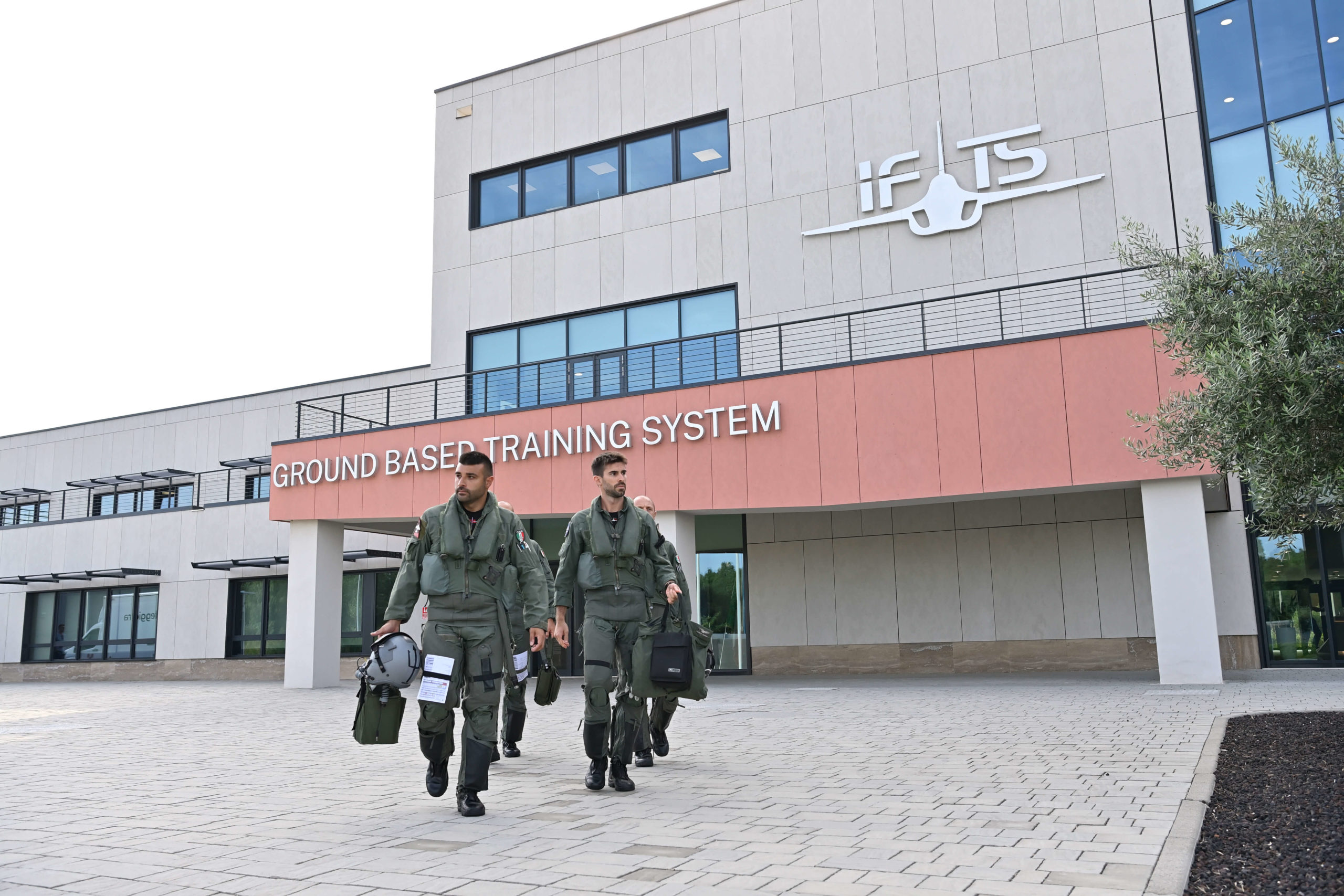
The tiltrotor training pipeline has evolved considerably since the Osprey’s initial fielding. Modern pilot training increasingly emphasizes cognitive skills over traditional stick-and-rudder proficiency, recognizing that contemporary aviation demands decision-making within complex, networked environments. This shift parallels developments I’ve observed in advanced flight training programs like Italy’s International Flight Training School, where Live-Virtual-Constructive training systems prepare pilots for fifth-generation operations by emphasizing tactical decision-making and situational awareness.

For VMM-264 specifically, establishing an effective training program requires balancing immediate operational requirements against long-term capability development. The squadron cannot simply focus on basic MV-22 operations. It must integrate into the broader MAW operational framework, develop proficiency in distributed operations concepts, and build interoperability with joint and allied forces. This demands time and resources that competing priorities may challenge.

The maintenance and sustainment challenges are equally significant. The Osprey remains a complex aircraft with demanding maintenance requirements. Establishing VMM-264’s maintenance capabilities requires not just assigning maintainers but developing unit-level expertise in troubleshooting, parts management, and coordination with depot-level maintenance activities. This organizational knowledge takes time to build and represents a long-term investment in squadron capability.

Strategic Signaling and Deterrence

Beyond immediate operational benefits, VMM-264’s reactivation contributes to strategic deterrence in ways that transcend the squadron’s tactical capabilities. In great power competition, force structure decisions signal intentions, priorities, and resolve to both adversaries and allies. Expanding tiltrotor capacity demonstrates American commitment to maintaining expeditionary capabilities that enable distributed operations across contested spaces.

China carefully monitors U.S. military developments, seeking indicators of American commitment to Indo-Pacific security. A Marine Corps that expands rather than contracts its expeditionary aviation sends clear messages about American intentions to maintain forward presence and operational capacity throughout the region. This matters because deterrence depends not just on possessing capabilities but on demonstrating willingness to employ them and maintaining sufficient capacity to do so sustainably.

For allies and partners, VMM-264’s return reinforces confidence in American security commitments. Regional partners from Japan to Australia to the Philippines closely watch U.S. force posture decisions, understanding that American capabilities directly affect regional security dynamics. An expanding Marine Corps tiltrotor fleet enhances prospects for combined operations, security cooperation activities, and crisis response—all essential elements of the network of relationships that underpin Indo-Pacific stability.

Looking Forward

VMM-264’s reactivation represents an important chapter in the ongoing narrative of Marine Corps transformation, but it raises questions about future force structure decisions.

  • Does this signal broader aviation expansion beyond a single squadron? How will the Marine Corps balance tiltrotor capacity against other competing modernization priorities?
  • What does this mean for the overall trajectory of Force Design 2030 as initial implementation yields to operational experience?

The answers will emerge through continued experimentation, exercises, and operational deployments that test emerging concepts against real-world challenges. What seems clear is that the Marine Corps has concluded its tiltrotor fleet requires expansion to meet operational demands in the Indo-Pacific and other priority theaters. This represents a course correction based on operational reality, precisely the kind of adaptive learning that successful military transformation requires.

As General Patton observed, “if everyone is thinking alike, someone isn’t thinking.” VMM-264’s reactivation suggests Marine Corps leadership is thinking critically about aviation requirements rather than simply following predetermined trajectories. This willingness to adjust based on operational experience, even when it means reversing previous force structure decisions, demonstrates the intellectual flexibility essential to navigating strategic competition’s inherent uncertainties.

The Black Knights’ return marks not an ending but a beginning of renewed capability, expanded capacity, and continued adaptation to the challenges of operating in an era where chaos management rather than crisis management defines success.

Note: VMM-264 as seen in 2011:

U.S. Marines with Marine Medium Tiltrotor Squadron 264, conduct a foreign object debris walk, Camp Bastion, Helmand province, Afghanistan, May 23, 2011. FOD walks are conducted on a daily basis ensuring the flight line is free of any obstructions that would interfere with Marines completing their task. CAMP BASTION, AFGHANISTAN 05.23.2011

2nd Marine Air Wing: Transitioning the Fight Tonight Force


Examining the True Force-Mass Potential of Large Uncrewed Underwater Vessels

12/31/2025

By Dr Tom Loveard and Dr Marcus Hellyer.

This article has been motivated by C2 Robotics’s internal company analysis of ongoing test and evaluation activities employing the Speartooth large uncrewed underwater vessel (LUUV).

Our assessment is that the Department of Defence and the broader Australian strategic policy community have underappreciated the potential impact of large numbers of LUUV systems on warfare. This is both an opportunity Australia can exploit and a threat we must be prepared for.

This article is an attempt to break the bounds of traditional understandings of the possible and paint a picture of the potential of LUUVs at the operational and strategic levels in order to provoke a wider, more informed discussion within the Australian and allied strategic policy communities.

 How UUVs compare to USVs

Despite the hype around fast unmanned surface vessels (USVs), we believe that UUVs are the real future.

USVs have gained a lot of attention due to their spectacular sinking of a large proportion of the Russian Black Sea fleet.[1] This has been an incredible success story for Ukraine, but our view is that USVs’ disruptive effect is unlikely to be sustained, as the tactic is no longer novel and can be countered. Fast USVs, even in large numbers, are detectable at long ranges using simple technology (cameras can see them many kilometres away and the vessels have considerable thermal signatures). They can be effectively targeted and destroyed by low-cost counter-measures, whether air-launched munitions or uncrewed aerial vehicles (UAVs). Nevertheless, the fact that low-cost asymmetric systems have rendered a vastly larger and more powerful conventional force ineffective confirms that these approaches are already operationally effective and are no longer in the realm of science fiction or some distant future.

LUUVs are very different to USVs. While significantly slower, they are vastly more challenging to detect and track. They are even harder to localise to the accuracy level required for successful interception. The difficulty in targeting in the underwater environment is why submarines are such an important part of national defence capabilities. UUVs are no different in this regard, but unlike submarines they can be produced rapidly and in huge numbers. With their small signatures, UUVs are a technology that will not be easy to counter and as a result are likely to have much longer future applicability than USVs. Indeed, if the technology that can detect and destroy LUUVs is developed, it will likely also make crewed submarines obsolete.

This article uses C2 Robotics’ Speartooth LUUV as an exemplar of what LUUVs can achieve. Speartooth has been in the water for around three years, accumulating well over 1,000 hours of in-water test and evaluation (as well as many more hours of virtual test and evaluation).

Based on our experience, we are confident that LUUVs can operate over multiple thousand kilometres. This frees UUVs from the need to be transported to the area of operations by a crewed mothership; they can self-deploy from safe operating bases. As battery performance improvements flow across from the electric vehicle industry to other applications, range and endurance will increase further. Greater energy density and efficiency will also allow increased speed. Because autonomous systems have short development cycles (as the war in Ukraine has demonstrated), LUUVs will become more capable in relatively short timeframes.

The Operational Impact of LUUVs in Conflict

LUUVs have enormous potential to shape both the operational and strategic levels of major power conflict. While analysts have started to consider the operational aspects, the strategic aspects have received little or no scrutiny. We will start by examining the operational level, as this allows us to set out the capabilities of LUUVs. We can then consider their implications for the strategic level.

Combining flexibility and scalability for effective force-mass

Speartooth has been designed to be a long-range, payload-agnostic system that can deliver payloads with high accuracy, including in GPS-denied environments. This makes Speartooth – and other LUUVs with a similar design philosophy – an extremely flexible platform. When equipped with appropriate payloads, LUUVs can currently perform, or will be able to perform in the near term, the following missions:

  • Strike on stationary maritime targets
  • Strike on moving maritime targets
  • Strike on land targets in the littoral
  • Barrier operations in chokepoints
  • Barrier operations off harbours (for example, preventing submarines from deploying)
  • Trade blockade through threatened or actual strikes on merchant ships
  • Spoofing/diversion/distraction
  • Mine warfare
  • Support to amphibious operations (for example, hydrography and rapid environmental assessment)
  • Covert logistics
  • Persistent intelligence, surveillance and reconnaissance (ISR) and electronic warfare.

Many of the payloads needed for these missions exist already. They are also benefiting from ongoing miniaturisation allowing more payloads (in both number and type) to be carried – every LUUV can be an ISR platform by default, regardless of its primary mission, as it has the space and power for multiple sensors. Moreover, integration into the LUUV host platform can be done much more rapidly than into a traditional crewed platform.

In addition to flexibility, the other key attribute of LUUV systems such as Speartooth is scalability. Speartooth has been designed to be manufactured cheaply and in large numbers using commercial, off-the-shelf components. Even small or medium-sized militaries will be able to acquire these types of LUUVs in the hundreds or thousands and stockpile them in large numbers in standard storage facilities at little cost.

Combining flexibility and scalability mean that small and medium-sized militaries will have sufficient LUUVs to conduct the missions listed above simultaneously in multiple locations, something that is not possible with small numbers of traditional crewed platforms. Moreover, with many nations’ industrial bases capable of producing multiple LUUVs every day, militaries will be able to sustain a high operational tempo across multiple locations, even in the face of attrition.

There are very valid concerns around the circumstances under which autonomous systems may be employed to deliver lethal effects. We are not suggesting Australia would or should use UUVs in ways that are contrary to the laws of armed conflict. But it is undeniable that potential adversaries will. For example, Yemen’s Houthis are currently attempting to enforce a blockade in the Red Sea by striking merchant shipping clearly in breach of international law. Moreover, when confronted with military threats, even responsible states that are signatories to arm control treaties will reconsider what they regard as justifiable. Finland, for example, is withdrawing from the Ottawa Treaty banning anti-personnel landmines.[2] Regardless of how Australia might employ LUUVs, it is difficult to prepare to counter an adversary’s potential use of UUVs if we are not familiar with what they can do, both now and in relatively near future.

LUUVs and anti-surface warfare

While all these missions have operational utility, we will focus on anti-surface warfare missions, which potentially have the greatest impact. ‘Minnow’ operations – whether midget submarines, manned torpedos, small watercraft or frogmen – have a long history and have been proven highly effective in targeting stationary maritime targets. They have realised disproportionate operational outcomes – for example, removing the threat posed by the German battleship Tirpitz to Arctic convoys supplying the Soviet Union. However, minnow operations have also had a high rate of failure, losing a high percentage of operators, who take a long time to train and are very difficult to replace. While the Krait raid by Australian and Allied special forces on Japanese shipping in Singapore harbour under Operation Jaywick in 1943 was successful, a subsequent mission in 1944, Operation Rimau, resulted in the entire raiding force of 23 men being killed in action or executed after capture.

We believe that LUUVs such as Speartooth already can conduct these sorts of operations but at a much larger scale (due to their low cost and high rate of production) and with much lower risk (as no human operators would be exposed to danger). What have been high risk, one-off operations conducted by small numbers of elite operators are repeatable at a high tempo. This means any adversary’s forward maritime operating bases in Australia’s near region are now at risk, including moored shipping, port infrastructure and even land-based assets near the coast.

However, LUUVs will also have the ability to strike moving surface vessels, whether military or commercial, in the near term. Attacking surface shipping and deterring surface ships has been a high-priority task for submarine fleets since World War I. But this is a high-risk task for a crewed submarine since target vessels are likely to be defended by anti-submarine systems, and the submarine’s location can be exposed when approaching or launching attacks on surface ships. Moreover, a submarine attack can be deterred or defeated if the submarine’s commander believes it has been detected, even if it is not destroyed.No such fear or constraint exists with LUUVs, because the loss of a cheap, mass-produced LUUV operating as part of a massed swarm is immaterial compared to the effect achieved. Indeed, the detection or loss of multiple UUVs may still achieve an operational effect – even if the UUVs do not inflict any damage – by forcing the adversary to alter or abandon a course of action.

Certainly current LUUVs are slower than surface ships, making open ocean interceptions difficult. However, submarine operations have traditionally occurred in key locations along sea lanes such as approaches to ports, strategic straits and similar predictable, high-traffic areas. Massing LUUV systems in these locations where shipping is channelled towards them mitigates their limitations and multiplies their ability to disrupt surface traffic. LUUVs also have the potential to interdict amphibious operations which by their nature occur close to shore and require amphibious ships to slow or stop. Moreover, once the land component of an amphibious task force has lodged, the location of its maritime component is well known.

Based on our experience, we believe that the step from existing LUUV systems to a capability that can target moving surface shipping would not be difficult, time-consuming or costly and could be achieved by integration of a range of existing propulsion systems and payloads. Therefore, this is a near-term capability. Should maritime conflict break out in our region, these developments would be rapidly accelerated as they have been in all areas of autonomous systems through the war in Ukraine.

Rewriting our understanding of distance

The National Defence Strategy acknowledges that the security provided to Australia by its distance from threats is being eroded due to the development of technologies such as long-range missiles.[3] While the National Defence Strategy does not name them, we assess that LUUVs are at the forefront of this technological revolution. Traditionally range has been proportional to a platform’s size; big things can go further. However, this rule is being rewritten by modern energy storage and propulsion technologies which provide smaller systems with great range and endurance.

Certainly LUUVs’ energy supply places limits on how far they can project power. Speartooth’s range is very considerable but it does have limits. However, by being small, very efficient and electrically powered, these systems can be recharged using basic infrastructure. A small vessel, autonomous craft or island base with a small generator and a diesel fuel supply (which LUUVs can deliver) would be all that is needed to cover thousands of kilometres around any forward location.[4] The ongoing rapid improvements in battery storage capacity will also improve LUUVs’ performance, allowing not only greater range and endurance but also speed which will enhance their anti-shipping capabilities. Hybrid propulsion systems are also feasible, either to allow recharging at sea, or to provide greater velocity for a final approach to the target.

Moreover, limitations in range and endurance can be addressed by forward deploying LUUVs, as they do not require significant infrastructure or support personnel. They can simply be ‘racked and stacked’ in shipping containers and stored in commercial storage facilities. With LUUVs’ constantly growing organic range capabilities and their ability to be forward deployed into theatre, considerations of range will not be the limiting factor on their employment.

Thinking in hundreds and thousands

Overall, we believe that the adoption of LUUVs will see far more sensors, weapons and processing power in the oceans than ever before. This will inevitably have a huge operational impact on maritime and archipelagic conflict in the very near future.

Therefore, it should be a high priority for the Department of Defence to model and analyse the operational impact of LUUVs both as an asset we can employ and a threat that will likely be deployed against us. This modelling should not be based on small numbers of vessels as is the case with traditional crewed vessels. Certainly a small number of autonomous systems can have a large asymmetric effect, as we have seen with Ukrainian USVs in the Black Sea, and this is clearly possible also with LUUVs conducting minnow operations. However, because of the simplicity and affordability of LUUVs,  militaries will be able to deploy them at scale. Therefore operations analysis should be based on the employment of hundreds and even thousands of LUUVs.

The strategic impact of LUUVs

Much of the discussion of the potential threats to Australian and allied security interests focuses on traditional capabilities such as Chinese shipbuilding, fighter aircraft or long-range missiles. However, we believe that the single biggest relevant factor for force generation today is a country’s capacity for industrial mass production of autonomous systems.

In this regard China’s capabilities are vastly ahead of those of Australia and its allies, even the United States. China’s industrial capacity has achieved staggering dominance across consumer-grade, mass-produced electronics, drones, electric vehicles, batteries and propulsion systems. If C2 Robotics had been a Chinese company, building Speartooth would have been far easier due to the ability to access such a broad industrial base, and manufacturing at scale would be easier again. This is sobering to consider because Chinese companies are already developing LUUVs; we are not naïve enough to believe that other actors cannot develop comparable capabilities.

One Hundred Thousand LUUV Systems?

If hundreds or thousands of LUUVs can have disproportionate operational effects, could larger numbers have asymmetric strategic effects? As a thought exercise it is very useful to consider extreme cases and then assess the validity of assumptions in such cases. Let us consider an extremely large number of LUUV systems – 100,000 units. What does a world look like where a nation decides to build such a huge number?

First, is this even technically or economically possible? Australia might want to build thousands of F-35s but the costs and industrial requirements to build them, the personnel to fly and maintain them, and the runways to operate them make this unachievable.

This is not the case for LUUVs. Our experience shows that building LUUVs is of comparable complexity to building a large electric vehicle, and in fact it utilises many similar components. Both have their own unique requirements, but the fact that a small company has successfully designed and built numerous Speartooth LUUVs shows that this is the appropriate complexity level to assign to the system. Indeed, since a LUUV does not have to protect human occupants, it is simpler in many regards.

Economies of scale for 100,000 LUUVs would drive prices down. For reference, China produced over 10 million electric vehicles in 2024. We believe A$200,000 per unit for a highly capable LUUV would not be unrealistic at such quantities, and a country like China with a deep existing manufacturing capability could produce an equivalent capability for as low as A$100,000. The history of decreasing unit price for mass-manufactured electric vehicles and their key components such as batteries reinforces this view.

LUUVs will require payloads to deliver effects. These will vary in cost depending on their effect, but a reasonable assumption is a similar cost point to that of the vessel for several asymmetric payload systems. Some sophisticated sensors might cost more, but simple kinetic effectors would cost far less. Therefore, an average cost of between A$200,000 and $400,000 per unit equipped with payloads is reasonable. So, 100,000 LUUVs would cost A$20 billion to $40 billion to build. As a point of comparison, the approved budget for the first three Hunter-class frigates is $25.9 billion for the ships and a further $1.2 billion for other necessary inputs to capability.[5]

This would be the vast bulk of the lifecycle costs. Traditionally the materiel acquisition cost of a crewed system such as a major warship is only a third of its total lifecycle cost as it requires a large crew, is at sea for much of its life and will require maintenance, repair and upgrade. But for LUUVs this is not the case. They are more analogous to munitions. A Speartooth takes two people 10 minutes to launch from a small boat ramp and then it can stay at sea for months with little human interaction. It employs a ‘one operator to many systems’ model. Otherwise, when not in use it can be stored in a shipping container in a warehouse or even a field. Other operating costs such as electricity to recharge batteries are trivial. So through-life costs are minimal.

Overall, while the program cost would be huge, it would not be prohibitive. In fact, it might be quite attractive as an industry support program for a nation like China looking to soak up under-utilised manufacturing capacity in factories that are already built but are largely sitting idle (should, for example, other countries ban or place high tariffs on electric vehicle imports from China, which is no longer a hypothetical speculation).

Our assessment is that there is nothing fundamental in terms of industrial capacity, component or materials supply, budgets, workforce or facilities that suggests that the acquisition of 100,000 LUUVs is unachievable for a medium-sized nation. China could do it as a marginal exercise alongside commercial electric vehicle manufacturing systems and we might never notice. For a country such as China, a target of 1 million LUUVs could be achievable. Wars in Ukraine and Israel have shown how small economies can be mobilised in the face of threats to national survival. Even Australia, which once produced hundreds of thousands of cars per year, could do it unilaterally over several years if it were a national priority and the Australian Government wanted to mobilise our manufacturing sector.

What could you do with 100,000 LUUVs?

With 100,000 LUUVs it would be possible to disrupt all ocean-borne global trade. Released in huge numbers at the outset of a conflict (or indeed pre-emptively beforehand), LUUVs could swamp every major port in the world, every strategic strait and bottleneck. Even sea lines of communication crossing the open oceans could be filled with large numbers of LUUVs, supported by small recharging vessels keeping them at sea despite the distances involved. The oceans would be filled with sensors and weapons.

The Indo-Pacific region, which features numerous bottlenecks from the Red Sea across the Indian Ocean and through the Straits of Malacca to north Asia, is particularly vulnerable. It would become very difficult for any surface shipping to move, let alone enter or leave a port or chokepoint, without the approval of the country operating the LUUV fleet. This would allow it to control global trade.

The countries affected would of course seek to protect their shipping. But LUUVs are very hard to detect and defeat. Nets can be installed to protect moored vessels, but net-cutting devices can also be used by LUUVs, and moored vessels have to get underway eventually or become irrelevant. Command and control pathways can be attacked, but LUUVs use very low data rates, and communication links can take many alternative routes. An adversary unconcerned about rules of engagement or the laws of armed conflict would not need to exercise direct command and control, instead tasking LUUVs to target shipping completely autonomously regardless of the risk of collateral damage. And even if half of the total number of LUUVs sent on a mission were sunk, it would be of little concern to a state holding a stockpile of 100,000 vessels that could be rapidly replaced.

When attempting to defend against thousands of LUUVs, what would comparatively small numbers of crewed attack submarines or surface anti-submarine warfare assets even target, and with what weapons? In a world where one Javelin missile costs more than six or seven times the cost of a Tesla electric vehicle, it is likely that China could launch LUUVs much more quickly than the US and its allies could build torpedos or other countermeasures and get them to sea in submarines to counter those LUUVs.

Moreover, LUUVs could also influence any activity on land within proximity (for example, within 10 to 30 kilometres) of the ocean. All near-shore assets and activities – airports, ports, infrastructure, populations et cetera – would be at risk from LUUV-launched airborne munitions. LUUVs could be massed together to apply large simultaneous force effects to a specific area with very little warning time and could do so over huge sections of the coastline.

Australia would be vulnerable to such an attack and could be completely isolated, with maritime trade interdicted. Australia’s geography has often been seen as our greatest defensive asset, but in such a case it could become our greatest liability. If an adversary achieved control of shipping lanes by using massed LUUVs, it would be hard to break that control. Moreover, it would be extremely challenging to produce effective numbers of comparable systems to exercise an effective deterrent to such coercion without access to maritime trade.

LUUVs and the Strategic Balance

Finally, it is important to consider the global strategic impacts of scenarios in which nations employ massed LUUVs. If one country were able to control the world’s oceans, every other country would be forced to decide whether to forgo ocean access and trade or otherwise concede to the will of the nation with the LUUV fleet, likely resulting in exclusive trade with only that nation and its allies. Raw materials from the Middle East, Asia and Africa would either be forced to participate in the market controlled by the power controlling the oceans or have no market access. Each nation to capitulate would then bring more industrial capacity and raw materials exclusively to the side of the nation deploying the LUUV fleet. Any nation that resisted would be economically devastated.

In a scenario where one-sided deployment occurs, we do not see any long-term winning strategy for the nations that oppose such a deployment. We do not believe that any nation currently has a capability to counter this scale of LUUV activity; attempting to do so with crewed ships and submarines would incur a staggering cost while making very little dent in the adversary’s massive stockpile of LUUVs.

However, where both sides have huge numbers of such systems then we see a scenario of mutual denial of ocean access arising. Neither side could effectively defeat the other’s LUUVs, leading to a stalemate in which all maritime trade would cease since each side could interdict the other’s shipping at will. Unless major powers were happy to forgo maritime trade and its economic benefits, there would be a strong incentive to resolve the situation in favour of normalisation. In fact, the knowledge that an adversary had a mass LUUV fleet may serve as a strong deterrent against aggression.

As with all technologies that have offered the prospect of ending war because they potentially make its costs too great or would result in mutually assured destruction, we should carefully consider how this would work in practice. Many states have been willing to endure huge costs to achieve their aims or deny others, with Russia’s enduring war in Ukraine simply the latest in a long series of examples. Moreover, a global blockade could be highly escalatory: while the use of LUUVs against international trade would allow states to coerce without threatening to employ nuclear weapons, a state that lost access to the oceans and maritime trade might resort to a nuclear response to compel its adversary to give up the blockade.

These issues certainly require further analysis. Our fundamental point is that the simple and accessible technologies employed in LUUVs now offer many states, not just great powers, the ability to exercise strategic weight and reach far beyond what was previously possible. Moreover, this potential power is not currently constrained by any of the remaining international mechanisms governing nuclear weapons, other weapons of mass destruction or missile technologies.

Conclusion

One hundred thousand LUUVs may seem implausible, but there will likely be a saturation point at which a number of LUUVs well short of this can achieve the outcome of denying an adversary access to and the use of the oceans, whether unilaterally or mutually. What that number might be is beyond the remit of this article to consider.

The main point is that the scenarios presented here are within the realm of possible futures using existing technologies. The implications that flow from this are very significant, not just for naval operations but for the strategic balance. The first country that mobilises its industrial base to produce massive numbers of LUUVs will be at a major strategic advantage in the event of the current great power competition moving into open conflict.

[1] HI Sutton, ‘Uncrewed platforms have been critical to Ukraine’s success in the Black Sea,’ RUSI, 20 August 2024, https://www.rusi.org/explore-our-research/publications/commentary/uncrewed-platforms-have-been-critical-ukraines-success-black-sea. Vessels sunk include landing ships and landing craft, a missile corvette, a patrol ship and a minesweeper. Ukraine has also credibly claimed shoot down a helicopter from a USV as well a striking targets on land with guided weapons launched from USVs.

[2] Essi Lehto, Anne Kauranen, ‘Finland to exit landmines treaty, hike defence spending given Russia threat, PM says,’ Reuters, 1 April 2025, https://www.reuters.com/world/europe/finland-plans-withdraw-landmines-treaty-prime-minister-says-2025-04-01/.

[3] Department of Defence, 2024 National Defence Strategy, Australian Government, 2024, https://www.defence.gov.au/about/strategic-planning/2024-national-defence-strategy-2024-integrated-investment-program.

[4] While this may seem far-fetched to some, the technology to enable this is not science fiction. Indeed, the Australian Department of Defence’s Advanced Strategic Capabilities Accelerator recently awarded innovation funding to ‘explore the feasibility of two different technology options for underwater recharging stations for autonomous underwater vehicles.’ Department of Defence, ‘$3 million awarded to Defence research projects,’ Australian Government, 2 April 2025, https://www.defence.gov.au/news-events/releases/2025-04-02/3-million-awarded-defence-research-projects.

[5] Department of Defence, Defence Annual Report 2023–24, Australian Government, 2024, web table E.2, https://www.defence.gov.au/about/accessing-information/annual-reports.

Dr Tom Loveard is C2 Robotics’ Chief Technology Officer and Dr Marcus Hellyer is Director Strategy.

This article was originally published in the Australian Naval Review (2025 Issue 1) and is republished with permission of the authors.

Loveard, Tom and Marcus Hellyer, “Examining the True Force‑Mass Potential of Large Uncrewed Underwater Vessels,” Australian Naval Review, vol. X, no. 1, 2025.

The 2025 Book Publishing Year for Second Line of Defense: 16 New Titles

12/28/2025

The 2025 publishing year brought together a remarkably coherent body of work that spans contemporary defense transformation, global political change, and historical reflection, while continuing to deepen long‑standing partnerships with leading strategic thinkers and historians. Taken as a whole, the 2025 list underlines a central theme: democratic states are struggling to adapt to a world in which multi‑domain warfare, authoritarian competition, and historical memory all intersect in shaping the future of policy and power.​

Re‑shaping Air and Maritime Power

Several 2025 titles focus on how air and maritime forces are being re‑engineered for high‑end conflict and distributed operations. 2nd Marine Air Wing: Transitioning “The Fight Tonight Force” offers a longitudinal account of how a major Marine aviation formation has moved from Iraq‑ and Afghanistan‑centric operations to preparing for high‑end warfare in the North Atlantic, Arctic, and wider Euro‑Atlantic, enabled by platforms like the MV‑22, F‑35B/C, and CH‑53K. Training for the High‑End Fight: The Paradigm Shift for Combat Pilot Training complements this by examining how pilot training is being recast around kill‑web operations, live‑virtual‑constructive ecosystems, and the cognitive demands of managing information‑rich, coalition‑centric battlespaces.​

Two Osprey‑focused books—A Tiltrotor Perspective: Exploring the Experience and A Tiltrotor Enterprise: From Iraq to the Future—trace the evolution of the V‑22 from embattled program to cornerstone of a joint tiltrotor enterprise stretching across the Marine Corps, Air Force Special Operations, the Navy, and now the Army. They show how tiltrotor speed and reach have underwritten new operational concepts from Iraq to the Pacific and foreshadow the next generation of long‑range maneuver and logistics in contested environments.

My Fifth Generation Journey (Second Edition) updates the story of the F‑35’s global rollout, highlighting how the aircraft has become a software‑driven, continuously evolving combat system and a command node for emerging manned‑unmanned “wolf pack” concepts, including new insights from Israeli operations. Italy and the F‑35: Shaping 21st Century Coalition‑Enabled Airpower narrows the lens to one key ally, showing how Italy has used F‑35 participation, the Cameri facility, and carrier‑borne F‑35Bs to turn itself into a critical hub for European and global airpower. A Paradigm Shift in Maritime Operations: Autonomous Systems and Their Impact extends the modernization story to the sea, arguing that autonomous maritime systems and Distributed Maritime Effects are overturning centuries‑old capital‑ship logic, with Ukraine’s use of maritime drones against the Black Sea Fleet as emblematic of a broader revolution.​

Strategy, Competition, and Global Order

Another cluster of 2025 titles grapples directly with the shift to a multipolar, increasingly authoritarian international system. The Emergence of the Multi‑Polar Authoritarian World: Looking Back from 2024 collects fifteen years of analysis documenting how China, Russia, Iran, North Korea, and a wider “Global South” constructed parallel financial, trade, and political networks while Western elites remained anchored in post‑Cold War assumptions. Defense XXIV: Reworking U.S. and Allied Defenses to Deal with the Multi‑Polar Authoritarian Challenge brings the story forward into the 2024 security environment, examining how the United States and allies are re‑shaping posture, force design, and deterrence to deal with a multi‑axis authoritarian challenge, including changing nuclear dynamics and the rise of kill‑web‑enabled distributed operations.​

The Biden Administration Confronts Global Change: Déjà vu All Over Again evaluates whether the promise that “America is back” amounted to a viable strategy in this transformed environment or a form of strategic nostalgia. Drawing on four years of contemporaneous analysis, it tracks how the administration’s aspirations collided with Afghanistan, Russia’s invasion of Ukraine, China’s assertiveness, and allied doubts about American staying power. Alongside these volumes sit two intellectual portraits: Assessing Global Change: Strategic Perspectives of Dr. Harald Malmgren and America, Global Military Competition, and Opportunities Lost: Reflections on the Work of Michael W. Wynne. The Malmgren volume highlights an integrated view of economics, diplomacy, and security developed over decades of advising leaders and analyzing global flows, while the Wynne book explores how his advocacy of fifth‑generation air dominance, hypersonics, cyber, and kill webs anticipated today’s debates and how his 2008 dismissal reflected a costly failure of strategic foresight.​

History, Memory, and Political Transformation

The 2025 catalogue also underscores an ongoing commitment to historical depth and to the politics of memory. Remembering the B‑17 and Its Role in World War II uses the 1943 loss of a Flying Fortress over France and a 2013 ceremony on Noirmoutier Island to illuminate the human cost and strategic logic of the Allied air campaign, as well as the enduring Franco‑American bonds forged in resistance, rescue, and remembrance. Perspectives on Portuguese History: The 2024 Lectures by Professor Kenneth Maxwell gathers bilingual lectures linking the 1755 Lisbon earthquake, the 1974 Portuguese Revolution, and decolonization to show how Portugal repeatedly reinvented itself through catastrophe and how its experience illuminates broader patterns of democratic transition and empire’s end.​

The Tale of Three Cities: The Rebuilding of London, Paris, and Lisbon, also by Maxwell offers a comparative urban history of how those three capitals responded to fire, earthquake, and political crisis, turning destruction into engines of modernization and instruments of social control. It highlights the interplay of catastrophe, leadership, state capacity, circulating ideas, and economic forces in shaping the built environment. Controlling Contraband: Mentality, Economy, and Society in Eighteenth‑Century Rio de Janeiro, by Ernst Pijning, further broadens the historical canvas, examining how smuggling in gold‑rich colonial Brazil functioned as a central, negotiated feature of imperial governance and local society rather than a marginal criminality.​

A Coherent Publishing Trajectory

Across these domains, the 2025 books share a common preoccupation: how systems, military, political, economic, and urban, adapt under pressure, and what happens when institutions fail to recognize or act on the need for transformation. Whether the subject is Marine aviation shifting to distributed operations, navies grappling with autonomous swarms, allies like Italy leveraging industrial capacity for strategic weight, or Western policymakers confronting a hardened multipolar authoritarian system, the underlying concern is the same: how democracies can recover strategic agility in an unforgiving world.​

By pairing cutting‑edge defense analysis with deep historical and conceptual work, the 2025 list reinforces our publishing program’s distinctive niche: connecting front‑line operational change to long‑duration patterns of statecraft, economic power, and societal resilience.

Here is an ordered list of our 2025 books, grouped thematically (operational air/maritime power; historical and conceptual strategy; politics and global order; history and society), with an approximately 300‑word summary of each book.

  1. 2nd Marine Air Wing: Transitioning “The Fight Tonight Force”

This book traces the evolution of 2nd Marine Aircraft Wing from the height of the Iraq/Afghanistan era through 2025, showing how a legacy “fight tonight” organization has been re‑shaped for high‑end maritime conflict and integrated naval operations. Built around interviews with successive wing commanders and unit leaders, it reconstructs two decades of change in platforms, concepts of operations, and geography of concern—from desert expeditionary bases to the North Atlantic, High North, and wider Euro‑Atlantic theater.​

The narrative follows three intertwined trajectories. First is platform modernization: the arrival of MV‑22 Ospreys, F‑35B/Cs, and the CH‑53K, and how each platform changed not only what could be done tactically but how Marine aviation conceives time, distance, and logistics. Second is operational transition: from counter‑insurgency support to distributed operations in contested air and maritime spaces, including the re‑grounding of the wing in naval integration with carrier strike groups and amphibious task forces. Third is the human and command story: how commanders adapted C2, training, and culture to exploit fifth‑generation capabilities while preserving the core Marine ethos of supporting Marines in contact.​

A recurring theme is distributed lethality: the shift from a few concentrated hubs toward a more survivable, dispersed force in depth, connected by resilient C2 and supported by heavy‑lift and tiltrotor mobility. The book also highlights allied interplay, especially cooperation with Nordic and broader NATO partners as the North Atlantic and Arctic re‑emerge as central theaters in great‑power competition.​

For readers, the book provides more than a unit history. It becomes a case study in how a combat aviation wing manages technological disruption, strategic re‑tasking, and alliance demands without losing its identity. The 2nd MAW story becomes a template for understanding how other combat organizations must rethink their role as fifth‑generation aircraft, kill‑web concepts, and multi‑domain operations redefine the “fight tonight” mandate.​

  1. Training for the High-End Fight: The Paradigm Shift for Combat Pilot Training

This volume examines how combat aviation training is being reinvented for a world of kill webs, ubiquitous sensors, and machine‑speed decision cycles. The central argument is that the traditional “ace pilot” model is no longer adequate; the defining skill now is cognitive agility inside a complex, networked battlespace.​

The book contrasts the legacy “kill chain” mindset, linear targeting from find to finish, with the emerging kill‑web paradigm in which pilots operate as managers of distributed effects across air, maritime, land, space, and cyber domains. Fifth‑generation aircraft such as the F‑35 are treated as information nodes as much as shooters, demanding that pilots become integrators of data and orchestrators of coalition assets. This leads to an exploration of “chaos management”: training aircrew to function under compressed timelines, ambiguous information, and simultaneous threats where procedural competence is necessary but not sufficient.​

A major focus is the live‑virtual‑constructive (LVC) ecosystem, with case studies such as Italy’s International Flight Training School. Here, real aircraft, advanced simulators, and constructive threats are blended to replicate contested electronic warfare, integrated air and missile defense, and joint operations at scale without prohibitive cost or operational risk. The book critiques the inertia of legacy training systems and argues that clinging to obsolete trainers and syllabi actively undermines fifth‑generation effectiveness.​

Another recurring strand is coalition integration: training from the outset in multinational frameworks so that interoperability is habitual rather than improvised in crisis. Partnerships with industry are presented not as add‑ons but as structural to rapid curriculum and technology updates.​

The book closes by arguing that the decisive competitive edge in future air warfare will be the cultivated minds of pilots and mission commanders, not the airframes alone. Nations that re‑engineer training to build cognitive resilience, network fluency, and cross‑domain leadership will dominate any contest for air superiority in the high‑end fight.​

  1. A Tiltrotor Perspective: Exploring the Experience

This work tells the inside story of the V‑22 Osprey’s journey from political pariah to indispensable operational workhorse, as seen through the eyes of those who designed, flew, maintained, and fought with it. It begins with the bruising years of congressional assaults, media skepticism, and internal service resistance, situating the aircraft within the broader politics of Pentagon innovation and risk aversion.​

The core of the book is the lived experience of operators. Through extensive interviews with pilots, crew chiefs, maintainers, and commanders, it traces how the Osprey’s speed, range, and vertical lift enabled new forms of maneuver in Iraq, Afghanistan, and beyond. Missions that once required multiple platforms, exposed helicopters to extended threat envelopes, or were simply impossible because of distance become executable and routine as tiltrotor tactics matured. The narrative underscores how doctrinal innovation followed operational experimentation: Marines, Air Force special operators, and later the Navy used the aircraft’s unique envelope to re‑imagine assault support, special operations insertion, and maritime logistics.​

The book also explores how the Osprey became a symbol of a broader “tiltrotor enterprise” or an ecosystem of training, sustainment, industrial cooperation, and cross‑service learning. Rather than treating the V‑22 as an isolated platform, the account shows how it catalyzed thinking about future tiltrotor programs and the integration of next‑generation sensors and weapons.​

Against the early narrative of the Osprey as a “death trap,” the book documents how combat performance and user confidence reversed perceptions. Distinguished Marine leaders underscore that the aircraft now has no peer in its mission set.​

Ultimately, the book argues that the Osprey story is a case study in how genuine innovation in military aviation survives bureaucratic and political headwinds when driven by operational need and the persistence of warfighters who recognize a transformational capability and refuse to let it be killed off prematurely.​

  1. A Tiltrotor Enterprise: From Iraq to the Future

Where A Tiltrotor Perspective focuses on the fight to field and prove the Osprey, A Tiltrotor Enterprise zooms out to examine how tiltrotor technology has reshaped operational concepts and is now driving a broader joint and allied transformation. The book follows the arc from the first combat deployments in Iraq through the aircraft’s maturation as a central tool for global reach, rapid maneuver, and distributed operations.​

The narrative emphasizes that the real story is not a single aircraft but an evolving enterprise. It shows how Marines used the V‑22 to convert traditional amphibious forces into a long‑range, globally deployable force, how Air Force Special Operations leveraged its performance for deep insertion and exfiltration missions, and how the Navy is now using tiltrotors to re‑invent logistics at sea. The emerging Army variant is discussed as part of a future in which tiltrotor speed and range underpin land force maneuver in contested environments rich in autonomous systems.​

The book explores how pairing tiltrotor platforms with advanced sensors, C2 architectures, and precision weapons turns them into enablers for kill‑web operations rather than mere “helicopter replacements.” Interviews with warfighters and industry leaders illuminate a shift from platform‑centric thinking to enterprise‑centric planning, where training, maintenance, and concept development are integrated across services and with allies.​

Throughout, the book highlights how distributed operations in theaters like the Pacific change the value proposition of tiltrotor aviation. Long distances, austere basing, and the need to complicate adversary targeting make the Osprey and its successors central to emerging operational doctrine.​

In sum, A Tiltrotor Enterprise argues that tiltrotor capability has moved from controversial experiment to foundational element of 21st‑century joint power projection—and that the most significant payoffs still lie ahead as new variants, payloads, and concepts of operation are fielded.​

  1. My Fifth Generation Journey (Second Edition)

This revised edition updates the original 2023 volume with new material through 2025, including perspectives drawn from recent Israeli operations employing the F‑35. The book remains, at its core, a first‑hand chronicle of how the F‑35 moved from contested program to operational cornerstone of a global fifth‑generation enterprise.​

Structured as a series of essays and interview‑based case studies, it follows the aircraft’s introduction across multiple services and allied air arms, focusing on the people who made the transition possible: pilots, maintainers, logisticians, and planners who re‑shaped their forces around a software‑driven, sensor‑rich, networked combat system. The narrative emphasizes that the F‑35 is not a traditional airframe upgraded at long intervals, but an information age platform designed for continual software‑driven enhancement. Block upgrades are depicted as steps in a rolling transformation, each adding capabilities across sensing, weapons, and integration.​

A central theme is the F‑35 as a bridge to manned‑unmanned teaming and future sixth‑generation systems. The book explains how planners increasingly see the aircraft as a command node for “man‑robotic wolf packs,” orchestrating autonomous sensors and shooters rather than acting alone.​

The text also situates the program in a geopolitical frame: the spread of the F‑35 binds together a coalition of democracies with shared tactics, training, and logistics, creating an unprecedented level of interoperability. Critics who focused on developmental stumbles are contrasted with the operational reality of a maturing fleet that has altered the airpower balance in Europe, the Middle East, and the Indo‑Pacific.​

Ultimately, the second edition reinforces the core argument that the “fifth‑generation journey” is less about a single aircraft and more about a new model of continuous capability development, allied integration, and information‑centric warfighting.​

  1. Italy and the F‑35: Shaping 21st Century Coalition‑Enabled Airpower

This book analyzes how Italy has leveraged the F‑35 program to transform itself from a perceived secondary NATO airpower into a central node of coalition‑enabled operations. It argues that Italy’s approach combining industrial participation, operational innovation, and strategic ambition offers a template for mid‑tier powers seeking greater influence in a contested world.​

Central to the narrative is the Cameri facility, presented as far more than a production line. Cameri emerges as a strategic hub where Italy builds and sustains F‑35s for itself and partners, converting industrial competence into political and military weight. The integration of F‑35B aircraft on the carrier ITS Cavour is highlighted as a key turning point, marking Italy’s return to serious carrier aviation and giving it an expeditionary strike capability highly relevant from the Mediterranean to the Indo‑Pacific.​

The book develops the idea of Italy’s “double transition”: simultaneously fielding and networking F‑35s while modernizing legacy platforms such as Eurofighter Typhoons, tankers, and CAEW assets. This creates a layered force where fifth‑generation aircraft act as sensors and coordinators for a broader combat cloud.​

Case studies of exercises and operations ranging from participation in distant exercises like Pitch Black to NATO missions demonstrate how Italian pilots are using the F‑35 to project presence and interoperability far beyond national borders.​

Drawing on a decade of interviews with Italian airpower leadership, the book presents Italy’s journey as both national narrative and a broader lesson: in the 21st century, smart investments in integrated airpower, industrial capacity, and coalition roles can elevate a country’s strategic profile more effectively than traditional measures of size alone.​

  1. A Paradigm Shift in Maritime Operations: Autonomous Systems and Their Impact

This book explores how autonomous maritime systems are overturning centuries‑old assumptions about naval power, using Ukraine’s successful strikes against Russia’s Black Sea Fleet as a vivid point of departure. It argues that traditional capital‑ship‑centric models are giving way to Distributed Maritime Effects (DME), where swarms of relatively low‑cost, networked unmanned platforms can generate combat power once monopolized by major surface combatants and submarines.​

The narrative explains how Maritime Autonomous Systems on, above, and under the sea are becoming the backbone of this shift. These systems, integrated with manned aircraft and ships in kill‑web architectures, enable more resilient, flexible, and affordable combat clusters. The book contrasts the glacial pace and cost of conventional shipbuilding with the rapid, modular deployment of autonomous fleets by innovative militaries.​

Policy and legal frameworks are addressed through discussion of U.S. directives governing autonomous weapons, emphasizing the requirement for meaningful human judgment while recognizing that the technology is already operational rather than speculative. Examples range from Ukraine to Task Force 59 in the Arabian Gulf and Australian initiatives, underscoring that the maritime autonomy revolution is global in scope.​

The book criticizes over‑emphasis on protracted testing when commercial and off‑the‑shelf systems have proven combat utility, and quotes senior Marine leaders warning that these capabilities are coming regardless of institutional hesitation.​

Ultimately, it frames the central strategic question not as whether autonomous maritime operations will dominate future naval warfare, but whether established powers will adapt in time or be tactically and economically outflanked by smaller, more agile actors wielding autonomous swarms.​

  1. Defense XXIV: Reworking U.S. and Allied Defenses to Deal with the Multi‑Polar Authoritarian Challenge

This annual “Defense” volume surveys the rapidly changing 2024 security environment and how the United States and its allies are reshaping defenses in response to an emergent multipolar authoritarian world. Drawing on interviews and field‑grounded analysis rather than abstract theory, it covers theaters from Ukraine and the broader European front to the Indo‑Pacific and Middle East.​

A central theme is that today’s challenge is not a simple return to bipolar great‑power competition but a more complex struggle with multiple authoritarian actors, Russia, China, Iran, North Korea and others, whose interests diverge but whose anti‑democratic impulses align. The book details how this affects force‑planning, deterrence, and crisis management. It devotes considerable attention to the evolution of nuclear dynamics, highlighting how the proliferation of nuclear actors with different risk calculations undercuts Cold War deterrence paradigms.​

Another major focus is the maritime “kill‑web” paradigm and the integration of crewed and uncrewed systems in distributed operations. Case studies examine how navies and air forces are experimenting with new concepts to complicate adversary targeting and increase survivability. Allied integration emerges as a key motif, with particular emphasis on Nordic defense cooperation, European capability development, and the role of interoperable combat systems.​

The volume argues that mere incremental modernization is insufficient; what is required is strategic redesign of posture, basing, and command arrangements to reflect the realities of a multi‑axis authoritarian challenge. As the latest in your annual series, Defense XXIV functions both as a snapshot of one turbulent year and as part of a longitudinal record of how democratic states are struggling—and in some cases succeeding—to adapt their defenses to a more dangerous world.​

  1. The Emergence of the Multi-Polar Authoritarian World: Looking Back from 2024

This collection assembles fifteen years of analysis chronicling how an alternative, authoritarian‑anchored world order emerged while Western elites remained fixated on the post‑Cold War “unipolar moment.” It contends that while the West focused on counterterrorism and managing the “rules‑based order,” states like China and Russia methodically built parallel economic, financial, and political networks that now blunt Western tools such as sanctions.​

The book traces how China extended influence through infrastructure, trade, and finance across the Global South, while Russia weaponized energy flows and built resilient channels to sell oil and gas despite Western efforts to choke them off. It shows how Iran, North Korea, and others plugged into this evolving ecosystem, creating a “shadow empire” that allows authoritarian systems to cooperate and hedge against Western pressure.​

A key argument is that much of the U.S. foreign policy establishment remained trapped in mental frameworks forged in the 1990s and early 2000s, underestimating both the coherence and appeal of authoritarian alternatives. The book lists hard questions that now confront democracies: why sanctions have lost bite, how much of the world is prepared to operate outside Western institutional structures, and whether democracies can adapt to a multipolar order they did not plan for.​

The analyses highlight the perspectives developed through Second Line of Defense and Defense.info, emphasizing continuous observation rather than retrospective theorizing. Endorsements underscore the significance of the work as a guide for understanding how the current moment came about.​

In sum, the volume seeks to help readers see the international system as it has become, messier, more competitive, and less Western‑centric, rather than as many in the West still assume it to be.​

  1. The Biden Administration Confronts Global Change: Déjà vu All Over Again

This book scrutinizes the Biden administration’s foreign and defense policy against the backdrop of accelerating global disorder, asking whether the promise that “America is back” reflected a viable strategy or an outdated mental map. It uses four years of contemporaneous commentary and analysis to track how the administration responded to crises and structural shifts from 2021 to 2024.​

The narrative begins with Biden’s early speeches framing his presidency as a corrective to the Trump era and a restoration of U.S. leadership, including commitments to rally democracies against authoritarianism and address China’s ambitions and Russia’s disruptive behavior. It then examines how these aspirations collided with hard realities: the Afghanistan withdrawal, Russia’s full‑scale invasion of Ukraine, escalating competition with China, and allies’ lingering doubts about American staying power and coherence.​

The book argues that the administration often tried to revive tools and assumptions from earlier periods without fully accounting for the structural changes documented in your work on multipolar authoritarianism. The notion of “going back” is contrasted with a world that had already moved on: alternative financial structures, fractured alliance politics, and shifting domestic constraints within Western democracies.​

Rather than focusing solely on policy outcomes, the book treats the Biden years as a test case for whether traditional liberal‑internationalist playbooks can function in a world of resilient authoritarian competitors and skeptical partners.​

In doing so, it offers both an assessment of one administration and a broader reflection on the challenges any U.S. leadership will face in trying to reassert influence in a system where the old defaults no longer apply and where domestic and international constraints sharply limit grand strategic ambitions.​

  1. America, Global Military Competition, and Opportunities Lost: Reflections on the Work of Michael W. Wynne

This volume is a deep exploration of the ideas and legacy of Michael W. Wynne, 21st Secretary of the Air Force, cast as both tribute and cautionary tale. It presents Wynne’s core doctrine, never accept a “fair fight” because it signals failure of strategic preparation, and shows how this principle informed his advocacy of transformational technologies and concepts years before they became fashionable.​

The book details Wynne’s championing of fifth‑generation air dominance, hypersonic strike, advanced logistics enabled by UID/RFID, cyber capabilities, and the kill‑web approach to integrating sensors and shooters across domains. It emphasizes how he saw technology not as an end in itself but as a means to compress OODA loops and ensure U.S. forces could out‑think and out‑decide adversaries.​

A central section examines the 2008 firing of Wynne and Air Force Chief of Staff Moseley, arguing that their removal marked a strategic misstep in which the United States turned away from precisely the capabilities and concepts that would later be recognized as essential in great‑power competition. The book traces how, when Donald Trump later declared the return of great‑power rivalry, much of Wynne’s agenda resurfaced as urgent priority after a costly delay.​

Through essays and testimonials, the volume explores leadership as willingness to push against bureaucratic inertia and to think ahead of political comfort zones. It also reflects on how institutional myopia and short‑termism can squander windows of advantage.​

The result is both an intellectual biography and a meditation on strategic foresight, what it means, how it is resisted, and what happens when a system punishes rather than leverages its most forward‑leaning thinkers.​

  1. Assessing Global Change: Strategic Perspectives of Dr. Harald Malmgren

This collection presents fifteen years of work with Harald Malmgren, portraying him as a strategic “chess grandmaster” who integrates economics, diplomacy, and security into a unified framework for understanding global power shifts. It highlights his role as adviser to presidents and corporate leaders and as an architect of key elements of the modern trading system.​

The book organizes Malmgren’s essays and interviews around recurring themes: the interplay of financial flows and geopolitical leverage, the vulnerabilities of global supply chains, and the ways in which trade architecture shapes and constrains national strategy. Co‑authored context and commentary situate his analyses within journeys across the Asia‑Pacific, Europe, and U.S. military commands, emphasizing the fusion of high‑level insight with on‑the‑ground observation.​

One of the work’s strengths is showing how Malmgren identifies pattern and trajectory amid the noise of daily events. Essays track how shifts in monetary policy, energy markets, and regulatory regimes cascade into strategic consequences, often years before they become obvious to mainstream observers.​

The book also sheds light on Malmgren’s method: treating the global system as an interconnected board on which states, corporations, and institutions act with different time horizons and constraints. This approach underscores why purely military or purely economic analyses often mislead policymakers.​

Overall, the volume offers readers both a guided tour of two volatile decades in world affairs and a masterclass in synthetic thinking, how to connect dots across domains to see the underlying structure of change rather than just its surface manifestations.​

  1. Perspectives on Portuguese History: The 2024 Lectures by Professor Kenneth Maxwell

This book collects and contextualizes Kenneth Maxwell’s 2024 lectures delivered in Lisbon, Harvard, and other venues, presenting them as a coherent exploration of Portugal’s modern history and its global reverberations. It traces a narrative from the 1755 Lisbon earthquake through the 1974 Revolution and decolonization, showing how Portugal repeatedly reinvented itself through crisis.​

The lectures, presented bilingually in English and Portuguese, link the reconstruction of Lisbon after 1755 to broader European urban transformations in London and Paris, and then connect the Carnation Revolution to the late‑20th‑century wave of democratization and decolonization. Maxwell examines how elites, social movements, and external powers interacted at critical junctures, and how Portugal’s experience illuminates the dynamics of regime change more generally.​

The volume includes a rare early essay from 1964, offering a snapshot of Portugal still under dictatorship, and juxtaposes it with his later reflections on democratic consolidation and the international consequences of decolonization. Throughout, Maxwell is portrayed by commentators such as Carlos Gaspar as the leading historian of the revolution and its aftermath.​

Editorial framing underscores the contemporary relevance of these lectures. They speak to questions of how societies rebuild after catastrophe, how democratic institutions emerge from authoritarian contexts, and how a relatively small country can have outsized influence through empire, diaspora, and strategic geography.​

The result is a work that appeals both to specialists in Portuguese and Iberian history and to readers interested in democracy, revolution, and the long‑term consequences of imperial rise and decline.​

  1. The Tale of Three Cities: The Rebuilding of London, Paris, and Lisbon

Written by Kenneth Maxwell, this book offers a comparative history of how three European capitals, London, Lisbon, and Paris, responded to catastrophe and used rebuilding to re‑shape urban form, society, and power. It treats the Great Fire of London (1666), the Lisbon earthquake and tsunami (1755), and the political “catastrophe” of mid‑19th‑century Paris as gateways into understanding the making of modernity in stone and street grid.​

The London section portrays grand post‑fire visions colliding with property structures and fiscal limits, yielding a city that kept its medieval pattern but changed fundamentally in material, institutions, and imperial orientation. Lisbon’s reconstruction under the Marquês de Pombal is presented as a classic case of Enlightenment urbanism, where state power, science, and new building technologies (such as the gaiola system) turn disaster into an experiment in rational planning. Paris becomes a story of Haussmannization, where an authoritarian regime wields expropriation, finance, and infrastructure to carve boulevards, parks, and standardized façades into an unruly city, with profound social and political consequences.​

The book’s analytical core lies in its themes: catastrophe as opportunity, leadership and state capacity, circulation of ideas and expertise, and the economic drivers of urban change. It includes multilingual versions of the core essay, extensive notes, visual materials, and a reflective dialogue that invites readers to think about resilience, memory, and agency in city‑making.​

This makes The Tale of Three Cities simultaneously a work of urban history, political thought, and intellectual history, of interest to historians, architects, planners, and anyone concerned with how power and ideas become literally built into urban landscapes.​

  1. Remembering the B‑17 and Its Role in World War II

Centered on the 2013 commemoration on Noirmoutier Island, this book uses the story of a B‑17 Flying Fortress shot down over Nazi‑occupied France in 1943 to explore the human and strategic dimensions of the Allied air campaign. It weaves together personal accounts of American airmen, French civilians, and resistance actors to show how the crash created bonds of memory and obligation that lasted seven decades.​

The narrative balances operational analysis with human experience. It explains the logic and terrible costs of daylight strategic bombing, the training pipeline that produced bomber crews, and the tactical realities of flying into dense flak and fighter opposition. At the same time, it follows the fate of downed airmen on the ground and the risks taken by French villagers who sheltered them under occupation.​

Beyond recounting a specific incident, the book draws explicit links between the B‑17 era and contemporary debates about airpower and readiness. Questions that confronted wartime planners, how to design the right aircraft, train crews fast enough, and balance cost with capability, are shown to echo in current procurement and modernization struggles.​

The Franco‑American dimension is a recurring theme. The Noirmoutier ceremony becomes a lens on how communities remember, how transatlantic ties are sustained, and how acts of wartime solidarity reverberate across generations.​

Ultimately, the book stands as both historical narrative and reflection on remembrance: a tribute to the Flying Fortress and its crews, but also an argument that understanding this past is essential to thinking clearly about the uses and limits of airpower today.​

  1. Controlling Contraband: Mentality, Economy, and Society in Eighteenth-Century Rio de Janeiro (Ernst Pijning)

This monograph by Ernst Pijning examines smuggling in 18th‑century Rio de Janeiro as a structural feature of colonial society rather than a mere pathology. It argues that contraband was woven into international relations, imperial administration, and local social hierarchies, especially after Brazil became a leading producer of gold and diamonds.​

The book reframes “illicit” trade as a negotiated space among the Portuguese Crown, foreign powers, colonial officials, and Brazilian merchants. Rather than focusing on volumes or specific goods, it highlights the struggle to control the channels of legal and illegal commerce. The Crown attempted to manage this space by bending rules, selling offices, creating overlapping jurisdictions, and deploying anti‑contraband rhetoric, producing oscillations in enforcement over the 18th century.​

Pijning shows how smuggling shaped and reflected mentalities and social relations in Rio, affecting how actors understood authority, opportunity, and risk. As imperial control weakened in the early 19th century, the Crown’s ability to regulate contraband eroded, mirroring the broader unraveling of colonial rule.​

This work showcases our publishing program’s reach beyond contemporary defense and strategy into deeply researched, globally oriented early modern history.​


Fight Tonight Force: Combat Readiness at the Speed of Relevance

12/27/2025

Robbin F. Laird’s Fight Tonight Force book to be published January 10, 2026, explores the urgent necessity for democratic nations, notably Australia, to transition from long-term planning to immediate combat readiness.

The book emphasizes that modern conflicts are won through rapid adaptation and the integration of current assets rather than waiting for future technologies.

Key strategies include leveraging uncrewed systems and low-cost munitions to counter sophisticated threats while addressing the economic unsustainable nature of traditional defense.

A central theme is whole-of-society defense, which argues that national resilience depends on industrial capacity and civilian preparedness rather than just professional military force.

The book also highlights the importance of allied cooperation and the ability to manage “chaos” through decentralized, software-driven innovation.

Ultimately, the work serves as a call to action to prioritize strategic autonomy and societal cohesion in the face of rising authoritarian challenges.

The Global War in Ukraine: An Essay on the Changing Global Order

12/18/2025

On February 15, 2026, we are publishing the first of two books on the Global War in Ukraine.

The first one is written as an essay which leverages the much larger and more comprehensive one to be published on March 15, 2026.

The Global War in Ukraine: An Essay on the Changing World Order is not a book about a single front or a single war. It is a forensic examination of how one conflict has become the decisive crucible for a new international order. Ukraine is not a peripheral battlefield; it is “the furnace in which the international order is being reforged,” where alliance choices, industrial bets, and software updates collide with geography, memory, and nuclear shadow.

Robbin Laird traces how unresolved tensions from the 1990s, misread signals, and strategic amnesia set the stage for what one foreword calls “a system‑defining war” rather than a regional aberration. The post–Cold War hope that economics and institutions would dissolve spheres of influence runs headlong into the hard facts of power politics. The book reconstructs the road to 2022 as an escalatory script hiding in plain sight and shows how Western illusions about Russia, deterrence, and military power made catastrophe more likely, not less.

This is also a book about how war reorganizes societies. Laird explores Russia’s turn to permanent mobilization and a wartime political economy in which ending the conflict threatens the very system it sustains. He analyzes how “weakness itself constitutes a provocation,” and how Europe’s long strategic holiday ended in a crash course on rearmament, industrial policy, and coalition warfare. The reader sees a continent racing to relearn scale, stockpiles, and staying power under the pressure of a grinding war of attrition.

At the same time, The Global War in Ukraine shows how this conflict has broken traditional east–west and north–south frames. As one foreword notes, “traditional alignment models have been broken.” Asian powers are on the European battlefield in ways unseen since the age of empires: North Korean artillery and troops, Iranian drones, Chinese economic lifelines and technicians, Japanese and South Korean support to Kyiv. Middle powers—from India and Brazil to Turkey and the Gulf States—maneuver for advantage in a geopolitical landscape that no longer fits Cold War templates.

Technology in these pages is not scenery but protagonist. Laird details how Ukraine, under fire, has become a war laboratory where “cycles of innovation and counter‑innovation compress to weeks.” Drone swarms, AI‑assisted targeting, EW‑saturated battlespaces, and software‑driven upgrades redefine what mass, precision, and deterrence mean in practice. A state that began as a recipient of foreign systems becomes, in Laird’s telling, a doctrinal pioneer and co‑producer, demonstrating how democratic societies can adapt their industrial base and command system at wartime speed.

Running through the analysis is a sober engagement with nuclear coercion and the second nuclear age. The book examines how nuclear weapons now function less as apocalyptic endpoints and more as tools of pressure, sanctuary, and risk manipulation. It asks hard questions about thresholds, escalation ladders, and the credibility of security guarantees in a world where “the global nature of the war in Ukraine is further evidence that we are living in a new geopolitical age.”

Above all, The Global War in Ukraine is a book about agency and choice. It shows Ukraine’s transformation from passive object to active shaper of doctrine, industry, and alliance behavior. It charts how Europe begins to act as if its security were its own responsibility, how coalitions of the willing supplement formal alliances, and how industrial policy becomes strategy. And it insists that memory—of experiments like Partnership for Peace, of past resets and failures—is a strategic resource, not a footnote.

Combining strategic history, operational insight, and global perspective, Robbin Laird offers a map of how we reached this dangerous moment and a mirror that forces readers to confront what will be required to shape a more stable future. For policymakers, military professionals, and serious citizens alike, this book is essential reading for understanding the war that is remaking our world.

Lt General Preziosa underscores: “Ukraine is not at the periphery of the international order; it is the furnace in which that order is being reforged, one alliance choice, one industrial line, one software update, and one strategic decision at a time. In drawing these lines together, this volume does more than recount events; it frames a lens for the future. For that, gratitude is owed to Robbin Laird. He has not only captured a piece of history with clarity and rigor but has also offered a vision of how democratic societies might navigate the trials ahead.  His work reminds us that history is not merely about the past, it is a compass for the future, if we choose to read it.”

Brian Morra, noted political analyst and novelist adds: “In Washington, D.C., the foreign policy establishment has struggled to understand the global nature of Russia’s war in Ukraine. Fundamental misunderstandings have hamstrung efforts to reinforce Ukraine with weaponry in a timely way and have derailed efforts to influence the numerous countries that provide support either directly or indirectly to Moscow’s war effort. To remedy this, Robbin Laird’s new book provides insights that ought to be required reading at the State Department, the National Security Council, the Pentagon, the Congress, and in the Intelligence Community. It will be of equal value to America’s allies. The global nature of the war in Ukraine is further evidence that we are living in a new geopolitical age.”

And the noted German analyst, Dr.Holger Mey underscores: “Laird brings decades of experience analyzing military transformation, alliance politics, and strategic competition to bear on questions that will define our era. His work challenges comfortable assumptions and forces readers to confront difficult realities about power, deterrence, and the limits of diplomatic solutions when core interests collide.”

America Needs to Rethink Relocation Challenges for Its Afghan Fighters

By James Durso

After NATO forces evacuated Kabul in August 2021, the U.S. government implemented Operation Allies Welcome to remove Afghan allies, including interpreters, embassy staff, and others who worked alongside U.S. forces. The program provided humanitarian parole and resettlement opportunities for those evacuated during the chaotic airlift from Kabul.

Included in “others who worked alongside U.S. forces” were 10,000 to 12,000 Afghan fighters in the CIA-sponsored “Zero Units.” These special forces supposedly belonged to the Afghan National Directorate of Security, the intelligence and security service of the Islamic Republic of Afghanistan, but they were trained, paid, and tasked by the U.S. Central Intelligence Agency (CIA) for targeting anti-government insurgents, high-value Taliban commanders, and suspected terrorists.

The Afghans fought almost daily for ten years and, unlike U.S. forces, had no opportunities for rest and recovery outside the country. But despite the severe operating tempo, there are no public reports of “green on blue” attacks by members of Zero Units.

Over 76,000 Afghans were admitted to the U.S. under Operation Allies Welcome, one of the largest humanitarian evacuation efforts in recent U.S. history. Many were processed through temporary housing facilities at U.S. military bases before being resettled in communities across the country.

Evacuees underwent security screenings and health checks before resettlement. They were connected to resettlement agencies for limited assistance with housing, employment, and integration. Many Afghans entered under humanitarian parole, which allowed them to stay temporarily while applying for asylum or special immigrant visas.

Here is  where most Afghans were resettled:

Smaller numbers were resettled in in Colorado, Ohio, Michigan, Massachusetts, North Carolina, and Georgia, each hosting between 1,500–2,500 evacuees. 47 U.S. states received at least some Afghan families.

After the recent attack by Rahmanullah Lakanwal, a veteran of a Zero Unit, against two West Virginia National Guard Soldiers, one of who later died of her injuries, U.S. president Donald Trump ordered a pause in immigration applications from citizens of 19 high risk countries. Many Americans – and President Trump – questioned if the Afghan refugees admitted in 2021 were carefully screened.

In 2022, the Department of Homeland Security (DHS) Office of Inspector General (OIG) reported on “Operation Allies Welcome.” The OIG found: CBP [U.S. Customs and Border Protection] “did not always have critical data to properly screen, vet, or inspect the evacuees. We determined some information used to vet evacuees through U.S. Government databases, such as name, date of birth, identification number, and travel document data, was inaccurate, incomplete, or missing. We also determined CBP admitted or paroled evacuees who were not fully vetted into the United States.”

According to Director of National Intelligence, Tulsi Gabbard, at least 2,000 Afghan refugees “have ties to or are known or suspected terrorists,” though that is disputed by refuges advocates.

The U.S. government has a problem if some of the Afghans it admitted are not be eligible for entry to the U.S.: What to do with them?

Options:

  1. Deportation. This is easy enough and the social media will be satisfying to many, but the

“Zero Unit” veterans would likely be executed or imprisoned on arrival, and the Taliban will share the video with the world. The veterans’ return would be a PR boon to the Taliban who will arrange public confessions by the returnees who will admit they were fooled by the Americans and beg for forgiveness.

Some of the Afghans will no doubt have legal counsel protesting their removal as it would result in death or lengthy imprisonment for doing America’s bidding for a decade. It may be tied up in the courts for years.

  1. Resettlement. This sounds attractive, but finding hosts will be expensive for Washington, financially and politically. Third country leaders will be loath to explain to their citizens why they are admitting people the U.S. considers too dangerous, and would have to accede to security assurances and monitoring agreements.

In 2009, President Barack Obama ordered the closure of the Guantanamo Bay detention camp,  and 197 detainees were transferred, repatriated, or resettled in third countries during his presidency. Negotiations for resettlement often took months to years because countries had to be convinced to accept detainees who could not return home due to risk of persecution

And the receiving countries will want to be paid up-front. A thank-you note from the American ambassador will not suffice.

  1. Reformation. Keep the fighters under observation and provide better resettlement support. The Afghan fighters may have received security vetting before entering the U.S., but medical and psychological screening may not have screened for Post-Traumatic Stress Disorder (PTSD) or other combat-related maladies such as Traumatic Brain Injury (TBI). (Lakanwal, reportedly was a “door breacher” and was likely exposed to explosive blasts during raids. He, and other like him, may suffer from PTSD and TBI, which may have contributed to his decision to attack the Soldiers.)

The U.S. will have to determine if Lakanwal was radicalized after his arrival in the U.S., and how and why.  He was apparently in good spirits when he arrived in the U.S. but his mental health deteriorated as he struggled to adapt to his new life. Now we learn Lakanwal may have been blackmailed by the Taliban who threatened to kill his family members in Afghanistan if he did not follow their orders. And that is not an idle threat: a Taliban unit, Yarmouk 60, has tracked down and executed Afghan collaborators and their families, in one case beheading two small girls.   

DHS failed to commit the resources to properly vet Afghans entering the U.S., and the CIA appears to have failed to ensure its Afghan partners were successfully onboarding in the U.S. and to act when they were failing.

American soldiers who had years between combat deployments have had challenges adjusting to life in the U.S. after deployment; therefore, it is no mystery that soldiers from a different culture who were in continuous combat for a decade might have problems adjusting to life in the U.S.

In addition to more resources,  the U.S. should consider a term of “continuous vetting,” similar to that required for holders of security clearances to guard against blackmail or radicalization that occurs after arrival in the U.S.

There is no low-hanging fruit here. The U.S. government should survey the Afghan refugees not just for security concerns but for mental health maladies as part of an evaluation on how successfully they are integrating into American society. Then it should address any integration shortfalls by committing the funds for medical and psychological care, and job and skills training to ensure the Afghans, and especially the fighters and their families, can integrate into life in the U.S.  It will be expensive but that’s the cost of having someone else do your fighting for you.

The dead are dead, and Rahmanullah Lakanwal will spend the rest of his life in jail, but America’s Afghanistan project is not yet complete.

James Durso (@james_durso) is a regular commentator on foreign policy and national security matters. Mr. Durso served in the U.S. Navy for 20 years and has worked in Kuwait, Saudi Arabia, and Iraq.

Mission Debrief: The 2011 Libya TRAP Mission

12/17/2025

High over the Libyan desert on March 21, 2011, a critical malfunction sent a U.S. Air Force F-15E Strike Eagle plummeting towards the sand. The two crew members ejected into hostile territory, landing miles apart. While the Weapons Systems Officer was quickly recovered by friendly rebel sympathizers, the pilot, Major Kenneth Harney, found himself in a desperate situation. Alone, he was being actively hunted by five to six tactical vehicles from pro-Gaddafi forces, their searchlights sweeping across the desert floor.

This incident occurred during Operation Odyssey Dawn, the international military intervention to enforce a no-fly zone over Libya. The capture of a U.S. pilot would have been a significant propaganda victory for the regime and a grave danger to Major Harney. As enemy forces, complete with barking dogs and gunfire, closed in on his position, a race against time began. Waiting just offshore, a team of U.S. Marines was about to put a revolutionary and controversial aircraft to its first ultimate test.

  1. The Call to Action: The 26th MEU Responds

Aboard the amphibious assault ship USS Kearsarge, the Marines of the 26th Marine Expeditionary Unit (MEU) received the alert. A pilot was down, and a Tactical Recovery of Aircraft and Personnel (TRAP) mission was activated. A comprehensive TRAP package was rapidly assembled, combining multiple air assets to create layers of protection and capability for the complex operation.

AV-8B Harriers: Launched first to provide immediate close air support, establish communication with the downed pilot, and serve as the on-scene command platform.

MV-22 Ospreys: The primary rescue aircraft, tasked with the high-speed transit deep into Libya and the vertical extraction of the pilot.

CH-53E Super Stallions: Transported a Quick Reaction Force (QRF) of Marines, ready to provide ground security if the rescue became contested.

KC-130J Hercules: Stood by to provide critical aerial refueling for the other aircraft, extending their range and time on station.

The initial response unfolded with disciplined speed, transitioning from a potential incident to a full-blown rescue operation in under an hour.

Time (Local) Event
11:33 p.m. (March 21) F-15E crashes southwest of Benghazi.
12:50 a.m. (March 22) Two AV-8B Harriers launch from the USS Kearsarge.
12:55 a.m. (March 22) Full TRAP mission is approved by U.S. military leadership.

As the Harriers streaked toward the pilot’s last known location, they were flying not just to provide air cover, but to hold the line and buy the precious time needed for the Ospreys to arrive.

  1. Holding the Line: The Harrier’s Decisive Airstrike

Arriving over the dark desert landscape, the Harrier pilots, led by on-scene commander Major J. Eric Grunke, tuned their radios to the downed pilot’s frequency. This rapid response was possible due to Grunke’s specialized training as a Forward Air Controller (Airborne), or FAC(A), a skill that enabled him to orchestrate the complex strike with the speed and authority required to save the pilot’s life. The transmissions they intercepted painted a terrifying picture of Major Harney’s final, desperate moments before expected capture.

“I just start listening to gain an idea of what’s going on down there, and I can hear him, wind rustling and him whispering into his radio. At that point it all became real to me… that’s really a guy down there scared for his life.”

As the tactical vehicles with searchlights and gunfire closed in, Major Harney believed his time was up. He made a final, heartbreaking radio call.

“He comes up and actually crying on the radio he says, ‘tell my wife I love her.'”

With deadly force authorized, Grunke used his Harrier’s advanced targeting pod to identify the pursuing vehicles. Within five minutes of arriving on station, he confirmed their position with Harney, asking, “I’ve got two 500-pound bombs, do you need them?” The pilot’s response was immediate: “Yes, yes I do.” Grunke delivered two laser-guided bombs with direct hits on two of the pursuing vehicles. The remaining enemy forces, convinced by the decisive airstrike, broke off their search and fled.

The Harriers had saved Major Harney from imminent capture. But while the immediate threat was gone, the pilot was still stranded 130 nautical miles inside hostile territory, and the complex challenge of extracting him remained.

  1. “The Beauty of Speed”: The Osprey’s High-Speed Ingress

At 1:33 a.m., two MV-22 Ospreys lifted off the deck of the USS Kearsarge and transitioned into airplane mode, accelerating toward the Libyan coast. The mission would immediately showcase the revolutionary capabilities that set the Osprey apart from any conventional helicopter.

Unprecedented Speed: The Ospreys covered the 130 nautical miles to the pickup zone at 250 knots. This incredible speed reduced the transit time to approximately 45 minutes, a journey that would have taken traditional helicopters hours. As MajGen “Dog” Davis later commented, the mission was “45 minutes each way, instead of hours.”

Reduced Vulnerability During Ingress and Egress: Its speed and altitude capabilities allowed the Osprey to “shoot the gap between several SAM sites” during its ingress. Furthermore, its ability to approach quietly in airplane mode provided a decisive tactical advantage. This unique acoustic signature defeats rudimentary but effective early warning systems, like those used by insurgents in other theaters, which rely on tracking the distinct sound of slow-moving helicopters. The enemy heard nothing until it was nearly overhead.

Advanced Automation: The aircraft’s sophisticated autopilot systems allowed the pilots to manage the complex mission without being exhausted by the physical act of flying. As pilot Major Debardeleben explained, “Like setting cruise control in a car, you can focus your mind elsewhere.” This freed up crucial cognitive capacity for the crew to monitor communications, build situational awareness, and manage the tactical situation as it unfolded.

As the Ospreys closed in, the crew was calm, focused, and ready. They prepared to transition from high-speed aircraft to agile helicopter for the final, most critical phase of the operation.

  1. The Rescue: A First for the MV-22

The final moments of the rescue were a masterclass in coordination and execution. Using a flare from the downed pilot and a laser marker from an overhead aircraft, the Ospreys pinpointed Major Harney’s location, hidden in small desert shrubs. After a quiet, high-speed approach, the lead Osprey began its conversion to helicopter mode for landing. The sudden, deafening roar of its powerful rotors shattered the desert silence. Hearing the noise, the pilot on the ground made one last desperate call, fearing the sound was of the aircraft leaving: “Don’t leave me, I hear you.”

Major Debardeleben’s crew responded, assuring him they were on their way in. The pickup was incredibly rapid. Even before the Osprey’s wheels touched the sand, Major Harney bolted toward the aircraft with his hands above his head. The Marines on board barely had time to disembark before he had jumped on, fastened his seatbelt, and declared, “I’m ready to go.”

At 2:38 a.m., Major Harney was safely aboard the MV-22. Less than 25 minutes later, at 3:00 a.m., the Osprey landed back on the deck of the USS Kearsarge. The entire rescue mission, from launch to recovery, took just 90 minutes.

  1. Conclusion: A Watershed Moment for Marine Corps Aviation

The successful TRAP mission over Libya was more than just a single rescue; it was a watershed moment for the MV-22 Osprey and a definitive validation of the tiltrotor platform. After years of controversial development, the Osprey proved its revolutionary combat value in a high-stakes, real-world operation. The mission’s success validated the Marine Corps’ investment in a unique capability, a point MajGen Davis underscored with stark finality:

“No one could have gone and got that guy like we went and got him. Nobody.” — MajGen “Dog” Davis, Commanding General, 2nd Marine Aircraft Wing

This mission was the Osprey’s first combat rescue, and it was an unequivocal success. It proved that the aircraft’s unique combination of speed, range, and vertical-lift flexibility had fundamentally transformed the Marine Corps’ ability to project power.

The performance in Libya redefined the operational radius of the Marine Expeditionary Unit (MEU).

As one MEU officer later noted, “With the CH-46E, you are typically operating 25-50 nautical miles (NM) from shore. As of today, I can operate 250 NM or greater from shore.”

This ten-fold increase in reach transformed the MEU from a coastal force into a deep-inland power projection asset, solidifying the Osprey’s role as a cornerstone of expeditionary operations.

This is just one of the many stories contained in our new book looking back at the past 15 years of defense transformation generated by the 2nd Marine Wing.

2nd Marine Air Wing: Transitioning the Fight Tonight Force


Putting the Osprey in the Dock: What the GAO Gets Wrong on V 22 Safety and the Real Drivers of Mishaps

12/15/2025

By Robbin Laird

The GAO’s recent report on Osprey safety draws attention to real mishaps and genuine concerns, but its framing, methods, and omissions risk reinforcing an outdated caricature of the V‑22 rather than illuminating the actual safety problems the force faces.

A more rigorous and operationally grounded assessment shows that the Osprey’s long‑run mishap record sits near the middle of the U.S. military aviation pack, while the real outliers are rising accident rates across multiple fleets driven by under‑resourcing, training erosion, and maintenance stress.​

The GAO defines its core problem as “serious Osprey accidents” over roughly the last decade and then highlights that Class A and B accident rates rose in FY23–FY24 and often exceeded Navy and Air Force fleet averages. That narrow time frame produces an alarming narrative of spikes of 36–88 percent over the previous eight‑year average, but it does not answer the more fundamental question: is the Osprey a safety outlier when viewed across its full operational life compared with similar platforms in similar regimes?​

A broader framing, consistent with CRS data and Marine Corps internal analysis, looks at Class A mishap rates per 100,000 flight hours across the 2015 to 2024 period and finds that the MV‑22’s rate of roughly 2.56 sits slightly below the Marine Corps’ overall aircraft average of 2.67. That result places the V‑22 in the statistical middle of the type/model/series spectrum and undercuts the idea that there is a unique “Osprey problem” rather than a wider safety challenge affecting multiple fleets.​

The GAO report does include comparative tables in its appendices but those data never meaningfully shape the headline storyline which remains centered on Osprey‑only rate charts. That choice is crucial: by decoupling recent spikes from the aircraft’s longer history, the report blurs the fact that over a decade or more of intensive operational use, the V‑22’s mishap record is broadly comparable to other heavy‑use rotorcraft and tiltrotor‑like profiles.​

Independent analyses cited by CRS and in operator‑driven commentary place the ten‑year MV‑22 mishap rate around 3.4 per 100,000 flight hours, again squarely in the middle of Marine type/model/series. Over the same period, legacy helicopters such as the CH‑53, H‑47, and H‑60 families have experienced similar or greater numbers of fatal mishaps, and in some cases higher rates, yet they do not attract the same existential questioning of their right to remain in the inventory. A serious safety review would have led with that comparative context, not relegated it to the back pages.​

GAO’s next move is to aggregate all Osprey Class A and B mishaps into a single “serious accidents” bucket and to treat that aggregate as a proxy for inherent airframe safety. Yet the report’s own breakdown acknowledges that major mishaps have involved intertwined human, cultural, and materiel factors, leadership and risk‑assessment failures in the August 2023 Marine accident, decision‑making and checklist issues in the November 2023 CV‑22 mishap, and gearbox metallurgy problems in the same event.​

Experienced Osprey engineers and commanders have long drawn a sharp distinction between genuine design or component issues, such as early vortex ring state concerns, hard clutch engagement, and gear metallurgy, and the separate domains of training, maintenance culture, and operational risk tolerance. The program’s record shows that technical issues have been identified and mitigated, in some cases turned into comparative advantages, while a significant share of recent Class A mishaps fall into familiar categories of operator error or degraded proficiency that recur across all rotorcraft fleets. By treating the sum of these events as a property of “the Osprey,” GAO blurs precisely the causal distinctions that matter for policy.​

GAO does commendably detail the formal system‑safety apparatus around the V‑22: 79 risk assessments since 2010, with 45 closed and 34 still open or in monitor status, including a limited set of catastrophic‑severity items tied to airframe and engine components. It also notes that some generic aviation hazards, from bird strikes to aerial refueling risks, are accepted for the life of the program.​

The analytical error comes in the sharp boundary GAO draws between “system” risks those captured in formal hazard registers and “non‑system” risks linked to maintenance workloads, flight‑hour levels, aircrew experience, and sustainment shortfalls. The report describes that second category clearly, over‑stretched maintainers, cannibalization of parts, constrained training time, but then relegates it to a secondary tier in its recommendations, in part because those issues sit outside the formal remit of system‑safety boards. That inversion sidesteps a key reality that operator‑analysts like Anthony Krockel highlight: under‑funded operations and maintenance accounts, eroding proficiency, and acceptance of higher readiness risk are now primary drivers of mishaps across the aviation enterprise, not quirks of a single platform.​

Perhaps the most important omission in the GAO report is its silence on operational value and how that value feeds back into overall force safety. The Osprey exists because it does what helicopters cannot: it moves Marines and special operators faster, higher, and farther, shrinks exposure time in threat envelopes, extends the reach of medical evacuations, and enables distributed maritime and expeditionary operations at ranges that legacy assault helicopters simply cannot match.​

Interviews with MAWTS‑1 instructors and senior Marine aviators make the point concretely. Missions in Afghanistan and the Horn of Africa have demonstrated that Osprey speed and range directly translate into lives saved, whether by rapidly extracting troops from IED‑laden landing zones or moving critically ill sailors over 1,000 nautical miles to definitive care in a single night. Commanders from Third MAW to the current Commandant have repeatedly stressed that the platform’s ability to get Marines “out of harm’s way faster than anything else” and to range entire theaters with tanker support is central to modern Marine and joint concepts. A safety analysis that ignores that trade‑space invites a simplistic league‑table mentality, comparing mishap rates in isolation, rather than asking whether marginal differences in accidents are outweighed by systemic reductions in tactical risk.​

The narrative underpinning much external coverage of the V‑22 still leans heavily on developmental mishaps from more than two decades ago, particularly the 2000 crash linked to vortex ring state. GAO does little to push against that inertia by clearly distinguishing between prototype‑era failures and the mature operational aircraft now in service.​

Post‑2000 testing and envelope development showed that tilting the rotors forward by about 15 degrees enables a V‑22 to escape vortex ring state, turning a perceived “fatal flaw” into a recovery regime that compares favorably to conventional helicopters. More recent concerns such as hard clutch engagement have been addressed through measures like 800‑hour clutch replacement regimes, which bring Osprey practice in line with other rotorcraft and have effectively closed out that issue as an active safety driver. The Gundam 22 accident off Japan, while genuinely tragic, also demonstrates how mature safety systems respond: identifying gearbox alloy inclusions, examining triple‑melt steel processes, modifying alloys, and updating aircrew training so that chip warnings are treated with the urgency they demand. A balanced official review would foreground this pattern of identify‑understand‑mitigate rather than leave the impression of an aircraft trapped in its developmental past.​

Krockel points to a paradox that the GAO report does not fully wrestle with: the Osprey program is one of the most transparent aviation efforts in the Pentagon, with every mishap subjected to intense scrutiny and substantial public documentation. That openness generates more material for critics and reporters to cite, even when the underlying documents show a system that learns and improves over time.​

Less transparent programs with comparable or worse safety records simply generate fewer public data points and thus less critical attention. By not explicitly acknowledging this transparency differential, GAO risks reinforcing a biased media ecosystem in which the best‑documented program becomes the easiest target, and the existence of detailed safety records is taken as indirect evidence of unsafety.​

Perhaps the most consequential gap in GAO’s analysis is its failure to follow the evidence where it points: mishap rates have risen across multiple fleets over the last several years, pointing toward systemic problems in training, readiness, and sustainment rather than a single flawed aircraft. Krockel traces a clear chain of causality starting with operations and maintenance under‑funding, moving through parts shortages and cannibalization, reduced aircraft availability, and fewer flight hours, and culminating in crews whose currency and judgment are eroded.​

These are precisely the kinds of non‑system factors GAO describes but then structurally downgrades. If crews across platforms are flying less, maintaining aircraft with fewer spares, and operating under higher tempo and lower manning, then it is unsurprising that mishap curves bend upward across the force. The question Congress should be asking is not whether the V‑22 is uniquely dangerous, but whether it has properly resourced the training, sustainment, and safety nets that all complex aircraft, tiltrotor or helicopter, require.​

A more credible and useful GAO treatment of Osprey safety would rest on three pillars that the current report only gestures toward.

  • First, it would start from a whole‑of‑life, comparative baseline that makes clear where each V‑22 variant sits relative to peer aircraft across services and mission profiles, rather than isolating recent spikes in a narrow time band.
  • Second, it would disaggregate causal factors rigorously, separating airframe design and component issues from training, culture, and resourcing, and then tying each category to specific remedies from metallurgy and clutch regimes to flying‑hour programs and leadership accountability.​
  • Third, it would explicitly connect safety analysis to operational value, recognizing that a platform that reduces exposure for ground forces and enables otherwise impossible missions may, on balance, improve force survivability even if its mishap rate is only average.

In that more mature debate, the V‑22 would appear not as a uniquely dangerous outlier but as a heavily scrutinized, continuously improved system whose safety record is broadly in line with other demanding military aircraft and is operating inside a force that is under‑resourced and over‑tasked.

The real policy choice is whether to tackle the systemic conditions that drive accidents across the aviation enterprise, rather than once again putting the Osprey in the dock for problems that it shares with the rest of the fleet.

The featured photo was generated by an AI program and highlights the global fleet concept of the Osprey.

And less we forget, there is a “global Osprey enterprise” today consisting of roughly 450 V‑22 tiltrotors built or on order across all variants and operators, centered on U.S. services (USMC, USAF, USN) with Japan as the sole export customer.​

The V‑22 fleet of about 450 aircraft that has accumulated more than 800,000 flight hours, reflecting the total production run across all customers and variants.​

The three main variants are the USMC MV‑22B (assault support), USAF CV‑22B (AFSOC long‑range special operations), and USN CMV‑22B (carrier onboard delivery), with Japan operating a configuration based on the MV‑22.​

The Department of Defense has procured about 360 V‑22s for the Marine Corps, which constitute the bulk of the global Osprey fleet and underpin the assault support and expeditionary role of the aircraft.​

These aircraft equip multiple active and reserve VMM squadrons and MEU/ARG deployments, forming the core of USMC medium‑lift and ship‑to‑objective maneuver capability.​

The Air Force has acquired around 56 CV‑22s for Air Force Special Operations Command, focused on long‑range infiltration, exfiltration, and resupply in contested environments.​

CV‑22s operate from CONUS and overseas bases (including Europe and the Pacific), giving the tiltrotor enterprise a global special operations footprint.​

The Navy program of record originally envisioned 48 CMV‑22Bs, but current plans call for 44 aircraft, replacing the C‑2A Greyhound for carrier onboard delivery.​

CMV‑22B squadrons (VRM‑30, VRM‑40, VRM‑50 and supporting test units) provide logistical support to carrier strike groups, including long‑range logistics and F‑35C engine transport.​

Japan is the only foreign customer and is procuring 17 V‑22s, which form an “Air Transport Squadron” under the JGSDF for rapid deployment and island defense missions.​

As of 2025, the Japanese V‑22 unit has completed relocation from its temporary base at Kisarazu to its permanent base at Camp Saga on Kyushu, positioning the fleet closer to the Nansei/Southwest Islands and the East China Sea.​

Industry and Navy sources describe a fleet that has now surpassed 600,000 flight hours and has grown to more than 400 operational aircraft, consistent with the broader “~450 aircraft” enterprise figure when including aircraft in production and on order.​

The global enterprise thus spans multiple services and one key ally, with common industrial support from Bell and Boeing and shared sustainment, upgrade, and safety initiatives across this ~450‑aircraft tiltrotor community.​

Note: I highly recommend comparing the recent GAO report with the CRS report.

For the GAO report:

https://www.gao.gov/products/gao-26-107285

For the CRS report:

https://www.congress.gov/crs_external_products/R/PDF/R48703/R48703.1.pdf

When Safety Data Contradicts the Narrative: Why Doesn’t the Narrative Change?

https://www.defenseone.com/ideas/2024/02/groupthink-gives-v-22-bad-rap/394420/

https://arc.aiaa.org/doi/pdf/10.2514/6.2025-99024