

In the landscape of modern historical scholarship, few figures have done more to illuminate the complex relationships between Portugal, Brazil, and the broader Atlantic world than Kenneth Maxwell.
Over a career spanning more than five decades, this British-born historian has fundamentally reshaped how we understand the evolution of the Portuguese-speaking world, from the imperial crises of the 18th century to the democratic transformations of our contemporary era.
Born in 1941, Maxwell’s intellectual journey began at St. John’s College, Cambridge, where he studied under distinguished historians including Ronald Robinson and Harry Hinsley. His path toward becoming the preeminent English-language authority on Luso-Brazilian affairs crystallized during his graduate studies at Princeton University under Stanley J. Stein, a leading expert on Brazilian history. It was a 1964 viewing of the film “Black Orpheus” that first sparked his fascination with Brazil, leading to what would become a lifelong scholarly romance with the Portuguese-speaking world.
Maxwell’s early immersion in Portuguese and Spanish cultures spending six months each in Madrid and Lisbon, learning the languages and writing for local newspapers established a pattern that would define his career: the combination of rigorous academic research with direct cultural engagement and contemporary analysis.
Maxwell’s reputation rests primarily on his seminal 1973 work, “Conflicts and Conspiracies: Brazil and Portugal, 1750-1808.” This groundbreaking study examined what Maxwell identified as Brazil’s uniquely peaceful path to independence—”nonrevolutionary, nonfragmenting, and promonarchical”—in stark contrast to the violent, fragmenting independence movements that characterized Spanish America.
The book’s impact was immediate and lasting. When translated into Portuguese in 1977 as “A Devassa da Devassa,” it became a bestseller in Brazil and sparked vigorous scholarly debates. Maxwell’s approach was revolutionary: rather than focusing solely on prominent historical figures, he examined the structural economic and social forces that shaped imperial relationships across three continents. His methodology revealed how the Minas Conspiracy and other pivotal events were driven by broader systemic pressures rather than merely individual ambitions.
Equally significant was Maxwell’s biographical study of the Marquis de Pombal, Portugal’s chief minister from 1750 to 1777. Maxwell positioned Pombal as “the most spectacular and dynamic reformer of the century” which was a bold claim in an era that included Frederick the Great, Catherine the Great, and other major European rulers. His analysis of Pombal’s comprehensive reforms following the 1755 Lisbon earthquake demonstrated how imperial crises could catalyze fundamental social, economic, and political transformations.
What distinguishes Maxwell from many contemporary historians is his expansive intellectual approach. Colleagues have described him as resembling “the philosophes of the 18th century, focusing on a subject but with a wide view.” This perspective has enabled him to bridge the gap between specialized historical scholarship and broader public understanding.
Maxwell’s genius lies in making Luso-Brazilian history both accessible and relevant to general readers while demonstrating its crucial importance to understanding European and world history. As reviewers have noted, he has shown “why Luso-Brazilian history matters, and how it can and should be more effectively integrated into the broader picture of the history of Europe and the wider world.”
Maxwell’s scholarly influence extends far beyond traditional academic boundaries. His transition from pure historical research to contemporary analysis has been seamless and influential. As a weekly columnist for major Brazilian newspapers—first Folha de São Paulo (2005-2015) and then O Globo (2015-) and as a frequent contributor for several years to The New York Review of Books, Maxwell has applied his historical insights to current political and social developments.
His contemporary analysis is characterized by what observers call “sharp analysis, insightful observations, and engaging style.” Maxwell consistently demonstrates how 18th-century imperial dynamics continue to shape modern political relationships, economic structures, and social tensions in both Portugal and Brazil.
Maxwell’s impact on academic institutions has been profound and lasting. During his tenure as founding Director of the Brazil Studies Program at Harvard University’s David Rockefeller Center for Latin American Studies (2006-2008), he established new standards for interdisciplinary Brazilian studies. His fifteen-year leadership of the Latin America Program at the Council on Foreign Relations (1989-2004) positioned him as a key interpreter of hemispheric affairs for policymakers and opinion leaders.
The establishment of Kenneth Maxwell thesis prizes at both Harvard and Princeton universities for the best senior theses on Brazilian topics represents a tangible measure of his influence on the next generation of scholars. His donation of his extensive collection of books on Brazil, Portugal, and Latin America to St. John’s College, Cambridge, ensures that future researchers will have access to the materials that shaped his groundbreaking scholarship.
Maxwell’s contributions have been recognized at the highest levels in both Portugal and Brazil. His appointment as Grande Oficial of the Ordem do Infante D. Henrique by Portugal in 2003 and his receipt of an honorary doctorate from Brazil’s Federal University of Sergipe in 2024 reflect the esteem in which his work is held in the countries he has studied.
Perhaps more significantly, Maxwell’s analytical framework continues to provide insights into contemporary challenges. His examination of how imperial crises led to democratic transitions offers valuable perspectives on current political developments. His analysis of economic dependencies and elite relationships illuminates ongoing struggles with inequality and governance in the Portuguese-speaking world.
What makes Maxwell’s work enduringly valuable is his ability to demonstrate the continuities between historical patterns and contemporary realities. His recent essays on global trends apply his deep understanding of 18th-century imperial dynamics to current geopolitical shifts, particularly the changing role of Brazil in the international order and the evolution of democratic institutions in Portugal.
Maxwell’s approach to historical analysis, focusing on structural forces while remaining attentive to individual agency, examining economic relationships alongside cultural connections, and placing local developments within global contexts—has become a model for contemporary scholarship on imperial transitions and democratic development.
Kenneth Maxwell’s contribution to our understanding of the Luso-Brazilian world extends far beyond any single book or article. He has fundamentally altered how scholars, policymakers, and the general public understand the historical forces that shaped the modern Portuguese-speaking world. His work demonstrates that the study of Portuguese and Brazilian history is not a specialized academic pursuit but an essential component of understanding broader patterns of imperial development, democratic transition, and global economic integration.
As Maxwell continues his scholarly work into his eighties, his influence on the field remains undiminished. His ability to combine rigorous historical research with insightful contemporary analysis ensures that his interpretation of Luso-Brazilian affairs will continue to shape scholarship and policy for generations to come. In an age of increasing specialization, Maxwell stands as a reminder of the value of the broad, synthetic approach to historical understanding—a true inheritor of the Enlightenment tradition he has spent his career studying.
Through his groundbreaking scholarship, institutional leadership, and ongoing commentary, Kenneth Maxwell has not merely documented the history of the Portuguese-speaking world; he has helped define how we understand its significance in the broader sweep of world history. His work reminds us that the past is never truly past—that understanding historical patterns and relationships remains essential for navigating the complexities of our contemporary world or an alternative
Kenneth Maxwell stands among the leading historians of the Atlantic world, renowned for his pioneering work on Brazil and Portugal. His scholarship is distinguished not only by its depth and archival rigor but also by its ability to connect the history of these countries to global developments. Maxwell’s influence extends beyond academia into public debate, reflecting his commitment to showing how the past shapes contemporary realities.
Maxwell’s most celebrated contribution is his groundbreaking analysis of Brazil and Portugal during a critical era of transformation. His book Conflicts and Conspiracies: Brazil and Portugal, 1750-1808 remains a foundational text, bringing to light the intricate political, social, and economic ties that bound the colony and the metropolis. He scrutinizes eruptive events such as the Minas Conspiracy and the broader movement toward “estrangement,” highlighting the roles of Enlightenment thought, shifting imperial priorities, and local ambitions in shaping the destinies of both Portugal and Brazil.
His research into the period leading up to Brazilian independence emphasizes how local actors navigated and sometimes resisted metropolitan authority, offering nuanced interpretations of rebellion, reform, and the eventual breakdown of colonial rule.
Maxwell’s expertise is especially evident in his analysis of Portugal’s transition from authoritarian rule to democracy. In works like Perspectives on Portuguese History, he unpacks the complexities of revolution, decolonization, and nationhood. Recognized as a foremost authority on the Portuguese Carnation Revolution of 1974, Maxwell illuminates how Portugal’s modern history is inseparable from its imperial past and its entanglement with broader European trends.
A hallmark of Maxwell’s scholarship is his ability to situate Luso-Brazilian developments within wider Atlantic and global frameworks. He is frequently lauded for integrating local histories into the context of empire, revolution, and globalization. Collections such as Naked Tropics exemplify his interest in how Latin American, European, and African trajectories intersected through colonization, trade, and cultural exchange.
Maxwell’s engagement extends well into contemporary issues. His essays and reviews often address pressing subjects: modern Brazilian politics, U.S.. foreign policy, legacies of military rule, and the challenges of democratization. He is recognized for his candid assessments and willingness to address controversial topics, from critiques of U.S.-Latin American relations to the examination of the Workers’ Party in Brazil and the enduring legacies of authoritarianism in Portugal and Southern Europe.
Kenneth Maxwell’s impact is felt in classrooms, archives, and editorial pages across the Atlantic. He has inspired new agendas in Luso-Brazilian and Atlantic studies, encouraged comparative approaches to revolution and decolonization, and shaped debates about democracy, imperialism, and memory. His leadership roles including founding the Brazil Studies Program at Harvard and guiding the Latin America Program at the Council on Foreign Relations underline the broader reach of his influence.
Kenneth Maxwell’s scholarship stands as a bridge between nations and eras, helping readers and policymakers alike to appreciate the ways in which the histories of Brazil, Portugal, and the Atlantic world illuminate the challenges of the present. His work continues to encourage critical, comparative, and context-rich approaches to understanding our intertwined histories.
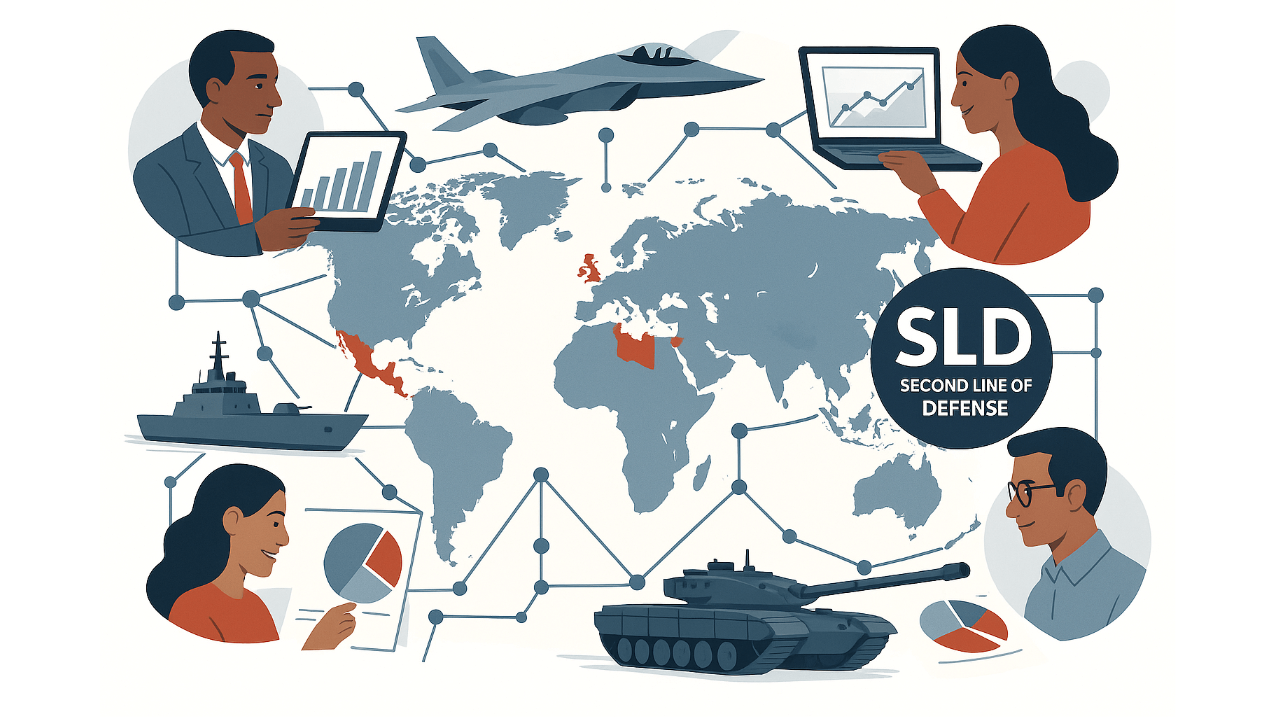
And as a member of the Second Line of Defense team, he has published many articles which have captured in a number of books we have published as well.
Perspectives on Portuguese History: The 2024 Lectures by Professor Kenneth Maxwell
The Tale of Three Cities: The Rebuilding of London, Paris, and Lisbon
Kenneth Maxwell on Global Trends: An Historian of the 18th Century Looks at the Contemporary World