CAMP PENDLETON, California
By Robbin Laird
On Friday December 5, 2205, I was at Camp Pendleton and watched the air insertion element of the Embassy Reinforcement Exerice which is part of Steel Knight 2025.
In the sprawling urban training complex at Camp Pendleton, I witnessed the aviation insertion component of one of the Marine Corps’ most demanding missions: rapid embassy reinforcement under hostile conditions. As part of Steel Knight 25, running December 1-14, 2025, this exercise serves as the final certification venue for Marines preparing to deploy with Marine Rotational Force – Darwin (MRF-D).
Steel Knight 25 is a scenario-driven, division-led exercise that has evolved into the primary certification mechanism for Marine units preparing for forward deployment. Led by the 1st Marine Division and I Marine Expeditionary Force, the exercise spans installations across California and Arizona, integrating command post exercises with live-fire events and realistic operational scenarios.
This year’s iteration is particularly significant because it certifies the designated regiment, 5th Marines, as the ground combat element for the upcoming MRF-D rotation. The exercise integrates aviation and logistics enablers into a full Marine Air-Ground Task Force construct, ensuring that all elements can function cohesively under the pressures of dispersed operations and crisis response.
The Marine Rotational Force – Darwin represents a critical piece of U.S. and allied Indo-Pacific strategy. With approximately 2,500 Marines and Sailors deploying to Australia’s Northern Territory, MRF-D serves as both a training platform for alliance interoperability and a crisis-response capability positioned for rapid deployment throughout the region. The force participates in major exercises like Talisman Sabre, Predator Series, and Archipelagic Coastal Defense, building the muscle memory for combined operations that could prove essential in a real crisis.
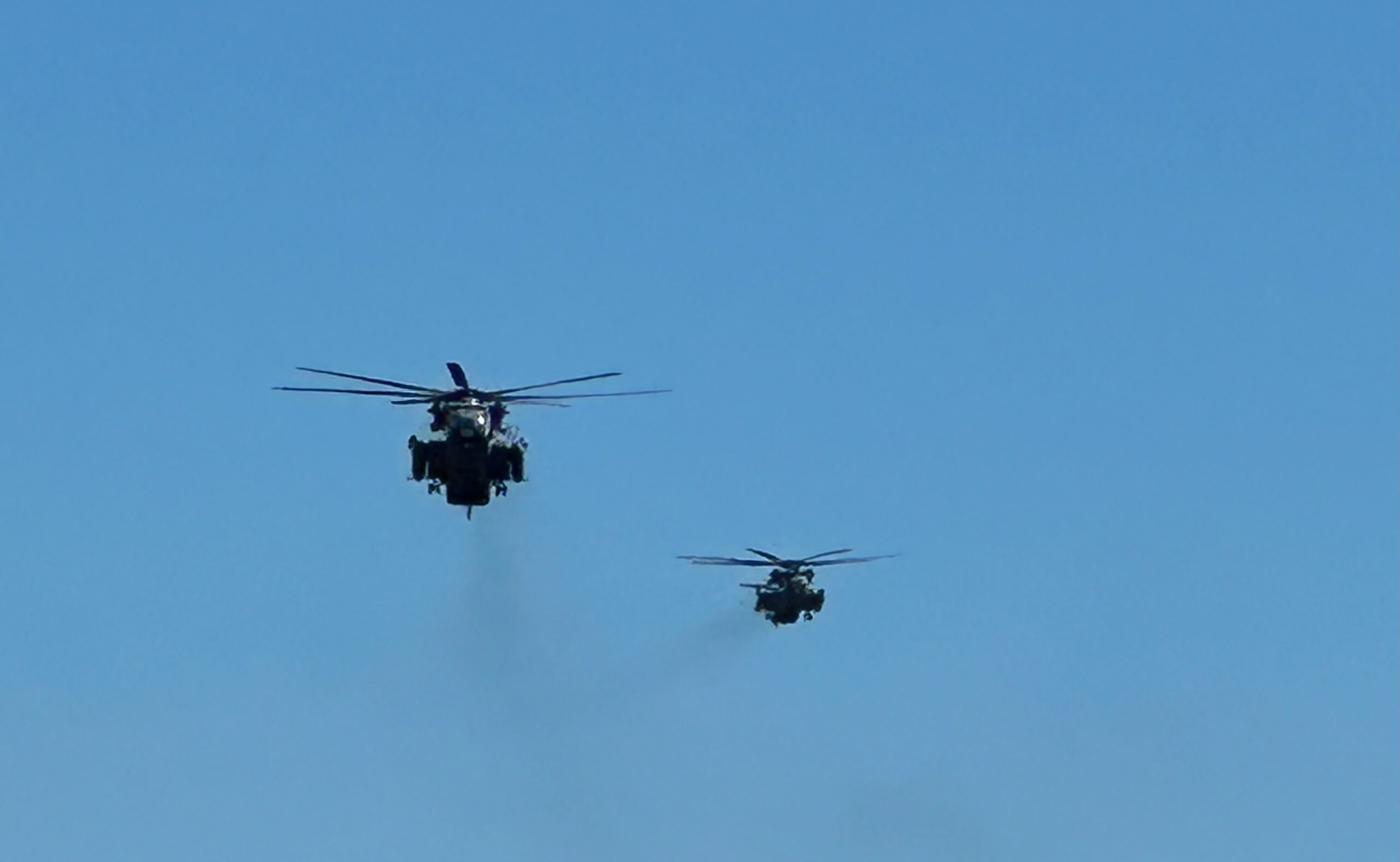
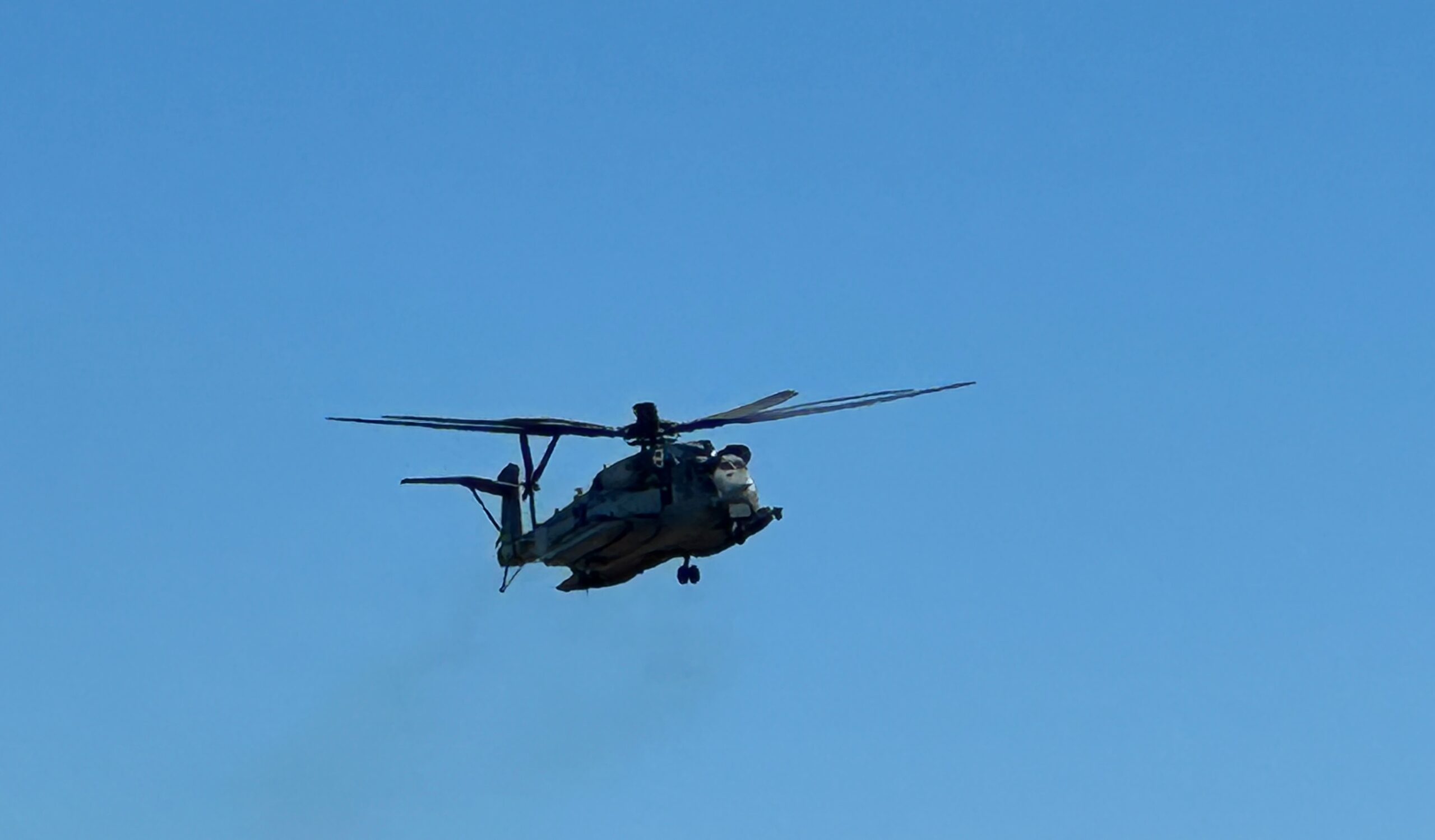
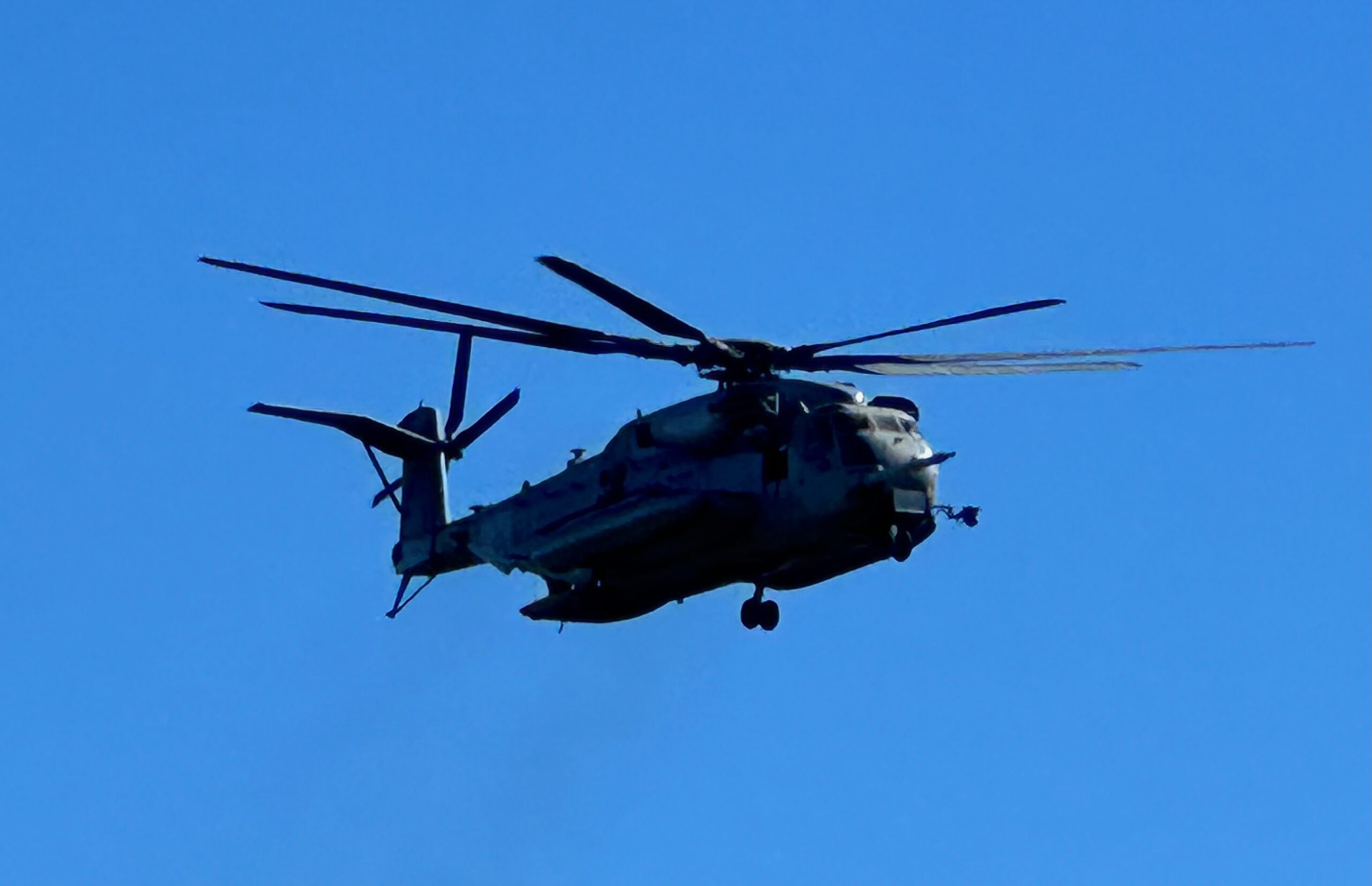
In typical MEU/SPMAGTF and MRF‑D embassy‑reinforcement drills, MV‑22Bs move the reinforced security element from ship or forward bases to the embassy or a nearby landing zone, exploiting speed, range, and aerial refueling to arrive quickly from over‑the‑horizon. CH‑53Es are used when the mission requires heavier loads, such as vehicles, generators, barriers, or large pallets of supplies, or when more robust external lift is needed into an austere LZ supporting the embassy complex.
Operationally, Ospreys usually bring in the initial rifle company‑sized force, FAST platoon, or similar element to seize and secure the compound, rooftop HLZ, or nearby airhead, often under cover of darkness and with minimal footprint. Once security and an LZ are assured, CH‑53Es flow follow‑on forces, heavier weapons, sustainment stocks, and, if required, evacuation loads, enabling prolonged defense or larger non‑combatant evacuation operations tied to the embassy.
Ospreys excel at long‑range, time‑sensitive crisis response tasks like rapid insertion, limited NEO, and tactical recovery related to an embassy crisis because they cruise fast at higher altitudes and can refuel in flight. Super Stallions, while slower and shorter‑ranged, provide unmatched vertical heavy lift in the Marine Corps inventory, allowing commanders to bring in the “heavy kit” that turns a small crisis‑response element into a more enduring, self‑sustaining force.
The typical division of labor between the aircraft is as follows:
- MV‑22: initial alert launch, embassy perimeter or rooftop insertion, rapid movement of reaction forces between zones, and initial NEO lifts of personnel.
- CH‑53E: follow‑on waves with heavy equipment, bulk ammunition, water and fuel, engineer gear, and larger evacuation serials once an LZ is secured.
Used together under such an embassy reinforcement construct, the Osprey gives the operational commander reach and speed to get Marines onto the embassy quickly, while the Super Stallion provides the mass and logistics depth to hold, reinforce, or expand operations as the crisis evolves. This pairing underpins the crisis‑response packages built for Indo‑Pacific, CENTCOM, AFRICOM, and European theaters where embassy reinforcement and NEO remain core Marine missions.
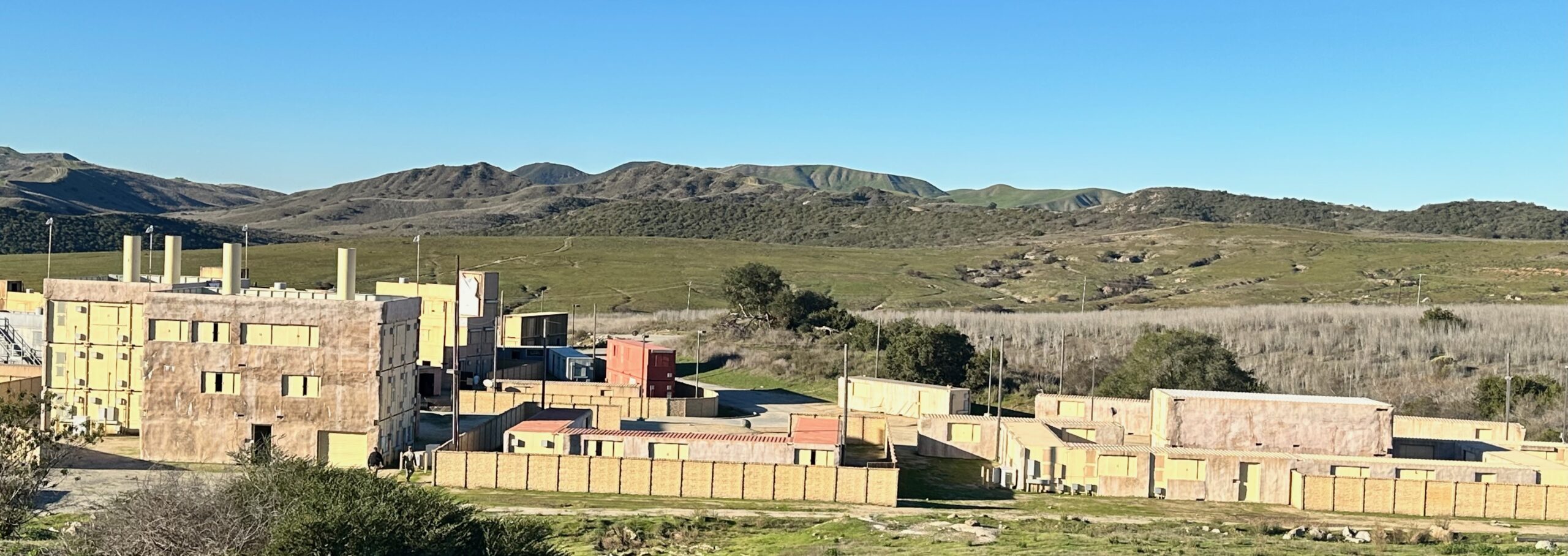
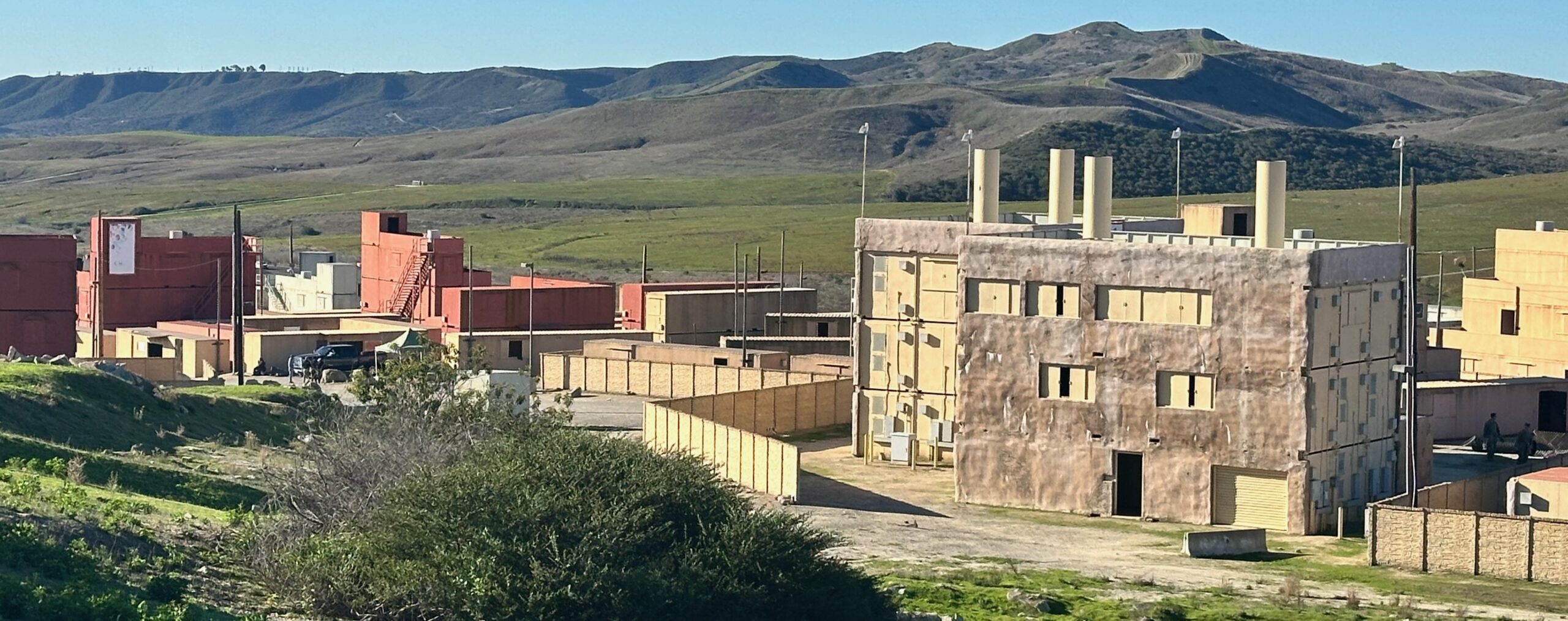
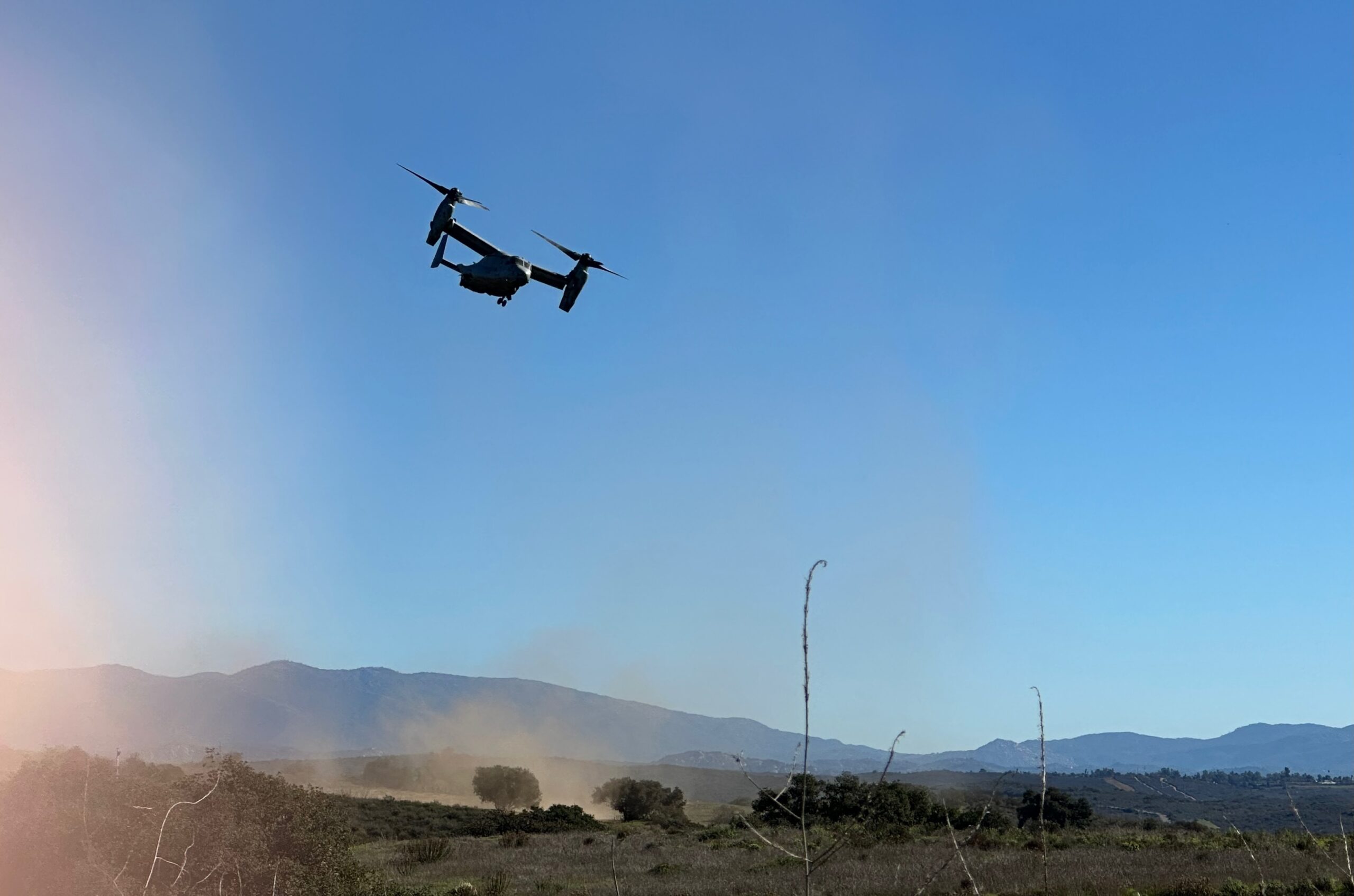
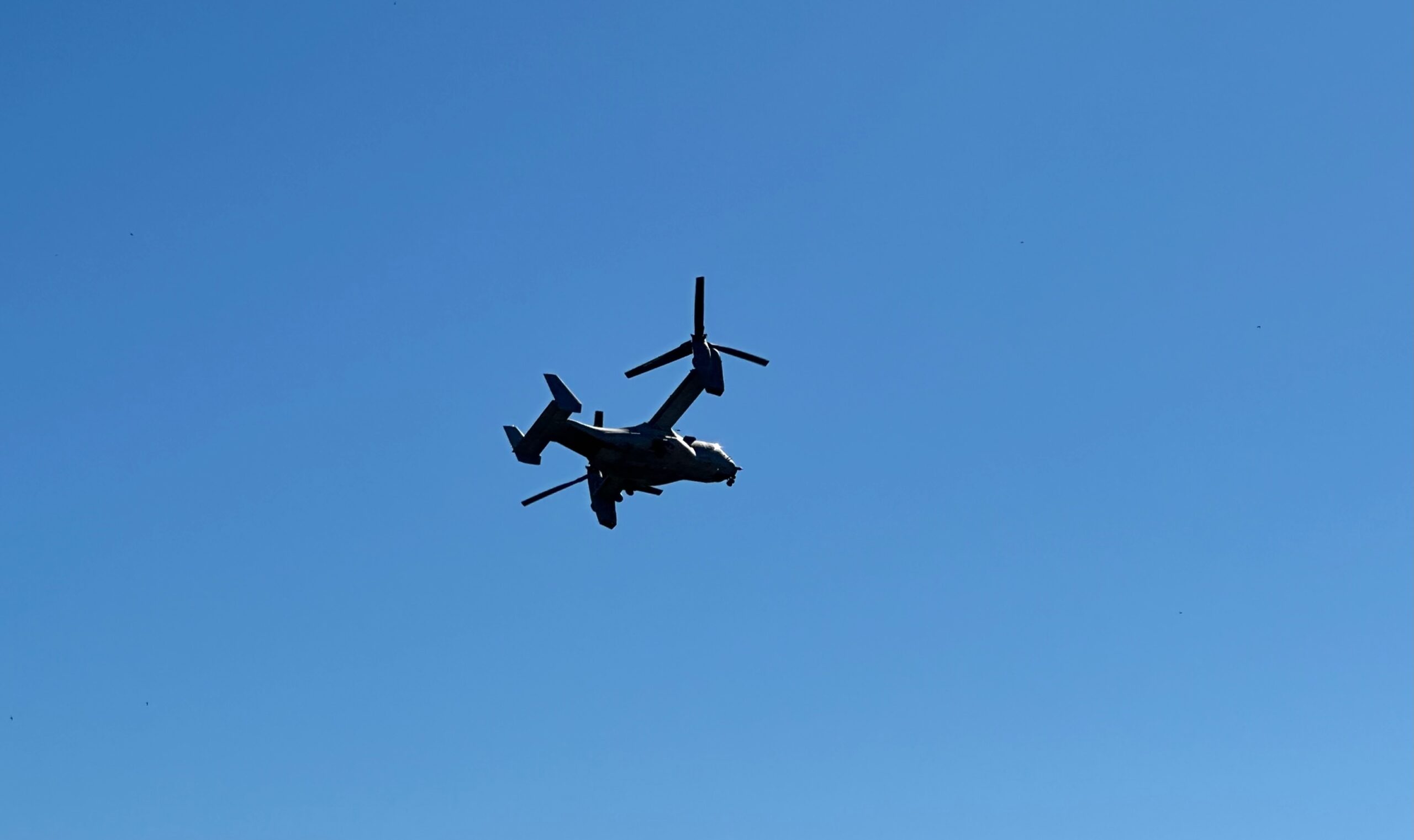
The photos in the slideshow below I shot during the insert. The first two photos show the exercise “town” where the intervention occurs. The next three highlight the Ospreys and the next three the Super Stalllions.
I also shot a video of one of the Ospreys involved in the aviation insert during the exercise.