

By Robbin Laird
This week I am visiting Third Marine Air Wing and observing their Steel Knight exercise.
And what I will learn will complement what I have observed over the years when visiting the Second Marine Air Wing (2nd MAW) since 2009
The USMC aviation force at a critical juncture in its evolution.
This is a subject I will address specifically in a book to be published next year focused on USMC evolution in the new challenging era of crisis management.
But the transformation of USMC aviation over the past two decades has been extraordinary.
The caee of 2nd MAW is indicative.
With approximately 11,500 Marines and sailors across three air stations on the Eastern Seaboard, this wing incorporates new platforms and capabilities and blends them with older ones in an ongoing process of transformation for the “fight tonight” force.
Based at Marine Corps Air Stations Cherry Point and New River in North Carolina, and Beaufort in South Carolina, the 2nd MAW operates as more than just a supporting element for the II Marine Expeditionary Force. Unlike other Marine air wings with direct geographic combatant command alignments, the 2nd MAW serves as the Marine Corps’ designated Crisis Response Force, capable of rapid deployment anywhere in the world. This unique role has been demonstrated repeatedly in recent operations, from rapid deployments to Guantanamo Bay and Panama to sustained operations across AFRICOM, CENTCOM, EUCOM, and SOUTHCOM areas of responsibility.
“We consider ourselves the service’s Crisis Response ACE,” explains a wing spokesperson, capturing the ethos of a force that must be prepared for any contingency, anywhere, at any time.
The wing’s structure reflects both its diverse mission set and its transitional nature. Organized into five Marine Aircraft Groups (MAGs) and 32 operational squadrons plus training detachments, the 2nd MAW currently operates 13 different type/model/series aircraft:
At Cherry Point, MAG-14 serves as the emerging center of F-35 and unmanned operations, housing F-35B and C squadrons, the last operational AV-8B Harrier squadron (VMA-223), MQ-9 Reaper operations, and the critical KC-130J Super Hercules logistics backbone. Marine Air Control Group 28, also based at Cherry Point, provides the essential command and control, air defense, and engineering support that enables distributed operations.
New River hosts the wing’s assault support aviation, with MAG-26 operating exclusively MV-22B Ospreys across seven squadrons, while MAG-29 combines the heavy lift capabilities of CH-53E/K helicopters with the versatile H-1 Viper and Venom platforms.
Beaufort currently serves as the F-35 training hub and houses the remaining F/A-18 Hornet squadrons undergoing transition to the Lightning II, with VMFA-501 operating as the East Coast Fleet Replacement Squadron for F-35 training.
What distinguishes the 2nd MAW and Marine aviation generally is its relentless focus on integration. This isn’t simply about adding new platforms to an existing structure; it’s about how each new capability fundamentally shifts the center of gravity for the entire force. The introduction of the Osprey didn’t just provide new transport capability. It revolutionized how Marines think about range, speed, and operational concepts. Similarly, the F-35 isn’t merely replacing the Hornet and Harrier; it’s creating entirely new possibilities for data fusion, battlefield awareness, and coordination with other platforms.
This integration extends beyond aviation platforms to encompass the ground combat element, creating combined arms capabilities that no other service replicates. The pressure to digitally connect these diverse systems reflects not just technological possibility but operational necessity. The Marine Corps’ fundamental approach to warfare demands that platforms work together in ways that multiply their individual capabilities.
The wing is currently in the midst of a comprehensive transition from legacy F/A-18 Hornets and AV-8B Harriers to the F-35 Lightning II. This transition, scheduled to complete over the next several years, represents more than a simple aircraft replacement. The F-35’s sensors, data fusion capabilities, and networking potential will enable new forms of integration with everything from attack helicopters receiving targeting data to autonomous systems operating under F-35 management.
VMA-223, the last operational Harrier squadron, will stand down in 2026, ending an era while VMA-231 prepares to reactivate as an F-35B squadron. VMFA-533 at Beaufort became the wing’s first operational F-35 squadron in late 2024, with additional transitions planned through fiscal year 2028.
Underlying all operations is the critical logistics backbone provided by VMR-252’s KC-130J aircraft. These platforms proved their worth in recent rapid deployments to Guantanamo Bay and Panama, demonstrating the organic lift capability that enables the wing’s crisis response mission. The symbiotic relationship between the KC-130J and platforms like the Osprey which lacks the range for extended operations without aerial refueling exemplifies the integrated approach that defines Marine aviation.
Yet this capability faces significant challenges. Years of intensive operations have stressed these aircraft, while production has not kept pace with operational demands. The coming integration of unmanned systems may provide some relief, but the fundamental requirement for sustainable logistics remains a critical concern for future force development.
The next chapter in the wing’s evolution will likely center on the integration of autonomous systems. The F-35’s advanced radar and data processing capabilities position it as a natural platform for managing multiple unmanned assets, from aerial vehicles to ground-based sensors. This represents not just technological advancement but a potential revolution in how small Marine units can achieve effects traditionally requiring much larger forces.
The wing’s current MQ-9 operations under VMU-2 provide a foundation for this evolution, while the planned Marine Unmanned Aerial Vehicle Maintenance Squadron scheduled to stand up in fiscal year 2026 signals the institutional commitment to unmanned operations.
The 2nd MAW’s evolution reflects broader questions about the future of military aviation and force structure. As conflicts from Ukraine to the Middle East demonstrate the proliferation of advanced capabilities to smaller actors, the days when Marines could expect technological superiority simply by showing up are ending. Future operations will require not just advanced platforms but the training, command capabilities, and integrated systems that allow those platforms to work together effectively.
The wing’s unique role as a crisis response force means it must be prepared for this reality across multiple theaters and conflict types. Whether supporting counter-terrorism operations in Africa, deterrence missions in Europe, or potential high-intensity conflict in the Pacific, the 2nd MAW must maintain capabilities across the full spectrum of operations.
Today’s 2nd MAW represents a force that has successfully integrated revolutionary capabilities like tiltrotor aviation while positioning itself for the next transformation through F-35 adoption and autonomous systems integration. This balance between proven capabilities and emerging technologies, between readiness for immediate crisis response and preparation for future conflicts, defines both the challenge and the opportunity facing Marine aviation.
The wing’s continued evolution will serve as a test case for how military organizations can adapt to rapidly changing technological and strategic environments while maintaining the core capabilities that define their effectiveness. For the Marines of the 2nd MAW, this means continuing to perfect the art of integration or making diverse platforms and capabilities work together in ways that create effects greater than the sum of their parts.
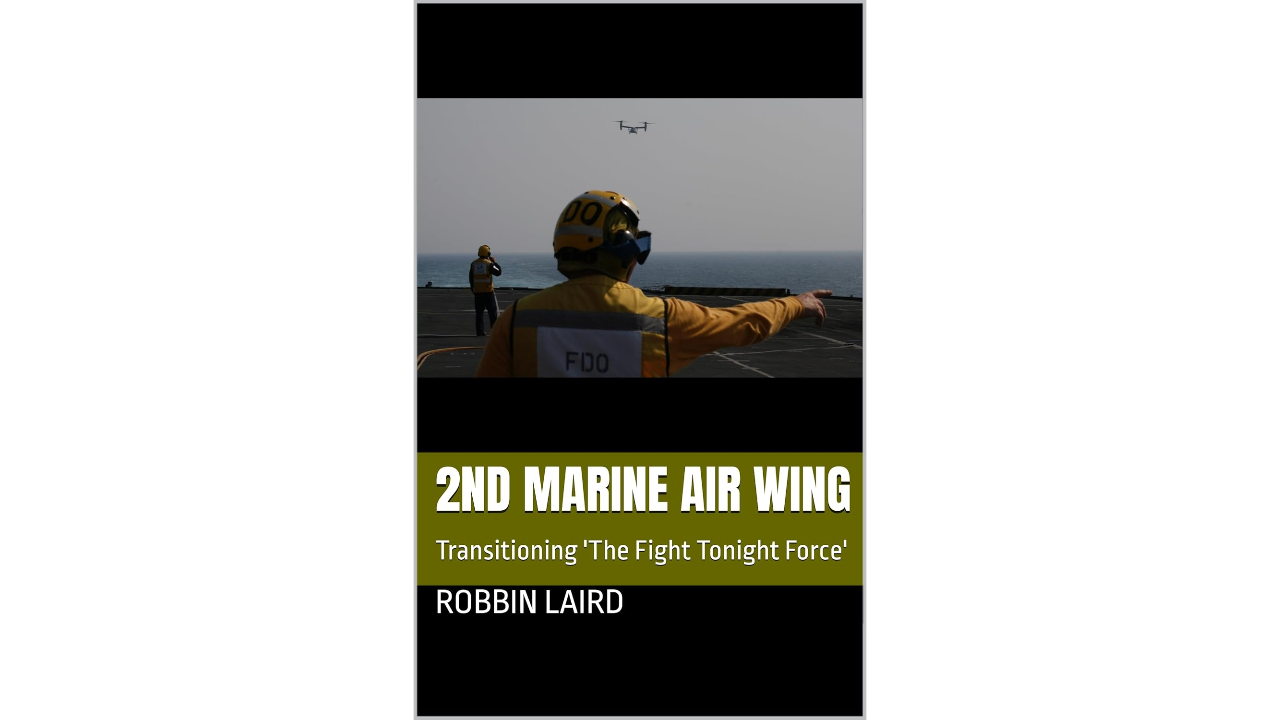
In my newly published book on 2nd MAW, I take the reader down the path which I have navigated in my years of visiting Cherry Point, New River and Beaufort. The book tells the story of these Marines as they transitioned the “fight tonight” force in real time. It is difficult to realize how challenging such a vocation is until you have spent time with the warfighters and watched them deal with the challenges of trying to remain at the cutting edge of operations in a world where being second best does not cut it.
For a video discussing the book, see the following:
Transitioning the Flight Tonight Force: The Story of 2nd Marine Air Wing