By Robbin Laird
In a modern defense and industrial ecosystem, the journey from raw material to a flight critical component is often invisible to strategists, policymakers, and even operators who depend on these parts every day. Yet it is precisely in places like this machine shop, captured in the photos accompanying this article, that industrial resilience, precision, and human skill converge to shape the credibility of Western air and maritime power.
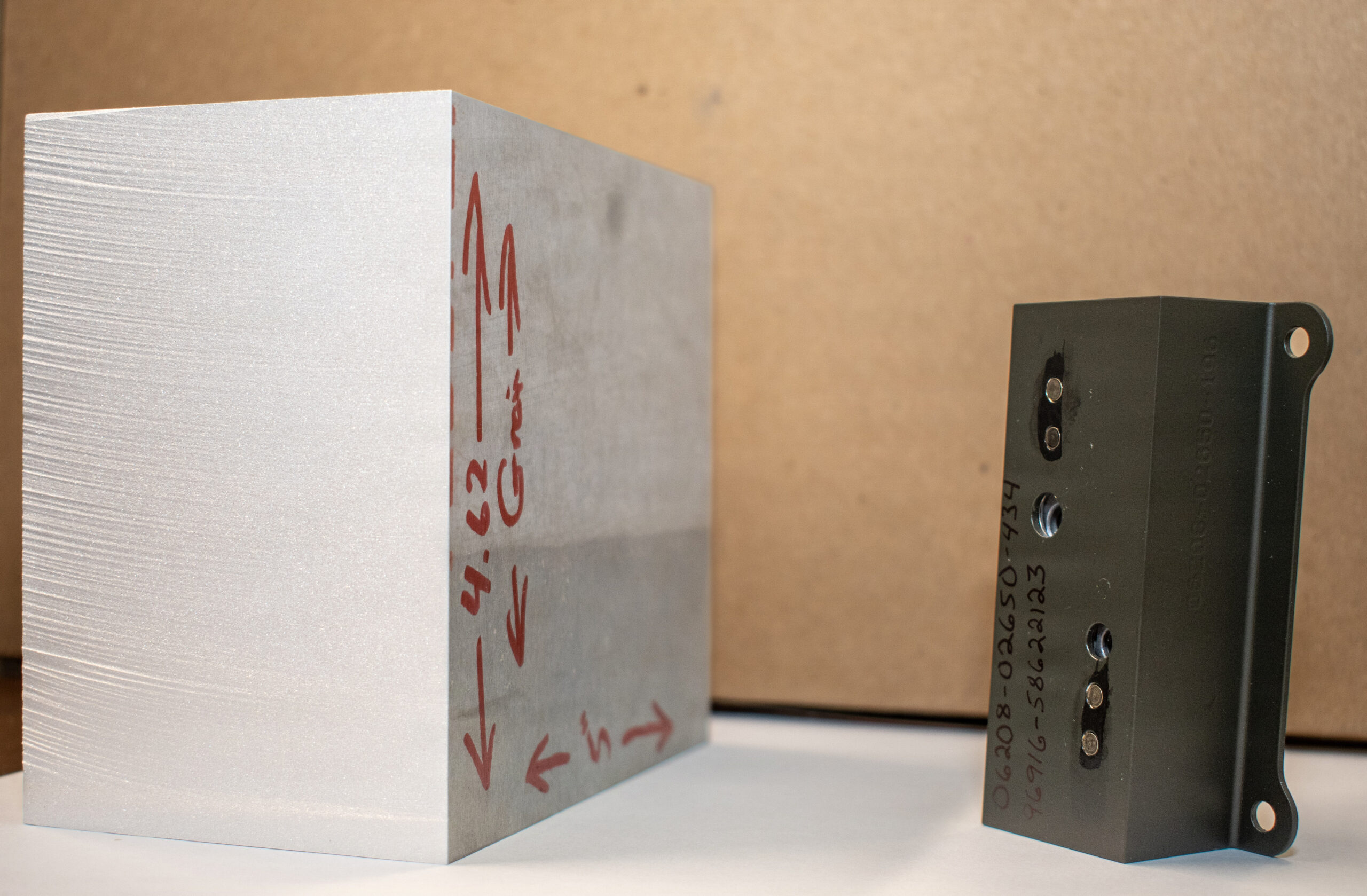
The opening image juxtaposes a clean, rectangular metal billet marked with grease pencil annotations and a smaller, more complex, coated part sitting beside it. The contrast is deliberate: on one side, undifferentiated mass and potential; on the other, finished geometry ready to integrate into a larger system. Those handwritten dimensions and arrows testify to the first step in the process, engineering intent translated into manufacturable features, tolerances, and operations. This is where design, materials science, and production planning begin to intersect.
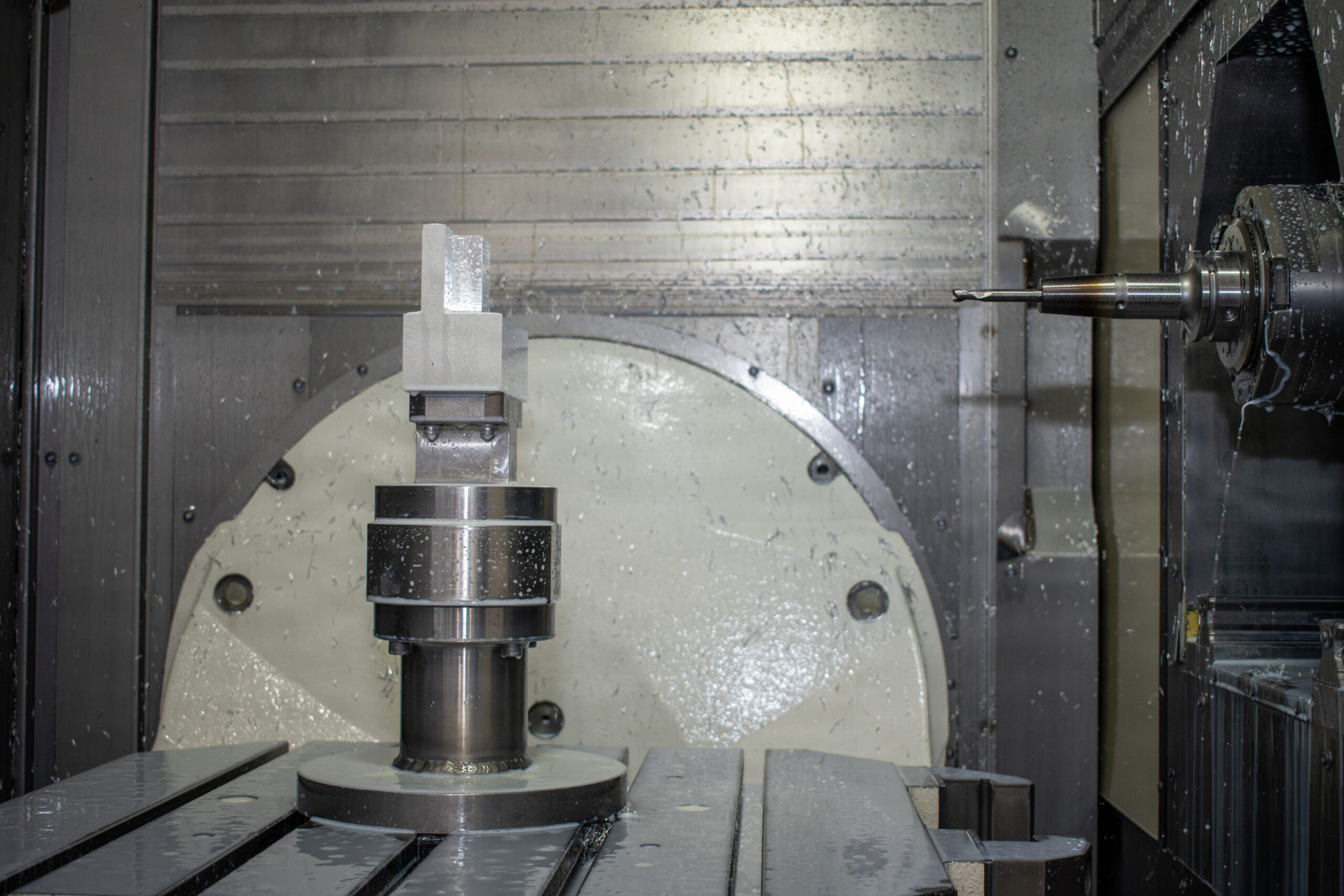
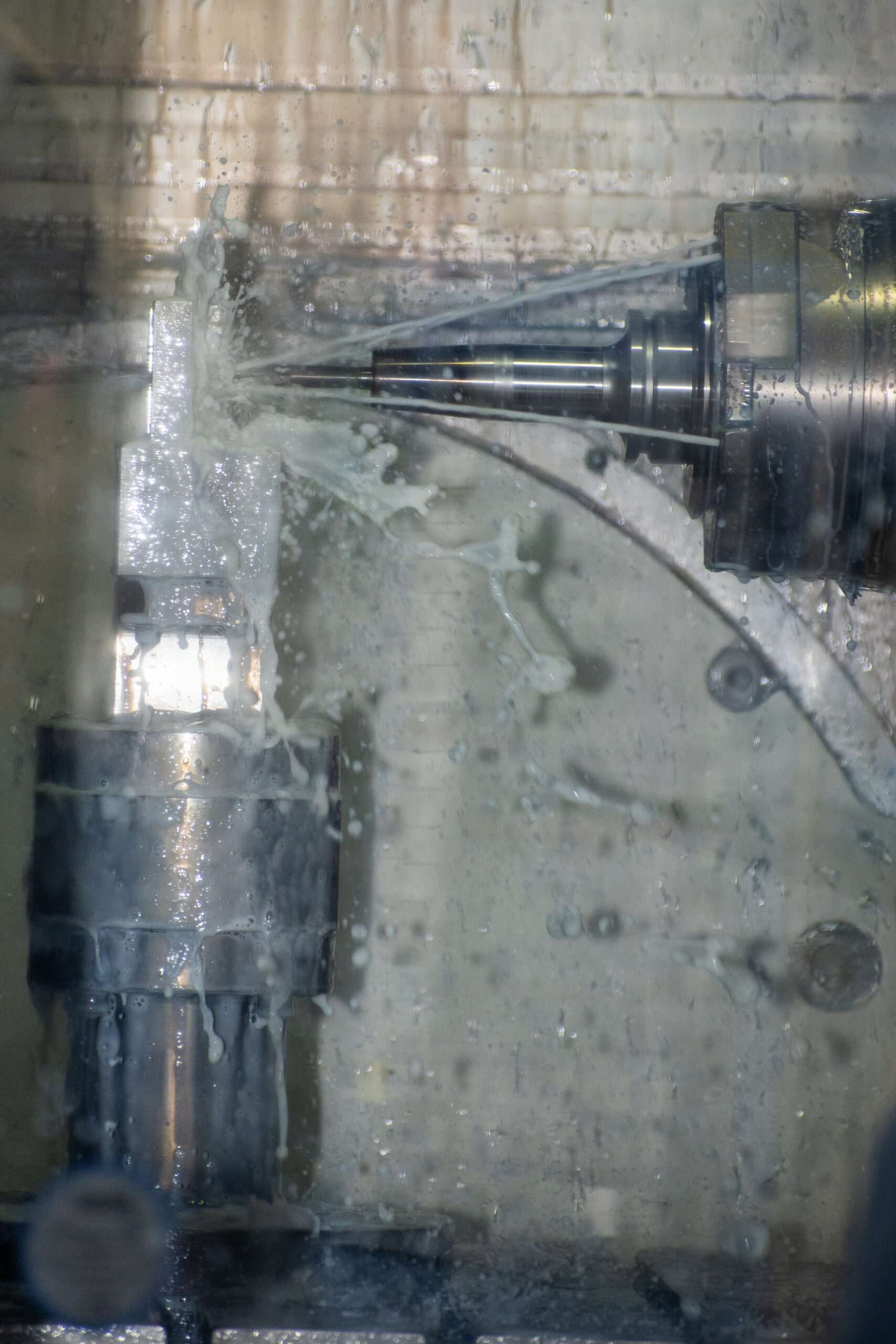
Moving from the bench to the machine enclosure, the next set of photos bring us directly into the heart of computer numerical control (CNC) machining. A billet is gripped in a precision fixture while a high speed spindle closes in, coolant cascading across the cutting zone in a white spray. The visual chaos of droplets and chips belies a carefully choreographed operation: toolpaths calculated to microns, feeds and speeds tuned to material behavior, and fixtures designed to hold geometry steady as metal is systematically removed. What looks like a violent encounter between tool and workpiece is in fact a controlled transformation, kinematic choreography that turns mass into function.
From another angle inside the machine enclosure, we see the billet elevated on a robust mandrel, centered in front of a rotary table and a waiting tool. This snapshot encapsulates the essence of multi axis machining: positioning, orientation, and access. By lifting the workpiece and rotating it relative to the spindle, the shop can machine complex faces and features in fewer setups, improving accuracy and repeatability. For aerospace and naval components, where stack up tolerances and alignment translate directly into aircraft performance and survivability of shipboard systems, this ability to hold geometry across multiple surfaces is not abstract engineering; it is operational reliability.
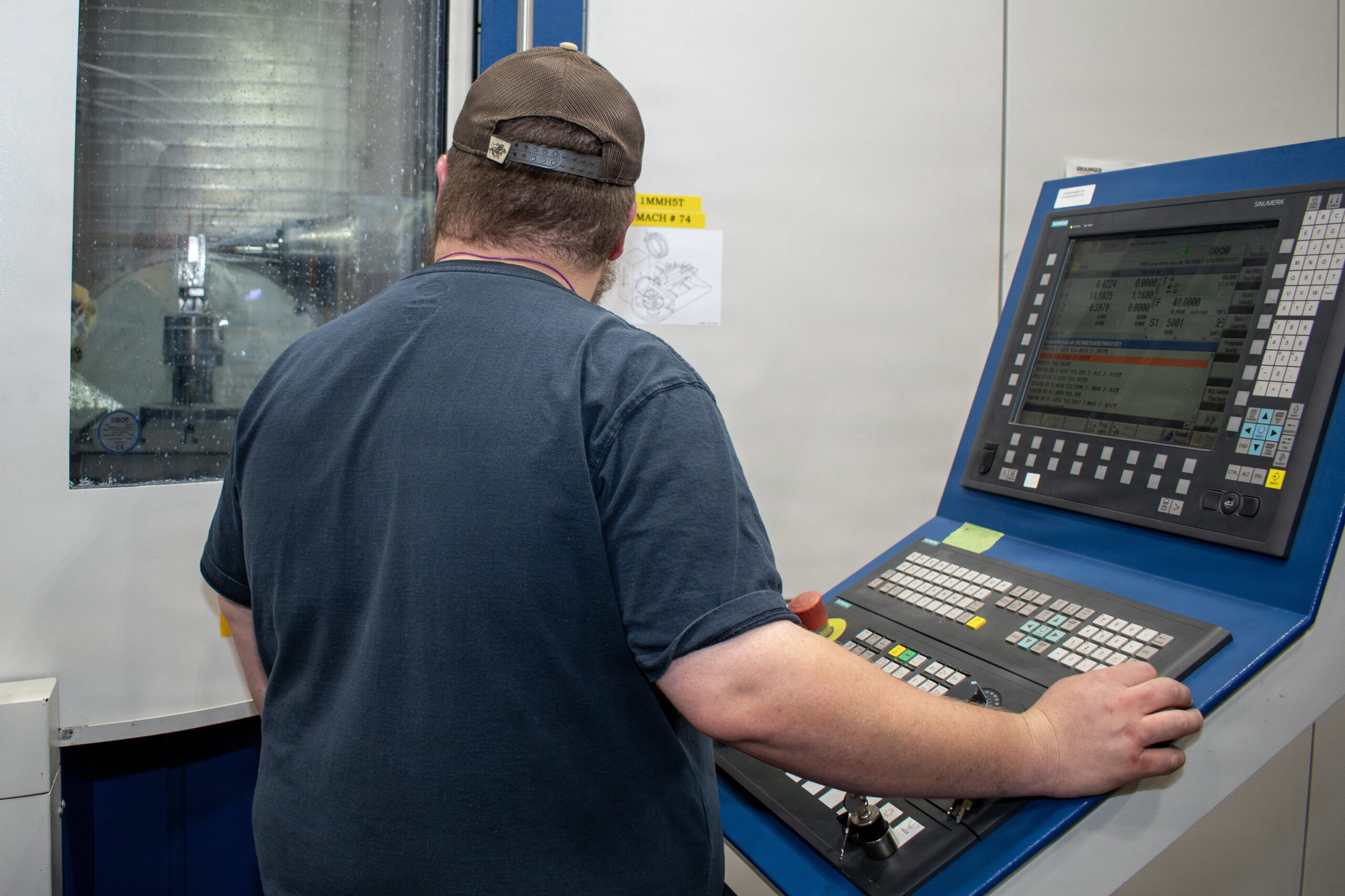
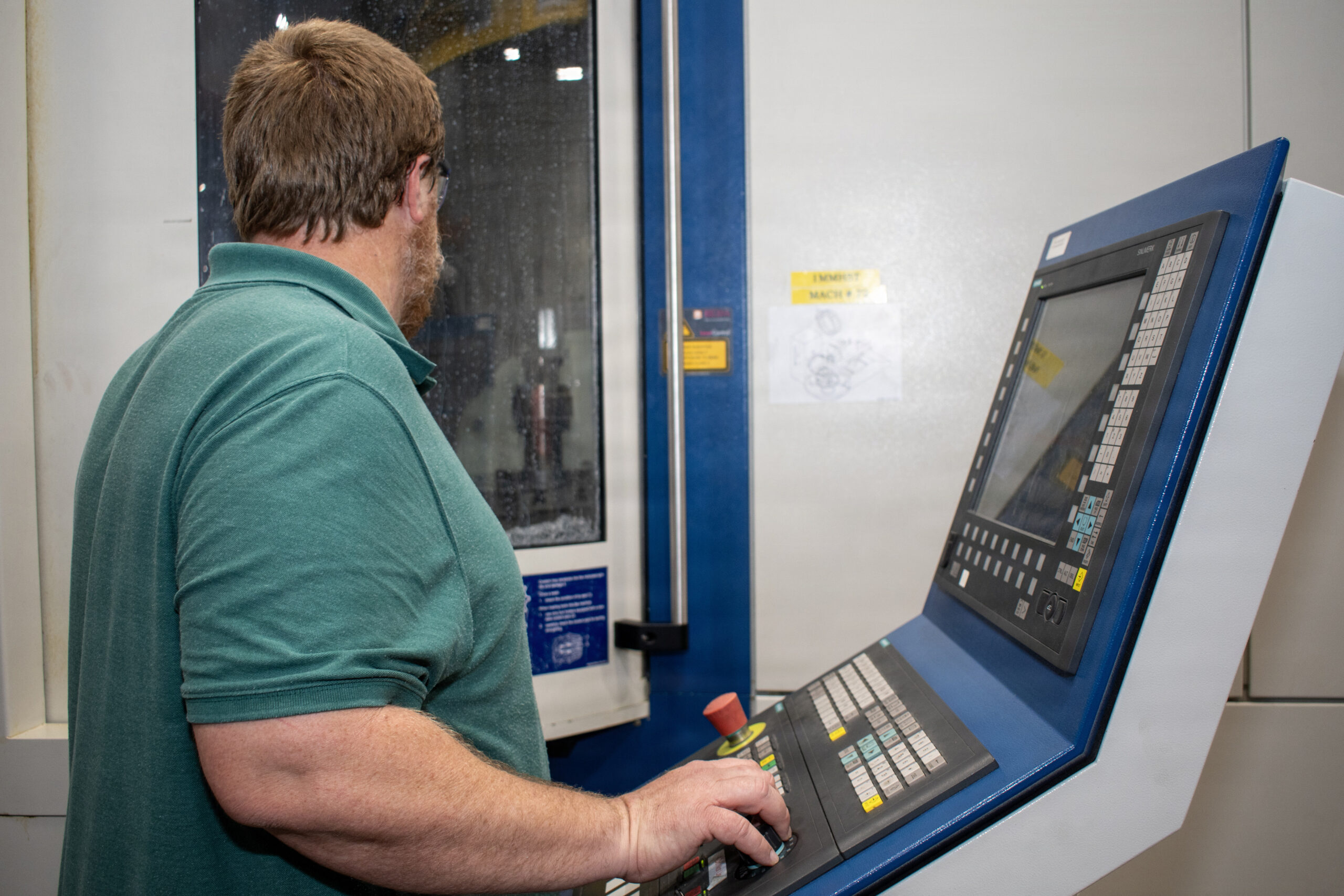
The human element appears as we step outside the enclosure to the control station. An operator stands at the CNC console, eyes moving between the machine window and a densely populated keypad and display. This is the interface where digital engineering meets physical production. Programs derived from CAD/CAM models are loaded, verified, and adjusted; offsets are set; tool changes are sequenced; and the machine’s status is constantly monitored. Far from the stereotype of fully automated “lights out” production, this image reinforces that a skilled machinist is still central to quality and throughput. The operator’s experience, knowing how a material sounds when a cut is right or wrong, catching a subtle anomaly in the program readout, remains a critical safeguard.
Another console shot shows a second operator managing a different machine, again with the billet visible through the window. Here, the emphasis is on control diversity and workload management: multiple machines, each with its own interface, tooling strategy, and job queue, all synchronized to deliver components on schedule. For defense programs operating under tight timelines, surge demands, and complex configuration control, the shop’s ability to coordinate these parallel digital production lines becomes a strategic asset. It is the micro level counterpart to industrial base discussions about capacity, ramp rates, and supply chain robustness.
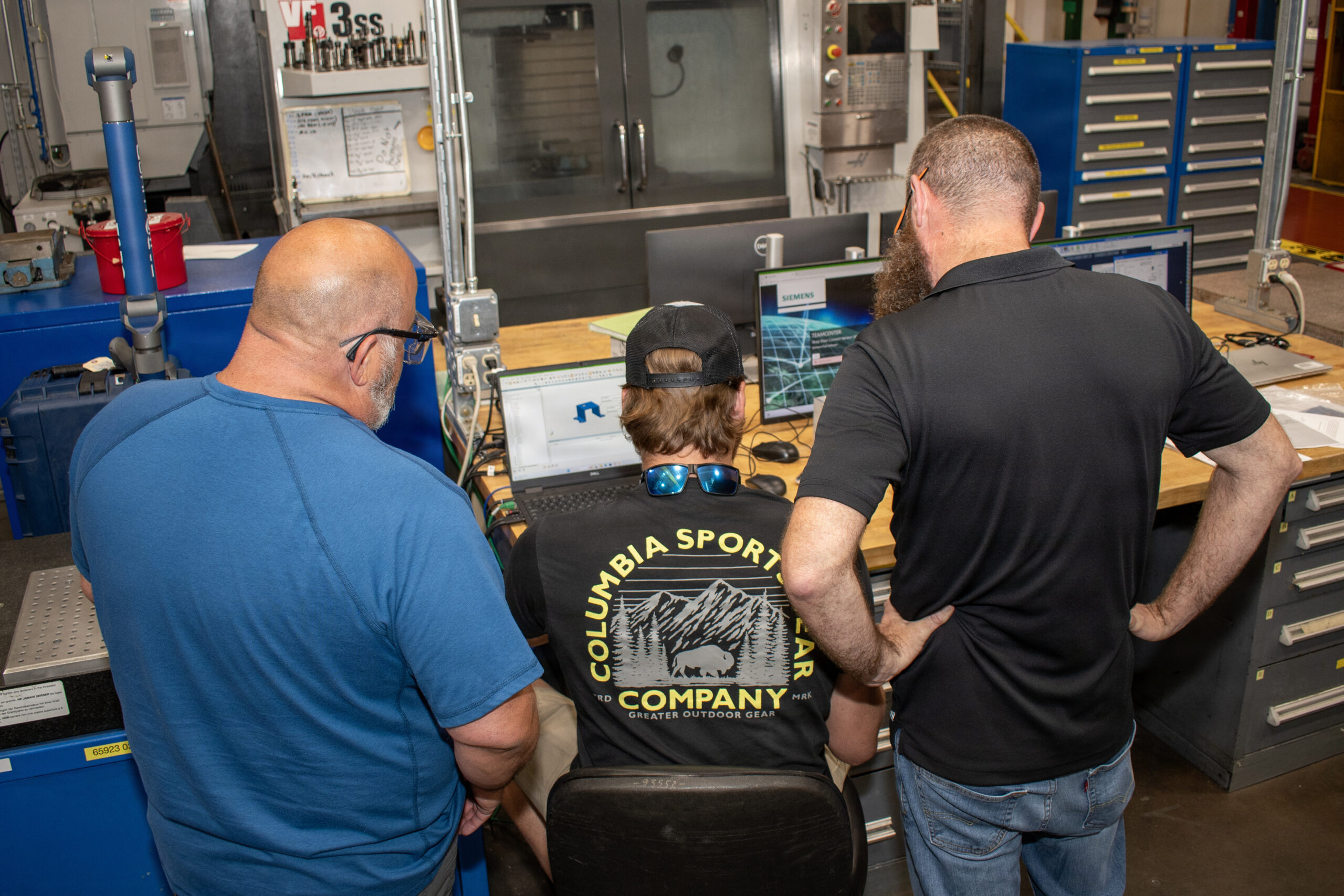
Equally important is the collaborative engineering captured in the image of three personnel gathered around a workstation, examining a 3D model on a laptop with the machine bay in the background. This is the design for manufacture loop in action. Toolpaths are being refined, fixtures conceptualized, and features evaluated in the virtual domain before chips are ever cut. By pairing CAD/CAM with the practical insights of the machinists and programmers, the shop reduces scrap, shortens development cycles, and ensures that the designed component can be produced repeatedly under real world conditions. This kind of tight integration between digital design and shop floor practice is essential if Western industry is to keep pace with the accelerating technical demands of fifth generation aircraft, advanced rotorcraft, and maritime autonomous systems.
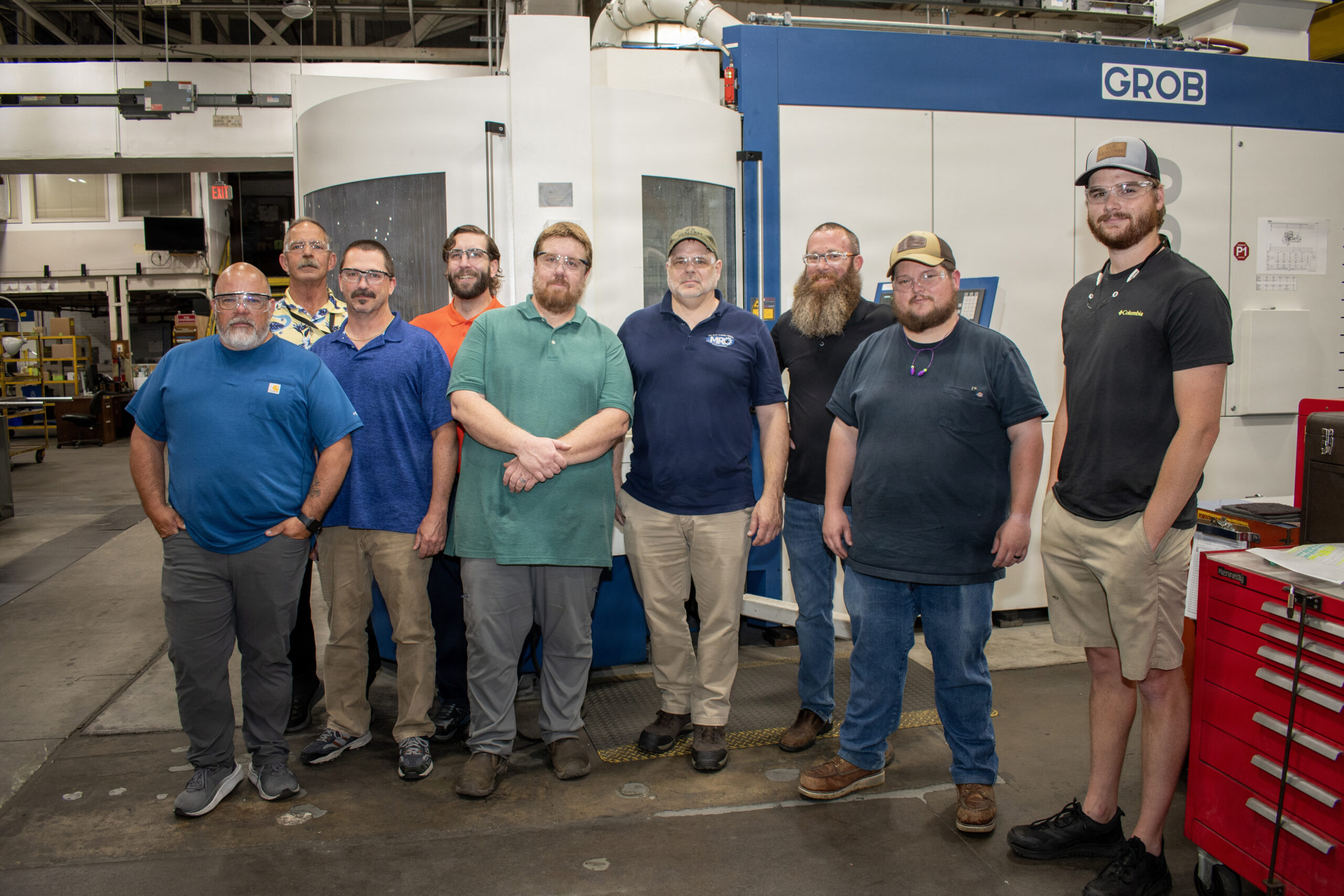
The group photo in front of a large machining center underscores the team dimension of industrial competence. A diverse set of specialists (operators, programmers, supervisors, perhaps quality and maintenance personnel) stand together in front of the machine that anchors much of this work. They represent the living capability behind the often abstract phrase “industrial base.” Each brings a unique mix of experience: legacy knowledge about older platforms and materials, familiarity with new alloys and coatings, fluency with evolving software toolchains, and a shared culture of safety and precision. When analysts speak of supply chain fragility or resilience, they are, in effect, speaking about whether teams like this can be recruited, trained, retained, and supported over time.
Taken as a whole, the photo set offers a compact visual narrative of contemporary machining as a pillar of defense capability.
We see the transformation from raw billet to finished part; the interior of CNC enclosures where material is shaped at high speed; the consoles where digital instructions are translated into physical action; the computer workstations where models and toolpaths are refined; and the people whose expertise binds everything together.
For policymakers and military leaders, the message is straightforward: investments in advanced platforms and munitions must be matched by sustained attention to the shops, tools, and teams that make the components. Without the quiet, repetitive, exacting work depicted here, the most sophisticated aircraft or naval system remains an idea rather than a deployed capability.
In future modernization debates, whether about sustaining legacy fleets like the CH53E while fielding the CH53K, expanding F35 production, or scaling unmanned maritime systems, images like these should inform our understanding of what “capacity” and “readiness” truly mean.
They remind us that behind every serial number and configuration code lies a series of human decisions, machine operations, and engineering checks. Appreciating that reality is a necessary step toward building a more resilient Western defense industrial base.