In an effort to be in compliance with GDPR we are providing you with the latest documentation about how we collect, use, share and secure your information, we want to make you aware of our updated privacy policy here
Enter your name and email address below to receive our newsletter.
Major Bonner During the SLD Interview (Credit: SLD)
06/09/2011 – During the roundtable at the Tanker Airlift Control Center (TACC) , the discussion closed with the challenge of adjudication (i.e. matching resources to demand and bringing plan and reality together). Major Bonner led this part of the discussion.
SLD: What does the Barrel do?
Moderator Comment: Once the plan is built, taking into account the weather, it goes to the allocation phase. So, there are “x” number of missions planned, now we have to match those missions up with available iron and air crews, and that’s where the major comes in.
Major Bonner: Like you said, the demand for tankers significantly outweighs the availability of assets. And some of that goes to the fleet structure; who owns what assets. We can only task active duty tankers unless we have some sort of long-term or short-term contract with the air reserve components.
SLD: Who controls the reserve assets?
Major Bonner: It depends on the type of unit. Some of them are unit-owned.
SLD: The state of Mississippi has its own air tanker fleet, that kind of thing?
Major Bonner: When it comes to the active-duty assets, we (TACC) can directly task those assets. When we want to use Air National Guard or Air Force Reserve crews and aircraft, instead of tasking, we ask them for participation when we are not in a mobilized status.
SLD: So, you’re a requester, not a demander?
Major Bonner: For reserve air components, it is based on volunteerism. And a lot of that ties into having the mandays and financial resources available to facilitate bringing those crews on orders for the mission.
SLD: So, okay. I have a need here. Your general calls who, for example?
Major Bonner: He would call the guard and the reserve commands, directors, their A3s. And we actually have liaisons here in TACC from both the guard and reserve side to facilitate those discussions.
SLD: I love this — the federal air tanker fleet.
Major Bonner: Say I have a C-130 mission. If I don’t have enough active duty or long-term reserve or guard forces to support the mission I would talk to our guard and reserve liaisons to say, here’s a mission, can you find a volunteer unit to fly it? This is a good process and works effectively when we can forecast requirements a few weeks out because most of the Air Reserve Component people are traditional, meaning they work civilian jobs most of the time. So, if there’s a mission that shows up three days from now, you’re generally not going to be able to find a volunteer on such short notice.
Forty bundles of fuel fly out the back of a U.S. Air Force Globemaster III aircraft assigned to the 816th Expeditionary Airlift Squadron, on target during an air drop mission over Afghanistan in support of Operation Enduring Freedom, Dec. 8, 2010. (Credit: U.S. Air Forces Central Public Affairs 12/9/10)
SLD: That sounds interesting. So, you have to stratify this in two ways. One is here are my assets.
Major Bonner: Right.
SLD: And here I can manage my assets up against five times the demand. And now I have to prioritize that. Then of the remaining demand, who can I chop this to this week or tomorrow?
Major Bonner: Yes. And there are a lot of factors to consider. Who can volunteer for it, or is there the proper amount of man-days or funding to pay for it?
As you start getting that delta between what you have available and what there is out there, that gets briefed to the TACC commander. If required, the 18th Air Force and AMC will get involved, and that’s where they weigh in to say we need to ask for more volunteerism, or they can make decisions about reducing the amount of training missions our crews conduct in order to dedicate those crews and aircraft to operational missions. Or, hypothetically, they can also look at the projected demand for airlift, air refueling and aeromedical evacuation for the next six months, and using those forecasts they can explore the option of mobilizing guard or reserve units, if required.
SLD: But at the end of the day, this must be one hell of a task to forecast in some way or to anticipate. Because you’re obviously anticipating. You’ve got to anticipate.
Major Bonner: That’s what you spend half your time doing because the appetite for airlift, air refueling and aeromedical evacuation capabilities is insatiable, while our fleet strength is generally static.
Sunrise or Sunset of Chinese Rise? (Credit: Bigstock)
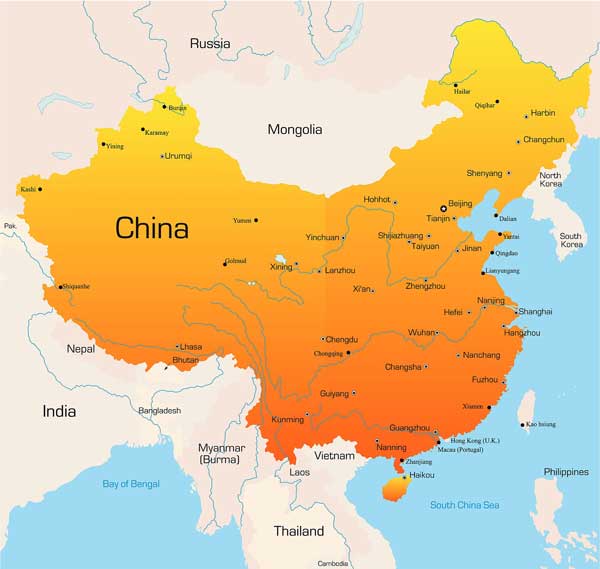
06/01/2011 – The China we have known in the last 15 years will not likely be the China of the next 15 years. The extent to which China can project power in the next 15 years depends upon China’s internal economic and political dynamics, China’s interaction with its Asian neighbors, and most importantly on the evolution of China’s relationship to the US.
As a result of China’s one child policy, its work force stopped growing in 2010 and began contracting in 2011. From now on China’s labor will contract at a rate of about 0.33 percent per year. Even if multiple births were allowed per family, it would take more than 15 years for increased births to become manifest in the work force. This also means continuing reduction in the number of young men who could serve in China’s military. The shrinking labor force will have to support a growing older population, putting a demographic restraint on the economic growth rate in the next 15 years. Wages are already escalating in China, pushed by rising costs of food and fuel. For the Chinese government to succeed in shifting from an export engine to a domestic consumption engine to pull growth, the wealth of China would have to be spread to an ever-widening workforce. This means wages will have to escalate even faster.
Foreign manufacturers operating in China are increasingly facing three challenges: Chinese labor costs are undermining Chinese competitiveness; Chinese quality control is poor; and bringing advanced technology products and production processes to China ends up with theft of that technology. Japanese companies that have been making things in China for decades no longer see China as a supply chain hub.
Now, they see making things for Chinese consumption as desirable, but using China as a source for components and subassemblies for export to the rest of the world is no longer competitive and likely to end up with problems of product recalls. American companies are coming around to the same view.
In other words, the dream of China as the manufacturing hub of the global economy is over.
The Impact of Chinese Regions Will Become Incresingly Significant in Shaping China’s Future (Credit: Bigstock)
China’s high rate of growth was long dependent on a high rate of exports during decades of high rates of growth of world trade. Since the summer of 2008 the world went through the deepest, longest contraction of world trade since the Great Depression. Even now, in 2011, world trade is not growing fast, and has only just reached back to the peak of 2008. Given that China is also less competitive globally, the export engine cannot be sufficient to keep China growing at double digit rates. Shifting to a growth engine based on domestic consumption or consumption in the nearby neighborhood will take several years.
To offset the collapse of trade since the summer of 2008, the Chinese government implemented extraordinary fiscal stimulus (bigger than that of the US) and ordered all banks to open credit to whoever walked through the door. Artificial lending reached levels which exceeded US financial bank bailouts and quantitative easing by the US Federal Reserve (quantitative easing), with the result that the entire banking system of China could be said to be nearly insolvent, sitting on vast non-performing loans mandated by Communist leadership.
Chinese industry is already flooded with excessive inventories of raw materials and finished products for which there is inadequate global demand.
With economic growth likely to slow, and rising social unrest driven by inflation and economic slowdown, and diminishing manpower, China will have limited options for projecting power. China’s army is local, not national. With social unrest likely to grow, a process of decentralization and fragmentation is not inconceivable, with the result of emergence of a kind of federation, with armies rather than a single army.
China can pressure neighboring countries over issues of jurisdiction over waterways, islands, offshore drilling rights, etc. and try to “Finlandize” the neighborhood, leaving few allies for American operations, bases and support.
China can focus military spending on means of degrading US capability in the region (satellite busting, EMP communication disruption, cyberwarfare, etc.).
China can give priority to any means of forcing US capabilities to move further away from China’s zone of influence (including parading of carrier busters, increased submarine capability, and aggressive close contact testing), with the possibility of aiming for a Chinese Asian-oriented equivalent of the Monroe Doctrine.
But China is unlikely to be able to confront US military power head on in the next 15 years. Chinese economic leverage on the US will not be powerful. China does not have alternatives to holding US Treasuries, and selling Treasuries would automatically lower the value of Chinese reserves as well as pushing up the value of the Chinese currency much faster (selling Treasuries and dumping the dollars have the effect of pushing up the renminbi).
China’s power projection therefore depends upon U.S. responses to Asian growth:
Will the US develop new economic and security alliances (India, Asean countries, etc.) and enhance ties to Japan?
Will the US develop a strategic counterweight with increasing interaction with India and its navy and airforce?
Can the US Defense Department bring itself into a new framework of thinking involving joint development of next generation weaponry and logistical support with Asians, integrating the future of their security and economic growth with that of US interests?
There is no preordained outcome of China emerging as the dominant superpower in Asia. China’s starting point is too fragile.
The key question is whether the US abandons interest and involvement with Asia, or instead has a policy of engagement and encouragement of a growing web of mutual interests across the Pacific in which China can prosper without ability to seek, much less achieve, domination.
Have We Experienced the Dawn of the Chinese Century?
By the Hon. Bill Anderson
China as Epicenter of the Globe? (Credit: Bigstock)
06/07/2011 – As Second Line of Defense completes its first issues forum, I offer a final thought from a different perspective on Chinese influence…both on a regional and world scale.
We don’t have to wait 15 years for the PRC to dominate the Pacific…it already does in many important ways….and it extends globally as well.
Domination not from the overt wielding of significant military power, but rather from commerce, made possible by the global demand for the goods and services that China is, and will continue to be, uniquely positioned to provide. It is almost certain that as the global economy claws its way out of recession, commercial demand will spark another uptick in China’s growth and its influence across the globe.
And the West can do very little to halt this march forward. As China’s influence grows, business, politics and international legal norms will take on a decidedly Eastern flavor, reflecting that growing influence.
The real question is whether the US…and the West for that matter…will adapt and reposition to remain a powerful influence on the world stage in the coming decades, or fail to see what is on the horizon as the world passes us by.
Just as many factors aligned one hundred years ago to set the stage for the American Century, a number of critical building blocks are in place to position China for prominence today:
Population: China enjoys a 4X population advantage over the United States. Now, that large population looms potentially as a huge social and financial liability. But, my guess is the Chinese government, desperate to maintain control, will be incentivized to find opportunities for growth on a large scale…and so far, they seem to be doing a pretty good job of it. Some suggest that China’s one child policy will stifle the country’s growth. Now, that might be an issue for a nation at capacity from a human standpoint. But, China has hundreds of millions of underutilized human resources…and they know it. The Chinese will move up to 300 million people into cities to man the factories of the future. Imagine having the equivalent of the population of the United States available as new industrial workers. What a huge strategic asset.
Government: While the current Chinese government does not meet the Western standard for self determination, it has certainly proved itself nimble enough to execute policies positioning the country for growth. It plans with a national view…it takes an end to end look at requirements to keep things moving in the right direction…and it takes actions to secure the means necessary to reach its goals.
Natural Resources: Where China has advantage in terms of indigenous supply…as in the case of rare earth metals…it has taken steps to ensure that adequate supplies remain in the country to support the development of local industries. We can debate whether those actions are contrary to international trade norms, but it is hard to argue the logic of their actions from a nationalistic perspective. And, where China sees internal resource shortages, they have moved aggressively to lock up supply from around the world. One example…China is moving decisively to secure energy feedstocks in Canada, Cuba and South America.
China is busy collecting friends in the Pacific and around the world, not by applying military force, but by providing economic opportunity to others. As China’s manufacturing labor rates have grown uncompetitive, China has taken action.
They have moved off shore to look for lower costs…at the same time providing opportunities to other nations. And every business deal that is signed delivers another friend to China. While the United States was busy establishing Africa Command…a US presence that no African nation is too keen on hosting…China has been busy cutting business deals on the African continent. When push comes to shove, who do you think will have the hearts and minds of the peoples of Africa?
Manufacturing as Core Building Block for Global Power (Credit: Bigstock)
And as Chinese influence grows in the global marketplace, so will their impact on international customs, laws and norms. Chinese President Hu Jintao, while recently in the U.S. gave us a glimpse as to how Chinese values differ from the West. His message was clear…different national circumstances impact how one addresses so called universal values like human rights. It is pretty safe to say that Eastern views of business, property rights, human rights, etc. will in the future have a greater influence on international norms currently dominated by Western views.
As President Obama is reaching out to Brazil to secure another stable source of oil for the U.S., let’s take a look at which country is having the most effect on Brazil’s economy. In 2010, China absorbed 11% of Brazil’s exports (up from 4% in 2000)…the US only accounted for 10% (down from 26% in 2002). In 2010, China became Brazil’s largest foreign direct investor with inflows of almost $50 billion. China is now Brazil’s largest trading partner.
Western leadership has all grown up in the American Century…we have no other frame of reference.
Are we now ill equipped to function within a new set of paradigms?
Has it made us blind to what is happening around us…a steady shift of the playing
field in favor of the East?
As the West contemplates how it will position itself vis-à-vis the emerging powers of the East…especially China…it will be helpful to see the world as it actually is and will be in the future, rather than as it was or how we wish it to be. China has the capacity and skill to produce what the West demands.
Do they really need overwhelming military capability to dominate the world stage…or are they already there?
***
The Honorable William C. “Bill” Anderson served as Assistant Secretary of the Air Force from 2005-2008. He can be reached at CO****@*****il.com.
06/07/2011 – The attendees of the November 19-20, 2010 NATO Lisbon summits (among the NATO heads of state alone and their subsequent meeting with President Dmitry Medvedev within the framework of the NATO-Russia Council) faced two independent BMD decisions:
(1) whether NATO would agree to integrate its missile defense programs (which focus on protecting military forces) with those being pursued until now independently by the United States in Eastern Europe (which protect aim to protect populations); and
(2) whether Russia would consider joining this effort, and to what extent (selling technologies, exchanging data, combining operations, etc). The second decision was formally independent of the first — NATO could agree to pool its efforts with those of the United States whether Russia joined this effort or not.
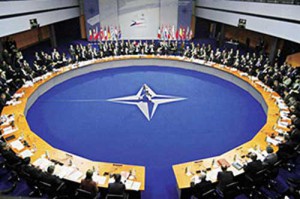
NATO Lisbon Summit (Credit: http://cns.miis.edu/stories/101112_lisbon_summit.htm)
The main goal of U.S. officials heading into the Lisbon summit was to secure NATO’s support for linking the U.S. BMD systems that will be deployed in Europe with NATO’s collective missile defense program. In particular, the Obama administration wanted to expand NATO’s ALTBMD command-and-control system to give it the capability to support territorial missile defense in conjunction with U.S. national systems deployed near Iran.
With this capacity, European countries could better integrate their BMD assets with those of the United States. For example, the U.S. SM-3 interceptor missiles are not yet accessible to European fire control systems, which operate on a different radar band. Overcoming these incompatibilities will lead to enhanced BMD protection for NATO and also help defend American military and civilian personnel in Europe. Eventually, the European-based NATO BMD assets would strengthen the U.S. ability to defend North America from long-range missile strikes.
The resulting linkage between European and American defenses would, it is hoped, reinforce the sense of common transatlantic security. For example, NATO radars could extend the sensor coverage of U.S. systems, certain Aegis-capable European warships could join with their U.S. Navy counterparts in providing joint BMD defenses of European ports, while the Patriot and other land-based missile interceptors could better network with U.S. interceptors.
As part of this newly integrated BMD architecture, the United States would like to place early-warning and tracking radars on the territory of countries near Iran, ideally to include Turkey, to be followed by increasingly effective interceptor missiles. Both the sensors and the interceptors would also be placed at sea.
Going into the Lisbon summit, the administration had already overcome several earlier objections regarding its missile defense plans. NATO leaders have come to share previously predominately American concerns about Iran’s emerging potential to launch ballistic missiles, perhaps armed with a nuclear warhead, against European targets. As the Wikileaks documents show, U.S. officials genuinely believed that Iran had received sufficient North Korean nuclear assistance to be able already to target European cities with long-range ballistic missiles.
President Medvedev at the Lisbon Summit (Credit: http://bit.ly/kqpgku)
Although Iran was not explicitly named as a focal point of NATO’s BMD systems due to Turkish sensitivities, it can be optimized to deal with an emerging Iranian missile threat.
In addition, the planned BMD architecture is sufficiently flexible that it can be adapted to deal with other possible missile threats that might emanate from the Middle East and North Africa. As designed by the Obama administration, the U.S. Phased Adaptive Approach can be adapted over tome in response to changes in NATO’s missile threat environment.
Another objection that had largely been overcome is that pursuing comprehensive missile defense would fit awkwardly with the existing alliance nuclear deterrence mission. Parrying those who argued that NATO could abandon its nuclear missions or rely more on arms control measures, U.S. officials have persuaded many allied governments that missile defense complements the alliance’s deterrence mission by causing potential aggressors to doubt that any attack could succeed as well as providing a hedge should deterrence fail. Rasmussen in particular added that the anti-ballistic missile system was a “complement” of NATO’s nuclear deterrent.
In the end, NATO missile defense advocates at the Lisbon summit successfully reinforced perceptions of a credible threat, demonstrated how NATO could leverage already acquired capabilities, stressed that burden-sharing is an imperative of any alliance, explained that enhanced European BMD capabilities will bolster European influence in missile defense decision making, revealed how BMD assets could also cope with related threats (such as those from the air or outer space), and generally persuaded NATO governments and populations that they would get good value for their money.
Nonetheless, questions persist regarding potential contradictions between missile defense and other NATO goals, the ability of the alliance to sustain the necessary expenditures for a decade to construct the system, and persistent Russian unease regarding the entire project.
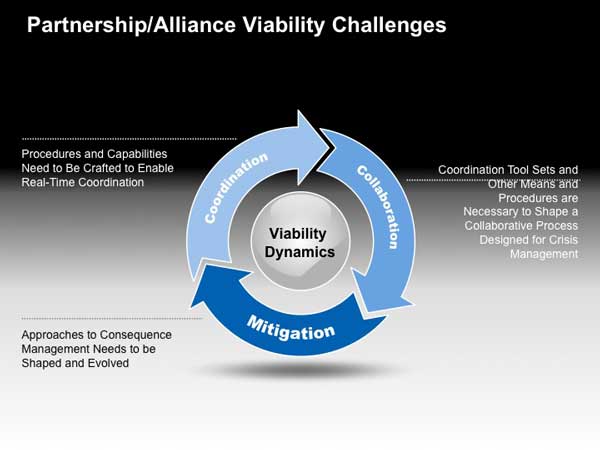
Alliance Viability Challenges (Credit: SLD)
At the Lisbon summit, the NATO governments agreed in principle to integrate their European missile defense programs with those of the United States, with the goal of providing comprehensive protection for NATO’s populations, territory, and forces. At Lisbon, the member governments committed to extending NATO’s Active Layered Theater Ballistic Missile Defense (ALTBMD) system to give it the capability to support territorial missile defense in conjunction with U.S. national systems deployed near Europe.
But the NATO leaders deferred resolving many of the difficult command-and-control issues regarding how to operate these new missile defense capabilities for further discussion.
And they gave their defense ministers until this June to develop a concrete action plan — which among other features would specify where to base the system — for achieving the sought-after BMD capability.
Meanwhile, NATO and Russia agreed to resume their theater missile defense exercises, which had been suspended since the 2008 Georgia War — and discuss how they could potentially cooperate on territorial missile defense in the future. Medvedev indicated Russia would consider very deep collaboration provided Moscow was treated as an equal partner, whereas the NATO governments seemed more interested in less encompassing collaboration on specific projects.
In terms of intra-NATO collaboration, unease persists about certain aspects of collective NATO missile defense. For example, to intercept a ballistic missile, a launch decision must be made in minutes. This condition could require pre-authorizing NATO commanders to attempt a missile interception without securing additional approval from civilian political leaders.
But some European officials are uneasy about allowing presumably American military leaders to take what could be an act of war (e.g., mistakenly shooting down a civilian space rocket) without requiring mandatory consultations with NATO leaders governments, especially of those allied countries from which interceptors are launched or where potentially radioactive debris might fall.
Yet, supporters of pursuing a comprehensive NATO BMD capacity note that even an erroneous launch decision is less fraught with risk than the alliance’s current nuclear mission, which has similar command-and-control arrangements to those that might be employed for NATO collective missile defense.
In addition, until they establish an integrated command-and-control system, the Europeans will be living with the U.S.-built missile defense architecture in which the United States dominates the command and control decisions.
Another long-term problem with missile defenses relates to money. Funding the upgraded ALTBMD command-and-control system extension to cover NATO’s territory and populations will require spending almost 300 million more dollars on the system than the $1.1 billion NATO already committed on the system designed to protect only NATO’s deployed military forces. Advocates consider this a bargain, especially since the United States is spending billions of dollars to deploy a range of expensive U.S. BMD systems in Europe already, but some NATO leaders genuinely believe that they cannot afford this additional expense at a time when they are implementing emergency austerity budgets to cope with the global economic slowdown.
In addition to the resulting lost tax revenue and additional counter-cyclical measures, the European governments are funding an unexpectedly costly military operation in Afghanistan and look set to adopt other new NATO commitments, such as enhanced collective cyber defenses, at the summit.
Some Europeans hope that Washington itself will eventually agree to pay entirely for the ALTBMD upgrade and other additional NATO missile defense capabilities. They see the U.S. unilaterally developing a variety of BMD systems and think that the United States might offer the allies a missile defense umbrella to complement the essentially unilateral extended nuclear deterrence guarantee Washington provides many NATO and non-NATO countries.
And some European leaders fear that U.S. and NATO analysts have underestimated the likely aggregate expenses of NATO’s acquiring and sustaining an effective comprehensive BMD capacity. For many major defense programs, substantial costs overruns occur following a procurement decision. Some European officials might be more supportive of missile defense if European companies receive many of the NATO and U.S. BMD contracts.
Many allies hope that the transatlantic missile defense will strengthen alliance cohesion and solidarity by further reinforcing the U.S. commitment to European security. Commitment is already established by the stationing of American troops and nuclear weapons, backstopped by U.S. conventional and strategic nuclear forces deployed outside Europe.
But some East European governments in particular have been concerned that the Russian-American reset is leading the United States to pay less attention to their security concerns.
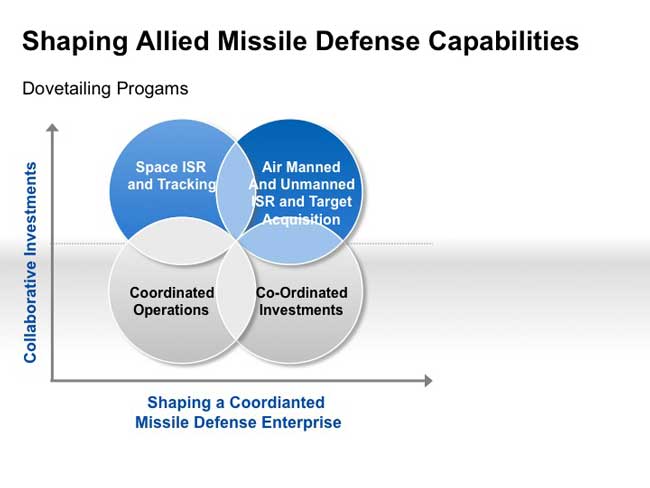
Shaping a Coordinated Missile Defense Enterprise (Credit: SLD)
From this perspective of strategic reassurance, the issue of the effectiveness of these systems under combat conditions is less important than the fact that, by their mere presence, they bind the allies together in another collective defense mission and symbolize continued U.S. engagement in NATO’s defense.
Ideally, this new transatlantic link would complement the existing nuclear and civilian linkages as well as NATO’s arms control and nonproliferation policies, but tensions persist between NATO’s BMD policies and the other capabilities. For example, money spent on BMD systems cannot be used to sustain conventional forces, which could exacerbate burden-sharing differences within the alliance.
How the alliance’s BMD programs link with NATO air defenses is unclear. Synergies and cost savings might be realized by using common assets for missile and air defenses. In addition, some threats, such as long-range cruise missiles, might fall between them if kept too separate.
Whereas some in NATO – including some Germans – see missile defense as a substitute from more aggressive threats to retaliate to attack with nuclear weapons, others see them as possibly encouraging a nuclear first strike by leading an actor to think they might be able to destroy so many of the target state’s own nuclear weapons and supporting command and control facilities that they could then use missile defenses to blunt any nuclear response.
Finally, whereas some NATO leaders argue that missile defenses will improve NATO-Russian relations through a cooperative work program, other allies continue to worry that pursuing comprehensive missile defenses will antagonize Russia.
At the Summit, NATO and Russia agreed to cooperate more on BMD issues. For example, they have committed to resuming their theater missile defense exercises, which had been suspended since the 2008 Georgia War — and discuss how they could potentially cooperate on territorial missile defense in the future.
NATO and Russian experts are now addressing such questions as what a common architecture could look like, what costs and technologies might be shared between NATO and Russia, how the knowledge gained from the joint exercises might be applied to a standing joint BMD system, and how NATO and Russia might cooperate to defend European territory as well as NATO and Russian military forces on deployment.
Yet, Medvedev indicated Russia would consider very deep collaboration provided Moscow was treated as an equal partner. He had proposed that NATO and Russia establish a joint sectoral missile defense architecture for Europe in which each party would be in charge of defending the other from missiles the fly through its territory.
Medvedev and other Russian officials warn of a new Cold War style arms race if Russia and NATO cannot agree on a cooperative European missile defense program. They have presented the choice as between full Russian participation in any NATO missile defense system (which is politically and technically impossible) or renewed confrontation (which is undesirable, unnecessary, and unwarranted).
For a comprehensive look at how to build a real trans-Atlantic capability in this area see this insightful analysis and as well as another analysis by Ambassador Jon Glassman.
06/07/2011 – Aircraft breakdowns can interrupt operations. Staff Sgt. Charles McNamara tells us about a stand by team downrange who helps keep aircraft moving.The C-17 has an excellent maintainence record, in large part due to the acquisition of modern aircraft. The fleet is newer than any other core fleet in the USAF inventory and, not surprisingly, this leads to much higher readiness rates than other USAF aircraft. Buying new does make a difference.
General Moseley as Chief of Staff of the USAF (Credit: USAF)
06/07/2011 – General Moseley is a widely respected as an airpower thinker, leader and commander in Israel. His years of service dealing with the Middle East are recognized for what they are, practical experiences in shaping an effective end game.
The General provided a wide ranging and thoughtful look at the challenges facing the future of U.S. and allied air dominance. And there was a clear sense of urgency in his consideration of the future of airpower and concern for the impact of current COIN thinking on downsizing airpower to an Army support function.
But rather than to replicate and probably inadequately the scope of his talk, I would like to highlight two thrusts of his presentation.
First, he warned against relying upon superficial “knowledge” and hopes in guiding airpower development decisions. He underscored that what I have called the “no sense of urgency approach” to airpower is really no less than creating the grounds for a massive strategic failure.
He catalogued some lessons learned from history to reinforce his point.
WWI (German fielding of Fokker Eindecker & DVII changed the game), Interwar Period (cancelation of German long range bomber decisively limited German employment – “loss of Battle of Britain in mid-1930s?) & WWII (German Me262 & V-Series Rockets potentially game changers).
Korea (Soviet Mig15 changed the game) & SEA (Soviet Maneuverable fighters / Soviet SAMs…loss of ½ of all F-105s produced & lack of historic kill ratios).
Post-SEA examples (67’, 73’, Falklands, Iraq I, Bosnia & Kosovo, 10+ years of NFZs, Afghanistan & Iraq II).
Failure to understand changing environment, accept strategic setting, realities or the failure to apply lessons learned – costly in live / treasure & failure prone.
Desire to “kill” Spitfire by politicians due to “complexity” & “cost” would have fundamentally changed outcome of Battle of Britain, as Hurricanes were effectively performance limited to – 18K & below.
Desire to “kill” German long range / 4-engine bomber in mid – 1930s by politicians & “experts” due to “complexity” & desire to tie Luftwaffe more closely with Army – fundamentally changed German ability to hold activities & targets at risk across the UK & Russia…providing each operational & logistic sanctuaries to build, repair, refit & train forces.
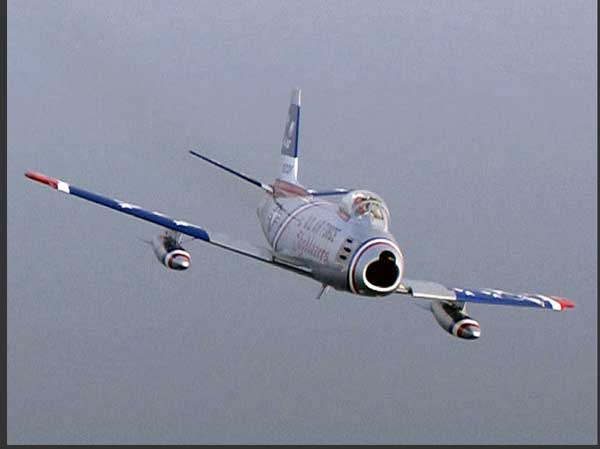
Desire by “experts” to build conventional, straight-wing fighters vice the swept-wing F-86 due to “complexity” & concern over “new” technology would have fundamentally changed outcome of Korean Conflict – as control of peninsula would have been near impossible under massive, hostile air campaign & loss of ROK would have been an much different dynamic in “Cold War”
Desire to “kill” F-15 by politicians & OSD program ”experts” due to complexity & “cost” would have fundamentally changed outcome of combat since SEA (100+ to 0 kill ratio – highest in history).
Desire to “kill” F-22 by politicians & OSD program “experts” due to complexity & “cost” has not fully played out…alternatives limited in altitude & speed as well as potential survivability challenges.
Additional decisions by politicians & “experts” that have not fully played out include: continued delay of fielding aerial tanker, continued delay of fielding survivable / mission capable CSAR helicopter, continued delay in fielding mission capable satellite & launch systems…as well as continued delay in fielding next generation, penetrating long range strike a/c (bomber).
F-86 in Flight (Credit: http://www.militaryfactory.com/aircraft/detail.asp?aircraft_id=120)
Second, he warned against building too specialized a force, and here had in mind the overinvestment in COIN capabilities, when the world is so uncertain. He argued for multi-mission, full spectrum forces to shape future capability. And he argued that the 5th generation aircraft should be understood in this sense, rather asserting as many do that these capabilities are highly specialized and designed to operate only on the high-end threat spectrum.
Leadership (civilian & uniformed) must realize that forces organized, trained & equipped to focus on only a portion of the spectrum, i.e. – irregular warfare, COIN or counter-terrorism potentially become useless…even in those applications without ability to capture & maintain aerial dominance.
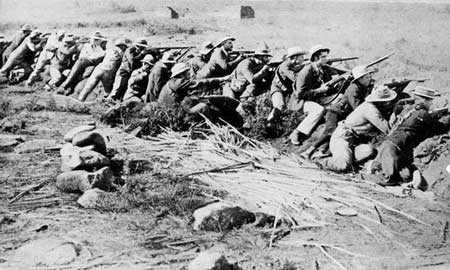
Fighting the Boer War and Late 19th Century COIN Operatons as the Method of Warfare for the Future )
He provided the example of the Boer war and the irrelevance of that experience to the combat capability, which England would then need in WWI.
England eventually deployed 400,000 troops into South Africa to fight Boars at end of 19th Cent…convincing themselves that COIN ops / irregular warfare was the future. Their organizations, training & equipage was focused on COIN resulting in serious challenges & losses a decade later in the trenches of Belgium when a most lethal opponent (Germany) decided to fight a conventional fight, on a global scale.
Strategic failure is inevitable with such an approach.
Failure to grasp the requirements of full spectrum operations will result in traditional forces / equipment employed in COIN or irregular missions within non-permissive scenarios also become useless with opponent’s fielding of next generation IADS (Vulnerability of UAVs, cargo/mobility, helo, C2/ISR systems, etc. – highlighted against latest fighter & SAM employment).
And he warned that hope is not a “plan for defending our people against a most uncertain future.”
Contemporary decisions must be tempered with actual combat experience & a truthful assessment of potential threat systems & truthful mission area analysis – to balance acquisition of “full spectrum” capabilities & capacities…and, not be lulled into a “hopeful” strategic setting or the latest “fad” (proliferation of UAVs, COIN specific a/c, unique anti-IED vehicles, etc.).
06/02/2011: In a brief during the Airbus Military Trade media event, the A400M head test pilot, Ed Strongman, provided an update on the status of the flight test program. Over the past 18 months there have seen significant flight-testing within the program. As of May 10, 2011, 55 pilots have flown the A400M. These pilots include, Airbus pilots, EASA and CQP pilots and pilots from several Customer Air Forces, including Germany, the UK, France and Turkey. And to date, there have 490 flights and 1580 hours of flight testing. There have been 880 take-off and landings of the aircraft through mid-May.
Among the many flight tests have been testing the flight envelope and handling qualities, various aero configurations have been tested to optimize local flow characteristics, ice testing and cold weather testing, various performance tests, structural tests, basic aircraft systems testing, powerplant testing, testing of various military systems, such as ramp and door operation and paratroop doors operation, night vision goggle operation, enhanced vision system, military radar, unprepared runway operations, formation flight testing to verify flight control capabilities, and AAR dry contacts behind an RAF VC10.
Originally published in Manufacturing and Technology News, May 17, 2011
By Charles McMillion, President, MBG Information Services, Washington, D.C.
06/06/2011 – The United States continues to lose production in the global economy, according to the first quarter 2011-trade figures for goods and services released by the Census Bureau on May 11.
(Credit: U.S. Census Bureau)
The first quarter trade deficit in goods and services is 23.5 percent worse than during the first quarter of 2010 and is 20.4 percent worse than during the last quarter of 2010. The dollar value of U.S. export growth remained near stagnant in the first quarter of 2011 (declining in February), while the value of imports accelerated sharply — largely due to higher prices for oil and other commodities.
The trade deficit for U.S. goods and services for March suggests that worsening net loss of production to global trade reduced GDP growth rate in the first quarter by more than the modest -0.1 percent cut that the Bureau of Economic Analysis initially projected.
The auto sector suffered a $10.4-billion trade deficit in March and, after $1.3 trillion in trade losses since the year 2000, appears to face a loss of at least an additional $125 billion in 2011.
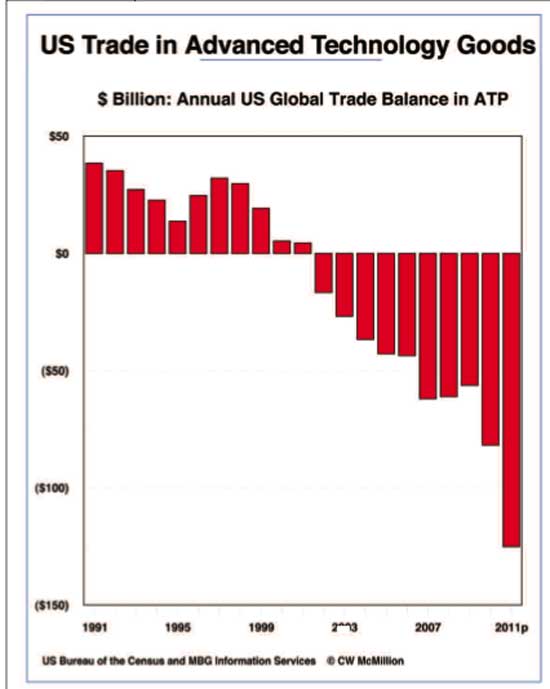
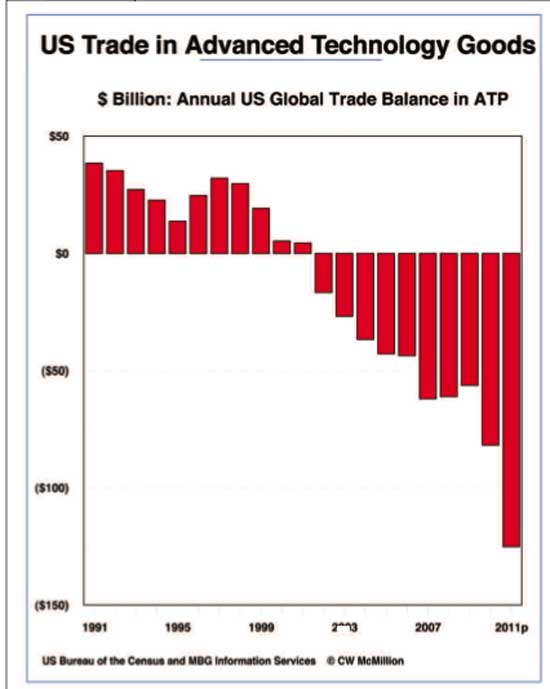
But the big news in the trade report is the continuing worsening of U.S. trade losses in Advanced Technology Products (ATP), which are now 66 percent worse in 2011 than the record-setting pace of losses in 2010. Exports of advanced technology products are up only 3.8 percent year over year, while imports are up 13.5 percent.
Losses in advanced technology products always accelerate from June-to-November, but even if year-over-year losses moderate later this year, it seems reasonable to expect an annual 2011 deficit of at least $125 billion compared with last year’s record $81.8 billion in ATP losses.
Imports from China continue to account for more than the entire U.S. ATP deficit, but there are other interesting changes: so far this year the United States has ATP surpluses with NAFTA partners but deficits with Europe.
It is important to note that all foreign-earned Intellectual Property (royalties and fees) revenues of “U.S.”-Incorporated firms such as Apple, Microsoft and Starbucks, declined in the first quarter of 2011 compared to the same quarter in 2010, as did the total IP revenue in the U.S. of foreign incorporated firms. As a result, the U.S. surplus in IP is virtually unchanged over the year, and remains far less than the ATP deficit.



 Forty bundles of fuel fly out the back of a U.S. Air Force Globemaster III aircraft assigned to the 816th Expeditionary Airlift Squadron, on target during an air drop mission over Afghanistan in support of Operation Enduring Freedom, Dec. 8, 2010. (Credit: U.S. Air Forces Central Public Affairs 12/9/10)