In an effort to be in compliance with GDPR we are providing you with the latest documentation about how we collect, use, share and secure your information, we want to make you aware of our updated privacy policy here
Enter your name and email address below to receive our newsletter.
01/02/2011 – An MQ-9 Reaper makes its final approach to the runway at Kandahar Airfield, Afghanistan, following a mission, Dec. 16. The MQ-9 Reaper is an unmanned aerial system with primary missions of close-air support, air interdictions, and intelligence, surveillance and reconnaissance. The Reaper is assigned to the 451st Air Expeditionary Wing.
Thirty-eight Predator and Reaper drones have crashed during combat missions in Afghanistan and Iraq, and nine more during training on bases in the U.S.– with each crash costing between $3.7 million and $5 million. Altogether, the Air Force says there have been 79 drone accidents costing at least $1 million each.
Accident rates are dropping, but the raw numbers of mishaps are increasing as use of the aircraft skyrockets, according to Air Force safety experts.
But no lives are lost, and for some experts, that’s the most important point: For them, drones are the vanguard of a new type of remote warfare that minimizes the risk to U.S. personnel. The number of crashes, however, illustrates how quickly the unmanned aircraft have become an essential part of U.S. combat operations. At least 38 drones are in flight over Afghanistan and Iraq at any given time.
Flight hours over Afghanistan and Iraq more than tripled between 2006 and 2009. However, ground commanders in Afghanistan say only about a third of their requests for drone missions are met because of shortages of aircraft and pilots. The loss of aircraft to crashes and other accidents can hamper combat operations — and risk the lives of troops who depend on them for reconnaissance and air cover.
01/02/2011 – In September 2010, Second Line of Defense attended IDGA’s Military Logistics Summit 2010 in Vienna, VA. At the conference, Dr. Robb Clarke of Michigan State University discussed RFID and other Auto-ID technologies and their role with supply chain optimization.
RFID, or Radio Frequency Identification, uses a system of readers and tags to store information about an object or product. The technology is hardly new; one of its first uses was to identify cattle and livestock. The system works when the reader sends out a signal to the tag, which, using the power generated from the reader’s signal, sends back a signal identifying its material or product. Not all tags are equal: passive tags, which are the cheapest, do not transmit active signals; semipassive tags, slightly more expensive, may be able to monitor qualities of the material, such as climate, but also do not transmit active signals; active tags, the most expensive of the three, have a power source and are able to continuously send active signals.
A passive RFID tag showing the embedded microchip (Credit: http://www.almc.army.mil/alog/issues/JulAug07/jav_hard.html)
RFID is already subject to a great deal of scrutiny and research; the implications of the technology are enormous for many industries. As Dr. Clarke explained, food and pharmaceutical industries can use it for safety and sterility as well as identification; consumer industries may use it for marketing. According to the Economist, smart sensors such as RFID are used in oil exploration and government systems such as public transportation, toll roads, and power meters.
The military recognizes the vast opportunities RFID and similar technology would afford. RFID technology has the ability to answer these questions, Dr. Clarke says:
Where are (or aren’t) things?
How many are there?
Are they time sensitive?
Are they real?
How will this provide safety or security?
As with any form of automation, RFID saves time by automatically identifying the qualities of the characteristic by answering the above questions. Improved efficiency will lead to faster and better responses to the needs of the warfighter. Dr. Clarke lists the benefits of Auto-ID, including more accurate inventory, quick product recalls, increased safety, decreased product diversion, and verification of product authenticity, to which one could add efficiency gained from automation; more broadly, this all leads to enhanced asset-tracking. RFID in a military sense would allow troops to track what supplies they have as well as the transportation of new supplies coming to them. The US Army, working with the DoD, has begun to implement RFID, using the Radio Frequency In-Transit Visibility (RF-ITV) System—reportedly the world’s largest RFID-enabled asset visibility system—to track the identity, status, and location of cargo as it is transported (Defense Industry Daily).
Another field of the military that can and will benefit is medical care. In the DoD’s FY 2007 Budget Estimates, there was a focus on using RFID “to improve the end-to-end visibility and tracking of medical supplies, resulting in enhanced medical care for the warfighter.” There has also been discussion of whether RFID may be used to track the actual physical condition of soldiers coming into medical centers; according to Defense Industry Daily, the US Navy’s combat casualty care unit has used RFID to track casualties in Iraq, using RFID chips sewn into soldiers’ cuffs to track the wounded arriving for treatment at field hospitals.
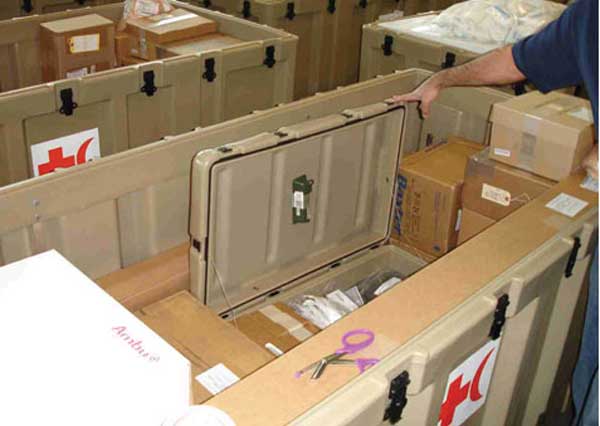
Testing the placement of sensor tags in medical sets (Credit: http://www.almc.army.mil/alog/issues/JulAug08/enhancelog_w_sensortech.html)
There are issues holding RFID back. Because these are radio frequencies, Dr. Clarke points out that they will not penetrate water and they are affected by the shape of the material as well as what the material is made of or surrounded by, be it metal, plastics, glass, or paper. They are limited to the distance over which the tag can draw enough energy from the reader. Price can limit the implication; active tags, for instance, are considerably more expensive than passive tags. Dr. Clarke also states that passive tags have a virtually limitless life, while active tags may require more maintenance or replacement of their power source.
One of the major concerns is over security. RFID tags may be read by anyone, which means they may not just be read by their military owners but also the military’s enemy. The Department of Defense certainly recognizes this concern; the great amount of research on RFID does include research into better security, such as cryptographic methods.
Defense Industry Daily also states that the DoD has not been able to achieve widespread implementation of the technology because of its inability to demonstrate to the return on investment, arguing that “it does not uniformly collect information on both the costs and benefits associated with implementation.”
With increased research on RFID, the military and other industries will benefit from the improved efficiency and accuracy of this technology. Increased visibility of supplies means the warfighter will be better equipped—faster, more accurately, and at a lower cost than he previously was before.
01/02/2011 – The Chairman of the House of Commons Treasury Select Committee expressed outrage at having “a gun held to the head” by BAES over the naval shipbuilding/support Terms of Business Agreement (ToBA) which includes the contract to build two aircraft carriers.
This outburst came in the wake of the publication of BAES’s CEO Ian King’s letter to the Prime Minister, David Cameron, stating the implications of cancellation of the second carrier. That BAES should be getting the flak in the way that it is, after the letter – headed “In Strict Confidence” – was put up on the Treasury website, seems a bit strange.
And all Defence Analysis can say is that it is tautly written, far from inflammatory, and a model of restraint. It simply aims to inform a Prime Minister who was evidently not being well-informed or advised by his immediate circle, or even a wider set of sources, of the actual consequences of an act, in this case the cancellation of one or both aircraft carriers.
What seems to be pretty apparent is that Mr. King’s simple missive shows quite what a harsh awakening the coalition government is getting when it comes to defense, and it also points to the growing fear of “train wrecks” down the line as the Strategic Defence & Security Review is “implemented”.
Defence Analysis will come to the single most important element of the letter, in our opinion, in due course. But there is a requirement for a few general observations about the letter.
First is the one part of the letter that could be seen as chiding the PM. This is in the opening paragraph when Mr. King says: “I have written to you on two separate occasions during the course of the Strategic Defence and Security Review …. I wanted to make sure that you and NSC colleagues understood what this would mean in practice, before you make your final decision.”
Note well Mr. King’s reference to having written twice before: the context might seem to be, “and you don’t seem to have listened to what I said in the previous letters”. It is also highly suggestive that “consultation” with industry over the course of SDSR was minimal, probably deliberately. And there would seem to be a major dig at the NSC’s capabilities, made plain by the direct reference to that body – Mr. King seems to be suggesting that the NSC simply does not have the corporate experience or knowledge to be making a whole raft of SDSR decisions. But these 69 words are the only ones in the letter that might be regarded as “risky”, as they are implied criticism of the SDSR process and some of the figures involved.
And so to the most important part of the letter. It will possibly have missed many people’s attention, as the main sources of interest will have been the simple cash figures. But the first paragraph on page 2 is the one with the most impact, not just in the course of the carrier debate, but as a wider observation about the defence industry-MoD relationship:
“It might be possible to ameliorate this position through a direct award of new work to BAE Systems. With fuel tankers, an ice capable ship, and the acceleration of the frigate program, it would be just about possible to sustain the Key Industrial Capabilities set out in the BAE Systems agreement with the MoD. But the speed at which these decisions would have to be made in order for us to be in a position to cut steel of any sort by 2013 has never been achieved in defense acquisition before on a program of this sort ….”
This is a damning indictment: despite the pressures of the current situation, Mr King is saying that the MoD, as well as the Treasury, are simply not up to the job of moving at speed. In effect, they are not fit for purpose. Even if it were to be deemed to be the single most important thing facing the MoD, everything else pushed to one side, the department would be unable to come to a decision.
And do note that Mr King doesn’t say that there isn’t time, say, to actually design a ship, or several ship classes: he is specifically stating that the MoD (and Treasury, by implication) cannot take decisions of sufficient robustness at speed.
Defence Analysis thought that the Gray Report was pretty damning about the MoD and how it operates – or doesn’t. But this letter, coming from someone who has worked inside the UK defense business for several decades, is saying that the department is simply so dysfunctional that it cannot operate on anything resembling a sensible pace.
Just think about this: armed forces, and those within them, are meant to be able to cope with incredibly stressful, dynamic situations, making decisions based on what their over-loaded senses are able to discern. And yet take them out of the trench, and put them in a Main Building office, or one at Abbeywood, and they lose most of those skills that they have been trained in. For a department that is, in theory, meant to cope with speed, it turns out that it has no sense of urgency.
It is now up to the MoD to show Mr King that it is not quite as broken and spavined as he states that it is. If the department believes that what Mr King states in his letter is factually incorrect, then it is going to have to produce concrete proof of why he is wrong. For sure, Defence Analysis knows that a refutation of Mr King’s beliefs will point out the Urgent Operational Requirements system as a shining beacon of rapid delivery.
However, the UOR system is not as brilliant as has been made out, and issues such as supportability and integration have proved to be problematic. A really key signpost about the UOR system is going to be how much of the UOR equipment gets retained after the end of major combat operations in Afghanistan, or at least how much the
Services actually want to keep ….
Actually, the UOR system is to a greater or lesser extent irrelevant: the main procurement and requirements systems are still incredibly tortured and slow, regardless of what has been done in support of operations. If the UOR system was so applicable across the piece, then surely by now it would have been rolled out to cover the larger ticket procurement programs, to inject some pace into them?
But there are signs that it isn’t quite as copy-able as might have been the case.
So, if the Secretary of State, Dr Liam Fox, were to be reading Ian King’s letter – or even the Prime Minister, David Cameron – he should be wondering why Mr. King has quite so little confidence in the capabilities of the MoD to move rapidly, effectively, and decisively. What evidence does Mr. King, by nature a cautious person who measures his words and deeds, have to back up his assertion and pessimism? And in which case, if he has this data and evidence, is it backed up by other parts of industry? And if it is, then what on earth can be done, and at what best speed, to rectify what would seem to be a pretty horrendous state of affairs?
What Mr. King is putting forward is a firm statement that the MoD machine is so broken when it comes to so many aspects of procurement and requirements that urgent action needs to be taken if anything concrete is to be achieved.
Which raises the question: bearing in mind the default appointment of Ursula Brennan as the new PUS, and the almost certain appointment to the CDM post of Andrew Manley, the former Commercial Director, how far is the new civil service team orientated towards deep reform? Is this potentially another problem that will blow up in the SecState’s face, and possibly even the coalition’s?
01/02/2011 – Securing the availability of energy resources – namely oil and gas – in accordance with environmental sustainability is a key challenge of the 21st century.
Also, history shows that conflicts over resources are not new. Whole epochs have been named after key resources: the Stone Age, Iron Age or Bronze Age. Wars have been fought about gold and diamonds. It would be completely unrealistic to expect that shortages of energy or deterioration of energy security would not lead to conflicts of various intensities.
Energy affects the prosperity, social peace and security of states. But more than that, it is a facilitator of the movement of goods; ideas; services; capital; information and people in all spaces – land; sea; air; space and cyber. High-tech economies, such as the United States, Germany or Japan, demand a highly reliable energy system to meet their needs. Only a secure energy supply guarantees the robustness of the nation’s economy and along with that its national prosperity and security.
In order to secure energy supply governments have to deal with risks and potential threats. They have to take precautionary measures to be prepared for uncertainties. What are these risks and potential threats to from the standpoint of German interests and security requirements?
Dependency
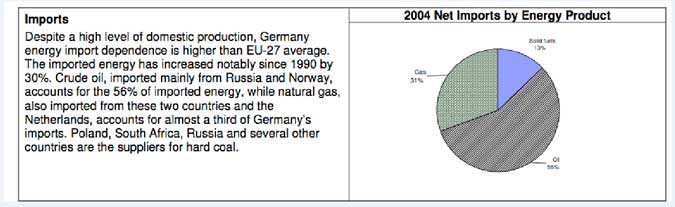
Germany is, in terms of oil and gas, an energy dependent country as it is importing 80 percent of its energy resources. Almost 50 percent of oil and gas are coming from the Commonwealth of Independent States, primarily Russia; 30 percent from Norway and Great Britain; 15 percent from Africa and 5 percent from the Middle East (see Bundesanstalt für Geowissenschaften und Rohstoffe (2009): Energierohstoffe 2009, Hannover: BGR, p. 34. )
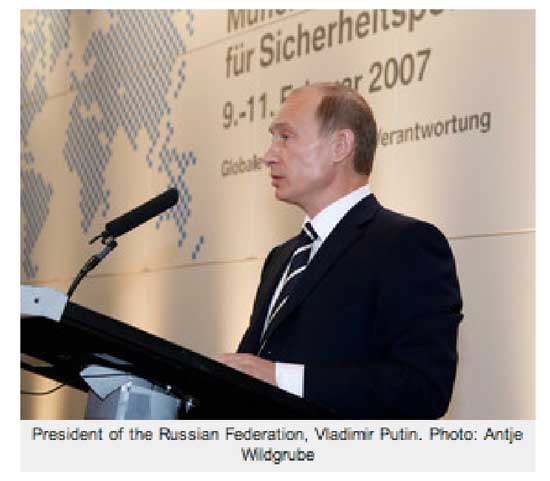
Obviously, a 50 percent dependency on Russia – despite all special relations – is no energy security at all. While some top political leaders in Germany appear to believe in Germany’s special relationship with Russia to secure its energy supply, Russia, most recently at the Munich Security Conference in 2007, made it very clear that it plays according to the rules of geopolitics, interests and power
What happens, if Russia turns its energy supply to Germany off or more likely follows its own interests in determining the most desirable energy partners, in dynamic circumstances?
Vladimir Putin addressing the 43rd Munich Security Conference, 9 to 11 February 2007 (Credit Photo: http://www.securityconference.de/Conference-2007.268.0.html?&L=1)
Competition
The competition for non-renewable energy resources as oil and gas is increasingly exacerbated by the energy needs of emerging countries of Asia has become a key driver in world energy markets.
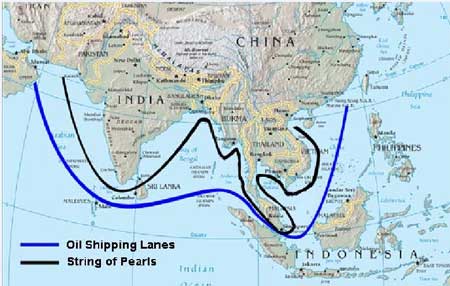
Being afraid of tight supplies and high prices that may constrain economic growth, China, the world’s fastest-growing economy – with an average growth rate of roughly 10 percent throughout the past 30 years – has been establishing a worldwide security network – the “string of pearls” – to ensure its energy needs. These strategic relationships along the sea lanes from the Middle East to the South China Sea are suggesting both a defensive and an offensive positioning to control strategic “chokepoints” protecting China’s energy interests. (Click here to see a list of the 12 fastest growing economies in 2010.)
Chinese “String of Pearls Strategy” (Credit Photo: http://www.china-briefing.com/news/2009/03/18/china’s-string-of-pearls-strategy.html)
What happens, if Germany is lacking both, a vision and the instruments to deal with this new strategic constellation? Or if German lacks the proper tools to work with partners and allies to secure the allied flow of energy supplies? Either one has the tools to do it alone or tools to contribute to a coalition, or simply hopes for the best.
Terrorist attack, piracy and natural disaster
Both, international and national energy systems, including energy producing, transporting and distributing systems and facilities, are widely spread, highly interconnected and, therefore, vulnerable to any planned attack or natural disaster.
Hitherto, the possibility of terrorist attacks on the world’s energy infrastructure does not generate the same level of attention as potential chemical, biological or nuclear terrorism. Oil and gas markets are tight, with little spare capacity, and increasing in demand on the customer side. (See this hearing before the U.S. House of Representatives on terrorist threats to energy security.)
Of course, terrorists can strike almost anywhere in the world. Beyond that, the risk of terrorism by both, state and non-state actors is hard to control. To this end the increasing intertwining between piracy and terrorism is of particular concern as most of world’s oil and gas is shipped through narrow strategic chokepoints.
What is Germany’s comprehensive strategy to protect pipelines, global shipping chokepoints and harbors – the vulnerabilities of national and international energy systems – against terrorism, piracy and/or natural disaster? What happens, if Germany does not have the appropriate capabilities to prevent terrorist attacks against national and international energy infrastructures, reduce the nation’s vulnerability to terrorism, accidents and natural disasters, minimize damage and assist in the recovery from such incidents, perform emergency planning for natural and manmade crises?
Wild Cards
Any situation can change at a moment’s notice, so can energy security. Carl von Clausewitz observed in 1830, “everything […] is very simple; but even the simplest thing is difficult”. Frictions can create enormous difficulties for the realization of any plan. (Aron, Raymond (1985): Clausewitz: Philosopher of War, Englewood Cliffs, New Jersey: Prentice-Hall, p. 418.) In fact: Things do often turn out different than expected. There are some wildcards for energy security:
Peak Oil: The arrival of peak oil has been delayed by a couple of years through the economic utilization of unconventional resources. There is still plenty of oil including: However this “new oil” is – because unconventional – expensive; and the times of getting oil cheap and easy are running out.
Consequences of technological progress: New technologies for instance producing energy from a broad scope of unconventional resources such natural gas, coal, biomass or kerogen in oil shale’s to liquid fuels or “heavy” oil. And reducing CO2 simultaneously producing energy (“Carbon Dioxide Reduction, Capture and Reuse” Initiative) could shift the global energy system including the role of current key energy players such as Saudi Arabia. (See Hon. Bill Anderson’s paper on carbon dioxide.)
Influence from global suppliers: key energy countries – such as Pakistan, Iran, Azerbaijan etc. – have the potential to either provide a corridor for energy trades or to threaten exactly those energy trades.
Is Germany able to cope with trend-breaking or trend-creating events that are hard or even impossible to anticipate?
Although world’s economies ought to be less vulnerable to energy price swings in future than it was in the 1970s, a major disruption in global energy supplies still would have devastating effects on Germany’s prosperity and security. (see page 39 of this CIA document on global trends of 2015)
The Germans have to, as former German president Horst Köhler stated in May 2010, “understand that in certain cases, in an emergency, military operations are necessary to protect our interests”.
For the rest of the world, Köhler stated the obvious. For many Germans, he stated the unthinkable. Under pressure Köhler resigned and now Germany runs the risk of failing to protect national interests and security. One thing is for sure: any inadequate management of the 21st century energy challenges on the national, regional and global level will not only jeopardize Germany’s prosperity and security but also its role and influence in world politics.
Therefore, Germany has to accept that energy security is a mix of geopolitics, national interests and power. Because national security is no longer limited to purposes of national defense – as it was from German perspective between the end of World War II until 1989 – but to national interests, Germany’s national security policy needs to be adjusted to this reality. “Today’s security policy must address new and increasingly complex challenges. Effective security provisions require preventive, efficient, and coherent cooperation at both the national and international levels, to include an effective fight against the root causes”
As a result, all available instruments have to be integrated in a broader security and defense vision and to shape a more comprehensive set of policy tools in order to ensure economic viability and prosperity within Germany, Europe and with Europe’s friends and allies.
Energy security is a cross-section policy area interrelated to several other policy areas such as distribution of energy; energy efficiency; energy facility siting; energy system diversity and redundancy; regional energy policies; emergency management and response; technology policies; cyber-security issues; environmental policies; transportation policies; foreign and security policies as well as financial policies etc. The government’s role in effectively preventing and responding to energy security risks and (potential) threats is crucial.
However, the institutional fragmentation of energy responsibility in Germany causes – due to the policy triangle of security, economy, and sustainability – a national energy trilemma: Security of supply vs. economy; economy vs. climate protection; climate protection vs. security of supply. All three issues cannot be resolved simultaneously.
That is why energy security ought to be all three – prevention, planning, and response. Employing a comprehensive strategy for energy security requires at first conceptual consideration, but beyond that also massive efforts including a supporting national security institution – in Germany a “real” Bundessicherheitsrat – with a corresponding substructure and inter-agency competences completely focused on the clearly defined deliverables of German energy needs.
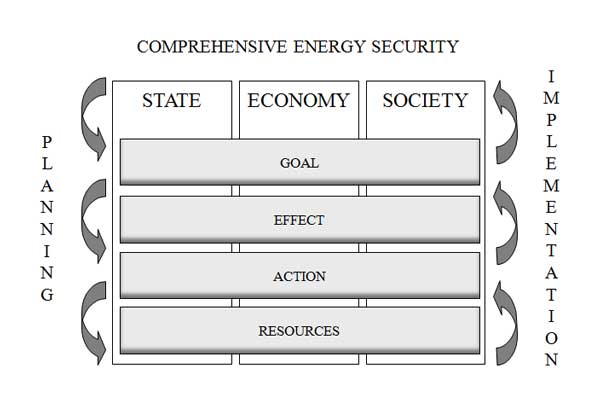
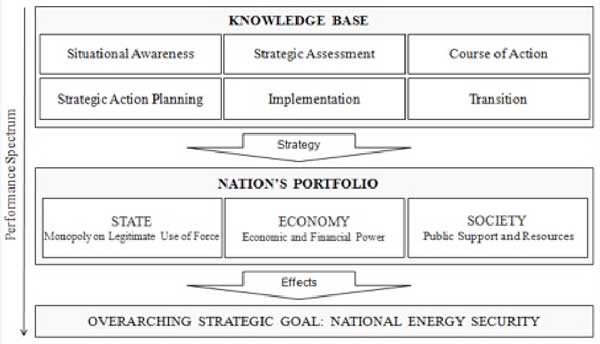
A comprehensive energy security concept emphasizes most notably the necessity of policy coherence on all levels, comprehensiveness of all instruments of crisis management, coordination in planning and a continuously assessment of the relevance of driving factors on the basis of a encompassing, holistic knowledge base. The, for autumn this year expected new energy concept for Germany should be based on the following three elements: Short-term: Management and coordination of security of energy supply incl. setting the policy course for the medium- to long-term challenges. Medium-term: Capabilities to tare asymmetries in the international energy system. Long-term: Capabilities to shape (“design”) the governance of the international energy system.
(Credit image: Caroline Mükusch)
One of the most important elements of preparing for the possibility of disruptions is to understand the system’s immanent vulnerabilities. Powerful planning capabilities would support the government’s effectiveness in
situational awareness of vulnerabilities including risks and potential threats;
dealing with unexpected strategic disruption;
identifying strategic objectives;
developing tactics achieving predefined goals and milestones;
developing methods of critical analysis and assessing long-term implications;
mobilizing adequate resources.
These capabilities are necessary for both, the implementation of policies appropriate to reduce vulnerabilities as well as risks and (potential) threats, and the enhancement of resilience of national energy security. Political instability of key energy producing countries, the manipulation of energy supplies, the competition over energy sources, attacks on supply infrastructure, accidents and natural disasters as well as global trends such as climate change, demographic change shape the framework and nature of international and national energy security challenges. Recognizing and assessing the likelihood of potential energy disruption or shortage will help to establish priorities and set a 21st century appropriate energy policy. “Clearly, the first task is to gain acceptance of a more reasonable view of the future, one that opens possibilities rather than forecloses them”,[1] because the future is not that unexpected und unthinkable some may believe.
Caroline Mükusch has studied political science focused on international security. Presently she is PhD student at the University of Cologne, Germany, working on energy security issues since 2008. She is also working as consultant for the IABG Germany in the field of Security Studies of Critical Infrastructures. She is our new German correspondent.
01/02/2011 – UAVs are key tools in the toolbox to support ground forces and to augment and or supplement manned aircraft. Whether they are able to operate in the contested airspaces of post-Afghan military environments or even the threats posed by a contested air dominance environment, such as on the Lebanese border are an open question.
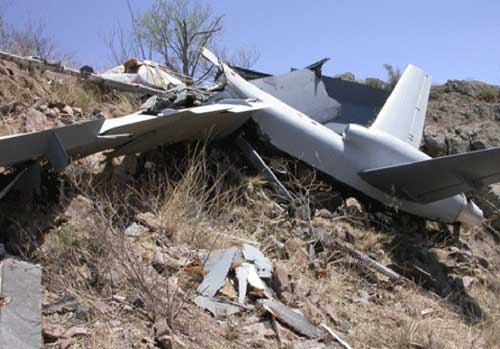
And there have been significant losses of UAVs as well. Some sources cite as much as 45% of the Predator fleet has been lost over the past three years.
Another source cites USAF officials that acknowledge that more than a third of their unmanned Predator spy planes — which are 27 feet long, powered by a high-performance snowmobile engine, and cost $4.5 million apiece — have crashed, mostly in Iraq and Afghanistan.
Another source indicates that recently the USAF asked for 12 new predators to replace those recently lost.
The Israelis are focusing on air dominance challenges posed by the evolution of the ground based missile threat. One key tool they intend to use against this threat is the UAV for targeting and the ground based missile for elimination of the threat. They are also putting the F-35 in the mix to deal with the potential vulnerability of UAVs.
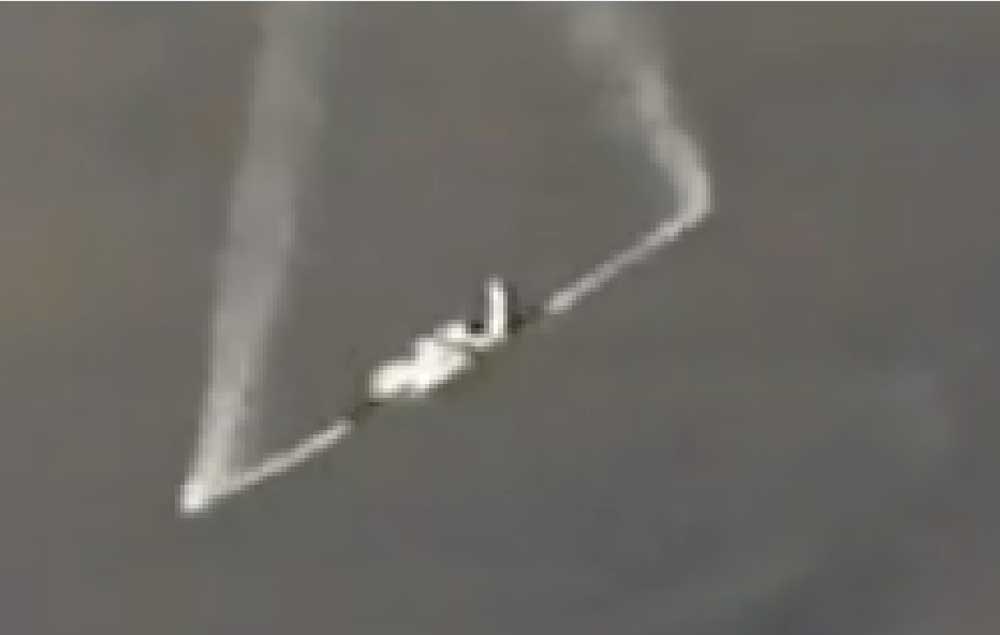
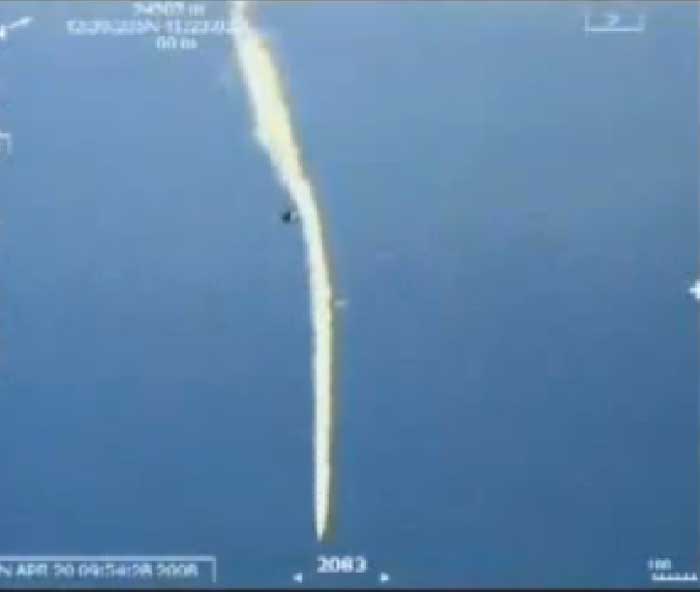
Global Hawk Crash at China Lake (Credit: http://www.aviationspectator.com/video/video-rq-4-global-hawk-uav-crash)
The threats can be broken down into four categories.
First, the Russians and we have shown how look down and shoot down techniques can destroy UAVs at virtually every altitude.
Second, low and mid range UAVs are subject to attack from a variety of ground based air defense capabilities, and the evolution of hand held SAMs will hold UAVs at this range at risk in the years to come.
Third, developing capabilities for air bursting munitions in the vicinity of the UAVs can hold them at risk. An example cited of the air bursting munitions capability is ATK’s Rapid Capture and Disablement of UAVs which is a gun-launched projectile guided by an infrared proximity sensors that bursts in the vicinity of a UAV, emitting high-performance netting, along with rapidly expanding foam. The foam then encapsulates the UAV, and electronically disruptive conductive carbon disables the aircraft’s communications, thereby disabling it without destroying it.
Georgian UAV Sees Missile About the Kill It from Russian Fighter (Credit: http://www.youtube.com/watch?v=U49n1JuWAmc)
And one analyst offered a warning that UAVs can perform much less effectively in operating in air space.
Kevin Williams of the FAA Civil Aerospace Medical Institute has worked for medical standards for UAS pilots. During the NTSB panel discussion, he pointed to several disorienting factors that affect UAS operations, including latency, or the time delay in the relaying of information between vehicle and pilot. The camera system on the Pioneer UAS retracts just before landing to protect it from a rough touchdown, at which point the remote pilot loses all video. A spotter at the remote runway has to radio the operator to shut down the engine after landing; in one instance, an ambiguous call led to a premature shutdown and a crash.
An authority on training conventional pilots to handle vertigo, Williams said that UAS pilots lack the vital sensory clues that warn of an impending risk. These include changes to the ambient noise, the sensation of pitch and yaw, vibration, and control forces becoming heavy or mushy. Even the sense of smell is important as an indicator of trouble in a cockpit. All such “diagnostic” cues are absent in the UAS. “You can simulate some of this information, but you can’t replace it,” said Williams, noting that 26.5 percent of accidents in the Predator were at least partly due to pilot misperceptions.
And, finally, we are doing a lot of work to determine how to disable the UAVs the Iranians and others are developing. We have to assume that anything we can develop, the Chinese and others are capable of doing as well. So the point is we cannot treat UAVs as viable tools in all circumstances. They are part of the solution; they are not silver bullets by any means.
01/04/2011 – Recently at an air power conference hosted by RAND Corporation in Taiwan, the former head of Air Force intelligence provided a wide-ranging overview on the evolution of Chinese military power, focusing on the air element. Second Line of Defense is providing a slideshow of his slides, and conducted an interview with him to provide a basic narrative concerning the presentation. In this piece, the General provides his explanation of the evolution of Chinese programs and capabilities, and in a second piece, a dialogue with Second Line of Defense’s Robbin Laird with the General discusses the question of the nature of the Chinese challenge.
As General Deptula summarized:
The PRC used to have many more airplanes than they have today, but they were not qualitatively that good. Well now they’re transitioning very rapidly from just quantity to a qualitative force with sufficient quantities that will pose very complex and significant combat challenges for the U.S. and its allies.
Follows General Deptula’s narrative of his presentation.
Chart 1: Today China is focusing on developing key technologies while it buys, borrows and steals the technology that it needs to integrate into its own defense industrial base. That set of facts is no more evident than in the PLA Air Force, and the PLA Naval Air Forces. This briefing is a summary of what the Peoples Republic of China (PRC) are up to in these two critical organizations as they work toward their goal of major world power status. To put these services in perspective, the PLA Air Force currently consists of about 330,000 personnel, and over 2500 aircraft, of which about 1600 are combat aircraft. That makes the PLA Air Force the largest air force in Asia, and the third largest in the world behind the U.S. Air Force and the Russian Air Force. The PLA Naval Air Force, by contrast, has about 26,000 personnel, and almost 600 aircraft. About half of those—300—are combat aircraft. In the arena of aerospace, China’s catching up with us in many areas and exceeding us in others—leveraging stolen U.S. technology, along with technology purchased from Israel, Russia, and Europe. They remain comparable to us in what might be termed their “mainstream fighter force.” For example, the Chinese F-10 is basically comparable to a Block 40 F-16 or an F-18 CD. But they’re building sufficient numbers of the aircraft, with sufficient advanced capabilities, to counter the U.S. in the event of any kind of Western Pacific confrontation. There’s a growing emphasis on offensive in the PLA Air Force—growing recognition that the PLA Air Force is a strategic force—and that dominance in air and space forces is required to be decisive in any kind of a conflict.
Chart 2: This is an overview of what we will be addressing today.
Chart 3: The PLA Air Force is undergoing a real transformation. They’re moving from a force that historically relied on quantitative advantage alone, to one that aspires to achieve a qualitative advantage; but with sufficient quantity to dominate in their immediate region. They are accomplishing that objective rapidly, and they’re doing it in a smart fashion, because they’re not just chunking these old aircraft, but rather as it indicates on the chart, they’re transitioning many of them into remotely piloted aircraft. They are doing this not in just a traditional “Okay, we’ll just make modern aircraft and throw out the old ones,” but they’re adapting their old aircraft to complicate any challenge they might face. This the quantity piece in their strategy. They are building a fleet development strategy that combines both manned and remotely piloted approaches. They know that in a nominal conflict situation that their adversary will have challenges trying to pick out the wheat from the chaff. For example, using manned aircraft with their advanced technologies and electronic attack capabilities, and intermingling them with remotely piloted aircraft that are easily seen. That kind of a concept of operations might be used to distract the relatively few 5th generation aircraft that could be put up against this kind of a force within the next decade. It’s a simple strategy, but it has the potential of being very effective. In this transition from old to new, it was agreed at the Taiwan conference on the PLA Air Force that they have achieved essentially four to five decades of progress in less than 20 years. So they’re modernizing at a very rapid rate.
Chart 4: The F-10 is the first real indigenously designed and produced fighter by the PRC. Although its existence was reported both inside and outside of China for many, years, the Chinese government didn’t officially admit its existence until January of 2007 when the first photographs of it were allowed to be published. The first aircraft were delivered to the PLA Air Force in February 2003, and it was given operational status December that same year. There has been discussion over whether it was based on working with Israel or not, and quite frankly, that’s history. The PRC manufacturers would tell you “no,” it was a completely indigenousness design. Regardless of where it came in terms of concept and design, today it’s got an advanced radar missile and electronic attack capability onboard, and they’re populating their Air Force with it rapidly. They’ve got five bases today, they’re expecting ten more bases by 2015, and they’re continuing to improve on the aircraft’s capabilities—both in terms of airframe and avionics.
Chart 5: The next series of charts briefly address the Flanker Variants in China. The Chinese have been on an evolutionary path since they were sold the original SU-27s built by the Russians. They modified the different variants, transitioned to a kit-built F-11, which had some limited Chinese avionics.
Chart 6: The newest Flanker variants are being built by the Chinese with Chinese produced engines, missiles and indigenously produced avionics. It is a Russian-designed aircraft; however, more and more of the F-11s are being built with components that are purely Chinese. They have grown in terms of capability and knowledge as a result of the evolutionary transition to this aircraft.
Chart 7: This map displays the growth of SU-27, F-11, and F-10 bases between 1995 and 2009. It emphasizes the change in the PLA Air Force from its former defensive posture to one much more capable of power projection.
Chart 8: The newest FB-7 airframe is a big improvement over their original FB-7. It’s maximum armament load is about 9,000 kilograms. In comparison the Su-24, and Su-30 payloads are about 8,000 kilograms, and the old F-111 is about 11,000 kilograms. So it’s lighter and it’s less complex than a Su-24 or the F-111, but it’s also considerably cheaper to produce and operate. It doesn’t have the air-to-air performance of the Su-30, but its range is greater. It doesn’t have any significant aerial combat role, but it does represent a significant strike capability for the PLA Naval Air Forces, and its load capacity allows it to carry four domestically made YJ-82 anti-ship missiles in a maritime strike ops role. It also has the potential of being upgraded to an electronic combat aircraft. It already carries advanced jammers; and one can expect them to be building more of these in the future, particularly for the Navy because it will allow them to increase their power projection capability.
Chart 9
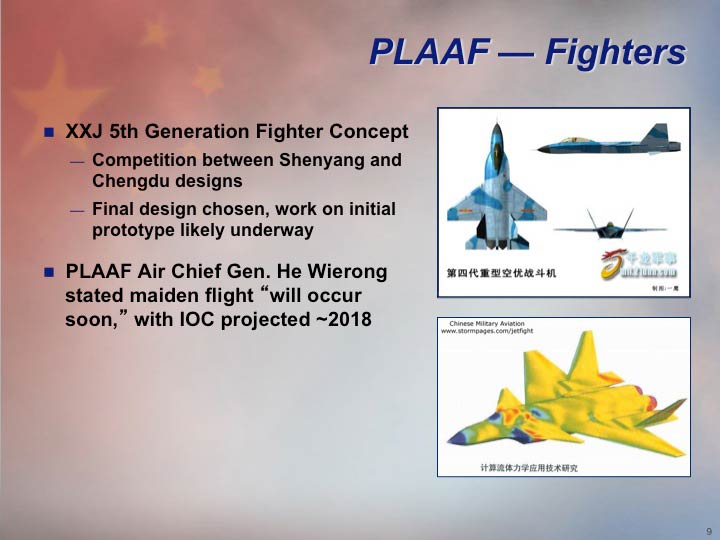
Chart 9: Regarding the XXJ 5th Gen Fighter concept, competition is ongoing between the two principal design bureaus. We believe a final design has been chosen, and work on an initial prototype is ongoing today. As I mentioned earlier, the PLA Air Chief has stated the maiden flight will occur relatively soon. People are prognosticating 2012, with an initial operational capability (IOC) projected around the 2018 timeframe. Most aviation experts would tell you that this is not going to be an aircraft better than an F-22, but it will aim to achieve similar kinds of capabilities, and here’s where the importance of quantity becomes a significant factor. What we have to watch is while it might not be absolutely as good in many of the particular performance areas, is it good enough to pose the US planned aircraft fleet significant challenges? Will the quantities in which it will be produced compensate for any weak areas in performance? It is doubtful that the PRC will limit XXJ production at less than half their requirement as did the US with the F-22. A part of this discussion space that is larger than the types of airplanes, is the marginal availability of resources to continue to expand the capabilities in quality sense, as well as in quantity.
Chart 10: The JF-17 Thunder Dragon is also designated the FC-1 and is a single engine lightweight multirole combat aircraft. It was developed jointly by the Chengdu Aircraft Industry’s Corporation of China, the Pakistani Air Force, and the Pakistani Aeronautical Complex. It was designated JF-17 by Pakistan, which is short for Joint Fighter 17, and was developed primarily to meet the requirements of the Pakistani Air Force for a low-cost, medium technology, multirole combat aircraft as a cost-effective replacement for their aging fleet of A-5s, F-7s, and Mirage 3s and 5s. It was also intended to have export potential to air forces of other developing countries as a cost-effective alternative to high-tech, but expensive Western fighters.
Chart 11: The Chinese bomber fleet is based on the old Russian B-6—the Badger baseline. They are old, however newer versions have been upgraded to allow the carriage of extended range cruise missiles. They’ve got new engines enabling increased payload. The newer variants are listed here on the chart. For the PLA Air Force, the B-6 is an aircraft with regional reach. When you combine it with the array of PLA AF cruise missiles, it provides a capable platform. The analogy can be drawn to our B-52—not in the context of weight, size, or range—but how we could employ it. The Chinese are doing that with the B-6 by making it a standoff platform.
Chart 12
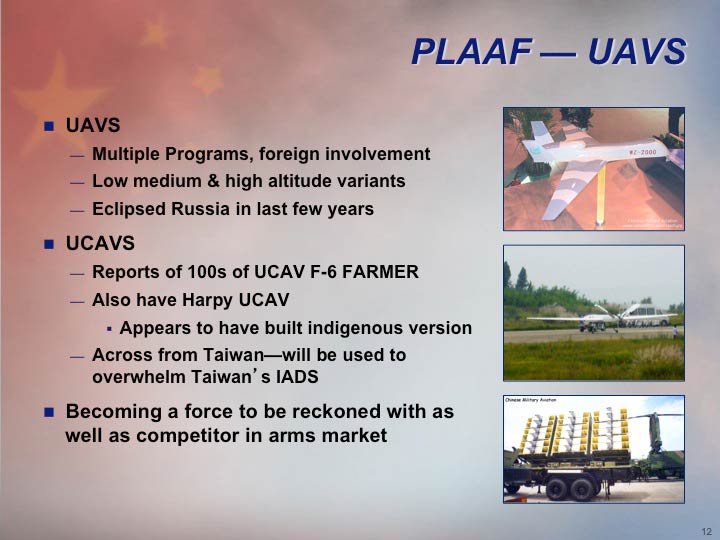
Chart 12: In the realm of remotely piloted aircraft (RPAs), the PRC is moving rapidly into an area of vast potential with dedicated exploitation and investment. One of the classic unmanned combat aerial vehicles (UCAVs) that the Chinese are already exploiting is the Harpy. They appear to have built an indigenous version. This is a persistent electronic attack UCAV that is designed to overwhelm Taiwan’s integrated air defense system. It is becoming a force to be reckoned with as well as a competitor in International Arms Markets.
Chart 13: The PRC is committed to investment in RPA technology.
Chart 14:In the arena of support aircraft the PLAAF uses the Y-8 as a common platform to perform a variety of missions. Not unlike the venerable C-130, the Y-8 has multiple variants.
Chart 15: Like western powers, the PLAAF has adopted aircraft originally designed for other specific missions, into variants for intelligence collection, airborne warning and control, air-to-air refueling, etc.
Chart 16: The PLA Naval Air Force (PLANAF) is a reflection of what the PLA Air Force possesses, but adapted for maritime operations. They really are a stepchild to the PLA Air Force in terms of size. If you recall from the introduction, the PLANAF is a much smaller force than the PLAAF. The PLA Navy has three fleets; north, east and south. They have adapted their aircraft organization in a similar fashion and basically acquire aircraft types in parallel with the development of the PLA Air Force. They have recently developed and acquired a carrier variant of the Flanker shown in the bottom photo.
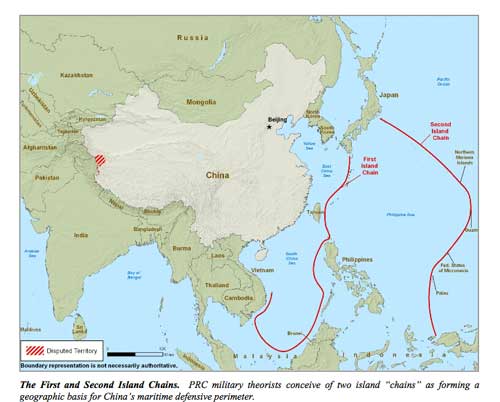
Chart 17: The PLA Naval Air Force is developing a combination of fighters and bombers to expand their influence beyond the first island chain out to the second island chain. With their extensive and growing complement of cruise missiles, they’ll be able to increasingly project power and move closer to their objective of extending their range of influence.
Chart 18: The PLA Naval Air Force support aircraft mimic the PLAAF with Y-8 based systems. They also have a small number of B-6 tankers that are used to refuel the F-8 and F-10.
Chart 19: Here we see the panoply of air launched air to surface missiles—both land-attack cruise missile variants; as well as anti-ship cruise missiles. If you think about the strategy we talked about earlier—the combination of the old, but in large quantities, and the new, in terms of electronic attack capability, and you add into that mix a large number of cruise missiles—that makes the challenge facing allied forces in a potential WESTPAC conflict very, very challenging. Bottom line—this is not your father’s PLA Air Force or Navy.
Chart 20: Looking at this chart it becomes evident that China is experiencing a surge in aircraft production—particularly for their fighter and fighter-bomber fleets. No worries about maintaining a warm aerospace industrial base in China.They are also expanding into the co-production market building the JF-17 fighter with Pakistan. The PRC currently have nine active military aircraft production lines open. To put that into perspective—recent Department of Defense decisions have put US defense plans on a path toward maintaining only one active military production line for bomber, fighter, and long-range transport aircraft combined in the next five years—the F-35. So while the Chinese are very active in aircraft research, development, and production, the United States is headed in the other direction.
Chart 21
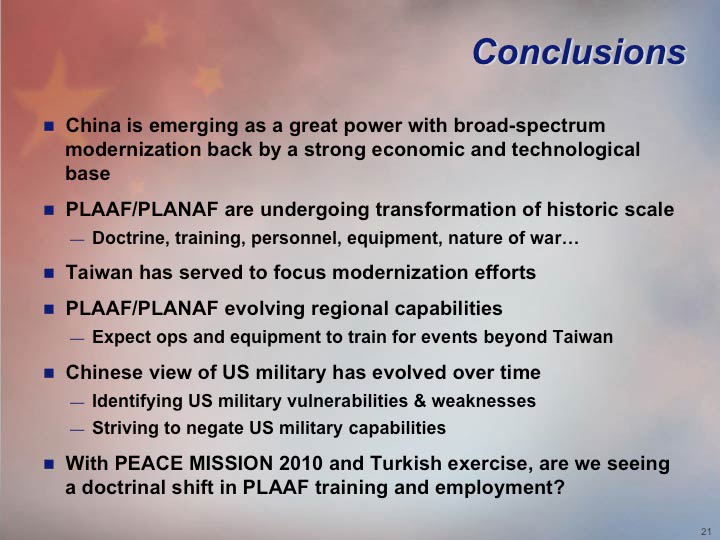
Chart 21: China is set on regaining what it believes is its rightful place as one of the world’s great powers. They believe that a time will soon come when the major global institutions are no longer dominated by the United States. The growth of their economy has fueled China’s reemergence on the world stage. They’re seeking the other necessary elements of comprehensive national power that include a world-class military. In order to make this happen, the PRC air forces have undergone a transformation of historic proportions. Changes that took the United States and Europe half a century occurred over the course of the last 20 years in China. The PLA has undergone a similar transformation. Over the course of the past 20 years, they have gone from a massive peasant army – something a noted China scholar referred to as the “Junkyard Army” – into an military with aspirations to develop global capabilities. Finally, it is important to note that the PLA’s perception of the US military has also changed over the course of the past 20 years. Once viewed as the “gold standard” which should be emulated—the US military is now viewed as a potential adversary who’s strengths and weaknesses are analyzed, and capabilities are developed specifically to counter US capabilities.
Chart 22
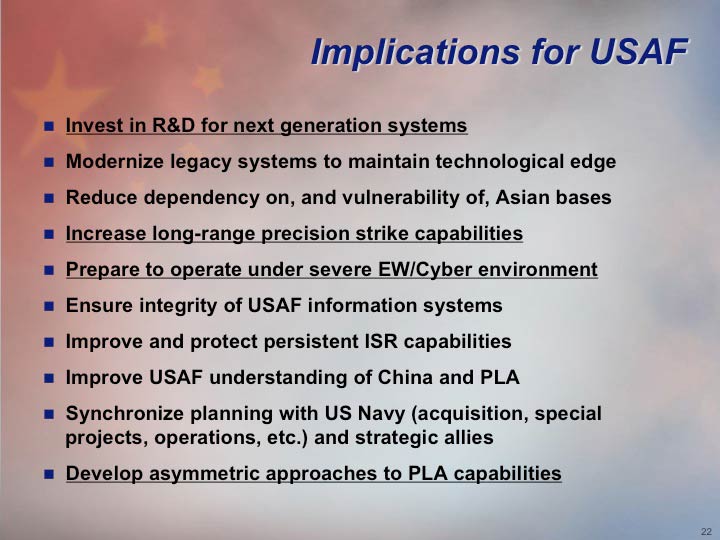
Chart 22: What is the optimal counter to this impressive advancement? An asymmetric approach—embracing distributed air operations; leveraging fifth generation aircraft to shape a new combat approach; and investing in capabilities that capitalize on rapidly developing information technologies. We need to pay more attention to the future, and shed the assumption that since we have dominated the aerospace environment the last quarter of a century, we will dominate the next. We need to embrace a new dynamic of how we lash together systems designed for each domain—air space, sea, sub-sea, and ground—into an integrated, distributed network to be able to accomplish what potential adversaries do not expect us to be able to accomplish. We need to present them with such a degree of complexity and uncertainty that they wouldn’t even contemplate using military force because they’re too uncertain of the outcome.
01/04 /2011 – In a sidebar conversation to the presentation of Lt. General Deptula’s briefing on the PLA Air Force, Second Line of Defense’s Robbin Laird discussed with Lt. General Deptula ways to think about the evolving Chinese challenge.
R. Laird: Why don’t we talk more generally about the PRC challenge, because from my point of view, probably the best way to understand these folks is how they’re building an air space industry, both military and civilian? This should be viewed as a strategic objective, and so they’ll be challenging A320s and 737s in the commercial marketplace, as they’re going to challenge us in the military marketplace. And I think both are viewed quite similarly and with the same industrial base virtually. Secondly, I think folks need to understand the Chinese pursuit of innovation. They are building UAVs, missiles and will come up with different answers than we’ve historically done. Often, when people think about the PRC, they’re thinking of 30 years of following our pathway, and then one day they wake up and they’re a power. They’ve already demonstrated in the commercial domain their quick closing capabilities. The third broad point is that there’s a significant focus in taking away advantages that we’ve historically had in air power. So you develop missiles to make it take out AWACS. They’re studying our historic operations and are looking for our weaknesses and are trying to exploit those things. Do those three broad propositions that make sense to you?
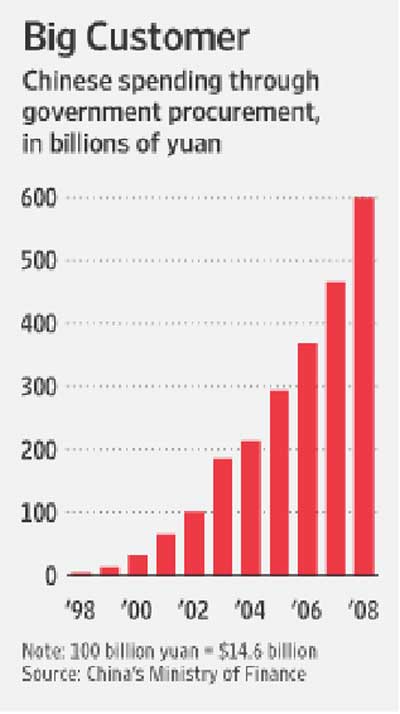
Lt. General Deptula: They do, and the ability of the Chinese to accelerate innovation in the air domain is quite impressive. They now have the ability to make major investments with the monies that are available from their economic growth for continued investment in research and development. That growth in the Chinese economy allows for investment in innovation. Unfortunately, until recently little concern has been evidenced by senior US defense leadership regarding the strategic challenges posed by the Chinese. How much investment is China making in advanced research and development vis-à-vis what the United States is doing? That will tell you how rapidly China will be able to accelerate in terms of military capability at a period in time where the United States is throttling back in terms of military capability.
http://professional.wsj.com
A recent article in the Shanghai Daily stated that “CHINA is set to become the world’s most important center for innovation by 2020, overtaking both the United States and Japan…” That’s another piece that you hit on in the context of: “Look, this isn’t just about the military piece; there’s also another element with respect to aerospace.” The space piece is increasingly important as well. They’re becoming well aware of the importance of being able to dominate an air and space. “The shift is not because the US is doing less science and technology, but because countries like China and India are doing more research. China is now the second-largest producer of scientific papers after the US, and research and development spending by Asian nations in 2008 was US$387 billion, compared with US$384 billion in the US and US$280 billion in Europe.”
China used to view the United States as the gold standard for which to aspire to in terms of military capability to emulate. Now they’re specifically targeting how to disable or negate what used to be U.S. advantages. From their perspective it’s becoming increasingly easier and easier to do that as the current U.S. Department of Defense leadership has elected to focus on the present to a much greater degree than the future.
R. Laird: And I think the real problem on the U.S. and European side, the same thing, is we’re kind of stopped. We seem to think we can rest here while something good happens, and that’s part of the problem.
Lt. General Deptula: Right. Simply put, there is a group-think that has captured the security elite that since we’ve been dominant in conventional warfare over the past quarter-century, we’ll remain so in the future. It’s a convenient presumption given the current economic environment, but a very dangerous one. It may play to conventional wisdom to state that the biggest threat to defense is the deficit, and while partially accurate, the immutable nature of conflict—and deterrence—is more basic—strength wins over weakness. As one looks to the future—given the current investment path the United States is on—the United States and our allies are becoming weaker.
The difficult position to take—given the current economic conditions and nation-building engagements we have elected to pursue—is to articulate the kind of investments we need to make in defense to secure a position of strength in the next quarter-century.
R. Laird: The Chinese have already reached out into the world and affected our military behavior. The carrier task force that was either withdrawn or not deployed in an exercise is a basic factoid as perceived in Asia.
Lt. General Deptula: The problem is when you send force to be symbolic, you better have sufficient wherewithal to back up your move with actual force application that your potential opponents know would be devastating, otherwise the “signal” is not going to be effective. The Chinese have told us to “pound sand” with respect to our recent “signals” regarding North Korean actions, and they will continue to do so as long as we speak with hollow words. As reported by Philip Ewing recently “Chinese officials responded to two days’ worth of [the US Chairman of the Joint Chief’s of Staff] condemnations by doubling down on their support for North Korea; top diplomat Dai Bingguo took presents to Kim Jong-il and “greetings” from Chinese president Hu Jintao. The response showed that the Obama strategy of increased pressure is at least getting to China and the North – although not producing the effect the U.S. wants.” I think your real point is: We don’t have the dominant capability that results in a real determinant that moving force in the region would actually demonstrate—or as raised by Michael Auslin recently in his piece “The F-22: Raptor or Albatross,” the current defense leadership may not be deploying its most capable system due to concern that doing so may illuminate the value of investing in them, thereby uncovering their error in judgment in terminating investment in what brings the U.S. its asymmetric advantage.
R. Laird: But I think the broad problem we have is that folks assume a dominance we don’t have; they still think strategically as if they had it. So they don’t understand you can’t do shadow boxing when I can’t bring the determinant crushing blow with you.
Lt. General Deptula: The Chinese used to have vast quantities of airplanes that were not qualitatively that good. Well, now they’re transitioning very rapidly from quantity to a qualitative force and transforming their old fighters into remotely piloted aircraft with sufficient quantities and in a mix that will pose a very complex military challenge across the board.
R. Laird: The issue here is as well the ability of the US to provide the linchpin force for our Asian allies. It is not like the Soviet-US competition in Europe where we had to prepare to occupy Russian territory as part of deterrence. With China we seek to deny their ability to reach beyond their littoral waters. We seek to have air and naval assets, which our allies can rely upon to augment their own and shape a significant curtailment capability. So our challenge, from my point of view, has always been: I don’t have to destroy the Chinese way of life, but I certainly have to be able to destroy every military asset that comes out into the South China Sea. It’s very simple. I need to curtail them. I don’t even have to contain them, but I need to curtail them to such a significant extent that Singapore, Australia, and others believe in our ability to be a linchpin to help them curtail the Chinese and put them back into the mainland. And I can only do that with air and naval power.
Lt. General Deptula: And that’s what an effective conventional deterrent strategy would do. Unfortunately, if we have one, it’s not very clear to friends and allies, much less those we are trying to deter, and how it fits into a grand strategy is even less evident. Our allies our very aware of the trends we’ve been discussing here. So much so that those trends are already significantly affecting their strategy and decision-making processes. All you need to do is look at the 2009 Australian Defense White Paper—here they are pretty blunt about it in terms of questioning whether or not they can continue to count on the United States in her role of traditional ally to maintain a deterrent capability. When I say “deterrent,” I mean a viable deterrent force to do the kinds of things that you’re talking about—to deter the Chinese from any notion of adventurism outside their borders.
R. Laird: We’re talking about a linchpin force that can work with the allies, certainly smaller than a force that would have invaded the Soviet Union and destroyed through eleven time zones. We’re talking about a force that’s an adequate, dispersed, viable linchpin that can work with allies. It’s much smaller than the one we had parked up against the Warsaw Pact, but it has to be more advanced, not less advanced.
Lt. General Deptula: We have to build a force to present a complex set of challenges that are so disconcerting to potential adversaries that they wouldn’t even consider taking it on because of fear of failure.
We have to build a force to present a complex set of challenges that are so disconcerting to potential adversaries that they wouldn’t even consider taking it on because of fear of failure.
12/21/2010 – Preparing Europe for a New Renaissance: A Strategic View of the European Research Area says the European Union and the world are in need of another “renaissance” in order to confront the challenges that will present themselves when 9 billion people occupy the planet in the next 20 years. Every European alive must embrace creativity, excellence and efficiency and there must be a “paradigm shift in the way we think, live and interact together as well as a paradigm shift in what the role and place of science should be,” says the board. With pressure on the Earth’s resources, “research and innovation will be the cornerstones of this new era and it must be linked to jobs, growth and progress. We need to restore trust between science and society.”
The 36-page report describes six themes that will set the course for a new era in European research.