

By Pasquale Preziosa
In June 2026, the world watched with concern as the crisis in the Strait of Hormuz unfolded. Once again, a stretch of sea just a few dozen kilometers wide proved capable of influencing energy markets, military strategies, and political decisions of powers thousands of kilometers away.
During the same period, Taiwan continued to be one of the main points of friction between the United States and China.
In the Red Sea, attacks on trade routes demonstrated just how vulnerable global commerce remains. Finally, in cyberspace, the competition for control over data, digital infrastructure, and artificial intelligence has become one of the main dimensions of international strategic competition.
What do these seemingly very different phenomena have in common?
The answer may come as a surprise: to understand them, it is still helpful to revisit an author who wrote in the late nineteenth century, Friedrich Ratzel. The occasion is marked by the publication of the first complete Italian translation of his seminal work, *Political Geography* (*Politische Geographie*), originally published in 1897 and now available thanks to a monumental edition by Niccolò Cusano University comprising nearly a thousand pages.
This is not merely a translation, but a genuine scientific and cultural undertaking.
The volume includes a lengthy historical-critical introduction, a detailed biographical account of the author, a survey of his publications, a selection of texts from *Anthropogeography*, and an extensive set of commentaries and notes that guide the reader through the complex cultural, scientific, and political landscape of late-19th-century Germany.
The importance of this work lies precisely in this approach. Ratzel is not an easy author to read. His *Political Geography*, originally printed in Gothic type, spans geography, history, anthropology, economics, ethnography, philosophy, psychology, and the natural sciences. Every page refers to historical events, peoples, territories, scholars, and debates that today require significant contextualization. Without an adequate critical apparatus, much of the text’s richness would risk being lost on the contemporary reader.
To understand the significance of this publication, we must begin with a seemingly paradoxical fact. Almost all textbooks on political geography and geopolitics cite Ratzel as the founder of the modern discipline.
Yet, for over a century, the text that gave shape to this discipline has never been available in its entirety in Italian. This is a surprising situation. It would be like studying modern biology without being able to read Darwin or sociology without having direct access to Durkheim.
There are many reasons for this delay. On the one hand, there is the theoretical complexity of the work; on the other, the weight of the political interpretations that accompanied its reception in the twentieth century. The European tragedies of the last century have often projected onto Ratzel meanings that belong more to his interpreters than to his own thought. World War I, the evolution of German geopolitics, and the ideological use of certain geopolitical categories during the Nazi era ultimately obscured the true nature of his thinking.
The result was paradoxical: one of the most cited authors in political geography has also become one of the least read. A direct reading of *Political Geography* reveals a figure very different from the one entrenched in the collective imagination. What emerges is neither the theorist of territorial conquest at any cost, nor the precursor of 20th-century totalitarian ideologies, nor even the rigid environmental determinist evoked by certain textbooks. Instead, what emerges is an extraordinarily complex intellectual.
A naturalist by training, zoologist, geologist, traveler, journalist, and later geographer, Ratzel belongs to that generation of scholars who sought to understand the world’s transformations through dialogue across different disciplines. His education was shaped by the influence of evolutionism and the natural sciences, but it was progressively enriched by his travels and direct observation of human societies. This aspect is fundamental.
Ratzel’s political geography did not originate in government ministries or military headquarters. It arose in the field, from the observation of migrations, economic activities, social transformations, and the relationships between human communities and their environment. His trip to the United States between 1874 and 1875 was likely one of the defining moments of his intellectual development. Ratzel observed America’s extraordinary growth, its westward expansion, the construction of the great transcontinental railroads, the integration of vast territories, and the transformation of a rapidly evolving society.
It is not difficult to see how these experiences influenced his subsequent thinking. The real surprise of *Political Geography* is, in fact, that its center of gravity is not territory, but movement. Ratzel views space not as a static reality, but as a system of constantly changing relationships, traversed by populations, trade, migration, communications, and flows of power. It is probably in this insight that the most modern aspect of his work lies. His thinking does not revolve around the simple occupation of space, but rather its organization. Long before contemporary globalization, Ratzel understood that power depends not only on the amount of territory controlled, but on the ability to connect, integrate, and govern networks of relationships. It is this aspect that makes his work surprisingly relevant today.
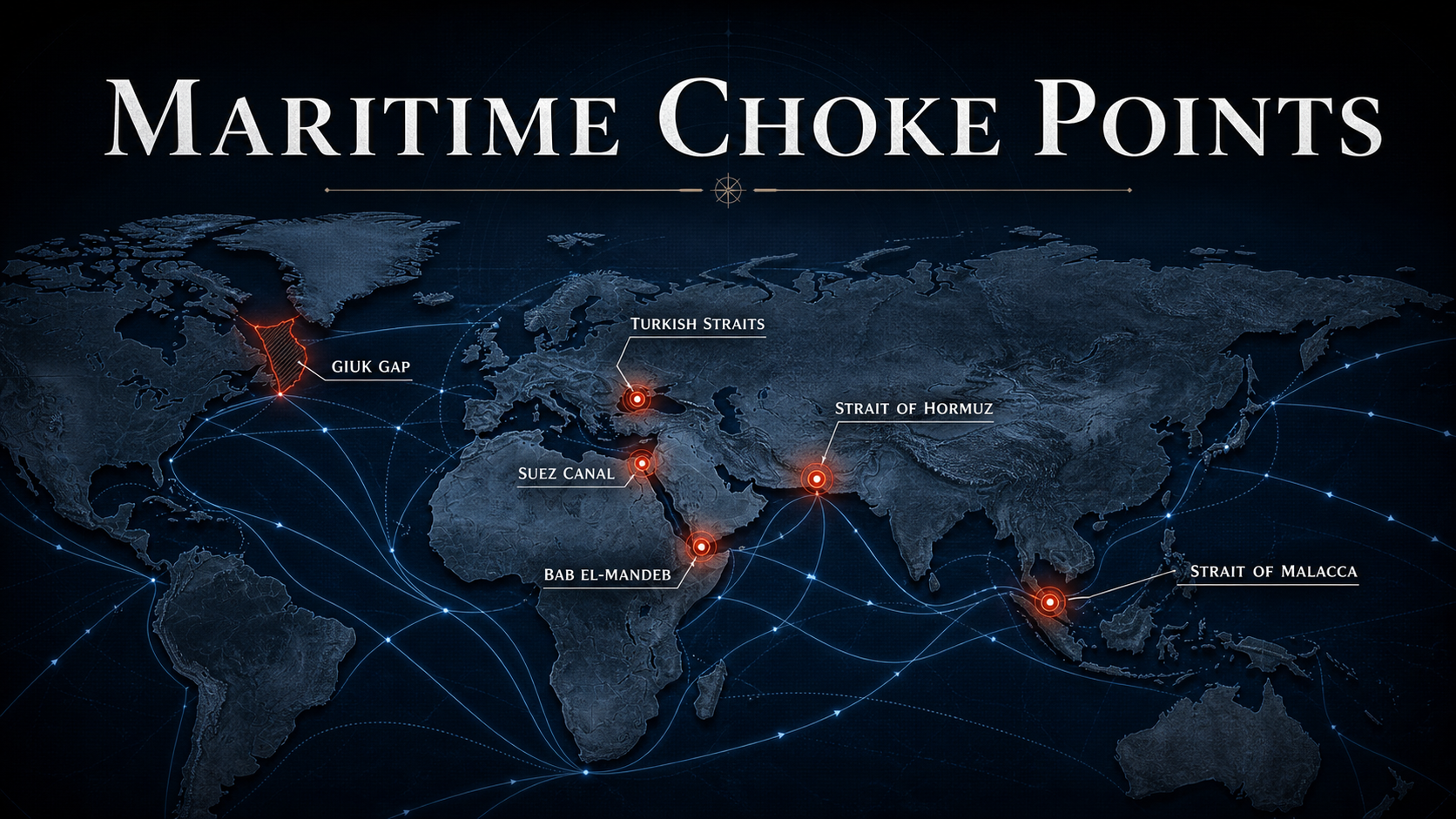
The Hormuz crisis offers a clear example of this. The strategic value of the Strait does not stem from its geographical size, but from the role it plays within global energy networks. The same applies to Malacca, Bab el-Mandeb, Suez, and the routes crossing the western Pacific.
Power does not derive simply from control over territories, but from the ability to influence the connections that traverse them.
Of course, it would be a mistake to turn Ratzel into a contemporary analyst. He wrote in a world profoundly different from our own, in which the railroad represented the pinnacle of technological modernity, steam-powered ships were revolutionizing transportation, and the telegraph marked the frontier of communications.
Yet it is precisely this historical distance that makes reading him all the more interesting. Ratzel does not offer us answers to today’s challenges.
Instead, he offers us a methodology for understanding them.
For decades, there has been debate over whether his thinking was deterministic or not. A comprehensive and contextualized reading shows that he never reduces political life to a mere consequence of the natural environment. The territory exerts an influence, imposes constraints, and offers opportunities, but it continually interacts with cultural, economic, social, and political factors. Humans act upon the environment, and the environment acts upon humans in a continuous, two-way relationship. This insight takes on new relevance today in an era marked by climate change, large-scale migration, competition for resources, the digital revolution, and the emergence of artificial intelligence.
If Ratzel’s nineteenth century was characterized by the conquest of terrestrial frontiers, our century is confronted with new frontiers: cyberspace, outer space, digital ecosystems, global information networks, and the growing interaction between human beings and intelligent systems.
Ratzel’s most important lesson, therefore, lies not in his conclusions but in his approach.
Political geography must be interdisciplinary. It must engage in dialogue with economics, history, technology, the social sciences, and the natural sciences. It must reject dogmatism and seek to understand the complexity of the relationships linking space, society, and power.
This is likely the most profound reason why the publication of this new Italian edition is particularly important. This is not merely the first complete translation of *Politische Geographie*, but an annotated and contextualized translation that finally restores Friedrich Ratzel’s thought to Italian readers within its authentic historical, scientific, and cultural context.
This work is the result of the collaboration of three scholars who represent some of the most authoritative figures in the contemporary Italian geopolitical tradition: Professor Maria Paola Pagnini, a student of the Trieste school of geopolitics and one of Italy’s leading scholars of political geography; General Pierluigi Campregher, a university professor and scholar of geopolitics; and Raffaele Umana, a researcher and author of numerous studies on geoeconomics and international relations. Through an extensive critical apparatus, a detailed biographical reconstruction, and hundreds of explanatory notes, the editors finally enable readers to understand Ratzel for who he truly was: one of the founders of modern political geography, free from the simplifications, reinterpretations, and ideological manipulations that have accompanied the reception of his work throughout the 20th century.
For the first time, Italian readers are not forced to learn about Ratzel through his interpreters. They can engage directly with the text that helped lay the foundations of modern political geography.
This edition reintroduces into the Italian discourse the foundational text of a discipline that has now returned to the center of public attention—though all too often reduced to slogans, oversimplifications, or journalistic commentary. Rereading Ratzel means returning to the origins of a rigorous, scientific, and interdisciplinary line of thought and rediscovering an author who does not offer us ready-made answers to the challenges of our century, but rather a methodology for understanding them. His legacy is not a doctrine to be applied mechanically, but a critical method for analyzing the relationships between space, populations, the economy, technology, and political organization.
And perhaps, in an era characterized by strategic uncertainty, technological transformations, and growing global complexity, this lesson is even more valuable than it was in 1897.
This article was published on Formiche on June 22, 2026 and is republished in an English transition with the permission of the author.
Editor’s Note
Pasquale Preziosa’s essay arrives at a timely moment, and his central provocation deserves to be taken seriously: that a German naturalist-geographer writing in Gothic type in 1897 still has something essential to teach us about the Strait of Hormuz, the Taiwan Strait, and the contested digital highways of the twenty-first century. For readers unfamiliar with Friedrich Ratzel, a brief orientation is in order.
Ratzel was born in Karlsruhe in 1844 and trained initially as a zoologist and geologist before becoming one of the most wide-ranging intellects of the Wilhelmine era. He was not a cabinet scholar. He traveled extensively in Europe, North America, Mexico, and Cuba, filing dispatches as a journalist before settling into an academic career that eventually brought him to the chair of geography at the University of Leipzig. His two landmark works, Anthropogeography (1882–1891) and Political Geography (1897), attempted something genuinely ambitious: to bring the methods of the natural sciences to bear on the study of human societies and their relationship to the physical spaces they inhabit, contest, and transform.
The core of Ratzel’s contribution and the reason Preziosa’s rehabilitation of him is worth taking seriously lies in a deceptively simple insight: that political power is not merely a function of territory possessed, but of space organized and connections governed. States, in Ratzel’s framework, are living organisms in a continuous, dynamic relationship with their environments. They expand not simply out of aggression but out of what he termed Lebensraum, a concept that, as Preziosa rightly notes, was catastrophically hijacked and ideologically deformed by later German geopoliticians and, most infamously, by Nazi doctrine. The distortion was so thoroughgoing that for much of the twentieth century, engaging seriously with Ratzel meant first negotiating a dense thicket of disclaimers. The result, paradoxically, was that the founder of modern political geography became one of its least directly read figures.
What the new Italian edition reviewed by Preziosa seeks to restore is access to the actual Ratzel, the naturalist, the traveler, the observer of American continental expansion, the thinker who understood the transcontinental railroad as a political instrument before most statesmen had fully absorbed the implication. In Ratzel’s America, he saw something that would shape all his subsequent thinking: that mastery of space is achieved not by static occupation but by the construction of networks, of rails, rivers, roads, and later cables and airwaves, that bind distant points into a coherent political whole. The territory is not the power. The connectivity is the power.
This is the insight that resonates so forcefully in 2026. The Strait of Hormuz is roughly twenty-one miles wide at its narrowest point. Its significance is entirely a function of the networks it connects or severs, the liquefied natural gas routes to East Asia, the crude oil flows to Europe, the supply chains that underpin industrial economies half a world away. The same logic applies to the Taiwan Strait, to Bab el-Mandeb, to the cable landing stations on the seafloor of the Indo-Pacific. Control, disruption, or even the credible threat of disruption at these nodal points propagates consequences through interconnected systems that Ratzel could only have glimpsed in their earliest form.
Preziosa’s framing that Ratzel offers not answers but a methodology is precisely right. The method is interdisciplinary, empirical, and resistant to the kind of single-variable determinism that tends to produce elegant theories and poor predictions. Geography shapes behavior; it does not dictate it. Technology reshapes geography; it does not abolish it. Human organization mediates between the two.
For readers engaged in the strategic debates of our own moment, over maritime choke points, over the architecture of allied deterrence, over the emerging geography of cyberspace and artificial intelligence competition, Ratzel is not an antiquarian curiosity. He is an interlocutor worth recovering.