Thirteen photographs from April 7, 2026, document a full operational day for the UH-1Y Venom near Yuma, Arizona, as part of Weapons and Tactics Instructor Course 2-26.
The day moves from the MCAS Yuma ramp through rappelling operations in the rocky desert mountains, a hot-pad turnaround at a forward site, door gun employment across the desert floor, and into the closing light of sunset.
Taken together, the photographs constitute the most operationally complete single-day record in this WTI 2-26 series, a document of the UH-1Y’s role not as a single-mission platform but as a multi-function system that a WTI must understand in its entirety.
The exercise designation — rappelling and counter-Unmanned Aerial System — is itself analytically significant. It combines two requirements that would seem at first glance to belong to different operational domains: the personnel recovery and special operations support function of rappelling, and the emerging counter-UAS mission that has become one of the most pressing operational challenges across every theater. That WTI is integrating these two requirements into a single exercise reflects an understanding that the UH-1Y crew in a contested environment will face both simultaneously.
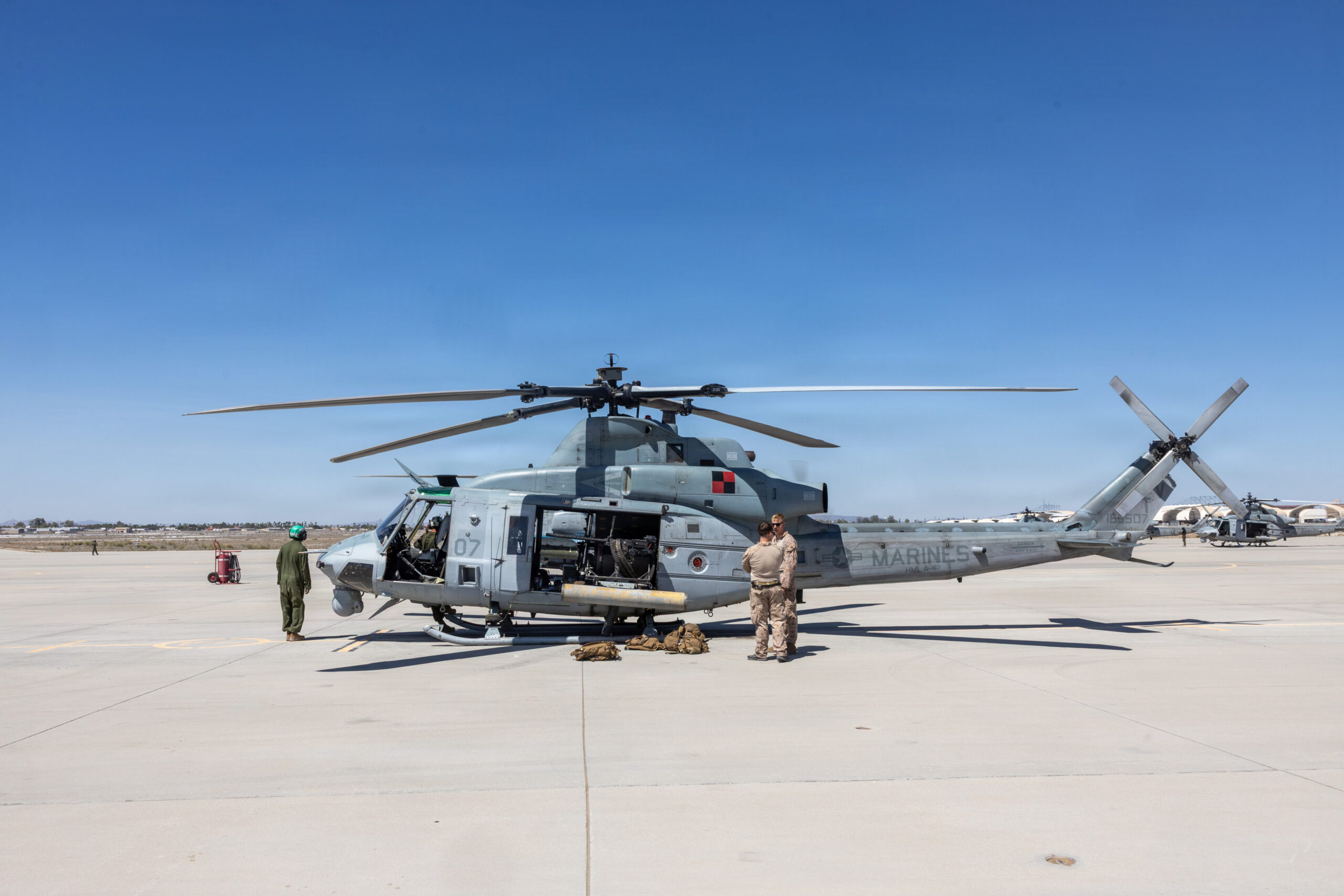
Image 1 shows UH-1Y aircraft 07 on the MCAS Yuma ramp, cabin door open, two Marines in discussion beside it. The aircraft is in a clean configuration — no external stores visible — and is being prepared for the day’s sorties. The open cabin door and the gear staged on the ground beside it indicate the loadout is being configured for the rappelling and hoist work to come. A second UH-1Y is visible on the ramp behind it.
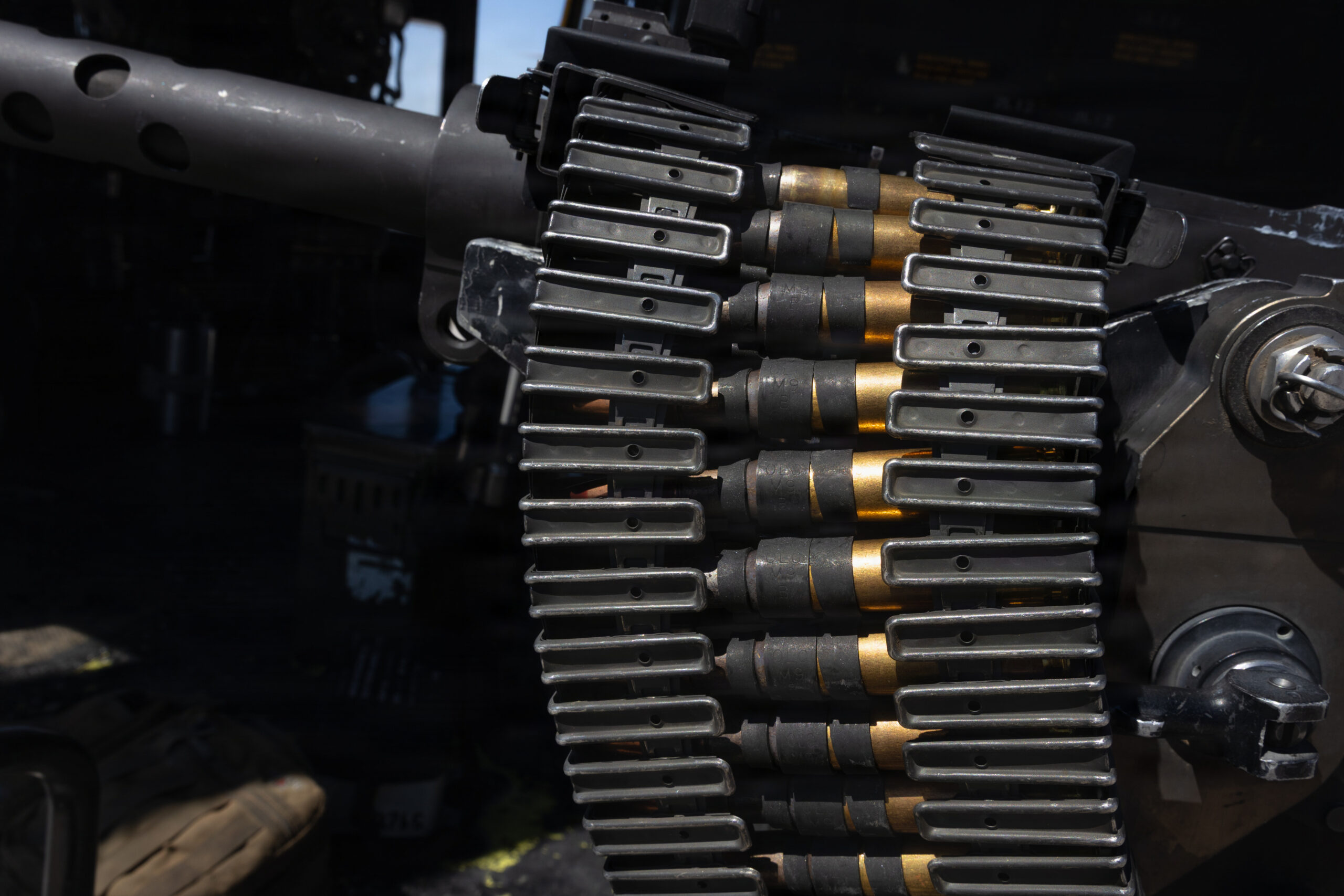
Image 2 closes in on a belt-fed weapon loaded and ready inside the cabin, a belt of .50-caliber or 7.62mm ammunition, the brass cartridges catching the desert light, the feed tray open. This detail bridges the rappelling and fires elements of the day’s mission: the same aircraft that will hover over a ridgeline while a Marine rappels down a cliff face is also armed and prepared to suppress threats. The door gun is not an afterthought on a utility helicopter. It is the self-defense and fire support layer that keeps the aircraft and its crew viable in a contested environment.
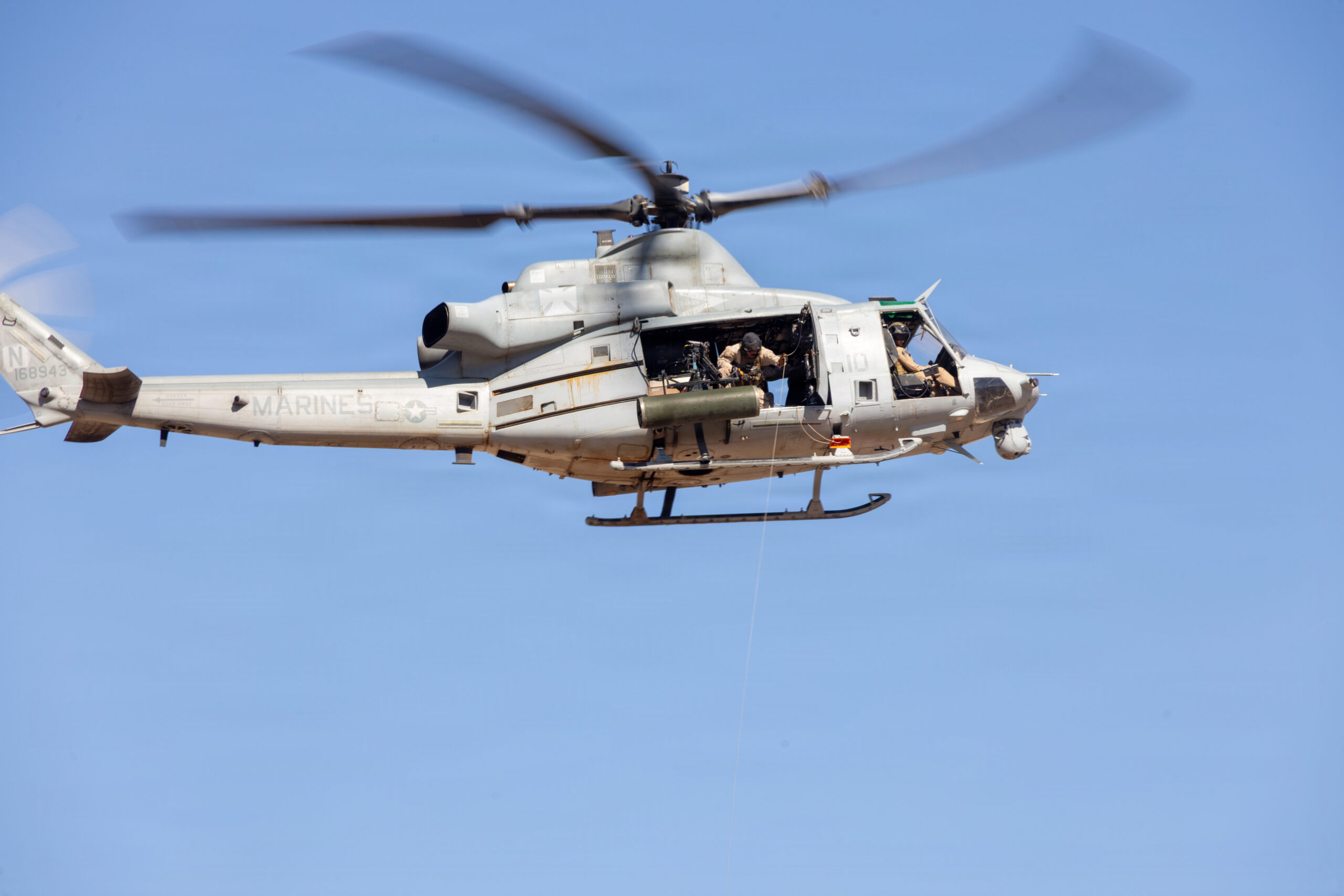
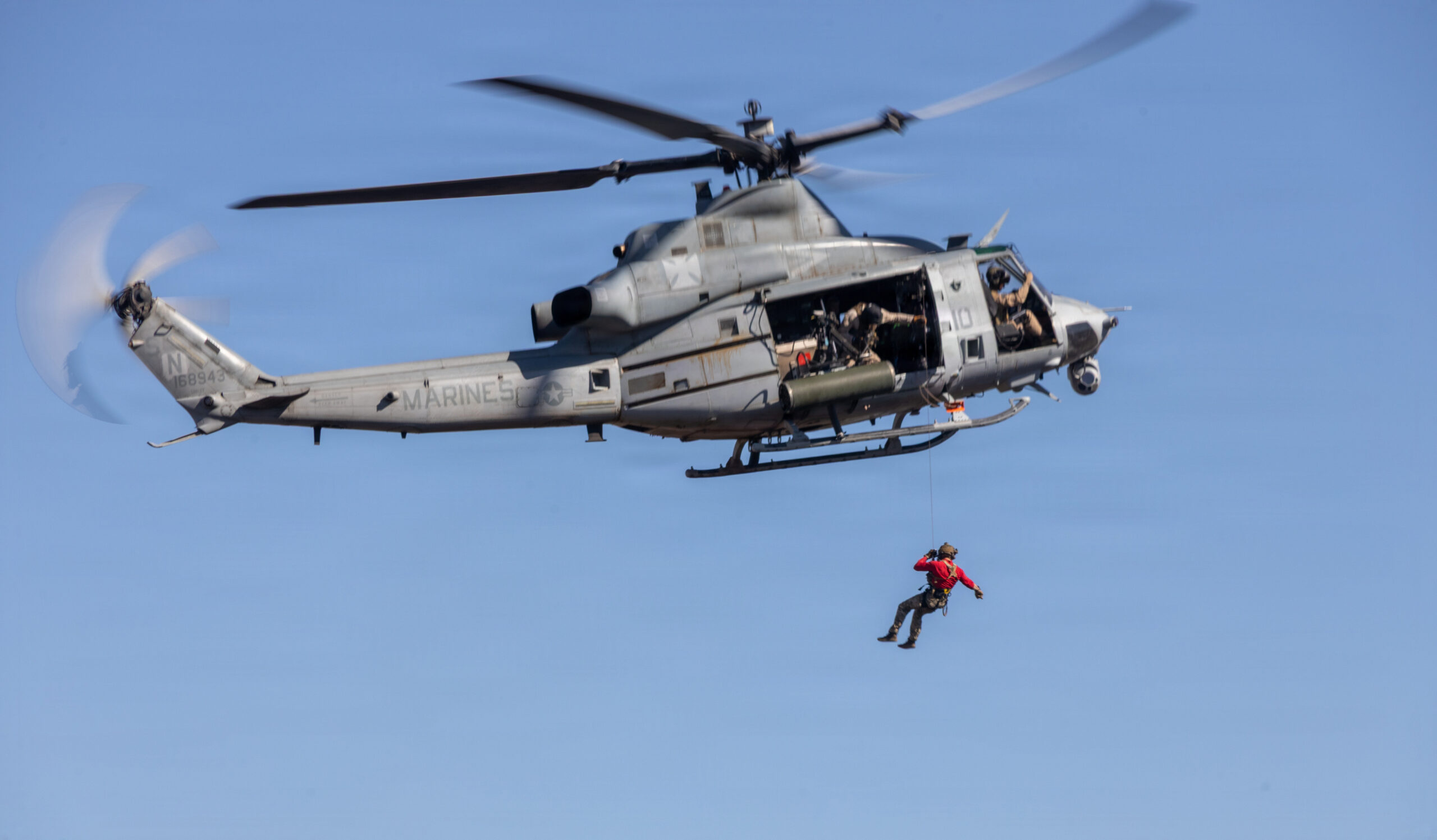
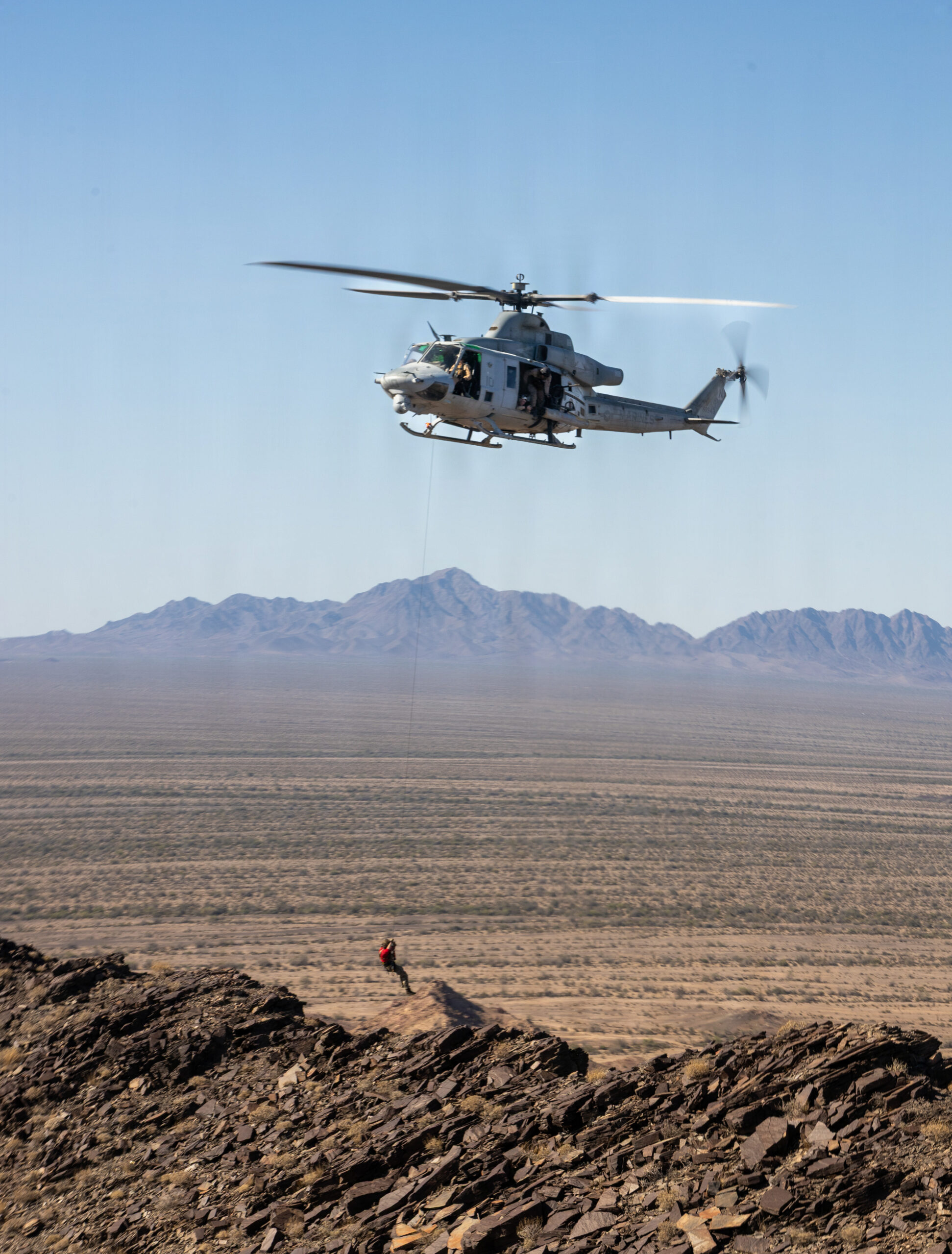
Images 3 through 7 document the rappelling evolution in the rocky desert terrain southwest of Yuma. The aircraft conducts the hoist operations, its crew chief visible in the open cabin managing the line. GySgt Dominick Gorman, identified in the DVIDS caption as a UH-1 helicopter crew chief with MAWTS-1, operates the hoist system.
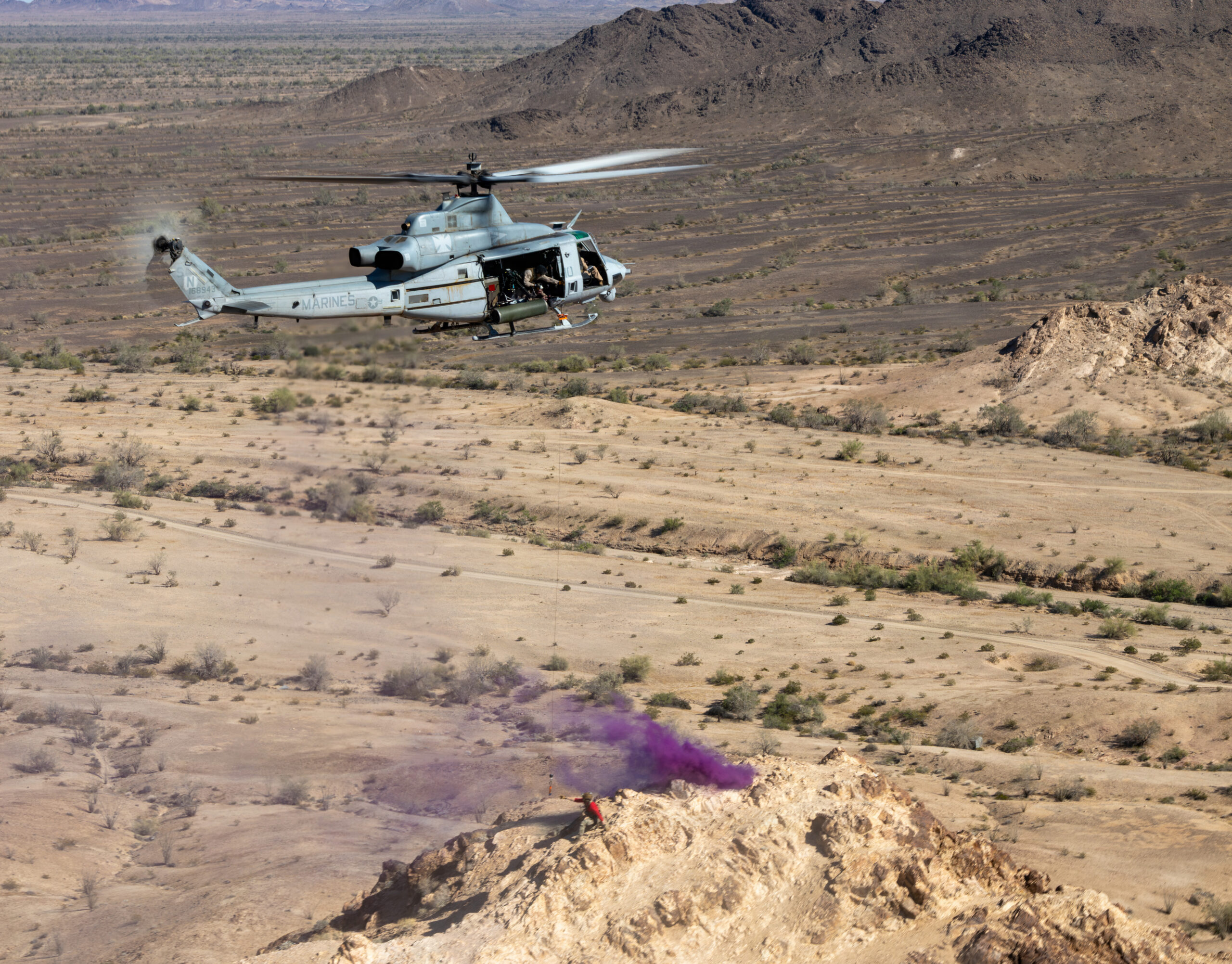
Image 4 is the operationally and photographically most compelling image in the set. The UH-1Y hovers above a rocky desert ridgeline, its nose tilted slightly forward, the hoist line dropping vertically from the cabin. On the cliff face below, a Marine in red — the safety color used in training to distinguish the rappeller from the terrain — descends the rock while a purple smoke grenade burns at the base of the cliff, marking the position for the aircraft above. The combination of the aircraft in the upper frame, the rappeller mid-descent on the rock face, and the smoke column rising from below creates a complete picture of the precision hovering, crew coordination, and terrain awareness that hoist and rappelling operations demand.
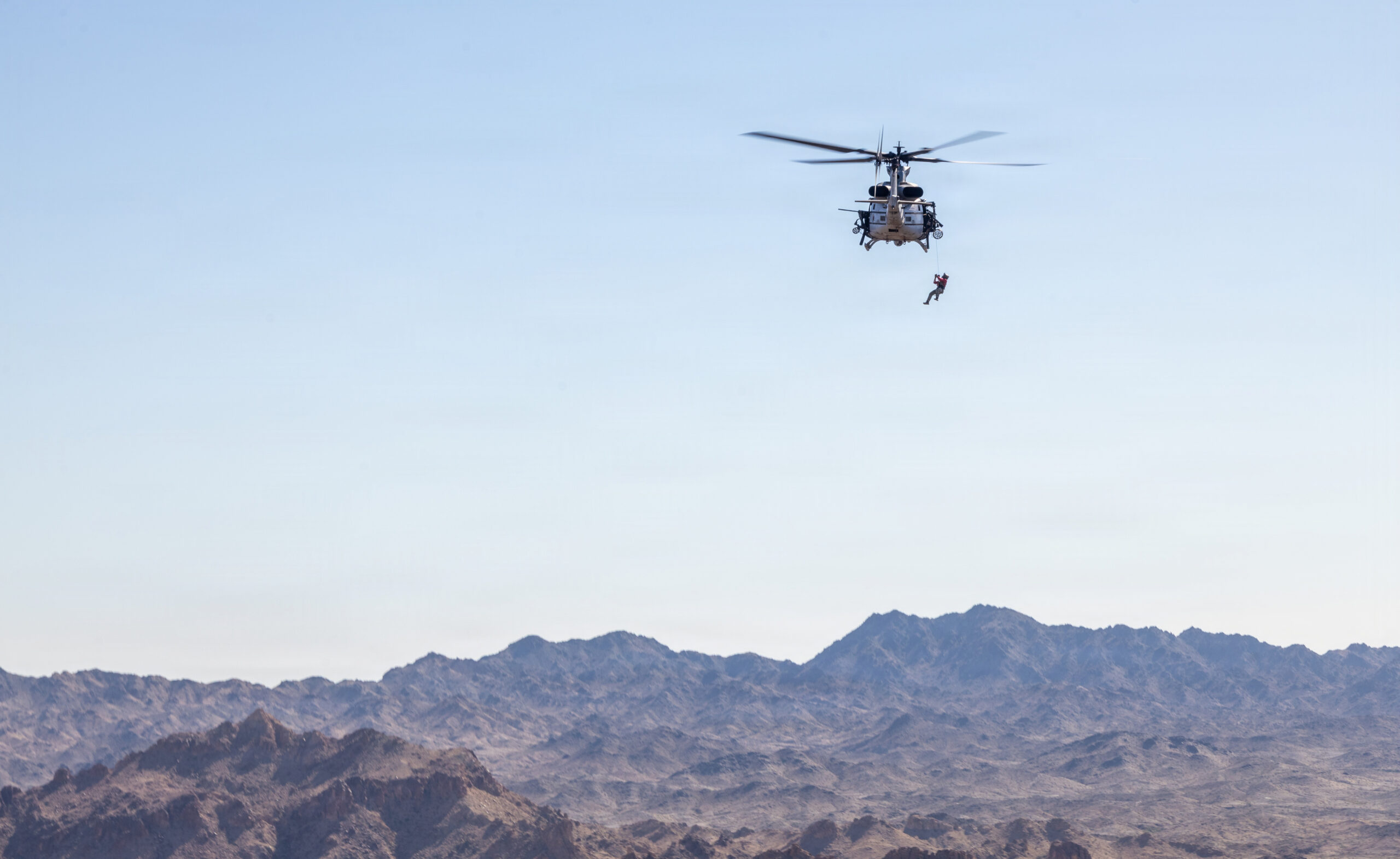
Images 5 and 7 show the rappeller suspended freely below the aircraft at altitude, no rock face, no terrain reference, just the person and the line and the desert mountain range stretching across the horizon. Image 7 is taken from distance, giving the full scale of the operation: the aircraft is a small shape in the upper right of the frame, the rappeller a figure below it, and beneath them the jagged brown ridgeline of the Yuma desert ranges runs wall-to-wall across the bottom third of the photograph. The scale makes the precision of the operation, maintaining a stable hover over irregular terrain while a crew member manages a person on a line, visually apparent in a way that close-up photography cannot convey.
The rappelling and hoist function connects directly to the counter-UAS mission that is the second half of this exercise’s designation. In an operational environment where small UAS are ubiquitous, a helicopter hovering stationary over a personnel recovery point is a target. The crew that can conduct hoist operations while simultaneously maintaining awareness of the aerial threat environment and whose door gunner is positioned to engage a threatening UAS if necessary is a crew that can survive the task. WTI’s integration of these two requirements in a single exercise day is not accidental.
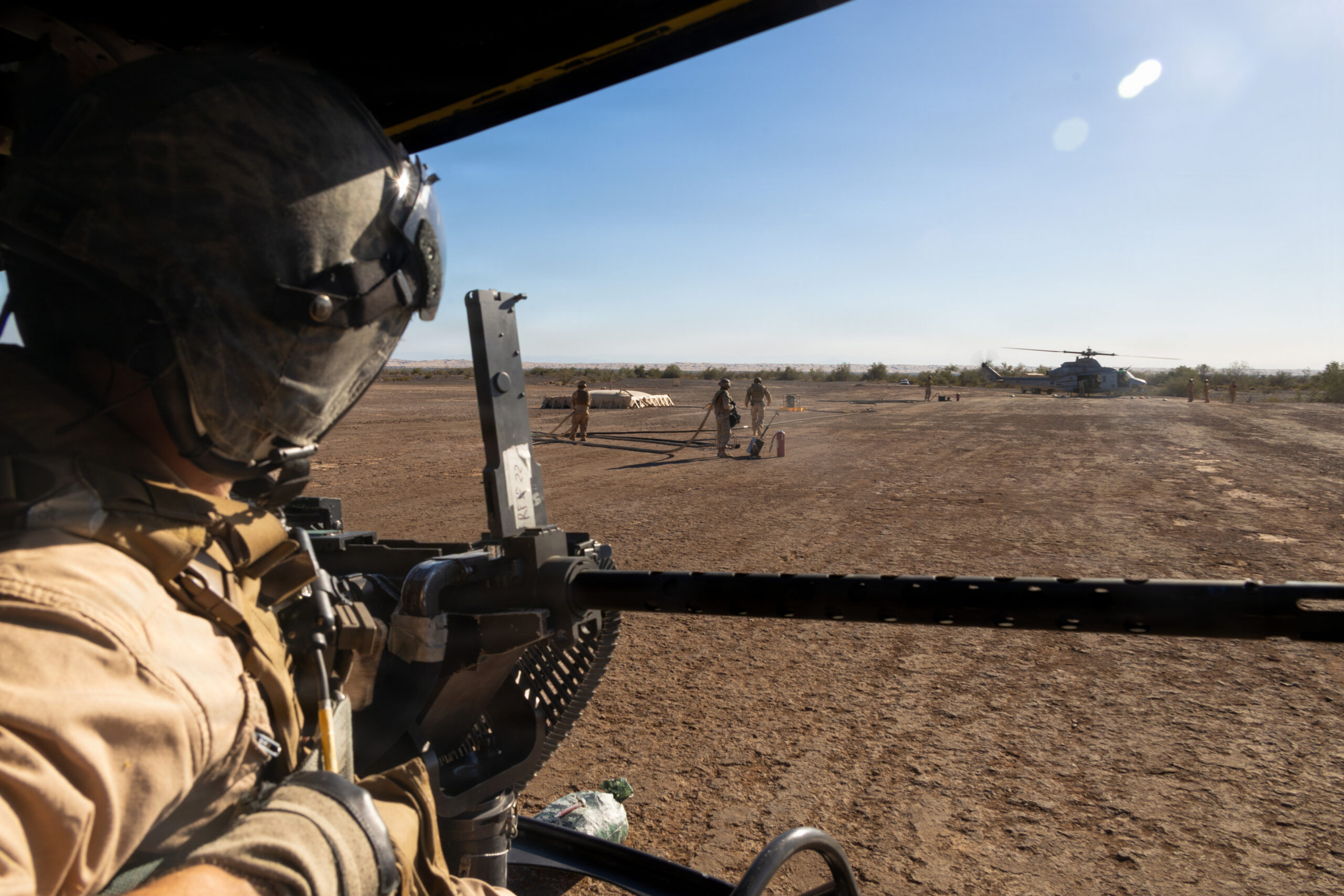
Image 8 shows the view from inside one UH-1Y looking out at the forward FARP site below. The crew chief is in the foreground at the door gun, oriented outward and watching the ground. On the desert pad below, several Marines are working fuel hoses, and a second UH-1Y is on the ground taking fuel. The image is a direct visual connection to the FARP practical application documented three weeks earlier in this series, the same collapsible hose system, the same expeditionary pad, now being used operationally under the protection of an armed aircraft overhead.
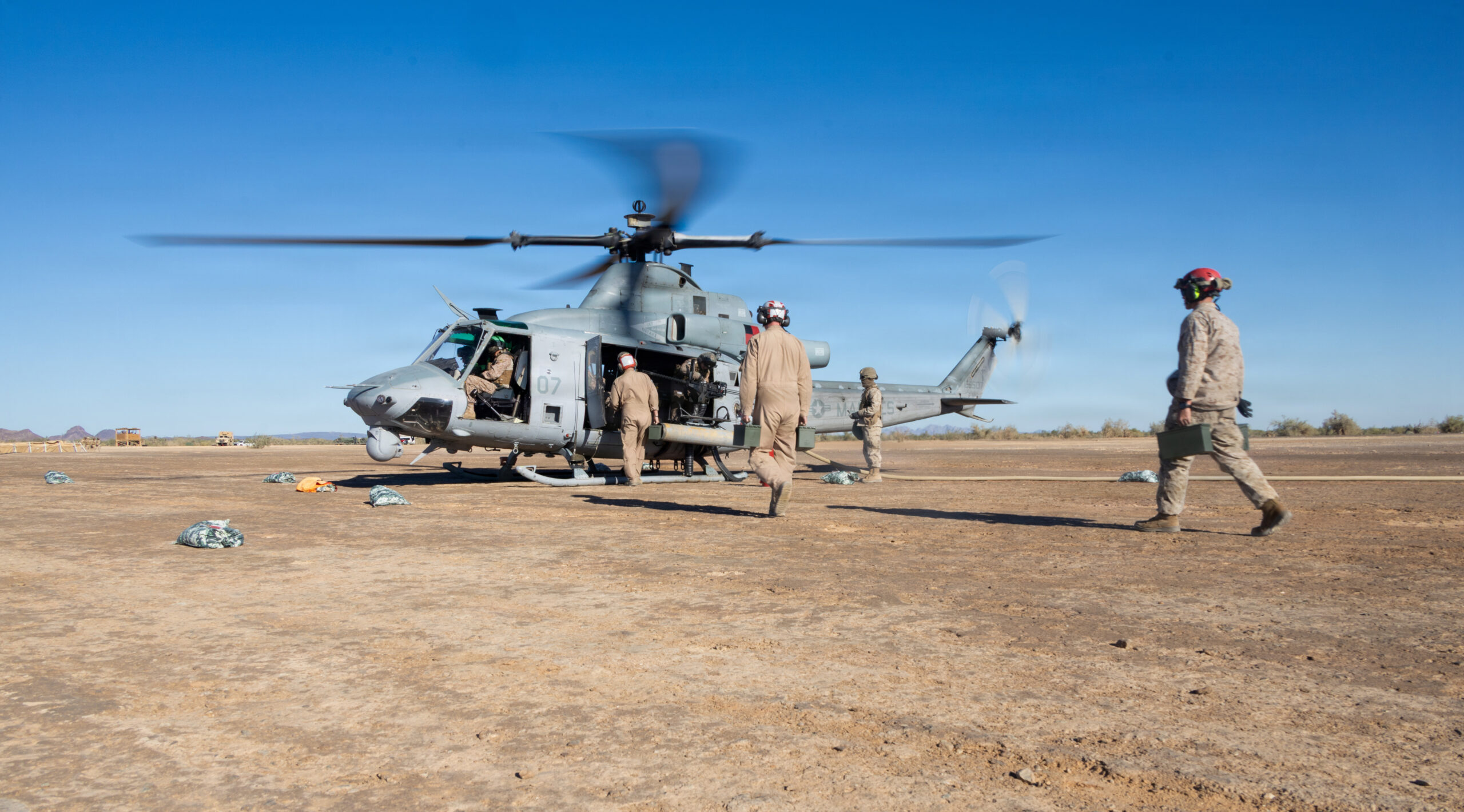
Image 9 shows the FARP turnaround from ground level: the aircraft on the pad, rotors turning, multiple crew in flight suits moving toward it carrying ammunition, the green ammunition cans visible, red safety helmets on the ground crew. This is a hot-pad turnaround: the aircraft does not shut down, the crew does not disembark, and the ammunition and fuel are moved to the aircraft rather than the aircraft taxiing to a service point. The speed of this sequence directly affects the sortie generation rate and the time the aircraft is unavailable to the exercise.
The visual connection between the FARP-building evolution at Auxiliary Airfield II in March and this operational use of a FARP in April is one of the most analytically satisfying threads in the WTI 2-26 photographic record. The Marines who laid the matting and set up the fuel system in the first week of the course are supporting the helicopter crews who are using that infrastructure in week three. The expeditionary airfield series is not a separate story from the flight operations series. It is the same story, seen from different vantage points.
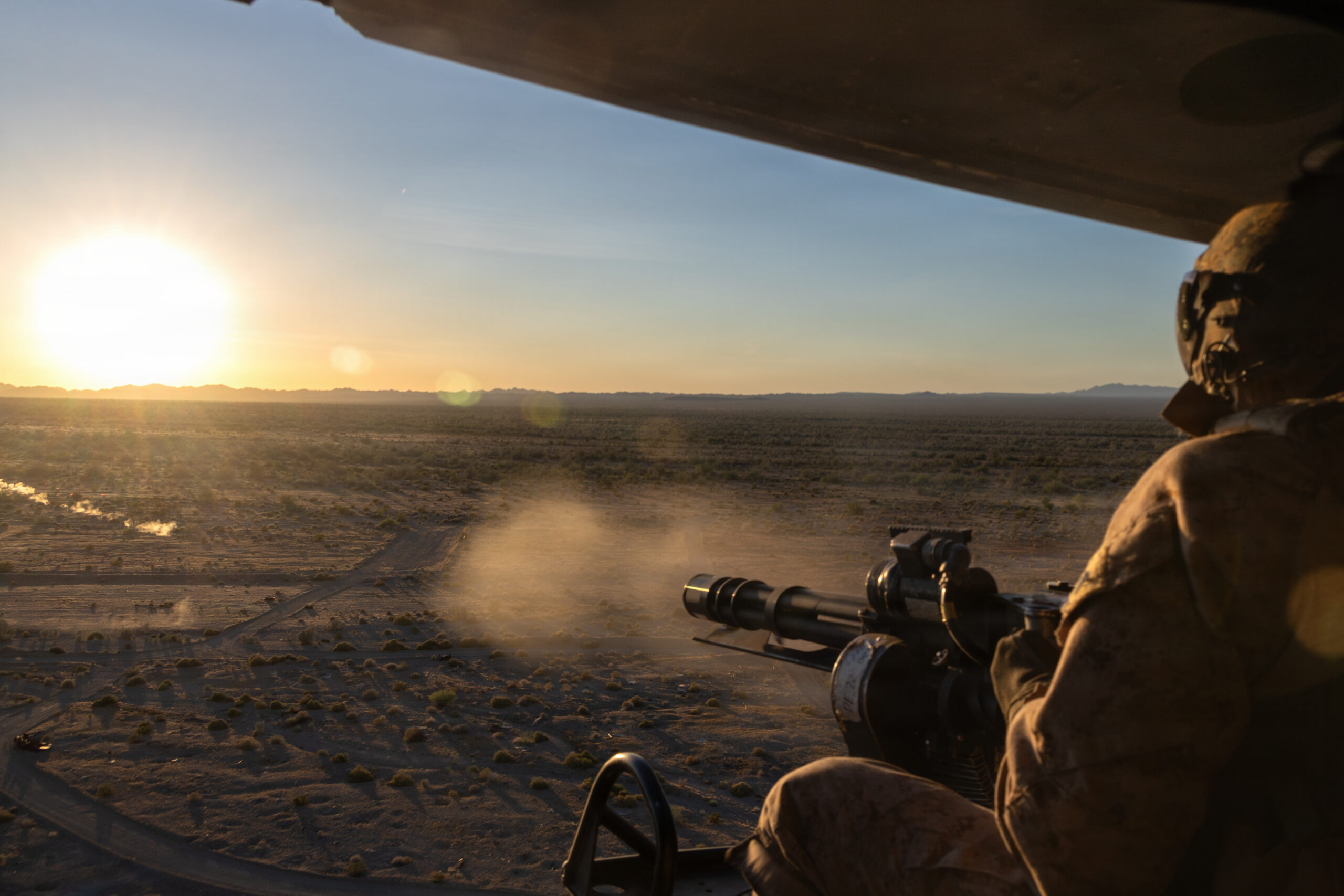
Images 10 through 13 shift to the door gun employment phase of the day, and they are among the most visually striking photographs in the entire WTI 2-26 series. The sequence moves from preparation through firing to the closing light of sunset, and each image in the sequence adds a layer to the understanding of what door gun employment actually requires.
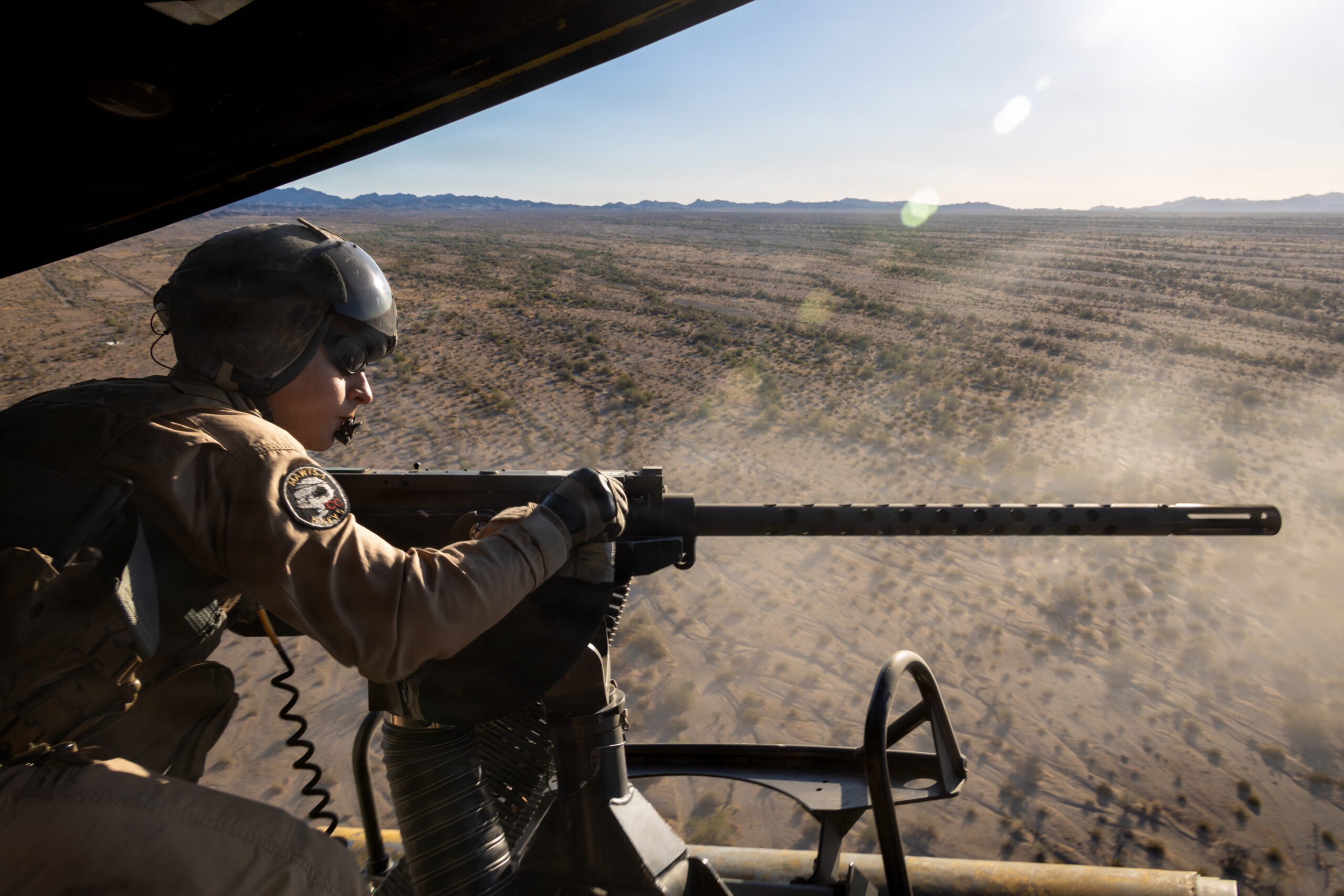
Image 10 shows GySgt Gorman at the door gun — his MAWTS-1 crew chief patch visible on the sleeve, the weapon oriented outward, the Sonoran Desert stretching to the horizon below. He is in the firing position: leaning into the gun, sighting through the scope, the desert floor at low altitude beneath him, the aircraft’s rotor wash visible in the dust kicked up behind the gun’s muzzle brake. This is the crew chief in the role that WTI trains as a weapons competency, not just as a utility function.
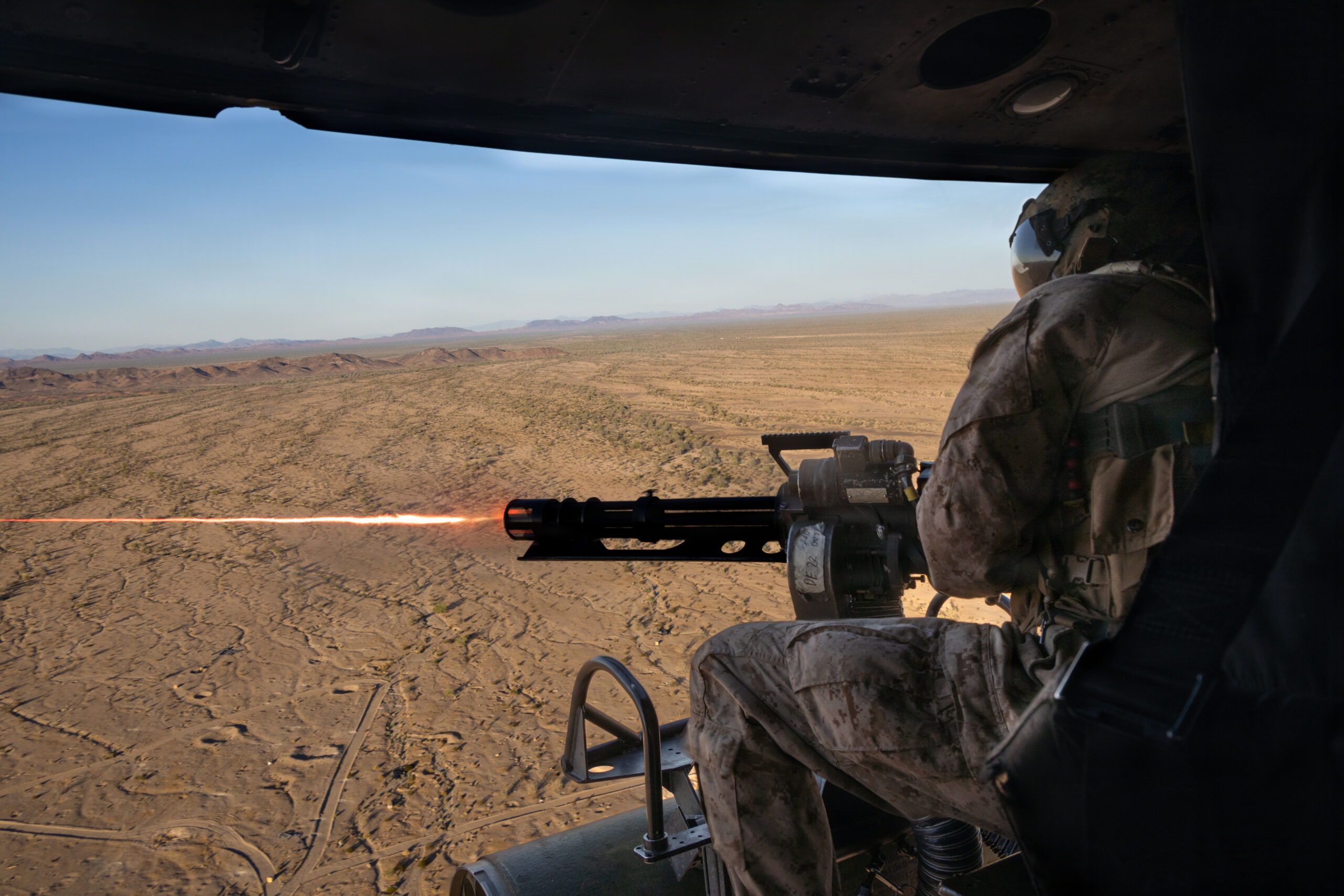
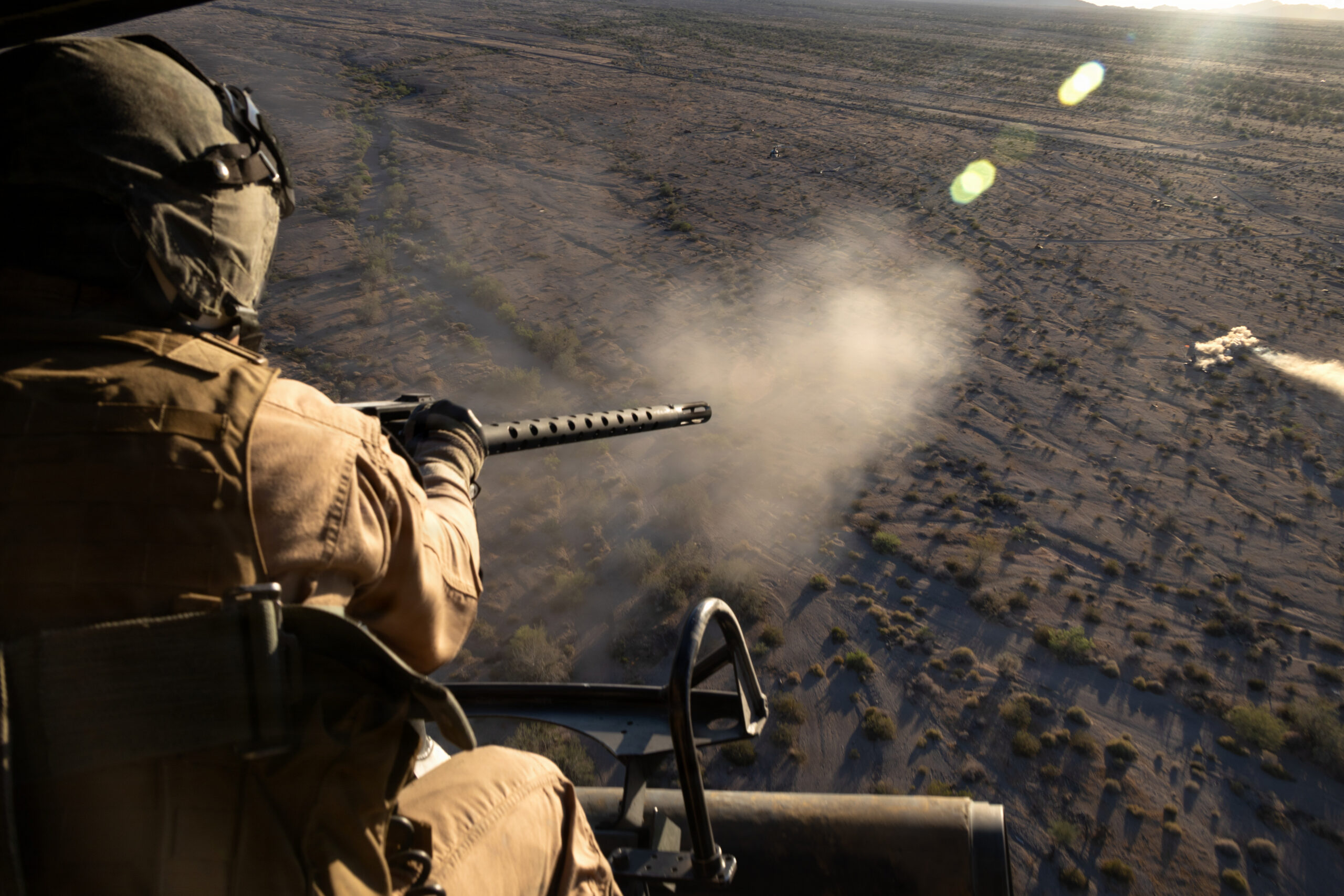
Image 11 is the most technically precise photograph in the set: a tracer round is visible leaving the barrel, a bright orange-red streak against the blue desert sky and the flat terrain below. The weapon is a GAU-21 .50-caliber or M240 7.62mm door gun, the round in flight captures the precise moment of exit, the muzzle energy still visible as a bright point at the barrel’s end. Images 12 and 13 show the gun smoke rolling back from successive bursts, the spent gas forming a white cloud that trails behind the aircraft as it continues across the desert. In Image 13, the sun is on the horizon, the day’s firing is ending as the light fades.
The counter-UAS dimension of the door gun employment is not incidental. The small, slow, low-flying profile of many UAS threats maps reasonably well onto the engagement geometry that a door gunner practices against ground targets, the gun traverse, the lead calculation, the burst discipline. A crew chief who has trained door gun employment to a high standard has the foundational skills to engage a UAS threat with the same weapon. WTI’s integration of counter-UAS training into the door gun and rappelling exercise is a reflection of the operational environment that the Marine Corps now designs all its training against: one in which UAS are present, persistent, and lethal.
In short, the UH-1Y Venom is the Marine Corps’ primary light utility and escort helicopter. It operates alongside the AH-1Z Viper in the light attack helicopter community, and the two platforms are designed to work together: the AH-1Z provides precision fires and anti-armor capability; the UH-1Y provides utility, escort, personnel recovery, command and control, and the kind of flexible organic fire support that a door gun delivers when precision guided munitions are not required or not appropriate.
The photographs from April 7 document the UH-1Y executing three distinct functions in a single day: personnel recovery via rappelling and hoist, logistics support via the FARP turnaround, and fire support via door gun employment. No other photograph set in the WTI 2-26 series shows a single platform type across this range of missions in a single day. The UH-1Y’s versatility — its ability to shift from hoist operations to armed overwatch to hot-pad resupply without returning to a main base or reconfiguring significantly — is a genuine force multiplier in the distributed operations environment.
The WTI student who flew all three phases on April 7 near Yuma returned to the debrief with a complete picture of what the UH-1Y demands from its crew: precision hovering skills, hoist management, threat awareness, weapons employment, FARP coordination, and the endurance to execute all of it across a full operational day. That is what WTI certifies.
The photographs document why the certification matters.