By Robbin Laird
In the fall of 2010, I was at Marine Corps Air Station New River talking to a group of Marines who had been flying the MV-22 Osprey for several years. One of them told me a story about a group of Marines who simply would not get off the back of the aircraft after landing. They were experienced in the ride by rotorcraft. They had not experienced the Osprey before. The Marines sat there, not moving, telling the crew they weren’t there yet.
They were there. They just didn’t believe it yet.
That story has stayed with me as the best single illustration of how long it takes for a force to fully absorb what a new platform actually makes possible. The aircraft’s capabilities outran the force’s mental model of what those capabilities were. It took years, closer to a decade, before the Marine Corps had built enough operational experience with the Osprey to reliably exploit what it could do. The demand signal, as one of the HMHT-302 officers put it to me during a recent visit to USMC Air Station, New River, takes time to arrive. You do things in the aircraft, the operational community sees it, and then they start asking for it. That cycle takes time.
The CH-53K is earlier in that cycle than the Osprey was in 2010. But something is different this time.
The training approach at HMHT-302 is specifically designed to accelerate that cycle, to compress the gap between what the aircraft can do and what the force believes it can do. The simulator ecosystem, the crew chief training program, the shift to initial accession, the mission planning architecture, these are not simply administrative arrangements for producing qualified personnel.
They are, in the language I have come to use, training as a weapon: a deliberate effort to build a generation of pilots, aircrew, and maintainers who will enter the fleet with a mental model of the Kilo that matches what the aircraft actually is, not what a previous platform was.
The Pivot That Just Happened
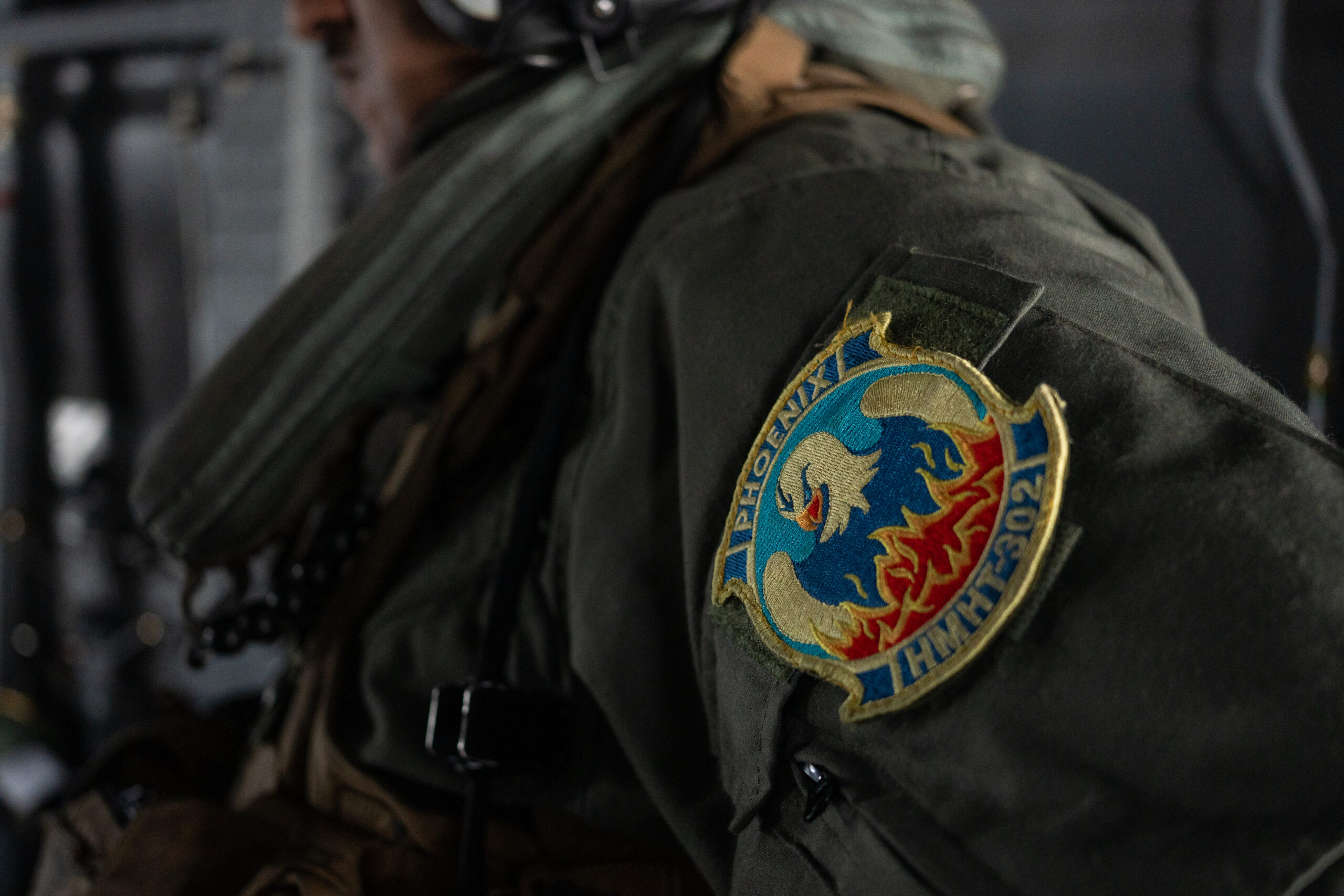
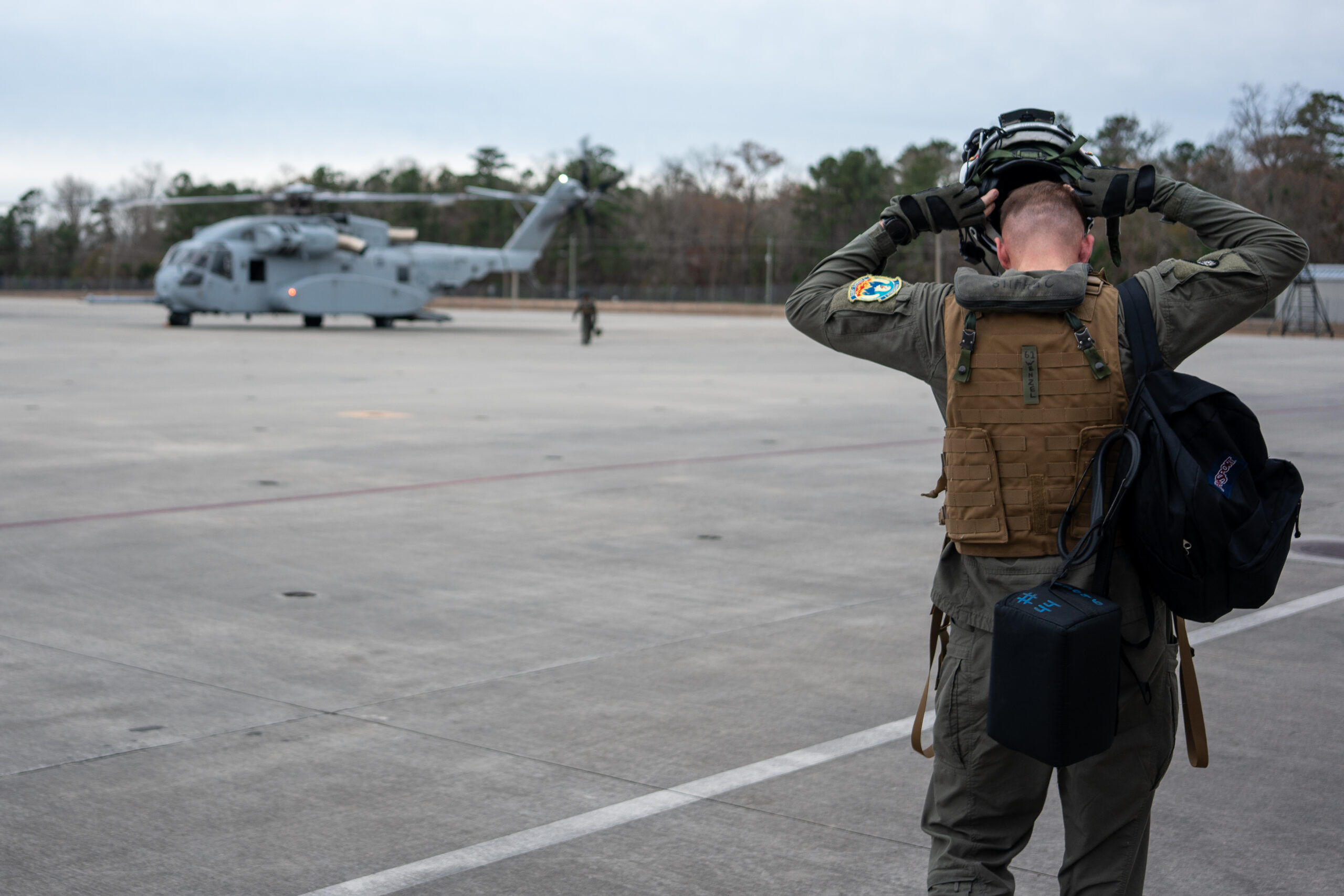
HMHT‑302’s mission to “train the 1000‑level Training and Readiness manual syllabus for the CH‑53E and CH‑53K” means that the squadron is the community’s foundation builder for heavy‑lift aviation. It takes new or transitioning pilots and crew chiefs and brings them to a common standard in the core skills, procedures, and crew coordination defined in the Marine Corps T&R construct, so that when they report to an operational HMH squadron they are already proficient in the basics of flying, fighting, and sustaining the aircraft.
In this role, HMHT‑302 not only delivers a structured syllabus of academics, simulators, and flights, but also serves as the primary conduit through which new tactics, techniques, and procedures, and the evolving understanding of the CH‑53K’s capabilities, are translated into standardized training.
The net effect is that HMHT‑302 underpins the readiness of the entire heavy‑lift enterprise: it produces aircrew with a shared baseline of competence and mindset, enabling fleet squadrons to focus on advanced mission employment rather than remedial instruction.
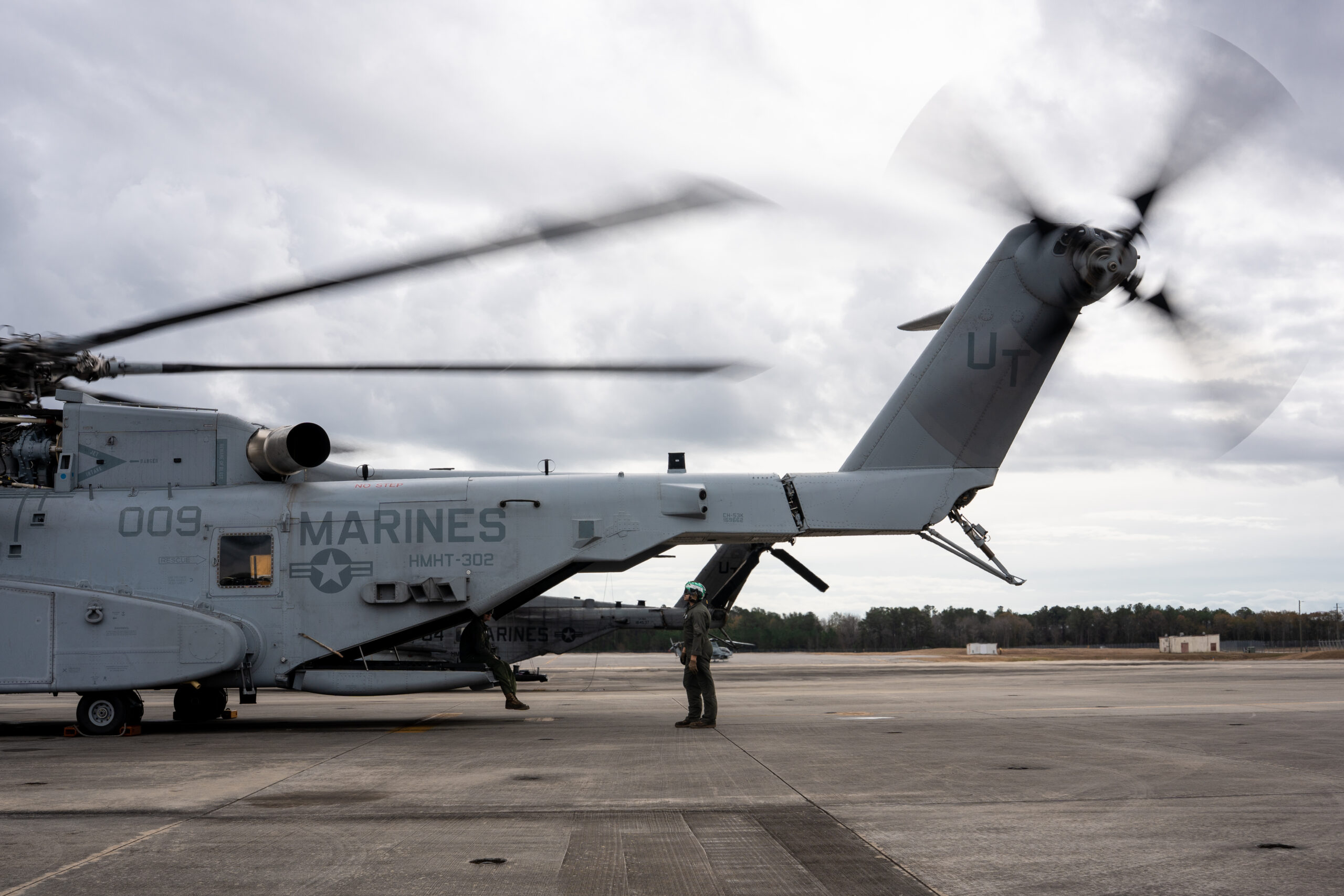
Since the arrival of the CH-53K at HMHT-302 in December of 2025, HMHT-302’s CH-53K charter was largely converting CH-53E crews to the Kilo, taking pilots and maintainers who had built their professional reflexes on the Echo and helping them adapt to a fundamentally different aircraft. That work is not finished. The squadron still runs Echo-to-Kilo conversions as needed through a 1000-level syllabus.
But as a senior officer at HMHT-302 described it, last year the charter was Echo-to-Kilo conversions, this year the charter is Kilo initial accession productions. The primary pipeline now brings students straight from Pensacola, with no prior heavy-lift experience at all.
This shift matters in ways that go beyond the administrative. Conversion training is inherently a remediation problem as much as a qualification program. It requires identifying which Echo habits are operationally disadvantaged in the Kilo environment, which learned instincts are simply irrelevant, and which aspects of the new aircraft’s behavior will feel wrong to someone whose expectations were formed on the legacy platform. The cognitive launch point is very different. The first group has to unlearn things. The other group doesn’t know what they don’t know.
The phrase deserves attention: they don’t know what they don’t know. In the context of the Kilo, this is an advantage. Initial accession students do not arrive with the Echo’s mechanical management habits embedded in their reflexes. They do not expect to manage engine torque manually, because they have never done so. They do not carry assumptions about what a heavy-lift helicopter can and cannot do that were formed on an aircraft with tighter power margins and less precise flight controls. They learn the Kilo’s logic as the baseline, and that baseline is already substantially different from anything the Echo could support.
The maintenance side reflects the same dynamic. As a maintainer at the squadron noted, HMHT-302 has just started receiving what he called “kilo only maintainers” or personnel who have never worked on the Echo and therefore carry none of what he called the “echo isms” that emerge from maintaining a legacy aircraft with limited diagnostic visibility and aging systems. These maintainers interface with the Kilo’s digital diagnostic systems as the normal way of doing things, not as a departure from a familiar pattern.
The Simulator Ecosystem
The Kilo’s digital architecture creates an opportunity for simulator-based training that did not exist with the Echo, and HMHT-302 is building the infrastructure to exploit it.
The core insight is straightforward: because the CH-53K is a digital aircraft, and because the simulator shares the same fly-by-wire software that governs the actual aircraft, proficiency built in the simulator transfers to the aircraft more completely than was possible with legacy platforms. As the senior HMHT-302 officer explained: “Because of the quantity and quality of our simulator training, copilots are arriving for their first flight significantly more prepared and capable for flight operations. Leveraging their flight proficiency early on in the syllabus, our instructors are able to dedicate more time to training students on the mission planning software, which our mission planning software is turning into a mission planning ecosystem.”
That last phrase, mission planning ecosystem, captures something important.
The Kilo is not just an aircraft with better avionics. It is a system within a system. Mission planning software inputs flow into the aircraft. Programs of record that previously required separate manual manipulation are being integrated so they communicate without requiring the pilot to work multiple siloed systems.
As the officer described MAGTABs, tablet-based mission management tools being linked directly to legacy mission planning systems allows for a seamless workflow inside the mission planning ecosystem, to allow pilots to focus on mission execution: “We no longer have to manipulate multiple systems in parallel. We manipulate one integrated system, that seamlessly flows information back and forth across multiple domains ”
The training pipeline at HMHT-302 is accordingly being designed not merely to produce pilots who can fly the Kilo, but pilots who are fluent in the mission planning ecosystem that the Kilo anchors.
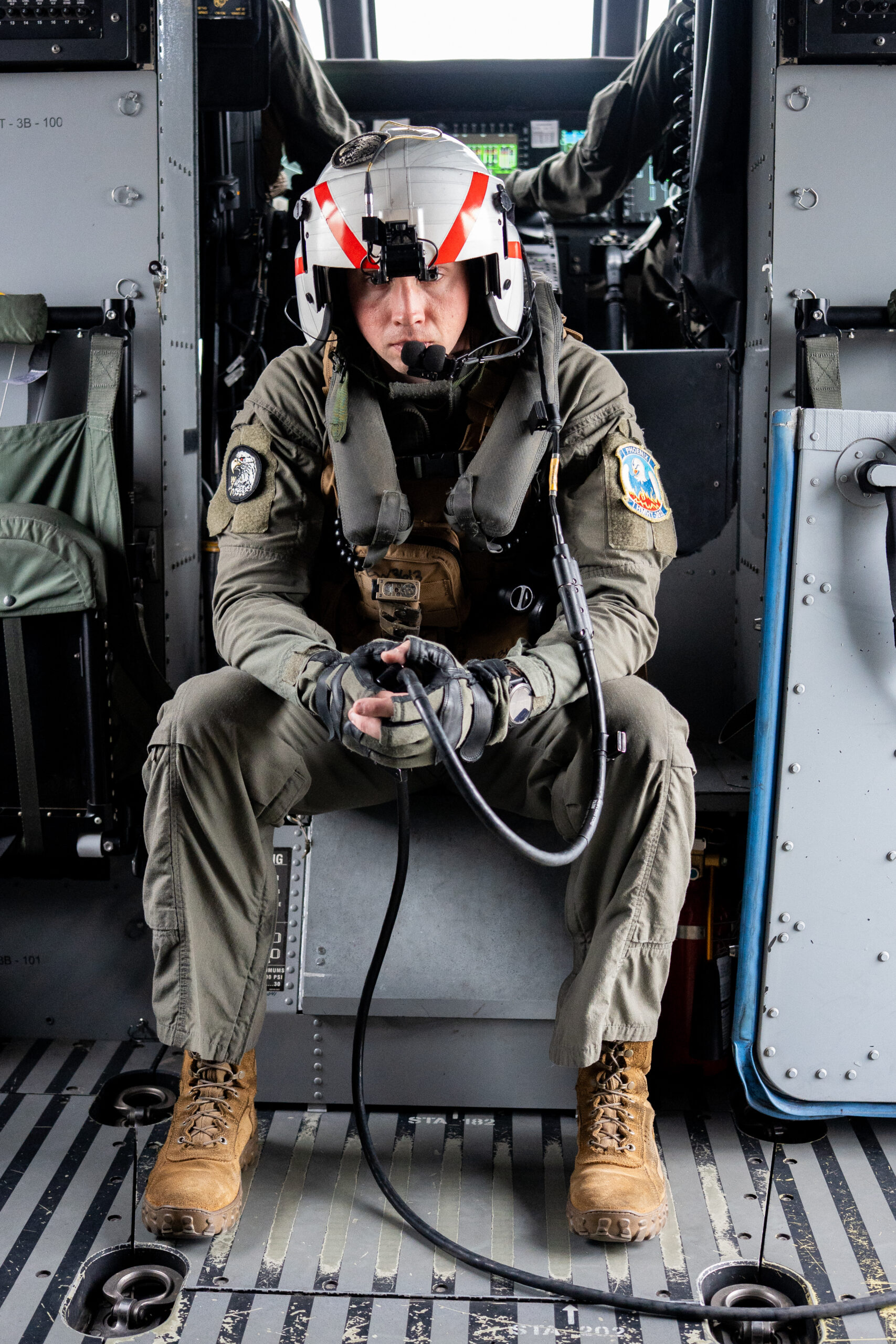
The physical training infrastructure is expanding to match this ambition. The squadron recently received access to an AATD, an Advanced Aircrew Training Device, that serves both pilots and crew chiefs simultaneously. For pilots, the simulator uses mixed reality goggles at the cockpit seats, allowing students to interact physically with the multifunctional displays while flying a simulated mission. For crew chiefs, the system puts them in virtual reality in the back of the aircraft, practicing the external load calls and crew resource management conversations they will eventually execute in an actual Kilo.
A crew chief instructor at HMHT-302 described the operational significance of these higher fidelity simulators: “Before these guys even go overseas, they can come into these simulators, and they can actually fly the routes that they’re generally going to be flying, from FOB to FOB.” The simulator does not simply train generic procedures. It can be loaded with mission-specific geography, allowing crews to rehearse actual routes before they fly them. The transition from simulator to aircraft becomes a transition from rehearsal to execution rather than a transition from controlled abstraction to operational reality.
The crew chief training program reflects a deliberate institutional choice that is worth noting explicitly. As one officer at HMHT-302 put it: “A lot of the questions were centered around the pilots, but I think the real win within 302 right now is the attention that the crew chiefs are getting, and training being conducted at a graduate level. Because the pilots control the flight control surfaces, but the crew chiefs do the mission work in the back.”
This is a significant statement. The crew chief is not a passenger or a safety monitor on a heavy-lift aircraft. The crew chief manages the external load operation, calls the hover, directs the approach, and executes the cargo handling that determines whether the mission succeeds. On the Echo, the difficulty of the platform put a natural ceiling on how much external load complexity a training-level crew could safely handle. The Kilo removes that ceiling and HMHT-302 is training to it from day one.
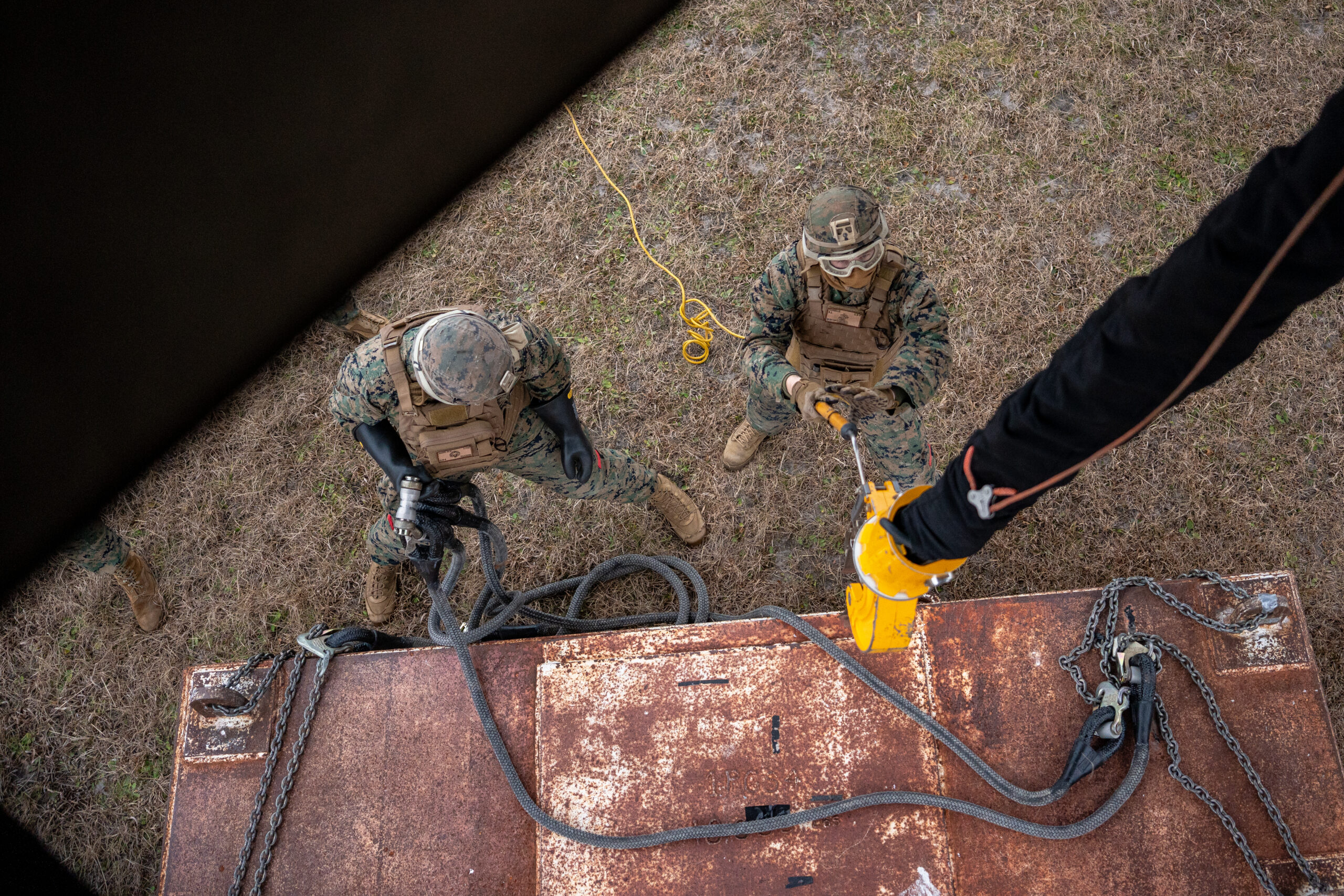
In addition to the AATD, the squadron is acquiring a static ground operations trainer built from a former Sikorsky experimental airframe, the development test aircraft that was previously at the Developmental Test Squadron, HX-21, and is now being configured as a cargo loading trainer at New River. It will allow crew chiefs to practice onloading and offloading cargo, handling different types of stock and rolling loads, in a static environment without consuming aircraft hours. As one officer described the training multiplier: “We can basically triple the amount of time that they’re going to get actually securing the cargo in different types of stock.” Students encounter the loading configurations before they see them in the fleet, rather than for the first time in an operational aircraft.
What the Numbers Show
The compression of the learning curve that the Kilo’s digital architecture enables is measurable, and the numbers at HMHT-302 are striking.
On the Echo, the standard training external load is approximately 8,000 pounds. The Echo’s tight power margins and high crew task saturation make heavier training loads with student-level crews genuinely risky. Getting a copilot to proficiency at that standard requires time and progression that the aircraft’s complexity imposes as a natural limit.
On the Kilo, the standard training external load can be as high as 27,000 pounds, more than three times the Echo’s training threshold, and a load with real operational significance. As a crew chief instructor at the squadron described the operational context: the Kilo, “being such a precision instrument, able to get externals more effectively… the drift in the Kilo is a lot less than the Echo. So the efficiencies between the pilots and the crew chiefs — our calls are on point, our CRM is good. The external lifts are much faster, much safer, much easier.”
The lift capacity difference is not just about what the aircraft can carry. It is about what can be trained. A 27,000-pound load in training means that the crews arriving in operational squadrons will already have experience with the kinds of loads, artillery systems, light vehicles, logistics packages, that actually matter in distributed operations. They will not encounter that scale of lift for the first time in a deployed environment.
A flight instructor at HMHT-302 went further, describing what initial accession students are already demonstrating: “It is not unheard of to take a very junior copilot and allow them to lift fleet-representative loads that are way closer to the maximum performance of the Kilo, a level that we haven’t previously allowed legacy copilots to get to because of the time and proficiency required.” These students are “far exceeding the expectations that we’ve had thus far, especially for the people that are just going through the Kilo with no previous Echo tendencies. They’re really mixing both the flight management system and the aircraft management systems, and being experts of the flight control logic to best utilize the aircraft in that position, at that moment, for that mission.”
What is being described here is not simply better-trained pilots. It is pilots whose capabilities at the entry level exceed what Echo-experienced copilots reached after extended operational service. The training pipeline is producing graduates whose baseline competence is higher because the aircraft’s architecture makes that baseline accessible.
The Gap That Must Close
There is a challenge implicit in all of this that the HMHT-302 team understands clearly, even if the broader conversation has not yet caught up to it.
The training that HMHT-302 produces is initial training. It is foundational qualification for entry into the fleet. What the fleet does with the Kilo, the tactics, the integration with other platforms, the exploitation of the aircraft’s capabilities in kill web operations, is still being discovered by operational squadrons like HMH-461 at New River and will be discovered by squadrons transitioning on the West Coast over the next several years.
The gap between what HMHT-302 trains and what operational experience demands is a natural feature of any new platform’s introduction. The Osprey Marines who wouldn’t get off the back of the aircraft in 2010 were not failures. They were the leading edge of a force that had not yet caught up to what the platform could do. The CH-53K community is at a similar early stage, with one critical difference: the demand signal, when it comes, will be larger and more urgent.
As one officer at HMHT-302 noted: “With a new asset like this, people outside of the program don’t know or grasp the Kilo’s capabilities and impact to the future battlefield. Give it ten years to prove itself operationally in the joint environment, the demand signal will come.” He was speaking about operational commanders who have worked with the Kilo but are still in the process of internalizing what capabilities it brings, about what they can ask it to accomplish.
The operational experiences in the Indo-Pacific will drive that demand signal forward rapidly once the Kilo is fully present in the theater. When a distributed force operation requires moving a load to a location no previous heavy-lift platform could reliably reach, and the Kilo makes it routine. When a maintenance cycle that would have grounded an Echo for days is managed in hours because the digital architecture told the QA team what was coming, the tactical community will begin asking for things that the training pipeline needs to be ready to produce.
This is the logic behind the emphasis at HMHT-302 on training that reflects operational reality rather than training that is merely safe and manageable. The 27,000-pound training loads, the crew chiefs rehearsing specific operational routes in the simulator, the mission planning ecosystem that mirrors what pilots will actually use in the fleet, these are not luxuries. They are the foundation for closing the gap between the training level and the operational level as quickly as the Kilo’s ten-year discovery cycle allows.
What General Davis Saw Coming
In 2015, I had one of the better conversations of my years covering Marine Corps aviation with General Davis at Cherry Point. He talked about the F-35 and what he called the iPad generation of pilots, young aviators who grew up with touchscreens and digital interfaces as the natural medium for information management, who approached the F-35’s sensor fusion and multifunction displays not as something to be mastered but as the obvious way to interact with an aircraft.
What HMHT-302 is producing is the equivalent generation for heavy-lift aviation. Initial accession students who have never known an aircraft that required them to manually manage engine torque, who find the Kilo’s flight management system intuitive because it resembles the digital environments they grew up in, who treat the mission planning ecosystem as the natural starting point for planning rather than as a capability they had to learn. A maintainer who started on the Kilo will not find the digital diagnostic interface unfamiliar; it is the only interface they have known.
The 2026 Marine Aviation Plan articulates a vision of training that is fundamentally about this generation: maintenance cultures built around data-driven decision-making, pilots who integrate information fusion into their operational thinking at the entry level, command cultures that can push authority to junior leaders who already possess the situational awareness to use it. The human dimension of the impact force that I have been developing in my forthcoming book Building the Impact Force depends on these people being produced in sufficient numbers and at sufficient quality to sustain the distributed operational concepts the Marine Corps is building toward.
HMHT-302 is where that production begins. The simulator ecosystem, the crew chief training infrastructure, the static cargo trainer, the 27,000-pound training loads, these are not just training efficiencies. They are investments in the cognitive and professional baseline of the generation that will discover, over the next decade, what the Kilo actually enables in the context of distributed operations, kill web integration, and the chaos management demands of the Indo-Pacific.
The Marines who would not get off the Osprey in 2010 eventually understood where they were. The generation coming through HMHT-302 right now will not need ten years to understand what the Kilo can do. They are being trained to know it from the start. How quickly the operational and institutional ecosystem catches up to that knowledge is the question that will define the Kilo’s first decade of fleet service.
Note: During my visit to USMC New River Air Station in April 2026, I met with Maj David Schwab, the Executive Officer of HMHT-302, Gunnery Sgt Evan Edler, Airframes Mechanic (CDQAR – Collateral Duty Quality Assurance Representative) and Staff Sgt Trevor Staehr, CH-53K Crew Chief Instructor.
This article and follow-on articles on the training re-set going on at New River associated with the coming of the CH-53K to the USMC draws upon my discussions with this team.
Note: I have just published my book on lessons on military transformation which reflects 30 years of fieldwork and provides the perspective within which I am looking at the Kilo transition.