By Robbin Laird
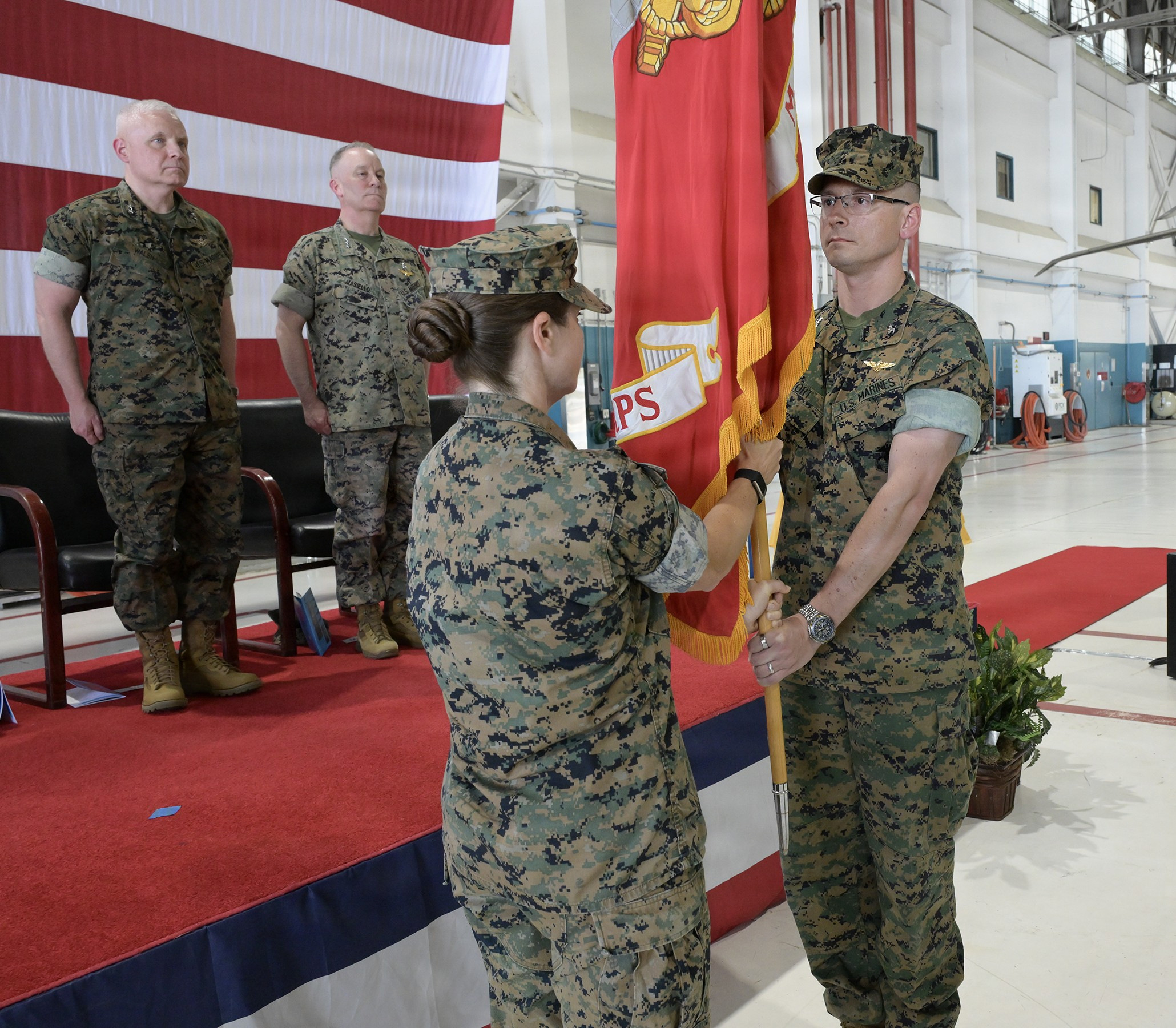
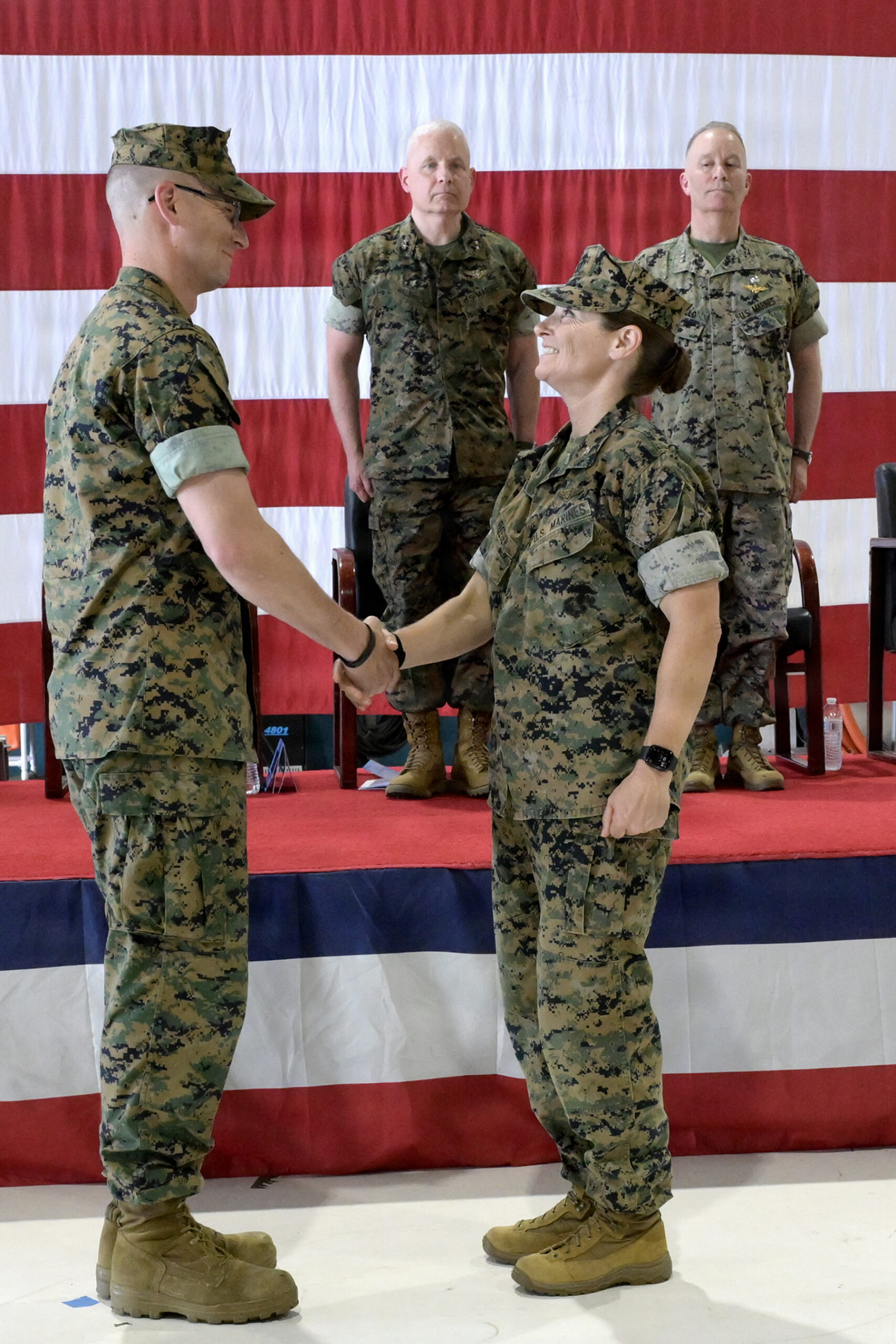
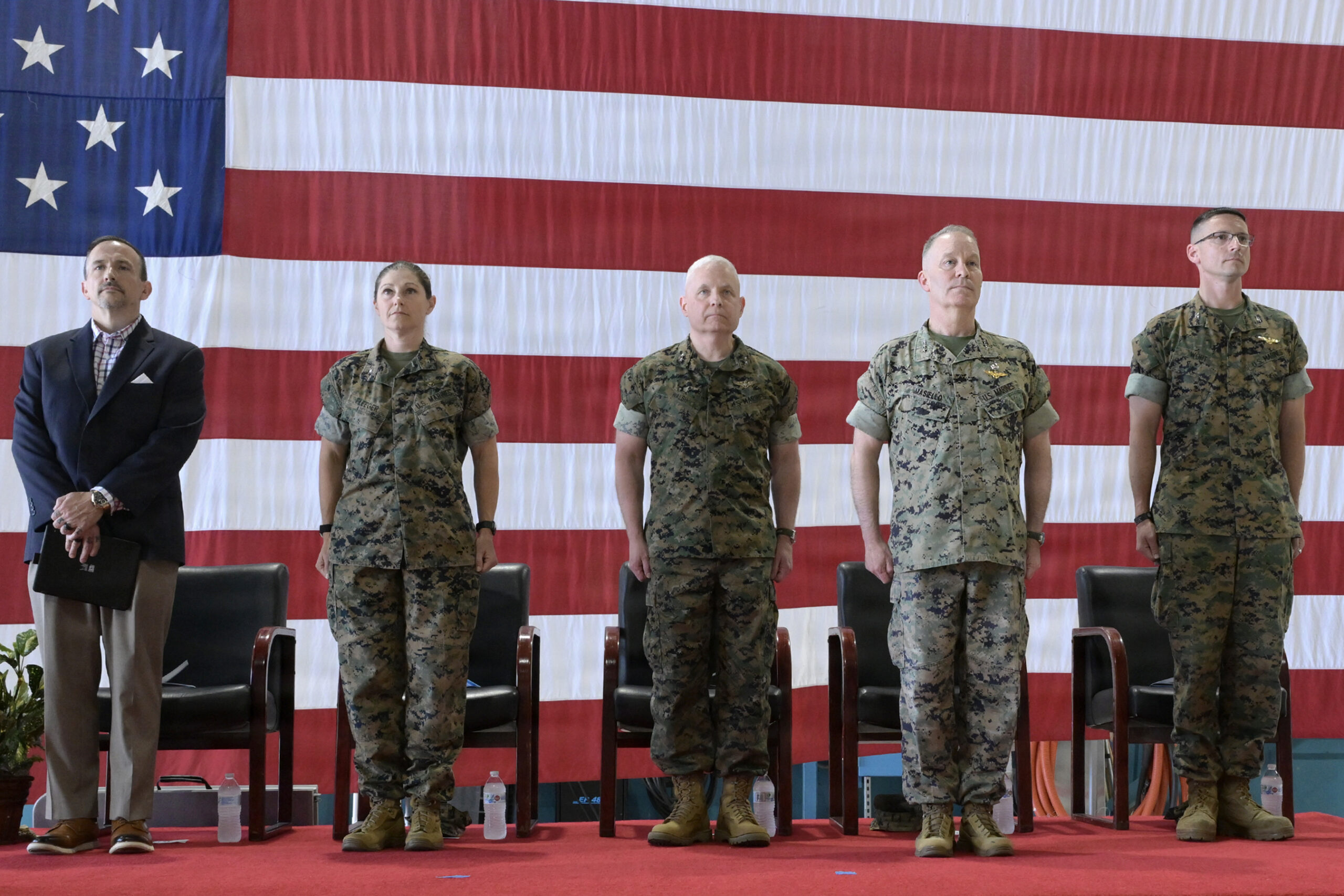
Colonel Kate Fleeger took the helm of PMA-261, the Naval Air Systems Command program office responsible for the Marine Corps’ heavy lift portfolio, in 2022. She arrived at a pivotal moment: the CH-53K King Stallion was moving out of its developmental phase and into full rate production, a transition that typically marks the point where a program office’s attention shifts from engineering risk to operational integration. Four years later, as she hands the program to Colonel Joshua Wort and moves to a new assignment at NAVAIR, Fleeger offered a retrospective on what those four years actually accomplished, and it was not the story most outside observers expected to hear.
The Maturation Everyone Anticipated, and the One That Actually Happened
When Fleeger took over PMA-261, the assumption inside and outside the program was straightforward: the next phase would be about technical maturation. But full rate production demands relative engineering stability, and by 2022 the CH-53K had already absorbed the bulk of its developmental hard lessons, the years of flight test, the redesigns, the fixes to rotor, drivetrain, and fly-by-wire systems that had defined the program’s earlier and more turbulent chapters. Fleeger was direct in her retrospective that this kind of maturation was well along “for good reason.” The aircraft needed to be a known quantity before the fleet could absorb it at scale.
As such the maturation that consumed her four years in charge, she explained, was of a different character entirely: not the aircraft maturing as a machine, but the institution maturing around it. That is a distinction easy to state and hard to appreciate from outside a program office, because it doesn’t show up on the same kind of chart as a flight-test milestone. It shows up instead in pilots logging hours they didn’t have before, in aircrew building muscle memory across mission sets, in maintainers learning the aircraft’s quirks well enough to anticipate rather than react to them, and in successive detachments and Weapons and Tactics Instructor (WTI) course classes at MAWTS-1 putting the aircraft through operationally realistic conditions rather than test-range conditions.
Fleeger’s own phrase for this was that the program had spent four years “putting it through its paces”, not just the airframe in isolation, but the entire sustainment architecture wrapped around it: the supply chain, the maintenance concepts, the training pipeline, the doctrine for how a squadron actually generates sorties with this aircraft under operational tempo. That is a much larger and messier thing to mature than a rotor blade, and it is also, in her account, precisely the work that had to happen before the CH-53K could responsibly deploy.
She was candid that the timing did not fall the way she might have wanted personally. The aircraft’s first operational deployment was not going to happen inside her four years as program manager, and she acknowledged some disappointment in that. But she was equally clear that this was not a case of a deployment slipping for the wrong reasons. The advancements made across training, sustainment, and fleet familiarity during her tenure are, in her framing, exactly what will make that eventual deployment work rather than merely happen. A program that deploys before its supporting ecosystem is ready is a program that generates readiness problems in theater. A program that takes the time to mature its human and logistics tail first is one that arrives ready to actually fight.
A Generational Handoff, Measured in Aircrews and Maintainers
Underneath the sustainment story is a workforce story. The Marine Corps has spent the CH-53K’s early fielding years growing an entirely new generation of heavy-lift aviators and maintainers who have never known the CH-53E Super Stallion as their primary platform. That is a slower and less visible process than standing up a squadron on paper, because it means building institutional muscle memory from close to zero: instructor pilots who can train the next class, maintenance chiefs who have seen enough tail numbers to know which faults are routine and which are not, and schoolhouses that have iterated their curricula against real fleet experience rather than merely developmental test data.
Fleeger’s account of “putting it through its paces” via WTI classes and detachments is really an account of this generational transfer happening in real time. Each WTI class that touches the CH-53K adds another cohort of instructors who can then seed that knowledge back into fleet squadrons. Each detachment, whether shipboard, expeditionary, or in support of a larger exercise, stresses the sustainment chain in ways a test squadron never fully replicates, because real detachments have to solve real parts and manning problems on real timelines. None of this shows up as a single dramatic milestone. It shows up as an accumulating base of institutional competence that eventually reaches a threshold where first deployment becomes not just possible, but low-risk.
Capability and Concept, Evolving Together
Asked about the relationship between the CH-53K’s heavy-lift capability and the operational concepts the Marine Corps and joint force build around it, Fleeger resisted a simple cause-and-effect answer. She described something closer to an iterative loop: the capability the aircraft brings will be discovered progressively as units actually employ it, and that discovery process will itself generate pressure to revise the concepts of operation built around it. In her telling, this is not a one-time event where doctrine catches up to hardware and then the relationship is settled. It is an ongoing interaction, and she expects it to keep evolving well past her own tenure on the program.
This point matters more than it might first appear. A heavy-lift aircraft with the CH-53K’s payload, range, and digital systems architecture does not simply substitute for the CH-53E in existing concepts of operation. It opens design space that planners have not yet fully explored. Distributed logistics across contested maritime terrain, sustainment of dispersed expeditionary advanced bases, and the kind of long-legged resupply that undergirds any serious concept of persistent forward presence in the Indo-Pacific are all use cases that get reshaped as units actually learn what the aircraft can do under real conditions, not what a requirements document predicted it could do years earlier. Fleeger’s answer suggests the Marine Corps is still early in that discovery curve, and that the next several years of CH-53K employment will do as much to shape doctrine as doctrine has so far done to shape employment.
The Limits of Current Imagination
The most striking part of Fleeger’s reflection came when she was asked for a closing reaction to the broader case that the CH-53K’s digital systems and heavy-lift capacity could reshape how the joint force and its allies think about distributed logistics and crisis response. She agreed with the premise, but she was unusually direct about how far current thinking still has to travel to catch up with the aircraft’s actual potential. In her words, “we can’t even imagine the full realm, full spectrum of what this aircraft will be doing, and with whom, and with what assets tomorrow.”
That is not a hedge or a rhetorical flourish from someone who spent four years running the program. It is a program manager’s honest assessment that the CH-53K, as fielded today, is not yet being used anywhere close to its fullest potential and that getting there will require more than incremental doctrine updates. It will require, in her word, leaps of imagination: planners and operators willing to ask what missions the aircraft could support that no one has yet proposed, what allied and joint partners might integrate with it in ways not yet on any exercise schedule, and what assets, uncrewed systems, sensor packages, distributed logistics networks, might eventually pair with a heavy-lift platform that has the digital backbone to support them.
Where the CH-53K ultimately settles into that future force design, Fleeger said plainly, “remains to be seen.” That is a rare thing to hear from someone who has just spent four years steering the program: an acknowledgment that the most important chapters of the aircraft’s institutional story have not been written yet, and that the work she oversaw was not the destination but the foundation.
Why Sustainment Maturation Is Harder Than Technical Maturation
It is worth dwelling on why the kind of maturation Fleeger described is so much harder to achieve than the technical maturation everyone expected her tenure to focus on. Technical maturation has a relatively clear endpoint: a design either meets its performance specifications under test conditions, or it does not, and engineering teams can converge on fixes against a known set of requirements. Institutional maturation has no equivalent finish line. A squadron does not become proficient at generating CH-53K sorties on a fixed schedule. It becomes proficient through the accumulation of thousands of individual decisions, how a maintenance chief triages a parts shortage, how a pilot handles a degraded system in flight, how a logistics officer routes a critical component across a supply chain that is itself still young.
This is why Fleeger’s framing of the past four years as “putting it through its paces” is a more demanding standard than it sounds. It required deliberately generating operational stress on the program before deployment did it involuntarily, exercising the aircraft across detachments, WTI classes, and training evolutions specifically so that the failure modes of the sustainment system would surface in a controlled setting rather than in a contested one. That is a program management philosophy as much as it is a technical one: accept near-term friction, in the form of training hickups, parts bottlenecks, and schedule slips, in exchange for a sustainment architecture that has already been stress-tested before the stakes are highest.
The Digital Thread as an Enabler of Faster Learning
Part of what makes this kind of institutional maturation move faster for the CH-53K than it did for earlier heavy-lift programs is the aircraft’s digital systems architecture. Where legacy platforms like the CH-53E relied heavily on paper-based maintenance records and analog diagnostic processes, the CH-53K was designed around a digital thread connecting design data, maintenance records, and operational performance data. That architecture does not by itself solve the institutional maturation problem Fleeger described, but it does compress the feedback loop: data from a detachment’s real-world sustainment experience can flow back into the program office and the fleet’s training pipeline faster than it could under a paper-based system, letting lessons from one WTI class or one shipboard detachment reach the next unit sooner.
Fleeger’s account of the last four years will continue into her new assignment. Getting ahead of supplier health and production capacity problems rather than discovering them after they have already become schedule risks is a transferable skill. The lesson she takes from PMA-261 that readiness is built through accumulated institutional learning, not declared by a milestone chart is a portable one.
In short, taken together, Fleeger’s remarks describe a program office whose central achievement over four years was not a technical fix or a production milestone, but the patient construction of an ecosystem, trained aircrews, competent maintainers, tested sustainment chains, and a growing base of real operational experience, capable of supporting whatever the CH-53K turns out to become. She is handing that foundation to Colonel Wort and to the fleet at the moment the aircraft is finally ready to deploy, carrying with it not just a heavy-lift capability but four years of hard-won institutional knowledge about how to actually operate and sustain the King Stallion.