Navigating the Way Ahead for a Fifth Generation-Enabled Combat Force: The Perspective of Maj. General Morten Klever

05/29/2018

By Robbin Laird

The Royal Norwegian Air Force is transitioning from an F-16 to an all F-35 air combat force as part of both Air Force modernization and overall defense transformation for the Norwegian forces.

The coming of the F-35 and the interaction between the standup of the F-35 and shaping a way ahead for the RNoAF was laid out and discussed.

In my conversation with the Norwegian head of the F-35 program, Major General Morten Klever, we had a chance to discuss key elements of shaping a way ahead, which would optimize the contributions of the air system to the transformation process.

We started with a base line reality as seen from Norway.

Major General Klever: “The plane is performing very well.

“The capabilities are superb.

“The feedback we have from the pilots is excellent and we are clearly looking forward to the impact of the aircraft or more accurately, the air system can have on RNoAF, and more generally upon the Norwegian armed forces.”

He underscored that it would take time as well because moving beyond legacy thinking and legacy cultures is part of the transition challenge.

Yet “pilots are already starting to work with the Navy and the Army and to explore ways they might work the F-35 with the ground and maritime forces.”

As the standup of the air system is put in place, it is important to generate best practices to ensure that the innovations, which the air system might allow, are realized.

Or put another way, it is important to lay a foundation that goes in the right direction rather than constraining the air system with regard to antiquated practices or legacy thinking that will reduce the impact, which the new air system can have on the combat force.

One key aspect of change, which is crucial for the F-35 weapons system itself, is expanding the ability to rapidly add capabilities, based on emerging threats. 

Major General Klever: “We need to find ways to speed up the software development and insertion processes and to allow the warfighting experience of the entire range of partners to shape that software development process as appropriate.”

Another key aspect of change is to ensure that an enterprise approach can be instituted from the performance of the software on the aircraft to its replication in the simulators.

This is especially important as the training dimension for fifth generation enabled combat will require expanded training spaces.

And even though Norway has significant air space in which to operate, there is little interest in letting potential adversaries learn how coalition F-35s will work together to empower and extend defensive and offensive force.

Virtual integration of aircraft and simulators across the enterprise and between partners will enhance daily training, and turn out to be a force multiplier in operations.

Major General Klever: “This means that we will still need to train in the United States and elsewhere, but even more importantly we will need to find ways to connect our air forces across key coalition partners to shape extended live virtual constructive training as well.”

And the infrastructure supporting the F-35 as a global air system needs to be shaped effectively.

This means that a global sustainment approach, grounded in an effective regional support structure, is established so that fifth generation aircraft can fly to the crisis rather than having to move large amounts of equipment prior to setting up and operating.

Major General Klever underlined the central importance of such an effort and expressed his concerns with the way ahead.

“The USAF is taking over the global sustainment approach as early as 2019.

“And currently, the USAF is continuing its legacy approach, , where the USAF transports its support equipment and parts to the fight, rather than relying on a more agile support structure.

“And even though they have an excellent PBL in the  C-17 program, generally they do not do performance based logistics, and that is what is needed for this program.

“The USAF is currently too committed to a strategy of organic ownership of parts.”

Major General Klever argued that the partners did not sign up for such an approach. 

Under the leadership of JPO, all partners and services have designed a global sustainment concept to be implemented and from this standpoint the USAF could learn from partners, notably UK and the RAF and their approach to aircraft availability.

My visit to the UK the week after this interview highlighted how significantly the RAF is innovating with regard to Typhoon support and how those innovations are clearly relevant to the F-35 2.0 approach to sustainment.

And during that visit, the RAF maintenance community highlighted a visit of then then head of the Joint Program Office, Lt. General Bogden, who kept focusing on the legacy question of trust: how could I know the part was there when I needed it.”

During a visit to RAF Coningsby a few years ago, he repeatedly asked that question to the RAF maintainers who all had the same answer: that is the wrong question.  We will ensure that the aircraft going into combat has parts priority and we have set up a system to ensure that that happens.

And for Major General Klever, the key is getting the right support to the right aircraft at the right time, at the right place.

That will NOT happen unless there is a global sustainment approach with an established management structure supported by agreed business rules to ensure priorities are supporting the needs of the warfighter.

Major General Klever underscored that Norway has had an excellent experience with Pratt and Whitney with regard to a PBL contract on F-16 engines and P&W is currently standing up a support structure in Norway for the F-35.

He believed that the some US services could learn from the partners on this issue; and more to the point, this is what the partners and services signed up to; not a legacy maintenance and support structure for their F-35s.

And with allies flying as many F-35s as the US in the next few years, clearly the U.S. needs to pay attention to this approach.

And beyond that, if the F-35 will enable the kind of military transformation necessary to turn adversary anti-access and aerial-denial bastions into Maginot Lines, an ability to provide combat sustainment at the point of critical interest is the key.

The image put by one analyst in a discussion about the shift highlighted that when United Airlines flies to Australia it does not have a cargo plane carrying parts to ensure that it can fly back.

Major General Klever concluded: “How often have you missed a flight because of unavailability of aircraft due to maintenance?

“The commercial world has taught us a significant lesson about the way ahead.

“In the end, this boils down to affordability, and subsequently increased operational effect.”

The featured photo shows Maj. Gen. Morten Klever, the program director of the Norwegian F-35 program, accepts the first two Norwegian F-35 Lightning IIs after they arrived at Luke Air Force Base, Ariz., Nov. 10, 2015.

Shortly after, a Norwegian pilot flew the F-35 for the first time, in conjunction with the Royal Norwegian Air Force’s birthday.

(U.S. Air Force photo/Staff Sgt. Staci Miller)
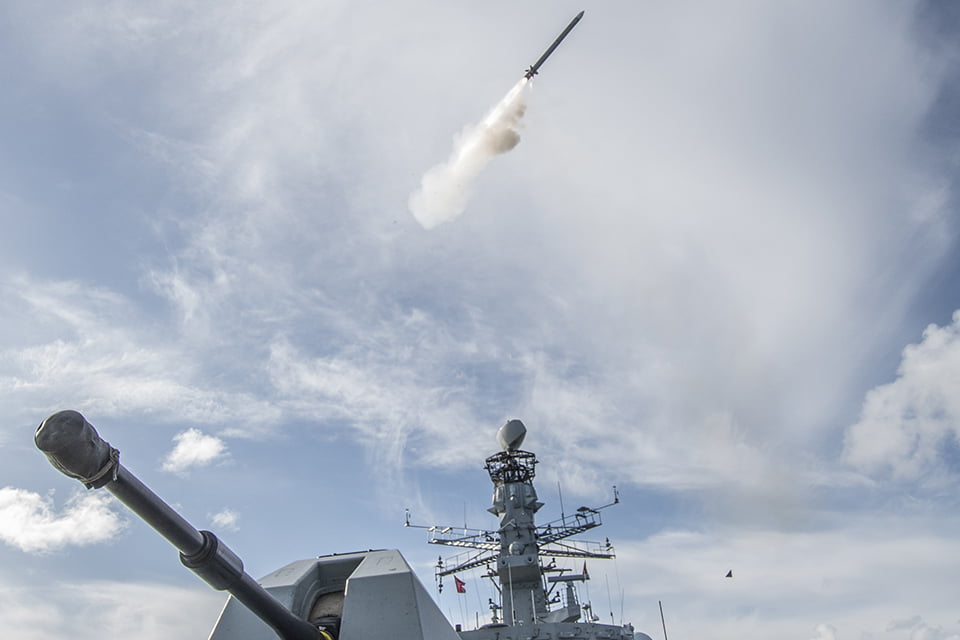
The Arrival of the Sea Ceptor Missile System

“A world-class missile system that will protect the Royal Navy’s new aircraft carriers has officially entered service, Defence Secretary Gavin Williamson has announced  on May 24, 2018.”

According to a story published on the UK Ministry of Defence website on May 24, 2018:

Sea Ceptor provides a powerful shield against airborne threats, including hostile combat jets, helicopters and other missiles, and has been developed and manufactured through Ministry of Defence contracts worth around £850m.

It will be carried by the Royal Navy’s Type 23 frigates, and has been successfully demonstrated through a trials and test firing campaign that started last year. Most recently, Plymouth-based HMS Montrose became the third ship to test fire the system.

Defence Secretary Gavin Williamson said:

“Sea Ceptor will protect our nation against the intensifying threats we face today and in the future, giving our ships a powerful shield against everything from supersonic missiles to enemy fighter jets.

“Fitting our warships with this ground-breaking technology not only protects our Navy but shows we are world leaders at sea. HMS Argyll will be the first ship to deploy with this cutting-edge system when she heads to support peace and security in the Asia Pacific region later this year.”

The announcement, made at the RUSI Sea Power Conference in London, follows detailed analysis of data gathered during the first of class firing trials by HMS Argyll, which took place last year. HMS Westminster and HMS Montrose, the second and third ships to be fitted with Sea Ceptor, have since also carried out successful firings.

Sea Ceptor has been designed and manufactured by MBDA and is directly supporting 600 jobs in Bristol, Stevenage and Bolton as part of the Team Complex Weapons partnering agreement between MOD and MBDA.

The first firings of Sea Ceptor were conducted from HMS Argyll at the Hebrides range off the coast of Scotland and saw the system tested against a range of complex scenarios – including engaging multiple targets at once.

Sea Ceptor is a major improvement on the existing Seawolf missile system which is being replaced. It offers improved performance against current and projected future threats, the ability to engage multiple targets, and allows the frigates to protect escorted vessels. The system is to be fitted to the Royal Navy’s new Type 26 frigates.

Richard Smart, Director Weapons for the MOD’s procurement organisation Defence Equipment and Support (DE&S), said:

“Sea Ceptor’s entry into service with the Royal Navy is a significant milestone, a massive achievement for everyone involved and a proud moment for the team.

“It’s really exciting to be delivering a new capability that will form part of the protection for the new aircraft carriers and will help to keep our service personnel and our country safe.”

Recently, HMS Montrose took part in the third test firing of the system and successfully intercepted a fast-moving drone target. Within seconds of the missile bursting from the ship’s silo, the simulated threat was destroyed.

Commander Conor O’Neill, the Commanding Officer of HMS Montrose, said:

“The test firing we carried out represents the successful culmination of a great deal of hard work by many people from Babcock, the Short Range Air Defence team, DE&S, MBDA and the Royal Navy.

“I am extremely proud of my ship’s company for their professional attitude which enabled the test firing to go so smoothly. This missile system represents a vastly-improved capability for the Royal Navy, and puts us ahead of the game in being able to defend ourselves and our new aircraft carriers from threat.”

https://www.gov.uk/government/news/850m-sea-ceptor-missile-system-enters-service-with-royal-navy

The featured photo shows Sea Ceptor missile system as sit enters service with Royal Navy. Crown copyright.

Royal Netherlands Air Force Receives New UAV Simulator: A Contribution from the European Defence Agency

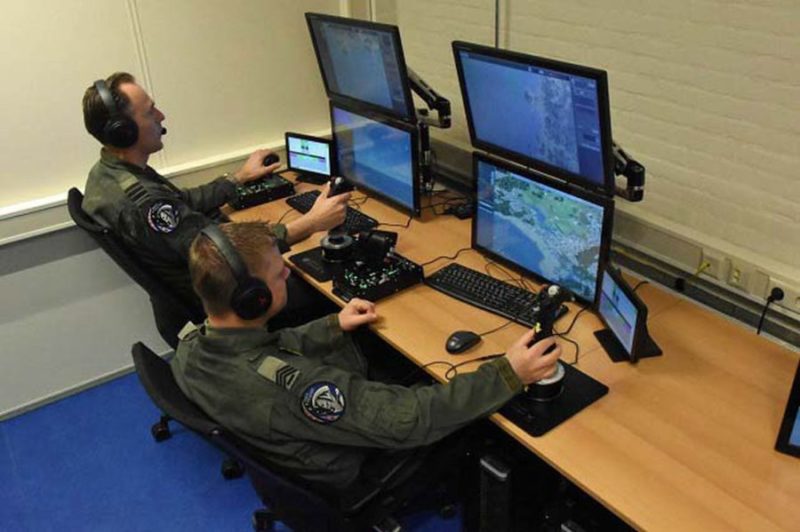
The Royal Netherlands Air Force (RNLAF) 306 Squadron at Leeuwarden Air Base received a desk-top simulator for UAV training.

The simulator is part of the Medium Altitude Long Endurance (MALE) Remotely Piloted Air System (RPAS) Training Technology Demonstrator (TTD) project managed by the European Defence Agency (EDA) and is part of a network of training simulators for unmanned aircraft.

The MALE was established to provide up to nine networked procedural trainers to the MALE RPAS community.

The multinational European MALE RPAS shares operational experience and maintenance of similar assets, logistics, training, doctrine, concepts and procedures.

Participating countries can share information and experiences directly with each other.

https://militarysimulation.training/air/rnlaf-acquires-uav-simulator/


Shaping a Way Ahead: The Perspective from the Norwegian Joint Headquarters

By Robbin Laird

The Norwegians are reworking their defense systems to shape a 21stcentury capability which can enhance their own capabilities but importantly work those capabilities into allied ready combat forces.

It is about shaping an effective 21stcentury combat force which when combined with allies provides a very credible deterrent force.

And given the proximity to Russia and the lack of strategic depth, it needs to be deterrence in depth back through the North Atlantic and continental Europe.

The Norwegians are adding new capabilities, like the F-35, the P-8, a new tanker, new missiles and other combat capabilities.  But they are reworking their infrastructure as well to work more effectively in both the national and NATO interests.

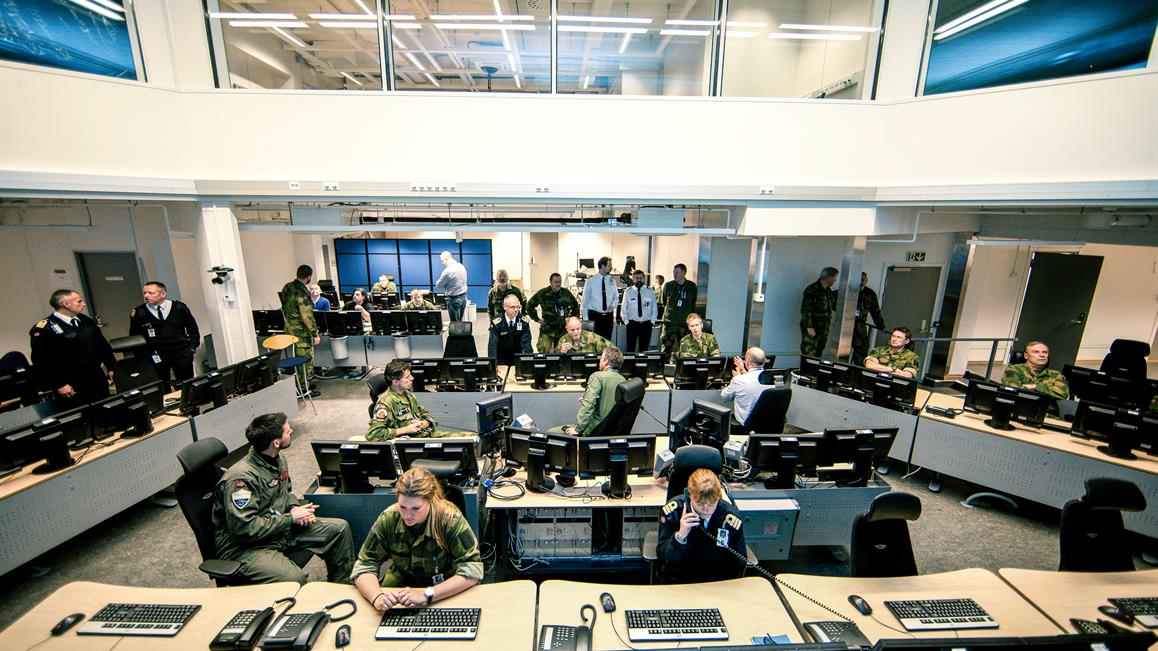
One aspect of this is reworking the C2 systems within Norway, including building new or rebuilding older, whichever way, one wants to put it, within the Norwegian Joint Headquarters.

According to the Norwegian Ministry of Defence:

The Norwegian Joint Headquarters plans, conducts and leads the Norwegian Armed Forces’ operations in times of peace, crisis and war.

​​​​​​​The Norwegian Joint Headquarters (NJHQ) operates day and night, and has the overall command and control of all military activity in Norway. It also commands the Norwegian military personnel abroad. 

NJHQ is located in a mountain complex about 22 km from the city of Bodø in Northern Norway. From its joint operation centre, experienced officers continuously monitor the activity in Norway’s vast land and sea territories.

This is possible thanks to our many sensors such as radars, the Coast Guard and the maritime surveillance aircraft P-3 Orion. The headquarters gathers all the information and makes a complete picture of the current situation.

This picture is shared with other departments in the Norwegian Armed Forces, and with NATO.

The NJHQ Commander is the Chief of Defence’s most important advisor in questions concerning military operations and activity.

NJHQ M​AIN TASKS:

  • Keep an eye with Norway’s vast sea and air territories, and have a current understanding of the overall situation.
  • Exercise sovereignty in Norway’s land, sea and air territories – and exercise national jurisdiction in these areas.
  • Be present, and be able to handle crisis of any kind.
  • Support civil society.
  • Plan and lead military exercises.
  • Provide control and suppo​rt to Norwegian forces in international operations.

The operations center is located in a mountain facility and is focused on providing a common operational picture for the forces and for NATO as well as building modern C2 capabilities as well to leverage the changes underway to provide for enhanced situational awareness as well.

Recent Russian exercises have highlighted the importance not only of having rapid acquisition of an accurate combat picture but an ability to rapidly respond with the right force in the right place to defend Norway.

The Russians have been simulating attacks against Norway over the past couple of years. Thomas Nilsen in article published by the Barents Observer on March 5, 2018 provided an overview on recent Russian actions.

“Less than a year ago, on March 24th, Russian bombers were flying tactical flights towards the intelligence service’s installations in Vardø. The bombers were conducting offensive profiles before they returned to bases on Kola. A total of nine aircraft participated in the operation,” said Lieutenant General Morten Haga Lunde in his annual speech at Oslo Military Society….

Two months later, Russian bombers were again simulating an attack against targets even further west in Northern Norway, the intelligence director could tell.

“Also, on the 22nd of May last year were Russian aircraft again flying tactical flights towards a fleet of NATO vessels exercising in the Norwegian Ocean. They conducted offensive operations before they returned to different bases on the Kola Peninsula,» Morten Haga Lunde explained. 

“A total of 12 aircraft participated in this operation, including MiG-31, Fencer [Su-24], Fullback [Su-34] and Backfire [Tu-22M]…..”

Russia’s simulated offensive operations against Northern Norway did not stop with that, the intelligence director told.

“Less than a week later, on May 27 was a similar mission directed towards our military installations in the Bodø area. This happened in connection with a larger allied air force exercise led by Norway in cooperation with Sweden and Finland. Nine [Russian] aircraft participated in the operation…”

Talking about Russia’s largest military exercise last autumn, the Zapad-2017, Haga Lunde said Iskander missile systems were moved to an area close to the Norwegian border. 

“Another significant element in connection with Zapad it that the missile system Iskander was transferred to the high north, specifically to the Pechenga valley, less than 40 kilometers from Storskog, approx. 15 kilometers from Korpfjell, not far from the border to Norway…..”

At Bodø Airbase, I had a chance to meet with Brigadier General Jan Ove Rygg and to discuss the geographical situation facing Norway as well as the changes being made to enhance the operational picture and to improve crisis management capabilities going forward.

CV Jan Ove Rygg (English)

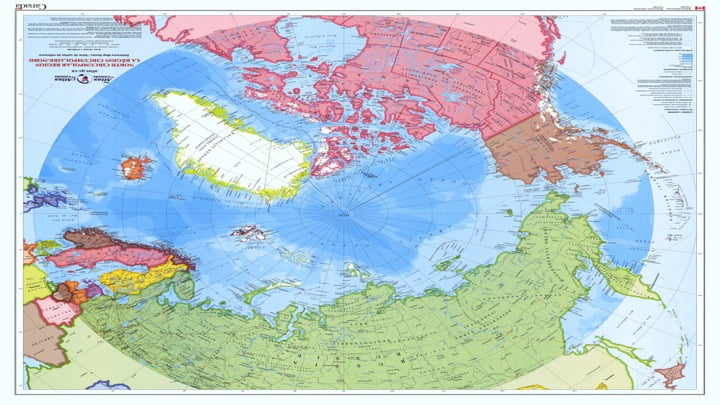
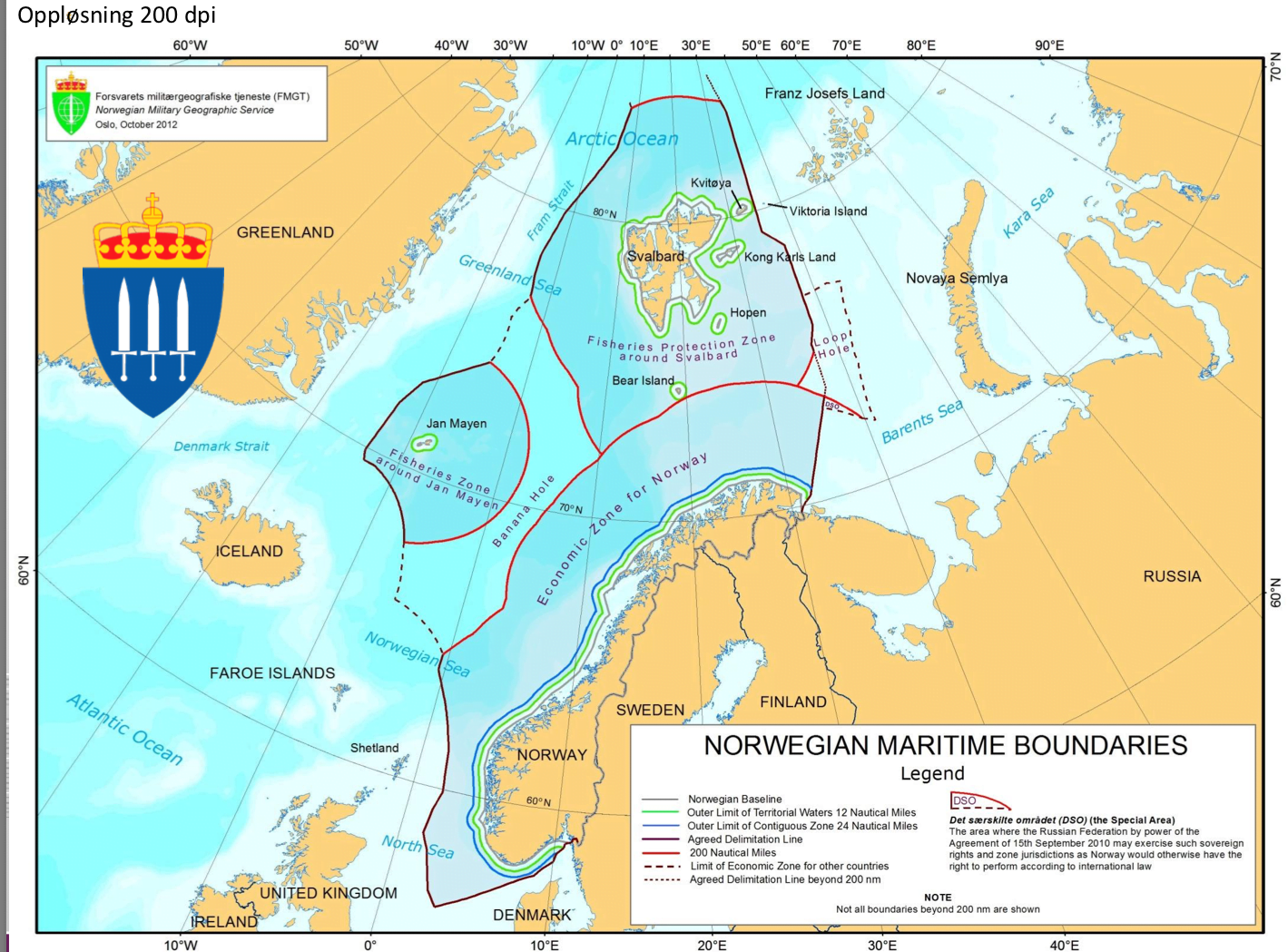
The map below provides one with a sense of how Norway looks at the Russian challenge.

The Russians are building out infrastructure in the High North and even if the primary purpose not might be military, the build out of infrastructure does provide for presence, engagement and can host the operation of dual capable systems.

And the vast maritime zones surrounding Norway provides another challenge to ensure that threats can be identified monitored and dealt with.

With significant shipping in the area, determining anomalies and threats to be dealt with is an ongoing challenge.

http://www.highnorthdialogue.no/wp-content/uploads/2015/03/Haakon-Tronstad.pdf

It is clearly not a zero sum game with the Russians, as Norway works with Russia on a number of issues, such as fisheries.  The two countries collaborate on ensuring that fishing in the maritime zones is regulated and “farmed” rather than exploited.

The goal is to have a sustainable fisheries industry and the two countries cooperate closely on this commercial and environmental objective.

In other words, a major demand is to be able to provide the military and civilian authorities with accurate and timely information through progress in situational awareness capabilities.

Brigadier General Rygg: “Everything that flies in Norway to support the government is operated by the air force.

“This means that we work closely with civilian authorities to provide for capabilities such as search and rescue and coast guard activities.”

With the coming of new ISR capabilities, such as P-8 and F-35, it will be an opportunity to leverage these new systems to enhance the situational awareness picture and to provided targeted information to decision makers to support cricis management efforts as well.

Brigadier General Rygg“I do not want to turn the F-35 into an ISR asset but it can cleaelry contribute to our efforts.

“More generally, the question how do we work ISR and C2 with the new assets?

“How do we use them in ways that inform us and not a potential adversary?”

The High North for Norway is a way of life, not some future scenario of activity being opened by global warming.  As such, this means that activity needs to be supported and monitored.

Brigadier General Rygg: “The maritime situation is changing as the Arctic changes and we are seeing significant growth in tourism.

“The problem is that with the large cruise ships, if there is an accident, we will be called upon to contribute assets, which we will do.

“But the best form of working rescue if a large cruise ship goes down will be another ship.”

The change in our ISR capabilities will flow into our National Joint Headquarters.  And we need to work those evolving capabilities with evolving C2 capabilities as well.

Brigadier General Rygg: “We are building out new C2 capabilities within the National Joint Headquarters.  It is about technology and reworking the workflow.

“We are bringing the key players into a close working relationship within the mountain to provide for better crisis management support as well.”

As infrastructure changes, the focus will as well to provide for crisis management support.

Brigadier General Rygg: “We are shifting from a classic joint targeting approach to a joint effects approach.  Every time that you do something with the military, you are creating an effect.

“We are fielding new systems, which provide capabilities we have not had in the past.

“How do we use these systems to create the appropriate joint effect?”

The kind of C2 system needed is clearly an agile, scalable and flexible one.

Brigadier General Rygg: “We may need to provide for mission control where the autonomy of key systems will be maximized.

“We may need to have a tight hierarchical C2 system.

“It depends on the threat; it depends on the mission and on the crisis management situation.

“But we need to build in redundancy and flexibility from the ground up.

“And we are.”

The featured photo shows the Norwegian Joint Headquarters. Credit: Norwegian Ministry of Defence


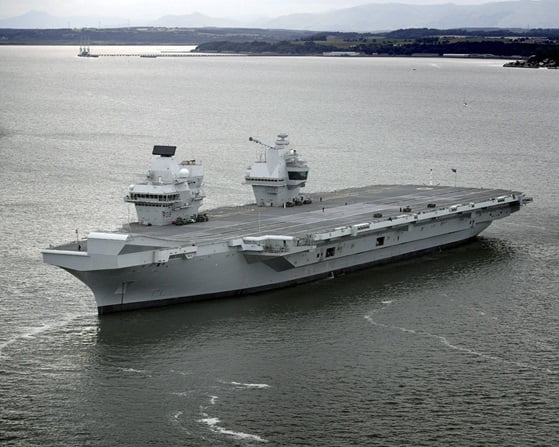
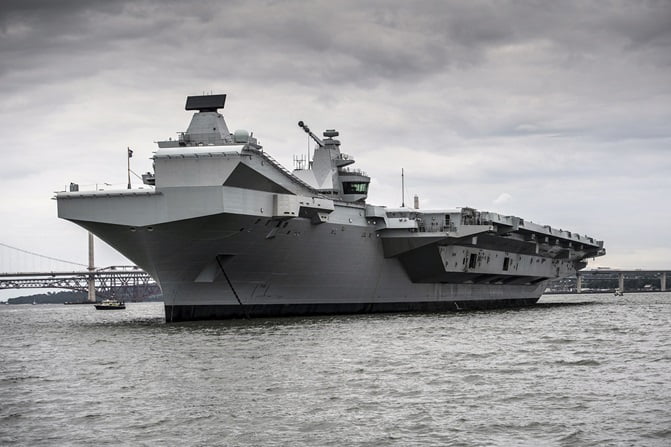
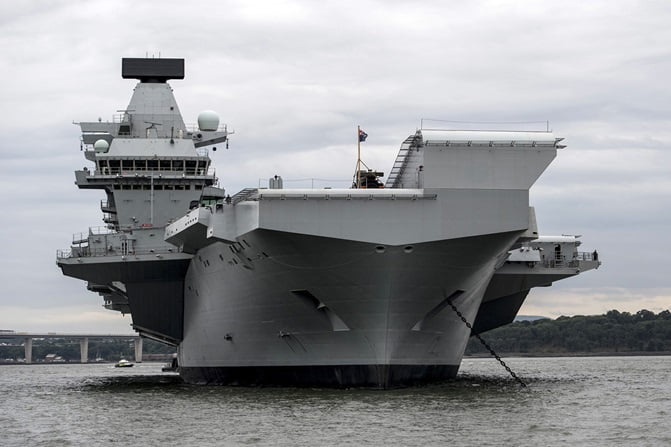
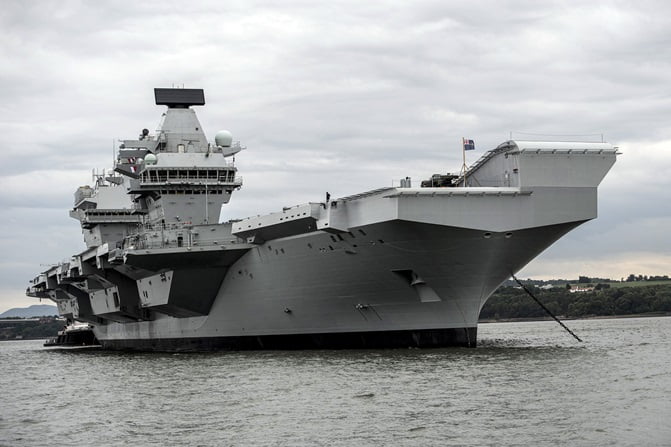
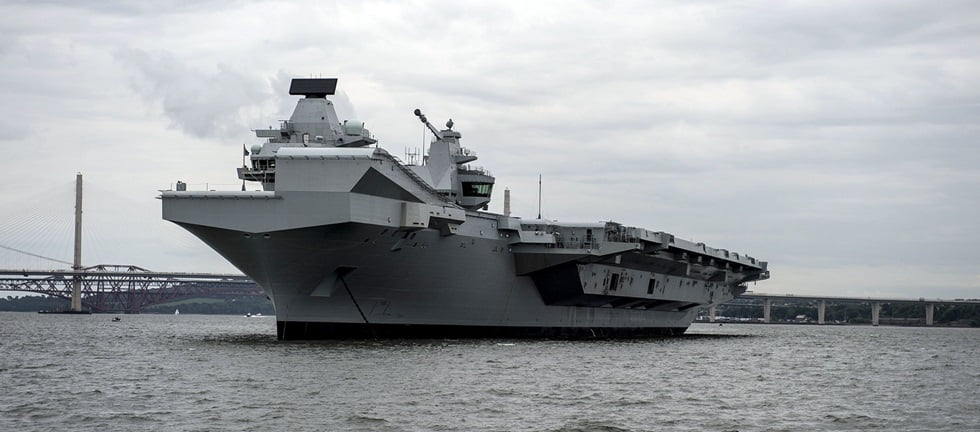
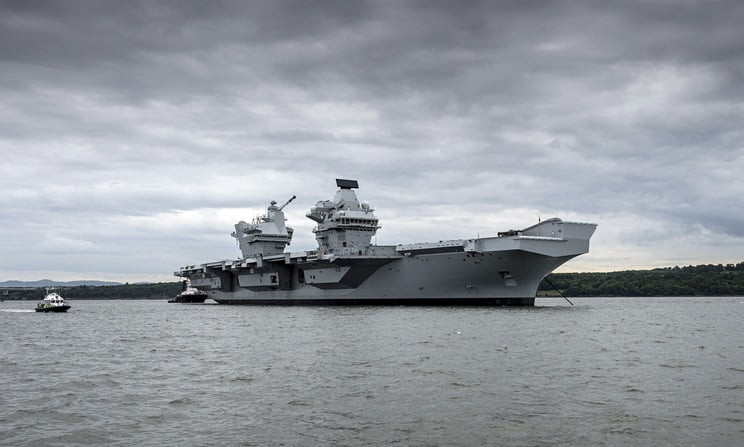
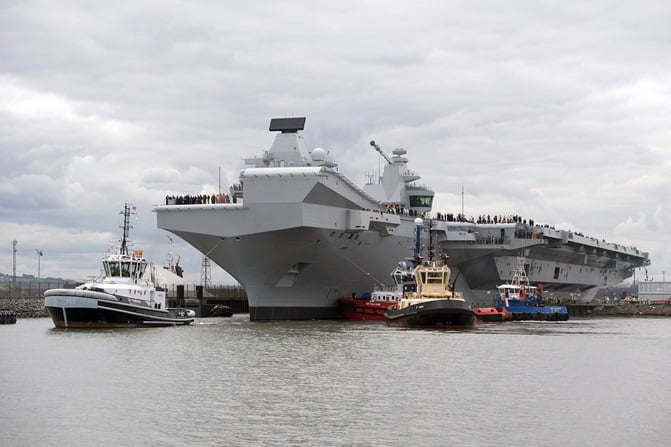
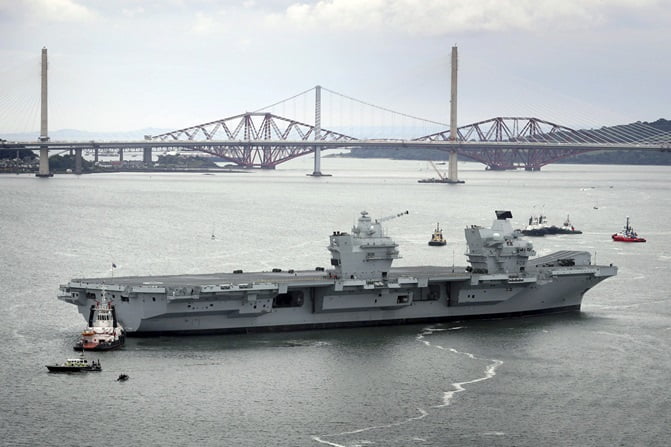
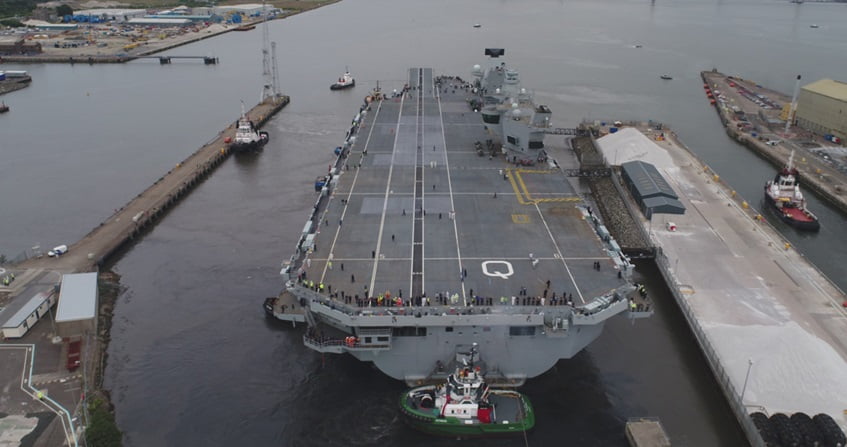
The Coming of HMS Queen Elizabeth: A Trigger Point for UK Defense Transformation

05/27/2018

By Robbin Laird

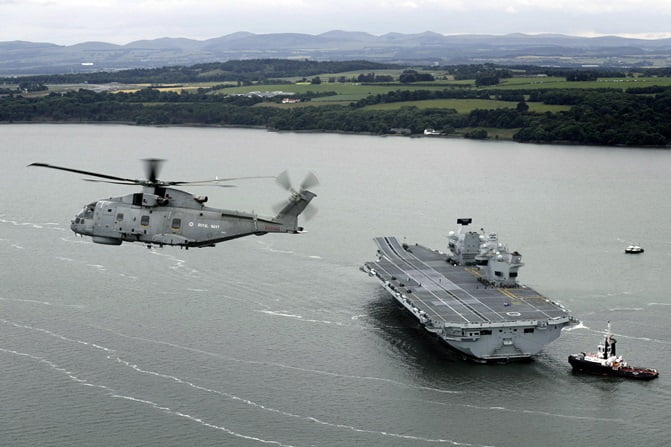
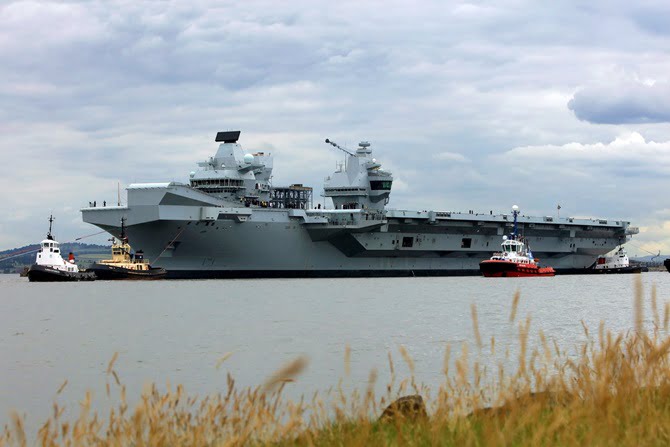
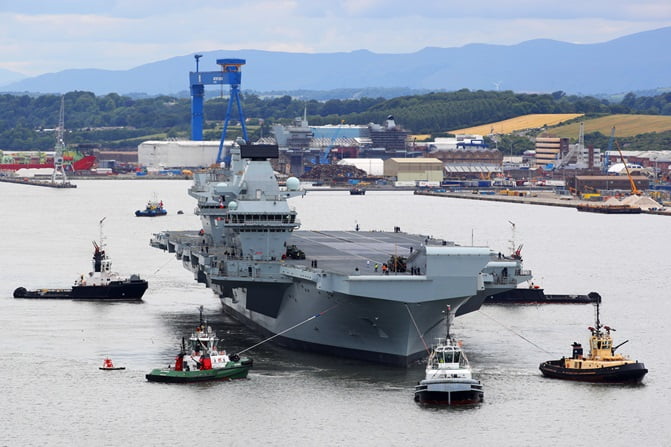
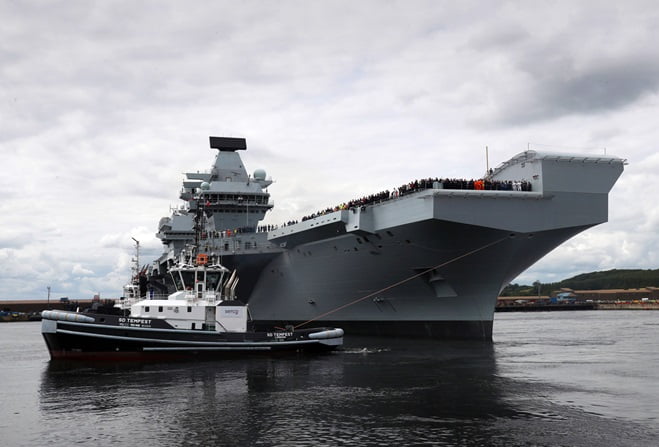
Recently, I had a chance to visit Portsmouth, UK and talk with senior Royal Navy officers about the coming of the carrier and did so after talking with the team of senior RAF and Royal Navy officers standing up F-35 at RAF Marham.

Those interviews will be published in the next few weeks.

But getting a chance to see HMS Queen Elizabeth again and to talk with the RAF and the Royal Navy about her as well provided an opportunity to think about the context in which the carrier is being launched and about its impact on that context.

I have just finished a new Special Report which focuses on the approach of the Nordics to the strategic shift and the need to operate in what a senior Norwegian official referred to as the “new normal,” namely, dealing with the impact of Russian capabilities and behavior on the defense of the North Atlantic.

This has had a major impact on the UK, which the Chief of the Royal Air Force highlighted during his presentation earlier this year in Canberra at the Williams Foundation seminar on the strategic shift:

Let me offer some examples of how this feels at the moment from a British perspective. Just over two weeks ago, a foreign country, Russia, used military-grade nerve agent in an attempt to murder people on the streets of the United Kingdom. 

Not only an extraordinarily aggressive and reckless act, but the first offensive use of a nerve agent in Europe since 1945.

Russia’s also illegally annexed Crimea, the first time since the Second World War that one sovereign nation has forcibly annexed territory from another in Europe. This is in addition to the appalling destruction, which has been visited on the Syrian civilian population by the Russian military itself, and the criminal activities of the Russian state under Putin in cyberspace and elsewhere; they’re well known.

So the post-Second World War consensus that has provided the basis of the rules-based international order and, I might say, peace in Europe, is being challenged and undermined.

We must respond, collectively, to reassure our citizens that hostile acts by Russia against our countries, our interests, and our values, will not be tolerated. And closer to home here, we can see many of these same issues and concerns being played out in relation to, for example, North Korea.

The UK like several other liberal democracies are responding to the strategic shift by transforming their military capabilities.

But the UK has another strategic dynamic at play, namely, the negotiation of it new relationship with the European Union, known as Brexit. 

A key aspect of defining a post-Brexit Britain is clearly reworking the nature of the UK defense relationship with Europe as well sorting out how UK defense transformation relates to a post-Brexit UK defense narrative.

The new UK carrier is coming into this strategic context, which is complex enough, without the considerations of operationally standing up the carrier.

And the new carrier is itself a trigger or magnet to a UK force transformation process.

In the recent update published this year by the UK government of its earlier 2015 defense review, the carrier was highlighted a centerpiece of joint force transformation.

“The Joint Force that we are building will need to be versatile and agile.  It will need to be effective in the full range of environments and across all five domains – land, sea, air, space and cyber.

“It will be international by design, routinely exercising and operating with allies and partners.

“It will be credible and capable of addressing state and non-state threats both alongside other nations and on our own.”

“Notably, the report then identified the major elements of defense modernization designed for Joint Force 2025 to meet these criteria and with little surprise the first one identified was as follows:

“A maritime task group centered on a Queen Elizabeth Class aircraft carrier with F-35 Lightning combat aircraft.”

Most of the analysis of the new carrier really focuses on the platform and what is necessary to get that platform operational but that is far too narrow an approach. 

The carrier is a centerpiece, trigger or magnet for broader UK defense transformation within a unique historical context, namely, the broader strategic shift to dealing with higher end operations and the coming of Brexit.

From a force structure transformation piece, the focus on the carrier can be approached in several ways.

The first way is to look at the workups and training associated with getting the carrier ready for its 2021 maiden deployment.

This is a significant challenge and the focus of attention of the Royal Navy and its industrial partners and a major element of my discussions while at Portsmouth.

From this point of view, the integration of the aircraft to fly on the carrier is a major challenge as well, and includes three new aircraft, the F-35, Commando Merlin, and the Crow’s Nest.

The second way is to look at the impact of the new carrier on the Royal Navy as it shifts from a single ship deployment focus to reshaping the Navy as a maritime task force navy. 

And given how different the new UK carrier is from the US large deck carriers, this maritime task force will draw upon US experience but shape a new approach as well.

The shift to a maritime task force requires other changes as well with new shapes and capabilities coming to the fleet, new aircraft, new missiles and ultimately directed energy as well to the force.

The third way to look at the carrier is how the coming of the F-35 to the RAF and Royal Navy will intersect with the global partners also flying the aircraft, and notably the partners within Europe. 

With the UK flying the same aircraft as the Northern Europeans, including the Dutch, this shapes new opportunities and capabilities as well.

And the close working relationship with the US Navy and Marine Corps will be evident as the HMS Queen Elizabeth comes this summer for F-35 integration training off of the Virginia Coast and when the Marines operate off of the ship, including next year during further ship trials off of the British coast as well.

The fourth way to look at the carrier is the impact of distributed decision-making, distributed operations and mobile basing upon the concepts of operations which the carrier will enable and participate in.

Put in another way, the concepts of operations being shaped 21stcentury combat forces are in transformation, a transformation which is built around distributed capabilities, distributed C2 and flexible or agile basing.

The new carrier both supports and interacts with all of these trends.

How will the carrier both contribute to and learn from these broader macro allied military transformation dynamics?

The fifth way to look at the coming of the carrier is to examine its intersection with and contribution to the transformation of airpower more generally.

The F-35 is a multi-domain flying combat system, rather than being a legacy multi-mission aircraft.

This provides an opportunity to both leverage and reshape multi-domain capabilities, as other aircraft are modernized or new assets added to the air combat force.

Clearly, the modernization of Typhoon is being done in close alignment with the coming of the F-35 and provides a significant plus up of the overall air combat force.

The coming of the P-8 to RAF Lossiemouth will provide as well a maritime domain awareness strike aircraft, which will provide a significant capability, which will be part of the operational envelope of the new maritime task force navy being forged around carrier.

In short, one can take a picture of the carrier.

But what one is not seeing is the tissue of relationships being reshaped by what you see in that picture.

It is a multi-domain warfare asset, which can only be understood as a driver for change within an overall UK defense transformation process and the new strategic setting.


Preparing for Trident Juncture 2018: Coming Into the Cold

05/26/2018

The Norwegians are hosting Trident Juncture 2018 which is a major NATO exercise and at the same time training for the Norwegians to support the total defense concept which they are reinvigorating in the “new normal” European security situation.

A recent article on the Norwegian Ministry of Defence website highlighted one aspect of the preparation:

Cold Knowledge is Hot in NATO

NATO’s Trident Juncture exercise is getting ready for Norway this autumn. This has led to a record demand for military winter knowledge.

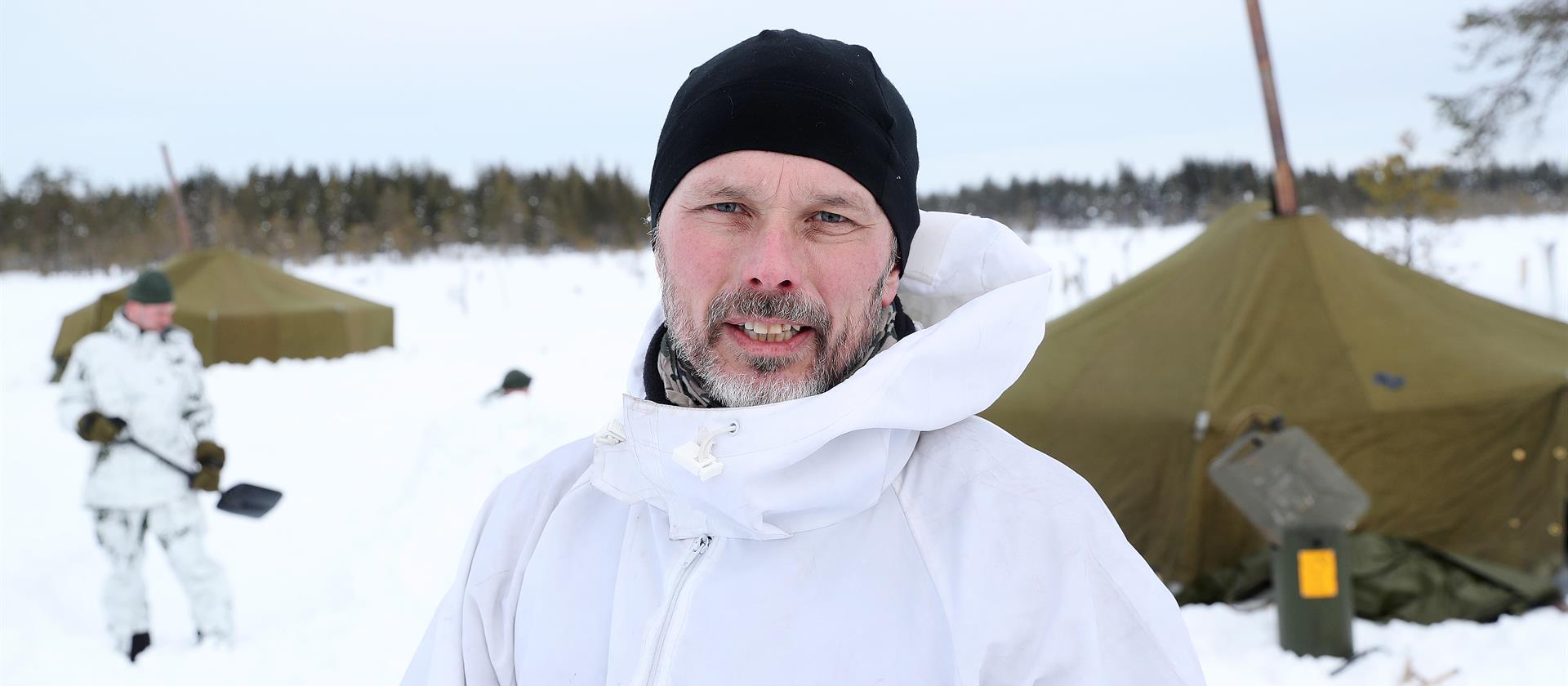
“This is my first time cross-country skiing. It’s very different, and I’ve been using muscles that I normally don’t use”, says First Lieutenant Norbert from the German Armoured Engineer Battalion 130.

Norbert is standing in a snowy forest outside the town of Elverum in eastern Norway. Along with 60 other officers from Germany and the US he is here for the Allied Winter Course hosted by the Norwegian School of Winter Warfare. 

WINTER IS HERE

The foreign soldiers have had a brutal first encounter with the seemingly neverending Norwegian winter. Yesterday, the temperature was –27 °C  (–17 ℉). Today, however, it is almost spring, the temperature has reached a whooping –11 °C (+12 ℉).

“It doesn’t matter if it’s 20 or 10 degrees below. It’s just freezing anyway”, laughs Norbert, adding:

“Yesterday, I had icicles hanging from my beard. I had to take a picture and send it to my wife. And tomorrow we’re going ice bathing. I may be smiling now, but I won’t laugh tomorrow.”

ALL-TIME HIGH 

Norbert is one of many thousand foreign soldiers who are coming to Norway this autumn, to participate in NATO’s exercise Trident Juncture.

To deal with the cold Norwegian autumn weather, the participants need “cold knowledge”.

Until recently, cold knowledge was a niche thing – but not anymore.

The Norwegian School of Winter Warfare usually holds one annual winter course with 30–40 participants. This winter, however, the school has held four courses, each with 60 participants. 

“We could probably have held ten courses, the interest is very high. We are positively surprised by the interest, especially from countries like the Netherlands, the United Kingdom and the US”, says Major Knut Hummelvoll, chief for the school’s Winter Section. 

He thinks the renewed interest is partly due to NATO’s shift from large operations in Afghanistan and the Middle East, to activity in its core areas in Europe and North America.

“I think this shift has brought more focus on winter training and cold knowledge. NATO has standing forces in Poland and the Baltics, and these are also very cold areas. The Alliance needs winter knowledge”, he adds.

HARD ROUTINES

Each winter course lasts four hectic weeks. During this time, the participants learn how to ski, how to dress for the cold, and how to establish a camp out in the field. 

“They also learn terrain assessment and tactics for military operations in the winter”, says Hummelvoll.

The course is concluded with twelve field days where the participants get to practice their new knowledge. 

“We practice so-called hard routines, like waking up in the tent in the morning and putting on your cold, wet clothes from yesterday. It’s brutal, but that’s what works”

SPOTS OF SURPRISE

Norbert, the German First Lieutenant, has had several surprises during the weeks. 

“I never knew that white spots in the skin is a sign of frostbite. That was new to me”, says Norbert. He looks forward to pass on the winter knowledge to his fellow soldiers in Germany. 

“We look forward to coming to Norway for Trident Juncture. As an engineering battalion in Europe, we are used to operating on large, wide plains. Norway has many steep, narrow valleys and fjords, which will give us another type of training.

We also get to meet soldiers from other countries and see how they operate.

MOTIVATED 

Some metres away from Norbert, two other German officers are building a wall of snow around their tent. Like their fellow countryman, neither Master Sergeant Alexander nor First Lieutenant Arne has any massive experience with snow or skiing.

“We have just tried cross-country skiing for the first time. It was quite challenging, especially with the sleigh and a 30 kilo (66 lbs) backpack”, says Alexander, platoon leader in the Rotenburg Jaeger Battalion 91.

He too believes that a lot of winter knowledge has disappeared from the Alliance after many years of focus outside NATO’s core areas.

“I think the shift from Afghanistan back to NATO’S core areas has brought more focus on winter training and cold knowledge.”

“A lot of practical know-how is lost and we need to learn this again. Therefore, we look forward to the exercise in Norway, and we are very motivated”, he says.

His colleague Arne agrees. He works at the German Armed Forces’ Medical Supply Centre in Kiel.

“For us to function and operate all over NATO, we need to know each other and the different landscapes. Attending this course is an opportunity few soldiers get, so we are quite proud to be here”, says Arne.

For our recent special report on the Nordics and the Strategic Shift, see the following:

https://sldinfo.com/2018/05/the-nordics-and-the-strategic-shift/

Changeover in Top Australian Defence Force Leadership

Prime Minister Malcolm Turnbull has named Lieutenant-General Angus Campbell, the new Chief of the Defence Force from July.

Prime Minister Turnbull said General Campbell’s new appointment would allow for “a seamless leadership transition” for the armed forces, which are currently undergoing the greatest modernisation yet seen.

I want to congratulate Lieutenant-General Campbell,” Prime Minister Turnbull said.

“We’re … undertaking the largest modernisation of the capabilities of the Australian Defence Force in our peacetime history.

“It is a massive national enterprise that we are undertaking and that is why we need the finest minds, the finest leaders at the helm of the ADF.”

Major-General Rick Burr is becoming Chief of Army.

Admiral Johnston becomes the new number two as Vice-Chief of Defence Force, responsible for the effective administration of the three services, the army, the navy, and the air force.

Air Vice-Marshal Mel Hupfeld steps into Vice-Admiral David Johnston’s current post as Chief of Joint Operations.

The current Chief of Navy, Tim Barrett is also stepping down to be replaced by Rear Admiral Michael Noonan.

The featured photos shows the the Chief of Joint Operations flag is handed from the outgoing Chief of Joint Operations Vice Admiral David Johnston AM, to the incoming Chief of Joint Operations Air Marshal Mel Hupfeld AO, DSC at Headquarters Joint Operations Command.

For past interviews with the newly promoted senior officers, see the following:

https://sldinfo.com/2017/05/designing-an-integrated-force-alignments-and-challenges/

https://sldinfo.com/2017/05/designing-the-integrated-force-the-australian-defense-force-repositions-for-the-next-phase-of-21st-century-force-structure-development/

https://sldinfo.com/2016/04/the-way-ahead-for-the-joint-land-combat-force-the-perspective-of-the-australian-army-chief-lt-general-angus-campbell/