RAF A330MRTT Tankers Train with UK F-35s for Deployment to Britain

05/25/2018

According to a story published April 12, 2108 on the UK Royal Navy website, the training of the Voyager tankers with UK F-35s was highlighted.

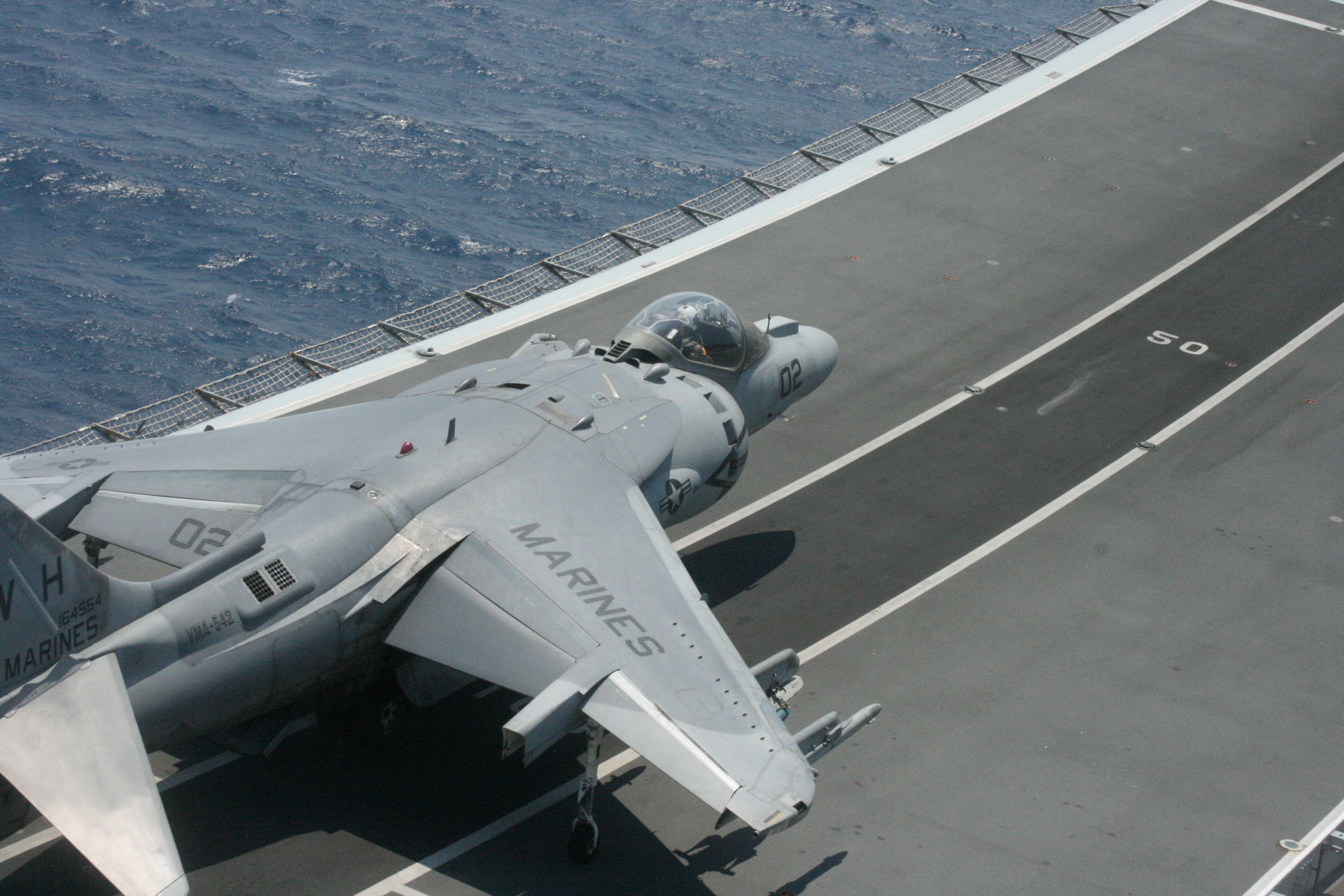
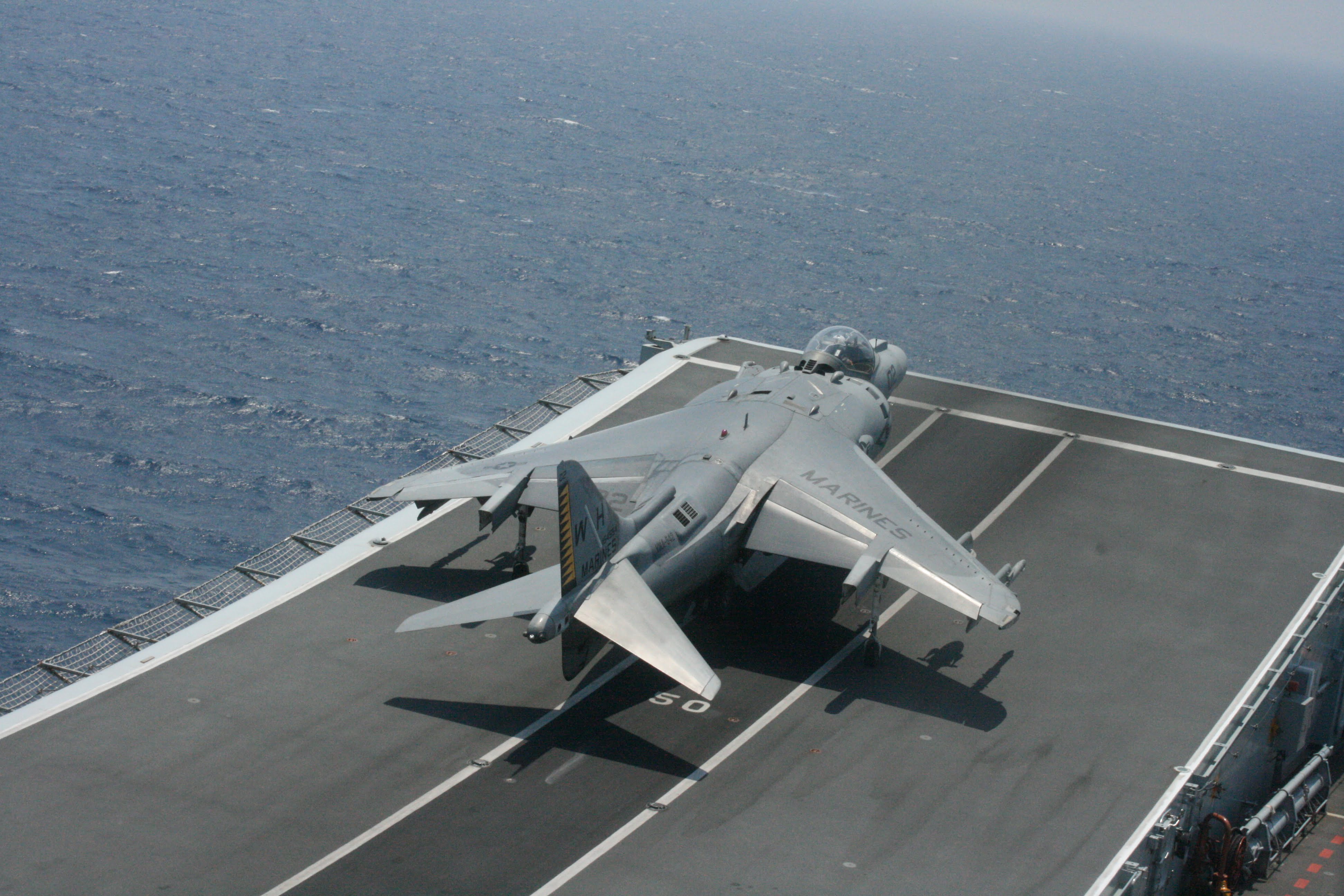
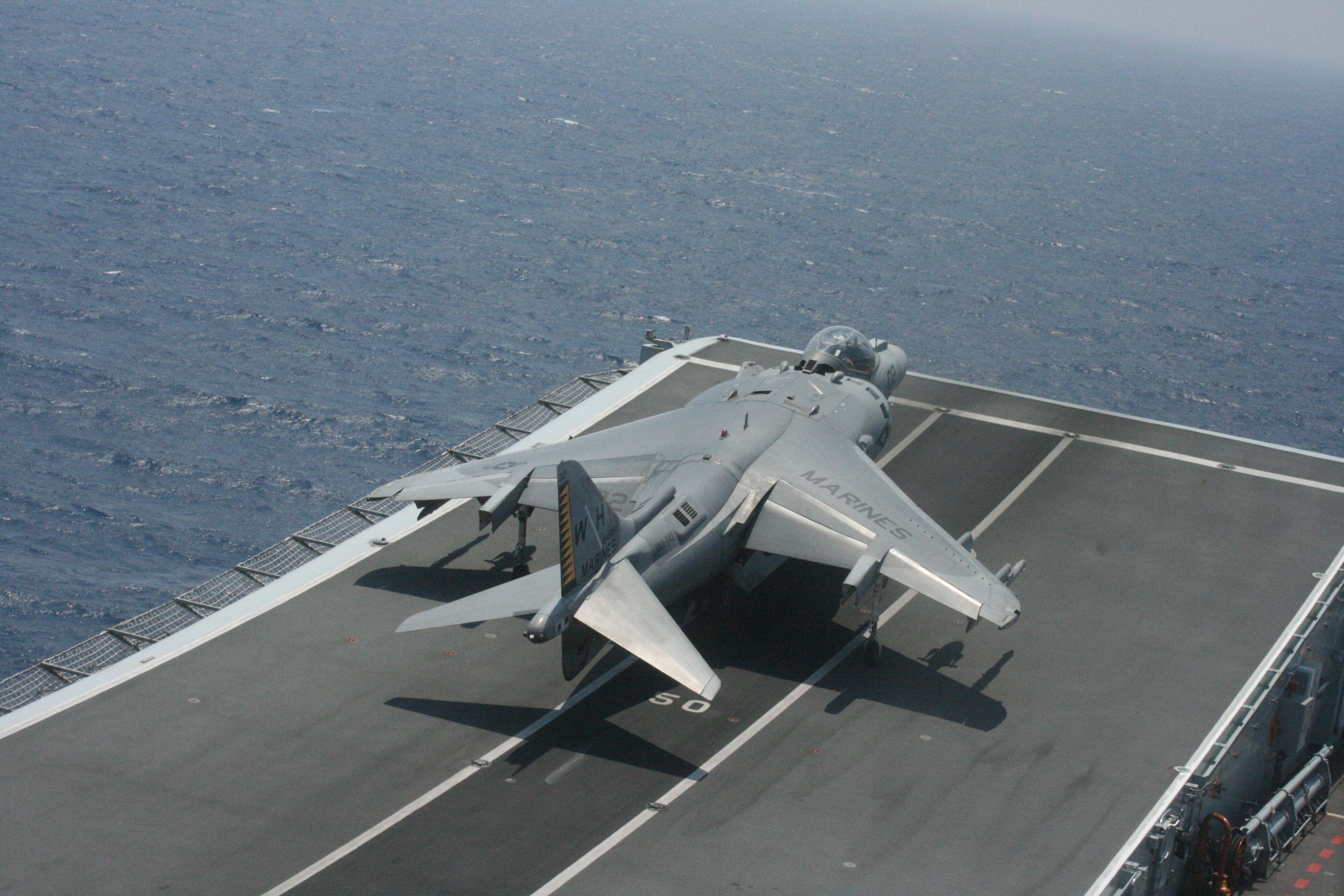
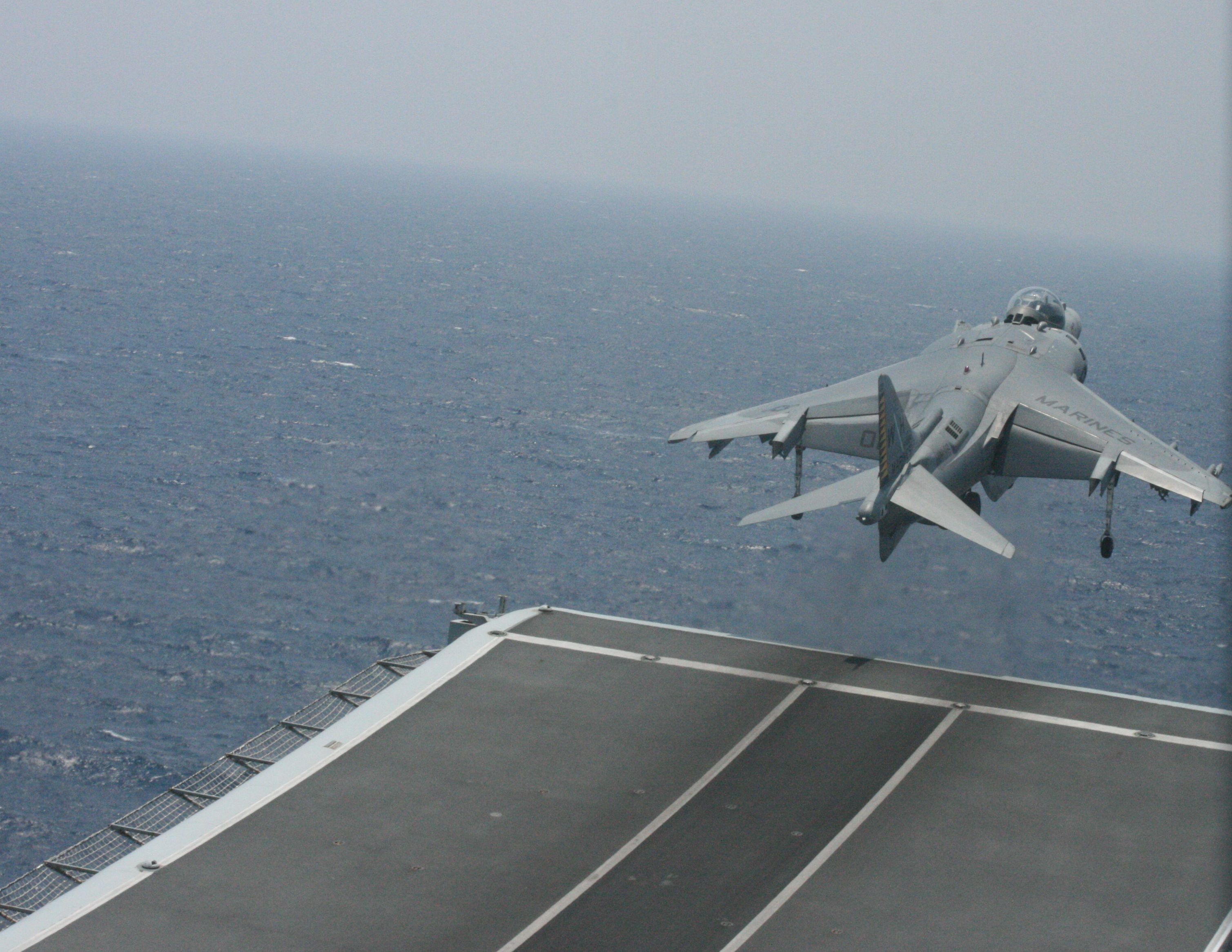
Thousands of feet above the Eastern Seaboard of the USA four British jets of tomorrow take on fuel from an RAF tanker – preparation for their impending arrival in the UK.

Fleet Air Arm and RAF crews are preparing around the clock to deliver the first F-35B Lightning II stealth fighters – the striking power of the nation’s two new aircraft carriers – to their new home at RAF Marham in East Anglia.

Having learned the art of flying fast jets in the UK – earning their wings on Hawk trainers at RAF Valley – all pilots selected for the F-35 programme cross the Atlantic and learn to master the new fifth-generation fighter at the US Marine Corps’ base at Beaufort in South Carolina.

Training on the multi-million pound jets will remain Stateside, but the UK’s front-line F-35 squadrons – firstly 617 Sqn RAF, later 809 NAS – will operate from Marham, each with mixed RN/RAF air and ground crew.

There’s just the small matter of 4,134 miles separating Beaufort and Marham – most of it Atlantic Ocean and the F-35B has a range of about 1,000 miles.

Hence the need for air-to-air refuelling (aka ‘tanking’)…several times.

So the RAF dispatched one of its Voyager tankers from 10 Squadron at Brize Norton to Cecil Airport in Jacksonville, Florida, to practise refuelling manoeuvres by day and night with the jets over the USA’s east coast.

It’s not the first air-to-air refuelling with the F-35Bs… but it is the first crewed entirely by the RAF.

Two RN and two RAF Lightning IIs manouevred into position to take on fuel – inserting the nozzle of their fuel intake (the probe), into the funnel-shaped drogue which delivers that fuel.

The tanker – a modified Airbus 330 airliner – can pump as much as 132,000lb of fuel over a five hour mission, or enough fuel to fill an F-35B’s tank nine times.

The coming few months mark a key period in the rebirth of Britain’s carrier strike force. As well as 617 Sqn debuting at Marham, in the late summer HMS Queen Elizabeth will conduct her first trials with the new aircraft off the east coast of the USA.

The Nordics and the Strategic Shift

The Russian seizure of Crimea and other aspects of its global activism have had a significant effect on the Nordics.

The Nordics are working mores closely together to deal with the strategic shift.  And they are adding new capabilities to shape a more effective approach to crisis management and deterrence in depth.

And the Norwegians, Swedes and Finns are clearly committed to a total defense concept whereby society is being mobilized to support defense in depth as well.

This special report based on recent interviews in Denmark, Norway and Finland provide some insights into how the Nordics are addressing the strategic shift and provides a baseline for further work.

A Look Back at the Standup of the SPMAGTF-CR-AF and the Way Ahead on Crisis Management: A Look Back and Forward with Col. David Suggs, CO of MCAS Yuma

By Robbin Laird

During my May 2018 visit to MCAS Yuma, I had a chance to sit down with the Commanding Officer of the Air Station who has significant electronic warfare experience and was part of the standup of the SPMAGTF-CR-AF.

The naming convention was changed multiple times.

The original name was SPMAGTF-AF operating out of NAS Sigonella, Italy.

This force was not a CR force and was designed to support Theater Security Cooperation (TSC) utilizing logistics combat element (LCE), no Air Combat Element (ACE), or Ground Combat Element (GCE).

The (CE) was limited in scope and tailored to meet mission requirements.

After 2013 the ACE, and GCE were added with a robust CE to support the Crisis Response (CR) mission requirements and hence became the SPMAGTF-CR.

We are focusing on the role of insertion forces in 21stcrisis management and the birthing of the SPMAGTF-CR-AF &CENT is clearly part of that transition.

Our conversation focused around the standup of SPMAGTF-CR-AF and the way ahead with crisis management.

During the visit of Murielle Delaporte to Morón Air Base, Spain, Dec. 6, 2013, the initial standup of the SPMAGTF-CR-AF was described:

SPMAGTF–CR-AF is a self-command and -controlled, self-deploying and highly mobile maritime crisis response force allocated to U.S. Africa Command to respond to a broad range of military operations to provide limited-defense crisis response in the AFRICOM/EUCOM region.

The Marine task force can serve as the lead element, or the coordination node, for a larger fly-in element. It also can conduct military-to-military training exercises throughout the AFRICOM and EUCOM areas of responsibility.

Like other MAGTFs, the SPMAGTF–CR includes a command element, a ground combat element (GCE), an aviation combat element (ACE) and a logistics combat element (LCE). It is composed largely from II Marine Expeditionary Force, Camp Lejeune, N.C., coordinating a balanced team of ground, air and logistics assets under a central command.

 https://www.mca-marines.org/leatherneck/2014/04/filling-gap

Col. Suggs provided an overview on how the standup and operation of the force provided a defensive insertion force, which empowered crisis response options but also triggered broader working relationships with allies in shaping convergent crisis response capabilities.

Crisis management requires both the forces and the convergent C2 and decision making to use those forces. And the standup and operation of the SPMAGTF-CR-AF facilitated both processes.

In effect, the formation of the SPMAGTF-CR-AF provided a bridging function for AFRICOM and EUCOM to be able to provide insertion forces able to deploy rapidly, a key means for triggering enhanced training with key allies in the Western Mediterranean.

This was especially important as the focus had shifted dramatically to CENTCOM and provided an important stimulus to American forces being able to work through with interoperability among crisis response forces.

SIPRNET is where Americans work with each other, and can become a limiting capability which inhibits broader and more effective collaboration with allies, the kind of collaboration central to allied crisis management.

And the Western Med collaboration in turn provided leverage back into broader NATO collaboration.

And all of this was driven by the stand up of the SPMAGTF-CR-AF as a forcing function force, so to speak.

“In fact, SPMAGTF-CR-AF itself was born from the Benghazi crisis.

“We did not have a reactive/sustainable force to operate in Africa and the AFRICOM and EUCOM relationship did not have in place the procedures for how to transfer forces from one component commander to the other in African operations in a timely manner.

“Having a complete understanding and the authority to launch a CR force from a sovereign nation can create additional bureaucratic delays if all participates are not on the same sheet.

“SPMAGTF-CR-AF created a catalyst and through collaboration with the Spanish and Italian MODs we were able to establish a clear common understanding allowing for quick response to a crisis.

“To me a crisis is my house on fire and I need to call the first responders right away and know the number to call.  It’s about building connective tissue, or access to the right people at the right time.”

“We needed to set up the first responders and the 911 number.

“And it is not just a question of the physical force, but the working relationships among allies to allow that force to engage rapidly.

“We have logistics support units postured in Africa but we are not set up to operate in Africa for a sustained period of time unless we are operating out of Djibouti.

“And it was cost prohibitive to set up Djibouti West, if one might call it that.

Question: In effect, you were sizing a force that could be effective, but clearly defensive in nature, and one that could work with allies to get not just pre-positioning but de facto pre authorization for use?

Col. Suggs: The challenge was precisely that.

“SPMAGTF-CR-AF was set up to operate out of Morón Air Base, Spain, and worked closely with Naval Air Station (NAS), Sigonella, Italy.

“The Spanish have great forces operating from Morón Air Base and we had close proximity with the French.

“We have had a lot of coordination with French Forces and conducted routine training exercises to ensure proper techniques and procedures where established.

“We have introduced the Osprey to the Spanish, French, Italians, and UK, integrating forces conducting amphibious training on their ships.  This increased readiness in not only our forces, but also to NATO forces.

“In effect, we were going back to the time when we used to have a MEU in the Mediterranean working with allies, but that has atrophied given the focus on CENTCOM.”

Col. Suggs highlighted that the SPMAGTF-CR-AF was a triggering for more allied cooperation as well.

“We created a number of second and third order effects as well as our small force contingents were able to work with other NATO allies, such as in theEUCOM Black Sea Rotational Force.

“There a small force of Marines led by a Marine Corps LtCol led the effort and we learned how to work more effectively together.

“The problem on the US side is that we rely primarily on SIPRNET for our communications and even though a significant amount of the content is actually unclassified, we are operating within our SIPRNET culture.

“Allies are not on SIPRNET so we need to train ourselves to become more interoperable and work with other communication and intelligence channels to deliver the kind of crisis management effect we are going to need.”

“This small little group is operating as a trigger for significant reworking by ourselves and our allies, way beyond the combat weight of what that force brings to the table.”

Question: It is important to focus on crisis management, not simply forces the US can deploy to an event. 

How does your SPMAGTF experience trigger that kind of learning?

Col. Suggs: If we have a crisis to respond too, a key part of the response is ensuring that the relevant allies are all on the same page operationally and politically.

“Because we are training regularly with those allies but not bringing overwhelming force to the training, we shape common approaches and procedures, which are crucial to crisis management situations.

“It is about convergent forces, and convergent intervention approaches and shaping a capability to do so in the short time span which effective crisis intervention requires.

“It is not about bringing multiple Army battalions or Air Force Air Wings.  It is about arriving at the right time; the right place and to get the right effect our outcome.

“When one’s house is on fire you want to call the first responders and expect them to show up.

“You are not calling the insurance adjuster’s first.”

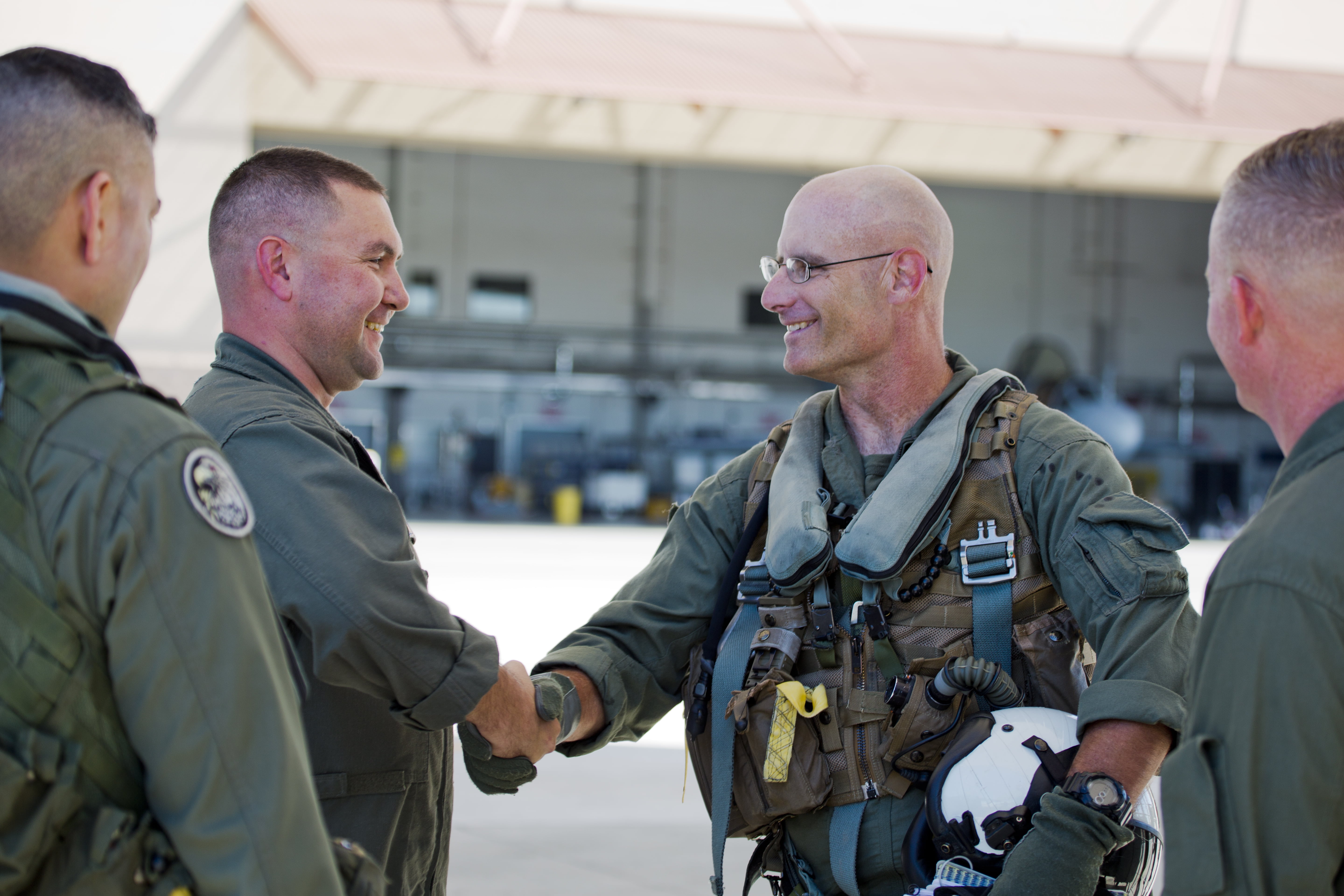
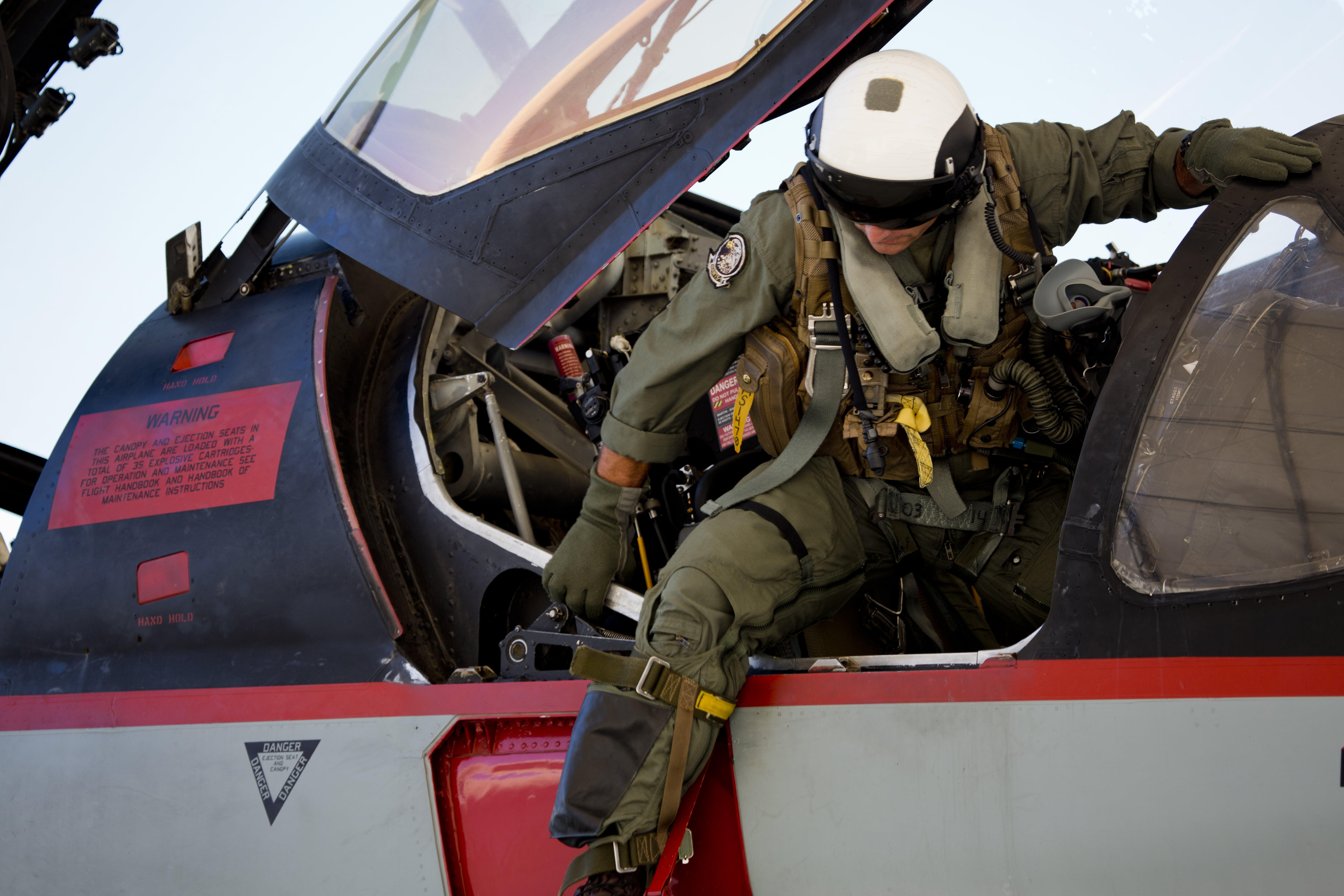
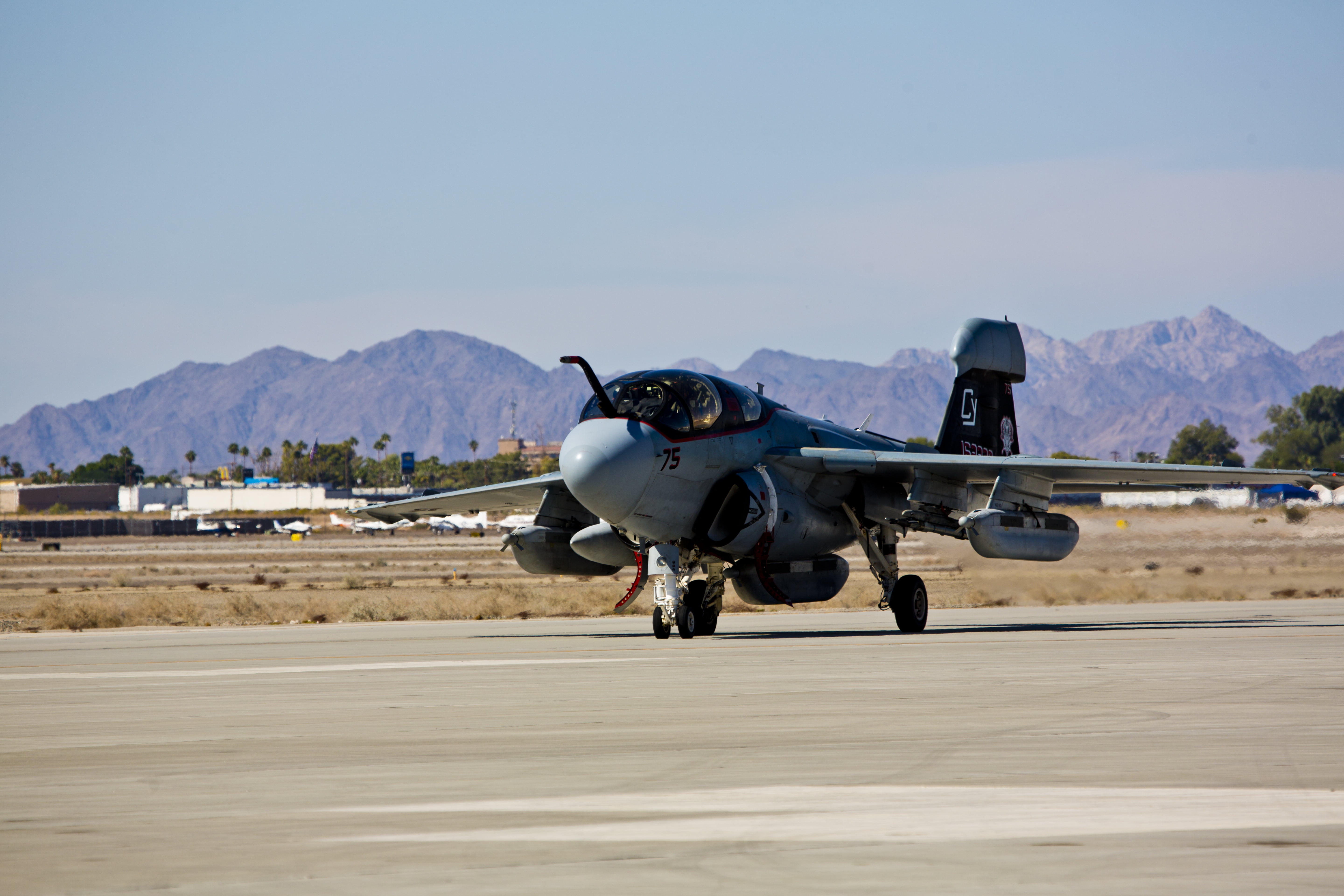
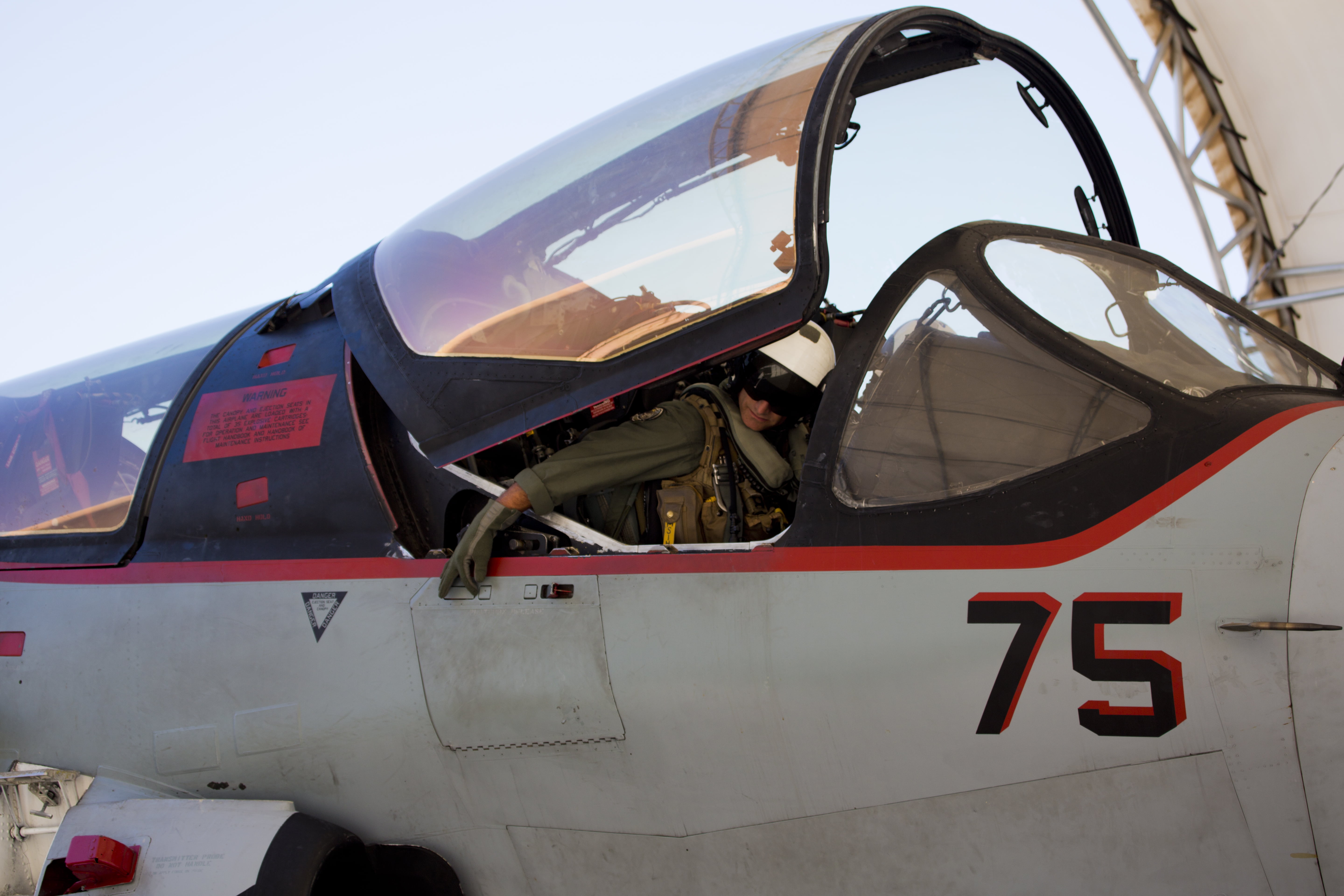
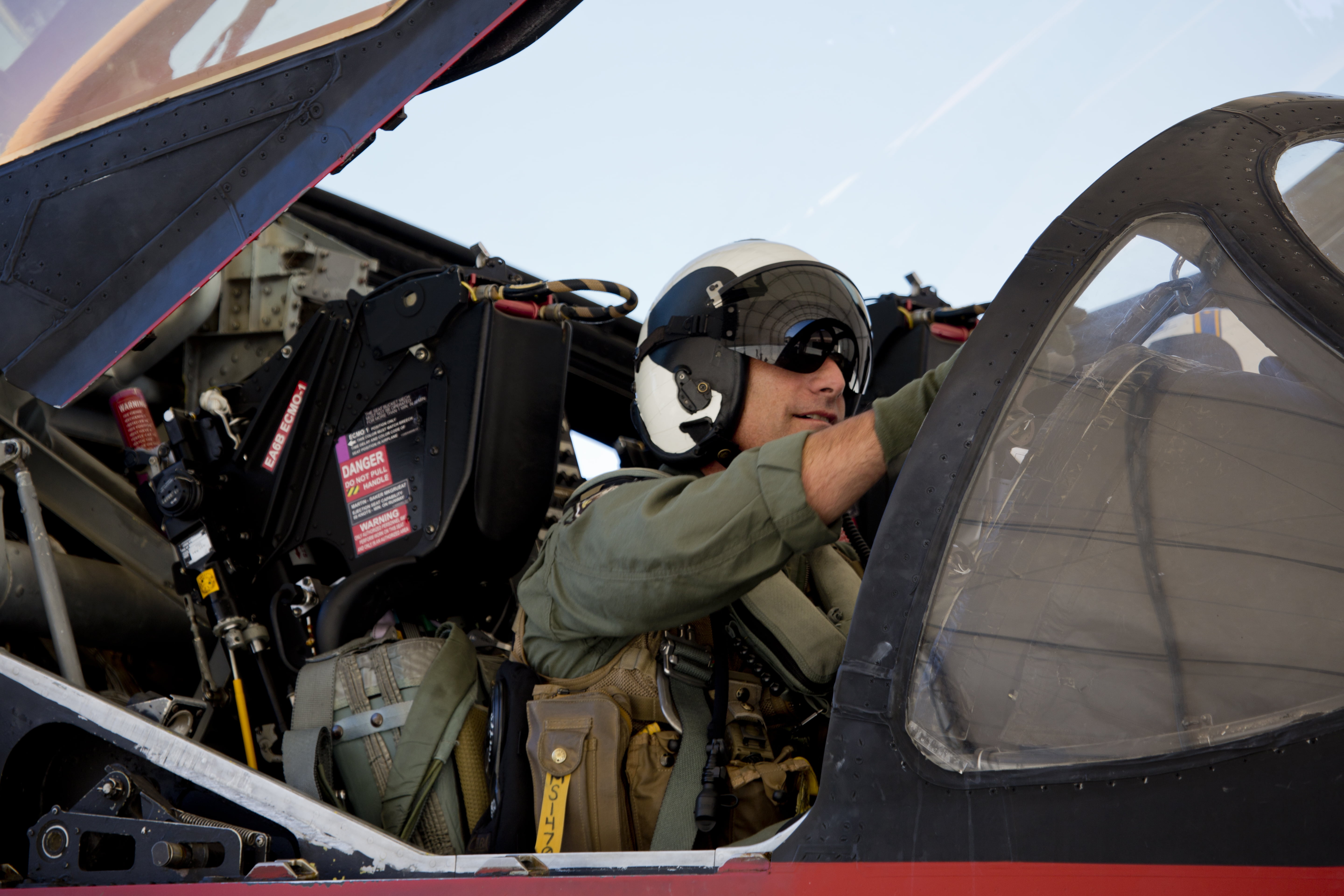
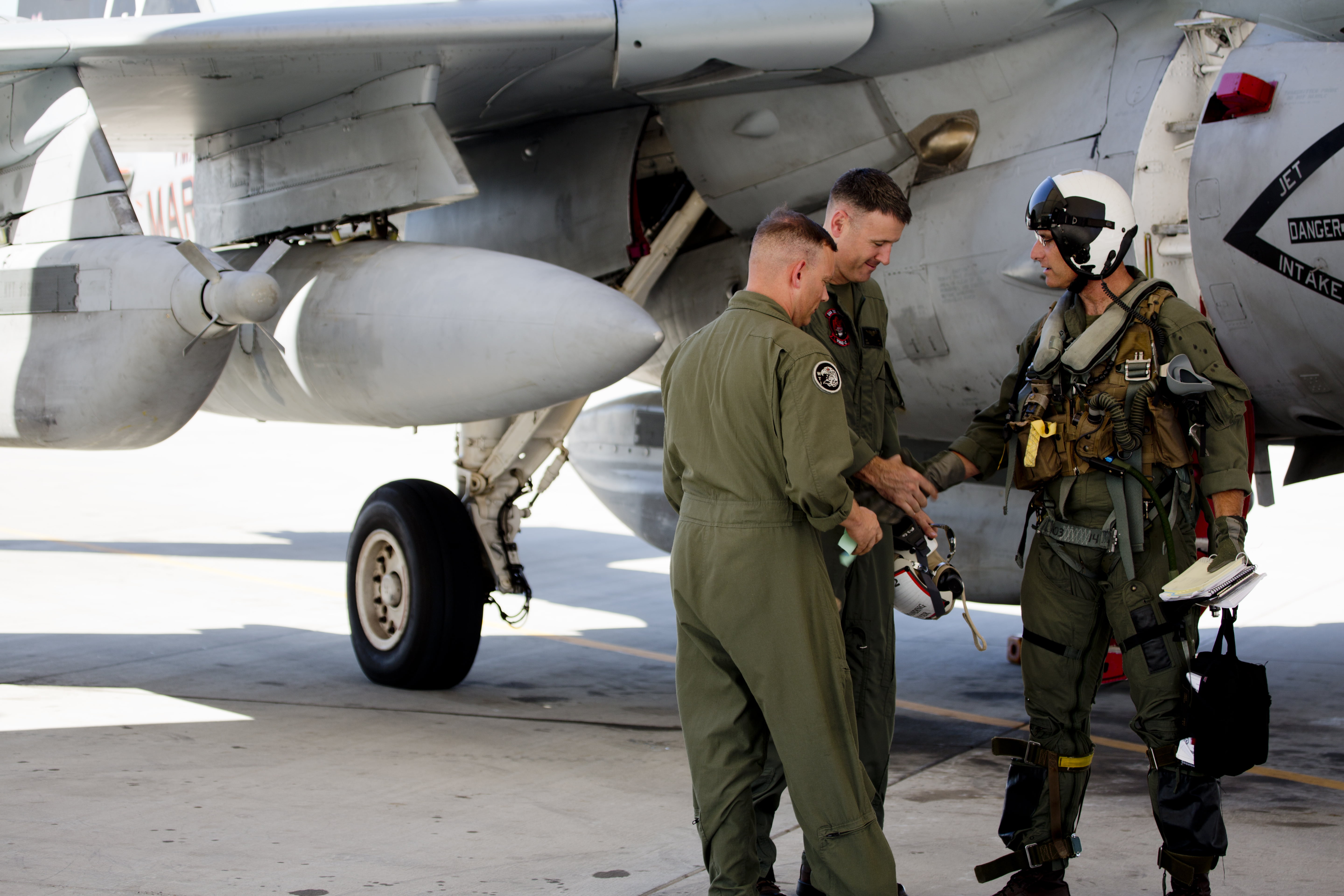
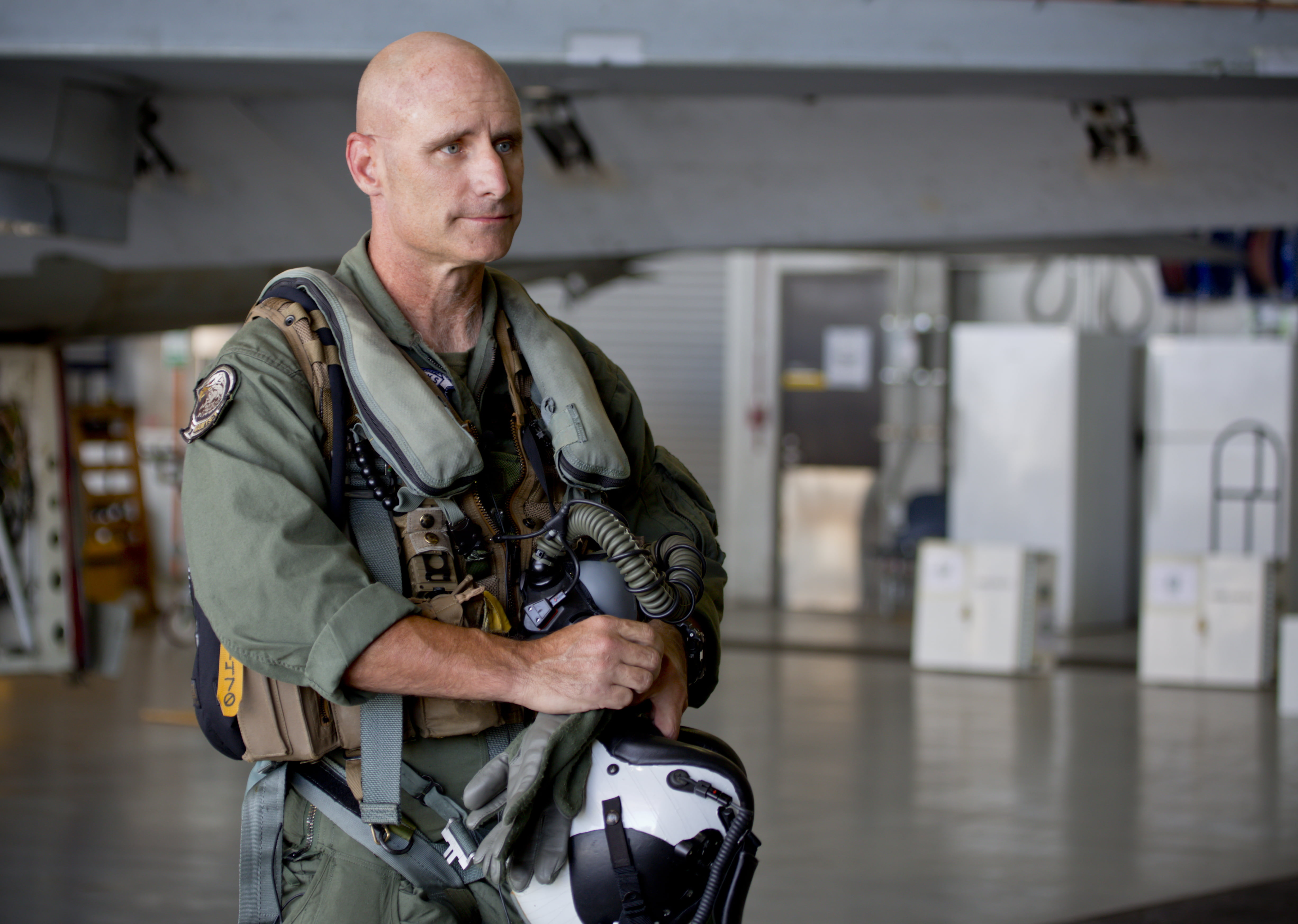
The featured photo and slideshow show U.S. Marine Corps Col. David A. Suggs, the commanding officer of Marine Corps Air Station Yuma, Ariz., when he was invited to fly in one of two EA-6B Prowler aircraft attached to Marine Tactical Electronic Warfare Squadron (VMAQ) 2, Oct. 16, 2017.

This is the first time Col. Suggs has flown the Prowler after Many Years. (U.S. Marine Corps photo by Cpl. Ernest D. Grant)

From HMS Illustrious to HMS Queen Elizabeth: A Decade’s Journey

05/24/2018

by Robbin Laird

Recently, I had the chance to visit RAF Marham and to interview Air Commodore Bradshaw who was appointed as Lighting Force Commander, Royal Air Force Marham in April 2017.

In looking through his background, I found that we had something in common.  We both had been onboard the HMS Illustrious.

Air Commodore David Bradshaw is a fast jet pilot with almost 3000 hours flying experience of which 2000 hours were in Harrier GR7 / 9 as a front line pilot, Qualified Weapons Instructor and Display Pilot. 

He has seen operational service over the Balkans and Iraq, the latter from both land and HMS Illustrious.

As a group captain, he commanded 904 Expeditionary Air Wing (EAW), Kandahar, followed by RAF Leeming and 135 EAW. Staff roles have included: Group Captain Lightning; Assistant Director (Integration) within the Directorate of Equipment Capability, Deep Target Attack; Chief-of-Staff Strategy within the Air Staff; and as the MoD member of the Prime Minister’s Strategic Communications Team during the 2011 NATO intervention in Libya.
Air Commodore Bradshaw assumed command of the UK Lightning Force in spring 2017 and is responsible for generating an Initial Operational Capability in 2018 with an embarked operational capability from HMS Queen Elizabeth in 2020.

 His role was obviously both different and more significant than mine, but my visit in 2007 was at the end of the line of the ship and was being populated with USMC Ospreys and Harriers in a training exercise off of the Virginia coast.

It has only been a decade since then but with the coming of the HMS Queen Elizabeth, again off of the Virginia coast this year, we are marking a significant way forward for both the Royal Navy and for the F-35 program.

Here is my most recent look at the 2007 visit to HMS Illustrious.

03/25/2015

By Robbin Laird

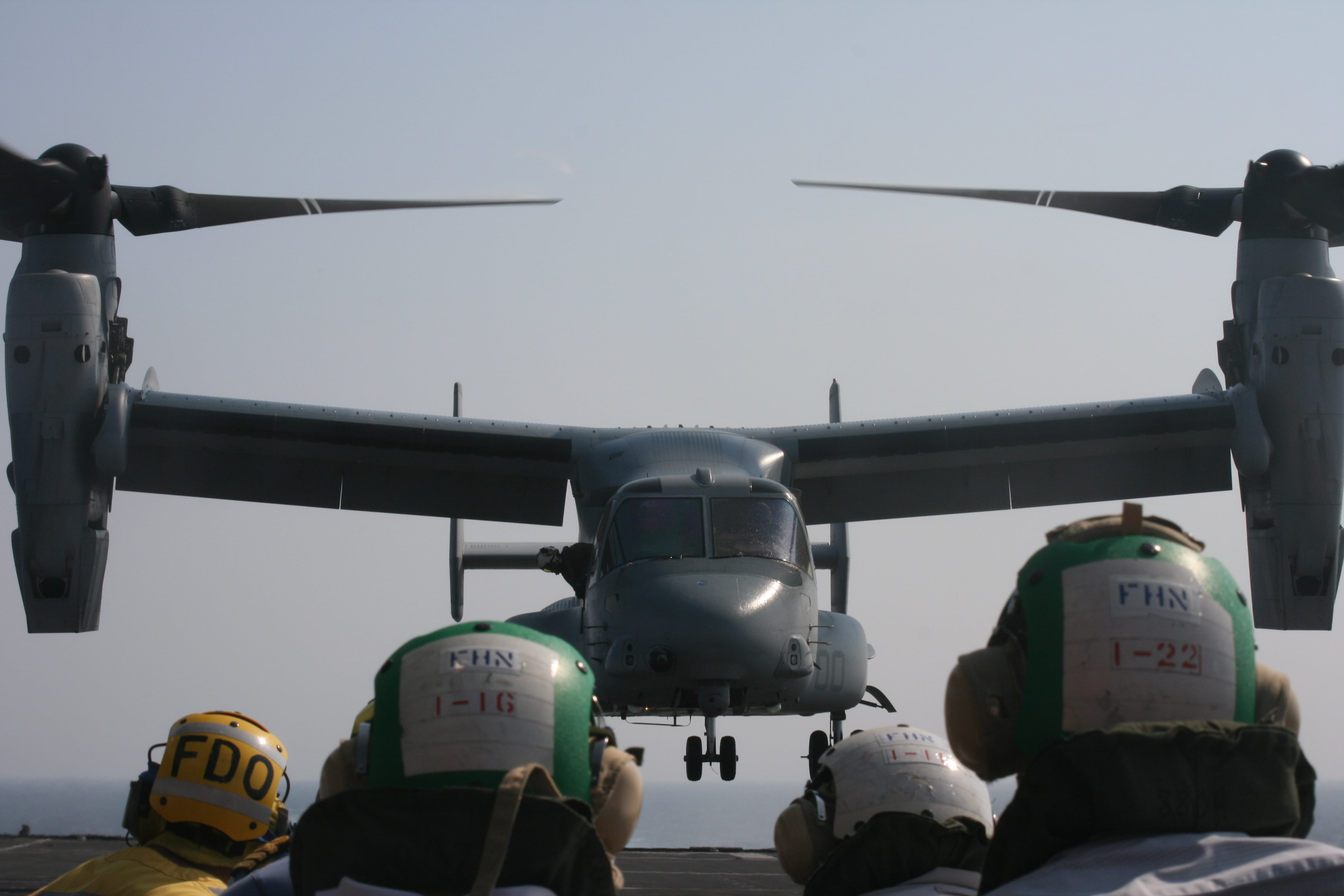
In 2007, the HMS Illustrious was the first non-US ship on which an Osprey was to land.

I had the opportunity to be aboard one of those Ospreys and land on the ship and observe Marines working with the Royal Navy and operating their Harriers off of the jump-jet carrier as part of their training effort.

At the time British Harriers were operating in Iraq and not aboard the ship itself.

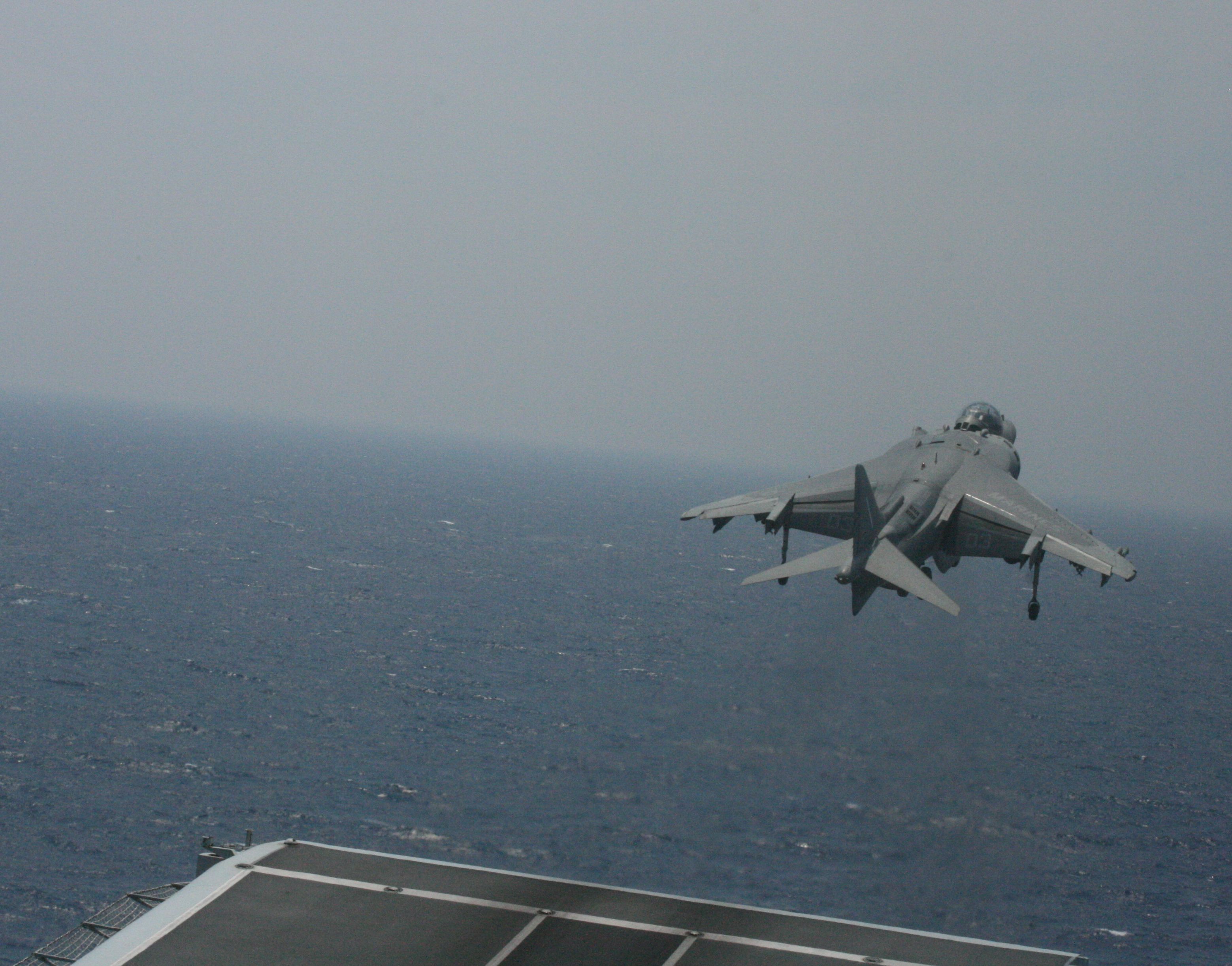
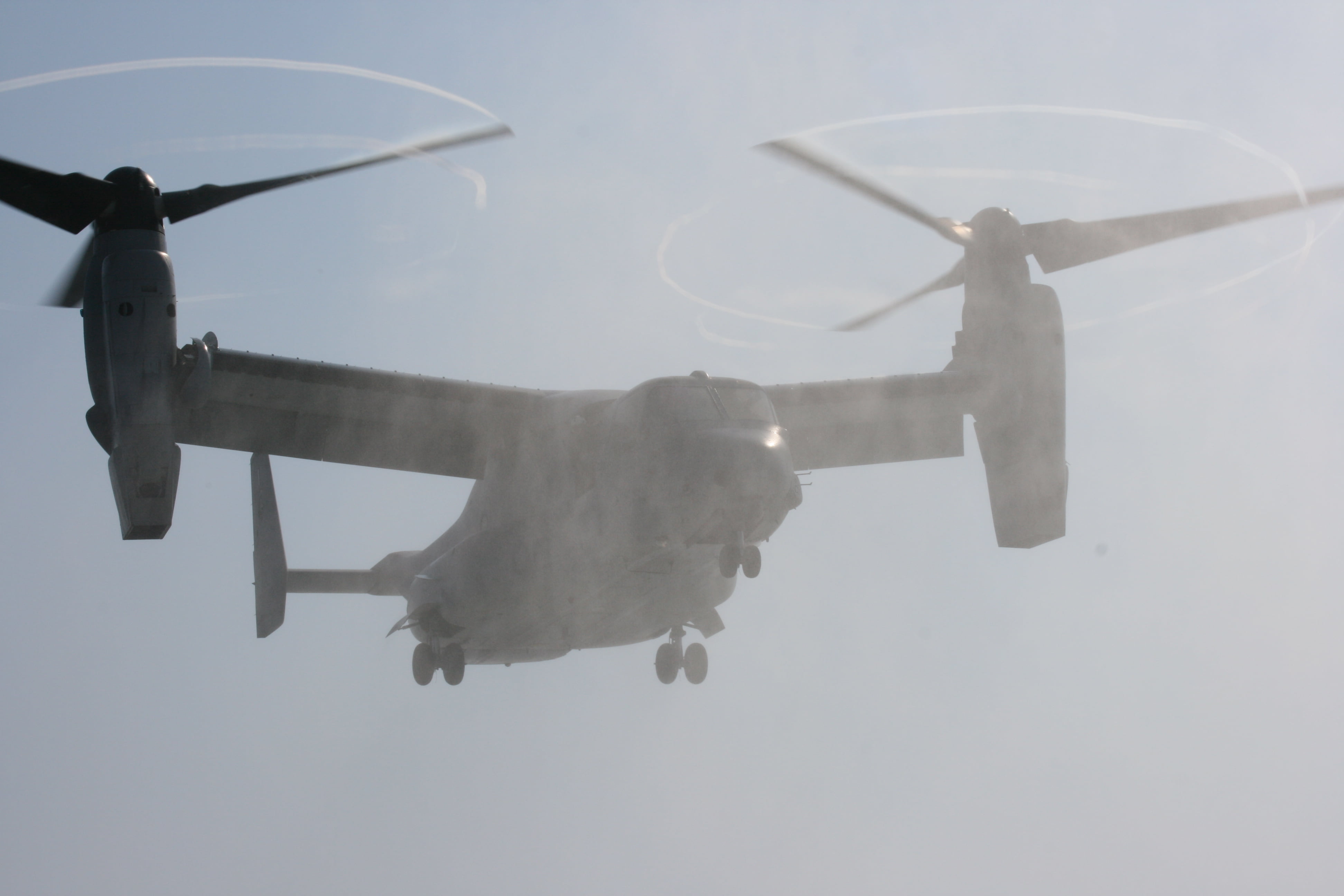
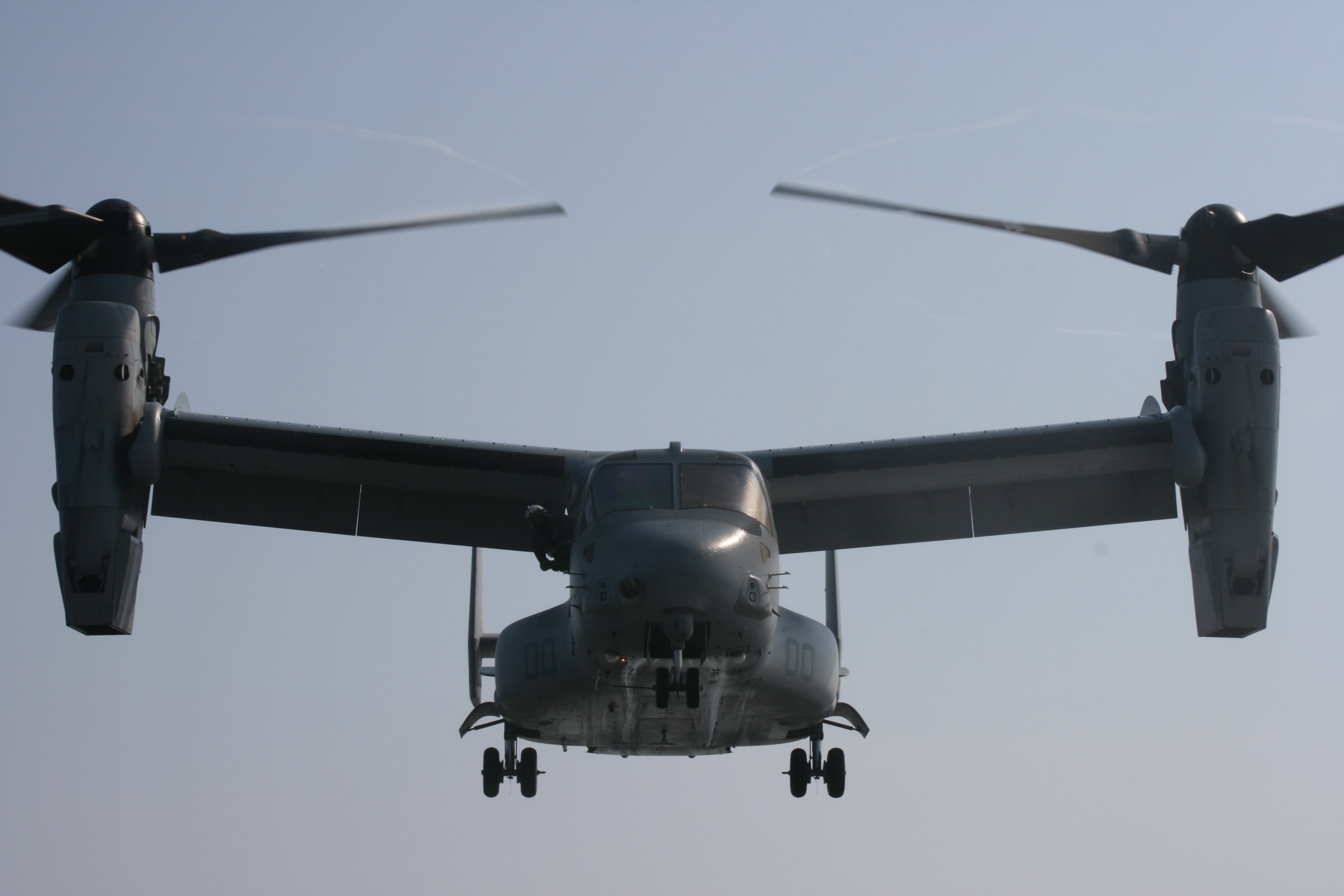
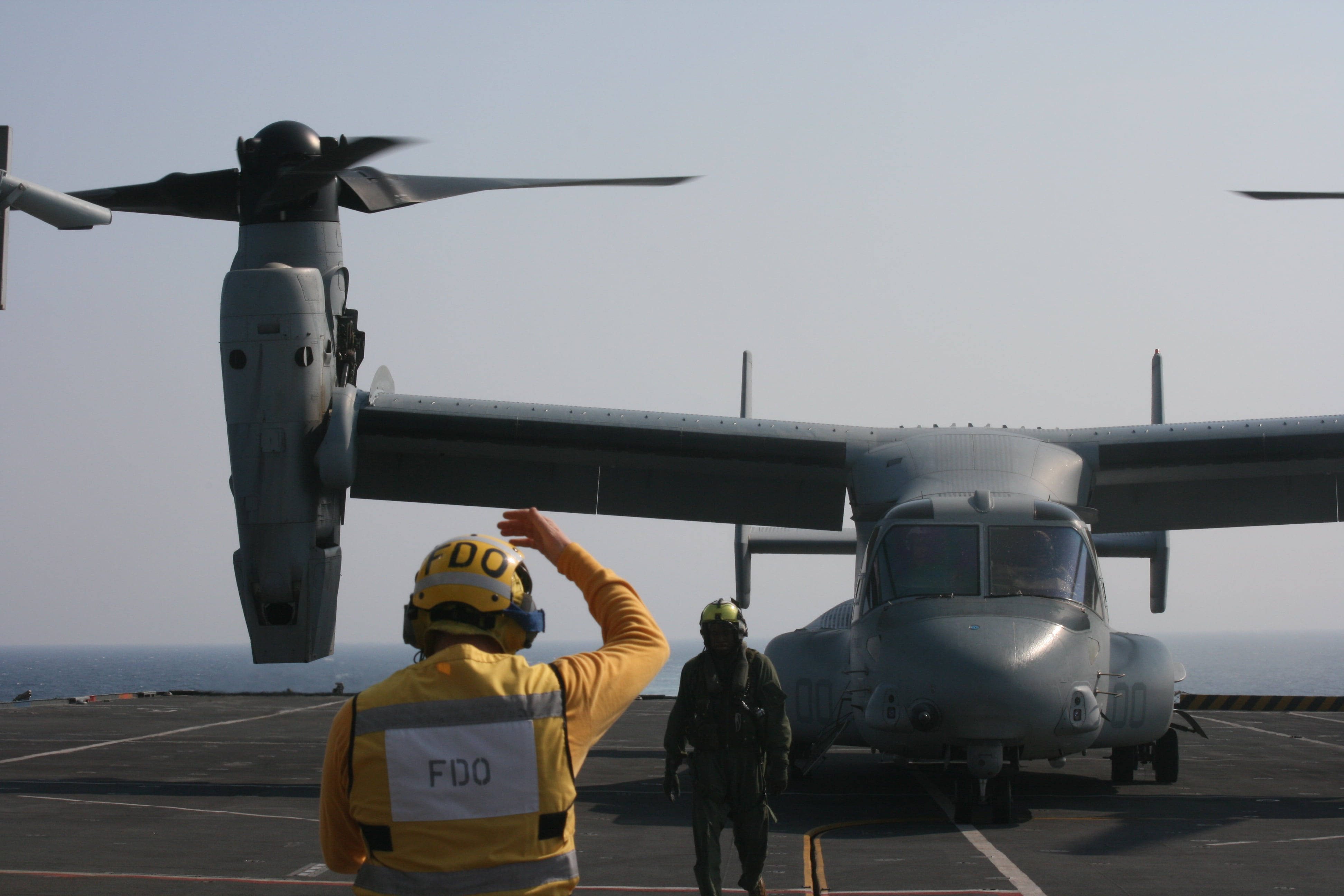
These photos show the Osprey and USMC Harriers operating aboard HMS Illustrious in the 2007 training exercise and are credited to Second Line of Defense. 

The final photo is credited to the Royal Navy and was shot when in September 2013, the Osprey landed again on the ship.

According to a Royal Navy story published in 2013:

Six years ago HMS Illustrious became the first non-US ship to fly an Osprey and was pleased to welcome one back on board with it completing a total of four deck landings.

Piloting the US Marine Corp aircraft as it landed at dusk was a Royal Navy Lieutenant – Alan Wootton – a former Army Air Corps pilot who transferred to the Royal Navy as a Lynx pilot.

Al is on a three year exchange with the US Marine Corps and flew with co-pilot Captain Goudy of the United States Marine Corps.

Lieutenant Commander Nigel Terry, deputy head of HMS Illustrious’ Flight Department was also on board when the Osprey visited in 2007.

He said: “Opportunities like this present an invaluable opportunity to continue to grow our ability to work together with other nations.

This is absolutely essential in modern naval operations.

“It allows us to grow our understanding of our different procedures as well as providing valuable training for our deck crews…..”

Until recently, USS Kearsarge had three Royal Navy aircraft handlers embarked as part of the Long Lead Specialist Skills Programme. 

This programme seeks to retain and develop the specialist skills required to operate the Royal Navy’s new Queen Elizabeth Class Aircraft Carriers which are under construction at Rosyth dockyard.

Three US Marines and six US Navy personnel also visited HMS Illustrious during the rendezvous.

HMS Illustrious is currently part of the Response Force Task Group deployed on Cougar 13 operating in the Mediterranean, Red Sea, Persian Gulf, and Horn of Africa.

It involves exercising with partner nations, and will show the UK Armed Forces’ capacity to project an effective maritime component anywhere in the world as part of the Royal Navy’s Response Force Task Group as commanded by Commodore Paddy McAlpine.

Recently, in an interview at Camp Lejeune, Major General Simcock, the CG of 2nd Marine Expeditionary Brigade, spoke of the importance of evolving a global amphibious fleet, where Marines need to train and be able to work with allies and partners off of their ships as well US Navy ships. 

Clearly, the kind of relationship the UK and the US has evolved is an example of this.

With the coming of the USS America, and the revitalization of the large deck amphibious ships with the twin operations of Ospreys and F-35Bs, there is a clear opportunity to expand those relationships with foreign warships, which can either operate the Osprey or the F-35B.

And with the British building the largest warship they have ever built coming on line in the period ahead, opportunities for shaping USN-USMC and British collaborative con-ops will go up as well.


The BAE Systems Role in the F-35 Program

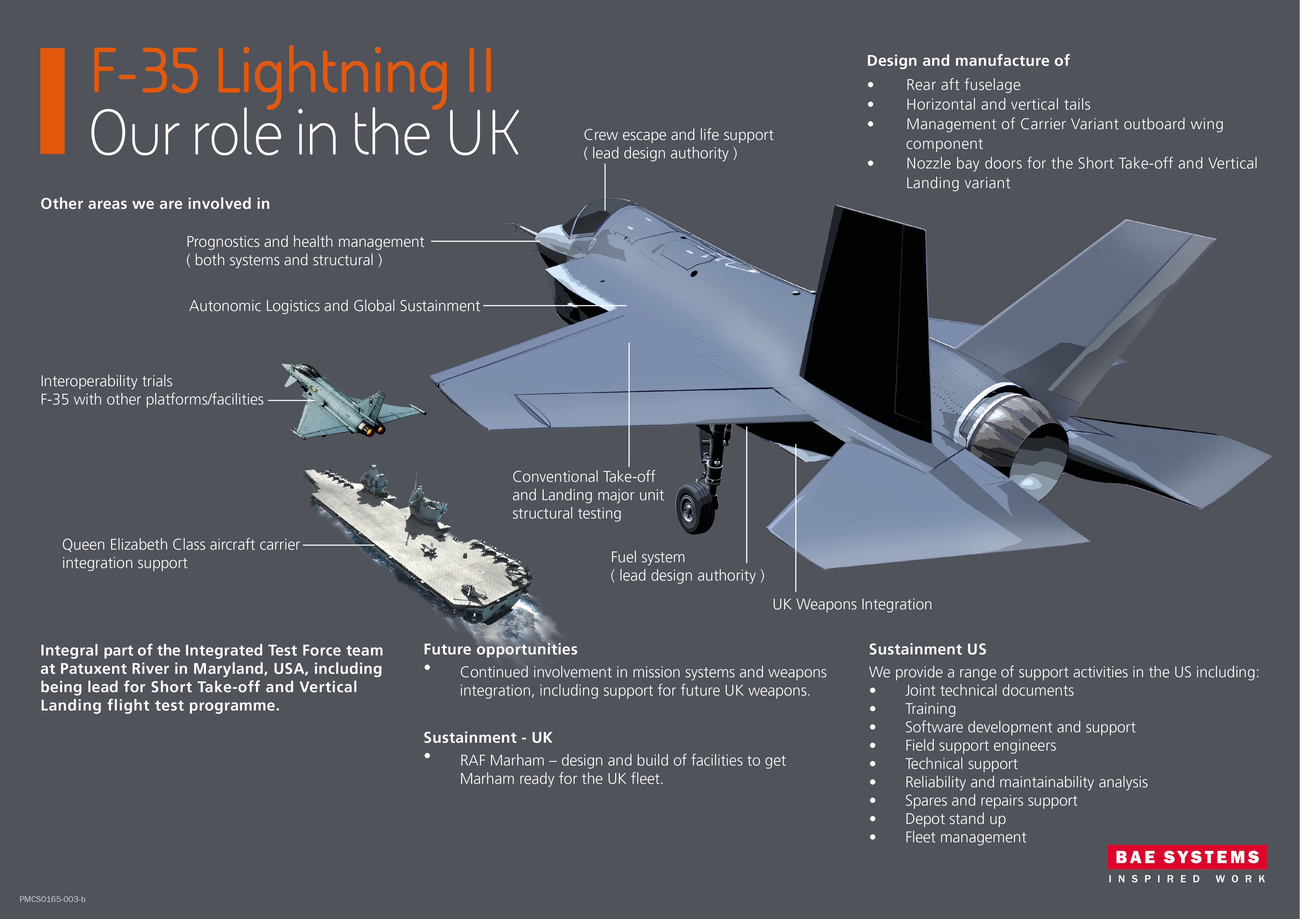
An overview of the significant role which BAE Systems plays in the F-35 program is provided by the company on their website.

https://www.baesystems.com/en-us/product/f-35#

The following graphic above provides a representation of this role with regard to the air system.

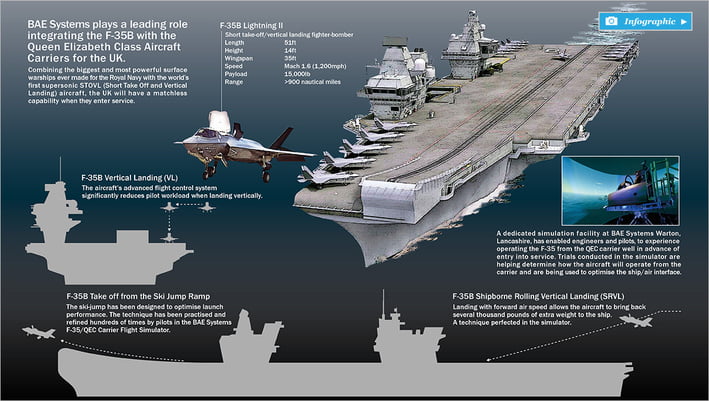
And the graphic below provides a representation of the key role which the company is playing in integration of the F-35 with the new UK carrier.

There is a webpage as well which provides an overview on the BAE Systems role with regard to F-35 and carrier integration.


Norwegian Quick Reaction Aircraft, Bodø Airbase and Future Basing Challenges

By Robbin Laird

During visits to the United Kingdom, I have had a chance to see and visit with RAF the operators of the quick reaction air capability in the United Kingdom.

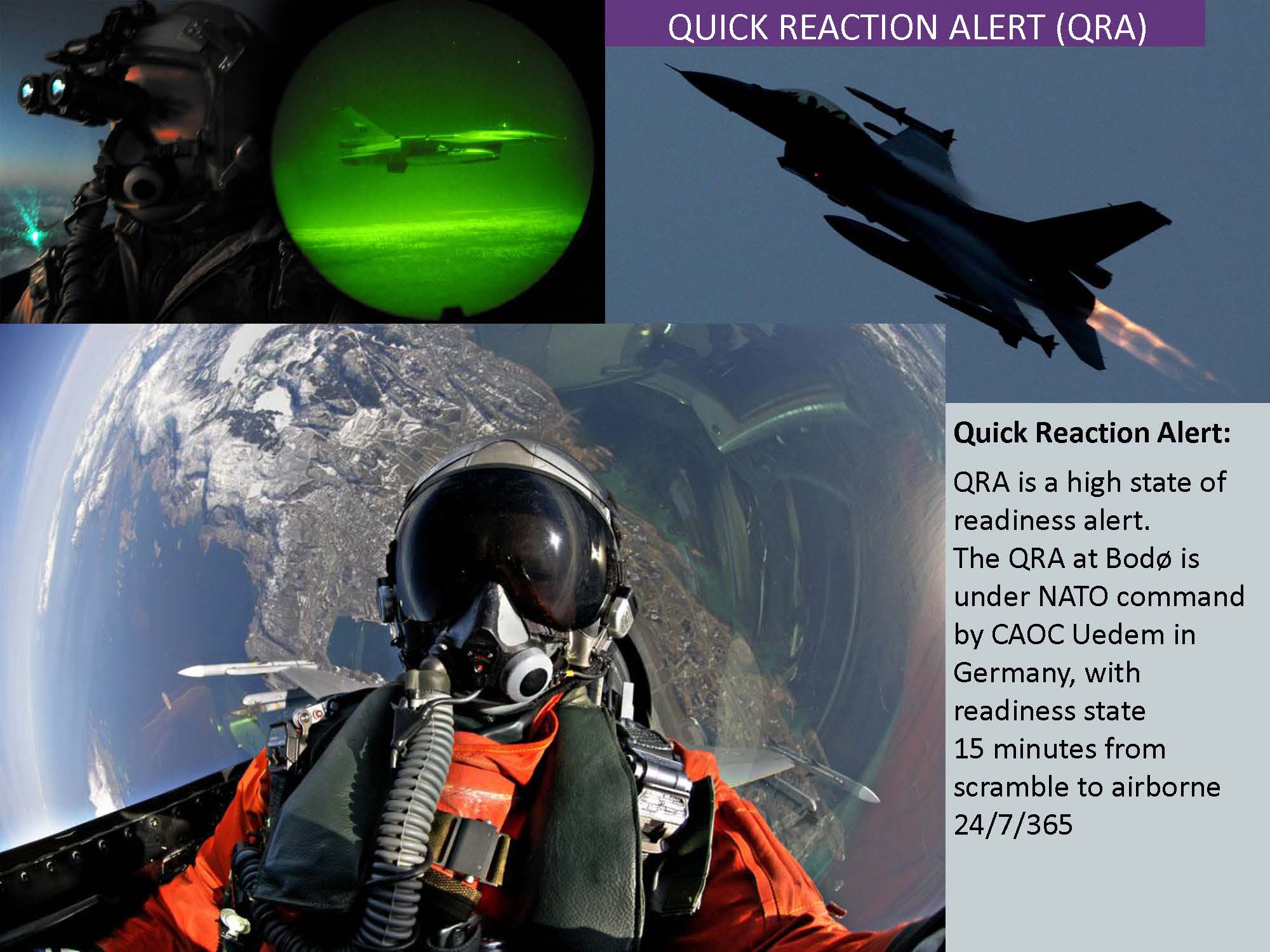
A key point is that to have two aircraft ready to fly on a moment’s notice, or within 15 minutes, a significant pyramid of support is necessary to deliver a QRA capability.

But the question of what the pyramid looks like beyond this is simply having two pilots ready 24/7 with 2 support staff and eight engineers for each week in support as well.

1(F) Squadron, II (AC) Sqn. and 6 Sqn. provide the aircraft, pilots and engineers for the 24/7 operation. The Air Traffic Control Center is manned 24/7 to enable aircraft to launch at any time. The Ground Support System or GSS provides support to the Typhoons with mission data and computer systems used by the aircraft.

And chefs and catering staff are on station to cook and serve meals for duty personnel, three meals a day, 365 days a year.

To put it bluntly: to be 24/7 ready is a significant demand signal for the Typhoon fleet, and one which can be overlooked in terms of the number of aircraft which are required to remain ready for operational launch, 24/7 and 365 days a year.

According to the QRA North team, the Typhoon has performed its role well, but it requires maintainers, pilots and operations personnel to pay close attention to the rotation of aircraft into the demand side of QRA.

And when the RAF deploys to the Baltics, in effect, the UK is supporting three QRA efforts.

The pyramid is demanding; the photos of the planes on strip alert simply masks the significant level of effort to ensure that they are on strip alert.

This demand side is one which can be easily overlooked by everyone, except those providing the capability and the intruders into UK airspace.

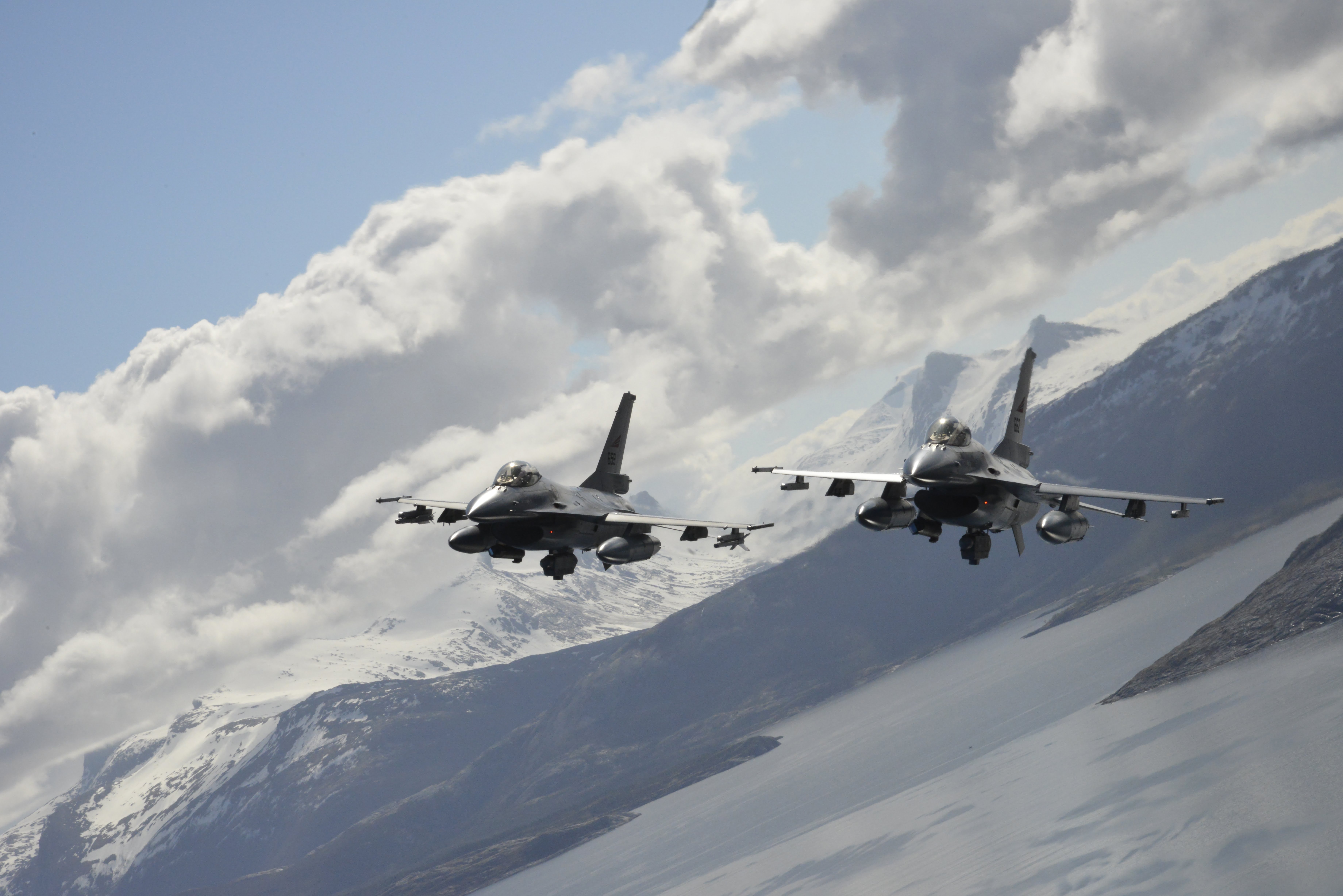
During my recent visit to Bodø Airbase, I was able to discuss the QRA effort at the airbase and the transition being put in place to transition from F-16s doing this mission from Bodø to F-35s operating from Evenes Air Station, where P-8s may operate from as well.

Evenes Air Station is significantly further north from Bodø, which will move the QRA effort further north as well.

The Norwegian government is restructuring its basing infrastructure, closing some airbases and building up others. Bodø Airbase itself is scheduled to close.

I discussed the QRA effort, the past and future of the Bodø Airbase, and the shift from the F-16 to F-35 for QRA with the Lt. Col. Henning Hansen Homb, Group Commander 132 Air Wing and Base Commander Bodø and Major Trond Ertsgaard who is a key member of the Wing as well.

The Bodø Airbase provides the pyramid from which the current F-16 QRA capability is generated. Like RAF Coningsby or RAF Lossiemouth, from which current RAF Typhoon QRAs are generated, Bodø Airbase is a main F-16 airbase and as such provides the pyramid to support the F-16s generated for QRA.

Bodø is strategically located to contribute to both air and maritime defense of Norway. It must always be remembered that Norway has very significant maritime as well as airspace to protect.

As Lt. Col. Homb underscored: “Norway’s territorial waters are six times the size of our land area. This is also an area which we need to defend.”

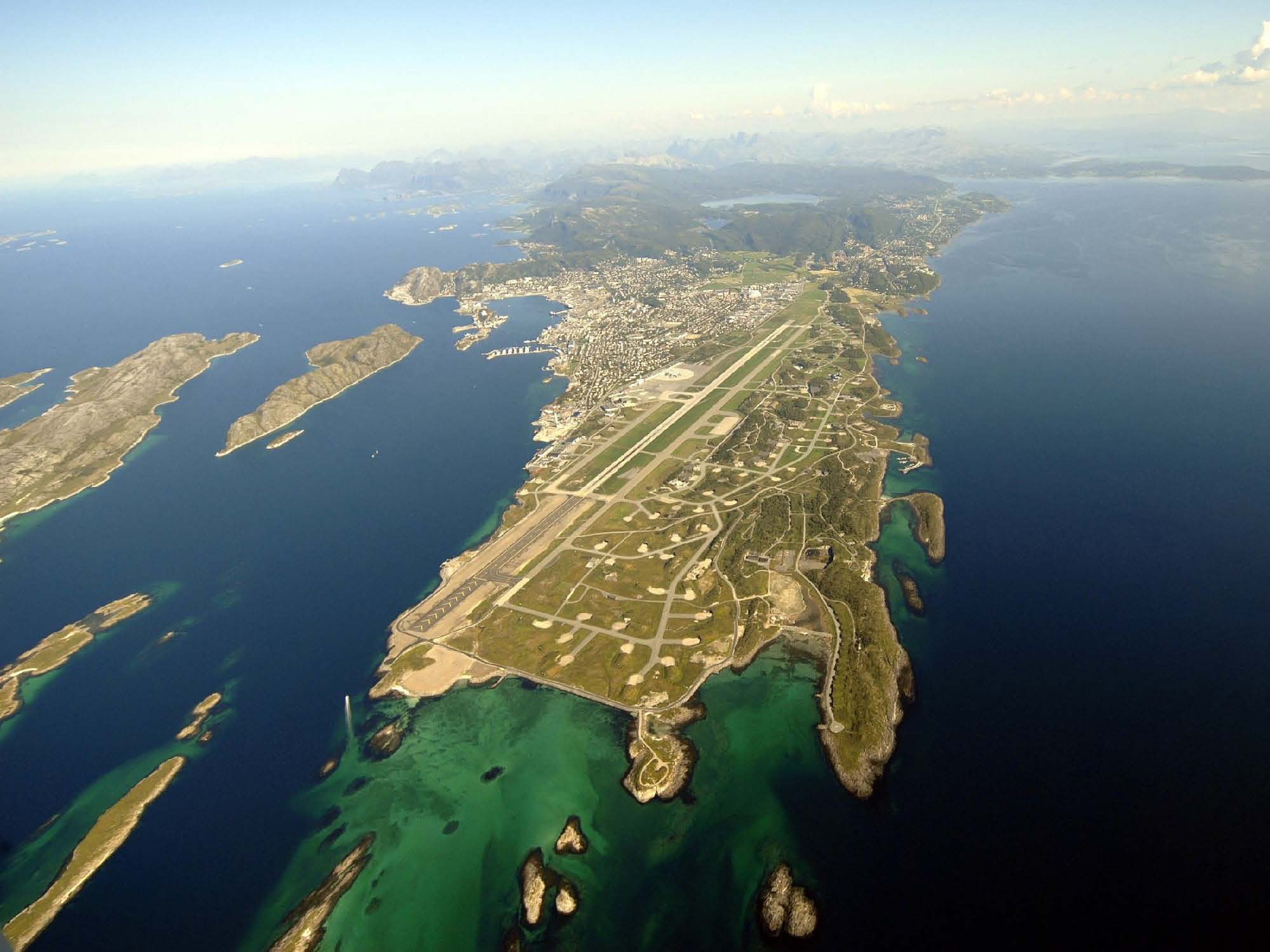
The base itself in its current configuration was built during the cold war and can host multiple squadrons and has a number of hardened shelters for operations as well.

As a main F-16 operating base, it can draw upon the personnel who fly, operate and maintain F-16s to support QRA activities.

Indeed, the base has demonstrated in operations, its ability to generate airpower as required by the Norwegian political authorities in times of crisis.

According to Lt. Col. Homb, during the Norwegian contribution to the 2011 Libyan operation, the turn around from the tasking to participate to delivering weapons during first strikes was only six days.

“That certainly proved that our training system clearly works.

“You can not go from a holiday weekend back home, to being ordered to participate in an international operation and then to deliver weapons within six days, if your training is not on track and clearly working.”

Bodø Airbase as a large airbase dominates the town and is located at the tip of the peninsula on which the town is located.

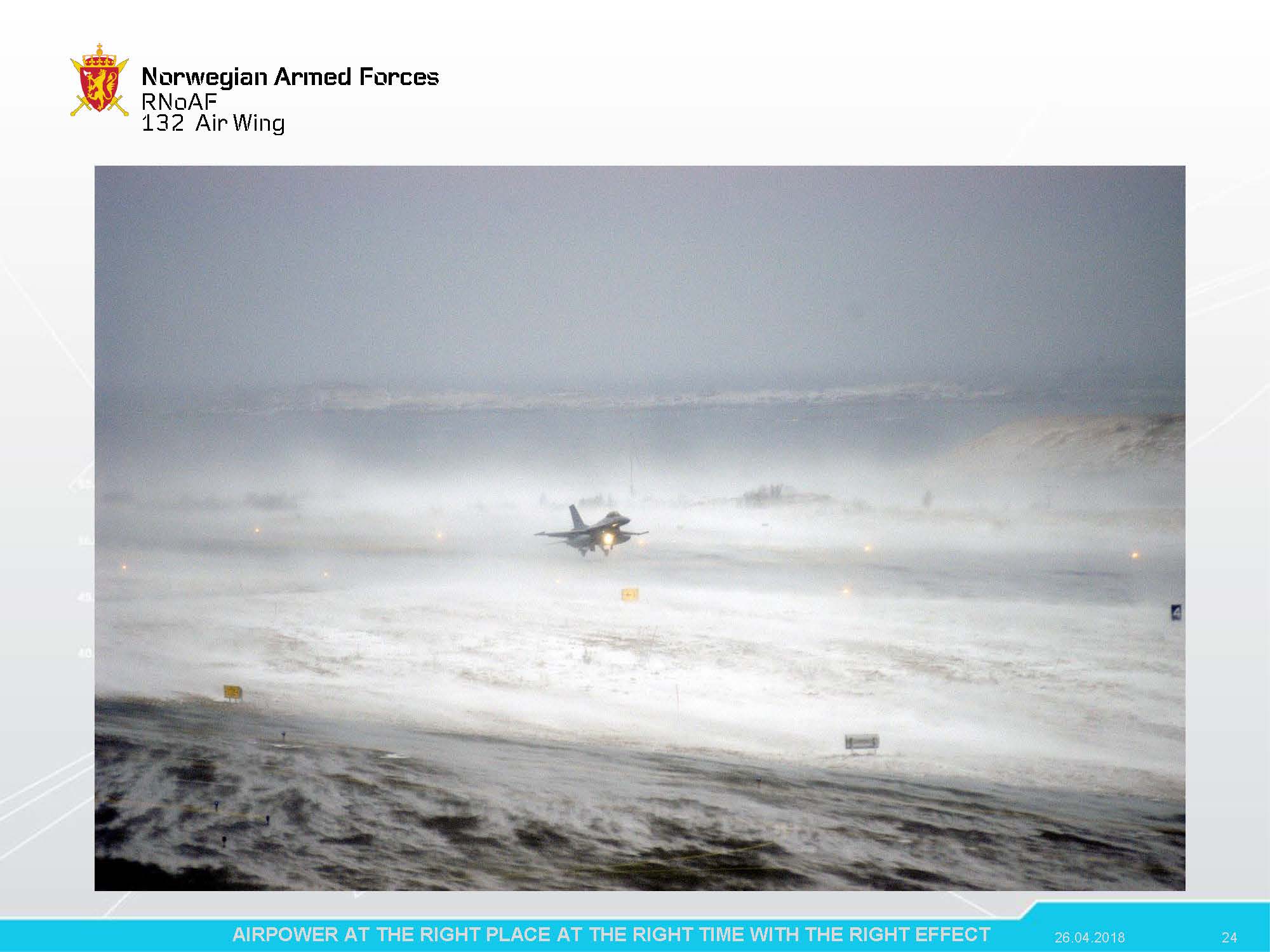
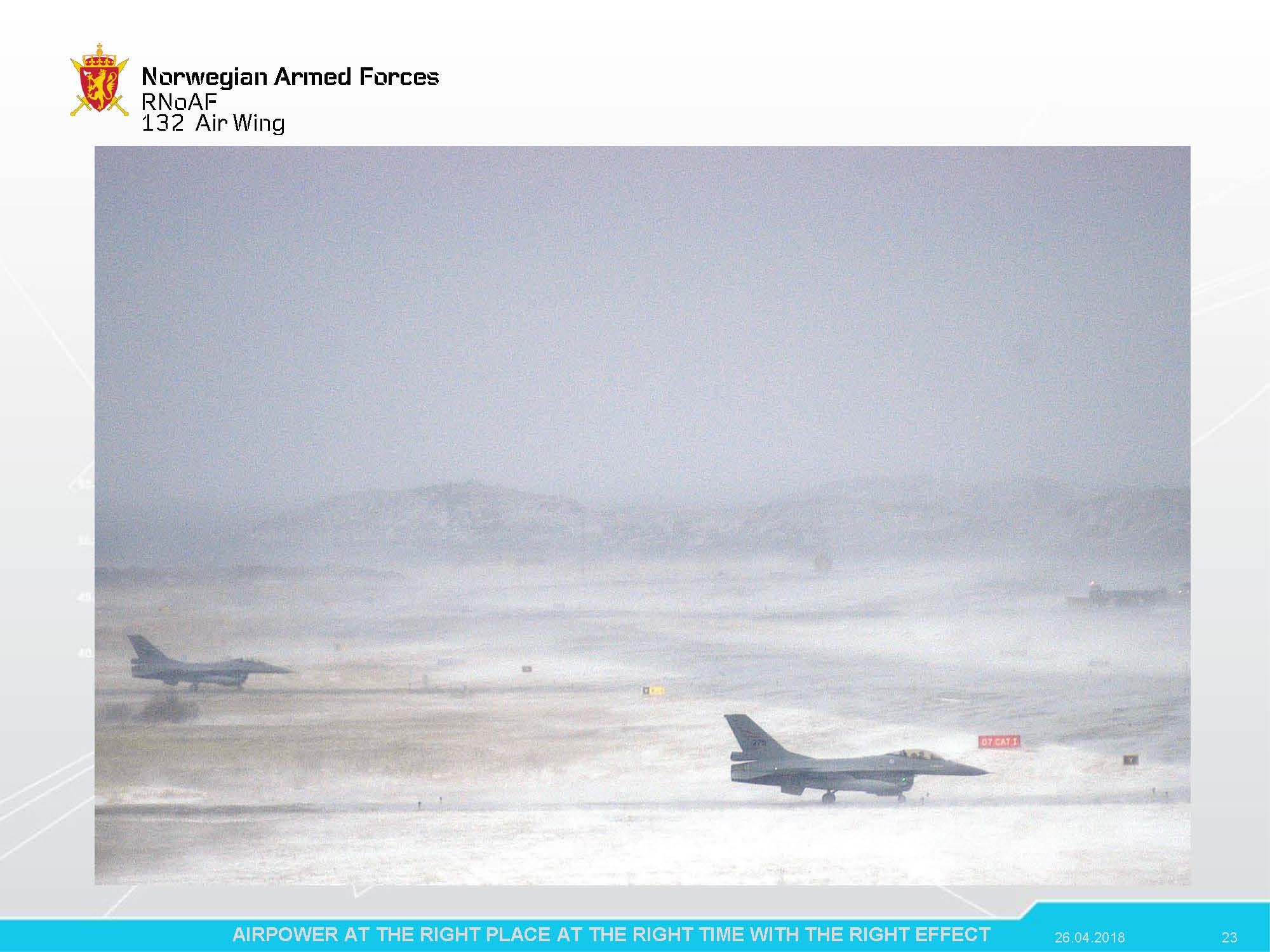
The operating conditions are challenging for sure with winds and temperatures which create challenges to operate combat aircraft, and which require a learning curve for allies who come to the airbase to work with the Norwegians as well.

The basic facts as provided by the Wing Commander with regard to Bodø were as follows:

  • Midnight sun between May 30thand July 12th;
  • Dark time between December 1stand January 9th;
  • Average temperature in summer time +13.6 degrees C and in winter time 12.1 degrees C;
  • Well known as a windy city and for having the world’s strongest maelstrom, Saltstraume;
  • And with the highest mountain in the area being Lurfjelltind, 1.284m above sea level

The following photo captures in some sense the challenge:

Put bluntly, operating a QRA force with a requirement to launch on 15 minutes from the order to launch is not an easy task.

And as a large airbase, Bodø has been a key one where allies come to operate in exercises with the Norwegian Air Force as will be done in this year’s Trident Juncture exercise.

And the larger shelters built to house an F-15 can take F-35s as well.

The local knowledge provided by the Bodø airmen are important to inform allies when they come to Norway of the challenges as well.

“We have beautiful scenery for flying but many hazards and dangers as well which we need to inform our colleagues from allied countries about when they fly in our area as well.

“Flying in mainland Europe is not the same as flying in our area for sure.”

But the base is being closed as part of a basing cutback to support defense economies in support of an overall defense modernization strategy.

The close down of Bodø does pose challenges as well.

The first challenge is that when the F-35 takes over from the F-16 it will operate at Evenes Air Station, which is not scheduled to be a main operating base for the F-35. 

The main operating base for F-35 will be the Ørland airbase.

This means that a detachment of F-35s to do QRA will be operating from Evenes and supported from Ørland, which is different from operating from a large operating base of the same aircraft.

Getting the deployment support right will be a challenge but one not dissimilar from the Baltic Air Policing or Icelandic Air Policing mission experience.

Currently, the Norwegian Air Force has about 200 personnel to support the F-16 base overall and from that force can support the QRA mission as well.

The second is that Bodø has proven to be a key allied support base and sorting through how best to base allies when they come for an exercise or a crisis is a work in progress, one the Norwegians take very seriously.

But as the future of Bodø is worked out, facilities could remain beyond the currently scheduled search and rescue force.

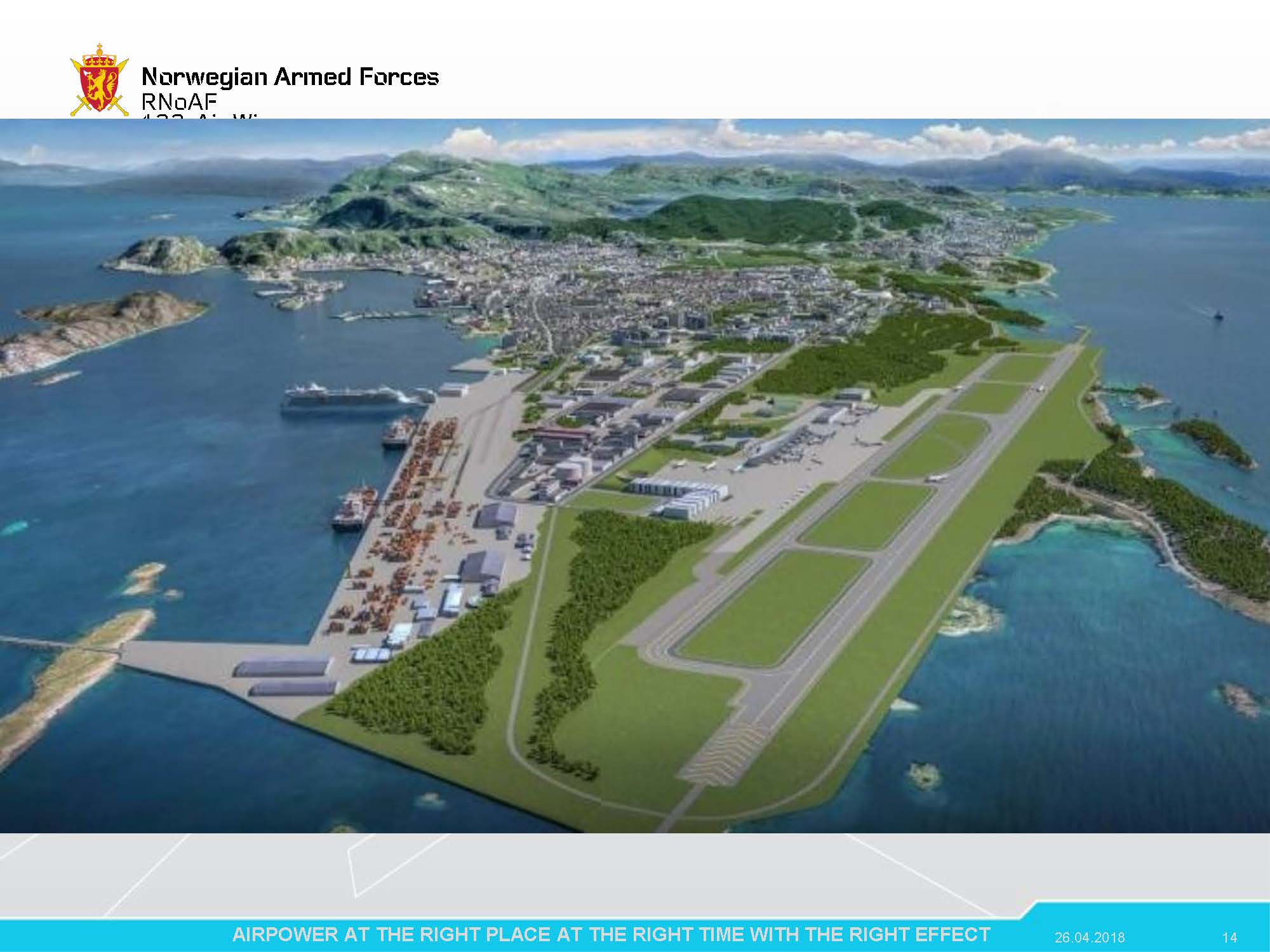
Shelters could remain in some areas, if the approach is not one of complete elimination, and residual support capabilities could be sustained as projected in the following drawing of a possible future Bodø situation.

A further challenge seen from the QRA perspective is that the F-35 is not an F-16 or a Typhoon for that matter.

What does a QRA mission conducted by an F-35 look like?

It is a multi-mission and low observable platform; how best to use it in the QRA role?

This is clearly a work in progress in which the Norwegians will be pioneering what I have called F-35 2.0, namely, how will use the aircraft as part of an overall combat transformation process?

Clearly, the Norwegians are modernizing their airpower and reshaping their infrastructure to support it and Bodø is part of that transition.

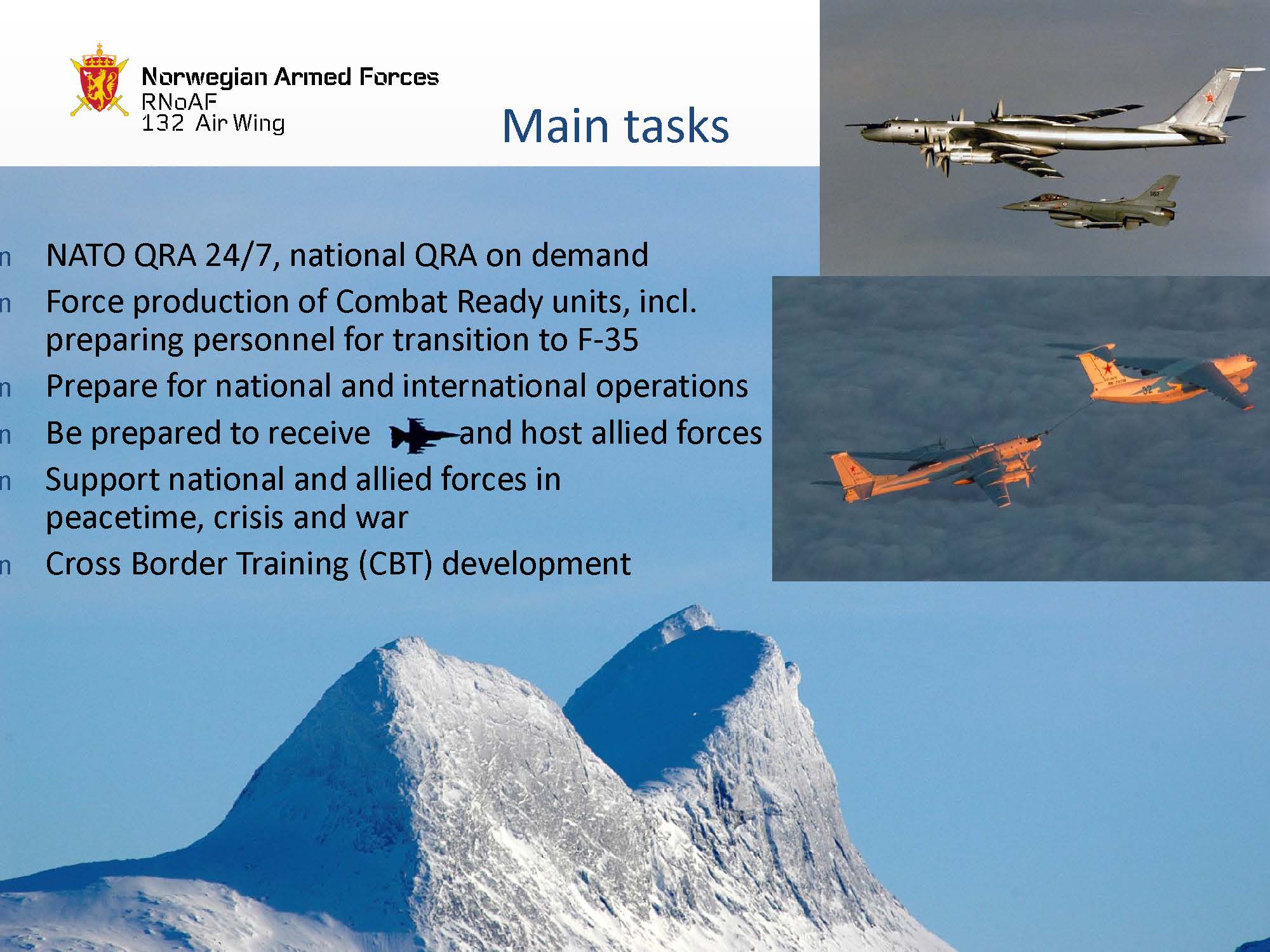
The current role of the Air Station was summed up by the Lt. Col. Homb in the following chart:

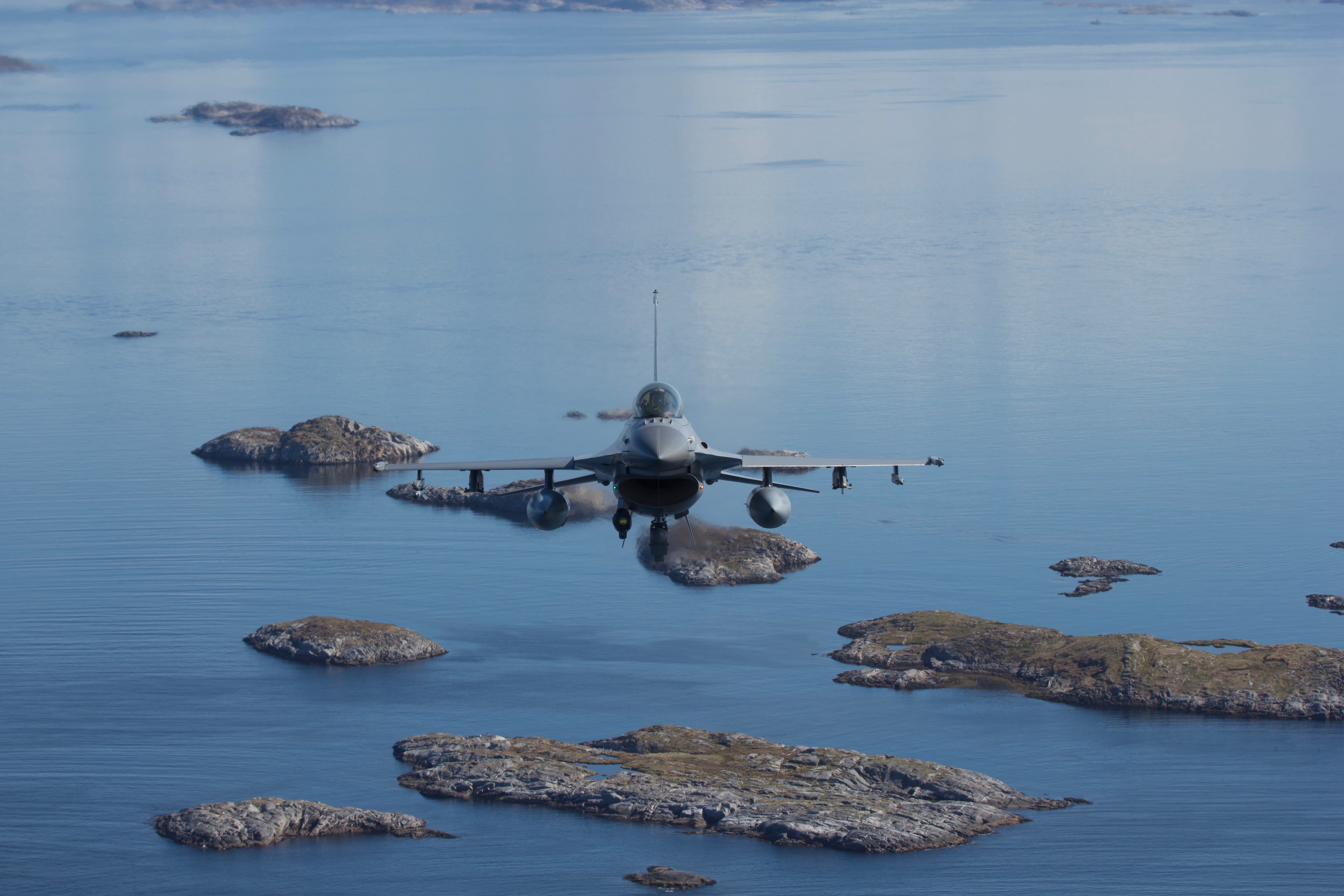
The first slideshow shows Norwegian F-16s participating in Arctic Challenge 2017 and flying form BODO airbase. Credit: Norwegian Ministry of Defence.

The second slideshow below highlights slides during the presentation by Lt. Col. Homb during the visit.


USMC Participates in Finland’s Arrow Exercise

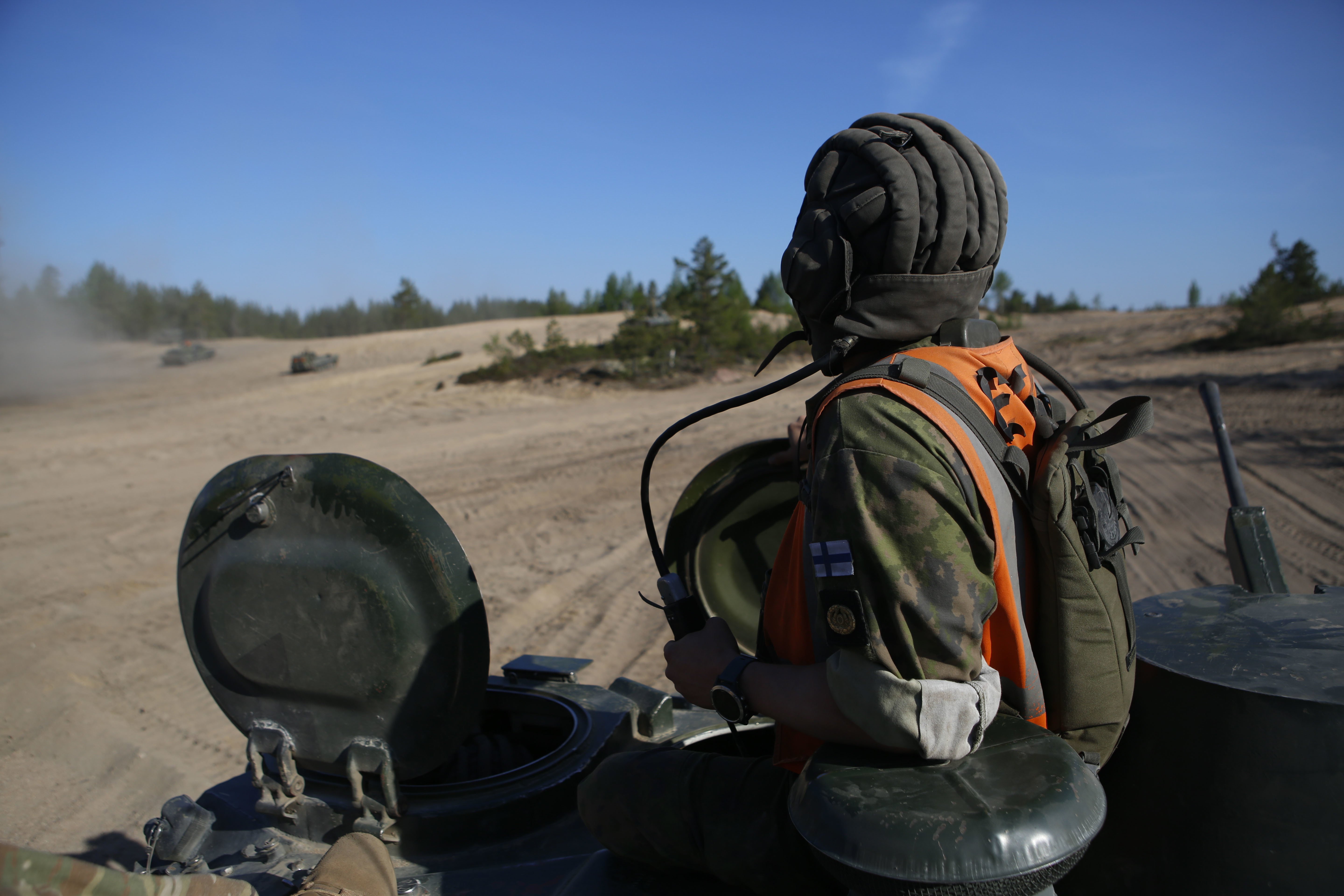
The Arrow Exercises are led by the Finnish Army and are part of training of Finnish forces based in large part on their mobilization capabilities.

For example, the Finnish Army provided this comment with regard to Arrow 17:

Arrow 17 is the final manoeuvre for many conscripts. There are also conscripts from Norway taking part in the exercise.

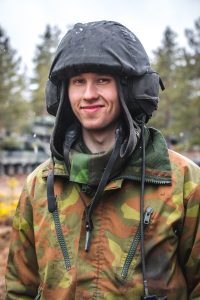
Tank trained Private Samu Kinnunen serves as a tank driver and drives a Leopard 2 A6 battle tank. Before Arrow 17, he wanted to train in new type of terrain. He also wanted to cooperate with international troops.

– All this action made me a little bit nervous, he tells.

There is one thing, that in particular sticks in Kinnunen’s mind: Leopard 2 A6 battle tanks.

– It was fun to drive a new Leopard 2 A6. I could really feel the force.

– It was an amazing experience to fire off a projectile. I had an opportunity to fire in spite of I am a driver. That was really nice, he says.

Cooperation is unbelievable

Samu Kinnunen finds that the cooperation between nationalities and branches has gone nicely.

– I think that we have all learned a lot. I have picked up on a lot from cooperating with Norwegian soldiers. I have also learned to piggyback terrains even better.

– Arrow 17 has been the culmination point of my time as a conscript. I will never regret this decision. I will never forget this exercise, he crystallizes.

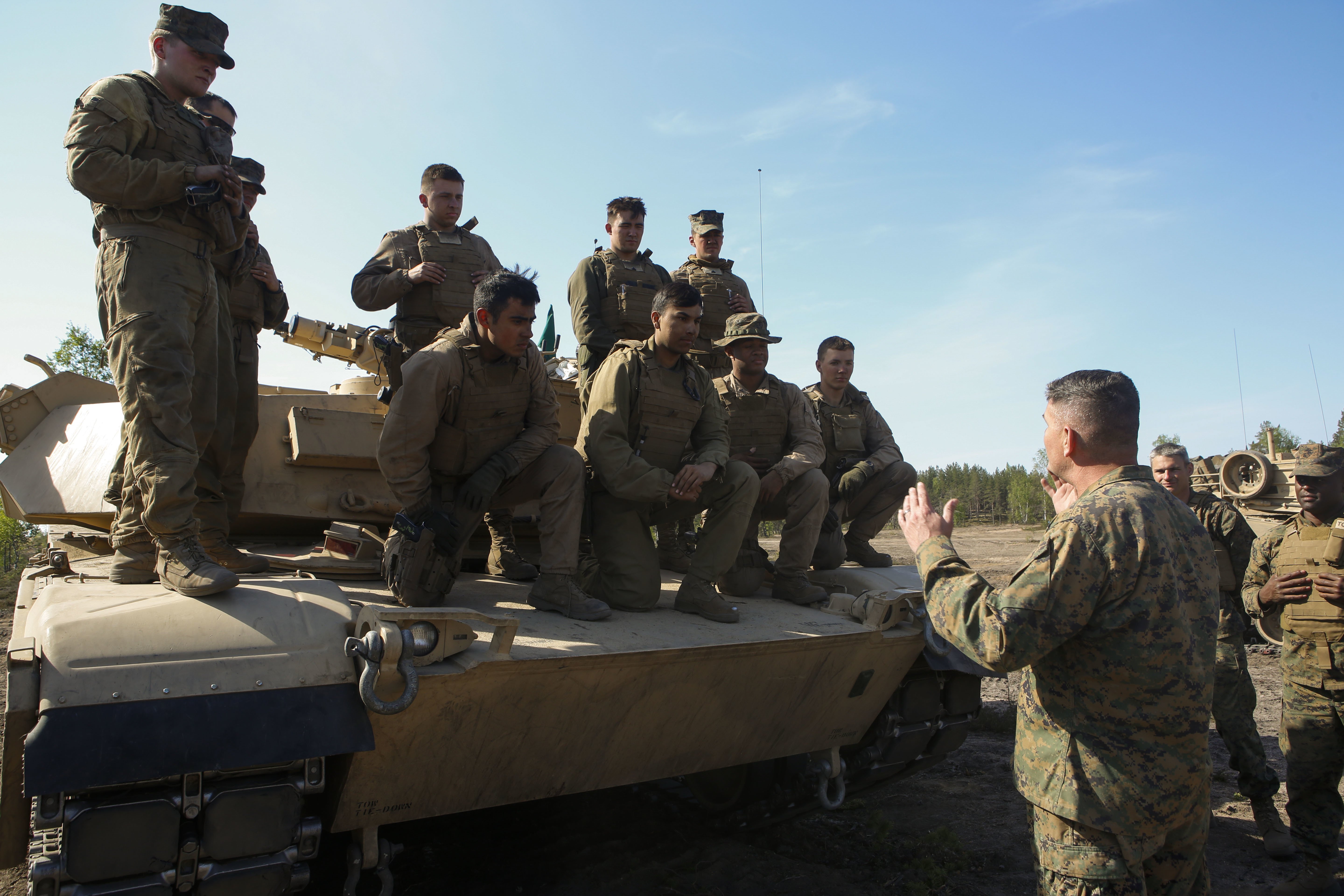
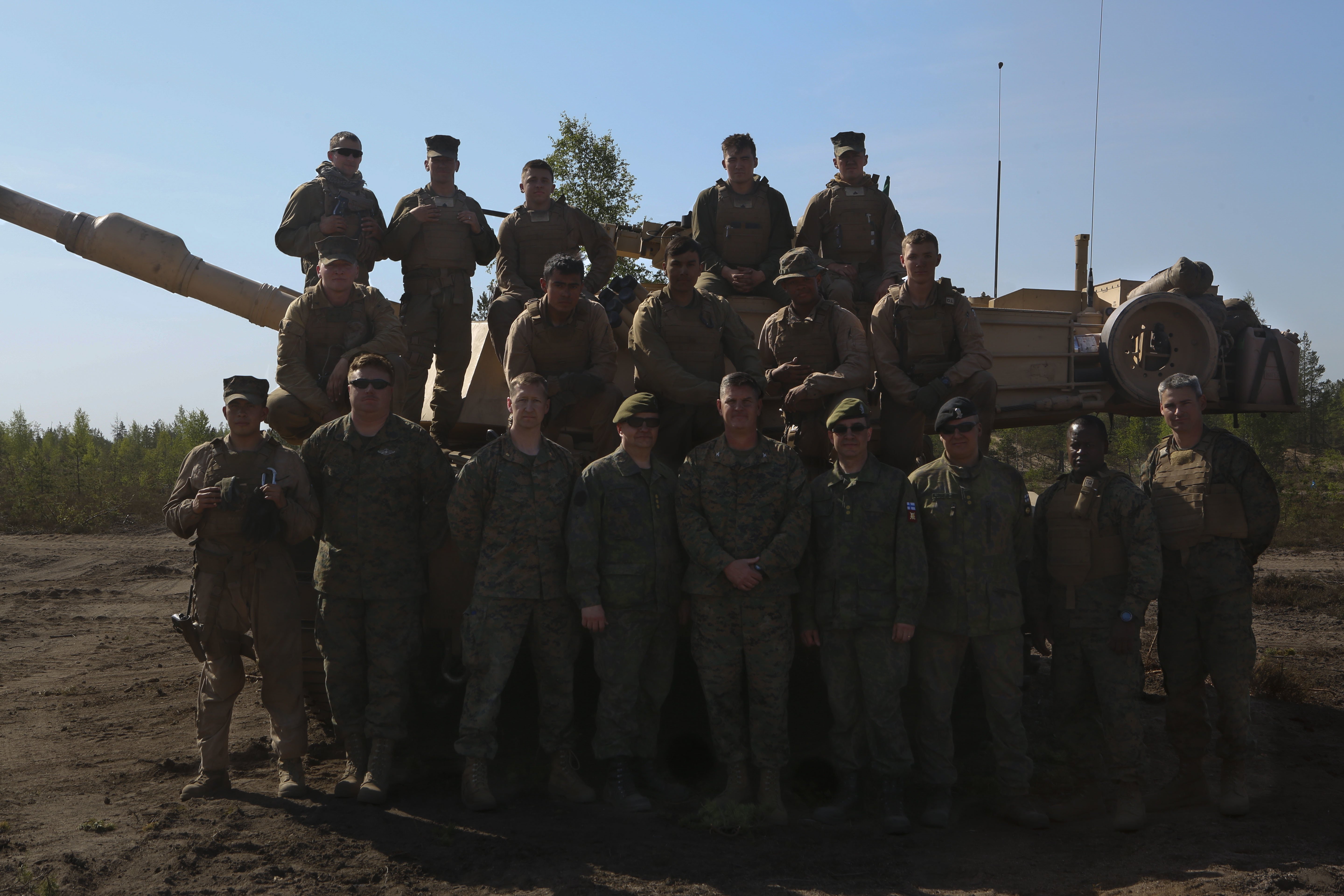
For this year’s Arrow Exercise, the USMC participated for the first time.

According to Martin Egnash in an article published May 21, 2018 in Stars and Stripes:

U.S. Marines withdrew tanks and weapons from storage caves in secret locations in Norway to fire tank guns and other weaponry alongside more than 3,000 Finnish servicemembers.

This was the first time Marines from the 4th Tank Battalion brought tanks out of the underground, rock-hewn lairs to be used in Finland, though they have been used in other exercises around Scandinavia. Exercise Arrow is an annual training event that began May 7 and wrapped up on May 18.

“All of our major equipment was drawn from the caves in Norway,” said tank commander Capt. Matthew Anderson, who participated in the exercise. “This exercise would not have happened without the caves. The equipment, forward-staged, allows us to conduct these exercises. Without it, it’s a whole lot less likely that we would have been as successful as we were.”

The Marine Corps Pre-Positioning Caves in Norway program began during the Cold War. The caves contain Marine vehicles, artillery, and enough food and ammunition for a brigade of 4,600 Marines to last in several weeks of combat.

Arrow is a Finnish-led event in which partner nations conduct live-fire war games to certify that Finnish servicemembers – most of whom are conscripted – are capable of fighting…..

The photos in the slideshow are credited to Sgt. Averi Coppa, U.S. Marine Corps Forces, Europe and Africa, May 15, 2018.