RAF Marham Prepares for Its Transition

05/24/2018

Last year, we visited RAF Marham and got an update on the progress with regard to the base in preparation for the arrival of its first squadron of F-35s.

This year, we visited RAF Marham and got an update in early May 2018 from Air Commodore David Bradshaw, Commander of the Lightning Force, Captain Adam Clink, Deputy Commander of the Lightning Force, and Group Captain Townsend, the RAF Marham base commander.

We will be publishing interviews with each of them.

Pictured are (from left) Captain Adam Clink, Air Commodore David Bradshaw and Group Captain Cab Townsend. Picture: Ian Burt

An article by Rebecca Murphy from the Eastern Daily Press published on November 27, 2017 provided a good overview on the base construction associated with the coming of the F-35.

Excerpts from the article by Rebecca Murphy follow:

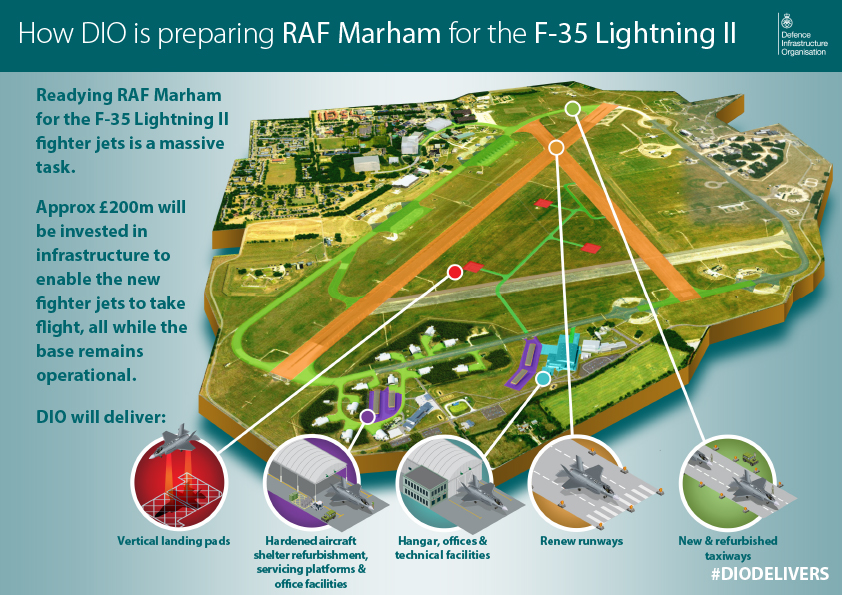
There are eight construction sites across the base. Works include refurbishment of the secondary runway which will be a short take-off and landing strip and construction of vertical landing pads.

A giant hangar where the RAF and Royal Navy’s aircraft will be maintained is being built along with a training centre which will house full Lightning mission simulators.

Buildings for the Operational Conversion Unit 207 Sqn, which will train future pilots, are also part of the works.
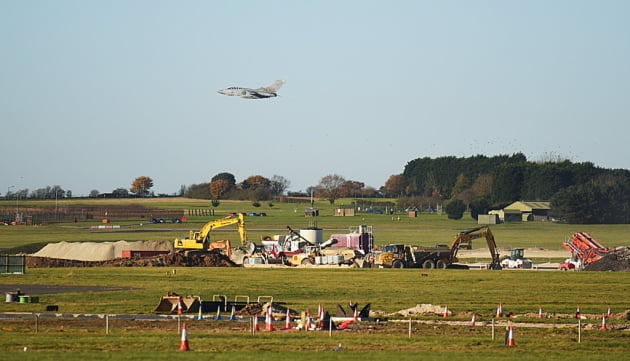
A Tornado GR4 flies over the site at RAF Marham where the second runway is under construction. Picture: Ian Burt

Group Capt Ian Townsend, station commander, said it was important to remember Marham is still home to the Tornado GR4, which he called a “stalwart” of the RAF.

The jets have 15 more months of operational service and are currently working in Iraq and Syria.

He said: “We absolutely have to maintain the operational focus on the Tornado GR4 community and they are working tirelessly day and night on that operation.”

However he added: “To have the F-35 coming here and securing the future of the base for the next 30 or 40 years is really significant.”

The F-35B is due to operate off HMS Queen Elizabeth aircraft carrier at the end of 2020.

Group Capt Townsend added: “In my four months here I cannot tell you how well support I think this air base is by the local community. That is brilliant.

“RAF Marham and the family of RAF Marham is not just us in the uniform or the civil service or contractors, it is really part of the region…..”

The featured photo shows (from left) Captain Adam Clink, Air Commodore David Bradshaw and Group Captain Cab Townsend. Picture: Ian Burt

Last year’s observations by Robbin Laird were published on 2017-04-13 and follow:

During my visit to the United Kingdom in March 2017, I had a chance to visit RAF Marham.

My host for the visit was Captain Nick Walker of the Royal Navy and we had the opportunity to view the various buildings in progress on the base as well as to receive a briefing from Commander John Butcher, the Chief of Staff at the Lightning Force Headquarters, and the commander of the first F-35B squadron to operate in the United Kingdom, which arrives next year.

I also received a briefing and had a chance to discuss the standup of the infrastructure with the impressive team supporting the establishment of the F-35B at Marham.

There is a staff of 17 at the Lightning Force headquarters supporting the operational standup with nine specifically focused on the infrastructure aspects.

They are busy simply in order to have the base ready next year to receive their first contingent of F-35Bs from their current base, which is in the United States.

The base will have a fully operational, training and support capability.

Training, maintenance and various centers are being stood up.

At the heart of the effort will be the National Operations Center in which logistics and operations are collocated and the U.S. will have personnel in this center as well.

According to Wing Commander Butcher: “Within the National Operating Center, you essentially have two main functions. There’s what we’re calling the Logistics Operating Center, and the Lightning Force Headquarters.

“The two of those together create the National Operating Center. Within the Logistics Operating Center, or the LOC, you have some very key elements of the Lightning project team that are currently based out of Abbeywood.

“The people who are doing the engineering supervision, the acquisition of the facilities, acquisition of the parts, the management of the supply chain, many of these will move to Marham and will sit alongside key industry partners.

“We have as well the Lightning Force Headquarters built within that same facility. Now if you plug in the USAF into that as well, which is our plan right now, then you have a very joint UK F-35 outlook with regard to the entire enterprise.”

There are multiple synergies involved with the F-35 and the standup of the Marham Air Base.

The first is the synergy from America to the United Kingdom and back again.

The UK has operators at Pax River, Edwards, Eglin and Beaufort Marine Corps Air Station.

17 Squadron at Edwards is a Test and Evaluation squadron and because the F-35 is a software upgradeable aircraft, tests will be a fact of life as the capabilities of the aircraft evolve over time, and the Brits are well placed at Edwards to be participants in this process. It should also be noted that the Dutch are on the ground floor with the Brits in this process as well as the Aussies.

The UK and the USMC are fully pooled at Beaufort with Marines flying British planes and vice versa. While there the Brits use the US Navy logistics system to support the F-35B whereas at Edwards they use the British system, so are learning how to work within both systems.

The Eglin engagement with the Canadians and Australians involved is with the reprogramming lab. “In effect, this is the apps center for the evolution of the software,” according to Commander Butcher.

According to Wing Commander Bucher, the build up at Beaufort will continue until mid-2018 when personnel will gradually transfer to Edwards or other facilities in the United States or come back to the UK.

“We will peak out at about 200 persons at Beaufort. We will bring 9 of our jets back next summer and five more later in the year.”

All of these bases are key elements in the UK element of the F-35 global enterprise.

The planes coming from Beaufort will provide the standup for the first RAF squadron. 617 squadron will be stood up next year as the Brits move from Beaufort to Marham.

The second synergy is between the standup among bases and lessons learned.

Marham is being stood up and generating operational lessons learned back to the United States, both in terms of the U.S.’s standup of its own bases abroad and at home, and, notably in terms of shaping a new operational dynamic for RAF Lakenheath.

The USAF F-35s at Lakenheath can become integrated into the operational, training and support elements in the UK as well, shaping a new approach for the USAF as well.

As Wing Commander Butcher underscored the possibilities:

“We want to take forwards everything that we’ve done in the pooling and implementation agreement in the United States, and try and see how we can transpose that into a UK model.

“We’re looking to have jets taking off, F-35A’s taking off at Lakenheath. Well, what if they have an issue and they need to land in Marham. Rather than take the time to move people, spares etc from Lakenheath up to here, what’s to say that we couldn’t conceptually have some maintainers from 617 Squadron repair the jet, sign off, send it flying again.

“Lakenheath is going to be busy base with the closure of Mildenhall. Increased efficiencies working with us would make sense.

“Could we potentially have F-35As operating out of Marham on a daily basis?

“How do we organize hot pit operations on each other’s base?

“One can easily see how that could buy you a lot of combat flexibility, in terms of how you might do maintenance operations.”

Commander Butcher noted that in the working group with Lakenheath, a 06-level maintainer is embedded in the UK Lightning Force Headquarters.

“He’s come in to do the interim scoping for how we might integrate the USAF into the Lightning Force headquarters facility, in particular the National Operating Center.”

Embedded in this synergy is a close working relationship with the USMC as well which can be seen at Beaufort or on the LHAs preparing for F-35B operations.

There is also a close working relationship between the new carrier community in the UK and with the US Navy as many UK officers have trained and operated aboard US carriers learning the US approach to the use of carriers, and shaping their thinking as well with regard to shaping their own approach to carrier operations with the F-35B.

The third synergy is between the Royal Navy and the Royal Air Force.

The UK is standing up a Lightning Force, not a RAF or Royal Navy force. The first two squadrons are being established on a 58/42 basis between RAF and RN pilots.

The first squadron, which will start the move from Beaufort in mid-2018 with full IOC by the end of 2018, will be badged as an RAF squadron and headed by an RAF officer (Wing Commander Butcher) who will be then relieved when the time comes by a RN officer.

And for the next two years, the squadron will work on integration with the Queen Elizabeth class carriers.

According to Wing Commander Butcher: “We are focused on the defense product, not the service one when it comes to the Lightning Force. It is important to do our business as a Lightning Force.”

The second front line F35B squadron, 809 Squadron, will establish at Marham and badged as a Royal Navy squadron with a RN officer in charge who could then relieved when the time comes by an RAF officer.

The fourth synergy is building the base while the three Tornado squadrons are operationally involved and on a busy schedule supporting RAF operations worldwide, notably in the Middle East.

This means that Tornado infrastructure not only needs to be maintained but not leveraged in any way until those squadrons leave Marham.

This means that the next Marham base Commander Group Captain Townsend will be charged with standing up the base for F-35Bs, the squadron arriving in two parts, and keeping the key strike function of Tornado operational until the very end.

It can be disruptive but the ops tempo of the base is the key determinant of the effort; not simply erecting new buildings for a new aircraft.

The fifth synergy is between the base and the new Queen Elizabeth Class Carriers.

The new carriers are coming on line concurrently with the base becoming operational and sea trials and preparing for the integration of the F-35 with the new carriers.

And this base will provide a key element of shaping the outreach from the UK into Northern Europe as well as Norway, Denmark and the Dutch Air Forces come on line with their F-35s as well.

In other words, standing up the base at Marham is part of a significant strategic effort by the UK and at the heart of shaping 21t century approaches to deterrence.

When joined with what is happening from Lossie, to Iceland to Norway with P-8s, the upgrades to Typhoon, which will make it a core complement to the F-35B fleet and the reshaping of the ISTAR fleet at RAF Waddington, major changes are coming to the UK air and naval forces.

The rebuilding program itself is extensive.

Virtually all of the runways need to be repaved. And the modifications of the hangers would be so significant for the F-35, that it was preferable to tear down buildings and build new ones to house the new force.

As the head of the Project Anvil project put it: “This is one of the few projects I’ve been involved with where we have actually demolished buildings, cleared the site, and built new buildings rather than simply refurbishing old ones.”

The team implementing Project Anvil as it is called underscored that the schedule is demanding to get it done in time the arrival of the jets and the standup of the squadron. The focus of the effort currently is on what is called the FOA, namely, Freedom of Action enablers for the squadron – the runway, the maintenance and finishing center, the Integrated Training Center and the National Operating Center.

And the second phase of Project Anvil can only start after the Tornados leave Marham and preparations for the second squadron can put in place.

The team has worked hard to ensure that the capability can be delivered on time.

One example was working with the planning authorities in the region for the upgrades of the power grid necessary to support the F-35s. By providing information on very timely basis, the planning authorities were obtained and the project kept on schedule.

And all of this is being generated in a time of profound political change within NATO and in terms of the threats being faced by NATO. Clearly, an effective standup of capabilities at Marham and their integration into a broader defense effort is crucial for the defense of the United Kingdom and for its core NATO allies.

Captain Nick Walker provided a good overview on the challenges and the opportunities inherent in setting up a new joint base at Marham with the coming of the Queen Elizabeth class carriers.

“I think there is fantastic opportunity with the restructuring of MARHAM to create a truly world-class F35 facility.  The investment in the infrastructure, particularly the National Operating Centre and maintenance facilities, will place MARHAM right at the fore of F35 operations and make it the hub in Northern Europe.  Only Italy, with its Final Assembly and Check Out (FACO) facility at Cameri will come close to what MARHAM can offer.”

“And the fact that we are building it from new rather than modifying existing buildings really does present great opportunities to make the structure both future proof but more importantly design it from the outset to support multi-national F35 operations.”

“On the carrier angle, we have a similar opportunity.  The UK is buying F35Bs, which are designed to operate from ships as well as land bases.  The UK has determined to regenerate a carrier strike capability at the core of its power projection capabilities, and therefore we have purposely opted for an embarkable F35 variant.

“The carrier was then designed specifically to support F35B operations – the ‘aviation flow’ around the aviation, Carrier Strike Group and Intelligence planning and maintenance spaces has been very carefully thought through to ensure the best possible service and most efficient flow for the embarked squadrons.”

“Given that the design is now fixed and the nature of carrier construction means there is little scope for future alteration, we should take the opportunity to design the infrastructure at RAF MARHAM to emulate as far as possible the embarked flow and processes.”

“The F35B squadrons will spend a good proportion of their time embarked, and making the transition from ashore to afloat as seamless as possible just makes sense.  The ‘shock’ of embarking is therefore reduced, processes are familiar rather than alien and the whole experience of taking squadrons to sea will be more efficient, safer and easier to manage.”

“It helps to make flying to and from the carrier as natural as flying at the Main Operating Base – the embarked elements become second nature because the ashore processes resemble them as closely as possible.”

“I accept that you cannot replicate a carrier at a land base, but given the MARHAM infrastructure is being designed from new, it makes perfect sense to build in as much commonality as you can.”

“A good example is the process of storing, collecting and returning the pilots’ helmets.  This is done at a particular point in the pre-flight flow on-board, so it makes sense to have it at the same point in the flow ashore – the process is therefore the same both embarked and ashore.”

“The Lightning Force has looked at the helmet process on-board and will incorporate a similar process at MARHAM.  Small things, but they do make a difference and keep the F35B Force aware of, and familiar with, their embarked processes as far as possible while ashore – it makes the return to sea smoother, familiar and safer.”

In short, the rebuild at Marham is at the heart of the modernization or indeed transformation of UK forces and a significant impact as well on allied thinking, including the United States.
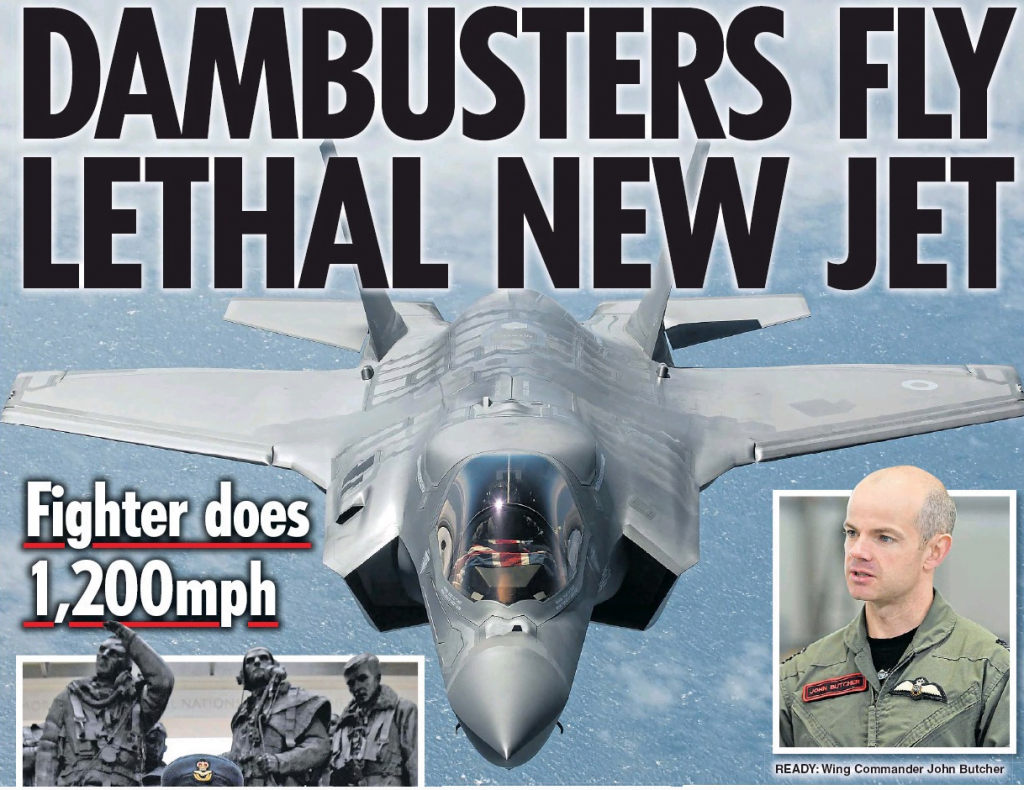
And getting into the spirt of things, here is the cover story from the Daily Star published on May 17, 2018:
Daily Star Cover May 17, 2018


Nordic Cooperation: A Stronger North?

05/23/2018

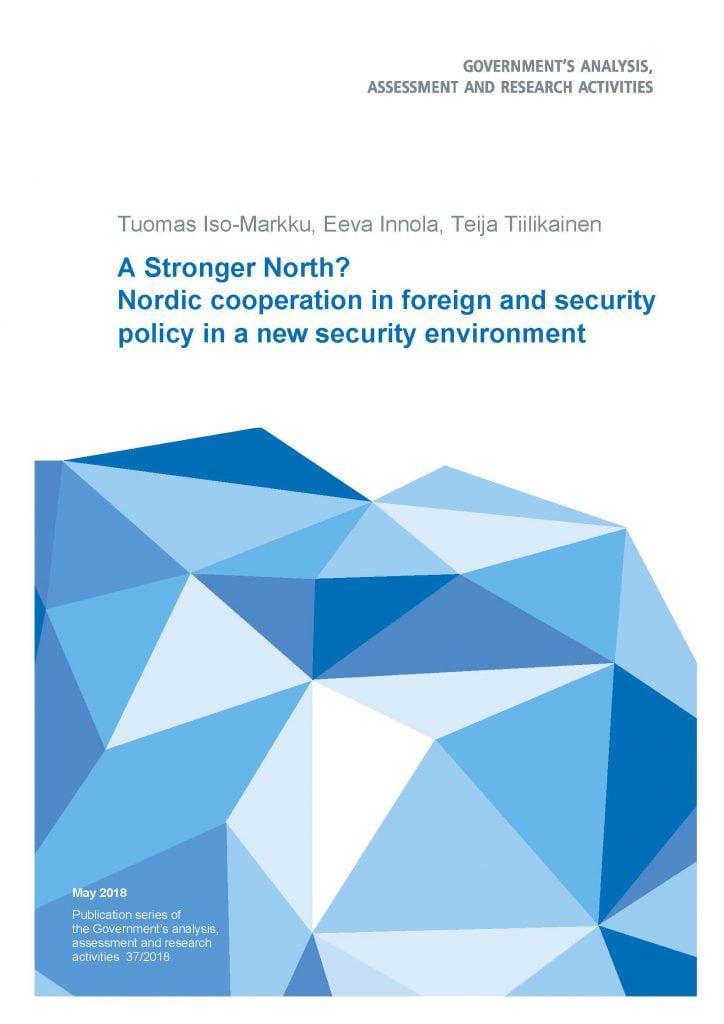
In a new report produced under the aegis of NORDEFCO, the Nordic cooperation effort is assessed and analyzed.

The authors of the report, Tuomas Iso-Markku, Eeva Innola, and Teija Tiilikainen, focused on the history and the way ahead with regard to Nordic cooperation.

https://www.fiia.fi/en/project/a-stronger-north-developing-nordic-cooperation-on-foreign-and-security-policy

Eeva Innola is a research fellow in the European Union Research Program.  Thomas Iso-Markku is a research fellow with the European Union Research Program. And Teija Tiilikainen is editor in Chief of the Finnish Journal of Foreign Affairs.

nordic-vnteas-report_final

The purpose of the report was identified as follows:

It is against the backdrop of the recent changes in the Nordic-Baltic region, the EU, NATO, the transatlantic relationship, international institutions and the global power political set-up that this report sets out to assess both the current state and future potential of Nordic foreign and security policy cooperation.

Where does Nordic foreign and security policy cooperation stand in an international environment marked by the above-mentioned developments?

Do these developments imply new challenges, opportunities and/or constraints for Nordic foreign and security policy cooperation?

The aim of the report is two-fold.

Firstly, it seeks to provide an overview of the current state of Nordic foreign and security policy cooperation. This entails taking a look at its formats and structures as well as recent trends in this cooperation.

Secondly, the report seeks to analyse in more detail possible gaps, constraints and problems as well as untapped potential in Nordic foreign and security policy cooperation.

The report is comprehensive and provides an very helpful overview on the dynamics of change with regard to Nordic cooperation.

The report concludes as follows:

There are many reasons to expect a coherent and coordinated Nordic approach to a multitude of issues in the international arena. Nordic countries are united both through their societal values and geopolitical position.

As Northern small or middle-size powers, their international position and  influence benefit essentially from joint  positions  and action. 

Due to their significant economic output, successful societal model and respected tradition of international mediation and peacekeeping there is a joint power potential within the Nordic countries that should not be underestimated.

Furthermore, Nordic cooperation is decidedly uncontroversial and enjoys a solid legitimacy among the Nordic populations.

This report studied how this power potential is used and the kind of hurdles that obstruct a more concerted Nordic action in foreign and security policy. 

The hurdles are political, institutional and cultural.

When the Nordic brand in international relations is quite clear and coherent externally, the different historical traditions and identities come to the fore internally.

The statement according to which the further away from the Nordic region one is, the better the Nordic foreign policy cooperation functions, is highly descriptive of the situation.

The study in hand confirms the key conditions for further enhancement of Nordic cooperation in foreign and security policy. 

Due to historical experiences and identities, the Nordic community is important but still does not form the primary political community for any of the Nordic countries.

It is rather seen to complement the main “alliances”, which in the case of Denmark, Norway and Iceland is NATO, and in the case of Finland and Sweden the EU.

Irrespective of the commonality of values and geopolitical interests among the Nordic states, Nordic cooperation has to adjust to the political and institutional requirements of NATO and the EU.

Adherence to different alliances does not mean that common Nordic interests could not be taken into account and promoted by the Nordic members of the respective two alliances, NATO and the EU.

This is what happens, but there are limits to it as it is by no means supposed to challenge the broader consensus-building in the EU or NATO. It is obvious that the possibilities for influencing the EU and NATO as common arenas for European and transatlantic policy-making remain underused from the point of view of common Nordic interests.

Major decisions in the EU and NATO concerning their policy priorities or strategic approaches, for instance, do affect the whole Nordic community irrespective of the Nordic states’ affiliation with the organisations.

The preparation of such decisions should therefore be prioritized on the Nordic agenda and be linked with more thorough information-sharing and policy coordination.

Broader Nordic-Baltic cooperation could duly strengthen these efforts to influence the EU and NATO. Could more efficient Nordic (and Nordic-Baltic) coordination lead to a more proactive policy by the respective Nordic members of the EU and NATO with regard to questions of shared Nordic interests?

Another key condition of Nordic cooperation in foreign and security policy – linked to its character in complementing primary alliances – is its informal nature. The only exception to this can be found within Nordic defence cooperation, where the set-up is more formal.

Informality means that there is no single institutionalized framework for foreign policy cooperation, nor is there any systematic planning or a coherent set of policy instruments.

What is equally missing is overall strategic leadership, which would define the key Nordic priorities and interests for this cooperation in the longer perspective.

Nordic cooperation takes place in a variety of different contexts, starting from dense contacts between individual civil servants and policymakers, and covering a whole range of multilateral fora, both with an entirely Nordic character (N5) and larger formats (NB8, e- PINE, N5+V4 and Northern Group).

Informality is highly valued as it enables the formation of a fully needs-based agenda.

The Nordic meetings can address issues of topical concern and interest.

Informality also means that there is no need to decide whether Nordic foreign and security policy cooperation should include the Nordic states with or without the Balts, as an enlarged Nordic community would be in the interests of many but not all.

Informality is clearly perceived to be an asset for Nordic foreign policy cooperation, but it is also a reason for the highly reactive nature of this cooperation. Without any joint policy- planning capability, the Nordic agenda can hardly contain more systematic and long-term efforts to influence the political environment in a more proactive manner.

In order to lead to more concrete outcomes, Nordic foreign policy cooperation should also have clear foci, which seems to be at odds with its needs-based agenda-setting.

To ensure full use of the Nordic potential, Nordic foreign policy cooperation should adopt a dual-track approach. Within the general framework of informality, it should still be possible to agree on a number of concrete policy priorities and adopt a joint implementation plan for advancing them.

In order to safeguard both the legitimacy and high political character of these joint  projects, their  planning and  implementation  should stay  within  the Nordic foreign ministries by taking the form of a joint Nordic task force.

These priority projects could contain a common Nordic initiative or effort within a multilateral institution or be more targeted towards the immediate  Nordic-Baltic environment. 

The projects should fully  respect  the Nordic commitments within EU and NATO contexts. These kinds of priority projects would enhance both the concrete content and continuity of the Nordic foreign policy agenda, but without challenging its informal character.

A third cornerstone of Nordic foreign and security policy cooperation can be found in its institutional complexity. The form of cooperation varies concerning its participatory structure and level and there is a lot of overlap between the various forms.

The informal foreign and security policy cooperation and the more institutionalized defence cooperation take place in separate realms with obviously little interaction existing between them.

In addition to the multilateral forms of cooperation, a range of systematic forms of bilateral relationships exist, with each of them having their own background and goal-setting.

Even if there is no possibility of significantly streamlining and simplifying the arenas for Nordic foreign and security policy cooperation, an effort should still be made to strengthen synergies between its different forms.

First, Nordic defence cooperation should be better anchored in a more systematically pursued Nordic consensus concerning the developments in its strategic environment and the emerging threats.

This is a section that is currently missing from the extensive cooperation agenda.  All of  the  Nordic countries  produce  such an  analysis separately, in the framework of their white books of security and defence, which also have linkages to the corresponding strategic documents produced by the EU and NATO.

A Nordic consensus on the strategic environment could be elaborated, for instance by reviewing the separate Nordic documents and identifying converging and differing elements in their analysis.

The review could bring together the ministries of foreign affairs and defence at different levels with the process and outcome of the debate, providing a more solid common political starting point for Nordic defence cooperation both in the NORDEFCO framework and in the bilateral format.

Other types of synergies between the different forms of Nordic foreign and security policy cooperation should also be enhanced. One question to be answered deals with the added value that existing bilateral relationships might provide for the broader Nordic framework if efficiently used.

Are the good practices emerging within a particular bilateral relationship efficiently presented in the multilateral Nordic context in order to possibly be used in another bilateral context?

Existing bilateral practices extend from the exchange of civil servants to joint political visits to third countries, and further to different forms of operational cooperation between various branches of the armed forces.

 Finally, one question that needs to be studied further is the discrepancy that exists between the external conception about Nordic unity in international relations, and the more divided and fragmented situation internally, where differences in policy content and the value of Nordic cooperation both come to the fore.

If the external view is much more coherent than the internal reality suggests, could it possibly be enhanced, and also be more efficiently utilized without major changes being made to the internal system of policy coordination?

The pragmatic Nordic political culture is free of political symbols and a political rhetoric typical of great powers. The forms or outcomes of Nordic foreign policy cooperation are rarely celebrated with attention-grabbing headlines or references to strong Nordic unity or loyalty. Among the very few recent exceptions to this modest outlook was the Nordic solidarity declaration, which was nonetheless cautious in tone.

This raises the question of whether the Nordic countries should change this low-key style and start marketing the Nordic achievements, including unity and numerous common goals in foreign and security policy,  much  more visibly  than  what is  currently  the case. 

The conceptions that exist about Nordic unity could also be utilized for the purposes of stronger communication about the common values underpinning this unity, and about the goals into which they translate at the international level.

The featured photo show Prime ministers Stefan Lofven of Sweden, Juha Sipila of Finland, Lars Lokke Rasmussen of Denmark, Erna Solberg of Norway and Iceland’s Minister of Social Affairs Eyglo Hardardottir pose for a family photo in Copenhagen.


Trident Juncture 2018, the Defense of Norway and Working 21st Century Deterrence in Depth

By Robbin Laird

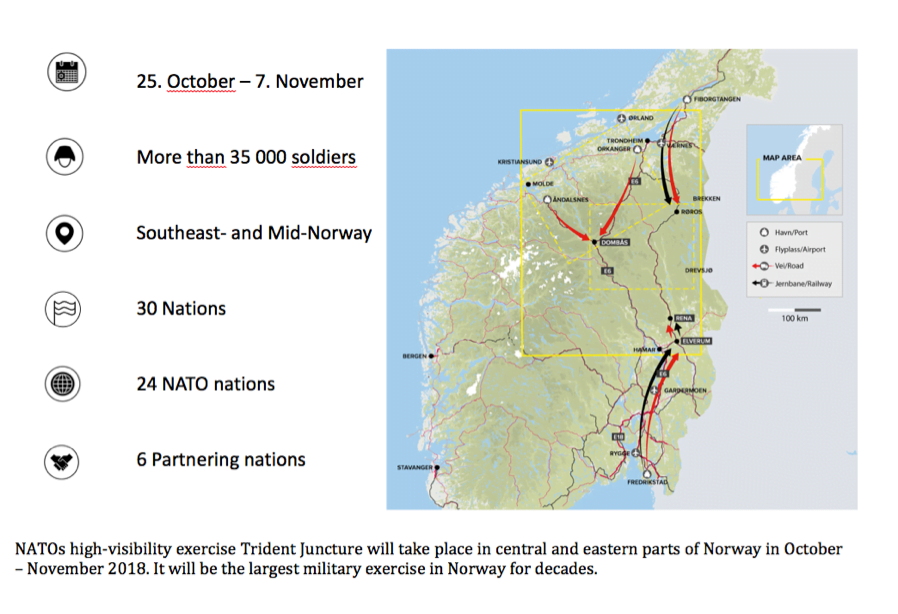
Trident Juncture 2018 will be a major NATO exercise. As the head of the Transformation Command in NATO, General Mercier,  put it last year:

“NATO needs to hold exercises on a large scale.

“Only this way are we able to test all the levels in the alliance: From the troops on the ground and all the way up to a strategic level, NATO needs realistic training, where we can combine operations in the air, at sea and on land. In Norway we get everything, this is one of the best places to train in Europe.”

It will be the largest exercise hosted in Norway for a very long time.

The first Trident Juncture exercise took place ​in Portugal, Spain and Italy from 3 October to 6 November 2015.

Around 36,000 soldiers and other personnel from over 30 nations took part in the exercise.

The next Trident Juncture will be held in central Norway in 2018 and is expected to be of the same size. Norway has a long tradition of hosting major allied and multinational mil​​itary exercises.

Among them is Cold Response.​​​​​​ Trident Juncture 2018 will consist of a live exercise in October ​and November and a Command Post Exercise in November 2018.

But seen from a Nordic perspective, the exercise is coming at a time when Norway is modernizing its defense force, working ever more closely with the other Nordics, including cross-border training with Sweden and Finland, and re-invigorating its total defense approach.

Indeed, with the return of conscription in Sweden, with the continued commitment to a national mobilized armed forces in Finland and to a re-emphasis on the total defense concept, the Nordics are leading the way within Europe on a wider societal commitment to defense.

With the importance of crisis management in the region, an ability to work effectively with allied forces operating on NATO territory supported by a total defense approach within Norway, is part of the effort to calibrate force capabilities appropriate to deal with regional crises.

As Norway reworks its air basing structure, and modernizes its air force, army and navy, along with changes in the broader North Atlantic, working deterrence in depth is underway as well.

For example, the UK will add a new F-35-enabled carrier able to operate in the region as a mobile base able to work with other F-35s in the region to shape a wider combat grid to support moves on the strategic and tactical chessboard necessary to deal with regional crises.

But to shape such capabilities will require an effective exercise regime, one in which Norway works to support allied forces appropriate to meeting effectively specific regional crisis situations.

It is not just about being reassured by importing allied capability, more generally; it is about integrating Norwegian with appropriate allied forces to meet specific crisis management challenges and military threats in the region.

During my visit to Norway during April 2018, I had a chance to discuss Trident Juncture with several Norwegian defense and military officials.
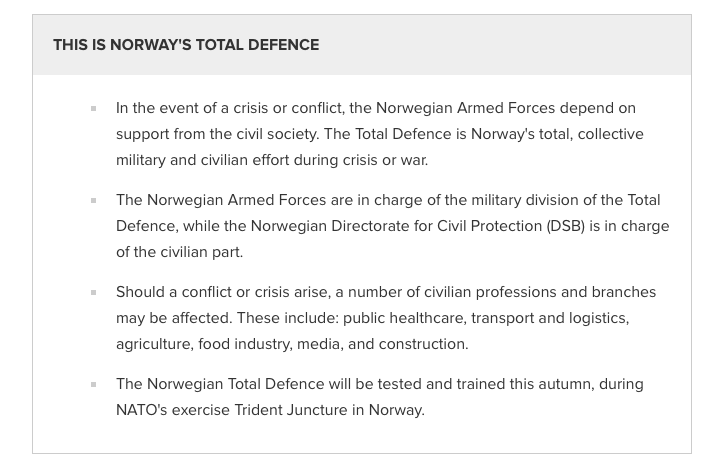
And at the end of the visit had a chance to focus specifically on the exercise and its interconnection with the Norwegian Total Defense Concept with Col Lars Lervik at the Norwegian Ministry of Defence who is working the preparation for the Trident Juncture 2018 exercise.

According to Col Lars Lervik: “A key focus of the exercise from the NATO side is exercising our ability to conduct high intensity operations in a multi-national environment.

“What we’re looking at here is confronting an opponent who has the whole arsenal available.

“We need to be able to function not only as individuals and individual nations, but actually function together.

“This is a key focus of the exercise.”

Trident Juncture 2018 is also a command post exercise as well and given that Norway is reworking its C2 capabilities as part of defense modernization, the exercise provides an opportunity to input multinational operational training as well into the transformation process.

Col Lars Lervik highlighted that “It is very important to ensure that we have the procedures in place necessary to operate an integrated force on Norwegian territory in a higher intensity operational environment.

“We are starting really to be serious about C2 again.

“We are working to shape an effective C2 template going forward.

“We need to make sure that all our structures are integratable with NATO.”

“It is not a coincidence that Norway volunteered to be the host for this exercise.

“We’ve been focused on getting NATO to focus back on collective defense for quite a while.”

The Norwegians are working at three levels with regard to C2.

The first is at the national level.

The second is at the NATO level.

The third is at the bilateral C2 level, namely working with the US, the UK, the Nordic non-NATO members as well as other NATO members, such as Germany.

There is a substantial maritime component within the exercise, which gets at the broader extended deterrence piece whereby the sea base becomes integrated into the defense of Norway and NATO forces operating on Norwegian territory as well.

Col Lars Lervik underscored that “Working with allied forces is also about the capability of Norway able to receive NATO and allied reinforcements.

“And that’s when a total defense concept comes into play for us to be able to fulfill our host nation support commitments.”

For Norway, the total defense concept is a focus on the ability of the civilian side of society to support military operations. 

For example, the Norwegians do not have a specialized military medical service. The civilian side is mobilized to support both Norwegian and allied medical needs in times of conflict.  This will be exercised during Trident Juncture 2018.

Col Lars Lervik emphasized that “We need to be able to support NATO allies when they come into Norway.

“I think we’re making real progress with regard to civil society’s ability to support the Norwegian and allied militaries.

“For example, when the US Marines arrive in Undredal, Norway (in the middle of Norway), it could be a civilian bus driver on a civilian bus who will transport them onward to their next location. They might pick up fuel from a local civilian Norwegian logistics company.

“It is about the resilience as well with regard to civilian society to support military operations.

“We need to understand and to enhance how the modern society is able to function in a time of crises and war.”

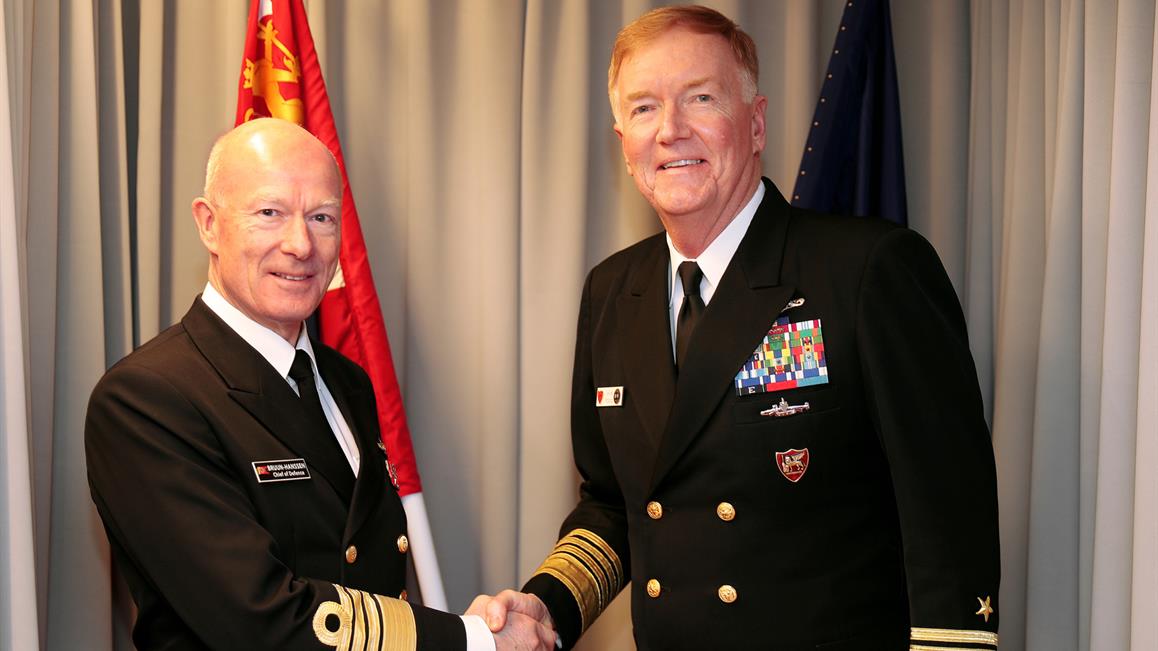
The featured photo shows the commander of NATO’s Allied Joint Force Command Naples, Admiral James Foggo, meeting with Norwegian Chief of Defence, Admiral Haakon Bruun-Hanssen, February 2018. Photo by Torbjørn Kjosvold
Moscow and Missile Defenses: An Update from the 7th MCIS

By Richard Weitz

Russia’s national security elite do not perceive U.S. missile defenses as the most serious obstacle to strategic arms control.

Their concerns mostly focus on U.S. long-range conventional strike weapons, U.S. space-based systems, NATO nuclear weapons sharing, U.S. military activities around Russia, non-ratification of the Comprehensive Test Ban Treaty, and U.S. strategic defenses.

The Russian government also demands that additional countries—especially Britain, France, and China—take part in future nuclear arms control agreements as well.

These insights derive from recent meetings with Russian officials and experts in Moscow and Washington.

Most Russians recognize these sweeping objectives are impractical.

They acknowledge that a more plausible goal, at least for the next few years, will be measures aimed at enhancing strategic stability rather than new arms control treaties.

Indeed, Foreign Minister Sergei Lavrov told participants of last month’s Moscow Security Conference that the Russian government wants a comprehensive dialogue with Washington on all aspects of strategic stability.

Russians complain that their U.S. interlocutors routinely dismiss their arguments as unimportant or self-serving.

Rather, they think that Americans have perceived Russia as weak and even unworthy of having its concerns or interests taken seriously.

They are not entirely wrong, so this column strives to communicate Russian views as well as correct them.

In his conference remarks, Defense Minister Sergei Shoigu termedU.S. missile defenses as “a serious destabilizing factor” since Russia will strengthen its offensive forces to overcome these competing defenses.

But Shoigu and other Russian officials focused more on other causes, especially NATO’s military buildup near Russia’s border, which is “spurring a new arms race.”

Resolving the Russian-U.S. missile defense dispute would therefore not generate much positive impact in bilateral relations.

In contrast to previous years, the Moscow Conference did not hold a missile defense session while convening panels on terrorism, soft power, and several regional subjects.

On February 5, the central limits of the New Strategic Arms Reduction Treaty (New START) finally entered into force. Through February 2021, these ceilings restrict Russian and U.S. air, ground, and maritime nuclear-armed ballistic missiles and warheads.

Russian experts describe New START as the first “fair” treaty since all previous ones allegedly favored Washington by imposing more severe limits on Soviet and Russian advantages rather than U.S. ones—limiting heavy ground-launched ballistic missiles but not submarine-launched ones.

New START supports Moscow’s claim to strategic parity with Washington, in both status and capabilities.

Russian officials have voiced some concerns about U.S. compliance with New START, but these are unrelated to missile defense.

For example, the Foreign Ministry has objected to how the U.S. government is converting certain former strategic delivery vehicles, such as some B-52s, to a non-nuclear role and excluding others, such as some missile silos designated for training purposes, from the ceilings.

Nonetheless, the Russian government is prepared to extend New START for another five years, as allowed for by the treaty, to reduce political tensions and to make Russian-U.S. nuclear relations more stable.

The U.S. government has launched an interagency review of whether to extend the treaty, allow it to expire in 2021, or pursue some other option.

A decision on New START extension would help address Russian criticisms about the unpredictability of U.S. foreign policy.

They complain that the Trump administration has yet to communicate its specific objectives regarding arms control and other bilateral issues.

They also confirm the administration’s reluctance to meet Russian government representatives, whether in ministerial-level meetings, receiving Russian envoys in Washington, or holding their long-sought Putin-Trump presidential summit.

Russian expectations of any near-term improvement in bilateral relations are low; for now, they are striving simply for stability and predictability.

Regarding nonproliferation, Russian officials worry that the disarmament deadlock and divisions among the five nuclear powers generate further support for what they characterize as quixotic disarmament schemes, like the Nuclear Weapons Ban Treaty, which lack effective means of verification and enforcement.

They also see Russian-U.S. tensions as impeding measures to curb the spread of sensitive nuclear technologies to other countries and non-state actors.

Russian government representatives say they want to work with the United States to limit the number of countries that can enrich uranium due to the risk that such technology can be misused to make nuclear weapons.

The Trump administration insists that further arms control progress will only occur after “Russia returns to compliance with its arms control obligations, reduces its non-strategic nuclear arsenal, and corrects its other destabilizing behaviors.”

However, Putin’s March 1 speech showing off new Russian strategic weapons attacking the United States makes clear that Moscow will not soon meet these requirements.

In any case, no U.S. missile defense architecture or system would satisfy Russian objections since Moscow is mostly concerned with BMD sensors and technologies rather than the specific type of U.S. interceptor.

According to Russian assessments, U.S. national and theater missile defenses present a seamless network of shooters (interceptors), sensors (radars), and other “plug-and-play” technologies.

If anything, Russian objections have focused more on systems deployed closest to Russia, such as Aegis-ashore in Europe or THAAD on the Korean Peninsula, rather than the Ground-based Midcourse Defense system, which provides the most effective means of shielding the American homeland from missile strikes.

Russia is increasing the number and variety of its nuclear weapons, displaying such weapons in high-profile exercises, and threatening to use them against Washington and its allies.

Putin’s March speech hopefully marked the end the of Moscow’s preoccupation with U.S. missile defenses. Russians insist that they can upgrade their offensive forces to overcome any defenses; U.S. Defense Secretary James Mattis agrees.

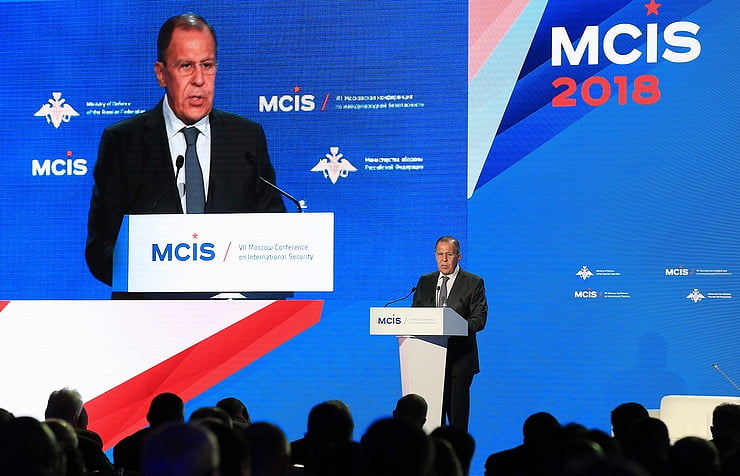
The featured photo shows Russian Foreign Minister Sergei Lavrov speaking at the 7th MCIS.

According to TASS in an article published on April 5, 2018:

Moscow calls on Washington to jointly tackle the issue related to the modernization of US strategic delivery vehicles in accordance with the New START Treaty, Russian Foreign Minister Sergey Lavrov said at the Moscow Conference on International Security on Thursday.

“We have honored all our commitments under the Treaty on Measures for the Further Reduction and Limitation of Strategic Offensive Arms and call on the US, in accordance with the procedures provided for by that treaty, to jointly address the issues related to the modernization of part of some US strategic delivery vehicles,” he said.


Norway, NORDEFCO and Shaping a Way Ahead with the Nordics

05/22/2018

By Robbin Laird

As Norway looks to its defense transformation and working out ways to work more effectively with its allies in extended defense and deterrence, it faces change in Europe associated with significant dynamics of change in Europe from Brexit to Catalonia.

At the same time, the US is dealing with the Middle East as well as the Koreas as President Trump and his team sort through shaping a way ahead for the US and its allies in dealing with the threats of weapons of mass destruction.

There is much uncertainty in the strategic environment on the allied and on the side of the threat envelope for Norway as well.

In such a context, it is not surprising that the Nordics are working ways to collaborate more effectively in the defense of their region.

One way to do this is the cross-border training they are engaged in with Sweden and Finland.

Here squadrons from Norway, Sweden and Finland work together every week on cross-border training activities.

And the air space being used is very significant as well.

Europe as an operational military airspace training area is not loaded with good training ranges.

The range being used for CBT is very large and is not a cluttered airspace, which allows for great training opportunities for the three nations, and those who fly to Arctic Challenge or other training events.

And the range flies over land so there is an opportunity for multi-domain operational training as well.

But this is being matched as well with policy discussions and policy coordination efforts as well.

As Harald Malmgren described such activities within the boarder European context:

A new “cluster” of European nations with a common security objective has quietly emerged recently in the form of focused military cooperation and coordination among the Nordic nations, Poland, the Baltic States, and the UK.

This cluster is operating in close cooperation with the US military.

The Danes, Norwegians, the Swedes and Finns are cooperating closely together on defense matters.

Enhanced cooperation is a response to fears of Russian incursions, which are not new, but have roots in centuries of Russian interaction with Northern Europe.

It is also a response to the weak defense and security policies of most of the rest of Europe, notably the emasculation of any meaningful German military by the German government.

The Norwegians and Danes notably and reaching back to the UK are adopting the concepts of warfare pursued by the US military in its new focus on conflict in a fully integrated battle space operating in high intensity and at high speed.

At the heart of this integrated approach to building a credible deterrent to Russian “adventurism” and territorial incursions are the 5th generation F35 aircraft capable of coordinating and applying firepower from land, sea an air simultaneously.

Norway, Denmark and the UK are all acquiring the F-35 as part of the evolving collaborative approach.

The pilots in this assemblage of F35s are all trained in the same locations in the UK and the US, and are able to fly each other’s aircraft without adaptation.

It should be noted that Italy’s military wants to find a way to interact with the Northern Europeans as well as the UK and is acquiring F35s for itself to enable participation on short notice.

An evolving institution within which Nordic cooperation is being shaped is NORDEFCO.

In an interview I did with an American colleague who has worked in Denmark the past few years as a Senior Researcher at the Centre for Military Studies at the University of Copenhagen, we discussed NORDEFCO and its emerging role.

Question: How has Nordic cooperation progressed during your time in Denmark?

Gary Schaub Jr.: It has progressed significantly.

Initially, much of the cooperation was very political and often symbolic.

It has become less headline grabbing and more focused on the nuts and bolts of cooperation to shape real military capabilities as well as enhanced crisis management.

This is clearly a work in progress, but the change is significant.

NORDEFCO has been the organized effort to enhance cooperation among Denmark, Norway, Iceland, Finland, and Sweden.

NORDEFCO is now focused on ways to enhance operational military capabilities among the forces. For example, an agreement was reached last year on “Easy

Access” among the air and naval forces of the member states.

The agreement allows relatively free flow of those forces across the territories of the member states as agreed upon.

Clearly, major changes on both the Swedish and Finnish sides have facilitated enhanced cooperation.

For the Swedes, it was a growing recognition of the threat to the Baltic States and Sweden has clearly cooperated more closely with NATO with regard to the Baltic States as well as in the Northern Region.

The Finns changed their legislation so that they can both receive and give assistance in a crisis.

Certainly, cooperation between Sweden and Finland has increased significantly in the past few years.

The NORDEFCO framework encompasses these two states who are not members of NATO with three members of NATO, namely Norway, Denmark and Iceland.

As one Norwegian senior analyst put the question to me during my visit to Norway in April: “How far can we take our cooperation?

“We now have a mission paper which extends our framework of cooperation through 2020 and we are working a new one which extends the horizon to 2025.”

The members are working on an “easy access agreement” whereby the forces of the member states can cross borders easily to collaborate in exercises or in a crisis.

The NORDEFCO states are not focused simply on their own member exercises but participating in larger ones, which inevitably means NATO. As this analyst put it:

“The Swedes and Finns have a permanently placed officer in the Norwegian Joint  command post in Northern Norway which certainly allows them to plan effectively for exercises, including this fall’s Trident Juncture.”

This analyst argued that there is a clear upswing on the level of cooperation and its significance as well.

“I think the discussions among ministers have been taken to an unprecedented level. We also discuss crisis management.

“We have to prepare ourselves for handing a situation without the Swedes and the Finns, because they are not members of NATO.

“But we think that it is more and more likely that they would be fully involved in such a situation.

“I think our western partners realize this, so the American footprint in Norway could also be used to reinforce the Baltic states.

“Having access to Norwegians territory, and perhaps for a door in Sweden and Finland makes a big difference.”

This cooperation is unfolding in the context of the strategic shift to prepare for both crisis management and conflict in a high intensity warfare setting.

Clearly, a key focus is upon rebuilding NATO’s ability to establish sea control to reinforce the Nordic region in times of crisis and to ensure that reinforcements from outside the Nordic region can seamlessly integrate with Nordic forces as well.

Part of the crisis management approach is to focus on civilian support to the military in a crisis, which the Norwegian Total Defense Concept or the Finnish mobilization concept or the Swedish reintroduction of conscription is clearly designed to do as well.

Clearly, timely and effective mobilization is critical to generate appropriate responses to crises and to provide tools to ensure more effective deterrence as well.

Nordefco_annual_raport_2017_MoD_FI

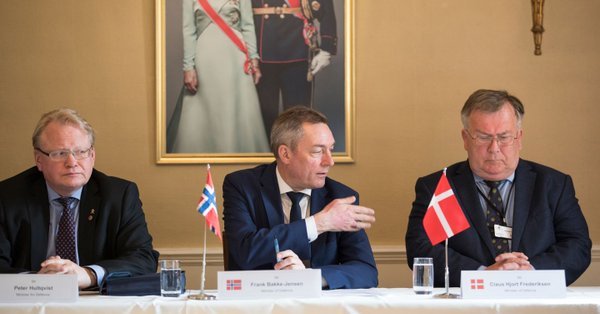
NORDEFCO Defense Ministers on April 10, 2108. Credit Photo: Emil Weatherhead Breistein, NTB scanpix

The Nordic defence ministers will be meeting in Bergen, Norway, April 10.-11. On the agenda is regional security challenges, as well as further developing Nordic defence cooperation.

Norway chairs NORDEFCO in 2018. This meeting will be the first meeting between the Nordic defence ministers under Norwegian leadership.

—The strong Nordic cooperation is successful. We have a good dialogue about joint regional challenges, as well as challenges around the world. Now we are discussing how the Nordic countries can contribute internationally together. Joint operations is something we have successfully done in the past, in for example Mali and Georgia. During the NATO exercise Trident Juncture, coming up this autumn, soldiers from several Nordic countries will train together. This will further strengthen our collaboration, says the Norwegian Defence Minister Frank Bakke-Jensen.

Agenda

During the meeting in Bergen, the defence ministers will discuss the security challenges in connection with Russian activity in the Nordic region. They will also discuss how several of the Nordic countries will be present with large forces during the NATO exercise Trident Juncture 2018 in Norway this autumn. Other issues on the agenda, includes the work with Easy Access and preparing a new Nordic vision for defence collaboration.

Dutch Defence White Paper, 2018

This past March, the Dutch government released a new defence white paper.

According to the MoD statement published on March 26, 2018:

The Netherlands Ministry of Defence can once again have confidence in the future.

After years of budget cuts, the Defence organisation is investing in its people, capabilities and visibility.

Personnel will be given the equipment they need to work as effectively and safely as possible. Capabilities will be enhanced by the procurement of new materiel and by the modernisation of existing resources. Investments will be made in IT and cyber.

The Ministry of Defence will also work more intensively with partners, such as the business community, NATO and the EU.

In view of the deterioration of the security situation, an agile military force is vital. NATO is demanding larger and more robust units for allied defence, and the United Nations and the EU are turning to the Defence organisation increasingly often.

In the Netherlands, too, the military needs to be there when needed.

The restoration and reinforcement of the military organisation is therefore urgently needed.

And that is going to happen.

How?

In what areas?

To be able to do what?

And why?

This is all outlined in the Defence White Paper published today.

Capabilities

The document, entitled ‘Investing in our people, capabilities and visibility’, sets out what the armed forces are going to look like in the coming years. T

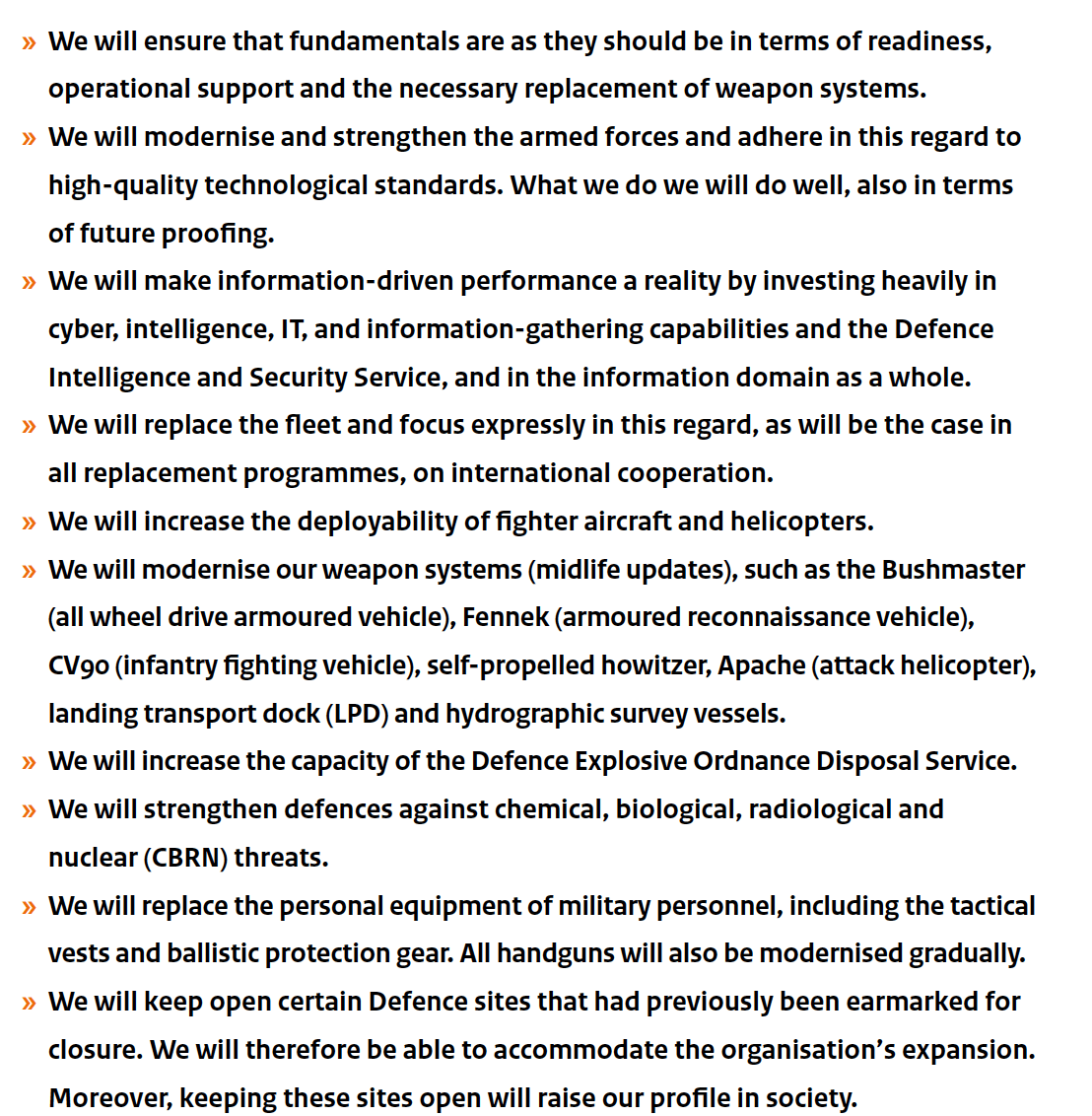
he White Paper states, for example, that capabilities will be enhanced by the modernisation of weapon systems, and the replacement and procurement of ships. Information-driven operations will also be a priority, as will increasing the deployability of fighter aircraft and helicopters.

The ever-changing security situation calls for an agile, robust military force. A force that adapts quickly and is there when it is needed. What does that mean in practice?

The Defence White Paper explains.

It also details what will be improved in the various elements of the Defence organisation. Much is possible with the extra money that will be allocated to the Defence budget over the years to come.

The White Paper is full of plans, not only with regard to materiel, but especially with regard to personnel. Aspects such as improved career guidance, terms of employment, staying in a function longer, and the availability of new personal kit.

The changes will take time, however.

New personnel need to be trained and materiel procurement takes time to process.

Start of a journey

As far as Minister Ank Bijleveld-Schouten and State Secretary Barbara Visser are concerned, this Defence White Paper is not a destination, but the start of a journey along a path that determines the direction for the future.

A future in which the Netherlands once again has a healthy military force, robust and agile. Follow-up steps are needed for this. These too are outlined in the Defence White Paper.

The Ministry of Defence wants to be an organisation for which people are proud to work, an organisation that is visible in society.

An organisation that is a good partner to civil authorities, the European Union, NATO, the business community and societal organisations.

A military force with sufficient means and people, satisfied personnel with faith in the organisation.

Defence+White+Paper+2018

The introduction of the White Paper highlights the way ahead:

We operate in a world that is changing and becoming less safe. Threats are complex, diverse and unpredictable.

The vulnerability of the Netherlands and of people throughout the world has increased. As a nation, we are strongly connected with the rest of the world.

The security of the Netherlands is thus also intertwined with security situations in other parts of the world.

The first main task, protecting national territory and the territory of allies, has therefore become more important in recent years.

The importance of the other two main tasks has likewise increased. Because of the greater instability in the world, a greater commitment is required for all of the main tasks.

It was with this in mind that we considered how the additional investments amounting to EUR 1.5 billion a year could best be spent.

This is based on the Netherlands integrated foreign and security strategy of the Minister of Foreign Affairs.

First, we will invest in our people.

They keep us safe and are there when they are needed. We want to restore their trust in the organisation and thereby ensure that they remain with the organisation.

Moreover, we want to recruit new employees and will focus on diversity. We will also invest in means. The emphasis in this regard will be on modernising our current strike capabilities and strengthening ourinformation-driven operating methods.

The third key area of investment will be methods. We will focus efforts in this area on increasing and improving national and international cooperation to ensure that the organisation evolves into one that is robust and agile.

We will make every effort in the coming years to implement the measures set out in this white paper. In many cases, results will only become visible after a few years.

That is unfortunately the reality we face. It takes time to attract and train people, produce material and make it operational.

Nevertheless, a number of changes will become apparent in the short term. New colleagues will be joining us, supply levels will be improved and more exercises are being planned.

Furthermore, unnecessary rules will be abolished and commanders will have greater discretionary power in the sphere of practical execution.

We will also become visible again in society. Military personnel may once again travel in uniform.

After further consideration, certain Defence sites throughout the country that had previously been earmarked for closure will be maintained.

Royal Netherlands Marechaussee personnel will also become more visible at the border.

Furthermore, the recruitment of new employees will be organised at regional level to augment current national-level efforts and we will strengthen our cooperation with other organisations.

We are also collaborating in the preparation of the community work placement programme for young people.

All this will contribute to the versatility and readiness of the Netherlands armed forces. NATO has drawn up capability targets for the Netherlands which require further steps.

Given the foregoing, this white paper does not constitute an end point. Rather, it is a step that is in line with the long-term objectives that were included in the NATO agreements made during the 2014 Wales Summit.

The White Paper is well worth reading and here is one graphic from the White Paper which provides a sense of how the Dutch government sees the way ahead:

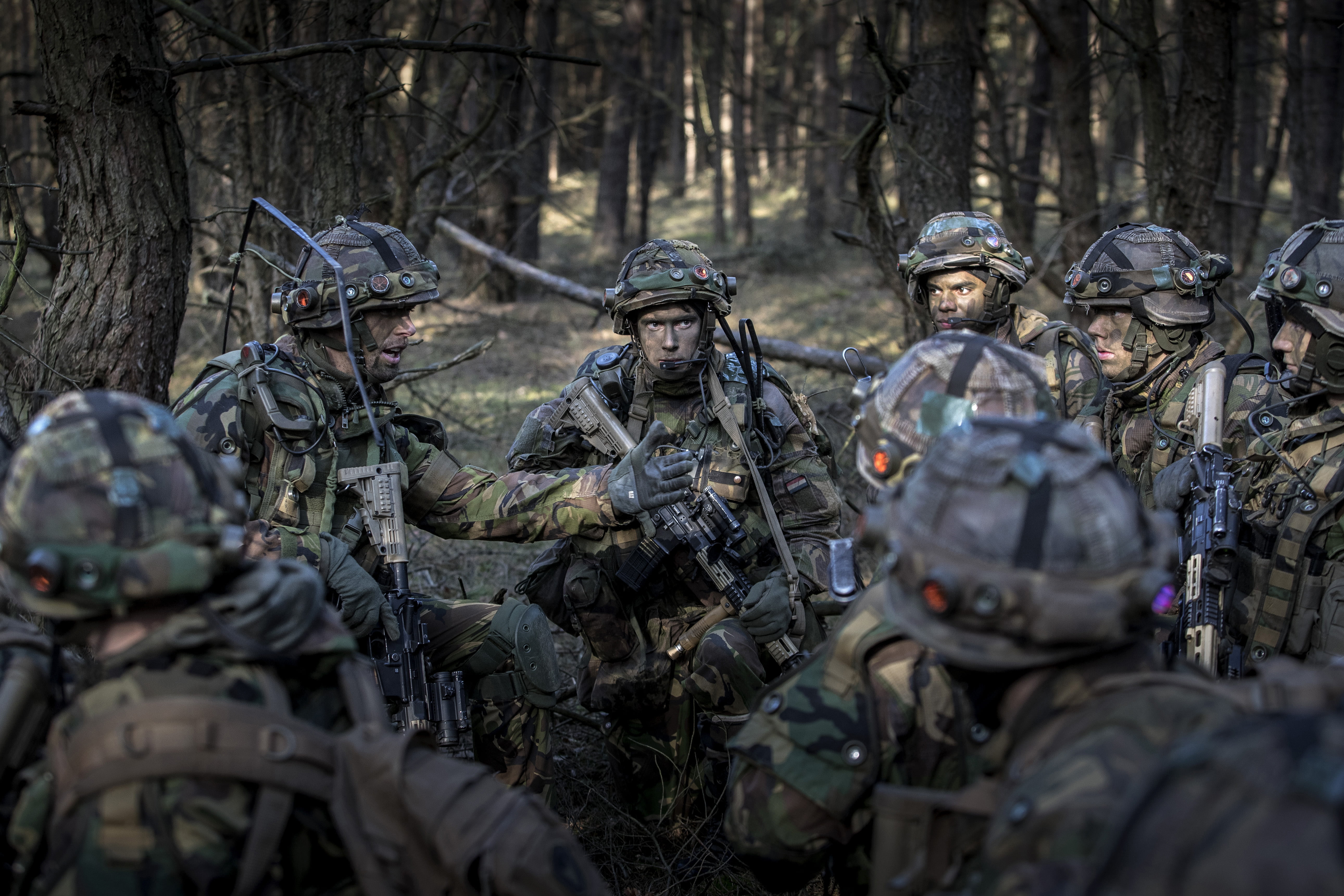
The featured photo shows Dutch soldiers in the Peacock Supremacy Exercise and is credited to the Dutch Ministry of Defence. The Field Training Exercise Peacock Supremacy was held at the German Army Combat Training Center in Letzlingen in February 2018.

Shaping a 21st Century Air Base at Ørland: Visiting the 132 Air Wing

By Robbin Laird

I have had the opportunity to visit F-35 bases since the standup of the first one at Eglin Air Force base.

And this year, I have visited Williamtown, RAF Marham, Ørland, and MCAS Yuma.

In each case, changes have been made to accommodate the coming of the F-35 but also, infrastructure has been or is being changed to shape a 21stcentury base appropriate to the transformation of 21stcentury air combat operations.

With the coming of the data rich aircraft, there are new requirements, needs and opportunities to manage data.  With the coming of a data generated maintenance system, new hangars are being built which can better facilitate the ability to work with data and to shape new maintenance approaches.

And security is a key requirement as well, but a work in progress.

At Williamtown and at Ørland, both the RAAF and the RNoAF are building F-35 centered airbases with legacy aircraft being moved out from the base.

At RAF Marham, the new facilities are being built as an enclave while the Tornados remain a key flying combat asset for the RAF and changes will be then be made at the base leveraging older facilities, such as hardened shelters, as the Tornados leave and the F-35s ramped up.

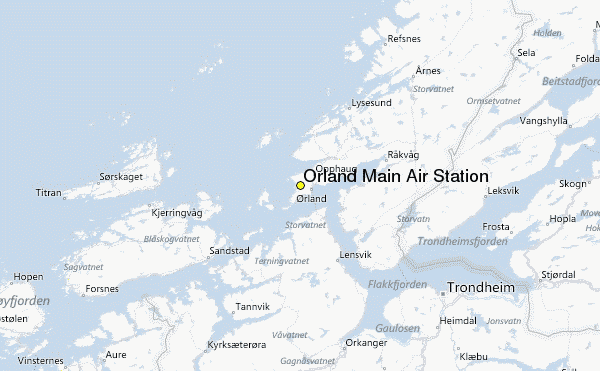
During my visit to Ørland, I had a chance to talk with Lt. Col. Eirik Guldvog, XO/COS 132 Airwing, at the end of April 2018, about the way ahead for the base.

The entire infrastructure for air operations in Norway is being restructured as the F-35 and the P-8 enter the force.

Ørland will be the main operating base for the F-35, with Bodø being closed and Evenes becoming the QRA base from which a squadron of F-35s could operate in a crisis as well.

The base is being built by the Armed Forces Estate Agency, and security is a key consideration. Workers have been brought from throughout Norway to work on the base.

According to Lt. Col. Eirik Guldvog: “The Armed Forces Estate Agency has built camps on the base to house workers to work on the base. Because of classifications, only Norwegian workers are being used.

When you fly into Ørland, one enters a small civilian terminal.  But that is the only aspect, which is civilian; the base is military and everything is run by the military on the base.

The F-16s will leave Ørland next year, and those at Bodø will be retired in 2022.

Lt. Col. Eirik Guldvog underscored that  “The main objective is by 2022, to have the F-35s replace the F-16s and to provide the base line combat capability needed by the RNoAF.
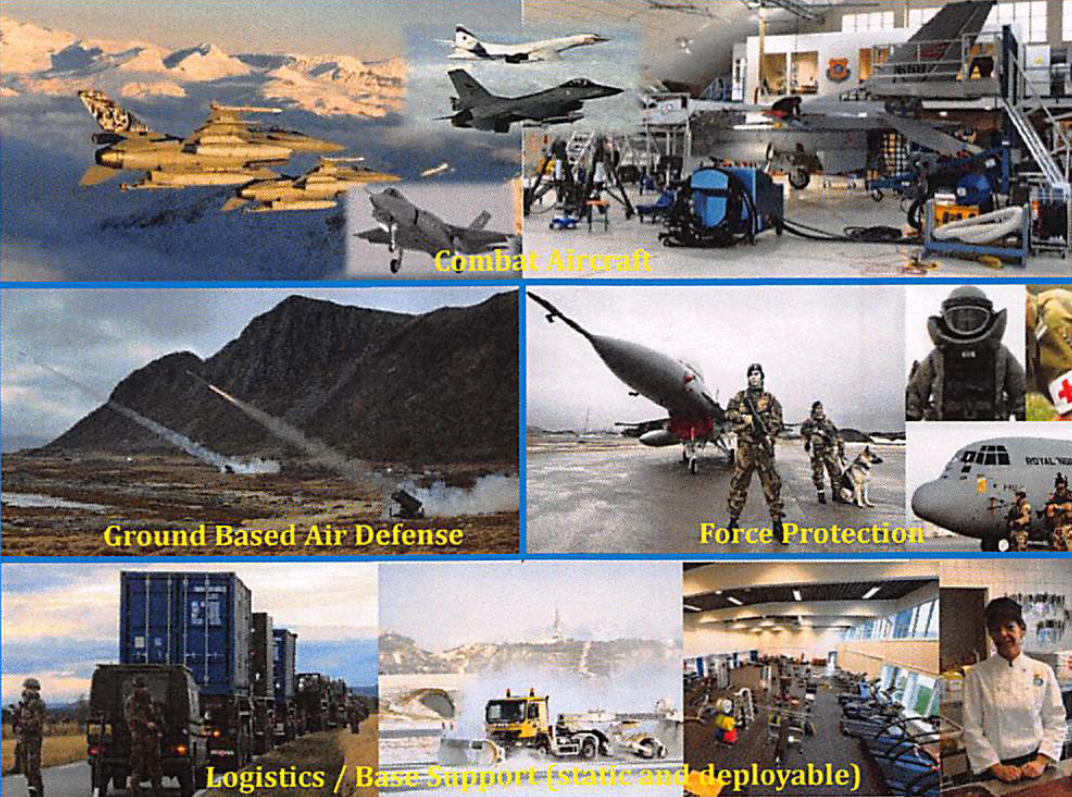
“During the next three years, when Final Operational Capability is achieved, we will be utilizing the expanded capabilities of the aircraft.”

Because the introduction of the F-35 is not just about the aircraft, but the entire air system, the build out of basing and training is a key part of the standing up of the aircraft.

And indeed, it is recognized that doing so will be a work in progress for several years as well.

Force protection is a key part of building out the base, and, indeed, the center of excellence both for ground based air defence, force protection and mobile logistic support operates currently from the base.

And these skill sets will become even more important in the years ahead as well.

The transfer from Luke to Norway began with the arrival of the first three F-35s from Luke last November.

And in April, the first maintainers started their training at Ørland. The maintainers trained at Luke form the cadre of the initial Norwegian training capability.

And the ramp up of maintainers will be correlated with the arrival of the aircraft as well.

As Lt. Col. Eirik Guldvog added: “Each six months, we will receive three new aircraft and we will have trained the requisite personnel prior to those aircraft arriving in Norway.”

And because of the concentration of fighter aircraft at the base, flight activity will be closely monitored to control for noise and other impacts on the local community.

Lt. Col. Eirik Guldvog noted that “There will be about three times the amount of total flying over current conditions once the F-35 base is fully functional.  The Estate Agency is closely monitoring noise and flight patterns, to provide a base line from which future decisions can be made to deal with any challenges.”

Clearly, the standup of the F-35 is at the heart of the base modernization, but it is about shaping a 21stcentury combat base. 

It is about the ability to operate and sustain the combat operations of the aircraft; it is about the defense of the base, through ground based air defense and force protection, and it is about having the capability to support the overall Norwegian Air Force to be sustained where they operate and fight as well.
And working the synergy among these core interactive aspects will be at the heart of the development of the base in the years ahead.

Lt. Col. Eirik Guldvog highlighted that “The base will be evolving over the next several years as we operate the aircraft, and shape the infrastructure to work with the operations of the aircraft and the transformation of the RNoAF overall.”

Norwegian F-35s in Flight from SldInfo.com on Vimeo.

Two of the Norwegian F-35s based at Ørland Air base are seen flying near the base in December 2017.

This video was provided by the Norwegian Department of Defense.

Sustainable Combat Capabilities: The Case of the CH-53K

A key element of building 21st century air systems is building in sustainability as part of the design.

21st century air systems are digital systems, built around software upgradeability.

The digital capabilities of the aircraft are a key part of building out a more sustainable combat system.

The CH-53K was designed with several USMC maintainers as part of the design process.

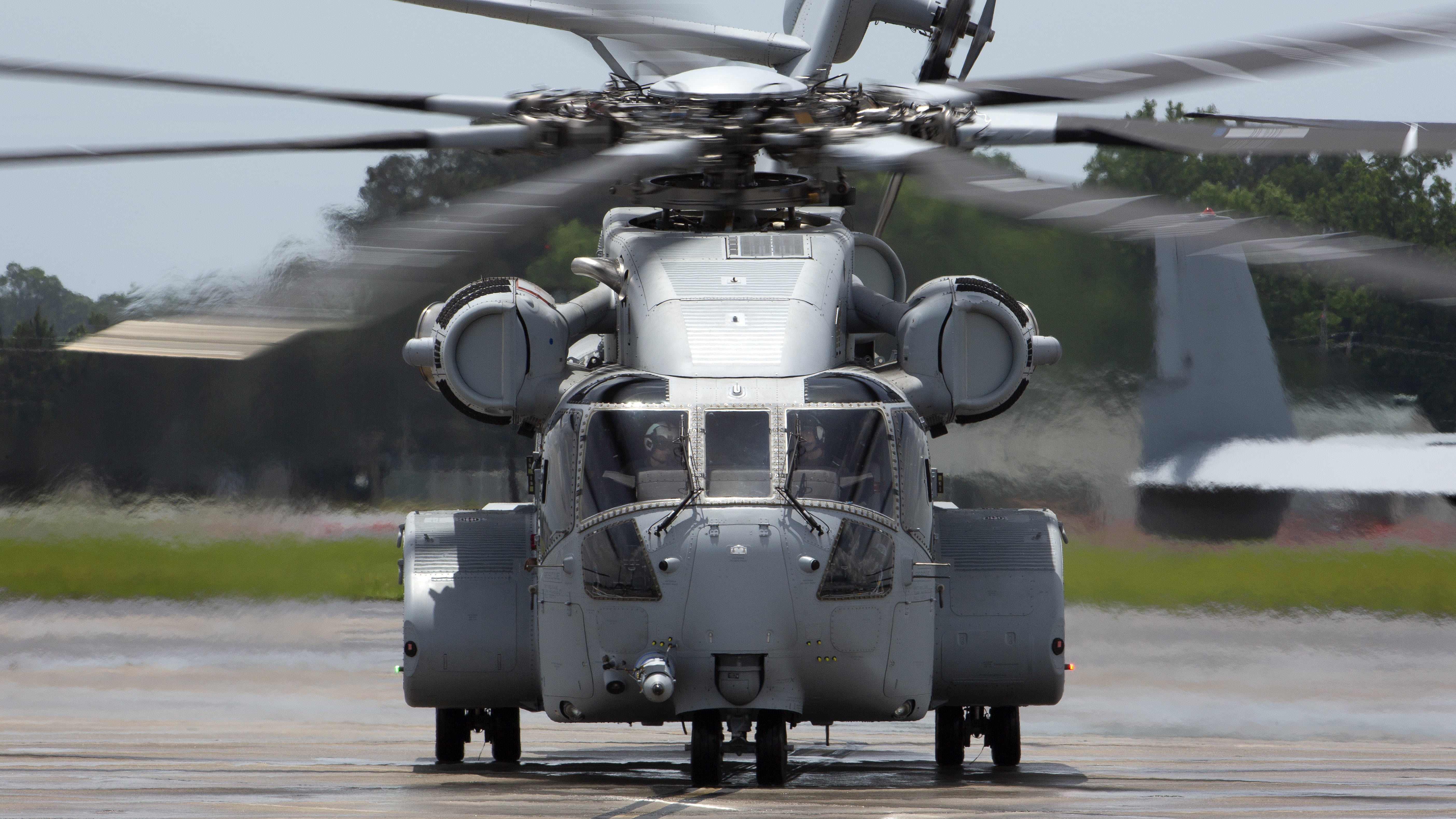
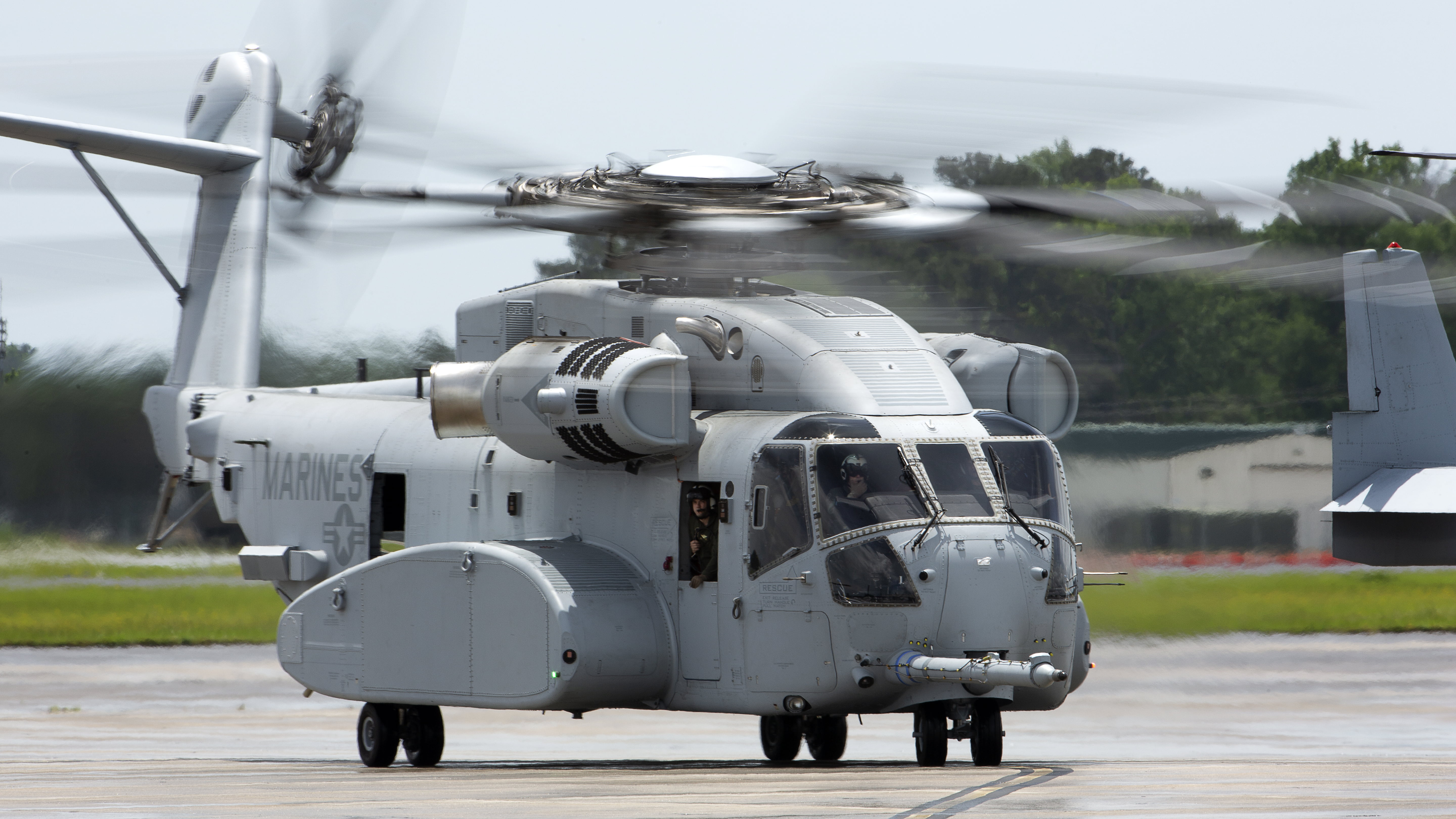
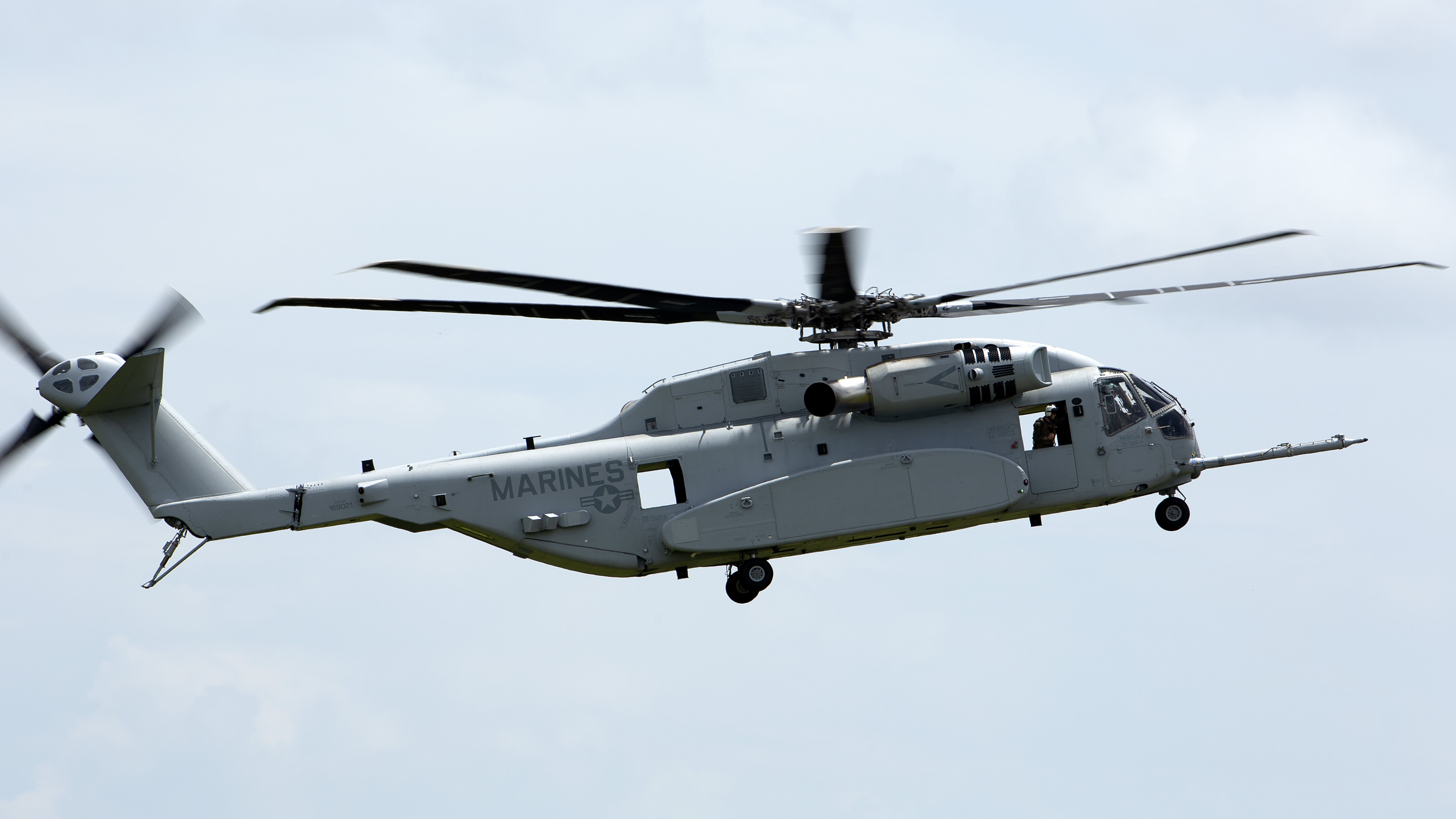
Now the Marines have taken delivery of  their first CH-53K at New River where the first squadron will be based.

The focus of the work to be conducted is precisely to work on the maintainability of the aircraft.

A CH-53K arrived on May 16, 2018 at New River for a sustainability test regime.

This will be performed by the former VMX-22 which was formerly based at New River and brought the Osprey into the Corps and supported its development for more than a decade.

Currently, Marine Operational Test and Evaluation Squadron 1 is based at MCAS Yuma and is working closely with the F-35B and its integration within the USMC and shaping its impact on USMC transformation as well.

Now the CH-53K will joint the process of air-enabled transformation generated by Marine Corps Air for the MAGTF.

We interviewed members of the squadron while in Yuma recently and will report on those discussions later this month.

“The helicopter’s arrival to New River enters it into the Supportability Test Plan where U.S. Marines will conduct a logistical assessment on the maintenance, sustainment and overall aviation logistics support of the King Stallion,” the Corps said in a command release Wednesday.

“I am very proud of the work accomplished to deliver the most powerful helicopter ever designed into the hands of our Marines,” Lt. Gen. Steven Rudder, deputy commandant for aviation, said in a command release.

The Corps plans to field a total of 200 CH-53Ks over the coming years. The first eight of that “program of record” currently is under contract.

According to a story published May 16, 2018 by Ben Werner in USNI News:

The Marine Corps accepted delivery of the first Sikorsky CH-53K King Stallion Wednesday, marking an important milestone on the path to achieving initial operational capability sometime next year…..

The CH-53K King Stallion program officially titled the CH-53K Heavy Lift Replacement Helicopter program – is a new production aircraft destined to replace the existing CH-53E Super Stallion fleet currently used by the Marine Corps.

The CH-53E first flew in 1974 and entered Marine Corps service in 1981.

The Department of Defense plans to purchase 200 CH-53K aircraft. The first eight are under contract and Sikorsky will continue delivering them to the Marine Corps through the year. The Marine Corps plans to ultimately field eight active-duty King Stallion squadrons and one reserve squadron…..

Meanwhile, Sikorsky is also starting to promote the CH-53K and its capabilities to potential international customers. Sikorsky demonstrated the King Stallion’s capabilities at the recent ILA Berlin Airshow in Berlin, Germany.

One of the CH-53K enhancements over previous helicopters is what Sikorsky officials have described as an integrated health management system, which monitors parts on the aircraft.

This system allows military technicians and Sikorsky officials better plan for when servicing is needed, and ultimately help control costs, according to Sikorsky officials.

In 2016, we interviewed senior Marines involved with the program about how central maintainability was to the design and development process:

A key argument for buying newer platforms compared to older ones is the savings built into a new platform over the operational and logistics costs of the older platform.

In the commercial airplane business, both Boeing and Airbus design and build their newest platforms with significant enhancements in sustainability in mind.

According to one senior official at Airbus, “We have a design committee which reviews recommendations with regard to sustainment and logistics support from commercial customers to determine the most desirable enhancements we might then build into the new aircraft (the A350).

We then determine priorities and feasibility’s with regard to the design approach and manufacturing process to shape the new build aircraft.”

This is true as well for military aircraft as well and can be seen in platforms such as the F-35, the A400M, the KC-30A and in other 21st century air platforms as well.

And the CH-53K is being shaped in the midst of this maintainability focus on design and manufacturing.

In an interview with three key Marines involved in the program we started by focusing upon the maintainability and sustainability aspects of the new air system.

The three Marines were as follows: Col. Paul Fortunato, Branch Head, Weapons Requirements (APW-1); Col. Hank Vanderborght, Program Manager, PMA-261/H-53 Heavy Lift Helicopters; and Major Thomas Trimble, Heavy Lift Requirements (APW-51), Department of Aviation, USMC.

Question: How important has it been building in maintainability to the CH-53K design approach?

Answer: It has been central from the beginning.

We formed a maintainer working group at the outset as part of the design team which has met every quarter to provide their recommendations from a maintainer’s perspective with regard to ways to improve the design from a maintainability and sustainability perspective.

Question: These were veteran CH-53E maintainers providing operational experience to guide CH-53K design?

Answer: That is correct.

Even though the aircraft is quite different, we wanted that field experience built into the design process from a maintainer’s perspective.

For example, on the CH-53E when you have to work on or replace the fuel cell you have to do so through big trap doors on the top of the aircraft. And then one has to wait a couple of days to have the gas free environment on which to work on the cell.

A maintainer suggested that we build a port on the bottom of the K where one can access the fuel pumps directly and easily, and then if you have to change the fuel pump inside the tank, you could go underneath the aircraft, unscrew it, pop in a new one, connect it and off you go.

You don’t have to wait until a gas free engineering environment is ready.

There are several examples of this kind of input to the design of the new aircraft, which will enhance maintainability, which, in turn, enhances readiness and sortie generation.

And the design of the avionics systems is built around an avionics box for easy access to the cannon plug and wires, which the maintainers need to work on. Instead of having to have a flashlight, a mirror and another Marine holding something to get behind the systems, the systems are facing the maintainer directly for their attention.

Question: This means that you are shaping a maintenance culture change as well as those maintainers work inputs to the design and start to focus on how their job will change as well?

Answer: That is a good way to put it.

The team working the new maintenance approach are the future stakeholders.

You are generating buy in as their ideas are incorporated into the design.

Currently, we have 10 maintainers at West Palm working on the aircraft.

These are the seed corn for the new maintenance approach working with the new aircraft.

Their recent fleet experience has prepared them to act as a critical link between engineers and end users in the development the helicopter and the knowledge they gain during their time on the program.

We are counting on these Marines to reenlist and be our Staff Non-Commissioned Officers assuming leadership roles as future Quality Assurance Representatives and Division Chiefs of the first King Stallion squadrons.

Question: You are now in the test process, so where do the maintainers fit into that process?

Answer: The NAVAIR process is somewhat like a V where one side is design and the other is testing and fielding.

We are now largely past the design piece and we are now focused on test and aircraft performance under those test conditions.

The ten maintainers that are down at West Palm are actually maintaining the aircraft.

They are validating maintenance procedures while identifying best practices, while noting and correcting any discovered deficiencies.

Question: And the maintainers we are talking about for the K are part of this new generation of electronics or digital maintainers.

How do you see that fit?

Answer: That is a good point.

The airplane is much more digital; and so are the maintainers; there is an evolving fit between the 21st century aircraft and the 21st century maintainer.

They are shaping the integrated manuals we need to support the aircraft in the field. They going to make sure that the manuals are written correctly.

That is why it so crucial to have the maintainers down at West Palm and integrated into the process from the outset.

Question: We have been discussing digital systems.

How has the Sikorsky approach to a Heath and Usage Monitoring System (HUMS) on its commercial helicopters affected the K program?

Answer: It is a crucial part of the program.

For example, Sikorsky has more than 10 years of experience with the HUMS on the S-92, a helo that is flown three times as much as we would fly the K.

43 Sikorsky CBM-HUM Past Present Future_2-9-15_Cycon

It is used for fleet management, and provides significant information with regard to the operational performance of the aircraft, parts and reliability and overall real-time data with regard to the operation of the aircraft.

We are leveraging this approach for the K and clearly when the E was built there was no HUMS system or capability.

An example from the S-92 world provides some insight into where we think the K fleet can go as well using the HUMS system. They’re measuring every aircraft across the fleet and they understand the signatures for every parameter they’re measuring looks like.

So they understand what normal looks like and if something starts deviating from normal they can understand where the safety margins are.

One example that sticks in my mind was an S-92 that was flying for an oil company in the Singapore area doing globe plots. And they had a tail rotor gearbox in this aircraft that was showing some signs of wear and tear.

And they knew that the operator was going to need to have in about 20 flight hours dedicated base maintenance.

So before the operator even knew that there was something going awry with the aircraft, they called the operator and said, this scheduled maintenance period you need to change your tail rotor gearbox. By the way we shipped you a brand new one yesterday.

We certainly look forward to such a capability within the K fleet.

In short, the predicate for the K is 21st century aircraft materials, systems and approaches.

The E was built in the age of the Studebaker; the K is built in the age of the electronically-enabled car.

In and of itself, that makes it a very different animal.

This article was first published on March 6, 2016.

For our articles on the CH-53K, including ones addressing maintainability and supportability, see the following:

https://defense.info/system-type/rotor-and-tiltrotor-systems/ch-53k/