F-35 Heritage Flight Team in 2018

03/28/2018

The F-35A Heritage Flight Team at Luke Air Force Base teams up with Air Force Heritage flight exhibiting the professional qualities the Air Force develops in the people who fly, maintain and support these aircraft.

Here is the 2018 airshow schedule for the US Air Force F-35 Lightning II Heritage Flight Team!

Schedules often change during the year – for the latest updates please be sure to check our forums!

2018 Appearance Schedule – US Air Force F-35 Lightning II Heritage Flight Team

March 17-18: Luke AFB, AZ

March 23-24: NAS Kingsville, TX

May 25-27: Miami, FL

June 9-10: North Kingston, RI

June 15-17: Ocean City, MD

August 10-12: Offutt AFB, NE

August 17-19: Chicago, IL

August 31-September 2: Toronto, Ontario

Sepember 21-23: Sacramento, CA

The video shows the F-35 Heritage Flight team at the Luke AFB event held on March 17 and 18, 2018.

03.18.2018

Video by Airman 1st Class Caroline Burnett 

56th Fighter Wing Public Affairs


The Australian Defence Minister Addresses the 2018 RAAF Airpower Conference

The Australian Defense Minister followed the opening address at the RAAF Airpower Conference 2018 given by Air Marshal Davies with an overview of how she saw the evolving global situation and its impact on the ADF.

Senator the Honorable Marise Payne, the Minister of Defence, noted at the outset that although it was only two years since she addressed the 2016 airpower conference, it seemed almost an age ago compared to the world of 2018.

The changes in Europe, the United States, and Asia have created significant pull in the strategic environment and shifting demand sets as well.

She underscored the core shift in how Air Forces receive and use information and with the coming of both Growler and F-35 this would be accelerated as well.

She underscored the important role which Australia played in the region and growing expectations of partners in the region for that role to remain central as well.

She reinforced the core message from Air Marshal Davies concerning the need to shape a 21st century workforce in Australia to support the ADF as well going forward, given the pace and scope of technological change in the commercial and defense domains.

She concluded her comments as follows:

“This year’s Air Power program is a graphic picture of the breadth of the challenges that face all of us in the decades ahead, from space to cyber, from energy security to digital advancement.

Through this period of intense disruption, the Australian Government is investing heavily in our Defence Force to ensure that it stays on the cutting edge and we are building a workforce that is able to exploit the full potential of this new technology.

We can’t master all the challenges alone and we will need to leverage our international partnerships.

We want to have the most effective Air Force possible.”

Air Power Conference | Department of Defence Ministers

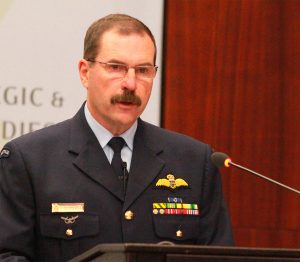
Air Marshal Leo Davies Addresses the 2018 RAAF Airpower Conference

The RAAF Airpower Conference 2018 provided a good look at the perceived dynamics of change in the broader global environment and within the ongoing technological revolution reshaping the demand side of both the use and development of modern airpower and the ADF more generally.

The conference was opened by Air Marshal Leo Davies, Chief of the RAAF.

He highlighted the growth in the breadth and depth of the challenges facing airpower as well as the growth in demands to operate in the gray zone.

Among the key dynamics he highlighted were the following: the dispersal of global influence and the diversity of power centers; the shift in the center of global power from the North Atlantic to the Indo-Pacific region, the elevated strategic impact of China and North Korea; the shifts in US national strategy from focusing primarily on counter-terrorism to great power challenges.

These dynamics were leading to the need to invest in higher end military capabilities and to seek innovative solutions to ensure that the liberal democracies had credible deterrent capabilities.

He underscored the core significance for the RAAF of evolving the skill sets to deal with these challenges which he characterized as shaping skill sets which could move beyond a narrow definition of mission performance to deal with the distributed battlespace and its more strategic demand set

He concluded with the following:

The disruptive world is presenting new challenges to the role of airpower in supporting national security objectives.

I don’t know what the next conflict will be, but I do know:

Many of the tools of trade are now more freely available to potential adversaries than ever before;

In future conflicts we can expect bases and support infrastructures, including civilian infrastructure, to be targeted through the use of physical and non-physical effects;

These are no longer sanctuaries immune from attack;

Emerging technologies will revolutionise the application of air power but also give rise to new challenges.

Success in the future battlespace requires the coordination of joint effects across all domains – a system of systems.

Airpower must be comprehensively integrated across the joint force to contribute meaningfully to the future fight.

These obstacles and challenges are real, but so are the visions and the ideas we will bring to meet them.

I have confidence in our Airmen to deliver on our vision.

I am reminded of the words of Henry Parkes, our father of federation, as he looked to the challenges at the creation of our nation, ‘In one hand I have a dream, in the other I have an obstacle. Tell me, which one grabs your attention?’

My proposition is that we ‘grab’ both, and collectively chart a new path for airpower in this disruptive world.

01_Opening-Address-Davies

Davies-Opening-Address

ICEX 2018

Los Angeles-class fast attack submarine USS Hartford (SSN 768) and Seawolf-class fast attack submarine, USS Connecticut (SSN 22) Surface Together in the Arctic Circle. ICEX 2018.

03.28.2018
Video by Robert Gensic
All Hands Magazine

ICEX 2018 from SldInfo.com on Vimeo.

In an article by Commander Submarine Forces, Public Affairs published on March 7, 2018, the opening of the ICEX 2018 exercise was described.

ARCTIC CIRCLE (NNS) — Commander, Submarine Forces (COMSUBFOR) officially kicked-off Ice Exercise (ICEX) 2018 in the Arctic Ocean with the construction of temporary Ice Camp Skate and the arrival of two U.S. Navy fast-attack submarines and one U.K. Royal Navy submarine March 7.

ICEX 2018 is a five-week biennial exercise that allows the Navy to assess its operational readiness in the Arctic, increase experience in the region, advance understanding of the Arctic environment and continue to develop relationships with other services, allies and partner organizations.

The Seawolf-class fast attack submarine USS Connecticut (SSN 22) from Bangor, Washington, the Los Angeles-class fast attack submarine USS Hartford (SSN 768) from Groton, Connecticut, and the Royal Navy Trafalgar-class submarine HMS Trenchant (S91) will conduct multiple arctic transits, a North Pole surfacing, scientific data collection and other training evolutions during their time in the region.

“With every ICEX we are able to build upon our existing experience and continue to learn the best way to operate in this unique and harsh environment,” said Rear Adm. James Pitts, commander, Undersea Warfighting Development Center (UWDC). “We are constantly testing new tactics, techniques and procedures (TTP) under the ice, and this exercise allows us to do so on a larger scale and alongside our U.K., joint and academic partners.”

The Navy’s Arctic Submarine Laboratory (ASL), based in San Diego, serves as the lead organization for coordinating, planning and executing the exercise involving three nations services, three submarines and over 100 participants over the five weeks of operations.

Ice Camp Skate is a temporary ice camp that was established on a sheet of ice in the Arctic Ocean, known as an ice floe. Skate will serve as a temporary command center for conducting submarine operations, including under-ice navigation and torpedo exercises. The camp consists of shelters, a command center and infrastructure to safely house and support more than 50 personnel at any one time.

“Our Arctic Submarine Laboratory team has been working for over a year to ensure our Submarine Force is able to conduct dynamic torpedo and under-ice operations in this unique environment,” says Larry Estrada, director of ASL. “This year’s camp is prepared to support the force with communication and weapons recovery.”

The camp gets its namesake from USS Skate (SSN 578), the first submarine to surface through open-water surrounded by ice in 1958 and the first submarine to surface through the arctic ice at the North Pole in March 1959. Since the success of Skate’s surfacing, arctic operations have been a crucial part of the missions conducted by nuclear submarines.

For more than 70 years, submarines have conducted under-ice operations in the Arctic regions in support of inter-fleet transit, training, cooperative allied engagements and routine operations.

The U.S. Submarine Force has completed more than 27 Arctic exercises; the last being conducted in 2016.

Dr. Robbin Laird Appointed as Williams Foundation Research Fellow

03/27/2018

At the dinner preceding the Sir Richard Williams Foundation seminar on the transition from fighting the land wars to engaging in high tempo and high intensity operations, Dr. Robbin Laird, the editor of Second Line of Defense was appointed by the board of the Williams Foundation as a Research Fellow.

The appointment reads as follows:

“On behalf of the Board, it is with great pleasure we welcome you as a Research Fellow of the Sir Richard Williams Foundation.

“The Board thanks you for your continued contribution to the core goal of the Williams Foundation; to promote the development and effective implementation of national security and defense policies as they impact on Australia’s ability to generate air power appropriate to its unique geopolitical environment and values.

“The Board and members of the Foundation greatly value the support you have provided in the past and look forward to continuing your involvement in future Williams Foundation programs.”

The letter was signed by AIRMSHL Geoffrey Brown AO (Retired) in his role as Chairman of the Williams Foundation.

Laird recognizes the key role of the Second Line of Defense team over the years in generating the high quality analyses and thinking which was recognized by the Williams Foundation with his appointment as a research fellow.

Our motto at Second Line of Defense from the beginning has been driven by the admonition of General Patton: “If everyone is thinking alike, someone isn’t thinking.”

That certainly has been something which the Williams Foundation has demonstrated in playing a leadership role in generating new thinking about military transformation in Australia and among the allies, as recognized by the significant and frequent commitment of the allies of Australia in participating and contributing to the seminars.


Marines Work the Sea Base and Expanded Capabilities

Pilots aboard the USS Wasp (LHD-1) perform deck landing qualifications in an MV-22B Osprey, MH-60S Sea Hawk, and F-35B Lightning II on March 19, 2018.

As the Marine Corps’ only continuously forward deployed Marine Expeditionary Unit, the 31st MEU provides a flexible force ready to perform a wide range of military operations

03.19.2018

Video by Lance Cpl. Kristiana Gehly 

31st Marine Expeditionary Unit

The transformation of Marine Corps aviation and with innovations in terms of the ability of the Marines to operate at greater distance, speed and more effectively in distributed operations began with the Osprey.

The F-35B is now being added to the force and it provides, sensing, C2 and strike capability for a distributed force.

Coming next is the CH-53K, which is no more of a replacement for the CH-53E than the Osprey replaced the CH-46 or the F-35B is replacing Harriers and Hornets.

And next up will be a new vertical life class four UAV, which will further enhance the ability to support the Marines at sea and at shore in the distributed battlespace.

And the K is arriving as the Marines are transitioning the MAGTF with a wide-ranging emphasis on digital interoperability.

The most recent Weapons Training and Tactics course at the Marine’s cutting edge Marine Aviation Weapons and Tactics Squadron One was the first WTI where digital interoperability was tested in every aspect of the training.


An Update on the CH-53K: March 2018

Recently, Deputy Commandant of Aviation, Lt. General “Stick” Rudder testified before the Congress on the coming of the CH-53K and its importance to the USMC and its approach to combat operations.

“This aircraft is mechanically and technologically amazing. It fits directly into the National Defense Strategy as far as heavy lift for distributed operations in whatever theater you’re talking about.

“We’ve got about 800 hours on the airplane right now in the test sequence and we are working through all the reliability issues early on.

“We have frontloaded reliability and spares of this airplane. It is meeting quite — when I say it gets the Marine and naval force off our amphibious ships or wherever you are in a manner which cannot be accomplished by any other aircraft in DOD.

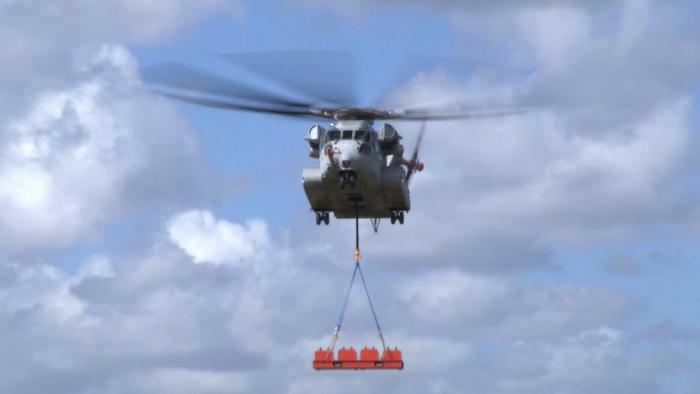
“We have KPP for 110 nautical miles lifting up 27,000 pounds. We’ve met that. As a matter of fact, we just lifted 36,000 pounds with this airplane the other day. That’s the highest.

“Now, I won’t want to argue with our Russian counterparts because they’ve got a helicopter that might have lifted more than that, but in the free world that’s the largest lift of any helicopter that we’ve done.

“So it is performing to that level that allows us as we look at the things that we are buying like the JLTV, and we just lifted one the other day that was 19,000 pounds. We’re able to lift that with ease.

“We’re able to dual lift Humvees, full up armored Humvees. So that capability allows maneuver on the battlefield.

“I think another thing I’ll say just for the logistics experts in here is we built that thing to be able to slide in 463L pallets. Those are the standard DOD pallets, so you can park a C-17, C-130, no tail-to-tail with this thing.

“You just roll pallets off right into the back of this helicopter and you can’t do that with any other system….

“It’s composite. It is fly by wire. It is one of those helicopters you can fly hands off and it’s really going to help us in another area that we have challenges with over the years.

“That’s a degraded visual environment zero visual conditions in the desert. So that stability, that helicopter will help us greatly in that environment.”

A recent press release from Lockheed Martin highlighted the CH-53K and its capabilities as well.

WEST PALM BEACH, Fla., March 7, 2018

 The Sikorsky CH-53K King Stallion completed an external lift of a 36,000-pound payload at the Sikorsky Development Flight Center, achieving a maximum weight on the single center point cargo hook.

This milestone marks completion of critical flight envelope expansion activities for the CH-53K as Sikorsky, a Lockheed Martin company prepares to deliver the first aircraft to the U.S. Marine Corps this year.

The CH-53K lifted the external load of 36,000 lbs. into a hover followed by flight demonstrating satisfactory handling qualities and structural margins.  The gross weight of the aircraft topped out at just over 91,000 lbs., making this the heaviest helicopter ever flown by Sikorsky.

“The successful completion of these last critical envelope expansion tests further demonstrates the maturity of the CH-53K aircraft,” said Dr. Michael Torok, Sikorsky Vice President, Marine Corps Systems. “We look forward to bringing this unique and exceptional heavy lift capability to the United States Marine Corps and our international customers.”

 Prior to the 36,000-lb. lift, the CH-53K lifted various external payloads up to 27,000 lbs. including a Joint Light Tacticle Vehicle (JLTV).

The CH-53K can carry a 27,000 lb. external load over 110 nautical miles in high/hot conditions, which is more than triple the external load carrying capacity of the legacy CH-53E aircraft.

CH-53K Heavy Lift Capability from SldInfo.com on Vimeo.

Other flight envelope accomplishments include tethered hover demonstrating flight speeds to 200 knots, angle of bank to 60 degrees, takeoffs and landings from sloped surfaces up to 12 degrees, external load auto-jettison, and gunfire testing.

 “The payload capability of this helicopter is unmatched, triple that of its predecessor and better than any other heavy lift helicopter in production,” said Col. Hank Vanderborght, U.S. Marine Corps Program Manager for the Naval Air Systems Command’s Heavy Lift Helicopters Program.

“The CH-53K program continues on pace to deploy this incredible heavy lift capability to our warfighters.”

 The CH-53K is also garnering international interest. Rheinmetall and Sikorsky recently signed a strategic teaming agreement to offer the CH-53K for Germany’s new heavy lift helicopter competition.

Additional teammates will be announced in the coming weeks leading up to the aircraft’s debut at the ILA Berlin Air Show in April.  

In the Fall of 2017, we interviewed the government’s chief test pilot and got his perspective on what the coming of the CH-53K means for the USMC:

The CH-53K is in the final phase of getting ready to enter into service.

The final phase of preparation includes the wrap up of testing at West Palm Beach, the conclusion of testing at Pax River, and the validation of maintenance procedures at the base, which will first receive the new aircraft, New River…..

In a discussion with LtCol Jonathan Morel, USMC, the CH-53K Government Chief Test Pilot and the first Marine to fly the CH-53K, during a visit to West Palm Beach on October 26, 2017, we discussed how the test process was readying the aircraft for its operational role.

In particular, we discussed the involvement of VMX-1, formerly VMX-22, in the process.

VMX-22 was set up to prepare the Osprey for its first combat engagements and has been a key player in the evolution of that aircraft. VMX-22 was based at New River, where I visited it several times, including flying on the Osprey with them as well.

The unit has been relocated to Yuma Marine Corps Air Station where they work closely with other key elements, such as MAWTS (Marine Aviation Weapons and Tactics Squadron One) to work not only the evolution of the new air assets but their integration into the evolution of the MAGTF.

LtCol Morel highlighted that the Integrated Test Team has included Sikorsky, the US Government, notably NAVAIR, and VMX-22 and then VMX-1.

This meant that the approach to preparation of the aircraft for service has built into it greater confidence in the aircraft not just meeting the test requirements set by the buyer, but the operational requirements of the user.

This means as well that the aircraft getting ready to join the operational force is not a prototype but a combat ready asset.

“We have already done the first operational assessment last year and this assessment fed into the milestone C decision. This operational assessment was done by VMX-1.

“We have been focused not simply on meeting the government set requirements but assessing whether we are on track to meet all our Key Performance Parameters (KPPs) as well.

“We flew the aircraft with an all government crew which included an operational test pilot from VMX-1 and myself to treat it more or less like an operational aircraft within any known constraints as part of the input to the Milestone C decision.

“We’re already doing the operational testers job to a large degree. And so, we actually end up with a lot of overlap on that regard with the operational testers and delivering a more combat ready aircraft.”

Milestone A is the process of initiating technology maturation and risk reduction.

Milestone B initiates engineering and manufacturing development.

Milestone C initiates production and deployment of a program.

https://fas.org/sgp/crs/natsec/RL34026.pdf

http://news.lockheedmartin.com/2017-04-04-CH-53K-King-Stallion-Program-Achieves-Milestone-C#assets_117:19309

LtCol Morel added that “everything that we’ve done for years, everything that we evaluate on the aircraft and looked at the aircraft, has been through the lens of, how is the aircraft going to work for us?

“If I were to leave this job and go back to the operational squadron with this aircraft, how is it going to help do the things that we need to do and how is it going to help us do them better?”

I then asked him to answer his own question.

And his answer underscored how the core function of heavy lift, which is to deliver Marines to the fight and to sustain them in the fight and to move them out of the fight, was going to improve with this aircraft.

The mission of a heavy lift helicopter for a ground force is pretty straightforward – it is to move people, equipment and supplies to where they need to be.

“I have to be able to get people and materiel to the area of interest in a timely manner and then I have to get them in safely and extract them when the time comes safely and securely as well.”

Reliability and availability of aircraft is a key consideration, and one which is a serious problem for the legacy fleet.

The K will be a much more reliable aircraft with the new maintainability built in as well as being built with modern systems and materials.

The engines and digital management systems onboard the aircraft will allow the Marines to operate the aircraft in extreme heat and altitude environments and carry up to three times as much usable payload with the aircraft.

“We’ll be able to go faster, we’ll be able to get there more reliably because of the avionic systems that are helping us get from point A to point B.

“But at the end of the day, we’re carrying more stuff.

“That means we’re using fewer aircraft to get there, I have a smaller footprint, I can act more distributed, I don’t need six aircraft in order to move this amount of stuff. I can do it with a section of two aircraft.

“Or I have to make fewer round trips back to the ship. I can minimize exposure, and build up combat power faster. To me, that’s what payload and speed give us.”

The safety aspect was underscored throughout the discussion.

LtCol Morel emphasized that with the E to perform safely required hundreds of hours of training and deploying the right people to get the job done.

“But that is not a recipe for predictable success.

“The fly by wire system delivers levels of automation and control, which provide for much great built in safety performance capabilities.

“The aircraft enables us to do the mission properly as opposed to waving off, taking several chances to get in, not being able to land where I wanted to because there is too much of a dust cloud and I have to land over there and the troops are scattered throughout the area of interest.

“With this aircraft, I can deliver the load the exact spot required, safely, and every single time.

“And that’s because of the fly by wire system of the aircraft.

“We can be in quickly and out.

“Quite honestly, other than getting aircraft out of the hanger and onto the flight line ready to launch, the hardest thing we do is land our cargo and troops in the desired location under any conditions.”

He was asked: What was your single most pleasant surprise operating the aircraft?

“How well the aircraft flies itself.

“We say that in the simulator, but what you get in the sim is what we are seeing as we test and operate the aircraft.

“The position-hold capability of the aircraft is amazing.

“It’s unbelievable to me how perfectly still the aircraft sits on a normal ambient, normal weather day outside in the hover mode.

“There’s not a pilot out there who can actually hover better than what the aircraft’s doing by itself right now.

“The aircraft can hover over a spot, just perfectly still.

“The guys are hooking up the load, giving you the thumbs up. It’s really unbelievable.

“This means that the tasks which we need to do that requires a steady platform, whether it’s taking off or landing on the ship, coming in to pick up external cargo and dropping off cargo in tight spaces or simply stabilizing the aircraft and getting on the ground quickly to drop the ramp instead of wasting time trying to stabilize, all of these tasks will be enhanced by the capabilities of the K.”

Indian Navy Frigate Trains with Roosevelt Strike Group

According to an article released by the US Navy and written by Mass Communication Specialist 3rd Class Morgan K. Nall, the USS Preble and INS Tarkash operated together and exchanged crew this month during an exercise.

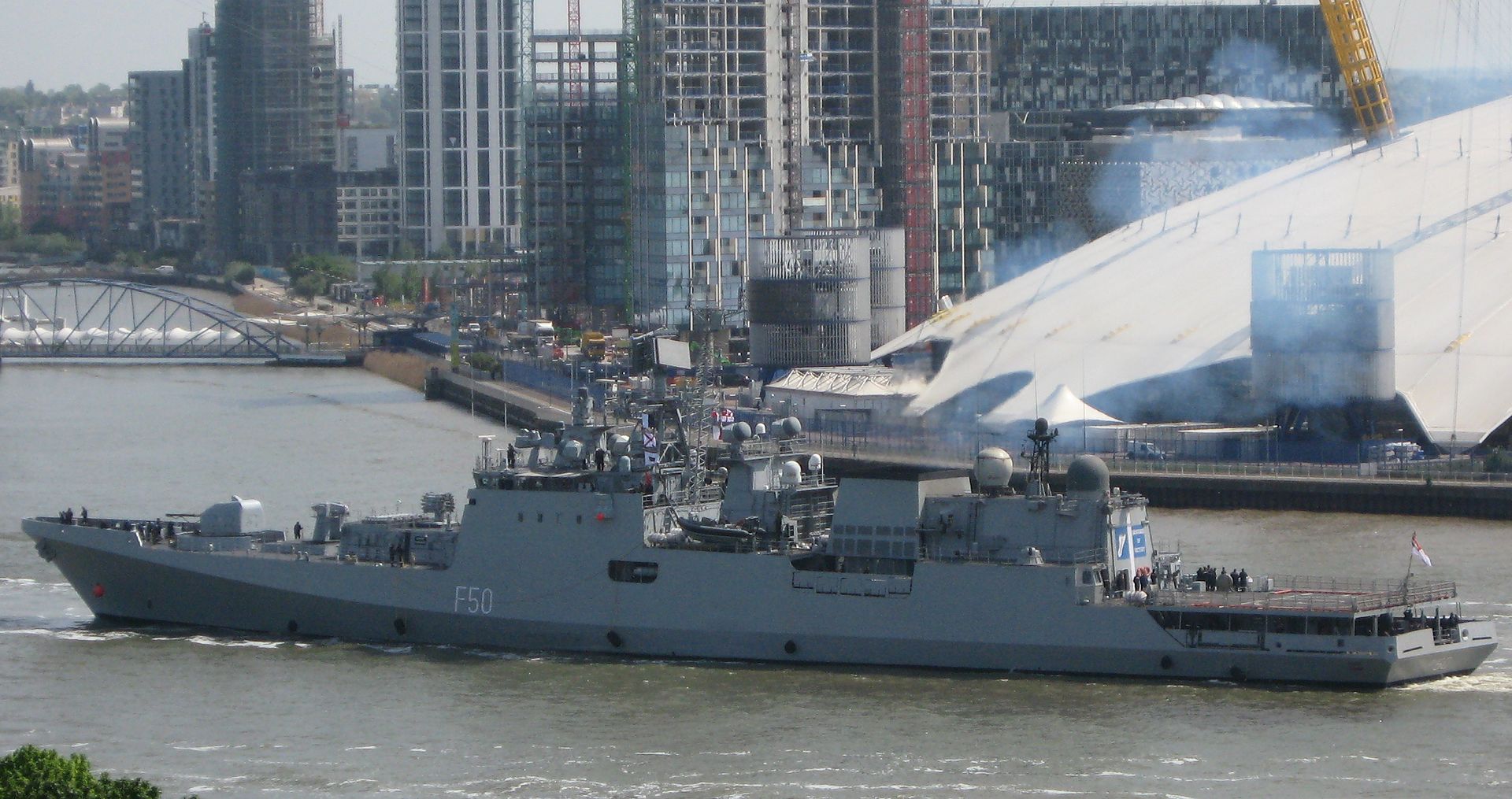
Units of the Theodore Roosevelt Carrier Strike Group sailed in formation with the Indian Navy Talwar-class frigate INS Tarkash (F50), March 25.

The Arleigh Burke-class guided-missile destroyer USS Preble (DDG 88), along with the aircraft carrier USS Theodore Roosevelt (CVN 71) and guided-missile destroyers USS Halsey (DDG 97) and USS Sampson (DDG 102) sailed in formation with the Indian Navy Talwar-class frigate INS Tarkash (F50), March 25.

The event was a naval greeting and training exercise between partner nations as Theodore Roosevelt Carrier Strike Group (TRCSG) transitions from fighting ISIS while in the Arabian Gulf to operations in the U.S. 7th Fleet area of operations such as counter-piracy, freedom of navigation operations and training.

Warfare commanders from the U.S. Navy ships and the Indian Navy ship practiced working together and strengthened their crews’ ship handling. Exercises included drills in communications and navigating in several close formations.

“This exercise offered a unique opportunity to further our capabilities to operate with and learn from one another,” said Cmdr. Allen Maxwell Jr., commanding officer of Preble. “It’s an excellent test for our watchstanders to exercise their flexibility as warfighters and to interact with foreign vessels in a tactical environment. Preble is dedicated to ensuring its ability to work together with our allies and partners and deal with common concerns such as disaster relief and safety of sea lanes.”

Additionally, 10 Indian Sailors toured spaces aboard Preble such as combat information center, central control station, and the bridge while 10 Preble Sailors visited Tarkash.

“Having the opportunity to go over to the Indian ship was an awesome cultural experience,” said Ensign Grace E. Pruden, a Sailor assigned to Preble. “I was surprised by how much was the same, but also intrigued to learn how our ship and the crew run differently. They were a very hospitable ship, eager to share with us and learn from us.”

Pruden said that the crew size, weapons systems, air capabilities, gas turbine engines, and officer and enlisted ranking were comparable to that of Preble. However, she noted differences in officer training programs.

“Whatever field their officers are in when they join is what they will stay in for their entire career, which for most is a minimum of 20 years,” said Pruden. “The idea of changing departments after a tour, or even during a tour, along with standing watches outside of the department we are in, as we do, really surprised them.”

While touring each other’s ships for the afternoon, Sailors had the chance to learn how they operate on a day-to-day basis and experience life at sea from a different perspective.

“The officers and crew of Tarkash were fantastic hosts and extremely welcoming to our group,” said Ensign Adam B. Campbell, a Sailor assigned to Preble. “It was very impressive that a cook staff of only five sailors could produce such a wide variety of delicious, fresh foods for a crew of 300 people three times a day.”

After a formal gift exchange between leadership and friendly conversation, Sailors returned to their ships on a rigid-hull inflatable boat to conclude the exercise.

Preble is currently deployed to the U.S. 7th Fleet area of operations with the aircraft carrier USS Theodore Roosevelt, the flagship of Carrier Strike Group (CSG) 9, along with the guided-missile cruiser USS Bunker Hill (CG 52), and guided-missile destroyers USS Halsey (DDG 97), USS Higgins (DDG 76) and USS Sampson (DDG 102)…..

http://www.navy.mil/submit/display.asp?story_id=104858

The photo shows INS Tarkash sailing past the O2 Arena in London on 10th May 2017. Credit: Wikimedia