Successful Test Firing of Indian High-Speed Cruise Missile

03/27/2018

According to an article published this month by our partner India Strategic, the Indians have successful tested their high speed cruise missile.

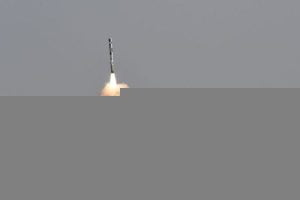
BrahMos, the formidable supersonic cruise missile with indigenous seeker was successfully flight tested at 0842 hrs March 22, 2018 at the Pokhran test range in Rajasthan.

The supersonic cruise missile and the seeker have been developed jointly by DRDO and BrahMos Aerospace.

Brahamos Missile Launch, March 22, 2018. Credit: India Strategic

The precision strike weapon with indigenous seeker flew in its designated trajectory and hit the pre-set target. The flight test was conducted by the scientists of DRDO and BrahMos along with the Indian Army.

A high level team led by Chairman DRDO & Secretary DDR&D Dr S Christopher was present during the flight trial, which included DG (Missiles & Strategic Systems) & SA to RM Dr G Satheesh Reddy and Director General BrahMos Dr Sudhir Mishra.

Programme Director Dr Dashrath Ram and Project Director Mrs V Prameelawho had led the effort for development of the indigenous seeker were also part of the team. Senior IAF officials also witnessed the successful launch of the tactical weapon.

Republished with permission of India Strategic.

http://www.indiastrategic.in/2018/03/23/successful-test-firing-of-brahmos-with-indigenous-seeker/


Europe Prepares for Fifth Generation Transformation: The European Air Group Works the Challenge

By Robbin Laird

The European Air Group has been an incubator for change within the European air forces. The EAG flies below the radar but is a key asset for the Air Chiefs of 7 major European Air Forces in shaping ways to work more effectively together and to get the best value they have from legacy and new assets at the disposal of those forces.

They clearly have grasped the point of the Ben Franklin moment: We all hang together or we hang separately!

“We need to learn to work more effectively together to ensure that our individual national air capabilities are maximized in their effectiveness,” as one EAG official told me a few years ago.

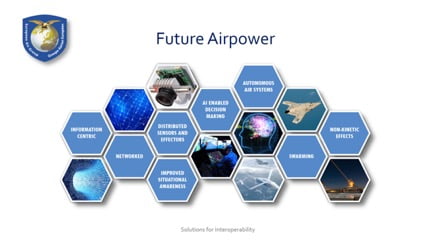
Evolution of Airpower. Credit: European Air Group

The head of the EAG is rotational among the Air Chiefs, with the current COS of the Italian Air Force now the head of EAG.  The Chiefs meet once a year to shape an agenda and to determine the way ahead based on the work performed by the EAG or being shaped for the EAG. There is a small permanent staff, headed by a Deputy Director and a Chief of Staff for the EAG, with its headquarters at RAF High Wycombe, UK.

The seven European Air Forces involved in the EAG are the following:  the UK, France, Italy, the Netherlands, Belgium, Spain and Germany.

Two notable achievements of the EAG are working through the terms of reference and the approach to establishing the European Air Transport Command and the European Personnel Recovery Centre.

In 2014, I first visited the EAG and presented a briefing on how to think about the integration of 4th and 5th generation aircraft as European airpower is transformed under the impact of fifth generation operations.

http://www.euroairgroup.org/project/4th5th-gen-aircraft-integration-initiative/

In 2016, the EAG held a working group session and conference on the opportunities and challenges with leveraging fifth generation transformation.

The 2016 two-day 4th 5th Generation Integration Information Forum was held at the home of the EAG, RAF High Wycombe, at the end of April 2016. 

With national 5th Generation aircraft programs maturing and the need to integrate 4th and 5th generation aircraft into future coalitions acknowledged the forum is providing a vital conduit to keep information flowing between both EAG nations and external partners and increase the awareness of nations about the challenges to come.

The first day saw experts from academia and industry set the scene with their interpretation of the technological and political developments that are going to shape the future of air power and more specifically the challenges of integrating 4th and 5th generation multi-national air forces into that vision.

The second day opened the floor to a discussion between the individual EAG nations present, Tactical Leadership Program (TLP), Joint Air Power Competence Centre (JAPCC); European Union Military Staff (EUMS) and the USAF that was being represented for the first time at an EAG 4th 5th Generation Forum.

The debate focused on the specific challenges being experienced at a national program level whilst also providing an overview of the future Air Force compositions.

Fifth-generation aircraft roll out over the next decade. Credit: European Air Group

The identification of the common challenges being experienced with this cutting edge evolution of the approach to, and employment of, air power is key to the development of future collaborative solutions. 

National representatives were able to take away key areas for further consideration and investigation that when resolved will be fundamental to enhancing interoperability between the nations.

The 4th 5th Generation Integration Information Forum will continue to provide a crucial communication channel between the EAG nations as the next generation of combat aircraft are brought into service in Europe.

http://www.euroairgroup.org/project/4th-5th-generation-integration-information-forum-april-2016/

Since then, the work on 4th 5th Gen integration has progressed considerably and the Integration Forum has been absorbed within a dedicated program that has been launched by the EAG in 2017.

During my most recent visit to the EAG in February 2018, I had a chance to talk with the Deputy Director of the EAG, Air Commodore Robert Adang of the Royal Netherlands Air Force, and to get an update on the effort to leverage fifth generation capabilities.

http://www.euroairgroup.org/wp-content/uploads/20161114-Bio-Cdre-Adang-DDEAG.pdf

As he noted in our discussion, as a young student he saw the first F-16 ever to visit the Netherlands fly over his school and head for a Dutch Air Base.  Now, he is on the ground floor as the F-35 enters European Air Forces, and is a force for change in reshaping the overall concepts of operations and combat capabilities of European Air Forces.

The EAG is addressing the question of how to shape an interoperable 4th-5th generation air force. They are addressing the question of “interoperability gaps” and how to attenuate them.

The EAG has developed a program, which they call the Combined Air Interoperability Program (CAIP) guiding the overall effort.  The EAG Steering Group mandated in 2016 that there was a need “to develop a plan to solve the inte

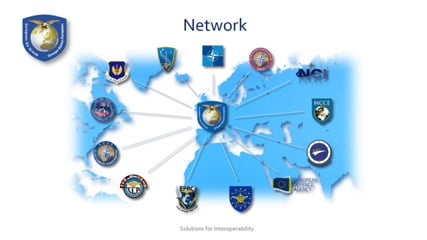
The EAG Network: Credit: European Air Group

roperability challenges that result from integrating 5th Gen with 4th Gen systems.”

The EAG is clearly not working this alone but is also providing operational intellectual capital to core organizations working the challenge in Europe, including USAFE, the Joint Air Power Competence Centre and NATO HQ Air Command.

As Air Commodore Adang put it: “the objective is plain and simple.  It’s to create the optimum conditions for future combined training, exercise and operations by resolving interoperability issues that result from 4th and 5th gen integration.”

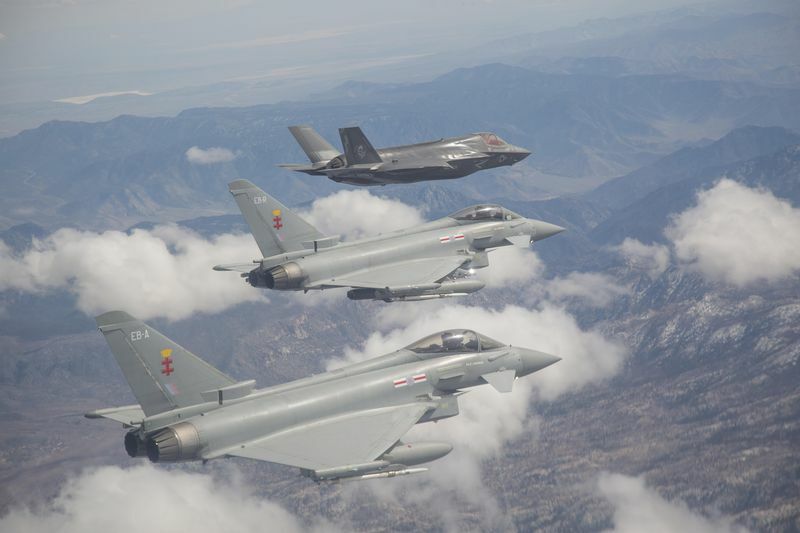
The baseline point is that F-35s will be a part of the force but not the dominant part numerically.

As Adang underscored: If I look at European air forces, current plans, when you total the projected number of F-35s in about ten years’ time, say 2028, and you compare it to the number of 4th gen fighters that will be used at that time still, then you’re looking at about 20% fifth gen systems and 80% 4th gen systems, not including any F-35 or F-22 US forces.

“And the total number that makes up that 20% of F-35s is too small to create the total effects that you need in a major combined air operation.

“You need the missile carrying capabilities and other attributes of the 4th gen fighters to ultimately be successful. So it’s only through a combination of 4th and 5th gen that we can be successful in future air operations.

“And this is the trick.”

Several dynamics of change are being addressed to generate a transformation process.

The first is shaping new training capabilities. 

“How do we integrate the F-35 in the European theatre? We’re working on that between the nations and associated organizations.

“How can we establish red forces capability that’s relevant for a 5th gen force?”

The second is to build out airspace training ranges within Europe as well.

“There is a clear need for training airspace and ranges that are suitable for accommodating training with 5th gen weapon systems.”

The capabilities of the fifth-generation sensors and how the sensor-shooter relationship will operate over larger areas of airspace clearly requires reworking airspace training options. And to do so will require working with the civilian authorities responsible for handling the common airspace.

“When you’ve identified this common idea of where these chunks of training airspace are going to be, then you have to start looking at how that aligns with Single European skies.  It’s the aim of Single European Skies to optimize civilian air transport. Integrating military training airspace is not a primary objective, and needs to be addressed effectively.

Third, is working the synthetic training environment and cross linking the various European efforts, including reaching out to the US forces in Europe as well.

“When I look at synthetic training, what I see is these national networks being developed bit by bit. I see some initiatives to connecting F-35 simulators multinationally. We clearly need to have some multinational training network that enables interoperability training in a synthetic environment – or rather a live, virtual and blended environment – in addition to live training.

“And I think that from a technological point of view it will be relatively easy to connect F-35 simulators from different nations in a multinational network, but then connecting that network to 4th gen capabilities for 4th gen nations is going to be where the challenge is, not only because of technological differences but also from a security perspective. But in the end, that’s where we have to go.

“If in ten or fifteen years’ time, we don’t do a substantial part of our multinational training in a synthetic environment, we’ve done something wrong.”

More broadly speaking with regard to transformation, the European air combat fleet under the impact of fifth generation is forcing changes, which are congruent with where technology, C2 and concepts of operations are headed.

Air Commodore Adang treats the F-35 as a first-generation information dominance aircraft. The fifth-generation approach lays the foundation for preparing for the future while current capabilities are transformed as well.

“By now most people agree there’s a future of military operations come to be about information, not about systems. And the only way to be successful in these information-centric operations is when all the capabilities that you have are networked together seamlessly, or as seamless as possible. And those networks will see an increasing number of distributed centers and effectors operating in unison through the network. These sensors will give us an improved situational awareness if we prove to be capable of exploiting all the information that they’re gathering, that’s one of the biggest challenges that we will be facing in the future.”

Put simply: a different approach to airpower and the fifth generation transformation is clearly driving change in this direction and the EAG wants to both help shape a way ahead for integration of the legacy with the new fleet, but lay down the foundation for the kind of combat learning which such a 21st century air combat foundation can enable.

“How can we educate people in 5th gen awareness, make them aware what 5th gen warfare means?”

The EAG is working within a network of organizations to foster innovation and to provide cross organizational learning which can facilitate transformation as well. “We want to take the best ideas and approaches within the European airpower network and apply those throughout the European airpower system.”

In short, the EAG is proving pragmatic intellectual leadership in the European airpower environment to shape a way ahead for a more capable 21st century combat force.

A South African Input to the Australian Defence Force

03/24/2018

Our partner defenceWeb has highlighted a South African input to the Australian Defence Force, namely, in terms of land munitions capabilities.

Rheinmetall will deliver the first qualification lots of 155 mm Assegai ammunition to the Australian Defence Force this year, with further partial deliveries taking place next year.

After successful qualification, Australia will procure war reserve stocks for the new ammunition. This comes after Australia in late 2017 announced the AU$100 million order of Assegai ammunition for its M777A2 howitzers.

Assegai rounds as well as fuses and propelling charges will be supplied by a team comprising NIOA, Rheinmetall Waffe Munition, Rheinmetall Denel Munition in South Africa, Nitrochemie and Junghans Defence. 

Rheinmetall on 21 March said the Australian contract, awarded under its Land 17 Phase 1C.2 Future Artillery Ammunition programme, also includes several options for further five-year periods, which could bring the value up to “the triple digit million AU$ range”. 

“The order represents a significant success for Rheinmetall in several respects. It will enable the Group to establish itself in coming years as Australia’s sole supplier of artillery ammunition. In addition, it is the first time a M777A2 field howitzer user nation has opted for the Assegai family. The armed forces of Canada and the United States, among other nations, also deploy the M777A2.”

Rheinmetall Denel Munition’s (RDM’s) portion of the initial contract for the qualification ammunition and war stock is approximately AU$60 million.

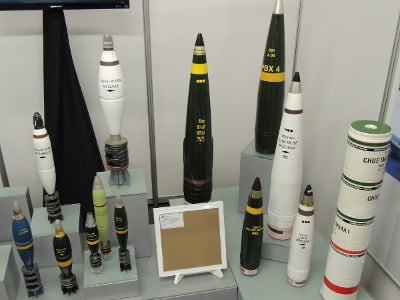
RDM will supply the complete family of ballistically matched Assegai projectiles with extended range, improved accuracy and increased effect, replacing Australia’s older generation ammunition. The latest technology includes the full suite of ammunition including High Explosive, V-LAP High Explosive Extended Range, visual and infrared illumination and smoke and practice rounds as well as modular charges for training.

The Australian artillery order came before the Australian government announced its intention to order Rheinmetall’s Boxer wheeled armoured vehicle last week under Australia’s Land400 Phase 2 programme. Presuming the procurement contract is awarded as planned, the order will mean over €2 billion in sales for the Düsseldorf, Germany-based tech group. A total of 211 Combat Reconnaissance Vehicles are to be built for the Australian armed forces.

Republished with permission of our partner defenceWeb

http://www.defenceweb.co.za/index.php?option=com_content&view=article&id=51146:rheinmetall-to-deliver-australian-assegai-ammunition-this-year&catid=50:Land&Itemid=105

And this comment was made on the defenceWeb website by one reader:

Nice to see a substantial order from a “top tier” country, a welcome change from the usual small orders from less stable customers. I suppose the financial muscle of Rheinmetall AG is backing this sale. Having this ammo qualified on the M777 obviously opens up further possibilities too.

High-Intensity Warfare and Alliances in the 21st Century: An Australian Persepective

03/23/2018

By Dr Alan Stephens

It was the 19th century British prime minister Lord Palmerston who famously remarked that in international relations there are “no eternal allies … only interests”.

Palmerston’s hard-headed world view has particular relevance for small- and medium-nations that find themselves drawn into high-intensity warfare. The October 1973 war in the Middle East and the 1982 war in the Falklands illustrate the point.

The 1973 war began on 6 October when Egypt and Syria launched a sudden attack against Israel. Over-confident Israeli commanders were shocked when their previously dominant air force found itself unprepared for the quality and tactical disposition of the Arabs’ ground-based air defence system.

The IAF started the war with about 290 frontline F-4 and A-4 strike/fighters and within days some fifty had been shot-down. It was an unsustainable loss rate.

A week later, as the war in the air began to turn and the Israelis started to assert their expected dominance, it was the Arabs’ turn to experience unsustainable losses.

Now, both protagonists faced the same urgent problem: neither had the reserves nor the local capacity to rapidly reinforce their fighting units.

There is a limit to how much a nation can spend on otherwise non-productive war industries and stockpiles. Governments have to make fine judgments regarding how many weapons – which represent stranded assets until they are used – they can afford to have parked on ramps or stored in warehouses against the possibility of a contingency that might never arise.

That economic imperative is especially pronounced in the war in the air, in which platforms and weapons are exceedingly expensive. And in high-intensity fighting, extreme unit costs are accompanied by extreme loss and usage rates.

Thus, during the nineteen days of the October War, the Israelis lost 102 strike/fighters and the Arabs 433, and the Arabs fired 9000 surface-to-air missiles. Those numbers alone amounted to thirty aircraft and $560 million per day.

What that meant was that neither the Israelis nor the Arabs was capable of fighting a high-intensity air war for more than about a week without direct assistance from their American and Soviet sponsors.

And that’s precisely what happened.

On 9 October, the Soviets started a massive airlift to resupply the Egyptians and Syrians with missiles, ammunition, SAM components, radars, and much more; shortly afterwards, the US did the same for Israel. The US also made good the IAF’s aircraft losses by flying-in about 100 F-4s, A-4s and C-130s, some of which arrived still carrying USAF markings.

Without that resupply, Israel and the Arab states could not have sustained such a high-intensity conflict.

This point bears emphasis. Israel was far superior militarily to the Arab states, and its excellent indigenous industry enabled it to develop important capabilities (such as electronic warfare counter-measures) during the conflict.

Nevertheless, it is not unreasonable to suggest that, had Egypt and Syria been resupplied and Israel had not, the war would have ended differently.

Sustainment in the form of aid from an external source was again crucial during the 1982 Falklands War between the United Kingdom and Argentina.

The UK’s armed forces are among the world’s very best, and the nation is one of the world’s wealthiest and most powerful. Argentina in 1982 was a dysfunctional, second-world nation led by an incompetent cabal of military dictators.

Yet according to both the key foreign affairs advisor to prime minister Margaret Thatcher, Lord Charles Powell, and the assistant US defense secretary,

Richard Perle, “Britain probably would have lost the war without American assistance”. That assistance extended to providing vital intelligence, and to “stripping part of the frontline US air forces” of the latest version of the Sidewinder air-to-air missile.

Argentina, by contrast, and to its dismay, found itself the subject of Lord Palmerston’s unsentimental characterisation of alliances, when it was abandoned by two nations which, until the day the shooting started, it had believed were its friends. The first, the US, cut-off intelligence and diplomatic assistance; and the second, France, which had sold the Argentine Navy Super-Etendard strike fighters and Exocet missiles, withdrew the technical support needed to make that capability fully effective.

In the event, the Argentines managed to fire five Exocets, sinking two ships from the British war convoy and severely damaging a third. It is feasible that, with better targeting information and only a half-dozen more operational missiles, the Argentines might have inflicted sufficient damage on the convoy to have compelled it to turn back before it got within 100 kilometres of the Falklands.

Should Australia become involved in a high-intensity conflict in the next ten years, we can confidently expect that our air power would be well-trained and well-equipped.

Those attributes would be insufficient in themselves, however, if they were not under-written by a strong and reliable alliance.

Rethinking Australian Defense Policy: Australian Risk Management in the Decade Ahead

03/21/2018

With changes in the region, and with new dynamics of change in the North Atlantic, how might Australia rethink its defense policy?

It is clear that the current government has put in place a fundamental transformation of Australian defense policy with the RAAF being significantly modernized, the navy recapitalized but a decade away from seeing the force transformation to be deployed and Army reworking how best to contribute to the transformation effort.

This provides a solid foundation for the way ahead but how best to proceed in the future as the foundation is transformed?

Clearly, a key aspect will be thinking through longer range strike and defense in depth capabilities.  In fact, the two might be combined as Australia looks to build a 21st century version of operating from flexible basing throughout Australia as fixed bases become high value targets.

Might the Army become a key force operating land based longer range strike and building up its capabilities to defend mobile air bases?

These are issues which we will explore in the coming months.

But during this visit to Australia, we had a chance to meet with Paul Dibb, emeritus professor of strategic studies at the Strategic and Defence Studies Centre which is part of the Australian National University.

And during that meeting, he brought to our attention a piece c0-authored last year with Richard Brabin-Smith which provided an interesting look at rethinking Australia’s defense policy in the new strategic era.

What follows is the executive summary to that paper published by the Australian Strategic Policy Institute.

Australia’s strategic outlook is deteriorating and, for the first time since World War II, we face an increased prospect of threat from a major power.

This means that a major change in Australia’s approach to the management of strategic risk is needed.

Strategic risk is a grey area in which governments need to make critical assessments of capability, motive and intent. Over recent decades, judgements in this area have relied heavily on the conclusion that the capabilities required for a serious assault on Australia simply did not exist in our region.

In contrast, in the years ahead, the level of capability able to be brought to bear against Australia will increase, so judgements relating to contingencies and the associated warning time will need to rely less on evidence of capability and more on assessments of motive and intent. Such areas for judgement are inherently ambiguous and uncertain.

In particular, China’s economic and political influence continues to grow, and its program of military modernisation and expansion is ambitious.

The latter means that the comfortable judgements of previous years about the limited levels of capability within our region are no longer appropriate. The potential warning time is now shorter, because capability levels are higher and will increase yet further.

This observation applies both to shorter term contingencies and, increasingly, to more serious contingencies credible in the foreseeable future.

It’s important not to designate China as inevitably hostile to Australia, and to recognise in any case that there would be constraints on the expansion of its military influence.

Beyond the short to medium term, there would be intrinsic difficulties in operating in waters potentially dominated by Indian anti-access capabilities, and there’s potential, too, for Indonesia to develop significant sea-denial capabilities.

Nevertheless, China’s aggressive policies towards the South China Sea and elsewhere are grounds for concern that it seeks political domination over countries in its region, including countries in Southeast Asia and including Australia.

It’s China, therefore, that could come to pose serious challenges for Australian defence policy.

We need also to keep a watchful eye on Indonesia against the possibility that Islamist extremism will come to dominate that country.

This isn’t the country’s current trajectory, but the security consequences for Australia of such a development would be severe, especially if Indonesia over the years ahead were to become a major regional power.

How should Australia respond?

Contingencies that are credible in the shorter term could now be characterised by higher levels of intensity and technological sophistication than those of earlier decades.

This means that readiness and sustainability need to be increased: we need higher training levels, a demonstrable and sustainable surge capacity, increased stocks of munitions, more maintenance spares, a robust fuel supply system, and modernised operational bases, especially in the north of Australia.

For the longer term, the key issue is whether there’s a sound basis for the timely expansion of the ADF.

In many ways, the expansion base is impressive, in that relevant capabilities already exist or are in the forward program, although not necessarily in the right numbers.

Matters that would benefit from specific examination include the development of an Australian equivalent of an anti-access and area denial capability (especially for our vulnerable northern and western approaches) and an improved capacity for antisubmarine warfare.

In summary, the prospect of shortened warning times now needs to be a major factor in today’s defence planning.

Much more thought needs to be given to planning for the expansion of the ADF and its capacity to engage in high-intensity conflict in our own defence—in a way that we haven’t previously had to consider.

Planning for the defence of Australia needs to take the new realities into account, including by re-examining the ADF’s preparedness levels and the lead-times for key elements of the expansion base.

The conduct of operations further afield, and Defence’s involvement in counterterrorism, must not be allowed to distract either from the effort that needs to go into this planning or from the funding that enhanced capabilities will require.

https://sldinfo.com/wp-content/uploads/2018/03/ASPI-MANAGING-RISK-FINAL-NOVEMBER-2017.pdf


The RAAF Airpower Conference 2018: The Way Ahead for Airpower in a Disrupted World

03/20/2018

By Robbin Laird

When I attended the 2016 RAAF Airpower Conference, the main focus was upon the newly released White Paper and related documents announcing the government’s ways ahead on defense modernization.

The Conference highlighted key elements for the modernization of the Australian Defence Force and the importance of shaping as integrated a force going forward as possible.

Indeed, the Williams Foundation seminars since that time have highlighted various aspects of integration, air-sea integration, air-land integration and the challenge of designing an integrated force.

This year’s RAAF airpower conference and indeed the Williams Foundation seminars are moving from that foundation to focusing on dealing effectively with the challenges of the evolving strategic environment.

How best to shape effective approaches, technologies and modernization strategies for the decade or more ahead?

The RAAF Airpower Conference is entitled “Air Power in a Disruptive World”and is providing an overview on how the RAAF and ADF leadership are looking at the challenges as well as various specialist presentations of technologies which may well drive significant change in the period ahead.

I will focus primarily on the policy side of the way ahead and how key speakers looked on Day 1 of the Conference at the broader parameters of change and shaping a way ahead.

But for non-Australians it is important to highlight the quite rapid path the RAAF has taken to modernization.

A decade ago the force was defined by its Hornets and C-130s and the range and effects which such a force could achieve.

Then the Super Hornets, Wedgetail, the KC-30A, and the C-17 were procured and the force went from being a territorial or regional force to one able t project globally.

The coming of age of this capability really was the Middle East Operation, called by the Australians Operation Okra.

Here a significant airpower package has been deployed from Australia to the Middle East and the skill sets developed to support an advanced air battle management system, an advanced tanker and a data rich combat aircraft, the Super Hornet.

With the coming of the F-35 and the Growler, the RAAF is about to take its next steps into the tron warfare domain and shaping a broader fifth generation warfare approach informing and empowered by transformation of the ground and maritime forces as well.

It is the coming of this force which is emerging into the changing world of the period ahead which is the backdrop to the discussions at both the RAAF and Williams Foundation Conferences.

Our interviews last week and this week with the RAAF and the Navy will highlight several aspects of the dynamics of change within the force itself.

But the RAAF conference provided a good look at the perceived dynamics of change in the broader global environment and within the ongoing technological revolution reshaping the demand side of both the use and development of modern airpower and the ADF more generally.

The conference was opened by Air Marshal Leo Davies, Chief of the RAAF.

He highlighted the growth in the breadth and depth of the challenges facing airpower as well as the growth in demands to operate in the gray zone.

Among the key dynamics he highlighted were the following: the dispersal of global influence and the diversity of power centers; the shift in the center of global power from the North Atlantic to the Indo-Pacific region, the elevated strategic impact of China and North Korea; the shifts in US national strategy from focusing primarily on counter-terrorism to great power challenges.

These dynamics were leading to the need to invest in higher end military capabilities and to seek innovative solutions to ensure that the liberal democracies had credible deterrent capabilities.

He underscored the core significance for the RAAF of evolving the skill sets to deal with these challenges which he characterized as shaping skill sets which could move beyond a narrow definition of mission performance to deal with the distributed battlespace and its more strategic demand set.

The Australian Defense Minister then followed with an overview of how she saw the evolving global situation and its impact on the ADF.

She noted at the outset that although it was only two years since she addressed the 2016 airpower conference, it seemed almost an age ago compared to the world of 2018.

The changes in Europe, the United States, and Asia have created significant pull in the strategic environment and shifting demand sets as well.

She underscored the core shift in how Air Forces receive and use information and with the coming of both Growler and F-35 this would be accelerated as well.

She underscored the important role which Australia played in the region and growing expectations of partners in the region for that role to remain central as well.

She reinforced the core message from Air Marshal Davies concerning the need to shape a 21st century workforce in Australia to support the ADF as well going forward, given the pace and scope of technological change in the commercial and defense domains.

Other key ADF speakers throughout the day added key points to the challenge agenda facing the ADF in the period ahead.

Chief of Navy, Admiral Tim Barrett, highlighted the significance of the digital transition for navy both in terms of what it means to shape an integrated digital force as well as building out a new shipbuilding capability built around a digital design and manufacturing process.

The key role of software upgradeable systems and digital manufacturing has been a theme for some time for Second Line of Defense, but there is still a broader lack of understanding in the defense community of how significant this shift is for force development and generation.

This clearly is not the case for Chief of Navy who underscored that the standing up the workforce and infrastructure to build the new navy platforms was designed not simply to build a new ship, but to be crafted in such a way that the “frigate or destroyer after next was already being shaped in the design and manufacturing process.”

Major General Toohey, Head of Land Capability, provided an Army perspective which focused on what she called the “post digital army,” although she was really focusing on how the digital transition was shaping a new approach to the man-machine relationship in which technology could extend the reach and impact of the combat elements in the ground maneuver force.

Vice Air Marshal Warren McDonald underscored the importance of building more effective security into a digitally enabled force.

His focus was less on new technologies to provide for enhanced protection, than upon the organization becoming more aware of how to avoid leaving seams within the organization through which adversaries could penetrate and influence the ADF decision making.

He highlighted a key element of the transition from the land wars to higher tempo operations in terms of the ADF and other allied forces getting too complacent about the environment in which digital tools have been used in the Middle East as the forces shift to dealing with cyber armed adversaries conducing information war on a regular basis.

He highlighted the strategic significance of resilience and building out resilient organizations to deal with new threat environment associated with IW.

The Chief of Joint Operations, Vice Admiral David Johnston, highlighted how he saw the impact of the evolving environment on the ADF and what he thought was the key to being successful in this environment moving forward.

As he put it, he had a five-year perspective as the Joint Force Commander, but frankly that makes a great deal of sense in terms of what the ADF is introducing in the next five years and how one then builds from that shift to the next round of innovations.

His perspective is very reminiscent of the ACC Commander whose own focus is quite similar.

He underscored that the geographical spread and diversity of threats has grown and the speed of response has been elevated as an operational requirement.

And the ADF is doing this in a very visible world characterized by the spread of social media and the proliferation of information war.

He also seconded McDonald’s remarks as well: “We have gotten used to operate in a non-contested EW environment, and those habits are a threat to our force going forward.”

The ADF faced the challenge of task diversity when deploying a force, but the new platforms, and the focus on acquiring multi-mission platforms provides an advantage.

Indeed, integrated force design and performance is a increasingly key discriminator going forward.

A broader geo political perspective was provided during the conference, led off by the keynote address by Bilahari Kausikan Ambassador at Large at the Ministry of Foreign Affairs Singapore.

This was a remarkable address given its breadth and pungent insights on the region, on the United States, on China and on the ASEAN countries.

He drove home the point that there is too much binary thinking in addressing the region, notably with regard to the US-Chinese competition. Developments and competition in the region is rarely zero sum; it is really a multiple-sum competition.

He started by addressing the significant analytical failures in the media and in the broader analytical community to grasp the reality of the Trump Administration.

Although his style leaves something to be desired, when one looks at the realities, the Administration has moved beyond failures of the Bush and Obama Administration to address some fundamental aspects of change globally.

He was concerned that the strategic achievements of the Administration militarily could be undercut by the Administration’s trade policy perspective, but at the end of the day there was significant continuity and the US was not going away.

He then focused on China and the consolidation of power by the Chinese leaders.

He saw the Chinese as trying to work an economic transition which will be difficult and the leadership will be focused on domestic challenges in the period ahead.

The leadership clearly would like to keep the current global system in place as they have more to gain than to lose from the current state of affairs but this is not at all clear will be the outcome.

Clearly, China would like to see its new status globally to be recognized and to shape a new china centric order with all roads leading to Beijing.

He saw the ASEAN states as seeking ways to leverage Chinese economic growth but at the same time protecting their autonomy.  A challenge but a necessity as well for the smaller states in the region.

He predicated that the period ahead would see significant great power competition and uncertainty but felt that although the Chinese are pursuing the path of persuading others that their rise was inevitable and the decline of the US equally inevitable, US allies in the region would work with the US to deflect such an outcome.

Another geopolitical presentation which focused on Australia was that of John Blackburn. 

His focus was on energy security and the absence of a policy in Australia looking at global realities that make security of energy in Australia a question mark, not a reality.

Obviously, military conflict in the region would lead to disruption of energy supplies, and disruption of energy would significantly impact Australian society and military operations.

Blackburn argued that not only should a comprehensive energy security policy be put in place but he argued for a “fifth generation” approach.

What he means by that is shaping an integrated approach which looks not simply at sources of fuel supply but how to integrated ways to supply demand with ways to reshaped demand in a crisis as well.

The first day was concluded by Peter Jennings, the Director of the Australian Strategic Policy Institute, who provided an overview on ways to reform the Australian policy system to better prepare Australian for meeting the challenges ahead.

He focused on ways the Australian system could build in better strategic decision making, ranging from changes in the terms of government, to Senate electoral reform to holding periodic cabinet meetings to address longer term strategy.

In short, the RAAF has undergone and is undergoing significant modernization.

But rather than sitting on their successes or focusing on the next platform, the RAAF is generating a broader look at the evolving strategic environment for the ADF and seeking to understand how that environment might drive the next round of modernization.


Creating Continuous Improvement Capabilities: A Core 21st Century Strategic Advantage for the US and Allied Militaries

By Robbin Laird

The US has introduced a new generation of combat aircraft.

These aircraft are different from legacy aircraft notably, in that they are designed, crafted and built differently – they are software upgradeable, data rich military aircraft for 21st century forces.

The challenge is to build out the working relationship with industry and to rework military organizations to leverage the opportunities built into the digital rich aircraft.

Leveraging the data generated by a fleet of commonly configured software upgradeable aircraft is a weapon system, which can provide a significant advantage when dealing with peer competitors.

But it will not happen simply by buying an F-35, or a CH-53K.

Much more is required – nothing less than shaping the focus of maintainers, reshaping how the military manages data, and how it works with industry.

During my visit to the Sikorsky Customer Service Center, I addressed this challenge as follows:

As new digital military aircraft systems come into operations, can the military benefit as has the commercial customer from leveraging data to enhance aircraft performance and availability?

 The digital systems in modern aircraft provide for the possibility of continuous improvement. 

 The challenge for the military is to align their organizations with the potential to tap into the aircraft systems THEY ARE ALREADY BUYING. 

 https://sldinfo.com/the-sikorsky-approach-to-global-fleet-management-and-support-lessons-learned-for-evolving-military-programs/

One of the key persons who briefed me on the functions of the Center as well as its applicability to military platforms was Ping Liu, Chief Data Scientist and Sr., Manager Advanced Analytics, Sikorsky Aircraft.
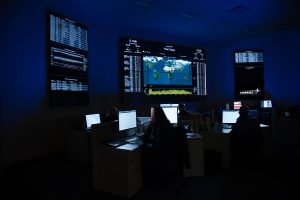
Sikorsky Customer Care Center, Trumbull, Connecticut. Photo Credited to Sikorsky.

Given her role in the Center and the insights, which she contributed during my visit, I wanted to follow up with a separate interview with her.

I did so on February 8, 2018 by phone during my stay in Paris, France prior to going to Helsinki.

We started by discussing the role of her team in the Customer Support Center.

“The Fleet Management Room is where my team develops & deploys predictive analytics for the aircrafts in the commercial fleet.

“We want to predict which aircraft is going to be down, and what component we need to stock up to ensure we have the right parts at the right place and right time.

“It is clearly a spiral learning experience.

“When we stood up the Center in 2015, my team was able to apply the latest technologies and capabilities, stand up the fleet monitoring and program performance dashboards so that we can increase the situational awareness across the enterprise.

“Once people understand what’s happening in the fleet, we then identify and integrate some of the best ideas across enterprise, to increase the ability to leverage action-driven information.”

Question: Gaining a fleet knowledge is crucial to the entire effort to understand how to get enhanced aircraft availability.  How do you do this?

Ping Liu: We are shaping predicative understanding of both the fleet and the individual aircraft.

“The fleet is composed of the individual aircraft with individual components.

“But being able to drill-down to the required level and to shape operational insights and convert those insights into actionable decisions is what we are focused upon.”

Question: What about the impact of differently configured aircraft on your ability to understand fleet behavior?

Ping Liu: The S-92 green aircraft has to be configured very differently for different missions. Configuration management is key.

“While we are focused on the fleet performance, we’re also very much focused on understanding regional operator mission differences, so we can actually drive aircraft-specific actions.

“We call it “prescriptive analytics.”

“We need to predict what the fleet is going to do from cost and availability perspective, but also to be prescriptive with regard to each individual aircraft in terms of what they have to do in order to increase performance for that particular aircraft.”

Question: You have regional support centers, and presumably understand the variations in regional operations are a key part of predictive analytics to manage the fleet regionally?

Ping Liu: It is.

“The helicopters flying the North Sea demonstrate different requirements than those flying in the Gulf of Mexico.

“When you are looking at asset deployment especially materiel stocking strategy you have to have a regional focus to be fully effective.

“For example, if  I don’t recognize individual configuration differences, I might be overstocking air conditioning components at North Sea where it’s mostly needed in regions with warmer climate, or overstocking search & rescue hoists that are only applicable to a portion of the fleet in a particular region.

“Understanding regional, operator, A/C level differences are key to manage cost & availability effectively.”

Question: By developing the models, you are obviously opening the door to culling the latest innovations in artificial intelligence and other analytical technologies as well, I would assume?

Ping Liu: That is correct.

“We are using a number of very sophisticated machine learning capabilities to do our job.

“We are consistently assessing the latest AI and machine learning capabilities to increase the development speed and accuracy of our predictive models, so that we understand what the data can tell us.”

Question: When Sikorsky first offered the S-92, it was a platform. 

Now you are providing a capability, driven by data empowerment. 

Is that a fair characterization?

Ping Liu: It is.

“As more and more data are generated from commercial platforms, we recognize that data needs to be looked at really as a product feature.

“How do we extract value out of this product feature and actually help our customers to improve readiness and cost?

“I think the difference between commercial and military, is on commercial platforms we have more or less easier access to data, invariably, compared to military applications.

“I think commercial operators are incentivized and motivated as they are profit driven, more so than military operations.

“Because of that, anything that can help them to reduce their costs, increase uptime, and they’re usually supportive. And we do a better job therefore delivering value to commercial operators.”

Sikorsky Customer Care Center, Stamford, Connecticut. Photo Credited to Sikorsky.

Question: Let us turn now to the military and how they might reap the advantages of working big data to get enhanced value from their new data rich aircraft.  How best to do this in your view?

Ping Liu: With the K we have an opportunity working with the US Navy and Marine Corps to shape a new way ahead.

“To achieve that we clearly need to have a collaborative data strategy to achieve a breakthrough that the services clearly want and deserve.

“However, this cannot be an after-thought or just an after market strategy.

“It has to be built in from the beginning.

“We have 750+ flight hours so far on the 53K aircrafts. How do we use our early experiences to build up K-specific analytics product and services so that the customer has a much better experience comparing to a legacy system?”

Question: Often when I am talking to military users, they highlight the security challenge but I think what is too often overlooked is that on the commercial side, security is a very high priority from the get go. 

How do you see the challenge?

Ping Liu: It does not matter whether it’s commercial or military.

“We always abide by the most stringent security requirements to protect the fidelity and security of our customers’ data.”

Question: What do you see as barriers for the military to be able to use data as a weapon system, in effect?

Ping Liu: It’s a two part answer, one is data collection, and the other is data quality management.

“For example, on the data collection part the workflow of the maintainers is not necessarily enabling them to handle data in a manner that would allow us to have the kind data that would enable analytics to empower the combat force.

“The Marines are really busy. And if the data collection is too cumbersome, they don’t tend to do it or do it well.

“The Navy can invest in technology and tools to make the data collection a little bit easier.

“For example, when Marines remove a gearbox, they don’t necessarily take pictures of the failed component itself today.

“Also, the database logging the malfunctions is a traditional database with many potentially confusing malfunction codes.

“This may create problems to the Marines while they are trying to describe what has failed.

“In many cases, either they pick a code they remembered but not necessarily the right one, or existing malfunction codes do not describe what they are seeing precisely, so they end up putting additional descriptions/failure symptoms in the comments.

“And the Navy today, lacks the tools to process unstructured data effectively and efficiently, whereas Sikorsky has tremendous capabilities developed over the last few years to do so.

“I think expanding the usage of unstructured data, using text and images to improve fidelity of the data, is something that Navy can do and significantly enhance the ability to gather critical data to improve maintenance efficiencies and increase aircraft availability.

“As to data quality, the data quality management is not necessarily a part of the enterprise work flow.

“But if you truly treat data as a product, the need of quality assurance is therefore a no-brainer.

“There are tremendous opportunities existing in data collection and data quality control which can be shaped to provide for data management which can be a force enabler and multiplier.”

Question: So it is important to think of effective data management, collection and processing and capability as really a strategic asset?

Ping Liu: And if you do so, then you recognize the effort as a priority to ensure that we have a more effective combat force.

“We need to treat data as a product within the military as we do in the commercial world.

“That mind-shift has yet to happen in the military.

“For them to really capitalize on analytics, they have to start to treat data collection, data quality, data management, as a strategic enabling initiative. You need to think about this almost on the same level as lasers, as rockets

“Data needs to be treated as a strategic asset in which downstream analytics are targeted, prescriptive and action-driven to enable enhance force effectiveness.”

In other words, what I would conclude after visiting Sikorsky in both West Palm and Connecticut and watching the standup of the Osprey from the beginning that the K provides an opportunity to not go down the Osprey path of multiple configurations and stove piped data management.

The Marines revolutionized combat by introducing the Osprey, but the configuration management and maintainability side of the equation were not its strong points.

With the coming of the CH-53K there is a strategic opportunity for the Navy-Marine Corps to reshape how they handle data and make it and use it just like any other enabling weapon system.

But again, this will not happen by simply by buying a data rich software upgradeable aircraft.

It requires organizational change and new skill sets built into the force, as well as effective working relationships with industry as well.

Editor’s Note: Also, see the following:

The Sikorsky Approach to Global Fleet Management and Support: Lessons Learned for Evolving Military Programs

The RAAF At Red Flag 2018

03/19/2018

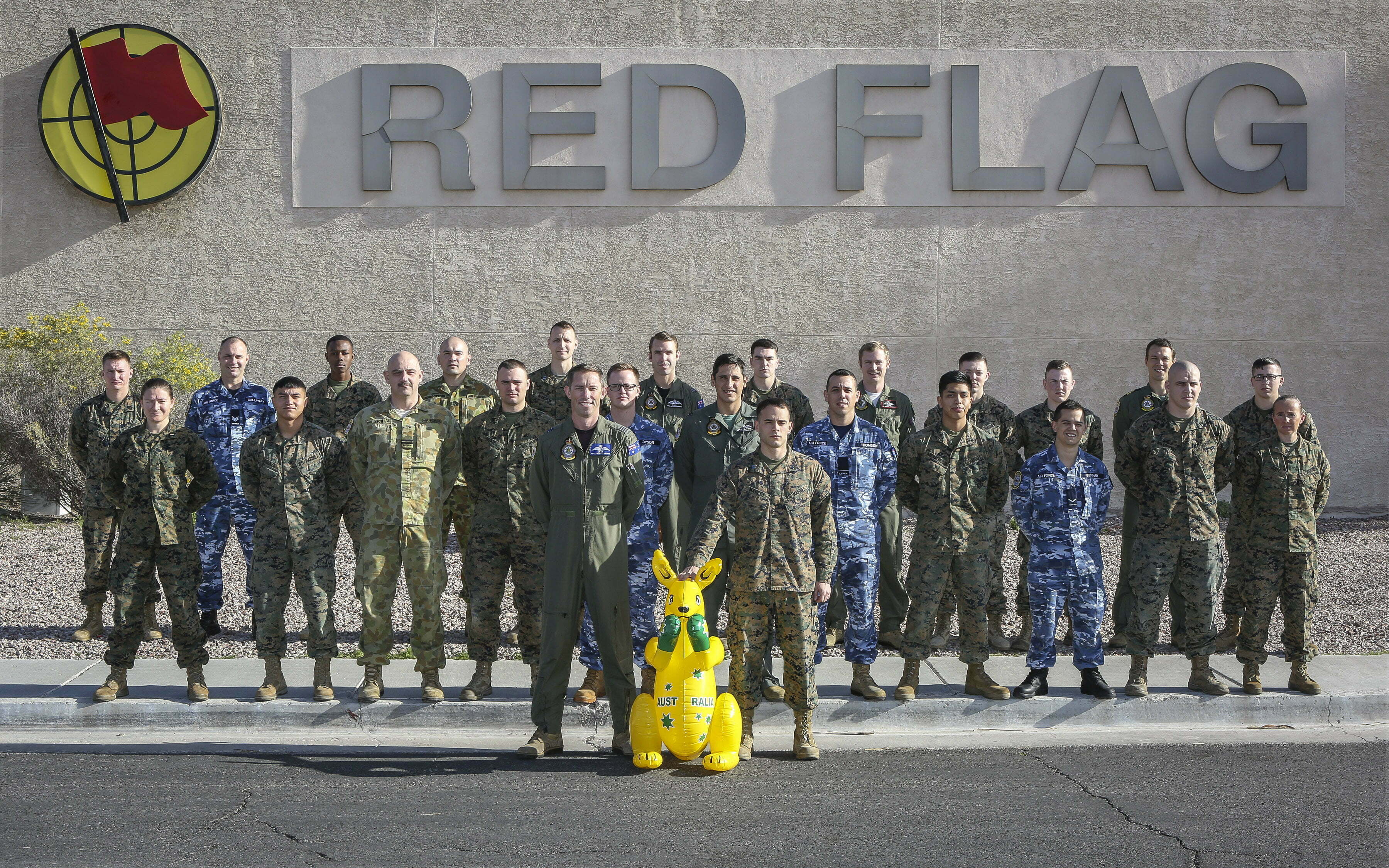
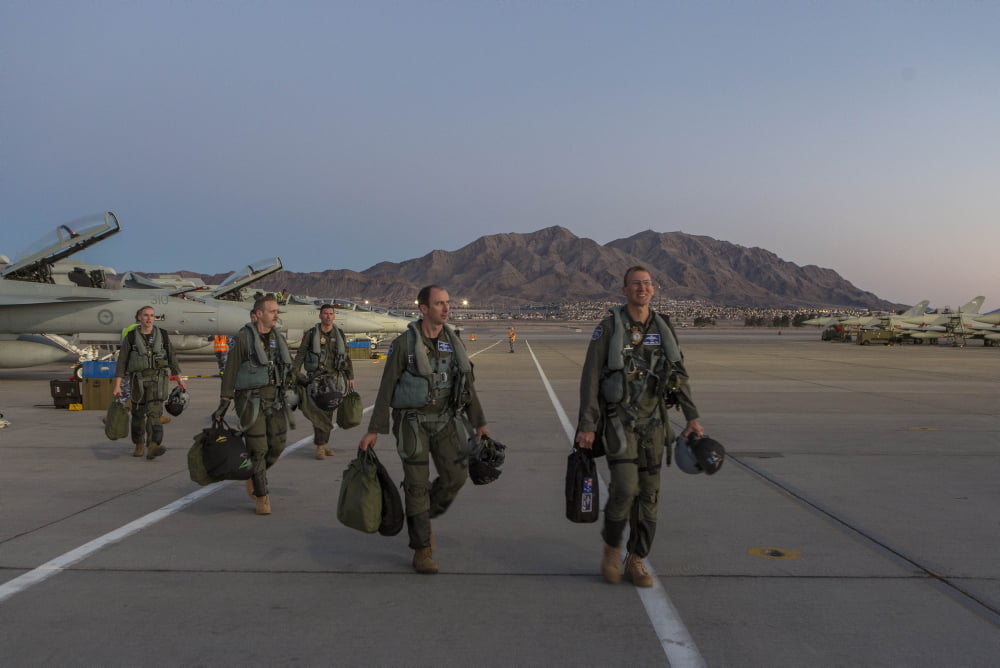
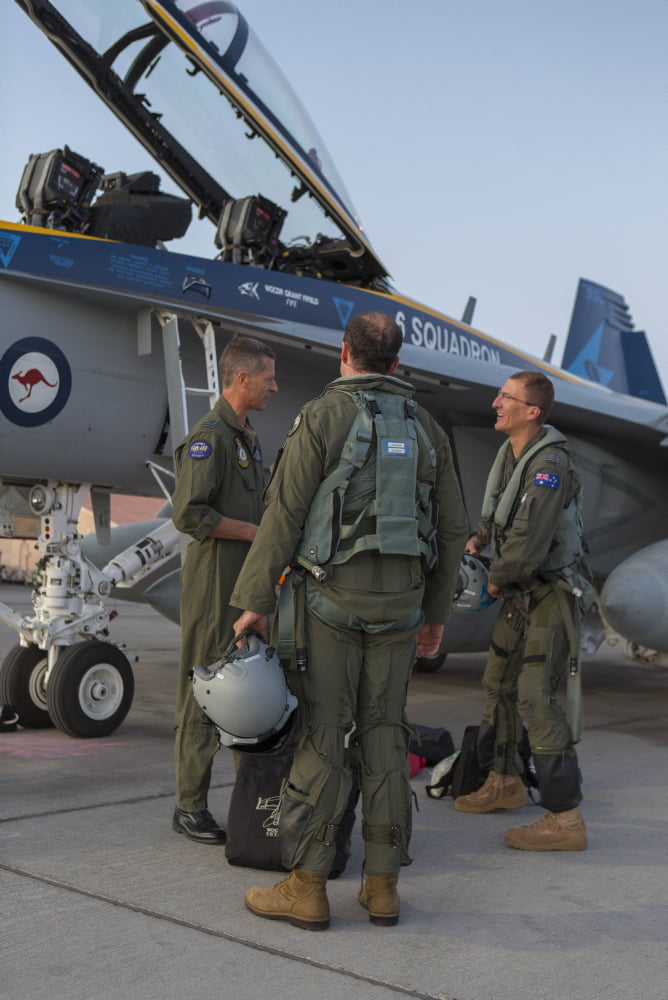
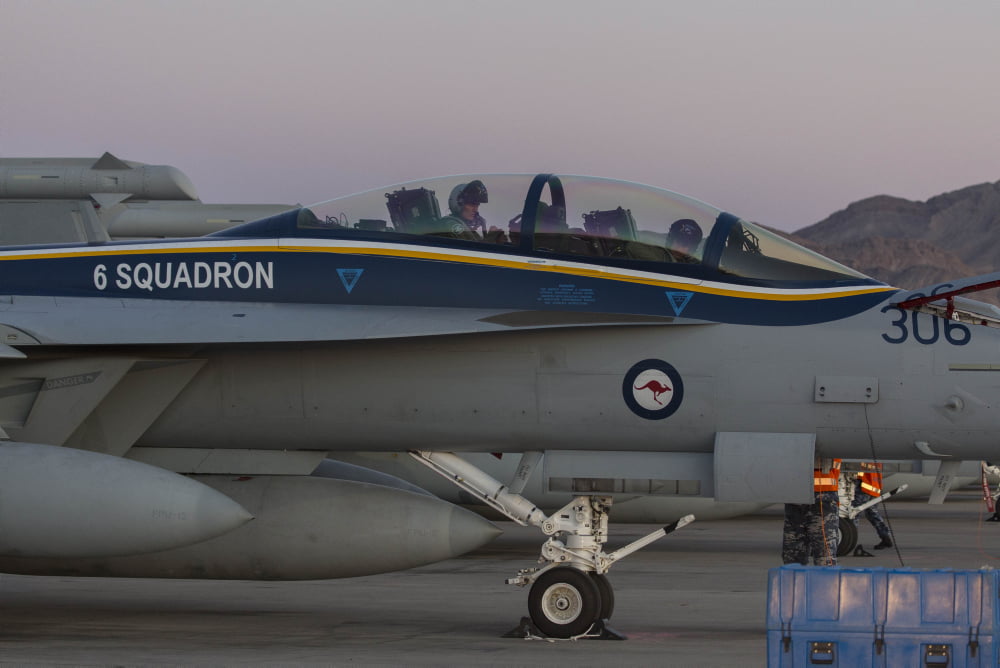
Prior to its deployment to Nellis, the RAAF issued this article on its participation on RF 2018-1.From 29 January–16 February 2018 around 340 Royal Australian Air Force (RAAF) personnel will deploy to Nevada to train in the world’s most complex air combat environment during Exercise Red Flag 18-1.

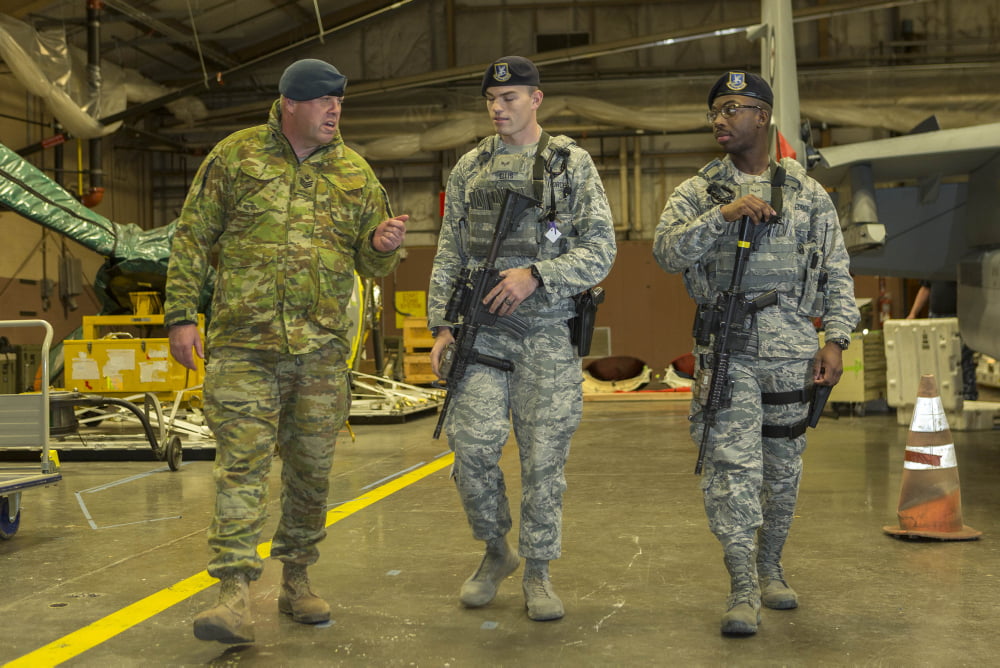
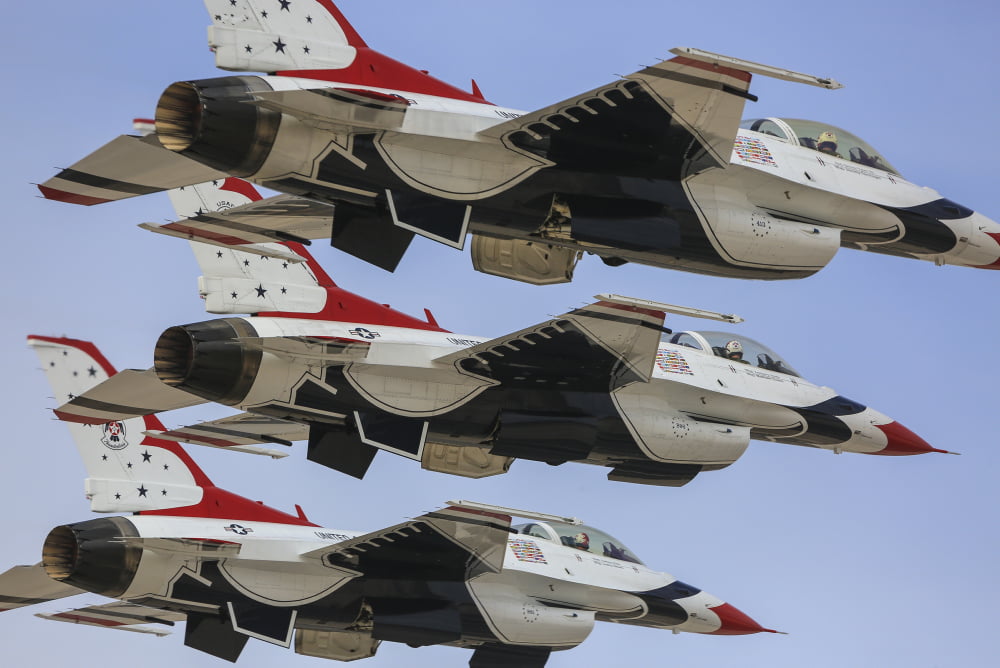
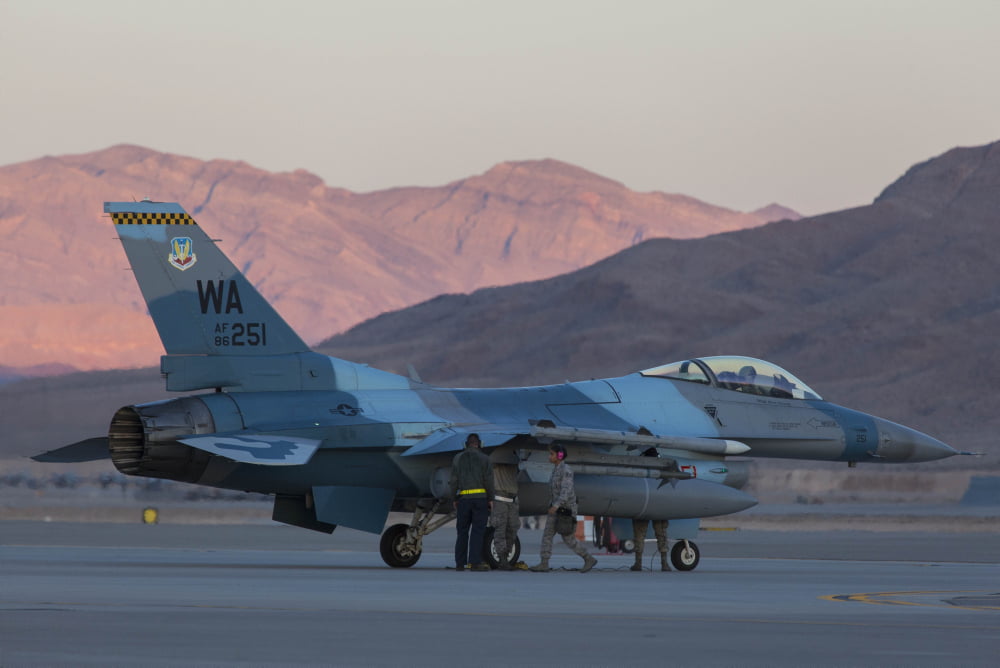
The RAAF personnel will support and participate in missions during the premier air combat exercise alongside counterparts from the United States and the United Kingdom, reconstructing a modern and complex battlespace.

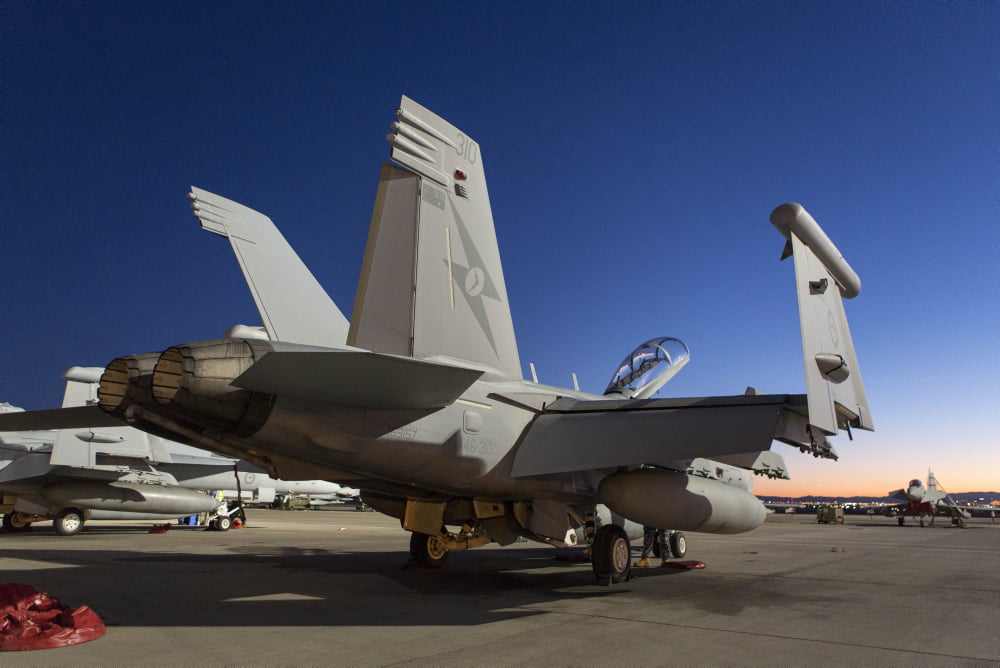
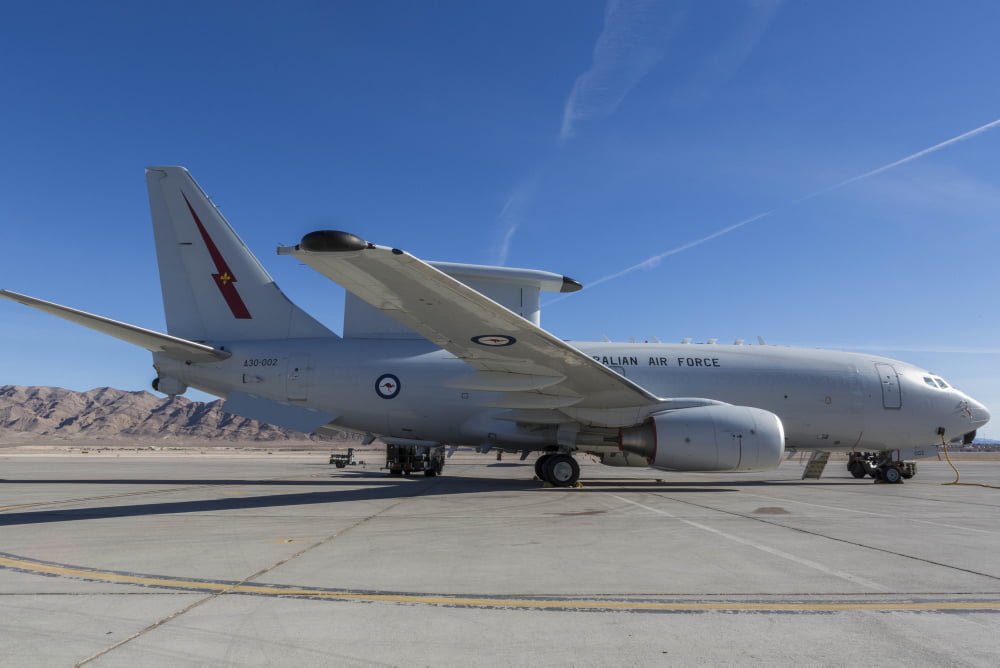
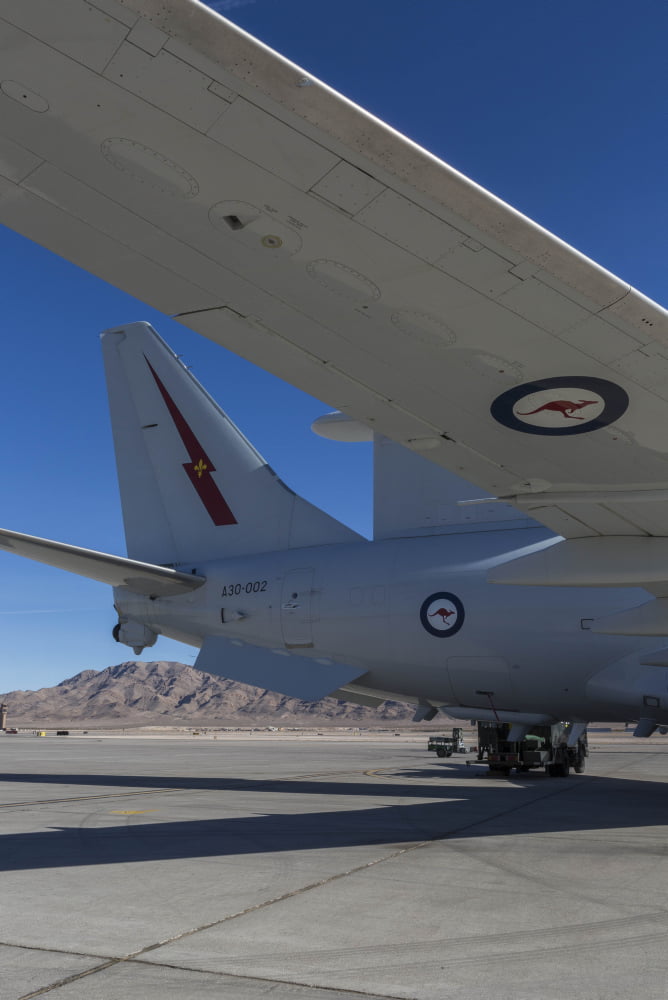
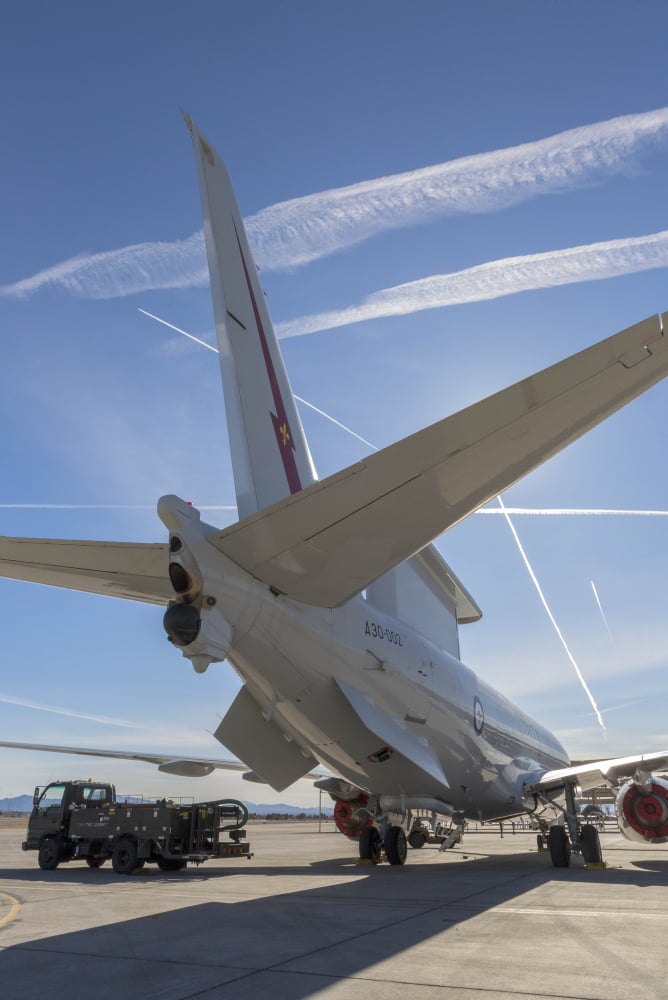
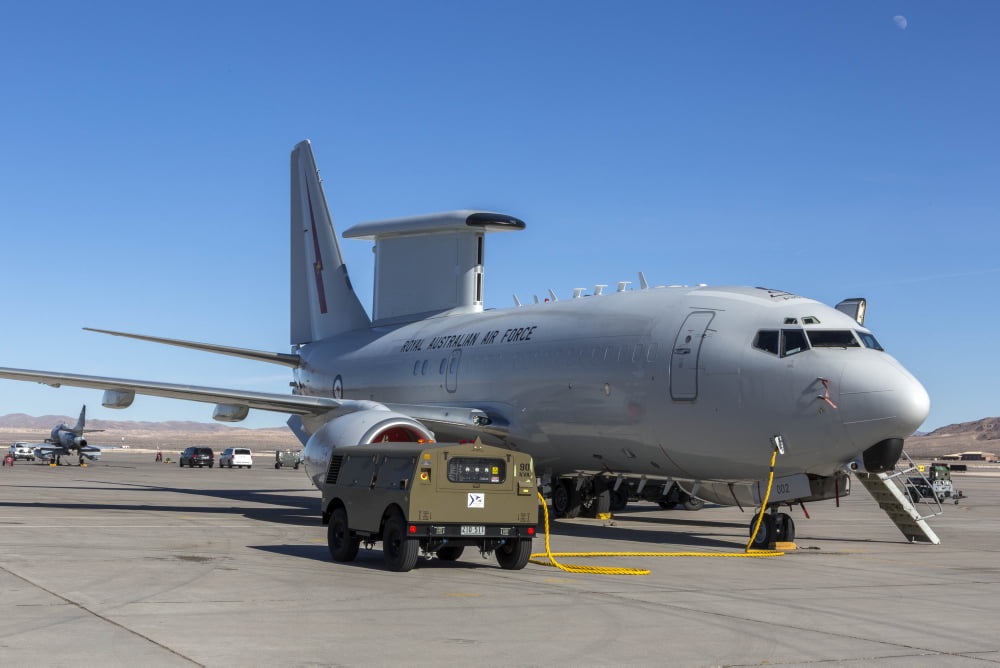
Four EA-18G Growler’s, an AP-3C Orion, and a E-7A Wedgetail Airborne Early Warning and Control aircraft will also participate in Red Flag, along with a Control and Reporting Centre from 41 Wing to support airborne personnel and aircraft.

During the exercise, participants will practice planning and executing day- and night-time missions, using large numbers of aircraft and ground systems, coordinated to overcome a considerable simulated adversary.

This includes a range of air power roles for RAAF personnel, from Air Superiority and Strike; and Intelligence, Surveillance and Reconnaissance to Electronic Warfare – providing a comprehensive training environment for aircrew, maintenance and support personnel alike.

Established in 1980 by the US Air Force, Exercise Red Flag provides personnel with an opportunity to experience a complex, modern and dynamic combat landscape.

https://www.airforce.gov.au/news-and-events/events/exercises/red-flag

During its time at Red Flag, one of the RAAF Growlers had a two engine failure as the plane was preparing for take off.

A January 28, 2018, Australian Aviation piece focused on the incident.

An apparent engine failure has seen an RAAF EA-18G Growler catch fire after an aborted takeoff from Nellis Air Force Base, Nevada on Saturday morning US time.

“Defence can confirm an incident involving an EA-18G Growler at Nellis Air Force Base during Exercise Red Flag.

 Royal Australian Air Force personnel are safe and no serious injuries have been sustained,” a Department of Defence statement released shortly before midday on Sunday (Australian time) confirmed.

 “Defence is currently working with the United States Air Force to investigate and will provide an update with further details once known.”

 The Growler’s crew, comprising a pilot and an electronic warfare officer, were able to exit the jet on the ground without ejecting…..

 Australia has taken delivery of 12 EA-18G Growlers, with the RAAF the only operator outside the US Navy to have the advanced electronic warfare platform in service.

The first aircraft were accepted into RAAF service in 2016 and all 12 jets were delivered to RAAF Base Amberley in mid-2017.

This is the RAAF Growler’s first Red Flag appearance.

 http://australianaviation.com.au/2018/01/raaf-growler-catches-fire-after-nellis-afb-takeoff-incident/

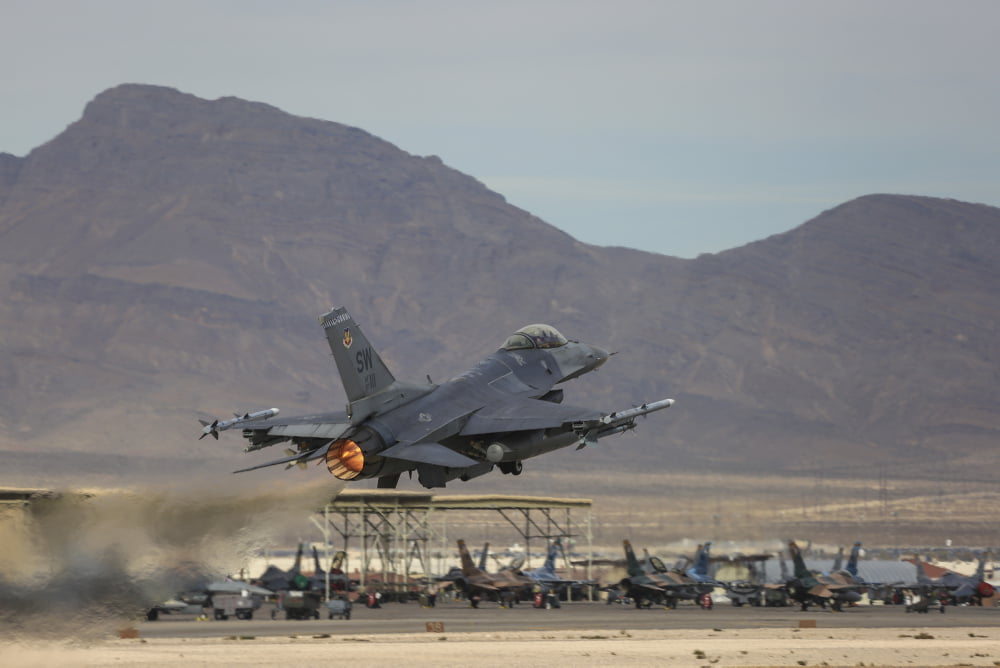
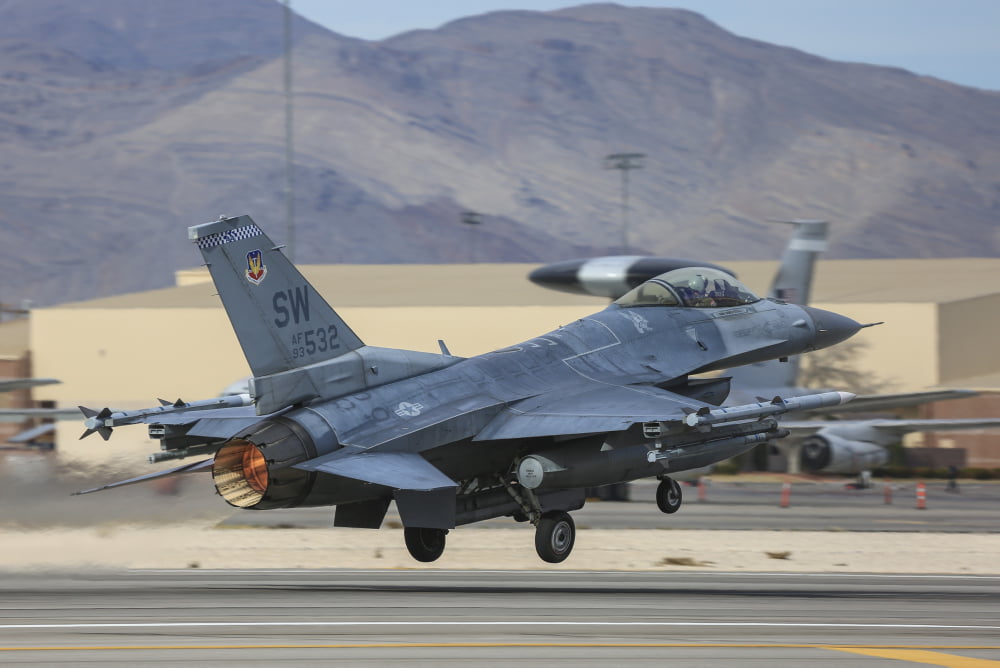
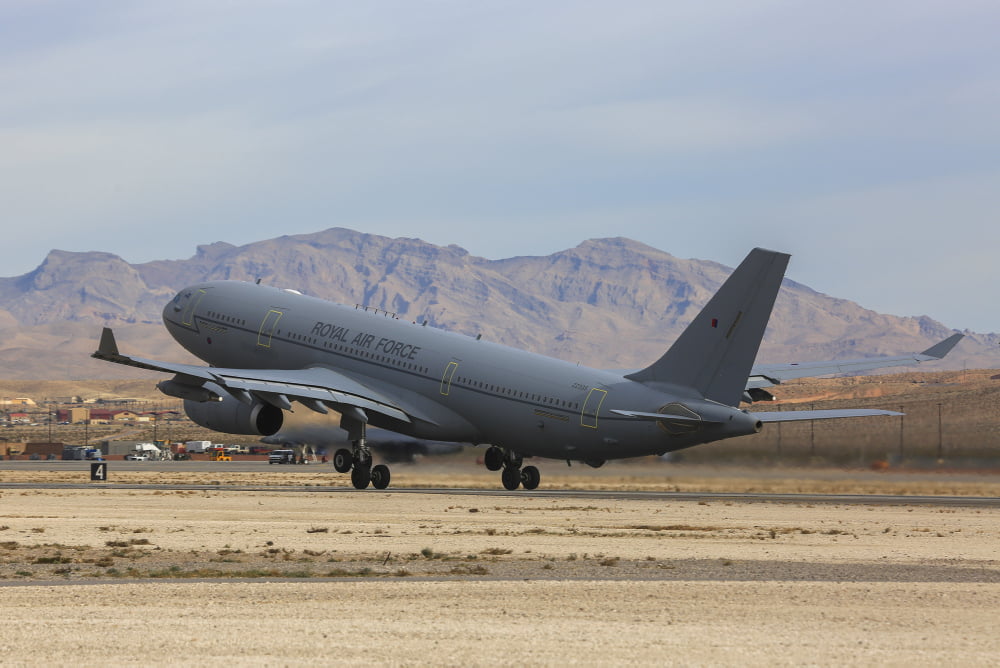
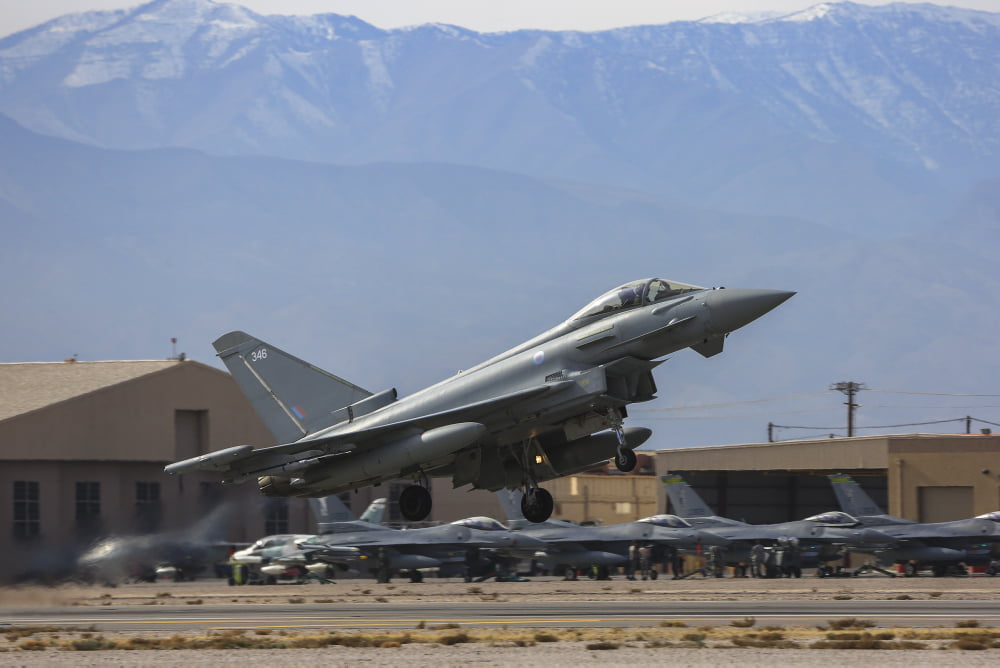
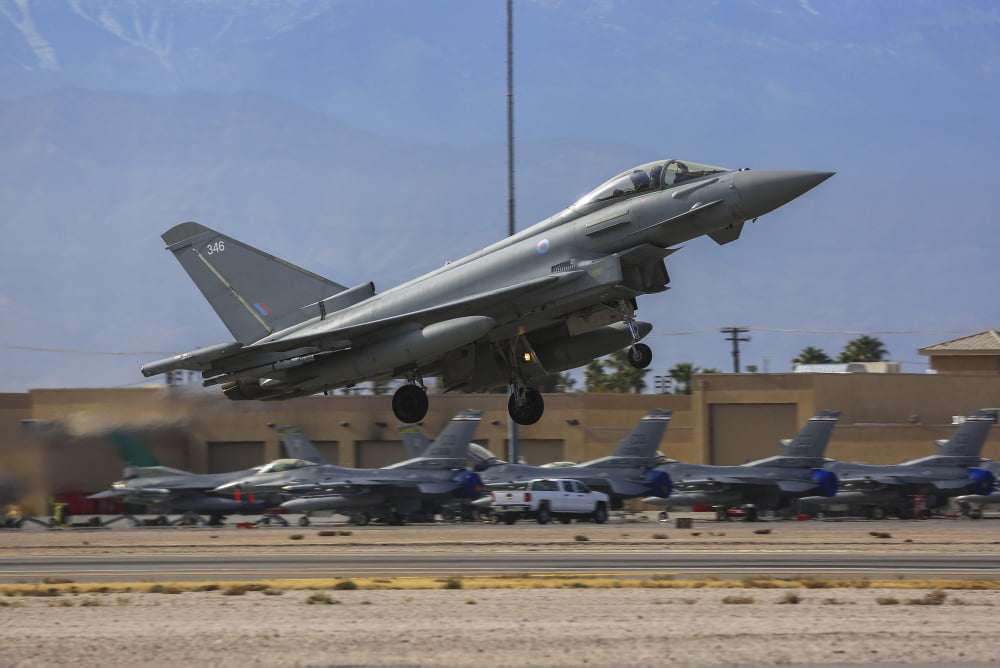
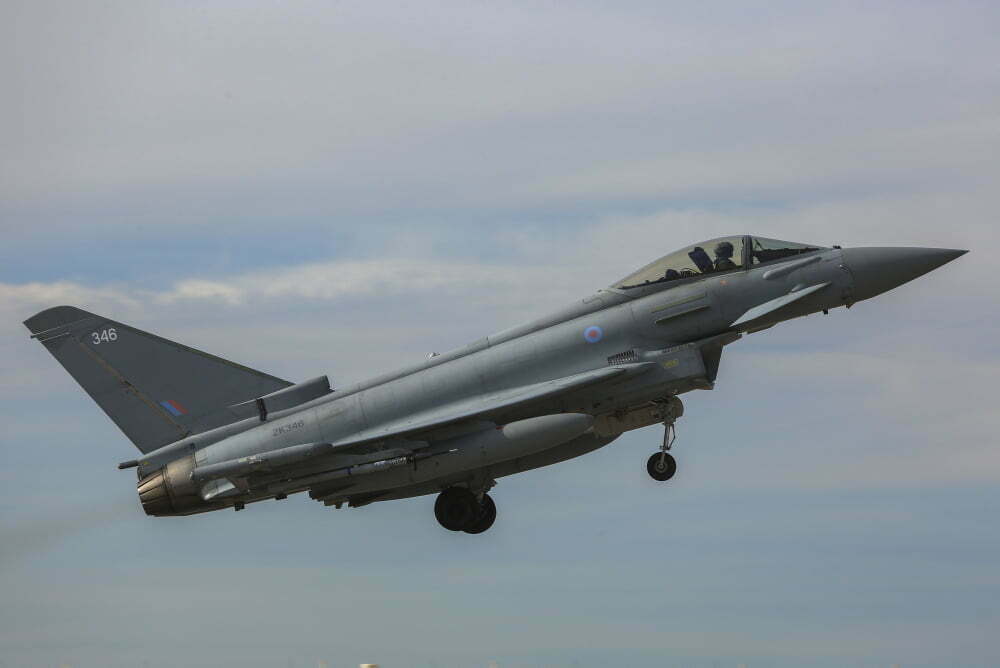
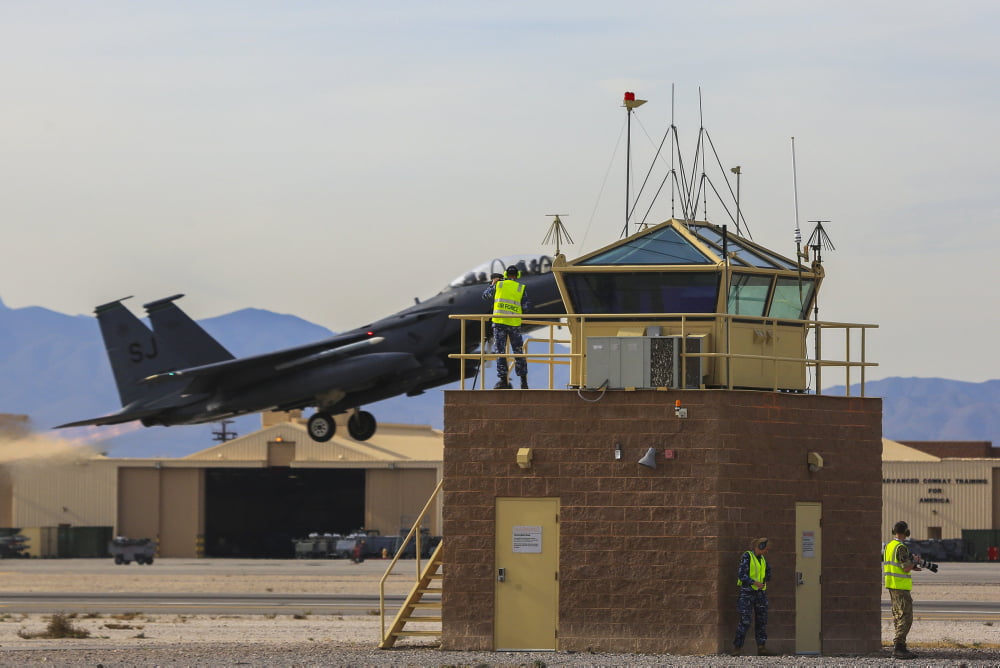
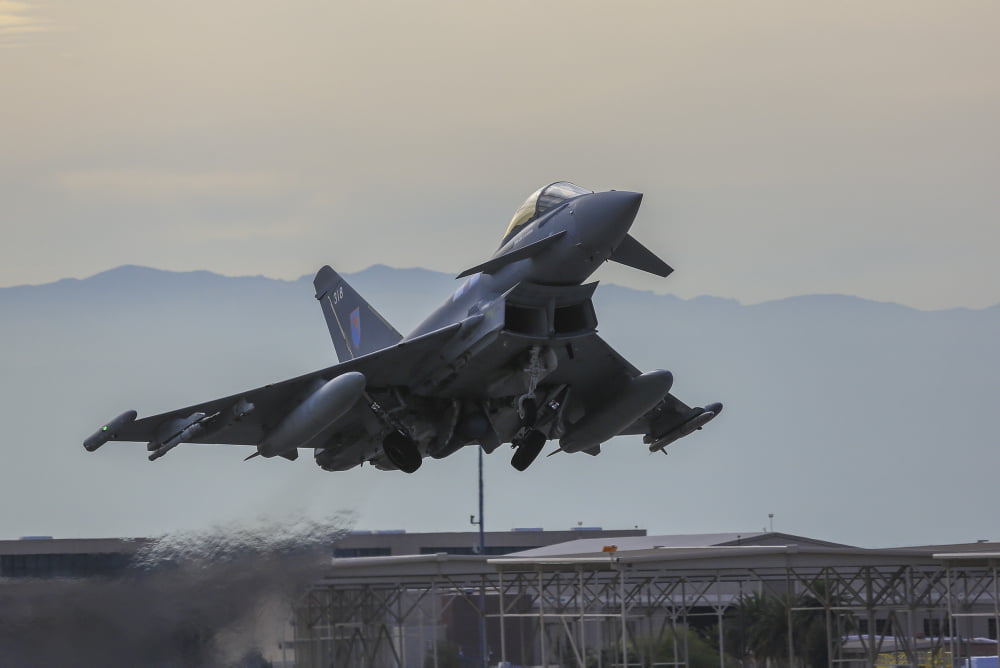
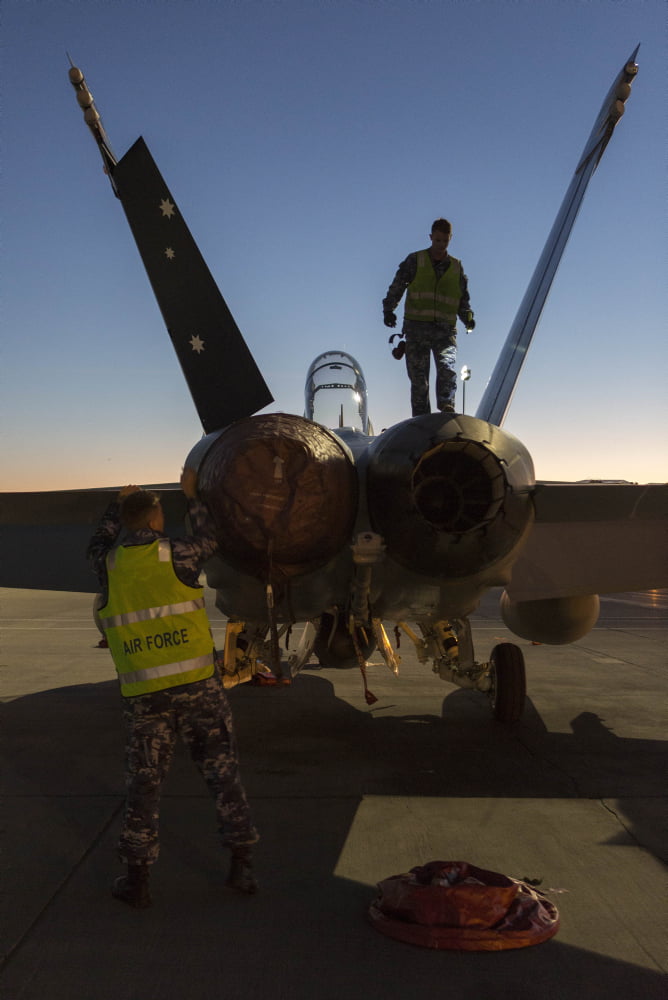
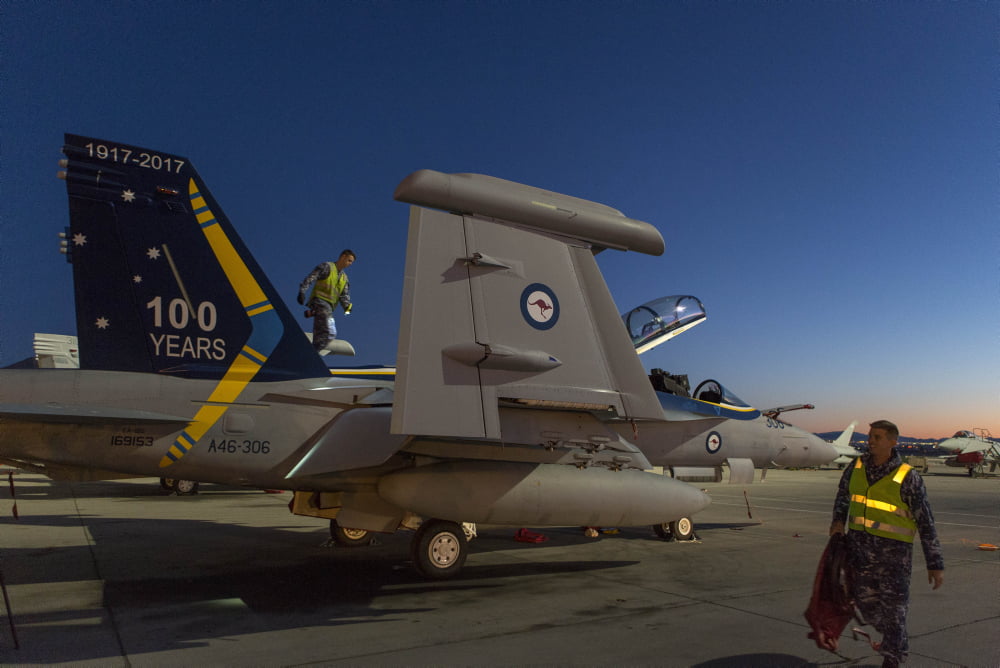
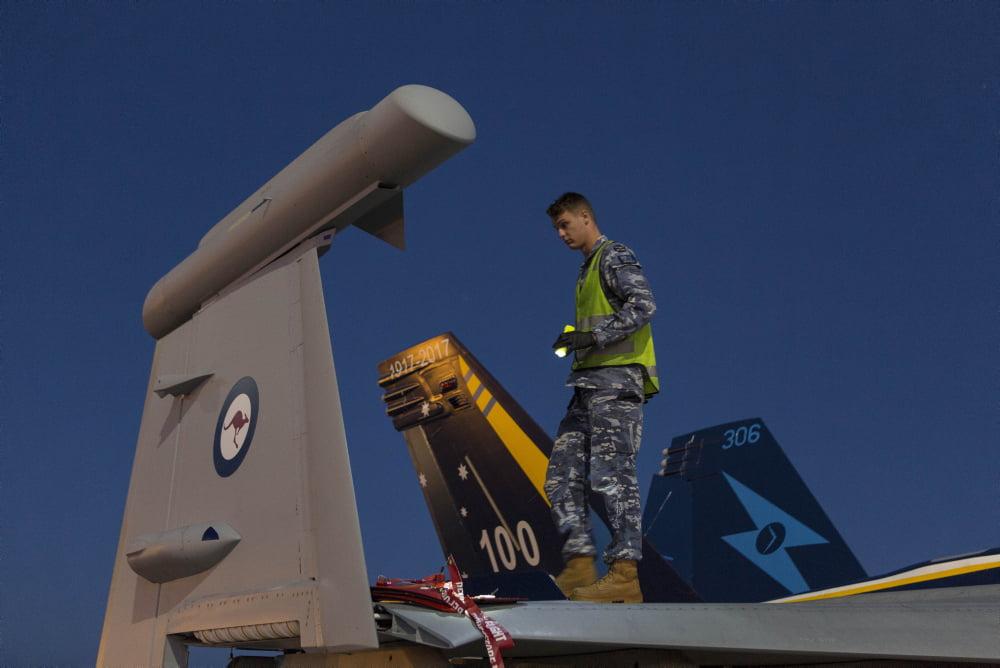
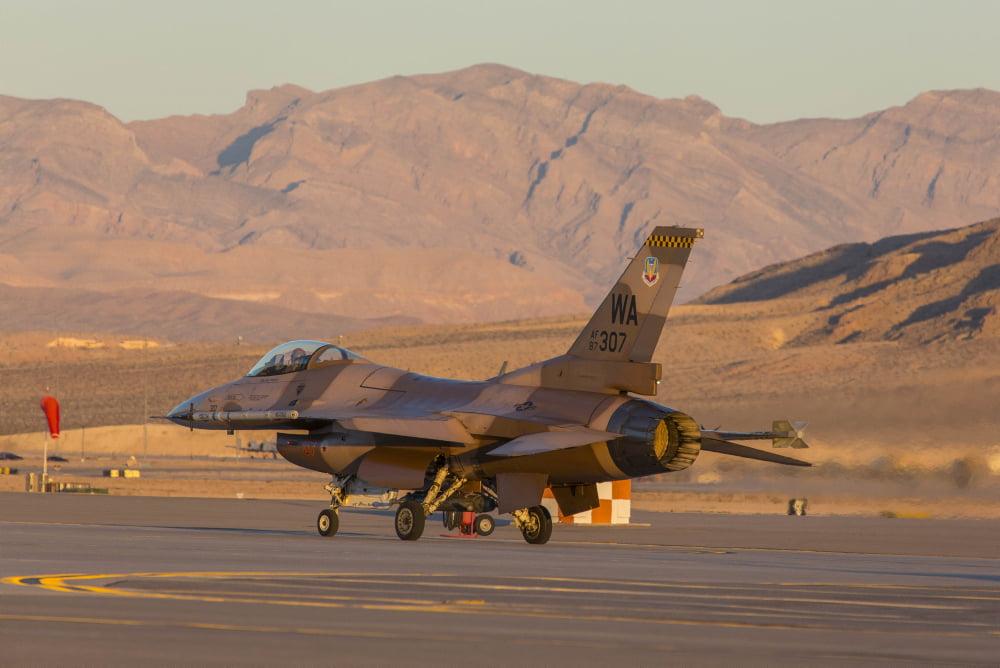
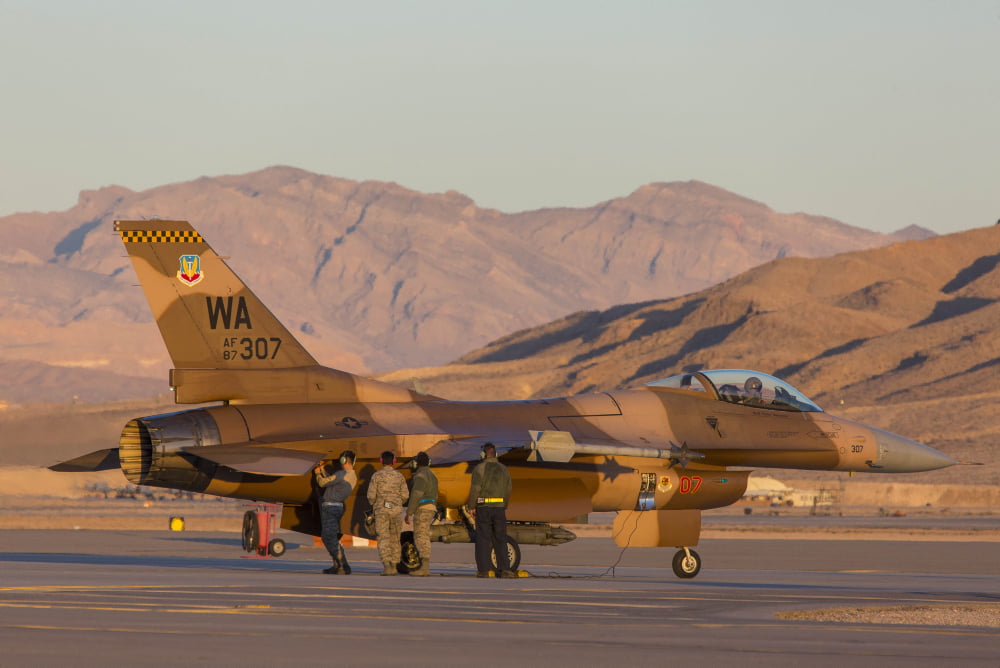
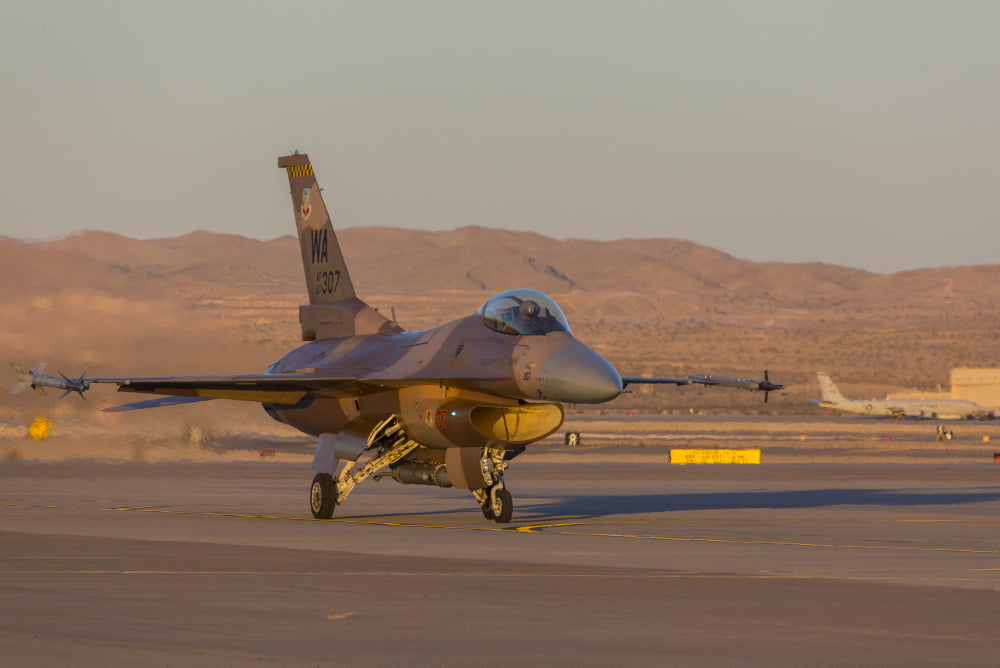
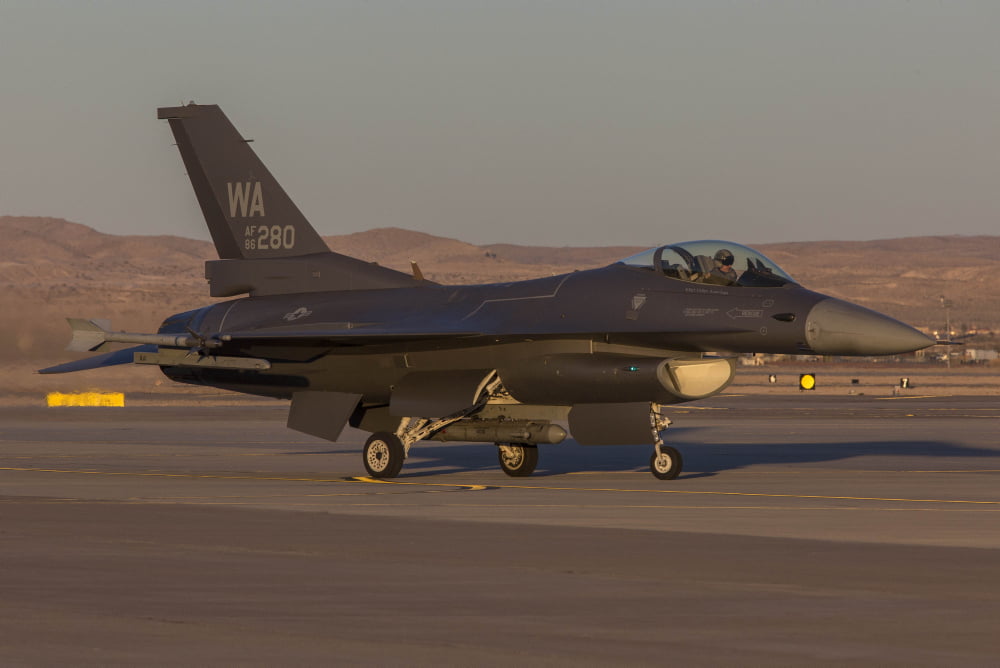
The photos in the slideshow are credited to the RAAF and include RAAF as well as allied aircraft involved in RF 2018-1.