Putting the Osprey in the Dock: What the GAO Gets Wrong on V 22 Safety and the Real Drivers of Mishaps

12/15/2025

By Robbin Laird

The GAO’s recent report on Osprey safety draws attention to real mishaps and genuine concerns, but its framing, methods, and omissions risk reinforcing an outdated caricature of the V‑22 rather than illuminating the actual safety problems the force faces.

A more rigorous and operationally grounded assessment shows that the Osprey’s long‑run mishap record sits near the middle of the U.S. military aviation pack, while the real outliers are rising accident rates across multiple fleets driven by under‑resourcing, training erosion, and maintenance stress.​

The GAO defines its core problem as “serious Osprey accidents” over roughly the last decade and then highlights that Class A and B accident rates rose in FY23–FY24 and often exceeded Navy and Air Force fleet averages. That narrow time frame produces an alarming narrative of spikes of 36–88 percent over the previous eight‑year average, but it does not answer the more fundamental question: is the Osprey a safety outlier when viewed across its full operational life compared with similar platforms in similar regimes?​

A broader framing, consistent with CRS data and Marine Corps internal analysis, looks at Class A mishap rates per 100,000 flight hours across the 2015 to 2024 period and finds that the MV‑22’s rate of roughly 2.56 sits slightly below the Marine Corps’ overall aircraft average of 2.67. That result places the V‑22 in the statistical middle of the type/model/series spectrum and undercuts the idea that there is a unique “Osprey problem” rather than a wider safety challenge affecting multiple fleets.​

The GAO report does include comparative tables in its appendices but those data never meaningfully shape the headline storyline which remains centered on Osprey‑only rate charts. That choice is crucial: by decoupling recent spikes from the aircraft’s longer history, the report blurs the fact that over a decade or more of intensive operational use, the V‑22’s mishap record is broadly comparable to other heavy‑use rotorcraft and tiltrotor‑like profiles.​

Independent analyses cited by CRS and in operator‑driven commentary place the ten‑year MV‑22 mishap rate around 3.4 per 100,000 flight hours, again squarely in the middle of Marine type/model/series. Over the same period, legacy helicopters such as the CH‑53, H‑47, and H‑60 families have experienced similar or greater numbers of fatal mishaps, and in some cases higher rates, yet they do not attract the same existential questioning of their right to remain in the inventory. A serious safety review would have led with that comparative context, not relegated it to the back pages.​

GAO’s next move is to aggregate all Osprey Class A and B mishaps into a single “serious accidents” bucket and to treat that aggregate as a proxy for inherent airframe safety. Yet the report’s own breakdown acknowledges that major mishaps have involved intertwined human, cultural, and materiel factors, leadership and risk‑assessment failures in the August 2023 Marine accident, decision‑making and checklist issues in the November 2023 CV‑22 mishap, and gearbox metallurgy problems in the same event.​

Experienced Osprey engineers and commanders have long drawn a sharp distinction between genuine design or component issues, such as early vortex ring state concerns, hard clutch engagement, and gear metallurgy, and the separate domains of training, maintenance culture, and operational risk tolerance. The program’s record shows that technical issues have been identified and mitigated, in some cases turned into comparative advantages, while a significant share of recent Class A mishaps fall into familiar categories of operator error or degraded proficiency that recur across all rotorcraft fleets. By treating the sum of these events as a property of “the Osprey,” GAO blurs precisely the causal distinctions that matter for policy.​

GAO does commendably detail the formal system‑safety apparatus around the V‑22: 79 risk assessments since 2010, with 45 closed and 34 still open or in monitor status, including a limited set of catastrophic‑severity items tied to airframe and engine components. It also notes that some generic aviation hazards, from bird strikes to aerial refueling risks, are accepted for the life of the program.​

The analytical error comes in the sharp boundary GAO draws between “system” risks those captured in formal hazard registers and “non‑system” risks linked to maintenance workloads, flight‑hour levels, aircrew experience, and sustainment shortfalls. The report describes that second category clearly, over‑stretched maintainers, cannibalization of parts, constrained training time, but then relegates it to a secondary tier in its recommendations, in part because those issues sit outside the formal remit of system‑safety boards. That inversion sidesteps a key reality that operator‑analysts like Anthony Krockel highlight: under‑funded operations and maintenance accounts, eroding proficiency, and acceptance of higher readiness risk are now primary drivers of mishaps across the aviation enterprise, not quirks of a single platform.​

Perhaps the most important omission in the GAO report is its silence on operational value and how that value feeds back into overall force safety. The Osprey exists because it does what helicopters cannot: it moves Marines and special operators faster, higher, and farther, shrinks exposure time in threat envelopes, extends the reach of medical evacuations, and enables distributed maritime and expeditionary operations at ranges that legacy assault helicopters simply cannot match.​

Interviews with MAWTS‑1 instructors and senior Marine aviators make the point concretely. Missions in Afghanistan and the Horn of Africa have demonstrated that Osprey speed and range directly translate into lives saved, whether by rapidly extracting troops from IED‑laden landing zones or moving critically ill sailors over 1,000 nautical miles to definitive care in a single night. Commanders from Third MAW to the current Commandant have repeatedly stressed that the platform’s ability to get Marines “out of harm’s way faster than anything else” and to range entire theaters with tanker support is central to modern Marine and joint concepts. A safety analysis that ignores that trade‑space invites a simplistic league‑table mentality, comparing mishap rates in isolation, rather than asking whether marginal differences in accidents are outweighed by systemic reductions in tactical risk.​

The narrative underpinning much external coverage of the V‑22 still leans heavily on developmental mishaps from more than two decades ago, particularly the 2000 crash linked to vortex ring state. GAO does little to push against that inertia by clearly distinguishing between prototype‑era failures and the mature operational aircraft now in service.​

Post‑2000 testing and envelope development showed that tilting the rotors forward by about 15 degrees enables a V‑22 to escape vortex ring state, turning a perceived “fatal flaw” into a recovery regime that compares favorably to conventional helicopters. More recent concerns such as hard clutch engagement have been addressed through measures like 800‑hour clutch replacement regimes, which bring Osprey practice in line with other rotorcraft and have effectively closed out that issue as an active safety driver. The Gundam 22 accident off Japan, while genuinely tragic, also demonstrates how mature safety systems respond: identifying gearbox alloy inclusions, examining triple‑melt steel processes, modifying alloys, and updating aircrew training so that chip warnings are treated with the urgency they demand. A balanced official review would foreground this pattern of identify‑understand‑mitigate rather than leave the impression of an aircraft trapped in its developmental past.​

Krockel points to a paradox that the GAO report does not fully wrestle with: the Osprey program is one of the most transparent aviation efforts in the Pentagon, with every mishap subjected to intense scrutiny and substantial public documentation. That openness generates more material for critics and reporters to cite, even when the underlying documents show a system that learns and improves over time.​

Less transparent programs with comparable or worse safety records simply generate fewer public data points and thus less critical attention. By not explicitly acknowledging this transparency differential, GAO risks reinforcing a biased media ecosystem in which the best‑documented program becomes the easiest target, and the existence of detailed safety records is taken as indirect evidence of unsafety.​

Perhaps the most consequential gap in GAO’s analysis is its failure to follow the evidence where it points: mishap rates have risen across multiple fleets over the last several years, pointing toward systemic problems in training, readiness, and sustainment rather than a single flawed aircraft. Krockel traces a clear chain of causality starting with operations and maintenance under‑funding, moving through parts shortages and cannibalization, reduced aircraft availability, and fewer flight hours, and culminating in crews whose currency and judgment are eroded.​

These are precisely the kinds of non‑system factors GAO describes but then structurally downgrades. If crews across platforms are flying less, maintaining aircraft with fewer spares, and operating under higher tempo and lower manning, then it is unsurprising that mishap curves bend upward across the force. The question Congress should be asking is not whether the V‑22 is uniquely dangerous, but whether it has properly resourced the training, sustainment, and safety nets that all complex aircraft, tiltrotor or helicopter, require.​

A more credible and useful GAO treatment of Osprey safety would rest on three pillars that the current report only gestures toward.

  • First, it would start from a whole‑of‑life, comparative baseline that makes clear where each V‑22 variant sits relative to peer aircraft across services and mission profiles, rather than isolating recent spikes in a narrow time band.
  • Second, it would disaggregate causal factors rigorously, separating airframe design and component issues from training, culture, and resourcing, and then tying each category to specific remedies from metallurgy and clutch regimes to flying‑hour programs and leadership accountability.​
  • Third, it would explicitly connect safety analysis to operational value, recognizing that a platform that reduces exposure for ground forces and enables otherwise impossible missions may, on balance, improve force survivability even if its mishap rate is only average.

In that more mature debate, the V‑22 would appear not as a uniquely dangerous outlier but as a heavily scrutinized, continuously improved system whose safety record is broadly in line with other demanding military aircraft and is operating inside a force that is under‑resourced and over‑tasked.

The real policy choice is whether to tackle the systemic conditions that drive accidents across the aviation enterprise, rather than once again putting the Osprey in the dock for problems that it shares with the rest of the fleet.

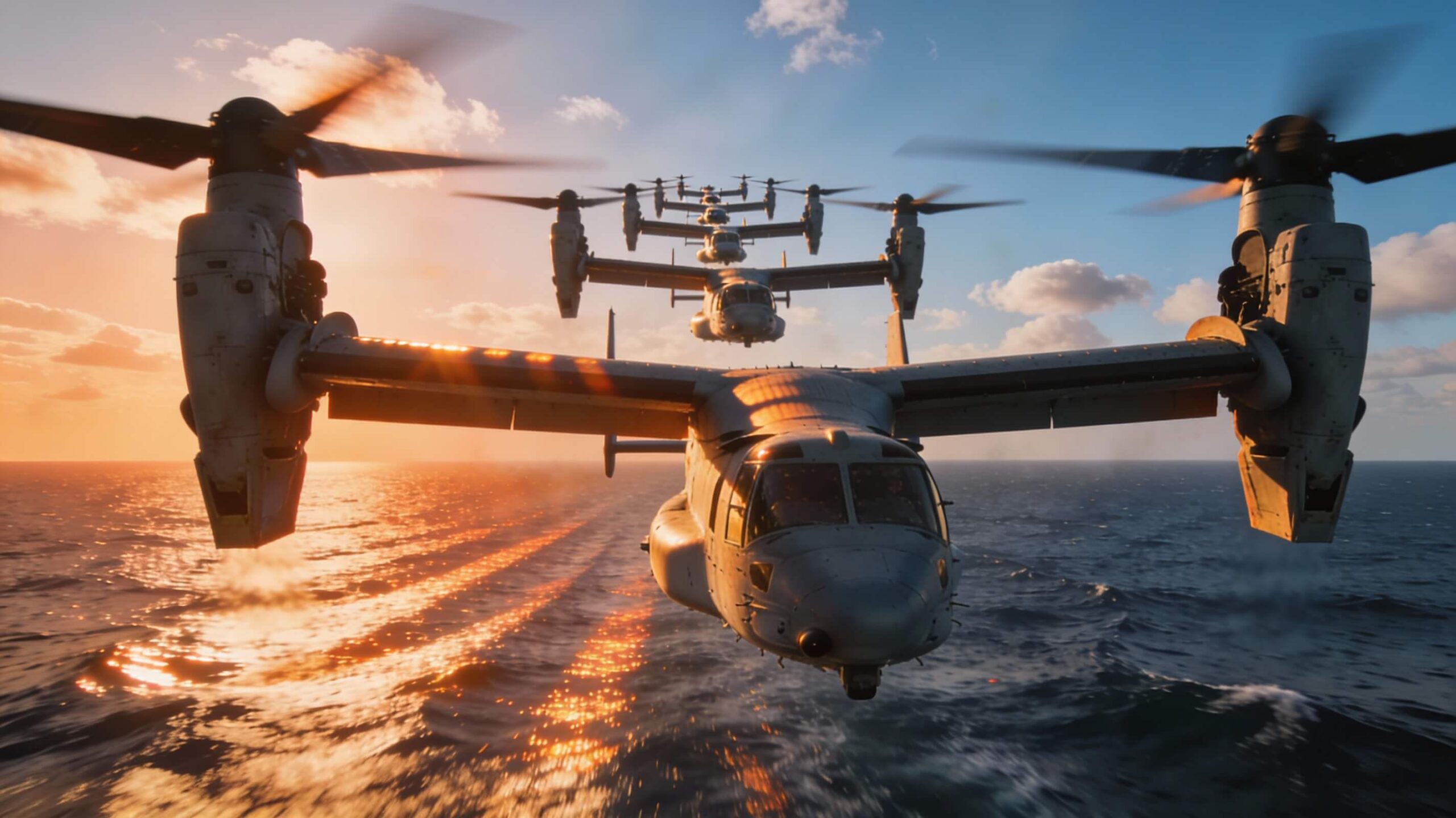
The featured photo was generated by an AI program and highlights the global fleet concept of the Osprey.

And less we forget, there is a “global Osprey enterprise” today consisting of roughly 450 V‑22 tiltrotors built or on order across all variants and operators, centered on U.S. services (USMC, USAF, USN) with Japan as the sole export customer.​

The V‑22 fleet of about 450 aircraft that has accumulated more than 800,000 flight hours, reflecting the total production run across all customers and variants.​

The three main variants are the USMC MV‑22B (assault support), USAF CV‑22B (AFSOC long‑range special operations), and USN CMV‑22B (carrier onboard delivery), with Japan operating a configuration based on the MV‑22.​

The Department of Defense has procured about 360 V‑22s for the Marine Corps, which constitute the bulk of the global Osprey fleet and underpin the assault support and expeditionary role of the aircraft.​

These aircraft equip multiple active and reserve VMM squadrons and MEU/ARG deployments, forming the core of USMC medium‑lift and ship‑to‑objective maneuver capability.​

The Air Force has acquired around 56 CV‑22s for Air Force Special Operations Command, focused on long‑range infiltration, exfiltration, and resupply in contested environments.​

CV‑22s operate from CONUS and overseas bases (including Europe and the Pacific), giving the tiltrotor enterprise a global special operations footprint.​

The Navy program of record originally envisioned 48 CMV‑22Bs, but current plans call for 44 aircraft, replacing the C‑2A Greyhound for carrier onboard delivery.​

CMV‑22B squadrons (VRM‑30, VRM‑40, VRM‑50 and supporting test units) provide logistical support to carrier strike groups, including long‑range logistics and F‑35C engine transport.​

Japan is the only foreign customer and is procuring 17 V‑22s, which form an “Air Transport Squadron” under the JGSDF for rapid deployment and island defense missions.​

As of 2025, the Japanese V‑22 unit has completed relocation from its temporary base at Kisarazu to its permanent base at Camp Saga on Kyushu, positioning the fleet closer to the Nansei/Southwest Islands and the East China Sea.​

Industry and Navy sources describe a fleet that has now surpassed 600,000 flight hours and has grown to more than 400 operational aircraft, consistent with the broader “~450 aircraft” enterprise figure when including aircraft in production and on order.​

The global enterprise thus spans multiple services and one key ally, with common industrial support from Bell and Boeing and shared sustainment, upgrade, and safety initiatives across this ~450‑aircraft tiltrotor community.​

Note: I highly recommend comparing the recent GAO report with the CRS report.

For the GAO report:

https://www.gao.gov/products/gao-26-107285

For the CRS report:

https://www.congress.gov/crs_external_products/R/PDF/R48703/R48703.1.pdf

When Safety Data Contradicts the Narrative: Why Doesn’t the Narrative Change?

https://www.defenseone.com/ideas/2024/02/groupthink-gives-v-22-bad-rap/394420/

https://arc.aiaa.org/doi/pdf/10.2514/6.2025-99024



Harald Malmgren: Architect of Modern Trade Policy and Global Economic Thinker

The passing of Harald Malmgren in February 2025 marked the end of an era in international economic diplomacy and policy analysis.

A trusted advisor to U.S. presidents, a visionary academic, and one of the cornerstones of modern trade negotiation strategy, Malmgren’s legacy spans over six decades of shaping global economic discourse.

Born on July 13, 1935, in Boston, Massachusetts, Harald Malmgren was destined for a career of influence. He pursued undergraduate studies at Yale University, where he studied under renowned economist and strategist Thomas Schelling. He later earned his doctorate at Oxford University under Nobel Laureate Sir John Hicks.

It was during these early academic years that Malmgren penned one of his most enduring works, the 1961 paper “Information, Expectations, and the Theory of the Firm.” This seminal piece explored the role of imperfect information in economic decision-making and anticipated many of the themes that would later earn other economists the Nobel Prize. Today, it remains a foundational work in the field of New Institutional Economics and is widely cited across disciplines.

Malmgren’s transition from academic to policymaker came during the Kennedy administration, when he was appointed to lead economic risk analysis at the Institute for Defense Analyses amid the Cold War’s rising intensity. His expertise soon proved indispensable across successive administrations—serving as a senior advisor to Presidents John F. Kennedy, Lyndon B. Johnson, Richard Nixon, and Gerald Ford.

In the late 1960s and throughout the 1970s, Malmgren became a cornerstone of U.S. international trade strategy. As Assistant Special Representative for Trade Negotiations and later Principal Deputy U.S. Trade Representative, he helped lead negotiations under the General Agreement on Tariffs and Trade (GATT), the forerunner of today’s World Trade Organization. His pioneering work formed the backbone of the landmark Trade Act of 1974, which established “fast track” authority—a mechanism that reshaped how the United States negotiates trade deals to this day.

Described by contemporaries as a deft diplomat and strategic thinker, Malmgren was instrumental in crafting trade policies that balanced domestic political pressures with international economic goals. His writings during this time—including International Economic Peacekeeping in Phase II and Negotiating Nontariff Distortions to Trade—became required reading for policymakers and legislators worldwide.

While deeply rooted in Washington policy circles, Malmgren was a global figure. His counsel extended far beyond American borders; he advised prime ministers, presidents, and finance ministers across Europe, Asia, and the Pacific Rim, including leaders from Japan, South Korea, France, Germany, and Australia. He was among the early voices to predict the economic collapse of the Soviet Union and later advised Russia on its tumultuous post-Soviet transition to a market economy.

Fluent in the languages of diplomacy, law, and economics, Malmgren’s insights were particularly valued during moments of global flux—when clarity, historical perspective, and sober analysis were in high demand.

Beyond his official titles, Malmgren remained a public intellectual throughout his life. He published regularly in influential journals such as Foreign Affairs and Foreign Policy, and contributed to policy forums at leading institutions. His work appeared in multiple languages and was often cited by lawmakers and even the U.S. Supreme Court.

He co-founded the Cordell Hull Institute, a think tank focused on international economics, named for the American Secretary of State often credited with laying the groundwork for the postwar trading system. Through this and other platforms, he mentored a new generation of policy analysts, economists, and diplomats.

Harald Malmgren’s career defies easy categorization. He was at once an economist, statesman, strategist, and teacher. While he may not have always been in the public spotlight, his impact was felt in presidential decision rooms, global trade summits, and university lecture halls alike. His ability to integrate academic insight with real-world strategy was rare, and his role behind the scenes helped guide some of the most consequential economic decisions of the 20th century.

As nations grapple with accelerating globalization, strategic competition, and the search for economic stability, the legacy of Harald Malmgren offers a blueprint: intellectual rigor, diplomatic skill, and a deep understanding of the intricate ties that bind global markets. He lived quietly but thought boldly, an architect of the world we now inhabit.

An overview of his life’s work as well as his articles which appeared on Second Line of Defense can be found in our recently published book which is available in French and German as well:

Assessing Global Change: Strategic Perspectives of Dr. Harald Malmgren


Infrastructure as Battlespace: The Return of Direct Defense in Europe

12/13/2025

By Robbin Laird

In 2020, Murielle Delaporte and I published a book examining what we termed “the return of direct defense” in Europe. Our central argument challenged conventional thinking about European security: defending Europe in the 2020s requires moving beyond traditional military deterrence to embrace a broader strategic concept that places infrastructure, resilience, and supply chains at the center of the contest with 21st-century authoritarian powers. Five years later, events have validated this analysis in ways we could not have fully anticipated.

The transformation we described represents a fundamental shift in how democracies must think about defense. Infrastructure—ports, energy networks, data cables, telecommunications systems, transport corridors, and digital platforms—is no longer merely the backdrop to military operations. It has become both target and weapon in a long-term strategic competition between liberal democracies and authoritarian states that understand power operates across multiple dimensions simultaneously.

From Cold War Templates to 21st Century Threats

The late Cold War model of European defense was architecturally elegant in its clarity. NATO planned around a central front in Germany, clearly defined flanks, and the integration of massive nuclear and conventional forces to deter a Soviet armored thrust westward. The infrastructure of defense—bases, depots, communications networks—mattered enormously, but primarily as the physical substrate supporting armies, air forces, and nuclear arsenals. The threat was identifiable, the geography was stable, and the Alliance’s mission was unambiguous.

Today’s challenge bears little resemblance to that framework. Russia’s 2014 seizure of Crimea and the parallel emergence of China as a system-shaping power revealed an authoritarian toolkit that operates across a far broader spectrum. Contemporary Russia exploits the newly independent states around its “window to the West” not through massed armor columns but through cyber operations, information warfare, energy dependency, and the strategic ownership of critical assets. These instruments allow Moscow to influence European decision-making and constrain policy options well short of open warfare.

China’s approach differs in execution but shares this fundamental logic: economic penetration, gray-zone activities, and targeted control of infrastructure reshape the external environment without conventional military campaigns. Both powers have learned to weaponize interdependence, turning the openness of liberal market economies into strategic vulnerabilities that can be exploited for political effect.

The Infrastructure Challenge: Cyber Penetration to Leveraged Acquisition

When we examined the “infrastructure challenge” in our book, we argued that it represents one of the central strategic shifts reshaping contemporary warfare and deterrence—not an afterthought to “real” military planning. The authoritarian toolkit extends from sophisticated cyber penetration of networks to what we termed “leveraged acquisition”: the systematic purchase or control of critical assets and connectivity nodes inside liberal democracies.

Chinese and Russian actors, often operating through ostensibly commercial entities, acquire stakes in ports, logistics hubs, energy companies, telecommunications infrastructure, data centers, and high-end manufacturing facilities. This creates enduring political and security leverage from within target societies. The threat is not simply espionage or intellectual property theft; it is the capability to threaten disruption or denial of crucial services during a crisis, to shape elite decision-making through economic dependency, and to gain operational insight into European patterns and vulnerabilities.

This connects directly to the broader concept of hybrid and gray-zone operations. In this operational model, lethal military force often serves as a supporting element while influence over infrastructure, information systems, and supply chains constitutes the main effort. Infrastructure is no longer neutral terrain—it has become a principal battlespace in great power competition.

The security implications cascade across multiple domains. A telecommunications network owned or substantially controlled by Chinese entities creates surveillance opportunities, data integrity risks, and potential denial of service during a crisis. A port facility in which Russian-linked companies hold significant stakes offers insight into military and commercial logistics flows while providing leverage over regional transport networks. Energy infrastructure that creates dependencies on authoritarian suppliers becomes a political weapon, as Europe discovered painfully after Russia’s full-scale invasion of Ukraine in 2022.

NATO, the EU, and the Dual Alliance Problem

The return of direct defense creates what we characterized as a “dual alliance problem.” NATO, with its focus on military capabilities, exercises, and collective defense commitments, cannot alone address vulnerabilities in energy grids, data networks, transport corridors, or medical supply chains. The European Union, historically weak on traditional defense matters, holds crucial instruments for infrastructure regulation, economic security, and coordinated crisis management. Neither institution can solve the problem in isolation.

The 2014 shocks—Russia’s seizure of Crimea and the mass migration flows from the Middle East and North Africa—exposed fundamental European weaknesses in controlling borders, managing crises, and protecting critical systems. The COVID-19 pandemic later revealed the extent of European dependence on Chinese-dominated supply chains for essential goods, particularly pharmaceuticals and medical equipment. These successive crises underscored the need for what we and other strategic thinkers have termed “smart sovereignty”: the capability to guarantee critical supplies and shape diversified, trusted production networks rather than simply purchasing at the lowest cost on global markets.

This represents a profound conceptual shift. Sovereignty in the 21st century is not merely about territorial control or diplomatic recognition—it includes the ability to maintain societal functions and military operations without catastrophic dependencies on potential adversaries. This insight has direct implications for how democracies structure their economies, screen foreign investments, and organize crisis management.

Supply Chains as Strategic Weapons

Our research, including extensive interviews with Nordic and European defense experts, drove home a central point: supply chain security and resilience planning—once treated as purely economic or civil protection concerns—must now be understood as core defense functions. The assumptions underlying just-in-time logistics and globally optimized supply chains collapse under crisis conditions and would fragment even more severely during serious geopolitical conflict.

The evidence is stark. When crisis strikes, nations prioritize their own populations. Supply chains fracture at unpredictable points, from obscure component suppliers to shipping chokepoints. The complexity of modern manufacturing means that a single specialized facility in one country can become a strategic bottleneck affecting military production and essential civilian goods across an entire continent.

The strategic response must operate on multiple levels. First, predictable essentials must be stockpiled, following models developed by Finland and historically practiced by Sweden and Denmark. Second, alternative production capacity—including advanced manufacturing techniques like 3D printing and rapid conversion of existing production lines—must be developed and regularly tested. The crucial caveat: high-end systems such as precision-guided weapons and advanced medical devices cannot be improvised under crisis conditions. They require sustained investment in production capacity and supply chain security during peacetime.

Third, serious cross-national planning must map likely supply chain vulnerabilities and identify alternative sourcing and production paths before crises hit. This cannot be purely national work; smaller European states in particular must collaborate in regional clusters and through EU frameworks to build credible supply chain security and crisis management mechanisms capable of functioning under stress.

Nordic Models: Resilience and Smart Sovereignty

Finland emerged in our research as a compelling model for “smart sovereignty” in an age of hybrid threats. Finnish national security planning emphasizes comprehensive defense: stockpiles, conscription, territorial defense, and deep civil-military integration. Finnish officials described a holistic security-of-supply system covering not only ammunition and fuel but also electricity, telecommunications, data integrity, and physical shelters for both civilians and critical infrastructure.

The underlying logic is both simple and profound: in a compressed crisis, states must fight and function with what they already possess. Reliance on overseas replenishment becomes unrealistic when adversaries actively create anti-access and area-denial conditions across physical, cyber, and financial domains. Data security—ensuring both availability and integrity of essential information systems—now constitutes a distinct layer of infrastructure defense, with dedicated agencies tasked to protect national datasets from corruption or manipulation.

This concept of resilience is not merely supplementary to traditional deterrence—it is a central component. Authoritarian adversaries specifically target weak points in infrastructure and civil society precisely because these are the levers most likely to generate political effects without triggering NATO’s Article 5 collective defense commitments. A society that can absorb shocks, maintain essential functions, and continue operations despite disruption is significantly harder to coerce than one that depends on fragile, easily interdicted systems.

The institutional response across Europe has included important innovations. The European Centre of Excellence for Countering Hybrid Threats in Helsinki represents one attempt to pool knowledge and help EU and NATO members develop capabilities for responding to influence operations, infrastructure attacks, and cross-domain pressures that blend economic, informational, and political instruments below the threshold of conventional warfare.

Our research suggested that effective infrastructure defense will not emerge from purely national efforts or exclusively supranational approaches. Instead, it will grow from coalitions of states with shared threat perceptions—the “clusters” we identified—operating under EU and NATO frameworks but not waiting for full alliance-wide consensus before taking action. This logic applies across domains: protection of undersea cables, screening of foreign investments in critical sectors, coordinated responses to disinformation campaigns, and joint development of resilience capabilities.

The Maritime Infrastructure Front

The concept of a “fourth battle of the Atlantic” illustrates how infrastructure defense, geography, and high-end warfighting intersect in practice. Russia’s military modernization around the Kola Peninsula, its advanced submarine and long-range missile forces, and its focus on denying NATO access across the North Atlantic directly threaten European ports, logistics hubs, and undersea communication and energy infrastructure.

Allied responses—new maritime patrol aircraft, F-35-enabled networked air operations, hardened and dispersed air bases, revitalized anti-submarine warfare capabilities—represent not merely force modernization but measures to protect the infrastructural lifelines connecting North America and Europe. Modern maritime contestation now includes hybrid elements: potential attacks on submarine cables, GPS jamming, cyber operations against shipping and port management systems, and the use of civilian vessels for military purposes.

In this environment, infrastructure protection—harbor facilities, fuel depots, data cables, and automatic identification systems—becomes integral to deterrence. Losing control of these nodes rapidly undermines the ability to surge forces or sustain operations. The Atlantic is simultaneously a military theater and a complex infrastructure system that must be defended as an integrated whole.

From Crisis Management to Operational Capability

The COVID-19 pandemic provided a brutal stress test for European infrastructure and crisis governance. Both the EU and national governments had assumed global markets would provide essential goods under all conditions. Instead, supply chains broke down completely and voluntary “solidarity” between member states proved insufficient when all faced simultaneous crises. Proposals for EU-level strategic stockpiles and regional hubs of critical equipment were important, but we argued they must be anchored in serious national planning and cross-border coordination rather than treated as substitutes for it.

This connects to a broader legitimacy question for the European Union. If Brussels cannot demonstrate real value in managing transnational crises—whether pandemics, migration, or infrastructure shocks—its credibility as a security actor will erode. Infrastructure defense and supply chain security thus become litmus tests of whether the EU can move beyond regulatory authority to operational relevance, particularly when authoritarian powers actively exploit economic dependencies and political divisions across the Union.

The European Defence Fund and related initiatives represent attempts to reduce fragmentation in European defense industries and stimulate collaborative development of key capabilities, including those relevant to infrastructure protection, cyber defense, and secure communications. For such programs to contribute meaningfully to direct defense, they must target genuine capability gaps identified in both EU and NATO planning processes rather than simply subsidizing national industrial champions.

Investment screening mechanisms have emerged as another critical tool. However, Europe’s economic difficulties and internal political divisions create constant pressure to welcome external capital regardless of strategic implications. Credible infrastructure defense requires not only legal frameworks for screening foreign investments but also sustained political will to prioritize long-term security over short-term financial attraction.

The Politics of Infrastructure Security

A central political theme in our analysis was that Europe’s response to authoritarian pressure will be shaped less by centralized grand designs than by the interaction of diverse national and regional trajectories. We identified multiple dynamics: Brussels-driven efforts toward convergence and common standards; national reassertion driven by migration, economic stress, and cultural politics; and a clusterization trend in which groups of like-minded states form practical coalitions on specific security issues.

Infrastructure defense sits at the nexus of these tensions. Decisions about ports, telecommunications networks, energy grids, and data centers embody fundamental questions about the relationship between national sovereignty, EU-level regulation, and regional solidarity. The Nordic countries offer one model: shared work on security of supply, cross-border air and maritime exercises, common technical standards, and political alignment in confronting Russian pressure. Similar patterns could emerge elsewhere in Europe, creating overlapping networks of trusted partners capable of rapid action to protect infrastructure and supply chains even when broader alliance consensus proves elusive.

Conclusion: Defense Transformed

Our central conclusion in 2020 was that direct defense has returned to Europe, but in a form far more complex than Cold War precedents. The authoritarian challenge extends well beyond armored offensives or missile salvos to include sustained efforts to penetrate and shape European infrastructure, information environments, and supply chains. NATO’s military adaptation, the EU’s emerging role in crisis management and industrial policy, and the growing emphasis on national and regional resilience all converge on a single strategic imperative: defend the systems that allow European societies and armed forces to function.

This transformation requires Europeans to fundamentally rethink sovereignty, alliance roles, and the balance between economic openness and security. Infrastructure defense—understood broadly to encompass energy, data, transport, medical and industrial supply chains, and societal resilience—is not a technical or secondary concern. It has become a central battlefield in the long contest between liberal democracies and 21st-century authoritarian powers.

The challenge is formidable, but it is also clarifying. When infrastructure becomes battlespace, defense becomes everyone’s responsibility. Military forces, intelligence agencies, regulatory bodies, private companies, and civil society organizations all have roles to play. Success will require unprecedented coordination across traditional boundaries while maintaining the adaptability to respond to threats that evolve faster than bureaucratic consensus.

The authoritarian powers have already adapted their strategies to exploit the infrastructure dependencies of open societies. The question is whether democracies can respond with sufficient speed, coherence, and political will to defend the systems on which their security and prosperity ultimately depend. The answer will shape the strategic landscape for decades to come.

Michael W. Wynne: Champion of Defense Innovation Across Sectors

12/08/2025

Michael W. Wynne’s wide-ranging career has influenced American defense innovation from every angle, military service, executive leadership in industry, transformative public service, and a continuing role as an advisor and champion of technological advancement. His legacy extends well beyond his time as Secretary of the Air Force, shaping the very tools, doctrines, and partnerships that define modern U.S. defense.

After graduating from the United States Military Academy at West Point in 1966, Wynne launched his career as a U.S. Air Force officer. In seven years of service, he rose to captain and contributed as an assistant professor of astronautics at the Air Force Academy, participating in early technical efforts such as the AC-130U Spectre Gunship project. This early work foreshadowed his lifelong focus on technologically advanced solutions for national security.

Wynne spent over two decades at General Dynamics, leading pivotal initiatives in both air and ground combat systems. He assumed leadership roles in the F-16 fighter aircraft program and the M1A2 main battle tank, eventually becoming President of the Space Systems Division. Here, Wynne guided landmark projects for launch vehicles like Atlas and Centaur. His business acumen surfaced in guiding the division’s sale to Martin Marietta, later Lockheed Martin, where he continued to oversee space launch systems and helped merge diverse technology segments.

Wynne briefly pursued venture capital and served as a board chair and adviser to technology startups, further reinforcing his aptitude for nurturing innovation outside traditional government and industry frameworks.

Wynne’s return to government came during a crucial period. As Principal Deputy and later Acting Under Secretary of Defense for Acquisition, Technology and Logistics (AT&L), he orchestrated sweeping reforms in procurement, research, and logistics across the Department of Defense.

His tenure saw the implementation of critical advancements:

  • The emergence of fifth-generation air capabilities.
  • Early-stage hypersonic development.
  • Launching logistics enhancements such as UID and RFID systems.
  • The first Departmental strategy to treat cyberspace as a vital domain of warfare.
  • Major pushes for interoperability, coalition operations, and pioneering efforts in cyber warfare and alternative energy (including aviation biofuels and adoption of “lean six sigma” methodologies for efficiency).

After public service, Wynne’s influence persisted through board memberships and advisory roles with organizations like MITRE, Battelle, and various national cybersecurity and infrastructure programs. His commitment to fostering next-generation leaders is reflected in distinctions such as being named a Distinguished Graduate of West Point and the creation of awards to inspire excellence in cyber operations.

Among his guiding principles is the doctrine: “If you are ever involved in a fair fight, it is the result of poor planning.” This encapsulates Wynne’s conviction that technological and organizational superiority are essential to sustaining national security.

Wynne’s multifaceted contributions have advanced:

  • Integration of complex systems (from fighter jets to armored vehicles and space assets).
  • Expansion of logistical and cyber capabilities within the defense sector.
  • A cultural evolution, embedding a forward-looking, agile approach within both the military and industry.

His rare distinction as the only West Point graduate to serve as Secretary of the Air Force underscores a career defined by innovation, vision, and a steadfast commitment to the nation’s defense.

Wynne’s example continues to inspire strategic investment and technological integration which are necessary to ensure America’s military remains agile, advanced, and always a step ahead.

Wynne’s relationship with Second Line of Defense is a core one.

Notably, we established the website in the wake of the turn of DoD and the Bush Administration to the land wars at the expense of focusing on the global shift already evident by what would become the multi-polar authoritarian world. Wynne had spearheaded an approach to deal with these evolving competitors which the Administration chose to move away from to pursue nation building and “stability operations.”

And he contributed a wide range of articles and insights over the years to the website and continues to do so. It turns out that intelligent insights do not go out of need simply as Administration’s change and pursue the fashion of the day.

Many of his articles are to be found in our recently published book about his work:

America, Global Military Competition, and Opportunities Lost: Reflections on the Work of Michael W. Wynne


The Embassy Reinforcement Exercise within Steel Knight 2025: The Osprey-Super Stallion Tandem and the Insertion Force

12/06/2025

CAMP PENDLETON, California

By Robbin Laird

On Friday December 5, 2205, I was at Camp Pendleton and watched the air insertion element of the Embassy Reinforcement Exerice which is part of Steel Knight 2025.

In the sprawling urban training complex at Camp Pendleton, I witnessed the aviation insertion component of one of the Marine Corps’ most demanding missions: rapid embassy reinforcement under hostile conditions. As part of Steel Knight 25, running December 1-14, 2025, this exercise serves as the final certification venue for Marines preparing to deploy with Marine Rotational Force – Darwin (MRF-D).

Steel Knight 25 is a scenario-driven, division-led exercise that has evolved into the primary certification mechanism for Marine units preparing for forward deployment. Led by the 1st Marine Division and I Marine Expeditionary Force, the exercise spans installations across California and Arizona, integrating command post exercises with live-fire events and realistic operational scenarios.

This year’s iteration is particularly significant because it certifies the designated regiment, 5th Marines, as the ground combat element for the upcoming MRF-D rotation. The exercise integrates aviation and logistics enablers into a full Marine Air-Ground Task Force construct, ensuring that all elements can function cohesively under the pressures of dispersed operations and crisis response.

The Marine Rotational Force – Darwin represents a critical piece of U.S. and allied Indo-Pacific strategy. With approximately 2,500 Marines and Sailors deploying to Australia’s Northern Territory, MRF-D serves as both a training platform for alliance interoperability and a crisis-response capability positioned for rapid deployment throughout the region. The force participates in major exercises like Talisman Sabre, Predator Series, and Archipelagic Coastal Defense, building the muscle memory for combined operations that could prove essential in a real crisis.

In typical MEU/SPMAGTF and MRF‑D embassy‑reinforcement drills, MV‑22Bs move the reinforced security element from ship or forward bases to the embassy or a nearby landing zone, exploiting speed, range, and aerial refueling to arrive quickly from over‑the‑horizon. CH‑53Es are used when the mission requires heavier loads, such as vehicles, generators, barriers, or large pallets of supplies, or when more robust external lift is needed into an austere LZ supporting the embassy complex.​

Operationally, Ospreys usually bring in the initial rifle company‑sized force, FAST platoon, or similar element to seize and secure the compound, rooftop HLZ, or nearby airhead, often under cover of darkness and with minimal footprint. Once security and an LZ are assured, CH‑53Es flow follow‑on forces, heavier weapons, sustainment stocks, and, if required, evacuation loads, enabling prolonged defense or larger non‑combatant evacuation operations tied to the embassy.​

Ospreys excel at long‑range, time‑sensitive crisis response tasks like rapid insertion, limited NEO, and tactical recovery related to an embassy crisis because they cruise fast at higher altitudes and can refuel in flight. Super Stallions, while slower and shorter‑ranged, provide unmatched vertical heavy lift in the Marine Corps inventory, allowing commanders to bring in the “heavy kit” that turns a small crisis‑response element into a more enduring, self‑sustaining force.​

The typical division of labor between the aircraft is as follows:

  • MV‑22: initial alert launch, embassy perimeter or rooftop insertion, rapid movement of reaction forces between zones, and initial NEO lifts of personnel.​
  • CH‑53E: follow‑on waves with heavy equipment, bulk ammunition, water and fuel, engineer gear, and larger evacuation serials once an LZ is secured.​

Used together under such an embassy reinforcement construct, the Osprey gives the operational commander reach and speed to get Marines onto the embassy quickly, while the Super Stallion provides the mass and logistics depth to hold, reinforce, or expand operations as the crisis evolves. This pairing underpins the crisis‑response packages built for Indo‑Pacific, CENTCOM, AFRICOM, and European theaters where embassy reinforcement and NEO remain core Marine missions.​

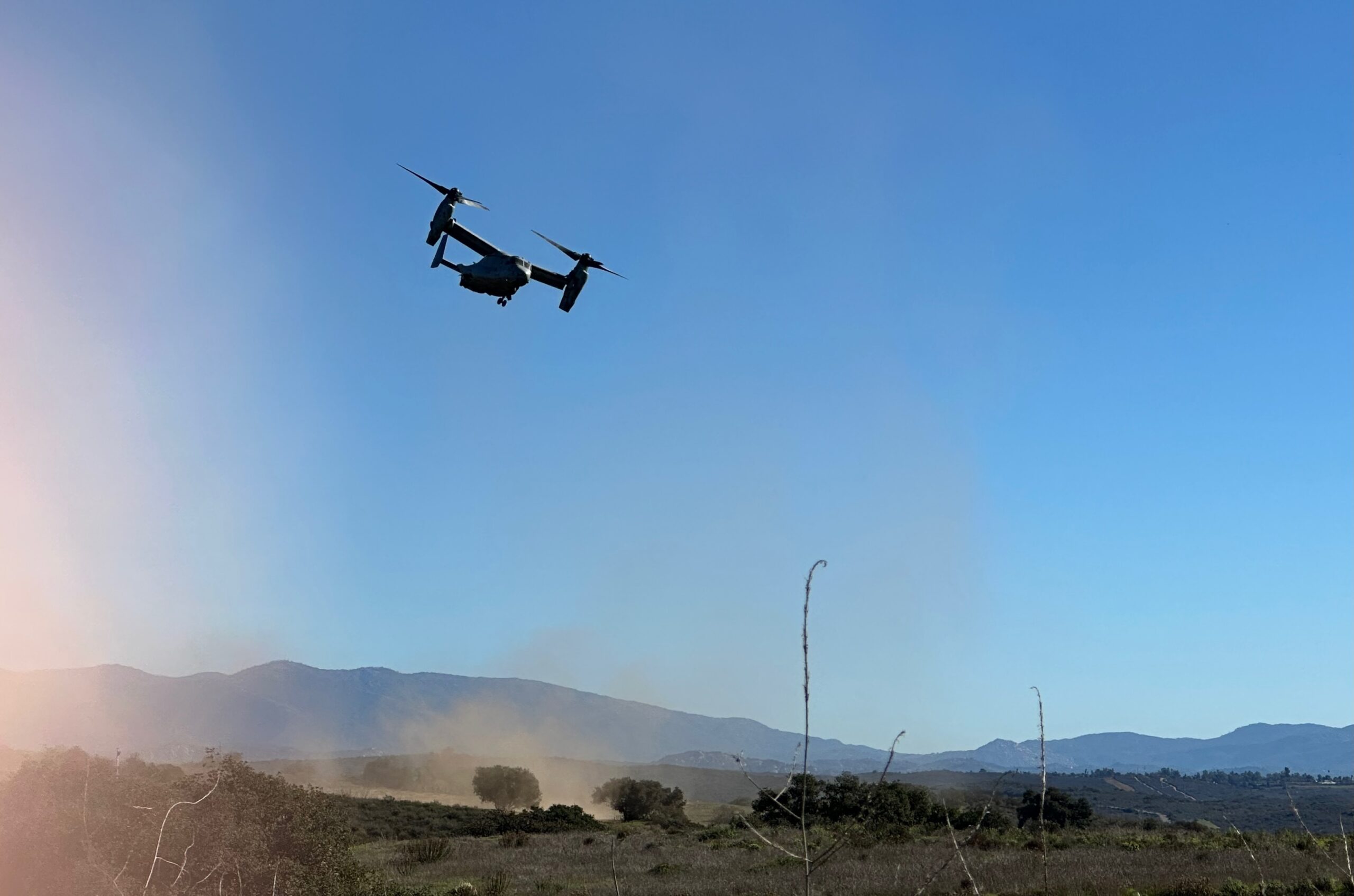
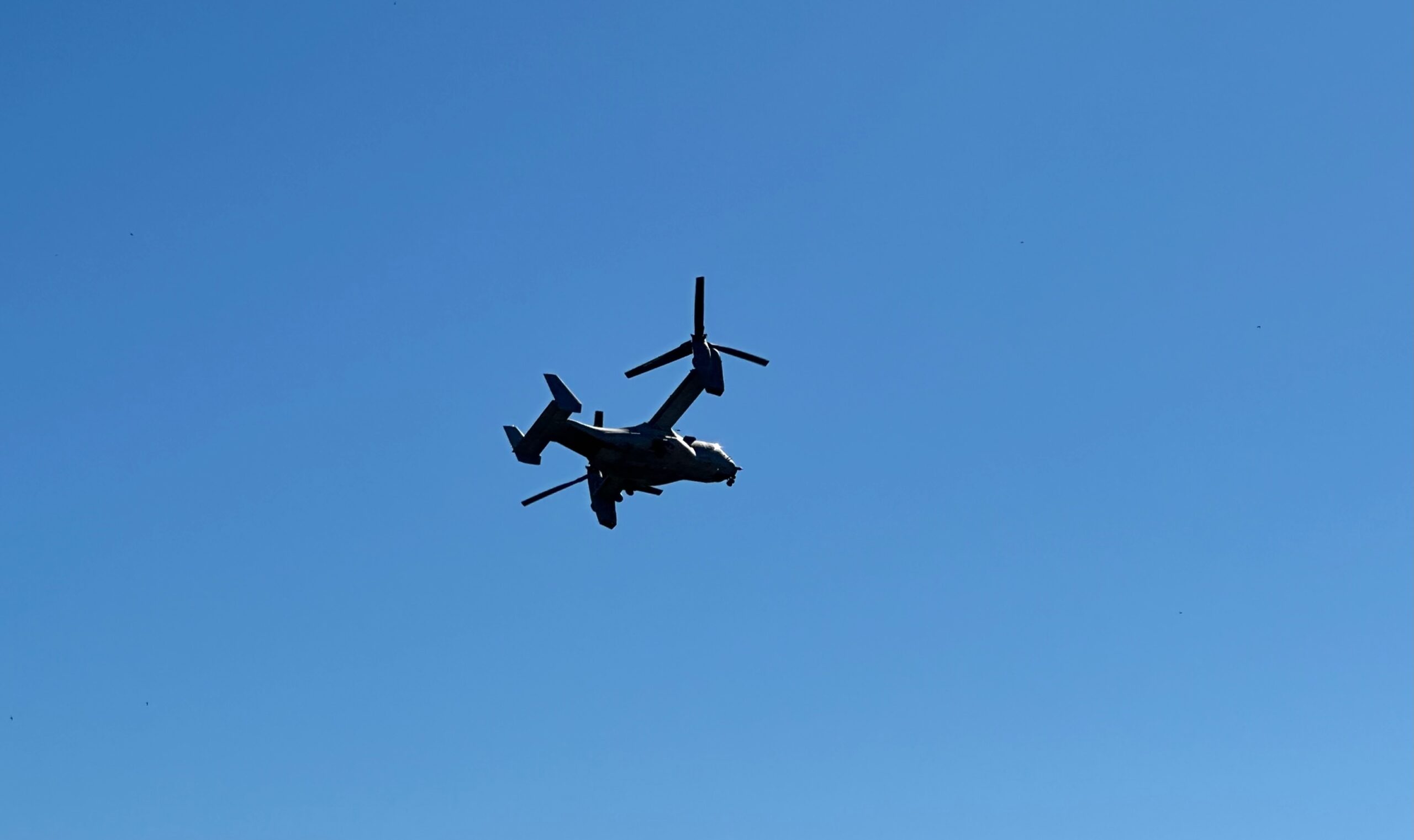
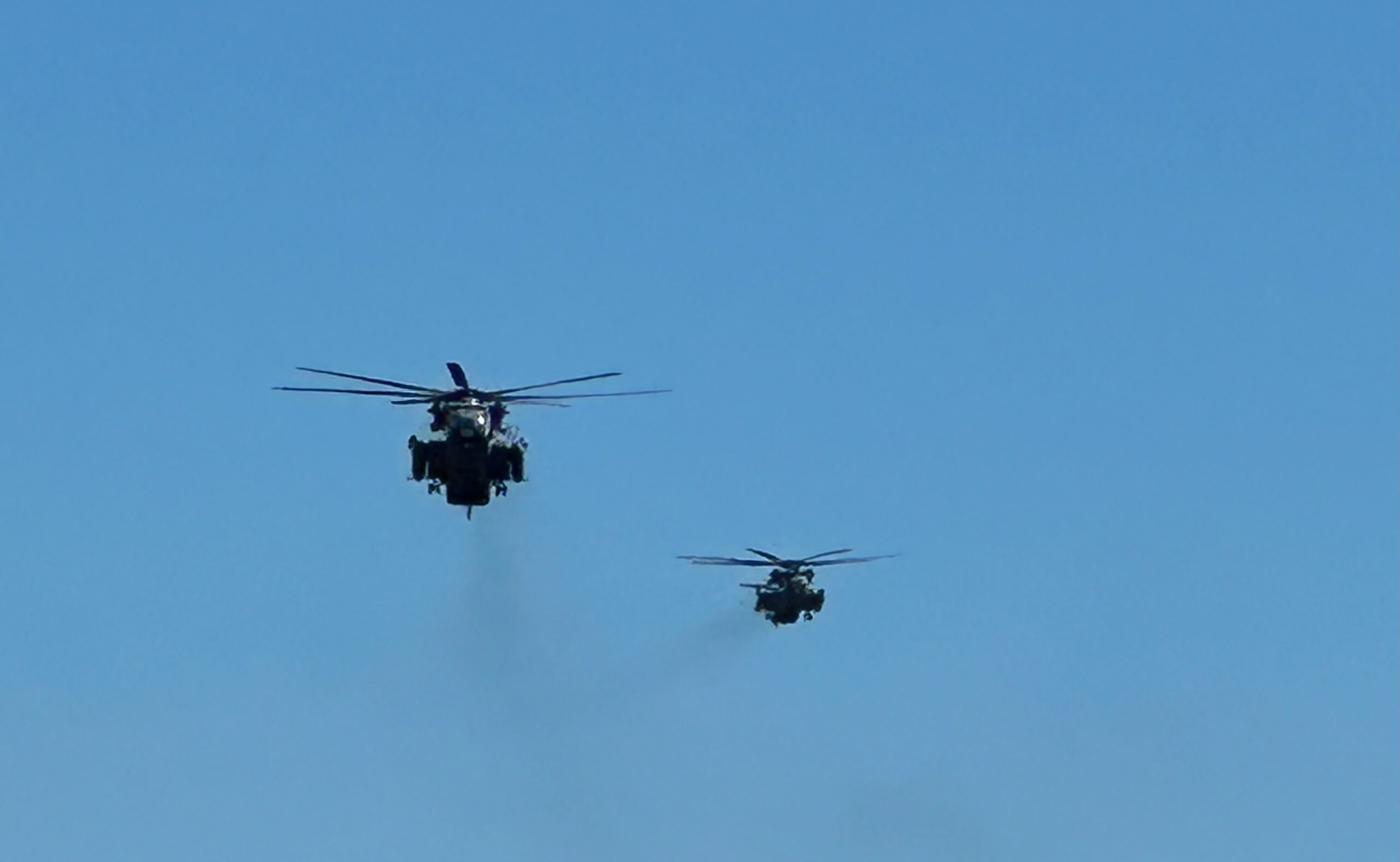
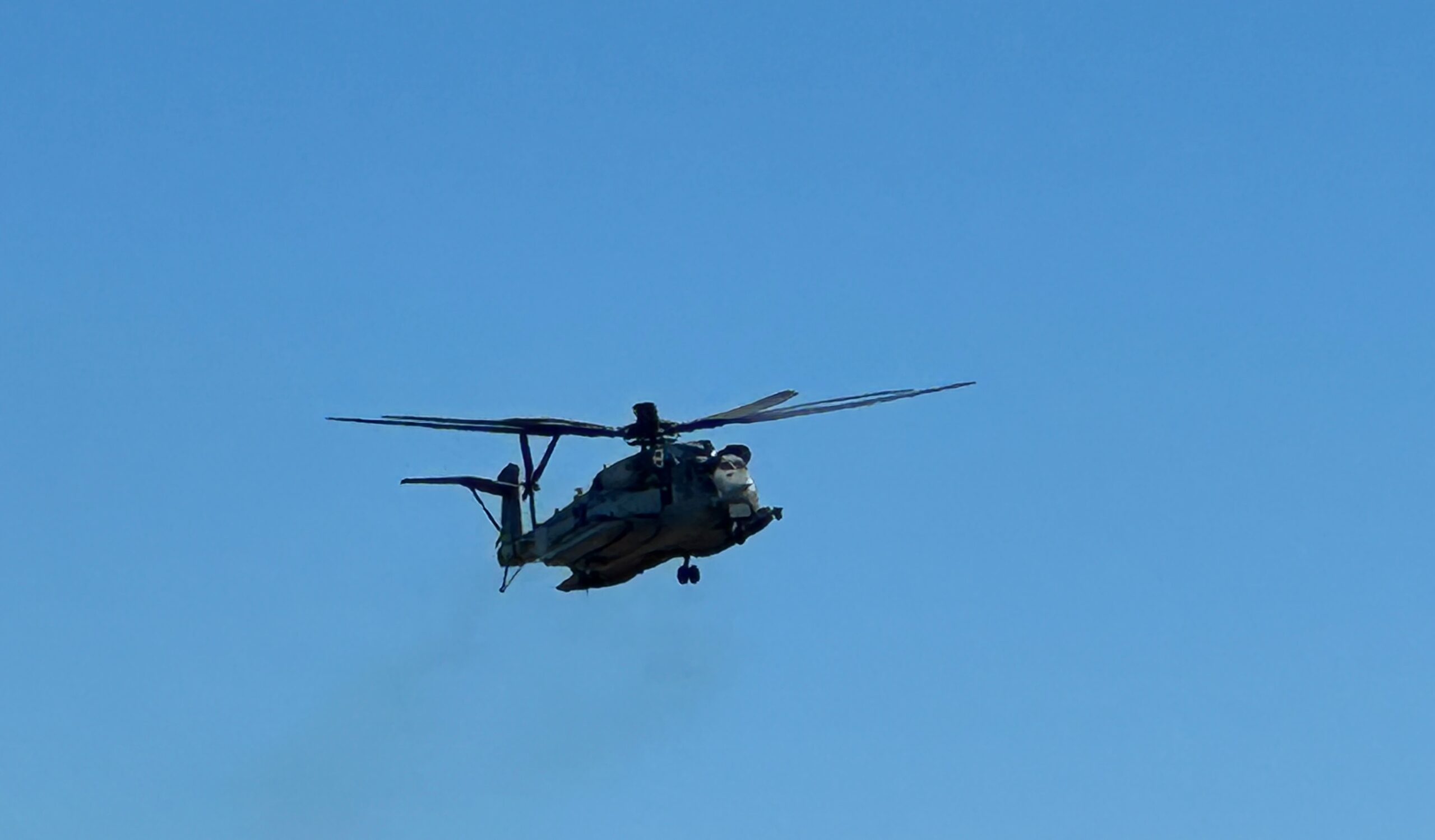
The photos in the slideshow below I shot during the insert. The first two photos show the exercise “town” where the intervention occurs. The next three highlight the Ospreys and the next three the Super Stalllions.

I also shot a video of one of the Ospreys involved in the aviation insert during the exercise.

When Safety Data Contradicts the Narrative: Why Doesn’t the Narrative Change?

12/05/2025

By Robbin Laird

The V-22 Osprey continues to generate controversy in defense media, but a recent opinion piece in Stars and Stripes argues that the aircraft has become a victim of lazy journalism rather than a genuine safety crisis. Retired Marine Colonel Anthony Krockel, who commanded a V-22 squadron during combat operations and later served as commodore of Training Air Wing FIVE, has stepped forward to challenge what he sees as a persistent pattern of misrepresentation.

Krockel identifies a troubling trend in defense journalism: “a handful of journalists hold on to the V-22 Osprey as the reliable clickbait keyword for aviation risk, even when the data tells a very different story.” His critique targets a recent Associated Press investigation that he believes perpetuates outdated narratives about the aircraft’s safety record.

The core of his argument rests on a simple observation: that despite comprehensive safety data showing the Osprey performs well compared to other military aircraft, it remains uniquely targeted in media coverage. According to Krockel, reporters continue to rely on “outdated V-22 talking points” rather than examining “more recent and accurate V-22 safety conclusions provided by senior Marine Corps leaders, the Congressional Record Service (CRS), and years of facts.”

To understand why the V-22 attracts such scrutiny, it’s important to acknowledge its history. The aircraft’s revolutionary tiltrotor design, combining vertical takeoff and landing capability with the speed and range of a fixed-wing aircraft, made it one of the most ambitious aviation programs in Pentagon history. That ambition came with significant growing pains.

Krockel doesn’t deny this history: “the Osprey remains one of the most scrutinized aircraft in Pentagon history, in part because of its revolutionary design, and a series of tragic mishaps that occurred decades ago when the aircraft was in development.” These early accidents, occurring during the testing and development phase, created a lasting impression that continues to shape public perception today.

However, Krockel argues that judging the operational Osprey by its developmental struggles is fundamentally unfair or equivalent to evaluating a mature technology by its prototype failures.

The statistical evidence Krockel presents challenges the “dangerous aircraft” narrative directly. He cites Gen. Eric Smith, commandant of the U.S. Marine Corps, who emphasized that the V-22 is “the most tested aircraft we have,” with a safety profile that outperforms other aviation platforms.

More specifically, Krockel references a September report from the Congressional Research Service that provides concrete comparative data: “the Class A mishap rate for the Marine Corps’ MV-22 is 2.56 mishaps per 100,000 flight hours for the period FY2015 to FY2024. The Marine Corps average for all aircraft over that time frame is 2.67 mishaps per 100,000 flight hours.”

This statistic is crucial: it means the Osprey actually performs better than the Marine Corps fleet average. Yet Krockel notes that journalists covering aviation safety often ignore this context, instead treating the Osprey as an outlier when the data suggests precisely the opposite.

The timeline is also significant. The last Class A mishap involving an Osprey occurred two years ago, and Krockel reports that investigators identified both human and mechanical factors: “flawed aircrew decision-making and a failure of material in the proprotor gearbox” were the main contributors. Importantly, he notes that “the military has since incorporated additional training to Osprey crews on the conclusions of the report and has been addressing the material issue with a new alloy manufacturing process.”

This represents exactly how safety systems should function, identifying problems, understanding root causes, and implementing corrective measures.

Perhaps the most striking element of Krockel’s critique concerns internal contradictions in the very articles that criticize the Osprey. He observes that journalists “pushing this narrative even contradict themselves within their own article by sharing data about the aircraft that have actually contributed to ‘the spike in aircraft accidents in 2024,’ such as the H-60 Black Hawk, F/A-18 Super Hornet, and AH-64 Apache.”

His point is devastating in its simplicity: “The V-22 mishap rate ranks far behind all three (with zero mishaps since November 2023) but still gets singled out by authors as ‘risky’ and ‘most dangerous.'” If such journalists were genuinely concerned about aviation safety rather than generating clicks, they would focus on platforms with higher mishap rates.

Krockel emphasizes that this pattern has persisted “for more than a decade,” during which “the MV-22’s Class A mishap rate has been lower than many Marine Corps platforms and compares favorably to several aircraft across other service branches, yet critics remain active and uninformed.”

One aspect of the V-22 program that Krockel highlights is its unusual level of transparency. “The Osprey program is one of the most transparent in the Pentagon,” he writes. “Every review, from internal safety boards to independent analysis, has reinforced the same conclusion: The aircraft is safe when operated within established parameters, and defense services have implemented meaningful improvements to address readiness and reliability.”

This transparency, paradoxically, may contribute to the aircraft’s negative coverage. When every incident receives extensive documentation and public review, it creates more material for critics to cite, even when that same material demonstrates effective safety management and continuous improvement.

Krockel is careful to acknowledge that all military mishaps deserve serious attention: “While all military mishaps are serious and warrant investigation, there is no factual support for those who argue the V-22 has a unique aviation safety problem. The data simply does not support that.”

Beyond defending the Osprey specifically, Krockel argues that fixation on this single platform distracts from a much more serious and systemic problem facing military aviation. “Over the past four years, mishap rates have increased across multiple military services,” he notes, calling for “serious examination of aircrew training, flight discipline, and systematic under-resourcing in readiness and sustainment across the armed services.”

His analysis of the root causes is particularly insightful, tracing a chain of consequences that begins with funding decisions: “Congress should examine to what extent accident rates are the result of under-funding military operations and maintenance (O&M) budgets.”

The cascade effect he describes is sobering: inadequate funding leads to insufficient replacement parts, which causes maintainers to lose troubleshooting skills as they resort to “cannibalization” or moving parts between aircraft. This reduces aircraft availability, which decreases training flight hours, which produces less proficient crews who may make compromised decisions under pressure.

“Crews with less currency and proficiency can sometimes make compromises that increase safety risks,” Krockel explains, “and they can lack the kind of judgment and sound decision-making that only additional flight time can provide.”

Krockel doesn’t limit his criticism to journalists. He directly challenges Congress to examine its own role in the broader safety picture: “Congress likes to point the finger at the Pentagon, but Congress needs to look itself in the mirror and consider whether it has provided adequate resources over the last four years to address these rising accident rates.”

This argument reframes the entire debate.

Rather than treating aviation safety as primarily a technical or operational issue, Krockel identifies it as fundamentally a resource allocation problem with political dimensions. If mishap rates are rising across all platforms and services, the common denominator isn’t any particular aircraft design but rather the systemic conditions under which all military aviation operates.

Krockel’s fundamental complaint is simple but powerful: “In their eagerness to bash the Osprey, journalists are missing the real story, which is the broader systemic issues that prevent our service members from accomplishing their missions and returning home safely.”

Krockel’s broader point about evidence-based journalism deserves consideration. When safety data contradicts established narratives, responsible reporting requires examining whether those narratives remain valid. When an aircraft with a better-than-average safety record continues to be portrayed as uniquely dangerous, something has gone wrong in how we process and communicate information about military aviation.

The American people, as Krockel notes, “deserve better.”

So do the service members whose professional competence and daily safety depend on accurate public understanding of the systems they operate.

In an era of declining trust in institutions, getting the basic facts right about military aviation safety isn’t just good journalism.

It’s essential to maintaining public confidence in the armed forces and ensuring resources flow to where they’re actually needed.

Anthony Krockel, “There They Go Again: Lazy Attacks on the V-22 Ignore the Real Safety Story,” Stars and Stripes (November 25, 2025).

Featured photo: U.S. Marine Corps Lt. Col. Anthony G. Krockel, commanding officer, Marine Medium Tiltrotor Squadron 365, 24th Marine Expeditionary Unit, speaks with Sen. Thom Tillis aboard the amphibious assault ship USS Bataan (LHD-5) during Amphibious Ready Group Marine Expeditionary Unit Exercise off the coast of North Carolina, Dec. 15, 2016. Tillis is assigned to the Senate Armed Services Committee and is visiting to be informed on Marine and Navy amphibious capabilities and ARGMEUEX. (U.S. Marine Corps photo by Cpl. Hernan Vidana).

A Tiltrotor Enterprise: From Iraq to the Future

A Tiltrotor Perspective: Exploring the Experience


An Update on FCAS: A December 18 Deadline for Decision?

12/04/2025

By Pierre Tran

Paris – The chief executives of Airbus Defence and Space and Dassault Aviation are seen to be holding the future of European military cooperation in corporate hands, with a Dec. 18 deadline reported to be looming for a new fighter jet project.

That mid-December deadline refers to signing a written agreement on the “core principles of cooperation,” Reuters reported Nov. 25, and includes a “decision roadmap” drafted by Berlin.

The new fighter project reflects French and German political ambitions to build a strong European arms industry, while corporate partners compete to boost technology and earnings.

A December signing by the German partner Airbus DS and French prime contractor Dassault would allow phase 2 of the future combat air system (FCAS) to get under way in 2026.

Phase 2 consists of building and flying a technology demonstrator for a new generation fighter (NGF) at the heart of the future combat air system, and two classes of remote carriers, or drones, by 2029/30. Phase 2 has a budget of around €5 billion ($5.8 billion).

The December agreement is reported to be a bid to bring the fighter project under political control. The proposed roadmap calls on air chiefs of staff of the partner nations – France, Germany, and Spain – to conduct a review of respective requirements.

Berlin and Paris are also reported to be preparing for a retreat, such is the tension between the contractors. Airbus DS and Dassault have made it clear they are ready to go their own way, if their conditions were not accepted for working on the vast FCAS project.

Cooperation could be scaled back to work on a European combat cloud for a command and control network for allied aircraft. That cloud would allow French, German, and Spanish fighters, drones and other aircraft to plug into the global combat air program (GCAP). Britain, Italy, and Japan are backing GCAP, with a separate fighter project at the core, based on the Tempest.

Orderly Withdrawal

The FCAS partner nations are considering scaling back cooperation to work on a combat cloud, the Financial Times business daily reported Nov. 17.

That would mark a retreat from building a new fighter, which would replace the Rafale for France and Eurofighter for Germany and Spain in 2040. Remote carriers or combat drones, and a cloud network would support the new fighter in FCAS, if that were to go ahead.

The testing of European corporate cooperation on the fighter project stems from Dassault’s insistence on clear management leadership as prime contractor, an increase of industrial work share to 51 pct from a third, and protection of intellectual property rights.

Airbus DS accepts Dassault as prime contractor but insists on a share of work that reflects the government funding of the fighter project. A senior Airbus DS executive, Jean-Brice Dumont, has said management of the project should show the “interdependency” that reflects the work share. The latter is tied to state financing, divided equally by the three partner nations.

Dassault sees itself as losing out on work share as presently set out, as Airbus gets more work through its German and Spanish units. Indra is the Spanish industrial partner in FCAS.

Airbus DS is the lead company on the FCAS cloud, working with partners Indra and Thales, a French electronics company. The cloud is one of the five main FCAS projects, or pillars.

The then  Airbus DS director for FCAS, Bruno Fichefeux, showed at the 2023 Paris air show a video of how the cloud would work as a battle management tool, linking up crewed and uncrewed aircraft, as well as being interoperable with allies, namely the global combat air program, and U.S. Next Generation Air Dominance (NGAD) F-47 fighter.

Fichefeux later moved on to be head of future programs at Airbus, the parent company based in Toulouse, southern France.

The FCAS budget is reported to be €100 billion.

Europe Responds to Moscow

That FCAS project could be seen as a test of European teamwork, at a time when analysts and French officers see Russia as a rising threat, and China a highly credible military power.

The French President, Emmanuel Macron, announced Nov. 27 a voluntary 10-month national service to start next year, backed by a €2 billion budget. The plan is to recruit an initial 3,000 personnel, rising to 50,000 by 2035, with 18-year-old conscripts offered monthly pay of €800. The personnel will operate solely on “national soil,” the commander in chief said.

Germany also seeks to boost the military ranks, looking to recruit 20,000 next year with voluntary service.

That European call to arms is seen as response to the Russian invasion of Ukraine, amid rising concern in the Baltics, Poland, and Scandinavia.

Meanwhile, political leaders have struggled to rally round the industrial partners, locked in a corporate struggle for leadership – or co-leadership – along national lines.

Dassault is based in Saint Cloud, in the comfortable suburbs of the French capital. Airbus DS is based in Manching, near Munich, southern Germany.

Phase 2 succeeds phase 1B, in which air force officers of the partner nations selected the aircraft architecture. Phase 1B is worth €3.2 billion.

If There Were A Break Up

There is conjecture on what might happen if Airbus DS and Dassault opt out of the joint fighter project, and go their own way.

Airbus DS might seek a place in the GCAP consortium or partnership with Sweden, with the company keen to gain the capability to build a fighter, said Sash Tusa, analyst at equity research firm Agency Partners.

“The question is what is the priority?” he said, as a fighter program would require 10s of billions of euros and a decade or more to build.

“Germany has the largest European defense budget, and Airbus has many, but by no means all, of the engineering skills required to be prime contractor of a sophisticated combat aircraft,” he said.

“The bigger issue is, arguably, the engine – German firms lack the hot section knowledge  and track record required for development of a complete engine,” he said. The country would likely have to either buy in an engine from another supplier, whether in the U.S. or U.K., or pay one of these companies for a progressive transfer of necessary technologies.

“Either of these would have a material cost, both financial and time scale.”

There is work for Airbus DS in the near and medium term, with Berlin’s tranche 5 order for 20 Eurofighter jets for the German air force, with the fighters to be armed with electronic warfare kit. That order, announced Oct. 15, comes on top of the 38-strong tranche 4 order,  the German Quadriga project, placed in 2020.

Germany has amended its constitution to allow the greater debt funding of half-a-trillion euros to boost its economy, including military spending.

Meanwhile in Sweden, Saab said Oct. 14 the FMV procurement office had awarded the company a 2025-2027 contract worth 2.6 billion Swedish crowns to extend concept studies for a future fighter system, which included crewed and uncrewed aircraft.

French Officer Seeks To Be Heard

The lesson from FCAS is the need for the French military to have a greater say, and cohesion at the European level.

“To change things, greater weight should be given at the operational level,” the joint chief of staff, air force general Fabien Mandon, told Oct. 15 the Senate defense committee. “That can be seen in a large program such as FCAS.

“After eight years, the chiefs of staff of the air force and navy agree on the project, but the partner nations are unable to reach agreement, and we are heading toward the manufacture of two aircraft,” he said.

“It’s irrational, and we are going to buy a product that is more expensive and not so good because we cannot reach agreement among Europeans, when it should be our top priority, it should be ready on the day of attack,” he said.

The air force chief of staff, general Jérôme Bellanger, told the Senate defense committee

French industry needed to deliver an open architecture on future fighters, to allow interoperability with allied fleets. Beyond delivering air superiority, contractors needed to offer interoperability to win export deals, he said.

The open architecture on the Mirage 2000-D meant the service was using the fighter as test bed for onboard artificial intelligence, he said, pointing out the aircraft dated back to the 1980s, with systems of the 1990s.

A priority for the air force was gaining capability for the suppression of enemy air defense (SEAD), to support deep strike missions, he said. There are studies for short term solutions, while there is development for an anti-radar missile and a long-range, stand-off air-to-ground missile for SEAD missions.

Those air strike missions also needed to consider saturation of enemy air defense with low cost weapons, and electronic warfare such as “offensive jamming,” he said.

“SEAD is an imperative…a capability gap for the air force,” he told parliamentarians.

A new weapon to hit enemy air defense could be seen at the U.K. DSEI trade show in September in the London Docklands, in the East End.

MBDA, a European missile company, unveiled its rebranded Stratus weapon. That armament is an Anglo-French development for a future cruise/anti-ship weapon (FC/ASW). The company showed mock-ups of its Stratus Low Observable (LO) missile, previously known as TP15, and Stratus Rapid Strike (RS) weapon, previously known as RJ10.

The French air force saw the Israeli air strikes against nuclear targets deep inside Iran as highly instructive, raising the perceived need for precise, long-range airborne weapons.

However, the budgetary planning is for the Stratus RS missile to enter service in 2035, so the service will need to look to interim weapons and other tactics for the time being.

French Industry Upbeat

Dassault appears to have a bullish medium term outlook, on the French industrial front.

The family-controlled company says it has won orders for 533 Rafale from France and eight export clients, of which 233 are to be delivered.

Dassault is raising monthly production of the fighter to four units from three, and could hit five if more export deals were sealed. The company formally opened Sept. 23 a factory in Cergy, northwest of the capital, in a high key media event. That is the company’s first new plant since the 1970s, and makes parts for the fighter and Falcon business jet.

Macron said Nov. 18 France had signed a 10-year “declaration of intent” with Ukraine, offering to ship up to 100 Rafale, with weapons and pilot training. There was “obviously” a production program, he said at a joint press conference, here, with the Ukrainian President, Volodymyr Zelenskiy at his side.

An op ed from a group which calls itself Mars poured scorn on that prospective Rafale deal with Kyiv, writing it off as a “communications” exercise. There was a lack of industrial and financial capability to make good such an offer, the article said.

That Ukrainian pact with France followed a cooperation agreement with Sweden, announced in October, with Stockholm offering 150 Saab Gripen fighters for an undisclosed amount.

Paris would need to find billions of euros in the national coffers to fund its own new fighter if FCAS were trimmed and France went its own way. France ranks as the third-most indebted state in the European Union, after Greece and Italy. There are 27 E.U. member states.

The French administration has presented its 2026 budget bill to parliament, and the bill refers to a target of a Rafale fleet of 286 fighters by 2035, 61 more than the previously planned 225-strong fleet for the air force and navy.

It remains to be seen whether the fractious French parliament will approve the bill, which seeks to slash the national deficit to three percent of gross domestic product, as requested by the E.U. The French economy grew 0.5 pct in the third quarter, and the French central bank has forecast only slight growth in the fourth quarter, Reuters reported.

Dassault has said it has the capability to build a new French fighter, along with engine maker Safran and Thales, if France baled out of FCAS.

China Seeks to Down Rafale Image

A perceived importance of the Rafale can be seen with alleged Chinese attempts to hurt sales of the French-built fighter, while promoting Beijing’s program for the J-35 fighter.

The annual report by the U.S.-China Economic and Security Review Commission cited a July 6 AP report on Beijing allegedly using AI pictures to support claims of Pakistan downing the Rafale flown by India. That was an example of how China used the “gray zone” to support its interests – in this case, promoting the Chinese-built J-35 fighter.

The U.S. report to Congress said on page 109:

“Following the May 2025 India-Pakistan border crisis, China initiated a disinformation campaign to hinder sales of French Rafale aircraft in favor of its own J-35s, using fake social media accounts to propagate AI images of supposed ‘debris’ from the planes that China’s weaponry destroyed.”

That “information” measure was among the military and security, cyber, and economic actions China undertook in the gray zone, the report said.

The share price of Airbus and Dassault have fallen recently, along with stocks of European arms companies, with the prospect of a settlement in the Russia-Ukraine war.

The seven FCAS pillars cover the new fighter, engine, drones, combat cloud, sensors, simulation, and stealth.

The Second Marine Air Wing: The Ready Force in Transition

12/03/2025

By Robbin Laird

This week I am visiting Third Marine Air Wing and observing their Steel Knight exercise.

And what I will learn will complement what I have observed over the years when visiting the Second Marine Air Wing (2nd MAW) since 2009

The USMC aviation force at a critical juncture in its evolution.

This is a subject I will address specifically in a book to be published next year focused on USMC evolution in the new challenging era of crisis management.

But the transformation of USMC aviation over the past two decades has been extraordinary.

The caee of 2nd MAW is indicative.

With approximately 11,500 Marines and sailors across three air stations on the Eastern Seaboard, this wing incorporates new platforms and capabilities and blends them with older ones in an ongoing process of transformation for the “fight tonight” force.

Based at Marine Corps Air Stations Cherry Point and New River in North Carolina, and Beaufort in South Carolina, the 2nd MAW operates as more than just a supporting element for the II Marine Expeditionary Force. Unlike other Marine air wings with direct geographic combatant command alignments, the 2nd MAW serves as the Marine Corps’ designated Crisis Response Force, capable of rapid deployment anywhere in the world. This unique role has been demonstrated repeatedly in recent operations, from rapid deployments to Guantanamo Bay and Panama to sustained operations across AFRICOM, CENTCOM, EUCOM, and SOUTHCOM areas of responsibility.

“We consider ourselves the service’s Crisis Response ACE,” explains a wing spokesperson, capturing the ethos of a force that must be prepared for any contingency, anywhere, at any time.

The wing’s structure reflects both its diverse mission set and its transitional nature. Organized into five Marine Aircraft Groups (MAGs) and 32 operational squadrons plus training detachments, the 2nd MAW currently operates 13 different type/model/series aircraft:

At Cherry Point, MAG-14 serves as the emerging center of F-35 and unmanned operations, housing F-35B and C squadrons, the last operational AV-8B Harrier squadron (VMA-223), MQ-9 Reaper operations, and the critical KC-130J Super Hercules logistics backbone. Marine Air Control Group 28, also based at Cherry Point, provides the essential command and control, air defense, and engineering support that enables distributed operations.

New River hosts the wing’s assault support aviation, with MAG-26 operating exclusively MV-22B Ospreys across seven squadrons, while MAG-29 combines the heavy lift capabilities of CH-53E/K helicopters with the versatile H-1 Viper and Venom platforms.

Beaufort currently serves as the F-35 training hub and houses the remaining F/A-18 Hornet squadrons undergoing transition to the Lightning II, with VMFA-501 operating as the East Coast Fleet Replacement Squadron for F-35 training.

What distinguishes the 2nd MAW and Marine aviation generally is its relentless focus on integration. This isn’t simply about adding new platforms to an existing structure; it’s about how each new capability fundamentally shifts the center of gravity for the entire force. The introduction of the Osprey didn’t just provide new transport capability. It revolutionized how Marines think about range, speed, and operational concepts. Similarly, the F-35 isn’t merely replacing the Hornet and Harrier; it’s creating entirely new possibilities for data fusion, battlefield awareness, and coordination with other platforms.

This integration extends beyond aviation platforms to encompass the ground combat element, creating combined arms capabilities that no other service replicates. The pressure to digitally connect these diverse systems reflects not just technological possibility but operational necessity. The Marine Corps’ fundamental approach to warfare demands that platforms work together in ways that multiply their individual capabilities.

The wing is currently in the midst of a comprehensive transition from legacy F/A-18 Hornets and AV-8B Harriers to the F-35 Lightning II. This transition, scheduled to complete over the next several years, represents more than a simple aircraft replacement. The F-35’s sensors, data fusion capabilities, and networking potential will enable new forms of integration with everything from attack helicopters receiving targeting data to autonomous systems operating under F-35 management.

VMA-223, the last operational Harrier squadron, will stand down in 2026, ending an era while VMA-231 prepares to reactivate as an F-35B squadron. VMFA-533 at Beaufort became the wing’s first operational F-35 squadron in late 2024, with additional transitions planned through fiscal year 2028.

Underlying all operations is the critical logistics backbone provided by VMR-252’s KC-130J aircraft. These platforms proved their worth in recent rapid deployments to Guantanamo Bay and Panama, demonstrating the organic lift capability that enables the wing’s crisis response mission. The symbiotic relationship between the KC-130J and platforms like the Osprey which lacks the range for extended operations without aerial refueling exemplifies the integrated approach that defines Marine aviation.

Yet this capability faces significant challenges. Years of intensive operations have stressed these aircraft, while production has not kept pace with operational demands. The coming integration of unmanned systems may provide some relief, but the fundamental requirement for sustainable logistics remains a critical concern for future force development.

The next chapter in the wing’s evolution will likely center on the integration of autonomous systems. The F-35’s advanced radar and data processing capabilities position it as a natural platform for managing multiple unmanned assets, from aerial vehicles to ground-based sensors. This represents not just technological advancement but a potential revolution in how small Marine units can achieve effects traditionally requiring much larger forces.

The wing’s current MQ-9 operations under VMU-2 provide a foundation for this evolution, while the planned Marine Unmanned Aerial Vehicle Maintenance Squadron scheduled to stand up in fiscal year 2026 signals the institutional commitment to unmanned operations.

The 2nd MAW’s evolution reflects broader questions about the future of military aviation and force structure. As conflicts from Ukraine to the Middle East demonstrate the proliferation of advanced capabilities to smaller actors, the days when Marines could expect technological superiority simply by showing up are ending. Future operations will require not just advanced platforms but the training, command capabilities, and integrated systems that allow those platforms to work together effectively.

The wing’s unique role as a crisis response force means it must be prepared for this reality across multiple theaters and conflict types. Whether supporting counter-terrorism operations in Africa, deterrence missions in Europe, or potential high-intensity conflict in the Pacific, the 2nd MAW must maintain capabilities across the full spectrum of operations.

Today’s 2nd MAW represents a force that has successfully integrated revolutionary capabilities like tiltrotor aviation while positioning itself for the next transformation through F-35 adoption and autonomous systems integration. This balance between proven capabilities and emerging technologies, between readiness for immediate crisis response and preparation for future conflicts, defines both the challenge and the opportunity facing Marine aviation.

The wing’s continued evolution will serve as a test case for how military organizations can adapt to rapidly changing technological and strategic environments while maintaining the core capabilities that define their effectiveness. For the Marines of the 2nd MAW, this means continuing to perfect the art of integration or making diverse platforms and capabilities work together in ways that create effects greater than the sum of their parts.

In my newly published book on 2nd MAW, I take the reader down the path which I have navigated in my years of visiting Cherry Point, New River and Beaufort. The book tells the story of these Marines as they transitioned the “fight tonight” force in real time. It is difficult to realize how challenging such a vocation is until you have spent time with the warfighters and watched them deal with the challenges of trying to remain at the cutting edge of operations in a world where being second best does not cut it.

For a video discussing the book, see the following:

Transitioning the Flight Tonight Force: The Story of 2nd Marine Air Wing